
Home / Shipping to Mauritius / How to Ship from China to Mauritius
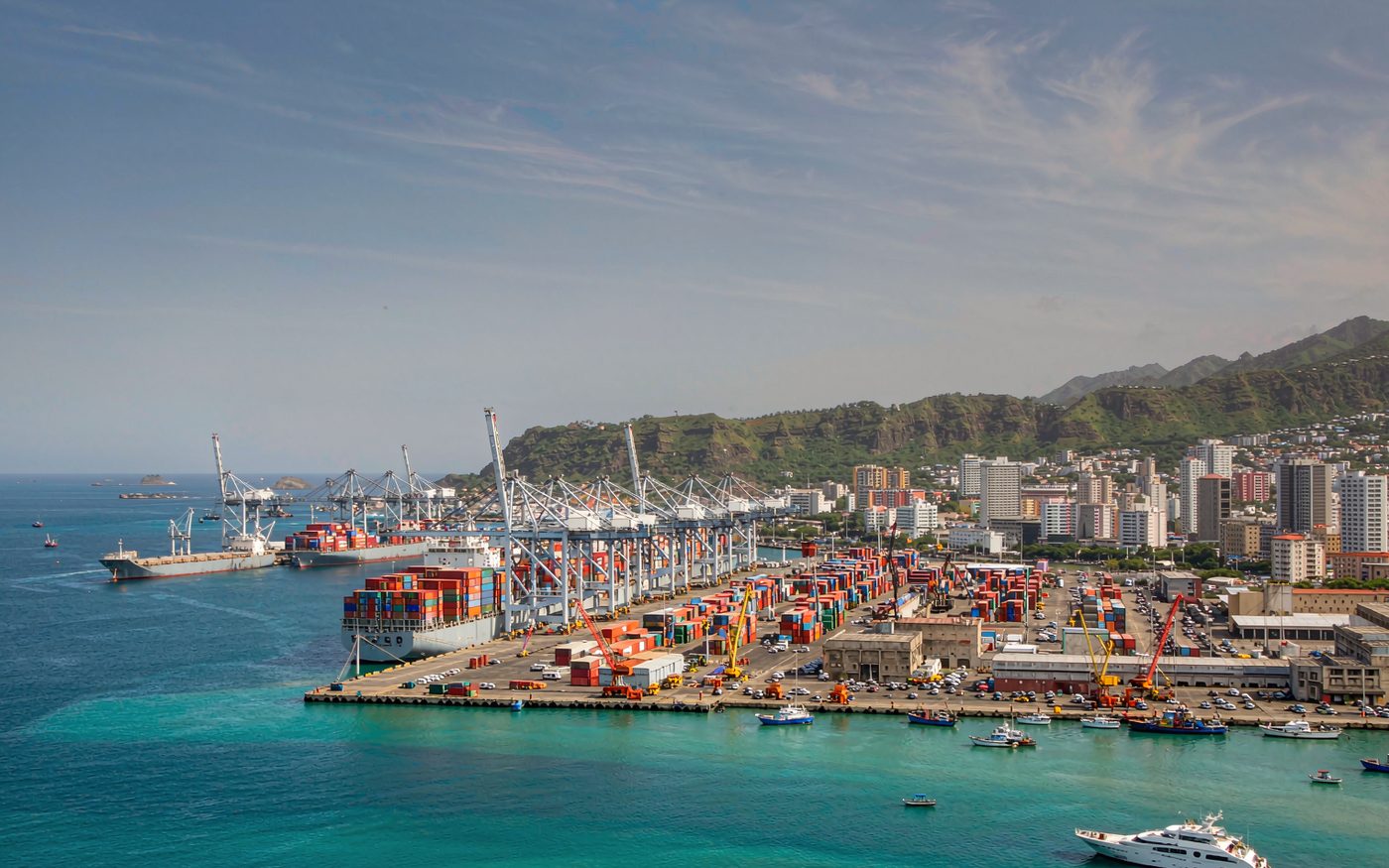
How to ship from China to Mauritius
Mauritius is a small, high-income island market with the most efficient customs administration in the region and one unusual advantage for a buyer importing from China: a free trade agreement between the two countries. That agreement can take the duty on most Chinese goods to zero, and it is the single biggest cost lever available to you, provided the paperwork is done before the goods ship.
Two things follow from that. The first is that the certificate of origin has to be applied for in China before shipment, because it cannot be created afterwards. The second is that everything else about importing here is comparatively straightforward: English documentation is accepted, the port is efficient, and the declaration is filed electronically.
This guide covers how to claim the preference, how the bill of entry is filed, how duty, VAT and excise stack up, which goods are restricted or banned, and how the whole sequence runs from a Chinese supplier to a Mauritian address.
At a glance
Customs is administered by the Mauritius Revenue Authority, with the customs declaration, or bill of entry, filed electronically through TradeNet. Duty is levied at five bands, 0, 5, 10, 15 and 30 per cent of CIF value, with a 100 per cent band for a few protected lines. VAT is 15 per cent on the duty-inclusive value, and excise applies to vehicles, electrical appliances, petroleum products, sugar-sweetened products, alcohol and tobacco. Under the China-Mauritius free trade agreement, in force since 2021, most Chinese goods can enter at zero duty against a certificate of origin meeting the regional value content rule. There is no general duty-free threshold for commercial imports.
How your cargo moves: China to Mauritius
Eight steps from your supplier's door to yours. The last four are the ones shaped by local rules.
- Pickup from your supplierWe collect the goods anywhere in China and bring them to our consolidation point.
- Export clearanceChina customs declaration filed and released before the goods move to the port.
- Loading and departureContainer loaded, sealed and handed to the carrier at the Chinese port.
- Main carriageOcean, air or rail movement booked on the route agreed for your cargo.
- Arrival at the gatewayDischarge at the port or airport of entry, recorded on the carrier's manifest.
- Import clearanceCustoms declaration filed locally, with duty and tax assessed on the declared value.
- Customs releaseGoods released into free circulation once duty and tax are settled.
- Final deliveryOnward movement to your delivery address, warehouse or nominated depot.
Duty rates, VAT rates and clearance times move, and the figure that applies to your goods is the one set for your commodity code on the day of clearance. We check the current position against your code before your goods sail and confirm it to you in writing — ask for that check when you request a quote.
A small island market, and the trade deal China signed with it
Mauritius has a population of around 1.3 million and one of the highest incomes per head in Africa, and it imports almost everything it consumes and sells. That combination, small market, high purchasing power, near-total import dependence, is why it punches above its weight as a destination for Chinese consumer goods, building materials and equipment.
It also operates as a freeport and an Indian Ocean trading hub, with duty-free regimes for goods imported for re-export. If your plan is to distribute onwards into the region, that status is worth understanding before you structure the import.
The customs administration is one of the more efficient in Africa, English documentation is accepted, and the systems are genuinely electronic. For a first-time importer, this is one of the easier markets in the world to clear a container in, provided the documents are right.
Choosing a mode: Port Louis by sea, or air into Plaine Magnien
Sea freight into Port Louis is the backbone of the trade. A full container suits cargo above roughly 15 cubic metres, and because the island is a long way from the main Asia routes, services usually involve transhipment.
LCL is the common entry point for a first order or for orders assembled from several suppliers. You pay by the cubic metre with a minimum and accept consolidation and deconsolidation time at both ends.
Air freight arrives at Sir Seewoosagur Ramgoolam International Airport, serving the island for cargo. It suits urgent, high-value or perishable goods, and it is charged on chargeable weight. Courier services handle documents and small parcels and clear them under their own procedures, reliably in this market.
| Mode | Transit commonly quoted | What it suits |
|---|---|---|
| Sea FCL to Port Louis | 25 to 40 days port to port | Volume above about 15 cbm |
| Sea LCL to Port Louis | Add 5 to 10 days | Two to twelve cubic metres |
| Air freight to Mauritius | 3 to 7 days airport to airport | Urgent, high-value or perishable cargo |
| Courier | 3 to 6 days door to door | Samples, documents, small parcels |
Incoterms on a Mauritian entry, and the VAT that follows them
EXW leaves you with the Chinese export formalities and no control over the loading. It is the least suitable term for a first shipment.
FOB is what most experienced buyers use: the supplier loads the goods in China, risk passes to you there, and you control the carriage and the choice of forwarder. It keeps freight and destination charges visible as separate numbers.
CIF and CIP include carriage and insurance to Port Louis while the risk still passes in China. Insurance is bought by the seller for a voyage whose risk you carry, which matters when something goes wrong.
DAP and DDP move the burden to the seller, and under DDP the Mauritian duty and VAT as well. If you are claiming the free trade agreement preference, check who is responsible for producing the certificate of origin, because without it the zero-duty treatment does not apply and the tax bill lands on whoever is declaring.
From a Chinese supplier to a Mauritian address, in sequence
Order confirmed and trade term agreed
Use an Incoterms 2020 term and write it into the contract.
Apply for the FTA certificate of origin
This is the step that turns a 15 per cent duty into zero. It has to be obtained before shipment, so raise it with your supplier at order stage.
Register with the revenue authority
A first-time importer registers with the Mauritius Revenue Authority, providing a tax account number, business registration and identification.
Pickup, consolidation and export declaration in China
Your forwarder collects or consolidates, declares the export, and provides the seal number and loading photographs.
Ocean leg to Port Louis
Usually with transhipment. Your forwarder sends the bill of lading draft for checking.
Bill of entry through TradeNet
Your broker files the customs declaration electronically with the invoice, bill of lading or air waybill and packing list attached.
Assessment and payment
Duty at the applicable band, or zero under the FTA, then VAT at 15 per cent on the duty-inclusive value, plus excise where it applies.
Release and delivery
Port charges, delivery order and the truck to your premises. On an island this small, the last leg is the easy part.
The China-Mauritius FTA and the certificate that unlocks zero duty
The free trade agreement between China and Mauritius came into force in 2021 and was the first free trade agreement China signed with an African country. Under it, the great majority of Chinese exports to Mauritius move towards zero tariff, with figures around 96.3 per cent of tariff lines cited. Steel, textiles, electronics and light industrial products are among the beneficiaries.
To claim it you need a certificate of origin issued under the agreement, and the goods must meet the origin rule, commonly a regional value content requirement around 40 per cent. Your supplier applies for the certificate before shipment, and it is submitted with the declaration through TradeNet.
Two practical points. First, the certificate is obtained in China before loading, so it belongs on your order-stage checklist, not your shipping-week checklist. Second, without it your goods pay the standard band, which for manufactured consumer goods is commonly 15 per cent and can be 30 per cent. On a container, that difference is far larger than any saving you will make on freight.
Where the origin status of a product is genuinely unclear, the revenue authority operates an advance ruling system that gives binding clarity on classification, origin and valuation on written request.
The tariff bands, then fifteen per cent, then excise
| Charge | Indicative rate | Base |
|---|---|---|
| Customs duty | 0, 5, 10, 15 or 30 per cent by HS code | CIF value |
| Customs duty, protected lines | Up to 100 per cent on a few goods | CIF value |
| VAT | 15 per cent | Duty-inclusive value |
| Excise | Varies | Vehicles, appliances, petroleum, sugary products, alcohol, tobacco |
Machinery and many industrial inputs sit in the zero band, electronics and cosmetics commonly range up to 15 per cent, and clothing and footwear can reach 30 and 40 per cent respectively. The band follows the HS code, so classification accuracy is what determines your bill.
On the question of a duty-free threshold: there is no general threshold for commercial imports, and duty applies from the first rupee. For gifts and personal postal items the revenue authority grants an allowance of Rs 1,000, and some guides quote a higher figure, so confirm before relying on it.
Mauritius also operates temporary admission for goods to be re-exported, ATA carnets for commercial samples and professional equipment, and a drawback scheme for goods later exported. If your shipment is not a straightforward sale, ask which regime fits.
Filing the bill of entry through TradeNet
The customs declaration is known as the bill of entry and it is submitted electronically through TradeNet, the trade portal, giving full details of the quantity, value and nature of the goods. Trade documents including the invoice and the bill of lading or air waybill are submitted with it.
Declarations are filed by, or through, a licensed customs broker, and a commercial import needs a broker in practice. After submission the importer may be called for further information, and duty and taxes must be paid before the goods are released.
Import permits, where they are needed for controlled goods, are issued by the relevant authority and guidance indicates a turnaround of around three working days once complete information is submitted. Apply early and treat the permit, not the vessel, as the critical path.
Every entry is a legal declaration. Incorrect entries are an offence, and penalties for false valuation or duty evasion run to three times the value of the goods or a fixed minimum, whichever is higher. Declare accurately.
Product rules: used clothing, food, pharmaceuticals and batteries
Used clothing is banned outright. That is an absolute prohibition, not a permit question, and it is the one that catches buyers who assume second-hand textiles are treated like any other cargo.
Food and beverages need health authority clearance, pharmaceuticals need licensing through the pharmacy board, and plants and seeds are subject to phytosanitary control. Chemicals must meet the applicable safety standards, and lithium batteries travelling with electronics are treated as controlled.
The Mauritius Standards Bureau runs conformity requirements for certain products. Prohibitions also cover narcotics, counterfeit goods, offensive weapons and explosives. Check anything unusual against the customs list before booking.
The document set behind a Port Louis release
| Document | What it has to show |
|---|---|
| Commercial invoice | Detailed product descriptions, values and HS codes, supplier and consignee |
| Packing list | Weight, dimensions and quantity per package |
| Bill of lading or air waybill | Issued by the carrier, consignee matching the importer of record |
| Bill of entry | Filed electronically through TradeNet |
| FTA certificate of origin | Required to claim zero duty, obtained before shipment |
| Insurance certificate | Where the sale is on CIF or CIP terms |
| Import permit | Food, pharmaceuticals, chemicals, plants and other controlled lines |
Registration comes first. A first-time importer registers with the revenue authority providing a tax account number, certificate of incorporation or business registration number, a copy of the invoice and bill of lading, and identification. Do that before the vessel sails.
Consistency across the invoice, packing list and bill of lading keeps a file moving. In this market, where systems are efficient, a discrepancy is more likely to produce a query than a delay, but a query still costs days.
Importing as an individual or as a Mauritian company
An individual can import personal goods, and there is a small allowance for gifts and personal postal items. Commercial importing is done by a registered business with a tax account number, and that route is also the one that allows the VAT to be accounted for and recovered.
The VAT point matters here as much as anywhere. At 15 per cent on the duty-inclusive value, the recoverable amount on a container is significant, and an individual pays it with no route to recovery.
Register before the goods ship. If you have no Mauritian entity, appoint a licensed broker before the vessel sails, agree the scope in writing, and agree who pays storage if the file stalls.
Choosing the right forwarder in China, and a Mauritian broker
In China your forwarder collects or consolidates, books the space, handles the export declaration, obtains the bill of lading, and, critically, chases your supplier for the FTA certificate of origin. That last item is worth more than the freight saving on most shipments to this market.
At destination a licensed broker files the bill of entry through TradeNet, responds to queries, arranges permits where needed and pays the duty and VAT. You need both, and neither substitutes for the other.
Judge them on specifics: legal entity name, years trading, a written quotation split into origin charges, freight and the destination charges you will owe separately, and a clear answer on who pays storage if clearance is delayed. Ask directly whether they will handle the FTA certificate, because that single question separates the brokers who understand this lane from the ones who do not.
Warning signs are consistent: pressure to declare a lower value, no written breakdown, an address that is only a phone number, and vagueness about who carries the risk during the voyage.
Three illustrative orders into Mauritius
These three examples are illustrative, not client records. They show how the routing and the paperwork follow from the cargo.
A 40ft high-cube of furniture and household goods for a retail client. Full container to Port Louis with an FTA certificate of origin applied for in China before loading, moving the duty from the standard band towards zero. The lesson is that the certificate is the most valuable document in the file.
Five cubic metres of electronics from three suppliers in Shenzhen. Consolidated and shipped as LCL, with permits checked against the HS codes before booking because some electronic lines and lithium batteries are controlled. The lesson is that a permit check before booking is cheaper than a permit application after arrival.
Eighty kilograms of hotel fit-out samples needed for a presentation. Air freight, cleared in days. The lesson is that on an island market with efficient customs, air freight is a practical option for time-critical cargo rather than a last resort.
Why importers use Goodhope on this lane
Six things that are different about working with us on China to Mauritius shipments.
Get your Mauritius shipment moving
Send us the commodity, the volume and the HS codes if you have them, and we will come back with a routing that puts the FTA certificate of origin on the calendar before your supplier ships.
Get a quote Talk to usRelated pages
Frequently asked questions
Can Chinese goods really enter Mauritius duty free?
Largely yes, under the China-Mauritius free trade agreement in force since 2021, with figures around 96.3 per cent of tariff lines moving towards zero. You need a certificate of origin issued under the agreement and the goods must meet the origin rule, commonly a regional value content requirement around 40 per cent.
When do I apply for the FTA certificate of origin?
Before shipment, in China. Your supplier applies for it, and it is submitted with the declaration through TradeNet. Raise it at order stage; it cannot be produced after the goods have sailed.
What is the VAT rate on imports into Mauritius?
VAT is 15 per cent, calculated on the duty-inclusive value. A registered business accounting for VAT can normally recover it; an individual cannot.
Is there a duty-free threshold?
No general threshold for commercial imports: duty applies from the first rupee. For gifts and personal postal items the revenue authority grants an allowance of Rs 1,000, though some guides quote a higher figure, so confirm before relying on it.
What is TradeNet?
TradeNet is the electronic trade portal through which the customs declaration, known as the bill of entry, is submitted, along with the supporting trade documents. Filing is done by or through a licensed customs broker.
How much duty will I pay if I cannot claim the FTA?
Duty is levied at five bands, 0, 5, 10, 15 and 30 per cent of CIF value, with up to 100 per cent on a few protected lines. Machinery is commonly zero, electronics up to 15 per cent, and clothing and footwear up to 30 and 40 per cent.
Is used clothing allowed?
No. Used clothing is banned outright. That is an absolute prohibition rather than a permit question.
Do I need permits for food or medicines?
Yes. Food and beverages need health authority clearance, and pharmaceuticals need licensing through the pharmacy board. Permits are typically issued within around three working days once complete information is submitted.
How long does sea freight take from China to Port Louis?
Commonly quoted at 25 to 40 days port to port for a full container, with an additional 5 to 10 days for LCL. Add the clearance window on top.
Can an individual import commercially?
Not really. An individual can import personal goods within a small allowance, but commercial importing needs a registered business with a tax account number, and that route is also the one that allows VAT recovery.