
Home / Shipping to Moldova / How to Ship from China to Moldova
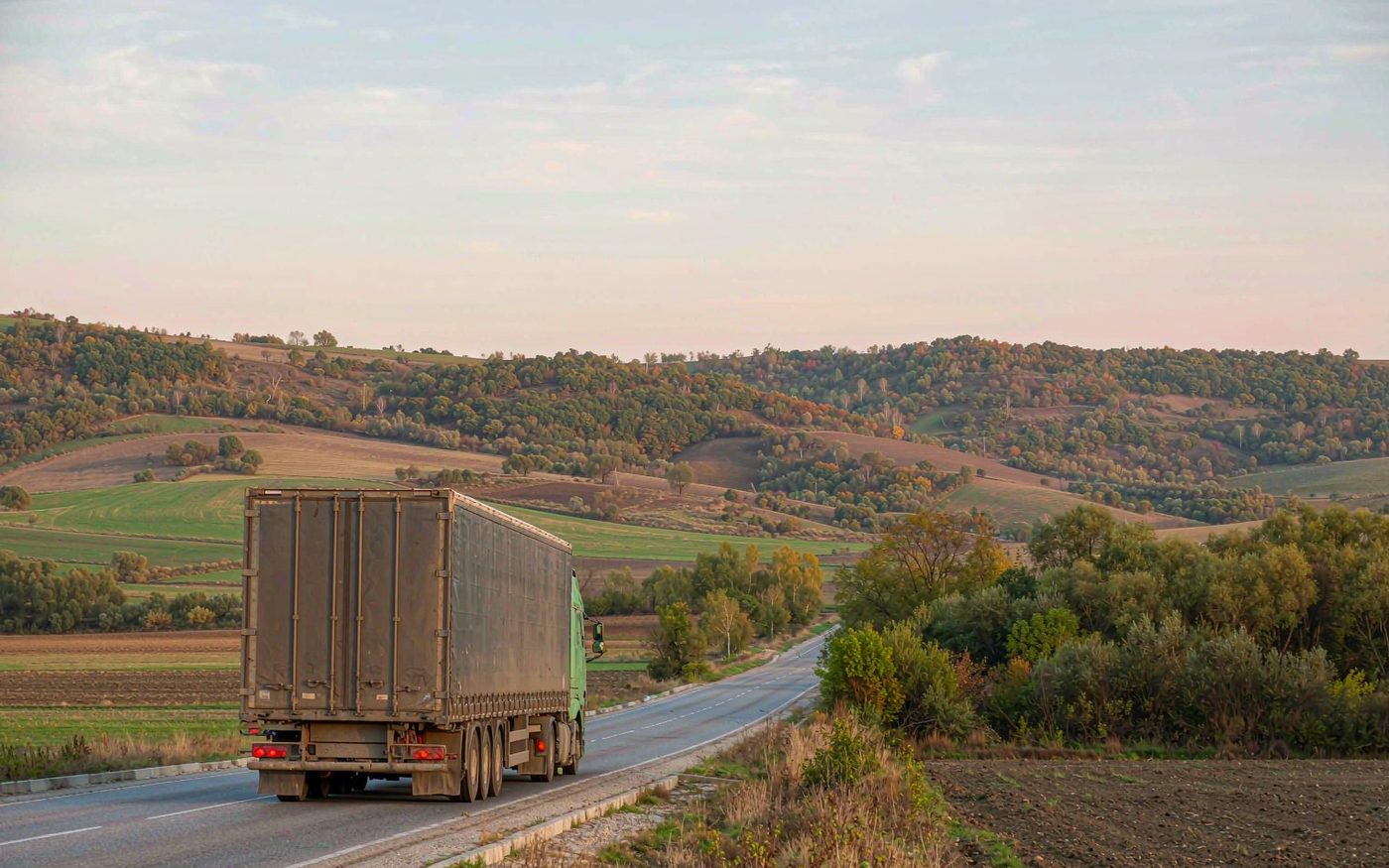
How to Ship from China to Moldova
Moldova has no container port of its own. That single fact shapes every shipment into the country, and it is the first thing a new importer needs to accept: your goods will be discharged in another country, moved overland across at least one border, and declared to Moldovan customs at a land crossing or an inland terminal.
Once that is understood, the rest is manageable. Moldova runs a modern electronic customs system, its tariff is moderate, and because it sits between the EU and the post-Soviet space it has a wide set of trade arrangements with both. What slows first shipments is not complexity but preparation: the paperwork for the road leg, the language on the labels, and the permits that specific products need.
This guide follows a container from a Chinese factory to a warehouse in Moldova, describing the route, the formalities and the costs that actually appear on an invoice.
At a glance
Moldova is landlocked. Most containerised cargo discharges at Constanta in Romania and continues by road or rail; Giurgiulesti, on the Danube, is the country's own small river port. Customs authority: the Customs Service, working on an electronic declaration system. Standard VAT: 20 per cent, with a reduced rate on defined goods. Duty: generally moderate, with bands running from zero upward. Romanian is the official language.
How your cargo moves: China to Moldova
Eight steps from your supplier's door to yours. The last four are the ones shaped by local rules.
- Pickup from your supplierWe collect the goods anywhere in China and bring them to our consolidation point.
- Export clearanceChina customs declaration filed and released before the goods move to the port.
- Loading and departureContainer loaded, sealed and handed to the carrier at the Chinese port.
- Main carriageOcean, air or rail movement booked on the route agreed for your cargo.
- Arrival at the gatewayDischarge at the port or airport of entry, recorded on the carrier's manifest.
- Import clearanceCustoms declaration filed locally, with duty and tax assessed on the declared value.
- Customs releaseGoods released into free circulation once duty and tax are settled.
- Final deliveryOnward movement to your delivery address, warehouse or nominated depot.
Duty rates, VAT rates and clearance times move, and the figure that applies to your goods is the one set for your commodity code on the day of clearance. We check the current position against your code before your goods sail and confirm it to you in writing — ask for that check when you request a quote.
Why Moldovan imports start at a foreign seaport
Moldova's own access to water is a short stretch of the Danube at Giurgiulesti, in the far south of the country. There is a port and a free zone there, and it does handle cargo, but it is a river facility with limited capacity and limited liner service. For a container from China it is rarely the practical answer.
The route that actually works for most importers is: mainline vessel from China to Constanta on the Romanian Black Sea coast, then overland into Moldova. Constanta is a deep-water container port with regular liner service from Asia, and the road distance from there to Chisinau is manageable. Some cargo moves rail, some by road, and a fair amount is transloaded at Constanta into trucks.
The practical consequence is that you are planning two legs, not one. The ocean leg ends in Romania. Everything after that — transit through Romanian territory, the border crossing, the Moldovan declaration — is a separate set of arrangements, and delays on the second leg are more common than on the first.
Filing with the Moldovan Customs Service
The declaration is lodged electronically with the Customs Service, which runs an automated system for import processing. In practice a licensed customs broker files on your behalf, and for a first shipment you should plan on using one rather than filing yourself.
The declarant needs to be registered. A foreign company without a Moldovan entity generally cannot declare directly, so the usual arrangement is a broker acting under a power of attorney, with a Moldovan-registered importer named on the declaration. Settle this before the goods move, because the importer of record is also the party that answers for the duty and the VAT.
Declaration data — classification, value, origin, quantity — must match the invoice and the transport documents exactly. Mismatches between the Romanian transit documents and the Moldovan import declaration are a routine cause of a border hold, and they happen because the two sets of papers were prepared by different parties from different instructions.
Transit procedure and bonded storage in Moldova
Because the goods enter through Romania, they travel across Romanian territory under customs control before reaching the Moldovan border. That transit leg is arranged in the EU system and closed out when the goods leave for Moldova. The Moldovan side then opens its own procedure.
Moldova offers customs warehousing and bonded storage, including at the Giurgiulesti free port, which lets you defer duty and VAT until goods are released for home use. For an importer testing a market, or holding stock for onward distribution, this is worth understanding before you commit to paying duty on arrival.
There is also a specific regime for the Transnistrian region, which operates its own administration. Goods destined there go through Moldovan customs formalities and companies in the region have their own registration requirements. If any part of your delivery is heading there, get advice before booking, because the arrangement is unusual and the paperwork differs from the rest of the country.
Moldovan tariff bands explained
Moldova's tariff is moderate by regional standards. Applied rates run from zero to a ceiling in the low-to-mid twenties, with an average appreciably below that. Raw materials and many industrial inputs sit at or near zero; finished consumer goods and apparel sit higher; a small number of lines carry specific or seasonal rates.
Classification follows the HS system, and the same warning applies as everywhere: the code determines the rate, so have it verified. Duty is assessed on the customs value, which is built up from the transaction value plus the cost of getting the goods to the Moldovan frontier.
Moldova has trade arrangements in several directions — a deep and comprehensive free trade arrangement with the EU, membership of the Central European free trade area, and agreements with other partners in the region. None of these helps goods of Chinese origin, because preference follows the origin of the goods, not the location of the importer. A certificate of origin will establish that the goods are Chinese; it will not reduce the rate.
VAT in Moldova and how it is charged
The standard VAT rate is 20 per cent, with a reduced rate applying to a defined list of goods. VAT is charged on the customs value plus duty plus excise where applicable, and it is payable at import.
The recovery question is the one worth settling before your first shipment. A Moldovan-registered business that is VAT registered and uses the goods for taxable supplies can normally deduct import VAT. A foreign buyer importing through a broker's or a partner's registration generally cannot, and treating VAT as a recoverable item when it is not is the most common way a first import turns out unprofitable.
VAT is charged in the local currency. If you are invoicing your own customer in euros or dollars, remember that the amount you actually pay at the border was fixed at the customs exchange rate on the declaration date, not at the rate on the day you priced the goods.
Permits and certificates that gate entry
Certain categories stop at the border until a document appears, and this is where Moldovan imports most often stall. Food, feed, animal-origin products and plants are controlled by the national food safety agency and need prior notification and health or phytosanitary certification. Arranging those after the goods have sailed is painful; arrange them when the order is placed.
Electrical and electronic goods, radio equipment, machinery and toys are subject to conformity requirements. Moldova's technical regulations are largely aligned with the European model, so documentation prepared for the EU market — declaration of conformity, test reports, technical file — usually satisfies the substance of what is asked for, but the local recognition of the specific certificate should be confirmed.
Pharmaceuticals, medical devices, chemicals, pesticides and any item with a security or dual-use dimension need their own licences or opinions. If your product sits anywhere near one of those categories, ask before you ship rather than discovering it at the frontier.
Romanian-language labelling and packaging
Romanian is the official language, and consumer information — instructions for use, safety warnings, warranty terms, composition — should be provided in it. Packaging in Romanian, or multilingual packaging that includes Romanian, is what you want. English-only manuals are the recurring failure on first shipments and they are a consumer-protection problem rather than a customs one, so the goods can clear and still be unsaleable.
Category rules sit on top: composition for textiles and footwear, ingredient and allergen declarations for food, shelf-life dating, and energy labelling for appliances. Check the rule for your product line rather than assuming a generic label suffices.
Wooden pallets, crates and dunnage must meet the ISPM-15 standard and carry the treatment stamp. Specify this to the factory at packing time. It costs nothing then and it can cost the whole consignment later.
Documents needed before the truck loads
For the ocean leg: commercial invoice, packing list, bill of lading, certificate of origin, insurance certificate. For the overland leg into Moldova: the transit document covering movement across Romania, the CMR consignment note for the road carrier, and the vehicle and driver papers.
For the Moldovan declaration: the same commercial invoice and packing list, the certificate of origin, the transport documents, any permit or certificate the product needs, the power of attorney to your broker, and the importer's registration details.
Two practical points. First, keep the description, quantities and values identical across every document — the Romanian transit papers and the Moldovan declaration are checked against each other. Second, declare the real transaction value; customs has access to freight and insurance data and an implausible invoice value leads to a valuation review that costs more in days than it saves in duty.
What clearance looks like on the ground
The sequence is: goods discharged at Constanta, transit opened across Romania, arrival at the Moldovan border crossing, import declaration lodged, documents reviewed and possibly the vehicle examined, duty and VAT assessed and paid, release granted, then the final inland move.
Clearance is typically a matter of a few working days when the papers are complete. Longer when a permit is missing, when the description does not match the code, or when a physical inspection is ordered — and a physical inspection of a road vehicle takes longer than an inspection of a container at a terminal, because it holds the truck.
Border crossings have their own rhythms. Queueing at the main points is seasonal and unpredictable, so build slack into any delivery promise rather than quoting the theoretical transit time.
The last leg into the Moldovan interior
Chisinau is the destination for most imports. From Constanta the road distance is moderate and the run is a normal international haul; from Giurgiulesti it is shorter still. Balti in the north and the industrial towns of the centre are reached from Chisinau by road.
Rail is available but comes with a technical wrinkle worth knowing. Moldova's network uses the 1,520 mm broad gauge while Romania uses standard gauge, so rolling stock must be transshipped or have bogies changed at the border. That makes rail slower to arrange than road for a first shipment, even though it is cheaper at volume.
Winter matters here. Road conditions between December and March can be poor, and border crossings slow in bad weather. If you have a deadline, ship earlier than the calendar suggests.
Cost items you should budget for
Import VAT is the largest single addition and the one most often omitted from a first calculation. Decide who imports before the goods move, because the answer determines whether it is recoverable.
Then the overland costs that a sea-only quote will not include: transloading at Constanta if the container is broken up, the road or rail haul into Moldova, border handling, and storage if the vehicle waits. Terminal handling and documentation fees at Constanta. Demurrage and detention if the container sits.
On the compliance side: broker fees, permit and certification costs where the product needs them, translation of instructions and labelling into Romanian, and conformity documentation. And any customs warehousing rent if you choose to defer rather than clear on arrival.
Why importers use Goodhope on this lane
Six things that are different about working with us on China to Moldova shipments.
Real shipments shipping into Moldova
Five shipments bought in China and delivered into Moldova, told end to end — where the order came from, how it moved, where it nearly went wrong, and how it finished. Client names are withheld at their request; the situations and the handling are what we deal with on this lane.
Landlocked · first container · Shenzhen to Moldova
The purchase. A buyer new to importing asked which Moldovan port his container would arrive at.
The move. Full container discharged at Constanta and moved on by road, with Giurgiulesti assessed as the river option.
Where it nearly went wrong. This country has no sea coast. The ocean leg ends in Romania and the rest is overland, with a small river port as the only domestic alternative. A quote that names a Moldovan seaport is naming somewhere that does not exist.
How it finished. We quoted the through move properly. He understood the routing on the first shipment and has planned around it since.
Language · labelling · Guangzhou to Moldova
The purchase. A first-time buyer shipped retail goods with English-only labelling, as he does across most of Europe.
The move. Consolidated cargo with Romanian-language labelling and packaging prepared before shipment.
Where it nearly went wrong. Romanian is the official language and labelling has to work in it. Repackaging after arrival costs more than printing correctly, and the goods cannot be sold while it happens.
How it finished. We flagged it at quotation. His distributor accepted the stock without relabelling.
Transit or storage · cash flow · Ningbo to Moldova
The purchase. A buyer budgeted duty and VAT as cash due at the border on every arrival.
The move. Full container moved under transit, or into bonded storage, and assessed as it was withdrawn.
Where it nearly went wrong. Both procedures are available here and both defer the assessment rather than waiving it. For an importer whose stock turns over months, the difference is working capital, not paperwork.
How it finished. He uses transit on repeat lines now. The cash went back into inventory.
Permits · gating entry · Yiwu to Moldova
The purchase. A buyer shipped regulated goods assuming the permits could follow the paperwork.
The move. Consolidated cargo with permits and certificates obtained before departure.
Where it nearly went wrong. Several categories need a permit or certificate before they are released, and the entry does not progress while one is being issued. Goods wait, storage runs, and the delay is entirely avoidable.
How it finished. We made permits a booking condition. Nothing has waited on paperwork since.
The interior · last leg · Shanghai to Moldova
The purchase. A buyer quoted delivery to the capital and inland destinations at the same price.
The move. Full container with the final inland leg priced by where the goods actually go.
Where it nearly went wrong. The last leg into the interior is a real cost that varies by destination. Pricing it as though it were included in the freight is how a quote gets accepted and then loses money.
How it finished. He prices the inland leg separately. No Moldovan delivery has gone out at a loss since.
Why importers use Goodhope on this lane
Six things that are different about working with us on China to Moldova shipments.
Booking a first shipment into Moldova
Send us your HS codes, weights and dimensions and we will advise on the route through Constanta, the transit and border formalities, and what duty and VAT to expect at the Moldovan frontier.
Get a quote Talk to usRelated pages
Frequently asked questions
Moldova has no sea port, so where does my container go?
Usually to Constanta on the Romanian Black Sea coast, then overland into Moldova by road or rail. Giurgiulesti, Moldova's own small river port on the Danube, exists but has limited liner service and capacity for container traffic from Asia.
Can I clear customs in Moldova if my company is not registered there?
Not directly. The declaration is normally filed by a licensed broker under a power of attorney, with a Moldovan-registered importer named on it. Arrange the importer of record before the goods move, because that party answers for the duty and VAT.
How much duty will I pay?
It depends on the HS classification. Applied rates run from zero up to a ceiling in the low-to-mid twenties, with an average appreciably below that. Raw materials and industrial inputs tend to be lowest; finished consumer goods and apparel higher.
Does any free trade agreement reduce duty on Chinese goods?
No. Moldova has arrangements with the EU and with regional partners, but preference follows the origin of the goods. Chinese-origin goods pay the standard rate.
What is the VAT rate on imports into Moldova?
The standard rate is 20 per cent, with a reduced rate on a defined list of goods. It is charged on the customs value plus duty, and is payable at import.
Can I recover import VAT?
Yes if the importing entity is Moldovan-VAT-registered and uses the goods for taxable supplies. A foreign buyer importing through another party's registration normally cannot, so treat it as a cost in that case.
Do labels have to be in Romanian?
Consumer information such as instructions, warnings, warranty terms and composition should be in Romanian. Multilingual packaging is fine provided Romanian is included.
What permits might hold my shipment at the border?
Food, feed, animal-origin and plant products need prior notification and health or phytosanitary certificates from the national food safety agency. Electrical goods, machinery and toys need conformity documentation. Pharmaceuticals, chemicals and dual-use items need their own licences.
How long does clearance take?
Typically a few working days with complete paperwork. Missing permits, mismatched descriptions or a physical inspection add time, and an inspection of a road vehicle holds the truck.
Is rail a good option into Moldova?
It is cheaper at volume but slower to arrange, because Moldova uses 1,520 mm broad gauge and Romania uses standard gauge, so rolling stock is transshipped or bogies are changed at the border. Road is the default for a first shipment.