
Home / Shipping to Monaco / How to Ship from China to Monaco
How to Ship from China to Monaco
Monaco is a sovereign state of about two square kilometres, and one of the consequences of being that small is that it has no customs administration. Goods bound for Monaco are cleared by French customs, under an arrangement that has been in place for decades. If you are importing for the first time, this is the thing to internalise: your shipment's formalities happen in France, not in Monaco.
That is good news in one sense — you are dealing with a large, well-documented EU customs system rather than a small one. It creates one distinctive problem though: the paperwork has to make clear that the goods are destined for Monaco and not for France, or VAT and duty get treated the wrong way.
The second distinctive problem is at the other end of the journey. Monaco is dense, steep and tightly regulated for vehicle access. Getting a pallet into a building in the old town is a genuine logistical task, and it is the part of the job most often underestimated by first-time importers.
At a glance
No Monegasque customs office: clearance is carried out by French customs under a long-standing customs union. Practical clearance points: the port and airport at Nice, the port of Marseille, and the land office at Menton. Standard VAT: the French rate of 20 per cent. Duty: the EU common customs tariff. Postal code 98000. Invoices should state Monaco as the destination.
How your cargo moves: China to Monaco
Eight steps from your supplier's door to yours. The last four are the ones shaped by local rules.
- Pickup from your supplierWe collect the goods anywhere in China and bring them to our consolidation point.
- Export clearanceChina customs declaration filed and released before the goods move to the port.
- Loading and departureContainer loaded, sealed and handed to the carrier at the Chinese port.
- Main carriageOcean, air or rail movement booked on the route agreed for your cargo.
- Arrival at the gatewayDischarge at the port or airport of entry, recorded on the carrier's manifest.
- Import clearanceCustoms declaration filed locally, with duty and tax assessed on the declared value.
- Customs releaseGoods released into free circulation once duty and tax are settled.
- Final deliveryOnward movement to your delivery address, warehouse or nominated depot.
Duty rates, VAT rates and clearance times move, and the figure that applies to your goods is the one set for your commodity code on the day of clearance. We check the current position against your code before your goods sail and confirm it to you in writing — ask for that check when you request a quote.
Why Monaco has no customs office of its own
Monaco and France have operated a customs union since the mid-twentieth century. The practical effect is that goods entering Monaco are treated as entering the customs territory that France administers, and there is no separate Monegasque import procedure to go through.
So there is no such thing as a Monaco import declaration. There is a French import declaration, made at a French customs office, for goods whose final destination is Monaco. The declaration is made in the EU system with an EORI number, and the goods are released into free circulation there before moving the short distance east along the coast.
For a buyer this simplifies the formalities and complicates the paperwork, because the destination has to be stated clearly and consistently on every document from the commercial invoice to the delivery note.
Which French port handles your clearance
Three points do most of the work. Nice is the nearest: it has the Cote d'Azur airport with cargo handling and is only a short road distance from Monaco. Marseille is the big container port in the south of France and is where a full container from China is most likely to be discharged. Menton sits on the border and handles the land formalities for goods arriving by road.
For a full container from China, expect Marseille, then road north-east along the coast. For groupage or air freight, Nice is usually the more convenient clearance point because it is close to the final address and avoids a long inland haul on the French side.
Whichever is used, the goods must be declared in France before they continue into Monaco. They are not in transit at that point — they have entered free circulation — so duty and VAT are settled in France and the last leg is a domestic-style delivery.
Transit and storage before the border crossing
If your container discharges at a northern European port instead of Marseille, it will normally travel to the south of France under a transit document and be declared at the French office nearest the final destination. That keeps the declaration, the duty and the VAT all in one place.
Customs warehousing and bonded storage are available in France and can defer duty and VAT until goods are released for free circulation. For most Monaco shipments — which tend to be small, high-value and time-sensitive — this is rarely worth the administration, but it exists if you are holding stock.
Storage near Nice is the more useful practical question. Because the final delivery is constrained by vehicle access, having a short-term holding point on the French side is often what makes a delivery schedule workable.
Duty rates applied to Monaco-bound goods
Duty follows the EU common customs tariff, applied through the ten-digit TARIC code. There is no China–EU free trade agreement, so standard rates apply. Most manufactured goods sit at low single digits; apparel, footwear and certain consumer lines are higher; and particular Chinese industrial goods carry anti-dumping or countervailing duty on top.
Duty is assessed on the customs value, which includes freight and insurance to the EU frontier. Work from the CIF figure, not the ex-works price, when estimating landed cost.
The classification is the thing to verify before you commit. For high-value goods — which is what Monaco tends to import — the difference between two plausible codes is a material amount of money, and it is also the difference between a clean clearance and a valuation query.
French VAT on goods delivered into Monaco
VAT is the French rate, 20 per cent on most goods. It is charged on the customs value plus duty plus transport to the first destination, and it is payable at import.
The useful mechanism here is the reverse-charge deferment available to businesses with a French VAT number. Instead of paying VAT at the border and reclaiming it later, the importer accounts for it on its own return. For a business importing regularly, that removes a significant cash-flow drag.
Whether you can use it depends on your VAT registration rather than on your nationality. A Monegasque company without a French VAT number, and a foreign buyer without either, will not have access to it — and in that case the import VAT is a real cost, not a timing difference. Settle the question of who imports before the goods move, because it is worth more than most of the negotiation on freight rates.
Product conformity and the EU representative
Goods inside an EU directive or regulation need CE marking backed by a declaration of conformity and a technical file. Where the manufacturer sits outside the EU, an authorised representative within the Union is required for most categories, and their details belong on the product or its packaging.
Consumer products need a responsible person established in the Union under the general product safety regime, with instructions and safety information in a language the end user understands. For Monaco that means French.
Producer responsibility for packaging, electrical and electronic equipment and batteries applies, and because the goods enter through France the French registration and reporting regime is the one that bites. For a single small shipment it is easy to overlook; for a business supplying the market regularly it is a real and recurring obligation.
What the commercial invoice must state
This is the Monaco-specific requirement that catches people. The commercial invoice, the packing list and the delivery documents should show Monaco as the destination — not France, and not a French city. The postal code is 98000. A delivery address in Monaco with a French address on the invoice is exactly the inconsistency that creates a VAT problem later.
Beyond that, the invoice needs the standard content: seller and buyer, description, HS codes, unit and total prices, currency, Incoterm and country of origin. Declare the real transaction value — customs sees freight and insurance data independently, and an implausible figure leads to a valuation review that costs more in delay than the duty it was meant to save.
And note that a certificate of origin proves origin without unlocking a preference, because China no longer receives EU generalised preference. It is still worth having for marking and anti-dumping purposes.
Delivering into Monaco's narrow streets
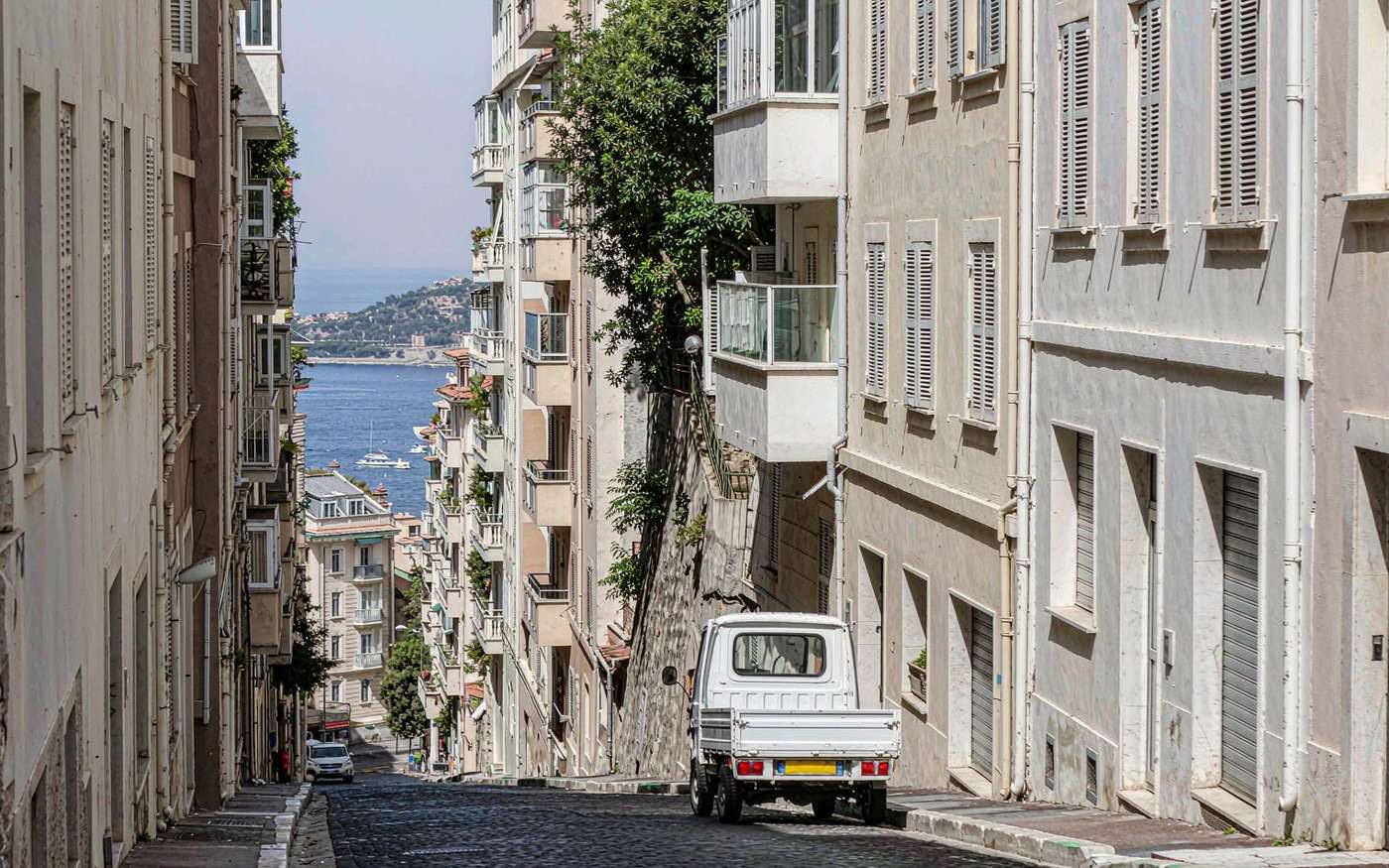
Monaco is built on a steep hillside with dense development, tight streets, and restricted vehicle access in parts of the old town. A full-size delivery truck cannot reach many addresses. Deliveries are typically made with small vehicles, and bulky items often need a shuttle from a larger vehicle parked outside the restricted area.
That has three practical consequences. Tell the shipper the true dimensions and weight, including packaging, and not the bare product figure. Expect the final leg to be arranged separately from the line haul. And if you are shipping furniture, equipment or anything large, plan for a white-glove service — delivery to the room, unpacking and removal of packaging — because that is the normal expectation rather than a luxury here.
Delivery windows are also constrained, and some streets have time restrictions. A first delivery should be arranged with a specific appointment rather than sent out on a standard route.
Documents to prepare before loading starts
Commercial invoice showing Monaco as the destination, packing list, bill of lading or air waybill, certificate of origin, insurance certificate, conformity documentation where the product requires it, power of attorney to your broker, and an EORI number.
If a French VAT number is being used for deferment, have the number and the authorisation in place before the declaration is lodged, because it cannot be applied retrospectively.
Wooden packaging must meet ISPM-15 and carry the treatment stamp. And because Monaco-bound consignments are often small and high-value, consider cargo insurance explicitly rather than relying on the carrier's limited liability, which is calculated by weight and will not come close to covering a shipment of this kind.
How clearance and delivery are sequenced
The flow is: arrival at the French port or airport, import declaration lodged, risk assessment, release or examination, duty and VAT settled, goods released into free circulation, then the short road move into Monaco and the final delivery.
Clearance at a French office for clean, correctly documented goods is normally quick; the variable is not customs but delivery access. High-value goods are more likely to attract a documentary check, and a first-time importer more likely still.
Sequence the delivery appointment only after release is confirmed, not after the vessel berths. A truck held at the border or at a delivery point because the paperwork was not yet released is a cost you can avoid simply by ordering the two events correctly.
Charges that catch people out on a first order
Import VAT is the largest single addition and the one most often left out of a first calculation. Whether it is recoverable depends entirely on who imports and on their VAT registration.
Then the delivery costs, which are higher here than almost anywhere else in Europe relative to the distance: small-vehicle shuttle, white-glove handling, appointment-based delivery, and possible remote-area surcharges from express carriers. Carriers do treat Monaco as a premium delivery point, and the surcharge appears on the invoice whether or not it was quoted.
On the compliance side: producer responsibility registration if you supply the market regularly, conformity documentation, translation of instructions into French, and anti-dumping duty on the specific lines where it applies. For high-value goods, the insurance premium is worth treating as a line item rather than an afterthought.
Why importers use Goodhope on this lane
Six things that are different about working with us on China to Monaco shipments.
Straight cases shipping into Monaco
Five shipments bought in China and delivered into Monaco, told end to end — where the order came from, how it moved, where it nearly went wrong, and how it finished. Client names are withheld at their request; the situations and the handling are what we deal with on this lane.
No customs office · first shipment · Shenzhen to Monaco
The purchase. A buyer new to importing asked when his container would clear through Monaco customs.
The move. Full container cleared by French customs at the appropriate office, then delivered across the border.
Where it nearly went wrong. There is no customs office here at all. Clearance is carried out by the French administration under a customs union, and waiting for a Monegasque entry means waiting for something that will not happen.
How it finished. We routed the clearance through the right office. His first shipment cleared without confusion.
The invoice · state Monaco · Ningbo to Monaco
The purchase. A first-time buyer's supplier issued invoices addressed to France because that was where the port was.
The move. Consolidated cargo with the commercial invoice stating Monaco as the destination.
Where it nearly went wrong. The destination on the invoice should read Monaco, together with the local postal code. A French address on the paperwork creates questions about where the goods are actually going, and answering them takes time.
How it finished. We corrected the invoice set at source. No document query since.
Which office · mode decides · Guangzhou to Monaco
The purchase. A buyer assumed every clearance went through the same place.
The move. Sea freight cleared at the port that matched the arrival, with the land office used for road movements.
Where it nearly went wrong. Which office handles it follows how the goods arrive: the ports at Nice or Marseille for sea, the airport at Nice for air, and the land office at Menton for road. Nominating the wrong one adds a movement nobody planned.
How it finished. We match the office to the mode on every Monaco booking now.
EU representative · conformity · Yiwu to Monaco
The purchase. A buyer importing regulated consumer goods assumed CE marking alone was enough.
The move. Consolidated cargo with conformity documentation and the EU-side representative arranged before shipment.
Where it nearly went wrong. Regulated products need an established representative on the European side, not just a mark on the box. Without one the goods clear and then cannot lawfully be sold, which is the more expensive outcome.
How it finished. We arranged it before shipping. His goods went on sale without a gap.
The last mile · narrow streets · Shanghai to Monaco
The purchase. A buyer booked a full-size delivery vehicle for a consignment going into the old town.
The move. Full container devanned and delivered with a vehicle sized to the streets.
Where it nearly went wrong. Delivering into narrow streets is the constraint on this last leg, not the volume of the goods. Sending a vehicle that cannot reach the address turns one delivery into several movements.
How it finished. He plans the vehicle with the delivery. Every drop since has been single-handled.
Why importers use Goodhope on this lane
Six things that are different about working with us on China to Monaco shipments.
Arranging a first delivery into Monaco
Tell us the dimensions, weight and value of the goods and we will advise which French clearance point suits them, what duty and VAT treatment to expect, and how the final delivery should be arranged.
Get a quote Talk to usRelated pages
Frequently asked questions
Does Monaco have its own customs?
No. Under a customs union with France that has been in place for decades, goods for Monaco are cleared by French customs. There is no separate Monegasque import declaration.
Where will my goods actually be cleared?
Usually at Nice, Marseille or Menton. Marseille is the main container port for a full container from China; Nice is more convenient for groupage and air freight because it is close to Monaco; Menton handles land formalities at the border.
Do I need an EORI number?
Yes. The declaration is made in the EU system, so an EORI number is required before anything can be lodged.
What VAT applies to goods delivered to Monaco?
The French rate, 20 per cent on most goods. It is charged on the customs value plus duty plus transport to the first destination and is payable at import.
Can I avoid paying VAT at the border?
Businesses with a French VAT number can usually use a reverse-charge deferment and account for the VAT on their own return instead. Without a French VAT number, expect to pay at import. Settle this before the goods move.
What must the invoice say?
It should state Monaco as the destination, not a French city. The postal code is 98000. An invoice showing a French destination for goods going to Monaco creates a VAT inconsistency that is awkward to correct later.
Can a normal truck deliver in Monaco?
Often not to the final address. Monaco is steep and dense with restricted vehicle access in parts of the old town, so deliveries are commonly made by small vehicle, and bulky items need a shuttle and often a white-glove service.
Do express carriers charge extra for Monaco?
They may apply a remote-area or premium delivery surcharge. Ask for it to be quoted rather than discovering it on the invoice.
How long does clearance take?
Normally quick for clean, correctly documented goods at a French office. The greater variable is delivery access in Monaco, so schedule the delivery appointment after release is confirmed.
Do EU product rules apply in Monaco?
In practice yes, because the goods enter through the French and EU system. CE marking, an EU authorised representative where required, French-language instructions and producer responsibility obligations all apply.