
Home / Shipping to Mongolia / How to Ship from China to Mongolia
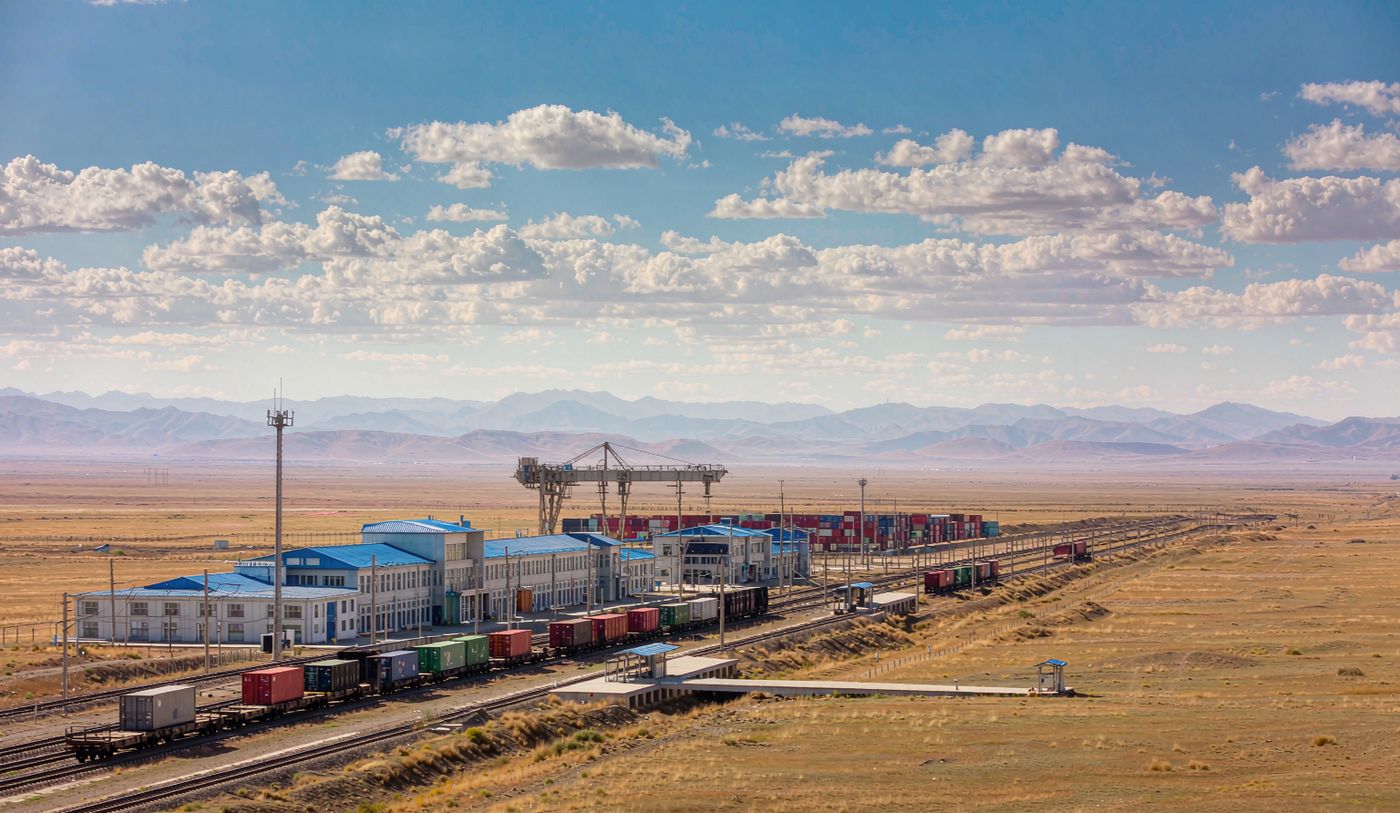
How to Ship from China to Mongolia: Zamyn-Üüd, Tianjin & the Flat 5%
Mongolia has one of the simplest tariff structures you will meet: a flat five percent customs duty on most goods. Published schedules show a range from zero to around twenty-five percent by HS code, with machinery and electronics at the low end and clothing, textiles and some consumer goods higher — but the default answer for a great deal of what moves on this lane is simply five percent. That makes the costing easy, which is fortunate, because everything else about the lane is not.
What complicates it is geography. Mongolia is landlocked between Russia and China, so every container crosses a land border, and in practice almost all of them cross the Chinese one. The main corridor runs from Tianjin — or Qingdao — by rail through Erenhot on the Chinese side and Zamyn-Üüd on the Mongolian side, and on to Ulaanbaatar. There is a northern alternative through Russia, and there is air, but the Tianjin corridor is the one your freight will use.
Then there is the winter. Mongolia's continental climate reaches around minus forty degrees Celsius, which affects road conditions, border handling and schedule reliability. It is the reason rail is preferred over road, and it is the reason to build buffer into any commitment between roughly November and March.
At a glance
Country: landlocked in East Asia between Russia and China; capital Ulaanbaatar; a WTO member since 1997. · Currency: the Mongolian tögrög. · Duty: a flat 5 percent on most goods, with published schedules from zero to around 25 percent by HS code; machinery and electronics commonly at the low end, clothing and textiles higher. · VAT: 10 percent on the CIF value plus duty; basic food items and children's goods at reduced rates. · Excise: on alcohol and tobacco. · De minimis: none for commercial imports; a personal parcel allowance exists, described variously as roughly EUR 125–150 or about ten times the monthly minimum wage. · Customs: Mongolia Customs General Administration, electronic system in use; Ulaanbaatar is the primary customs hub. · Gateways: Tianjin and Qingdao as sea ports, the Erenhot–Zamyn-Üüd crossing as the main land gate, Sukhbaatar–Naushki as the northern route via Russia, and Ulaanbaatar airport for air. · Transit: rail 7–10 days; sea plus overland 9–10 days FCL and 10–14 LCL; air 2–3 days; express 2–4. · Clearance: 2–7 days. · Winter: temperatures can reach about −40 °C.
How your cargo moves: China to Mongolia
Eight steps from your supplier's door to yours. The last four are the ones shaped by local rules.
- Pickup from your supplierWe collect the goods anywhere in China and bring them to our consolidation point.
- Export clearanceChina customs declaration filed and released before the goods move to the port.
- Loading and departureContainer loaded, sealed and handed to the carrier at the Chinese port.
- Main carriageOcean, air or rail movement booked on the route agreed for your cargo.
- Arrival at the gatewayDischarge at the port or airport of entry, recorded on the carrier's manifest.
- Import clearanceCustoms declaration filed locally, with duty and tax assessed on the declared value.
- Customs releaseGoods released into free circulation once duty and tax are settled.
- Final deliveryOnward movement to your delivery address, warehouse or nominated depot.
Duty rates, VAT rates and clearance times move, and the figure that applies to your goods is the one set for your commodity code on the day of clearance. We check the current position against your code before your goods sail and confirm it to you in writing — ask for that check when you request a quote.
The flat five, and the exceptions around it
| Category | Published duty | Note |
|---|---|---|
| Most goods | Flat 5% | The default answer on this lane |
| Electronics and machinery | 0–5% | Commonly at the low end of the schedule |
| Books | 0% | Published as zero rated |
| Clothing and textiles | 5–15% | Higher than the flat rate |
| Consumer goods and agricultural products | 5–25% | The top of the published range |
| Alcohol and tobacco | Duty plus excise | Licence required as well |
Duty is assessed on the CIF value. Note that the CIF value on this lane is not simply the factory price plus ocean freight — it includes the overland leg to the Mongolian border, because that is part of getting the goods to the point of import. Under-costing the CIF value by omitting the inland leg understates both the duty and the VAT that follows.
VAT at ten, charged after the duty
VAT is ten percent, charged on the CIF value plus duty. Basic food items and children's goods are published at reduced rates, and excise applies on top for alcohol and tobacco.
A worked example at a CIF value of US$20,000 with duty at the flat five percent: duty is US$1,000, the VAT base is US$21,000, and VAT is US$2,100 — a total of US$3,100, or 15.5 percent of CIF. That is the number to budget against, not the five percent.
Tianjin is the sea gateway, Erenhot the land one
Tianjin and Qingdao
These are Mongolia's practical sea ports. Your container is discharged at Tianjin, then moves overland by rail through Erenhot. Published figures put the sea leg plus overland at around nine to ten days for a full container. This is the corridor to quote against.
Erenhot and Zamyn-Üüd
The main land crossing, handling the majority of goods from China. It is also the bottleneck: published commentary describes it as frequently congested, and a documentation discrepancy here is a known cause of expensive border holds.
The northern alternative runs from the Russian far east ports of Vladivostok and Nakhodka through the Sukhbaatar–Naushki crossing. It matters mainly if your supplier is in north-east China, or if the southern crossing is congested. Air goes to Ulaanbaatar in roughly two to three days and is the answer for urgent or high-value cargo.
Rail is the default, and why
| Mode | Published transit | Best for |
|---|---|---|
| Rail | 7–10 days | The main mode — reliable, cost-effective and direct |
| Sea to Tianjin plus overland, FCL | 9–10 days | Larger volumes where ocean rates are favourable |
| Sea to Tianjin plus overland, LCL | 10–14 days | Smaller mixed loads, with consolidation time added |
| Air | 2–3 days | Urgent and high-value shipments |
| Express | 2–4 days | Time-sensitive small packages |
Rail wins on three counts. It is faster door to door than sea plus overland once consolidation is counted. It is more predictable, because it runs on a schedule rather than on road conditions. And it is less exposed in winter. It is not cheaper than sea in every month, which is why the honest answer is to quote both and compare for your specific month.
Winter, and the season that changes everything
Between roughly November and March, plan differently:
- Build buffer into commitments. A continental winter at minus forty slows handling at the border and makes road movements unreliable.
- Prefer rail over road. This is the season where the choice matters most.
- Pack for the temperature. Adhesives, liquids, batteries and some plastics behave differently at that extreme, and a container standing at the border in January is a container at January temperature.
- Do not book to the last possible day. Congestion and weather compound rather than cancel out.
Ulaanbaatar clearance and the border file
Ulaanbaatar is the primary customs hub, and published figures put clearance at two to seven days. But the practical difficulty is usually at the crossing rather than in the capital, and it usually comes down to one thing: whether the documents agree with each other.
The rule at Zamyn-Üüd: rail waybills and commercial invoices must match on HS codes precisely. Published guidance is explicit that discrepancies at this crossing cause costly border delays, and that under-declaring values is heavily penalised. Get the code right once, in writing, before the train moves — not at the border.
Licences and certificates for controlled goods
| Category | What is needed |
|---|---|
| Alcohol and tobacco | Import licence, plus excise |
| Pharmaceuticals | Import licence |
| Weapons and precious metals | Import licence |
| Animal products | Veterinary certificate |
| Plants, food and agricultural goods | Sanitary and phytosanitary certificates |
| Most ordinary consumer goods | Standard documentation only |
Certificates of origin are issued through the Mongolian National Chamber of Commerce and Industry. Mongolia has been a WTO member since 1997 and holds GSP beneficiary status with several markets, which matters for what it exports rather than what you send in.
The personal parcel allowance, if you ship samples
For commercial imports there is no duty-free threshold — duty is assessed from the first dollar. For personal parcels there is an allowance, and the published descriptions of it vary: some sources express it as a value below roughly 125 to 150 euros, others as around ten times the monthly minimum wage, with limits on the quantity of identical items.
Because the figures conflict and have moved, confirm the current allowance for your consignment rather than relying on a general number. If you are sending samples repeatedly to the same consignee, this is worth five minutes with your broker — it is the difference between a parcel that walks through and one that generates paperwork every time.
The dossier for the crossing
| Document | Note |
|---|---|
| Commercial invoice | Description, HS code, value, currency and terms of sale |
| Packing list | Contents, weights and dimensions, agreeing with the invoice |
| Rail consignment note or bill of lading | Must match the invoice on HS codes |
| Customs declaration | Filed through the electronic customs system |
| Certificate of origin | Where reduced or preferential treatment is claimed |
| Import licence | Alcohol, tobacco, pharmaceuticals, weapons, precious metals |
| Veterinary or phytosanitary certificate | Animal, plant and food products |
| ISPM 15 evidence | Stamp on every wooden pallet or crate |
What an Ulaanbaatar broker is actually for
- The crossing, not the capital. Knowing how Erenhot and Zamyn-Üüd are behaving this week and routing around congestion.
- Document consistency. Making sure the waybill and the invoice say the same HS code, which is the specific failure mode on this corridor.
- Valuation. Declaring the real CIF including the inland leg, so the assessment is not reopened.
- Licences. Knowing which controlled category your product falls in before it reaches the border.
- Rail slots. Securing space on the Trans-Mongolian corridor, which is capacity-constrained at certain times of year.
Why importers use Goodhope on this lane
Six things that are different about working with us on China to Mongolia shipments.
Quote the through move, not two separate halves
Tell us what you are shipping, the HS codes if you have them, the packed dimensions and gross weight, the pickup city in China and the delivery address in Mongolia. We will quote the through move — sea or rail leg, the crossing and the inland leg to Ulaanbaatar — as one number rather than two, confirm the duty band and the ten percent VAT before anything is filed, tell you whether your product needs a licence, and give you a realistic schedule for the season you are shipping in.
Get a quote Talk to usRelated pages
Frequently asked questions
What duty and tax will I pay?
A flat 5 percent on most goods, with published schedules from zero to around 25 percent by HS code. Then VAT at 10 percent on CIF plus duty. Basic food and children's goods at reduced rates; excise on alcohol and tobacco.
How does cargo get in?
Through China in almost every case — Tianjin or Qingdao by sea, then rail through Erenhot and Zamyn-Üüd to Ulaanbaatar. A northern route via Russia exists through Sukhbaatar–Naushki. Air goes to Ulaanbaatar.
Why is rail the default?
It is the best balance of cost and time on a corridor with no sea leg of its own — published at 7–10 days — and it is more predictable and less winter-exposed than road.
What does winter do?
Temperatures can reach about −40 °C, affecting road conditions, border handling and schedules. Build in buffer from roughly November to March, prefer rail, and pack for the extreme.
How long does clearance take?
2–7 days, with Ulaanbaatar as the primary hub. The practical difficulty is usually congestion at Zamyn-Üüd plus documentation discrepancies.
Is there a duty-free threshold?
None for commercial imports. A personal parcel allowance exists, described variously as about EUR 125–150 or around ten times the monthly minimum wage — confirm for your consignment.
Which goods need a licence?
Alcohol, tobacco, pharmaceuticals, weapons and precious metals. Veterinary certificates for animal products; sanitary and phytosanitary certificates for plants and food. Most consumer goods need standard documents only.
Do I need a broker?
For a first shipment, effectively yes — the difficulty is at the border rather than in Ulaanbaatar, and rail slots and document consistency both need local handling.
How long does shipping take?
Rail 7–10 days; sea to Tianjin plus overland 9–10 days FCL and 10–14 LCL; air 2–3 days; express 2–4. Add 2–7 days for clearance, more in winter.
What documents are required?
Commercial invoice with HS code, packing list, rail consignment note or bill of lading matching the invoice, the electronic declaration, certificate of origin, licences for controlled goods, and veterinary or phytosanitary certificates.