
Home / Shipping to Morocco / How to Ship from China to Morocco
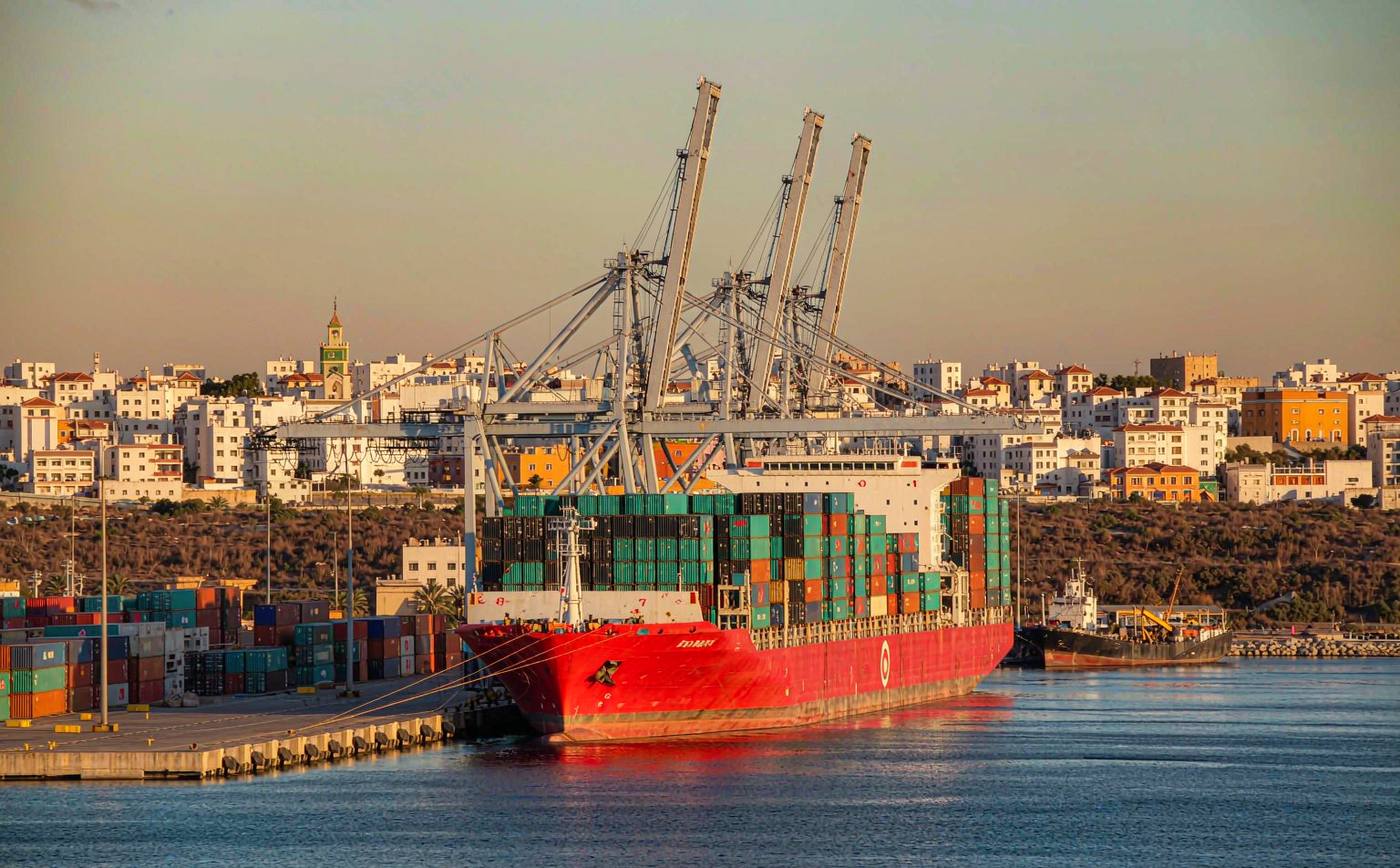
How to Ship from China to Morocco: Casablanca, PortNet & VAT
Before the goods move, you sign a commitment and a bank holds it. Morocco requires commercial importers to sign an Engagement d'Importation and domicile it at a Moroccan bank. It declares what you are buying, from whom, at what value, and the domiciliation is what allows foreign currency to be released to pay for it. Morocco is unusual among the countries in this series in having a genuinely liberal foreign exchange position internationally; the discipline sits in this document rather than in a shortage of currency.
The second thing is that Morocco has free trade agreements with the European Union and with the United States, and not with China. Chinese-origin goods are assessed at the general rates, which run from about 2.5 percent on capital equipment to around 40 percent on some finished consumer goods. Then VAT at twenty percent goes on top, charged on the CIF value plus the duty plus the parafiscal tax — the highest headline VAT rate in this series, and the reason the effective tax burden on a finished consumer good lands near half the CIF value.
The third thing is that your container will probably not arrive where you expect. Most China services call at Tanger Med, the deep-water hub at the western entrance to the Mediterranean, and goods bound for Casablanca often reach it by a feeder leg, by road or by rail. Asking which port the vessel actually calls — and how the container gets from there to your warehouse — is the first question worth asking a forwarder on this lane.
If you read one section: sign and domicile the Engagement d'Importation before the goods ship; check whether your product needs a certificate of conformity, because that inspection happens in China; get the commercial invoice in French; and price the duty and the twenty percent VAT on the CIF value, not on your invoice.
How your cargo moves: China to Morocco
Eight steps from your supplier's door to yours. The last four are the ones shaped by local rules.
- Pickup from your supplierWe collect the goods anywhere in China and bring them to our consolidation point.
- Export clearanceChina customs declaration filed and released before the goods move to the port.
- Loading and departureContainer loaded, sealed and handed to the carrier at the Chinese port.
- Main carriageOcean, air or rail movement booked on the route agreed for your cargo.
- Arrival at the gatewayDischarge at the port or airport of entry, recorded on the carrier's manifest.
- Import clearanceCustoms declaration filed locally, with duty and tax assessed on the declared value.
- Customs releaseGoods released into free circulation once duty and tax are settled.
- Final deliveryOnward movement to your delivery address, warehouse or nominated depot.
Duty rates, VAT rates and clearance times move, and the figure that applies to your goods is the one set for your commodity code on the day of clearance. We check the current position against your code before your goods sail and confirm it to you in writing — ask for that check when you request a quote.
Register the company, and get the identifier that goes with it
Moroccan importing is done by a Moroccan-registered entity, and the consignee on the bill of lading has to be one. A foreign business with no local entity cannot be the importer of record, which settles the structure question before anything else.
| What you need | Who issues it | What to watch |
|---|---|---|
| Registered company | Commercial register | The legal entity that imports. Sole traders and companies both appear, but the entity has to exist and be registered. |
| Tax identification number | Moroccan tax administration | Appears on the commercial invoice and on the declaration. It is also what the consignee field on the bill of lading is checked against. |
| Common company identifier | Moroccan administration | The single identifier used across the tax, social security and commercial registers. Expect to be asked for it repeatedly. |
| Professional tax registration | Local tax authority | The business licence element of the local tax, easy to overlook and easy to be asked for. |
| PortNet access | The national single window for foreign trade | Your broker files here. You need to be registered, and you need the data the broker will ask you for. |
| A licensed customs broker | Licensed with the customs administration | The declaration is filed electronically, and the broker holds the certified electronic signature. For a first import this is how it happens. |
The practical route for a foreign business without a Moroccan entity is to sell to a Moroccan company that holds its own registrations, or to appoint a local importer of record. Settle which it is before the pro forma invoice, because the importer named on the declaration is the party the administration deals with, and the consignee on the bill of lading has to match.
The Engagement d'Importation, and the bank that domiciles it
If you have read the Nigeria guide, this will feel familiar: the gate is a bank document, not a shipping document. The mechanism is different in emphasis, though, and it is worth understanding the difference.
What it is
A commitment signed by the importer declaring the goods, the value, the supplier and the origin, then lodged with — domiciled at — a Moroccan bank. It is mandatory for commercial business-to-business imports and it is the document the administration and the bank both work from.
What it controls
The domiciliation is what permits foreign currency to be released to pay for the goods. It ties the shipment to a bank file, which means the bank sees the transaction before the goods move, and a discrepancy between the commitment and the eventual documents is a problem with the bank as well as with customs.
The sequence it imposes is the practical point. The commitment is signed against a pro forma invoice, before the goods are built or shipped. The final commercial invoice and the declaration then have to reconcile to it, and a material difference between the committed value and the declared value is a question you will have to answer. Importers who treat it as a formality and then change the order discover that the file is not as flexible as the supplier is.
Change the order, change the commitment. If the specification or the value moves after the Engagement d'Importation has been domiciled, tell the bank and the broker before the goods ship, not after they arrive. A mismatch here is not the kind of discrepancy that gets waved through.
VoC: the conformity check that happens in China, not at Casablanca
Morocco's Verification of Conformity programme has been enforced since early 2020 for regulated categories. Like Kenya's PVoC, the work happens at the Chinese end, and the consequences of skipping it are worse than a fine.
| Step | What happens | Where |
|---|---|---|
| Check the scope | Confirm whether the HS code falls in the regulated list. Electronics and electrical goods, toys, building materials and certain automotive parts are commonly cited. | Before you order |
| Apply to an appointed body | An inspection company appointed for the programme, such as SGS, Bureau Veritas or TUV Rheinland, takes the application with the invoice, packing list and any test reports. | In China |
| Inspection and testing | Physical inspection of the consignment, and laboratory testing where the Moroccan standard requires it. | In China, before loading |
| Certificate issued | The certificate of conformity is issued for the consignment and travels with the documents. | Before the vessel sails |
What happens if you skip it. A consignment that arrives without a required certificate cannot be cleared. The reported options are re-export at your expense, destruction, or a retroactive certification done at the port — which is slow, uncertain, and runs while demurrage accrues. None of the three is cheap, and all of them are avoidable by checking the HS code before you book.
Budget time as well as money. Certification costs vary widely by product, and the timeline is commonly quoted in weeks rather than days. Build it into the production schedule rather than into the shipping schedule, because the inspection has to happen while the goods are available and before they are sealed.
Tanger Med, and why your container lands there first
Morocco's port geography is the thing most first-time importers get wrong, because the biggest port and the biggest market are not in the same place.
| Port | What it is | Notes |
|---|---|---|
| Tanger Med | Deep-water hub at the western entrance to the Mediterranean | One of the busiest ports in Africa and the Mediterranean, and the main call for deep-sea services from Asia. A large part of its traffic is transhipment. Most containers from China land here first. |
| Casablanca | The largest commercial port and the biggest consumer market | Where the market is. Reached directly by some services and by a feeder leg or overland from Tanger Med by others. Strong on conventional and ro-ro cargo as well as containers. |
| Jorf Lasfar | Deep-water industrial port on the Atlantic | Serves the industrial and mining hinterland, and handles bulk as well as containers. |
| Agadir, Safi, Kenitra, Mohammedia | Regional ports | Serve their own hinterlands. Used when the delivery point is genuinely close, and otherwise bypassed. |
| Nador | Mediterranean coast, in the north-east | Serves the eastern Rif and the north-east, with a newer deep-water facility alongside the existing port. |
| Laayoune and Dakhla | Southern ports | Regional, limited service, sensible only for deliveries in the south. |
The question to put to the forwarder is not "which port is closest to me" but "which port does the vessel call, and how does the container get from there to my door." If the answer involves a feeder leg or a road haul from Tanger Med, that is a cost line and a schedule item, and it should be in the quote rather than discovered later.
How long into Morocco by vessel and aircraft
These are port to port for full containers and airport to airport for air cargo, and exclude clearance and inland delivery.
| Origin | Destination | Mode | Transit |
|---|---|---|---|
| Shenzhen / Guangzhou | Casablanca or Tanger Med | FCL sea | 26–32 days |
| Shanghai / Ningbo | Casablanca or Tanger Med | FCL sea | 30–38 days |
| Qingdao / Tianjin | Casablanca or Tanger Med | FCL sea | 35–42 days |
| Any major port | Morocco | LCL sea | Add 7–10 days for consolidation and deconsolidation |
| China | Casablanca (CMN) | Air freight | 3–7 days |
| China | Morocco | Express courier | 3–5 days door to door |
Add clearance and the inland leg. Door to door from a Chinese factory to a warehouse in Casablanca, a realistic planning figure is five to seven weeks by sea and a week by air.
Duty, the parafiscal tax and VAT
Three charges stack, and the VAT is charged on a base that already includes the other two.
| Element | How it is worked out | Illustrative figure (USD) |
|---|---|---|
| Invoice value of the goods | What you paid the supplier, FOB | 18,000 |
| International freight and insurance | Added to reach the CIF value | 2,200 |
| Customs value (CIF) | Invoice plus freight and insurance | 20,200 |
| Import duty at 25% | On the CIF value, at the HS code rate — 25% is typical of finished consumer goods | 5,050 |
| Parafiscal import tax at 0.25% | On the CIF value | 51 |
| VAT base | CIF plus duty plus parafiscal tax, plus excise where it applies | 25,301 |
| VAT at 20% | On the VAT base | 5,060 |
| Total duty, parafiscal tax and VAT | The cash out at clearance | 10,161 |
The effective burden is just over half the CIF value on a finished consumer good at that rate, and near enough to the same on textiles and clothing, which sit at the higher end of the tariff. VAT is recoverable by a registered Moroccan business against output VAT, so it is a cash-flow item rather than a cost for most importers. The duty is not.
VAT rates are not uniform. Twenty percent is the standard rate, and reduced rates — commonly quoted at ten and fourteen percent — apply to certain basic necessities. Excise duty applies on top for tobacco, alcohol, petroleum products and some vehicles.
Incoterms on a Morocco booking, and who signs the engagement
The Engagement d'Importation is signed by the importer and held by a Moroccan bank. No Incoterm changes that. What Incoterms change is who controls the Chinese end, where the conformity inspection lives.
| Term | What you control | What to watch |
|---|---|---|
| EXW / FOB | Everything on the China side, including the VoC inspection | Full control and full responsibility. The right choice if your forwarder has run Moroccan VoC before. |
| CIF / CFR | The engagement, the clearance and the taxes | The supplier books the carriage, but the commitment and the currency release are still yours, so the supplier cannot make the shipment happen on their own. |
| DAP / DDP | Little, by design | Sold as the easy route, and often genuinely easier. Find out whose tax number the declaration goes under — the importer of record is the party the administration holds, and a seller using a borrowed entity is a risk that lands on you. |
Put three dates in the order: when the engagement is signed and domiciled, when the conformity inspection happens, and when the French-language invoice is in hand. Those three decide the schedule.
PortNet, and the declaration filed on it
PortNet is Morocco's national single window for foreign trade, and it is where import declarations are filed. The customs administration works through it, the broker files through it with a certified electronic signature, and the assessment, the inspection instructions and the release all come back through it.
- Commercial invoice, in French or bilingual, showing HS codes, unit and total values, the buyer's tax identification number, and dates in the day-month-year format.
- Packing list with weights, dimensions and package counts.
- Bill of lading or air waybill, with a Moroccan-registered consignee holding a valid tax number.
- Certificate of origin.
- Engagement d'Importation, signed and domiciled at a Moroccan bank.
- Certificate of conformity, where the product is regulated.
- Import permit, for restricted goods only.
- The declaration, filed electronically by the broker.
Paper declaration survives only for low-value express consignments, and everything else is electronic. Risk assessment routes the declaration: a green route releases automatically, a yellow route goes to document review, a red route to a physical examination, which can include scanning, opening, or sampling for laboratory analysis. Where the goods go through a third country, the direct transport rule applies, so a transhipment has to be documented as a transhipment rather than as a change of origin.
Following a shipment from Ningbo to a warehouse in Casablanca
A worked example. A Casablanca importer buys a container of small domestic appliances from a factory in Ningbo.
Registration, and the identifier
The importer holds a registered company, a tax number and the common company identifier, and has appointed a licensed broker with PortNet access. The broker fixes the HS code, which is the number everything else follows.
The conformity check
Domestic appliances sit inside the VoC scope. The broker confirms it, the importer tells the factory, and the inspection body is appointed in China. Testing is booked against the Moroccan standard while the goods are being produced, not after.
The commitment and the bank
The factory issues a pro forma invoice. The importer signs the Engagement d'Importation and domiciles it at the Moroccan bank, which is what allows the currency to be released later. The committed value is the value the rest of the file has to match.
Production, the inspection, and the French invoice
The goods are produced. The inspection takes place while the consignment is available, and the certificate of conformity is issued. The factory issues the commercial invoice in French — with the HS code, the values, the buyer's tax number, and the date in the day-month-year format — along with the packing list and the certificate of origin.
Booking and the voyage
The forwarder books from Ningbo to Tanger Med, which is the service the carrier actually runs. The container is loaded and sails, roughly a month.
Arrival, the inland leg, and release
The container is discharged at Tanger Med and moves overland to Casablanca. The broker files the declaration on PortNet, risk assessment routes it, duty, parafiscal tax and VAT are assessed and paid, and release follows. The container is trucked to the warehouse.
The failure modes in that sequence are the second, third and fourth steps. Miss the conformity certificate and the goods cannot clear; commit one value and invoice another and the bank file will not reconcile; accept an English-only invoice and the broker will be translating while the container waits.
The tariff bands, and the agreements Morocco has that you cannot use
Morocco's tariff runs in broad bands, and knowing which band your product sits in is close to knowing your landed cost.
| Band | Typical rate | What sits in it |
|---|---|---|
| Capital goods and industrial machinery | Around 2.5% and below | The lowest band, and the reason equipment imports are treated differently from consumer goods. Temporary admission is available for some capital goods against a bank guarantee. |
| Intermediate and semi-finished goods | Around 10% | Inputs for further production. |
| Finished consumer goods | Around 17.5% to 25% | Electronics, household goods, furniture, toys. |
| Textiles, clothing and sensitive items | 25% to 40% | The top of the tariff, and the categories most exposed to additional scrutiny. |
Now the part that frustrates importers. Morocco has a free trade agreement with the European Union, one with the United States, membership of the Agadir Agreement with Egypt, Jordan and Tunisia, membership of the Greater Arab Free Trade Area, an agreement with Turkiye, and participation in the African Continental Free Trade Area. None of those covers Chinese-origin goods. A China–Morocco free trade arrangement has been discussed rather than concluded, so plan on the general tariff.
What that means in practice. If you are comparing sourcing between China and, say, Türkiye or an EU supplier for the Moroccan market, the duty difference can be large enough to matter more than the freight. It is worth running the comparison with the tariff in it rather than without.
IMANOR, ONSSA, ANRT and the sector regulators
Beyond the conformity programme, specific product categories answer to specific agencies, and a product can answer to more than one.
| Body | Covers | Notes |
|---|---|---|
| IMANOR | Standardisation | The national standards body. Moroccan standards, known as Normes Marocaines, are what the conformity programme tests against. |
| ONSSA | Food, plants, animals, pesticides | The food safety and agricultural regulator. Registration and phytosanitary certificates for plant and animal products, and approvals for pesticides and some chemicals. |
| Ministry of Health | Cosmetics, medical devices, pharmaceuticals | Registration before import for cosmetics and medical devices, and marketing authorisation for medicines. |
| ANRT | Telecommunications and radio equipment | Approval for anything that transmits radio, including Wi-Fi, Bluetooth and cellular. A router can need this and the conformity certificate too. |
| Customs administration | Restricted goods | An import permit is required for restricted categories, and it has to exist before the goods ship. |
Morocco's mains supply is 220 V at 50 Hz and plugs follow the European pattern, so a product built for a 110 V market is a non-starter regardless of paperwork. As elsewhere in this series, identify the sector regulators at the point of choosing the product, because these approvals cannot be obtained once the goods are on the water.
Foreign exchange, and what the commitment controls
Morocco's position is different from Egypt's and worth stating plainly. Egypt has repeatedly used import payment rules to manage foreign currency demand. Morocco's constraint is documentary rather than a shortage: the Engagement d'Importation and its domiciliation are how the foreign currency release is tied to a real, declared transaction.
What that means for an importer is that the bank sees the transaction early and the file has to stay consistent. The value on the commitment, the value on the commercial invoice and the value on the declaration all need to agree, and a material change means going back to the bank. The payment itself is not the bottleneck; the consistency is.
There is one useful facility worth knowing: capital equipment can sometimes be imported under a temporary admission regime that defers or relieves the duty, against a bank guarantee for a percentage above the duty at stake. For an importer bringing in production machinery, that is worth raising with the broker.
The invoice, in French, and the value behind it
Two things about the commercial invoice matter here, and both are cheap to get right.
Language and format
French, or bilingual French and English. The administration works in French and Arabic, and the declaration is prepared from the invoice. Show the HS code, the unit and total values, the buyer's Moroccan tax identification number, and dates in the day-month-year format. A Chinese supplier will produce English by default, so ask when you place the order.
The value is tested
The customs administration maintains its own internal valuation database. Where a declared value looks low it can reassess the consignment to what it considers the market value, with penalties and weeks of delay attached. Declare the true transaction value, and include what belongs in it — royalties and commissions paid outside the invoice are dutiable.
Under-declaration is the single most expensive shortcut on this lane. The reassessment is not a negotiation about a number; it is an administrative decision with a penalty attached, and it is made while the container is at the port.
Buying on a platform, and clearing under your own code
A marketplace checkout does not change any of this. The Engagement d'Importation still has to be signed and domiciled, the certificate of conformity still applies to regulated products, and the declaration still goes through PortNet — and a marketplace seller in China will not produce a French-language invoice with your tax number on it without being asked.
For a business, the workable routes are to import under your own registrations and have the supplier issue documents in your name, or to use a marketplace or consolidator that offers a Moroccan importing entity — in which case find out whose tax number the declaration goes under. Morocco has no general duty-free threshold for commercial goods, so there is no value below which business imports escape the process.
Small parcels move on the express channel and are a route for samples and documents, not for stock.
Trade goods, and household removals into Morocco
| Situation | What applies | What to expect |
|---|---|---|
| Business stock bought from a Chinese supplier | Engagement d'Importation, VoC where regulated, French invoice, PortNet declaration, duty and VAT | The complete process in this guide. This is the normal path. |
| Household removals and personal effects | A separate treatment for used household goods, assessed differently | Still a declaration, still an inventory, and still capable of sitting in storage if the paperwork is wrong. |
| Samples and documents | Express channel | Small, fast, and the reason to keep samples genuinely small. |
| Capital equipment | Standard process, with temporary admission sometimes available | Worth asking the broker about a bank guarantee arrangement where the equipment is for production. |
| Restricted goods | Import permit | Required before the goods ship. Check the category at the point of choosing the product. |
The China forwarder and the Moroccan customs broker
The split is clean: the conformity inspection is a China-side event and the declaration is a Morocco-side event, and the two have to be sequenced rather than merely coordinated.
The forwarder in China
Books the vessel, collects and consolidates the goods, handles export clearance, and schedules the VoC inspection so it happens while the consignment is available and before it is sealed. Also the party who can tell you honestly which port the vessel calls.
The broker in Morocco
Fixes the HS code, advises on the engagement, files the declaration on PortNet, handles the valuation query if there is one, arranges payment and release, and books the inland leg from Tanger Med if that is where the container lands.
The question to settle between them: what does the inspection need, and when. If the container is sealed first, the certificate cannot be issued, and everything downstream stops.
Checking a forwarder on a Morocco booking
- Which port does the vessel actually call? The honest answer is usually Tanger Med, with a leg onward.
- Have you booked a VoC inspection, and when relative to loading? It should be while the goods are available, before sealing.
- Do you ask the supplier for a French-language invoice? It should be raised at the order, not at the documents.
- Do you know the buyer needs an Engagement d'Importation domiciled at a Moroccan bank? A forwarder working this lane should raise it unprompted.
- Is the inland leg from the port of call in the quote? It should be a line, not a surprise.
- What are the free days at the terminal? Someone who knows has watched containers sit.
- Who pays the inspection and certification? It should be itemised.
Three shipments into Morocco, and the reason for each
A container of domestic appliances, Ningbo to Tanger Med
FCL, because the volume justifies it and the appliances are inside the VoC scope, so the inspection is booked during production. Tanger Med because that is the call the carrier runs; the container then moves overland to Casablanca.
Fast-moving electronics, Shenzhen to Casablanca
Air freight, three to seven days, because the stock has a selling season. The conformity certificate still applies and the inspection still has to happen before the cargo is handed over, which on air freight means before the flight cut-off rather than before the loading.
Production machinery, Shanghai to Casablanca
Sea freight in the lowest tariff band, and worth discussing temporary admission with the broker against a bank guarantee. The French-language invoice and the technical documentation matter more here than on a consumer shipment, because the classification is what sets the rate.
Ramadan, summer and the holiday calendar
Morocco's calendar has a real effect on clearance times, and it is worth checking against your arrival date.
| Period | What changes | What to do |
|---|---|---|
| Ramadan | Working hours shorten across the administration and the ports. | Do not plan a first clearance in the last ten days of Ramadan. Anything that needs a person needs a person who is working shorter days. |
| Public holidays | The 2026 list includes 1 January, 11 January, the Prophet's birthday, 1 May, 30 July, 14 August, 20 August, 6 November and 18 November, plus the Islamic holidays that move each year. | Check the list against your arrival. A release that falls on a holiday falls on the next working day, and storage does not stop. |
| Summer | Peak import season ahead of the autumn trading period, and the holiday cluster in late July and August. | Book earlier than feels necessary, and expect the August holidays to slow everything. |
| Chinese New Year | Chinese factories close and export volumes spike beforehand. | Finish production before the holiday or accept a gap of several weeks. |
What Goodhope handles on the Morocco lane
We work the China end, and on this lane the China end is where the conformity inspection happens.
- VoC inspection scheduling. We book the appointed body's inspection to coincide with production, so the certificate exists before the container is sealed.
- French-language documentation. We ask the supplier for the French or bilingual invoice at the point of order, with the HS code, values, tax number and date format the administration expects.
- Honest port advice. We tell you which port the vessel calls and what the onward leg costs, at quotation rather than at arrival.
- Factory collection and consolidation across China, with loading photographs before sealing.
- FCL and LCL from Shenzhen, Guangzhou, Ningbo, Shanghai, Qingdao and Tianjin to Tanger Med and Casablanca, plus air freight to Casablanca.
- Cargo insurance, inspection and dangerous goods handling where the shipment needs them.
We do not sign your Engagement d'Importation, domicile it at your bank, or act as importer of record — those belong to you and your broker. What we do is make sure the consignment leaves China inspected, certificated and documented in the language the declaration will be prepared from.
Why importers use Goodhope on this lane
Six things that are different about working with us on China to Morocco shipments.
Ask for a Morocco quote with the engagement step named
Send us the product, the HS code if you have it, the supplier's city, the weight and volume, and the delivery city in Morocco. We will come back with the mode, the port the vessel actually calls, the transit range, and a written note on what has to be in place before the goods leave China.
Get a Quote Contact UsFrequently asked questions
What is an Engagement d'Importation and do I need one?
It is the import commitment that a Moroccan importer signs and then domiciles at a Moroccan bank, and it is mandatory for commercial business-to-business imports. It declares the goods, the value and the supplier, and the bank's domiciliation is what allows foreign currency to be released for the transaction. It is the gate on the money rather than on the ship, and it has to be in place before the goods move. If you have imported into Nigeria, the idea is similar to the Form M, but here the emphasis is on the commitment and the currency release rather than on a declaration of intent alone.
What is VoC and which products need a certificate of conformity?
Verification of Conformity has been enforced in Morocco since early 2020 for regulated categories, which include electronics and electrical goods, toys, building materials and certain automotive parts. A certificate is issued by an appointed inspection body such as SGS, Bureau Veritas or TUV Rheinland after inspection and, where required, testing, and it has to be obtained before the goods leave China. A consignment that arrives without one cannot be cleared: the reported options are re-export, destruction, or a retroactive certification at the port that is slow, uncertain and expensive while demurrage accrues.
Which port will my container actually arrive at?
Most container services from China call at Tanger Med, which is the large deep-water hub at the western entrance to the Mediterranean and one of the busiest ports in Africa and the Mediterranean. Casablanca is the larger commercial port and the bigger consumer market, but many services reach it by a feeder leg or by road and rail from Tanger Med rather than directly. Ask your forwarder which port the vessel actually calls and how the container reaches your city, because that inland leg is a real cost and a real schedule item.
How much duty and tax will I pay importing from China into Morocco?
Import duty runs from about 2.5 percent to 40 percent depending on the HS code, with lower rates on industrial machinery and capital equipment and much higher rates on finished consumer goods, textiles and clothing. On top of the duty there is a parafiscal import tax of about 0.25 percent of the CIF value, excise duty on categories such as tobacco, alcohol and petroleum, and VAT at 20 percent charged on the CIF value plus the duty plus the parafiscal tax. Taken together, the effective tax burden on many finished goods is about half the CIF value.
Is there a free trade agreement between China and Morocco?
No. Morocco has free trade agreements with the European Union and with the United States, it is part of the Agadir Agreement and the Greater Arab Free Trade Area, and it has agreements with Turkiye and other partners. Chinese-origin goods are assessed at the general rates. A free trade agreement between China and Morocco has been discussed rather than concluded, so plan on the general tariff and check the position rather than assuming a preference exists.
Does the commercial invoice need to be in French?
French, or bilingual French and English, is the practical requirement: the customs administration works in French and Arabic and the declaration is prepared from the invoice. The invoice should show the HS code, unit and total values, the buyer's Moroccan tax identification number, and dates in the day-month-year format used in Morocco. A Chinese supplier will produce an English invoice by default, so ask for the French version when you place the order rather than when the documents are needed.
How long does shipping from China to Morocco take?
From South China to Casablanca or Tanger Med, full container loads typically run about 26 to 32 days port to port; from Shanghai and Ningbo about 30 to 38 days; and from the northern ports about 35 to 42 days. Less than container load adds consolidation and deconsolidation, commonly another seven to ten days. Air freight to Casablanca runs about three to seven days airport to airport depending on the routing. Add clearance and inland delivery on top, and confirm the current schedule at the time of booking.
What happens if customs disagrees with my declared value?
The customs administration maintains its own internal valuation database, and where a declared value looks low it can reassess the consignment to what it considers the market value, with penalties and delays attached. Declare the true transaction value, make sure the commercial invoice supports it, and include items that belong in the customs value such as royalties or commissions paid outside the invoice. Valuation disputes are slow to resolve and expensive to lose.
What documents does Moroccan customs require?
A commercial invoice in French or bilingual showing HS codes, values and the buyer's tax number, a packing list, a bill of lading or air waybill whose consignee is a Moroccan-registered entity with a valid tax number, a certificate of origin, the Engagement d'Importation domiciled at a Moroccan bank, a certificate of conformity where the product is regulated, and the declaration filed electronically through PortNet. Sector permits apply by product, and an import permit is required for restricted goods.
Do I need to register before importing into Morocco?
Yes. A commercial importer needs a registered company, a place on the commercial register, a tax identification number and the common company identifier used across the Moroccan administration. The consignee on the bill of lading has to be a Moroccan-registered entity with a valid tax number, so a foreign business with no Moroccan entity cannot be the importer of record. A licensed customs broker files the declaration through PortNet on your behalf.