
Home / Shipping to Mozambique / How to Ship from China to Mozambique
How to ship from China to Mozambique
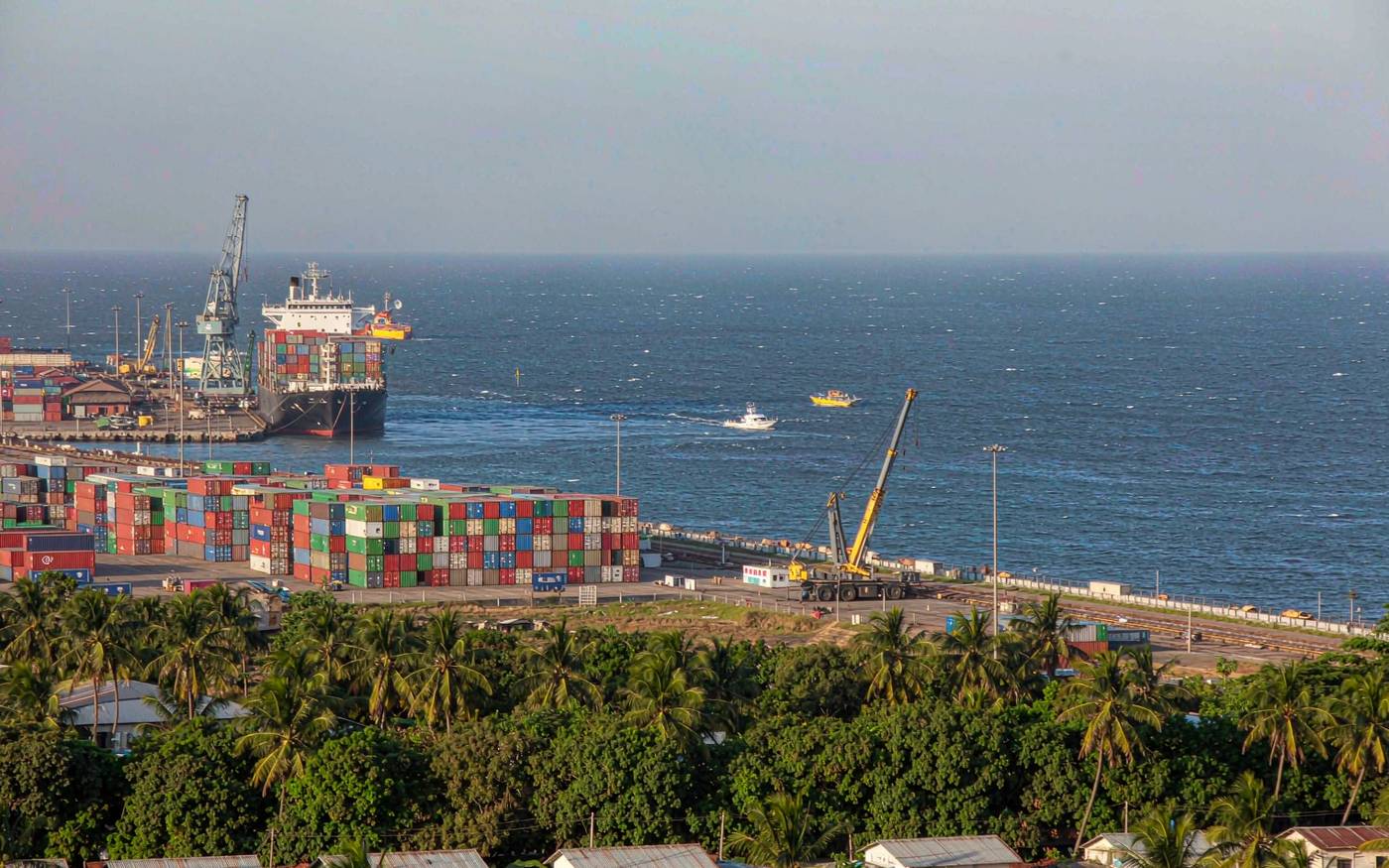
Mozambique has a long Indian Ocean coastline and three working container ports, which is unusual for southern Africa and gives importers a genuine choice. Maputo in the south, Beira in the centre and Nacala in the north each serve a different hinterland, and two of them carry cargo for landlocked neighbours as well as for Mozambique itself.
The thing that shapes everything else here is language. Mozambique is Portuguese-speaking, and the customs administration works in Portuguese. Documents drafted in English are not refused outright, but they are read by officers whose working language is Portuguese, and a description that needs translating is a description that waits.
This guide covers how to choose the port, what has to be translated and when, how the declaration is filed through the tax authority's systems, how duty and IVA are calculated, which goods are restricted or banned, and how the whole sequence runs from a Chinese supplier to a Mozambican address.
At a glance
Customs is administered by the Autoridade Tributária, the Mozambique tax authority, with declarations handled through ASYCUDA World and the JUE electronic single window. Every importer needs a NUIT tax number. Duty commonly runs 0 to 20 per cent of CIF value depending on the HS code, with capital goods and machinery at the lower end and clothing, footwear, cosmetics and toys at the top. IVA, the value added tax, is 16 per cent, and one source quotes 17 per cent, so confirm the current rate with a licensed broker. Customs service fees are charged even where the goods themselves are duty exempt.
How your cargo moves: China to Mozambique
Eight steps from your supplier's door to yours. The last four are the ones shaped by local rules.
- Pickup from your supplierWe collect the goods anywhere in China and bring them to our consolidation point.
- Export clearanceChina customs declaration filed and released before the goods move to the port.
- Loading and departureContainer loaded, sealed and handed to the carrier at the Chinese port.
- Main carriageOcean, air or rail movement booked on the route agreed for your cargo.
- Arrival at the gatewayDischarge at the port or airport of entry, recorded on the carrier's manifest.
- Import clearanceCustoms declaration filed locally, with duty and tax assessed on the declared value.
- Customs releaseGoods released into free circulation once duty and tax are settled.
- Final deliveryOnward movement to your delivery address, warehouse or nominated depot.
Duty rates, VAT rates and clearance times move, and the figure that applies to your goods is the one set for your commodity code on the day of clearance. We check the current position against your code before your goods sail and confirm it to you in writing — ask for that check when you request a quote.
Mozambiques three ports, and which one your cargo should use
Maputo, in the far south, is the port closest to South Africa's industrial heartland and serves Mozambique's own southern market as well as onward movement into Gauteng, Eswatini and parts of Zimbabwe. If your consignee is in or near Maputo or Matola, this is the port.
Beira, in the centre, is the natural gateway for Zimbabwe, Malawi and parts of Zambia via the Beira corridor, and it serves central Mozambique. Nacala, in the north, is a deep-water port serving northern Mozambique and Malawi.
Choose the port by the final delivery address, not by the ocean rate. A cheaper rate into Maputo for cargo destined for Malawi is not cheaper once the overland leg is counted. If in doubt, ask for two quotations and compare them delivered, not port to port.
Northern Mozambique has experienced insecurity in Cabo Delgado province which has affected logistics in that region. If your consignee is in the north, ask about current conditions on the road leg before committing to a schedule.
Choosing a mode: sea to Maputo, Beira or Nacala, or air to MPM
Sea freight in a full container is the standard route for anything above roughly 15 cubic metres, and it is what most Mozambican importers use for stock orders. Services from China usually route with at least one transhipment.
LCL suits smaller first orders and orders assembled from several Chinese suppliers. Add consolidation and deconsolidation days at both ends, and remember that Mozambique adds its own declaration step on top.
Air freight arrives at Maputo International Airport (MPM). It suits urgent spare parts, pharmaceuticals, electronics and samples, and it is charged on chargeable weight. Courier services handle documents and single cartons under their own clearance procedures.
| Mode | Transit commonly quoted | What it suits |
|---|---|---|
| Sea FCL to Maputo, Beira or Nacala | 30 to 45 days port to port | Volume above about 15 cbm |
| Sea LCL | Add 5 to 10 days | Two to twelve cubic metres |
| Air freight to MPM | 4 to 8 days airport to airport | Urgent or high-value cargo |
| Courier | 4 to 7 days door to door | Samples and documents |
Incoterms on a Portuguese-language clearance
EXW puts the export formalities on you in a country whose procedures you do not work in daily. For a first shipment into Mozambique it is the term to avoid.
FOB is the term most experienced buyers use. The supplier loads the goods in China, risk passes there, and you control the main carriage and the choice of forwarder. It also keeps the freight visible as a separate number, which matters when you are comparing ports.
CIF and CIP include carriage and insurance to the destination port while the risk still passes in China. That gap between who pays and who carries the risk is the single most misunderstood thing in a first import contract.
DDP means the seller handles everything including Mozambican duty and IVA. It is convenient and legitimate, but you are delegating the declaration of value, the NUIT handling and the tax payment. If it is done carelessly, the exposure attaches to your goods, not to the seller.
From a Chinese port to a Maputo warehouse, one stage at a time
Order confirmed and trade term agreed
Use an Incoterms 2020 term and write it into the contract. Confirm at the same time whether the goods need permits or conformity certificates.
Register the NUIT
The importer's tax number is required before a declaration can be made. Do this at the start, not when the vessel is two weeks out.
Pickup, consolidation and export declaration in China
Your forwarder collects or consolidates, declares the export, and provides the seal number and loading photographs.
Ocean leg and bill of lading
Check the draft bill of lading carefully: the consignee must be the party that holds the NUIT. Corrections after issue cost time and money.
Arrival and the declaration through JUE
The declaration is submitted through the tax authority's electronic single window, with supporting documents attached.
Assessment, IVA and payment
Duty by HS code, IVA on the duty-inclusive value, and customs service fees that apply even to exempt goods.
Release and inland delivery
Delivery order, port charges, then the truck to your warehouse. If the cargo is bound for Malawi or Zimbabwe, the corridor leg starts here.
Portuguese paperwork: what must be translated, and when
The commercial invoice and the packing list are the two documents that get read most closely, and product descriptions in Portuguese will move faster than descriptions in English. Ask your supplier for a bilingual invoice, or have your forwarder prepare a Portuguese version alongside the original.
Certificates, permits and technical documentation for regulated goods, including food, pharmaceuticals and chemicals, are expected in Portuguese or with a Portuguese translation. Arrange translations in China before loading rather than at the port, where they cost more and take longer.
Keep the numbers identical across every version. A translation that changes a quantity or a value is worse than no translation, because it creates a discrepancy inside your own file.
Tariff rates, IVA, and the fees even on exempt goods
| Charge | Indicative rate | Base |
|---|---|---|
| Customs duty | Commonly 0 to 20 per cent by HS code | CIF value |
| IVA (VAT) | 16 per cent | CIF plus duty plus other charges |
| Excise | Varies by product | Alcohol, tobacco, vehicles, fuel and others |
| Customs service fees | Charged even on exempt goods | Per declaration |
The spread across duty bands is wide, and it follows the product. Capital goods and industrial machinery sit at the bottom of the range, often 0 to 2.5 per cent for capital equipment and 0 to 7.5 per cent for machinery, while clothing, footwear, cosmetics and toys sit at the top, around 20 per cent, and electronics somewhere in between. Books are commonly zero rated.
One detail catches people out: customs service fees are charged even where the goods themselves are duty exempt. A shipment that attracts no duty still generates a customs bill.
Mozambique's membership of SADC and its economic partnership arrangement with the European Union give preferences to goods originating in those groups, not to goods from China. Do not budget for a preference your cargo cannot claim.
The NUIT tax number and the JUE declaration
The NUIT is the single taxpayer identification number, and it is required for customs purposes before an import declaration can be made. A company registers with the tax authority; a foreign buyer with no local entity works through a licensed broker or a local representative.
The declaration itself is filed through the JUE, the electronic single window for foreign trade. Recent guidance indicates that importers using it are required to sign a commitment term as part of the process, which is an administrative step your broker handles but which you should know exists.
Registering early is the practical advice. The tax number is the key that opens the declaration, and a container waiting for a registration number is a container accruing storage.
Product rules: plastics, asbestos, food and medicines
Mozambique bans certain single-use plastic bags and prohibits asbestos and asbestos-containing products. Packaging that contains banned plastic, and any building material with asbestos content, will be stopped rather than taxed.
Food, beverages, pharmaceuticals and medical devices need clearance from the relevant health authority in addition to the customs entry. Apply for it before the goods ship; a permit obtained after arrival arrives after the storage charges have started.
Chemicals, plant and animal products and used goods each carry their own requirements, and used clothing and used tyres are among the categories treated as restricted. Wood packaging must carry the ISPM-15 treatment mark.
The paperwork a Mozambican clearance cannot do without
| Document | What it has to show |
|---|---|
| Commercial invoice | Descriptions, preferably in Portuguese, Incoterm, unit and total values, supplier and consignee |
| Packing list | Carton count, weights, dimensions, marks and numbers |
| Bill of lading or air waybill | Consignee matching the NUIT holder |
| NUIT | Importer tax identification number |
| Certificate of origin | Issued by CCPIT or China customs |
| Insurance certificate | Where the sale is on CIF or CIP terms |
| Permits and licences | Food, pharmaceuticals, chemicals, plants and other controlled lines |
Consistency is the cheapest insurance you have. The same value, the same description and the same weights on the invoice, the packing list and the bill of lading will keep a file moving; discrepancies invite a physical examination.
Importing as an individual or as a Mozambican company with a NUIT
A private individual can import personal effects and non-commercial goods. Commercial importing is done by a registered entity holding a NUIT, and the registered route is also the one that lets you account for and recover the IVA.
The difference is material. With IVA at 16 per cent on the duty-inclusive value, the recoverable amount on a full container is significant, and an individual simply pays it.
If you have no Mozambican entity, appoint a licensed broker before the goods ship, agree the scope in writing, and agree who pays storage if the file stalls. Verbal arrangements on storage are the most common source of disputes on this lane.
Who does what: your Chinese forwarder and your Mozambican broker
In China your forwarder collects or consolidates, books the space, handles the export declaration, obtains the bill of lading and arranges any translations that have to be done before loading. They are also the party who can chase a carrier when a schedule slips.
At destination a licensed broker files through the JUE, responds to queries, arranges examination if one is ordered, and pays the duty, IVA and fees. You need both, and neither substitutes for the other.
Judge them on specifics: the legal entity name, how long it has traded, a written quotation split into origin charges, freight and the destination charges you will owe separately, and a clear answer on who pays storage if clearance is delayed. A quote with no destination charge line is incomplete, not cheap.
Warning signs are the same everywhere: pressure to declare a lower value, no written breakdown, an address that is only a phone number, and vagueness about who carries the risk during the voyage.
Three illustrative consignments into Mozambique
These three examples are illustrative, not client records. They show how the routing follows from the cargo.
A 40ft high-cube of construction materials from Shanghai to Maputo. Full container, factory stuffed, with Portuguese descriptions prepared on the invoice and packing list before loading. The lesson is that translation belongs in the origin schedule.
Nine cubic metres of mixed consumer goods from four suppliers in Yiwu. Consolidated in Ningbo and shipped as LCL to Beira, with the onward leg to Zimbabwe arranged at the same time. The lesson is that choosing the port by the final address saves more than choosing it by the ocean rate.
One hundred and fifty kilograms of pharmaceutical products. Air freight to MPM with health authority clearance applied for in parallel. The lesson is that for controlled goods the permit, not the aircraft, is the critical path.
Why importers use Goodhope on this lane
Six things that are different about working with us on China to Mozambique shipments.
Get your Mozambique shipment moving
Send us the commodity, the volume and the delivery address, and we will come back with a port-by-port routing that puts the NUIT and the translation work on the calendar before you book.
Get a quote Talk to usRelated pages
Frequently asked questions
Which port should I ship to in Mozambique?
Choose by the final delivery address. Maputo serves the south and onward movement towards South Africa and Eswatini, Beira serves the centre and the corridor into Zimbabwe and Malawi, and Nacala serves the north and Malawi. Compare quotations delivered, not port to port.
Do my documents have to be in Portuguese?
Portuguese is the working language of the customs administration, and Portuguese product descriptions move faster than English ones. A bilingual invoice prepared in China before loading is the practical answer.
What is IVA and how much is it?
IVA is Mozambique's value added tax, applied at 16 per cent on the duty-inclusive value. Some sources quote 17 per cent, so confirm the current rate with a licensed broker before you finalise a selling price.
What is a NUIT and do I need one?
The NUIT is the taxpayer identification number issued by the Mozambique tax authority, and it is required before an import declaration can be made. Register early, because the declaration cannot proceed without it.
Are customs fees charged when goods are duty exempt?
Yes. Customs service fees are charged even where the goods themselves are duty exempt. A zero-duty shipment still generates a customs bill.
How much duty will I pay?
Duty commonly runs 0 to 20 per cent of CIF value depending on the HS code: capital goods and machinery at the lower end, clothing, footwear, cosmetics and toys around 20 per cent, electronics in between, and books commonly zero rated.
Do SADC or EU preferences help goods from China?
No. Preferences under SADC and the EU economic partnership arrangement apply to goods originating in those groups. Chinese-origin cargo pays the standard rates.
What goods are banned or restricted?
Certain single-use plastic bags and asbestos are prohibited. Food, pharmaceuticals, chemicals, plant and animal products and used goods each carry permit requirements, and used clothing and used tyres are treated as restricted.
How long does sea freight take from China to Maputo?
Commonly quoted at 30 to 45 days port to port for a full container, with an additional 5 to 10 days for LCL. Add the clearance window on top.
Do I need both a forwarder in China and a broker in Mozambique?
Yes. The forwarder handles origin consolidation, export declaration and the bill of lading. The licensed broker files the declaration through the JUE, handles queries and pays the duty, IVA and fees.