
Home / Shipping to Namibia / How to Ship from China to Namibia
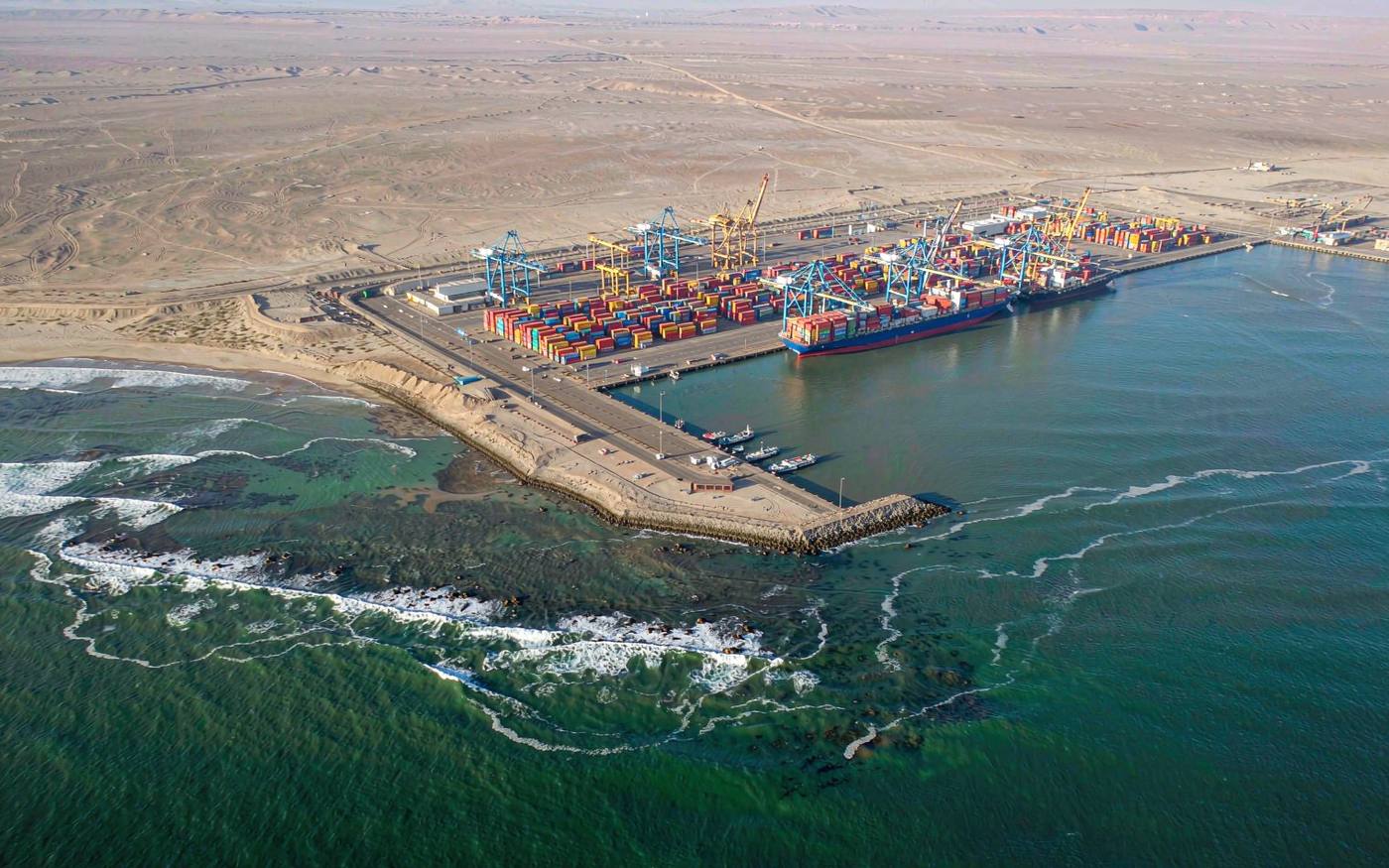
How to Ship from China to Namibia
Namibia is one of the more straightforward African destinations to ship into, and that surprises a lot of first-time buyers. The country has a single dominant deep-water gateway, a revenue authority that has moved most of its work onto an electronic declaration system, and a tariff that is not set locally at all but inherited from a customs union. Once you understand those three facts, the rest of the process is largely about paperwork discipline.
This guide is written for buyers who are importing from China for the first time. It walks through the choices you make before booking, the documents that decide whether your container clears in two days or two weeks, how duty and VAT are actually calculated, and where the inland leg to Windhoek fits into your budget. We do not publish freight rates here, because they move constantly; what follows is the structure you need in order to ask your forwarder the right questions and to read a quotation critically.
At a glance
Main gateway: Walvis Bay (Luderitz is a secondary port). Inland capital: Windhoek, roughly 380 km by road. Customs: Namibia Revenue Agency (NamRA) on ASYCUDA World. Duty: SACU common external tariff. VAT: 15 per cent. Typical sea transit from South China: 30 to 40 days depending on routing.
How your cargo moves: China to Namibia
Eight steps from your supplier's door to yours. The last four are the ones shaped by local rules.
- Pickup from your supplierWe collect the goods anywhere in China and bring them to our consolidation point.
- Export clearanceChina customs declaration filed and released before the goods move to the port.
- Loading and departureContainer loaded, sealed and handed to the carrier at the Chinese port.
- Main carriageOcean, air or rail movement booked on the route agreed for your cargo.
- Arrival at the gatewayDischarge at the port or airport of entry, recorded on the carrier's manifest.
- Import clearanceCustoms declaration filed locally, with duty and tax assessed on the declared value.
- Customs releaseGoods released into free circulation once duty and tax are settled.
- Final deliveryOnward movement to your delivery address, warehouse or nominated depot.
Duty rates, VAT rates and clearance times move, and the figure that applies to your goods is the one set for your commodity code on the day of clearance. We check the current position against your code before your goods sail and confirm it to you in writing — ask for that check when you request a quote.
Start with the right Namibian gateway: Walvis Bay, Luderitz or the Trans-Kalahari corridor
Almost everything that arrives in Namibia by sea comes through Walvis Bay. It is the country's only real container port, with a dedicated container terminal, gantry cranes and a depth that handles the vessels used on the Far East to southern Africa services. If your supplier is in Shenzhen, Ningbo or Qingdao, Walvis Bay is where your box will be discharged.
Luderitz, on the southern coast, exists mainly for fishing and bulk cargo. It can handle project and break-bulk shipments, but it is not a routine choice for a first-time importer moving general merchandise, because feeder connections are thin and the handling options are narrower. Treat it as a specialist option and only consider it if your cargo genuinely cannot be routed through Walvis Bay.
The second gateway decision is a commercial one rather than a port one. Walvis Bay is also the Atlantic outlet for several landlocked neighbours, and it is promoted as such through the corridor arrangements that run east into Botswana, Zambia, Zimbabwe and the southern DRC. If your consignee sits in one of those countries rather than in Namibia proper, you are not really shipping to Namibia at all - you are shipping through it. That changes the customs procedure, because the goods move in transit rather than entering Namibian home use, and it changes the way duty is settled. Say so clearly at booking time.
The practical test is simple: ask your consignee which customs office they will clear at. A Namibian importer with a NamRA registration clears at Walvis Bay or Windhoek. A Botswana or Zambian buyer clearing through Walvis Bay is running a transit procedure, and the bond, the tracking and the inland carrier arrangements are all different.
FCL or LCL into Walvis Bay and how the choice changes your cost
A full container load makes sense once your cargo is large enough that the fixed destination charges stop dominating the bill. Below roughly 15 to 18 cubic metres, consolidation usually wins, because you stop paying for empty air and you share the container's handling and delivery costs with other shippers. Above that, the arithmetic usually flips.
What makes Namibia slightly unusual is that the consolidation decision interacts with the inland leg. If your consignee is in Windhoek, an LCL shipment is deconsolidated at the port and then trucked, while an FCL shipment can be moved whole. On low-volume cargo this is a real advantage: the forwarder handles the deconsolidation, you pay only for your share of the space, and you avoid committing to a full container before you know whether the product sells.
The caution with LCL on this route is schedule. Walvis Bay is served by relatively fewer direct calls than Durban, and consolidated boxes often travel on a feeder leg. A consolidation that misses a connection can lose a week. If your cargo is time sensitive, ask your forwarder whether the consolidation is routed on a direct service or via a hub port, and price the difference against a full container.
Ask, in writing, for the destination charges as a separate line: terminal handling, deconsolidation, documentation and delivery order. These are not included in the ocean freight figure, and on West and southern African routes they are the single most common source of an unpleasant surprise on arrival.
When air freight to Hosea Kutako makes sense for Namibian cargo
Air freight into Namibia lands at Hosea Kutako International Airport outside Windhoek, and it is worth considering well before your goods are ready. The rule of thumb most buyers use is value density rather than weight: if the goods are expensive relative to their size, or if a stockout costs more than the freight premium, air earns its place.
Spare parts, medical supplies, samples for a tender, and electronics with short product cycles are the classic cases. So is the situation where a shipment has already failed once - a container held on a documentation error often costs more in lost sales than the air freight would have cost in the first place.
There is no direct freighter service from China to Windhoek on most schedules. Cargo normally moves on a Chinese or Gulf carrier to a hub - Johannesburg, Dubai or Doha are common - and then on a regional connection. Transhipment adds a day or two and adds a handling point, so build that into your planning rather than assuming the flight time is the transit time.
Remember that air freight does not remove the customs work. The document set is essentially the same, the clearance still runs through NamRA, and duty and VAT are still payable. What changes is the speed of arrival, not the compliance burden.
Transit times from Chinese ports to Walvis Bay, and what adds days
Sea transit from South China to Walvis Bay typically falls in the range of 30 to 40 days on a through service, with longer ranges when the routing includes a transhipment call. Treat any number your forwarder gives you as an estimate that depends on the specific service, not as a guarantee.
Three things are most likely to add days. The first is transhipment: if your container is relayed through a hub port in the Middle East or southern Africa, it waits for a connecting vessel and can miss that connection. The second is documentation: a container that arrives with an incomplete set will sit, and the bill of lading, commercial invoice and packing list are the usual culprits. The third is seasonal congestion at the discharge port, which is real on southern African services at peak times.
You should also plan the inland leg separately. Walvis Bay to Windhoek is a road move of roughly 380 km, and while it is a good road, it is still a booking that has to be made, a truck that has to be available, and a delivery window at the consignee. Build a buffer rather than promising your customer a date that assumes everything goes perfectly.
Ask your forwarder for the free time allowed by the carrier for container use at destination, and tell your consignee what it is. Demurrage and detention accrue daily once free time expires, and the most common cause is not port congestion - it is a consignee who did not know the clock had started.
What NamRA wants to see in your Namibian customs file
The Namibia Revenue Agency administers customs, and declarations are processed through an electronic system based on ASYCUDA World. Your broker files a customs declaration - often referred to as a single administrative document - supported by the commercial documents. What matters to you as the importer is that the underlying papers are consistent, because the system and the customs officer are both checking for agreement between them.
The core set is the commercial invoice, the packing list, the bill of lading or air waybill, and the certificate of origin. The commercial invoice should show the seller and buyer, a clear description of each item, quantity, unit price and total, the currency, the agreed trade terms, and the HS code where you can supply it. The packing list should reconcile exactly with the invoice on piece count, weight and dimensions.
Two details cause disproportionate trouble. The first is a vague description - 'machine parts' or 'accessories' invites a physical inspection and a valuation query. Write what the item actually is. The second is a mismatch between the invoice value and what customs considers a reasonable price for that commodity; valuation is a function customs takes seriously, and a declared value that looks implausibly low will be challenged.
Certain goods need additional papers before they are released: phytosanitary or veterinary certificates for plant and animal products, health or registration documentation for medicines and food, and type approval for radio and telecommunications equipment. Your broker should tell you which apply to your commodity before the goods ship, not after. Also note that Namibia does not require the electronic cargo tracking note that several neighbouring destinations insist on for shipments from China - but your forwarder should still confirm the current position at the time of booking, because advance cargo information rules in the region do change.
How the shared customs union schedule drives Namibian duty rates
Namibia is a member of the Southern African Customs Union, and that has a concrete consequence: the duty rate applied to goods from China is not set by Windhoek. It comes from the common external tariff agreed by the union's members. Goods that have already been cleared in another member country move between members without further duty, which is why the regional distribution model works here.
The duty itself is assessed on the customs value, which is built up from the price actually paid or payable for the goods with the international freight and insurance brought into the calculation where they are not already included. In practice, importers should budget as though duty is charged on a CIF-equivalent figure, not on the factory invoice alone. This is the single most common budgeting error we see: a buyer prices duty on a USD 10,000 FOB invoice when the assessed base is that figure plus freight and insurance.
On top of duty, Namibia applies VAT at 15 per cent. VAT is charged on the duty-inclusive value, so the effective burden is larger than 15 per cent of your goods' value. Excise duty applies additionally to alcohol, tobacco and some other categories. Some goods are zero-rated or exempt, and the treatment depends on the classification, so confirm the position for your commodity rather than assuming a standard rate.
Worked simply: if your CIF-equivalent value is USD 12,000 and your classification carries a 10 per cent duty, duty is USD 1,200 and VAT at 15 per cent is charged on USD 13,200, which is USD 1,980. Your landed tax is USD 3,180 before any port, handling or inland charges. Do this arithmetic before you commit to a purchase, not after.
Permits, certificates and standards clearances before Namibian release
Most general merchandise needs no permit at all - it needs a correct declaration and the payment of duty and VAT. The goods that need pre-approval fall into a recognisable set, and the discipline is to identify whether your commodity is in it before the goods leave China.
Plants, seeds, animal products and food generally need agricultural or health documentation. Medicines, supplements and medical devices sit under a medicines regulatory framework and need registration or an import authorisation. Telecommunications and radio equipment needs type approval from the communications regulator. Firearms, ammunition and related items are tightly controlled and effectively need authorisation arranged in advance.
Standards and compulsory specifications can also apply to electrical goods, and to products where safety conformity is regulated. Where a compulsory specification exists, the goods may need to be tested or certified before they are released, and in some cases before they are shipped. If your product plugs into a mains supply, carries a CE-style claim, or is a children's product, ask specifically.
Used vehicles and used machinery are a special case. Rules on the age of imported vehicles and on the documentation required for them have been tightened and revised more than once, and they differ from country to country in the region. Do not assume a vehicle that can be imported into one southern African market can be imported into Namibia on the same terms.
Packing for a long Atlantic passage and the Namibian inspection reality
A container from China to Walvis Bay spends weeks at sea in varying humidity, and then sits outdoors before it is collected. Packing should assume moisture, temperature cycling and at least one handling event you did not plan for. Use export-grade cartons, put goods on pallets where the volume justifies it, and use stretch wrap and desiccant where condensation would damage the product.
If you use wood packaging - pallets, crates, dunnage - it must comply with the international phytosanitary standard for wood packaging material. That means heat treatment or fumigation and the corresponding mark. Non-compliant wood packaging is a classic cause of an entire shipment being held, and it is entirely avoidable with a supplier instruction sent before production.
Physical inspection is a risk-based selection, not a certainty. Most consignments are released on the documents; some are selected for a document check or a physical examination. The way to stay in the fast lane is consistency: the description, the quantities, the weights and the values on your documents should tell the same story. When they do not, the container is opened, and you pay for the inspection, the handling and the delay.
One point specific to long southern African routings: the verified gross mass of the container must be declared before loading. Your forwarder will tell you the cut-off. Missing it does not cause a customs problem, but it can cause your container not to be loaded at all.
Incoterms and who carries the bill on a Namibian import
The trade term you agree with your supplier decides where risk and cost transfer, and it is worth understanding before you negotiate a price. Under FOB, the seller delivers the goods onto the vessel at the Chinese port and your cost and risk start there; you control the main carriage. Under CIF, the seller pays freight and insurance to Walvis Bay but risk still transfers at loading, which surprises buyers who assume CIF means the seller is responsible until arrival. Under DAP or DDP, the seller carries much more of the journey, and DDP includes clearing the goods and paying the Namibian duty and VAT.
For a first-time importer, FOB with a forwarder you chose is usually the most transparent arrangement. You see the freight separately, you know who is handling your clearance, and you are not relying on your supplier's agent at destination. DDP can be convenient, but you should ask who the declarant is, because the party named on the declaration is the party that carries the customs liability.
Whichever term you use, agree the currency and the payment mechanics early. Namibia's currency is the Namibian dollar, which is pegged one for one to the South African rand, and regional settlements are sometimes handled through South African banking channels. International freight itself is usually quoted and settled in US dollars. Confirm with your bank how a payment to a Namibian counterparty should be routed, and allow for the time it takes.
Moving cargo inland from Walvis Bay across the Kalahari
The inland leg is where a lot of Namibian import budgets quietly break. Walvis Bay to Windhoek is a well-maintained road of roughly 380 km, and the corridor continues east and north from there into neighbouring countries. The trucking is reliable, but it is a separate service with a separate price, and it should be quoted as such.
Decide early whether you want the container delivered whole to your consignee's premises, or deconsolidated and delivered as loose cargo. For a full container with a single consignee, delivery whole is usually cheaper and involves less handling damage. For consolidated cargo, the deconsolidation happens at a facility and the goods are delivered by truck from there.
If your consignee is outside Windhoek, or in Botswana, Zambia or Zimbabwe, the inland move becomes the dominant part of the total cost and the dominant source of schedule risk. Those moves cross borders, which means customs formalities at each crossing, and in some cases a transit guarantee or bond. Ask your forwarder to price the inland leg as a line item and to state whether it includes border clearance.
Namibia's rail network exists and carries freight on certain corridors, but for an importer's general merchandise the road move is what will actually be arranged. Plan around road transit, and do not assume a rail option is available for your commodity without checking.
Where Namibian imports go wrong for buyers new to the route
The most expensive mistake is budgeting duty on the invoice value rather than on the duty-inclusive customs value. The second is treating VAT as a percentage of the goods' value rather than of the goods plus duty. Both are arithmetic errors, and both are avoidable with a single worked calculation before you buy.
The third is weak documentation. A packing list that does not reconcile with the invoice, a description too vague to classify, an HS code copied from a supplier who never verified it - each of these converts a routine clearance into an inspection, an amendment and a delay. Ask your supplier for a draft invoice and packing list before the goods ship, and read them as a customs officer would.
The fourth is ignoring the clock. Container free time, port storage, and the window for filing the declaration all run on their own schedules. A consignee who learns about free time only when the demurrage invoice arrives has already lost money.
Finally, buyers sometimes assume that because Namibia is administratively efficient, they can improvise at destination. They cannot. The efficiency works in your favour if your paperwork is right, and against you if it is not, because a system that processes clean declarations quickly also flags inconsistent ones quickly.
Why importers use Goodhope on this lane
Six things that are different about working with us on China to Namibia shipments.
Real stories when importing into Namibia
Five shipments bought in China and delivered into Namibia, told end to end — where the order came from, how it moved, where it nearly went wrong, and how it finished. Client names are withheld at their request; the situations and the handling are what we deal with on this lane.
Gateway choice · first container · Shenzhen to Walvis Bay
The purchase. A buyer new to importing picked the corridor route because it looked shorter on the map.
The move. Full container into Walvis Bay, with the corridor compared rather than assumed.
Where it nearly went wrong. The right gateway follows the cargo and where it goes next, not the shortest line on a map. Walvis Bay handles most of the sea freight for a reason, and Luderitz suits a narrower set of cases.
How it finished. We compared all three at quotation. Walvis Bay won on his cargo and he has used it since.
Inland leg · the road to Windhoek · Ningbo to Namibia
The purchase. A first-time buyer quoted a delivery price to Windhoek based on the port being nearby.
The move. Full container with the inland run priced as its own leg.
Where it nearly went wrong. The capital sits roughly three hundred and eighty kilometres inland by road. Treating that as a short hop understates the cost of the second half of the journey.
How it finished. He prices the inland leg separately now. No Namibian delivery has gone out at a loss.
Shared schedule · duty · Guangzhou to Namibia
The purchase. A buyer costed duty from a neighbouring country's schedule.
The move. Consolidated sea freight with duty worked out on the customs union schedule.
Where it nearly went wrong. Duty follows the common external tariff of the customs union rather than national rates. Using a neighbour's schedule produces a number that looks plausible and is wrong.
How it finished. We apply the union schedule. His landed costs have matched the assessment every time.
Standards clearance · before release · Yiwu to Namibia
The purchase. A buyer shipped goods that needed a standards clearance and expected it to be part of customs.
The move. Consolidated cargo with permits and standards clearances obtained before departure.
Where it nearly went wrong. Several categories need their own clearance before release, and it runs on its own timeline rather than alongside the entry. Goods that arrive without it wait, at the port's rates.
How it finished. We obtain them during production now. Nothing has waited on clearance since.
Atlantic passage · packing · Shanghai to Namibia
The purchase. A buyer packed for a short regional voyage and met a long ocean passage instead.
The move. Full container packed for a long Atlantic passage and for inspection on arrival.
Where it nearly went wrong. The sea leg from South China runs weeks rather than days, and the goods are inspected on arrival. Packing for the shorter of the two is what produces damage claims that insurers decline.
How it finished. We specify packing for the real passage. Nothing has arrived damaged since.
Why importers use Goodhope on this lane
Six things that are different about working with us on China to Namibia shipments.
Get a Namibia shipping plan that matches your cargo
Tell us what you are moving, the volume, where it is heading inside the country, and when it needs to arrive. We will route it, set out the documents NamRA will expect, and give you a landed cost that includes duty, VAT and the inland leg - so you are not surprised at Walvis Bay.
Get a quote Talk to usRelated pages
Frequently asked questions
What is the main port for shipping from China to Namibia?
Walvis Bay handles the overwhelming majority of Namibian container traffic. Luderitz exists as a secondary port and is used mainly for fishing and some bulk or project cargo, but for general merchandise imported from China, Walvis Bay is the practical choice.
How long does sea freight take from China to Namibia?
Transit from South China to Walvis Bay commonly falls in a 30 to 40 day range on a through service, and longer where the routing includes a transhipment call. This is an estimate that depends on the vessel service, not a guarantee, and it excludes the inland road move to Windhoek.
Does Namibia require an ECTN or advance cargo declaration?
Namibia does not currently require the electronic cargo tracking note that several neighbouring destinations impose on shipments from China. Advance cargo information rules in the region do change from time to time, so confirm the current position with your forwarder at booking rather than relying on a general statement.
How is import duty calculated in Namibia?
Duty comes from the Southern African Customs Union common external tariff, applied to the customs value. That value is built up from the price paid or payable, with international freight and insurance brought in where they are not already included, so you should budget as though duty is charged on a CIF-equivalent figure rather than on the factory invoice alone.
What VAT rate applies to imports into Namibia?
VAT is charged at 15 per cent, on the duty-inclusive value. Excise duty applies additionally to alcohol, tobacco and certain other categories. Some goods are zero-rated or exempt depending on classification, so confirm the treatment for your specific product.
Do I need an import permit for Namibia?
Most general merchandise does not. Permits, registrations or type approvals are typically needed for plants and animal products, food, medicines and medical devices, telecommunications and radio equipment, and controlled items such as firearms. Electrical goods may fall under compulsory specifications. Check your commodity before shipping rather than after arrival.
Should I ship FCL or LCL to Namibia?
As a working guide, consolidation usually wins below roughly 15 to 18 cubic metres, and a full container usually wins above that. The crossover depends on the destination charges on your specific route, so ask your forwarder to quote both and to show the destination charges separately.
Is air freight to Namibia worth it?
Air earns its place when the goods are high value relative to their size, when a stockout costs more than the freight premium, or when a previous shipment has already been delayed by documentation. Air cargo arrives at Hosea Kutako International Airport near Windhoek, usually via a regional hub because there is rarely a direct freighter from China.
How far is Windhoek from the port, and does that add much cost?
Walvis Bay to Windhoek is a road move of roughly 380 km. It is a good road and the trucking is reliable, but it is a separate service with its own price. Ask for it as a line item, and if your consignee is further inland or across a border, expect the inland leg to become a larger share of your total cost.
What documents will NamRA expect?
A commercial invoice with a clear description, quantities, unit and total prices, currency and trade terms; a packing list that reconciles exactly with it; the bill of lading or air waybill; and a certificate of origin. Depending on the commodity, you may also need phytosanitary, veterinary, health or type-approval documents.