
Home / Shipping to New Caledonia / How to Ship from China to New Caledonia: Its Own Tariff, Four TGC Rates and Nouméa
How to Ship from China to New Caledonia: Own Tariff, Four TGC Rates & Nouméa
New Caledonia is French, but its tax law is not France's tax law. That is the first thing to get straight, and it is the thing European buyers get wrong most often. Under the Nouméa Accord of 1998 and the organic law that followed, fiscal authority was transferred to the local government. The Direction des Services Fiscaux administers its own taxes under its own code, and metropolitan French tax law does not automatically apply here.
The second thing is the consumption tax. Since 1 October 2018 New Caledonia has applied the TGC — taxe générale sur la consommation — a VAT-like tax in four rates: 3 percent reduced, 6 percent specific, 11 percent standard, and 22 percent higher. Electronics, alcohol and tobacco sit at the top rate. A buyer who assumes a single flat rate will under-cost an electronics consignment by half again.
The third is origin. Goods of EU, French and OCT origin can qualify for exemption from customs duty where the origin is properly justified. Chinese origin does not. On this lane the certificate of origin is not a route to a discount — it is simply a document that has to be correct.
At a glance
Status: French sui generis collectivity with fiscal autonomy under the Nouméa Accord · Customs: Direction des Douanes de Nouvelle-Calédonie, own tariff · Consumption tax: TGC since 1 October 2018 at 3%, 6%, 11% and 22%; electronics, alcohol and tobacco at 22% · Duty: ad valorem, published figures range from 0% up to 20% or higher where protective tariffs apply · Origin: EU, French and OCT origin can be exempt from duty where justified; Chinese origin is not · Currency: CFP franc, XPF, pegged to the euro at 119.33 · Port: Nouméa · Airport: La Tontouta, NOU · Biosecurity: strict, administered by DAVAR
How your cargo moves: China to New Caledonia
Eight steps from your supplier's door to yours. The last four are the ones shaped by local rules.
- Pickup from your supplierWe collect the goods anywhere in China and bring them to our consolidation point.
- Export clearanceChina customs declaration filed and released before the goods move to the port.
- Loading and departureContainer loaded, sealed and handed to the carrier at the Chinese port.
- Main carriageOcean, air or rail movement booked on the route agreed for your cargo.
- Arrival at the gatewayDischarge at the port or airport of entry, recorded on the carrier's manifest.
- Import clearanceCustoms declaration filed locally, with duty and tax assessed on the declared value.
- Customs releaseGoods released into free circulation once duty and tax are settled.
- Final deliveryOnward movement to your delivery address, warehouse or nominated depot.
Duty rates, VAT rates and clearance times move, and the figure that applies to your goods is the one set for your commodity code on the day of clearance. We check the current position against your code before your goods sail and confirm it to you in writing — ask for that check when you request a quote.
A French collectivity whose tax law is not France's tax law
New Caledonia holds a distinctive status in the French Republic, and the practical consequence for a shipper is that the tax and customs rules are local ones. The Direction des Services Fiscaux administers the territory's taxes under the Code des Impôts de la Nouvelle-Calédonie, and it is an independent authority rather than a regional office of the French tax administration.
The mistake to avoid. A European buyer opening a New Caledonian entity often assumes the paperwork works the way it does at home, or the way it does in metropolitan France. It does not. The customs entry, the tariff and the consumption tax are all local, and the gap shows up at the declaration rather than at the gate.
Duty runs on its own tariff, with protective rates on what it makes itself
Customs duties here are ad valorem, assessed under New Caledonia's own tariff. Published figures differ: one authoritative tax summary puts the range at zero to a maximum of twenty percent, while trade sources describe protective tariffs running higher on goods that compete with local production.
That protective character is the point. New Caledonia deliberately shields local industry — food production in particular — and quotas and higher rates apply to goods that compete with it. For a Chinese exporter this means the category matters as much as the code: two products with the same HS chapter can be treated differently because one competes with a local producer and the other does not.
Four TGC rates, and electronics sit at the top one
The TGC is the part of the bill that surprises people, because it is not a single number. There are four rates, and where your product lands among them changes the landed cost substantially.
| Rate | Applies to | What it means for a China shipment |
|---|---|---|
| 3% — reduced | Basic goods at the reduced rate | Food and medicines are commonly cited here |
| 6% — specific | Goods at the specific rate | A middle band for particular categories |
| 11% — normal | Everything not subject to another rate | The default, and what most general cargo falls into |
| 22% — higher | Electronics, alcohol and tobacco | The top rate — and electronics is exactly what many first shipments contain |
The single most valuable check on this lane. Find out which TGC rate your product falls into before you price. Electronics at twenty-two percent instead of eleven is the difference between a viable order and an unviable one, and it is a question for the buyer's accountant or the customs administration rather than for us.
EU and French origin earn preference, and Chinese origin does not
Goods originating in metropolitan France, the European Union and the OCTs may be exempt from customs duty, provided the origin is justified in accordance with the regulations. That is a real advantage for a European supplier and it is worth stating plainly to any buyer who is comparing sources.
For a Chinese exporter the honest framing is this: you will not win this lane on duty preference, so win it on description, packing and schedule. The certificate of origin still has to be correct — it establishes what the goods are and where they came from — but it will not reduce the duty.
Noumea, La Tontouta and the nickel economy behind them
New Caledonia's cargo infrastructure is better than its population would suggest, and the reason is nickel. The territory holds some of the world's largest nickel reserves, and the extractive industry has built ports, roads and handling capacity that general cargo benefits from.
Sea — Nouméa
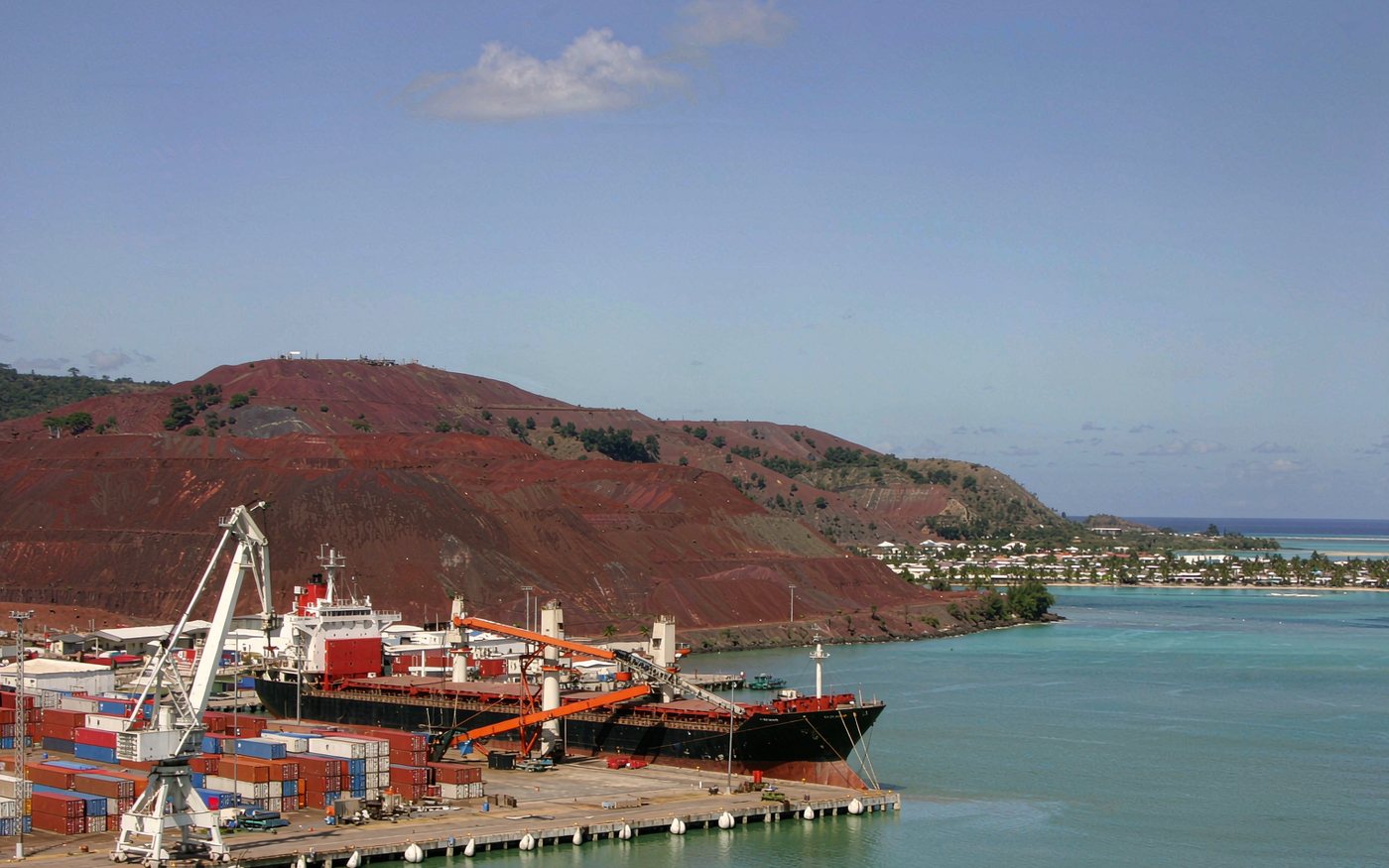
The port of Nouméa is the commercial gateway, handling containerised cargo and the bulk movements the nickel industry generates. Frequent services connect through Australia, New Zealand and Asia rather than direct from China in most cases.
Air — La Tontouta, NOU
The international airport, some distance from Nouméa itself, handles international services and air freight. A domestic airport at Magenta handles internal movement. Air suits spares, samples, documents and urgent consignments.
Biosecurity under DAVAR, and the quotas that protect local producers
Biosecurity here is strict, and it is administered by DAVAR, the veterinary, food and rural affairs directorate. Agricultural imports, food, plants, animals and anything of animal or plant origin are controlled, and the documentation has to be right.
Alongside biosecurity sit the import quotas and licences on some consumer goods, which exist to protect local producers. If your product sits in a category that is produced locally, ask whether a quota or licence applies before you commit to a shipment — because a quota you discover at the port is not a delay, it is a refusal.
The route your cargo takes to Noumea
Containerised cargo from China is normally consolidated and moved on a service calling at Nouméa, direct where one exists and transhipped through Australia, New Zealand or a regional hub where it does not. Air freight moves through NOU.
Quote the routing, not a transit range. On this lane we will name the service and the transhipment point rather than give you a number off a website. The schedule, not the distance, decides the arrival.
Where a first shipment goes wrong
| What goes wrong | Why | What to do instead |
|---|---|---|
| The TGC rate is assumed to be flat | There are four rates, and electronics is at the top | Confirm the rate for the product before pricing |
| The duty is estimated from an EU source | This is a local tariff with protective rates | Ask the buyer's broker for the local rate |
| Origin is expected to earn a discount | EU and French origin can; Chinese origin does not | Compete on description, packing and schedule |
| Food or plant material arrives without clearance | DAVAR controls it strictly | Arrange permits and certificates before packing |
| A quota stops the goods | Quotas protect local producers | Check whether the category is restricted before shipping |
Find the TGC rate before you quote a New Caledonia buyer
- Which of the four TGC rates does the product fall into? Electronics is at 22%.
- What is the local duty rate for the code? Not an EU figure.
- Does the product compete with local production? Protective rates and quotas may apply.
- Does it need DAVAR clearance? Food, plants, animals, anything organic.
- Is the certificate of origin correct? It will not earn a preference, but it must be right.
- Sea to Nouméa or air to NOU? Quote both where the cargo justifies it.
- Is the wooden packaging ISPM 15 marked? Check before sealing.
Why importers use Goodhope on this lane
Six things that are different about working with us on China to New Caledonia shipments.
True stories when importing into New Caledonia
Five shipments bought in China and delivered into New Caledonia, told end to end — where the order came from, how it moved, where it nearly went wrong, and how it finished. Client names are withheld at their request; the situations and the handling are what we deal with on this lane.
Not French VAT · first container · Shenzhen to Noumea
The purchase. A buyer new to importing applied the French rate he knew from mainland shipments.
The move. Full container with the local consumption tax applied at the correct band for the product.
Where it nearly went wrong. This territory has fiscal autonomy and its own consumption tax with several rates, where electronics sit in the top one. Applying a mainland rate is wrong in both directions depending on the line, and wrong by enough to lose the order or the margin.
How it finished. We found the band before quoting. His pricing has been right on every shipment.
Origin · Chinese goods get nothing · Ningbo to New Caledonia
The purchase. A first-time buyer asked whether European preference would apply, having shipped to French territories before.
The move. Consolidated cargo declared at Chinese origin, with no preference claimed.
Where it nearly went wrong. European and French origin, and that of overseas territories, can be exempt where it is justified. Chinese origin is not, whatever the flag on the port. Assuming the French connection carries a tariff benefit is assuming something the schedule does not give.
How it finished. We declared origin accurately. No claim of his has been refused since.
Protective rates · quoting · Guangzhou to New Caledonia
The purchase. A buyer costed duty as a flat low percentage across a mixed consignment.
The move. Full container with each line checked against the tariff, including protective rates.
Where it nearly went wrong. Duty runs on its own tariff and protective rates apply where the territory makes the thing itself. A flat assumption across a mixed consignment is wrong on the lines that carry the higher rates.
How it finished. We check line by line. Two lines came in higher than he expected and he repriced in time.
Biosecurity · DAVAR · Yiwu to New Caledonia
The purchase. A buyer shipped goods with soil and plant material on the packaging without declaring it.
The move. Consolidated cargo cleaned, declared accurately and cleared through biosecurity without treatment.
Where it nearly went wrong. Biosecurity here is strict and it protects local producers, so organic material is treated seriously rather than waved through. Compliance at origin costs a fraction of treatment on arrival.
How it finished. We made clean packing a supplier condition. Nothing has been treated since.
Currency · quoting · Shanghai to New Caledonia
The purchase. A buyer quoted in euros and was asked to re-quote in the local currency.
The move. Consolidated cargo with the landed cost set out in the local currency.
Where it nearly went wrong. The territory uses the CFP franc, which is pegged to the euro at a fixed rate. Quoting in euros is workable, but the buyer on the other end is pricing in his own, and meeting him there is part of winning the order.
How it finished. We quote both now. His conversion has not cost him an order since.
Why importers use Goodhope on this lane
Six things that are different about working with us on China to New Caledonia shipments.
Send us the code, and we will price the Noumea lane
Tell us what you are shipping, the HS codes if you have them, the packed dimensions and gross weight, the pickup city in China and the delivery address. We will confirm the routing into Nouméa, quote the sea leg and the air alternative through NOU separately, and check the wood packaging requirement with you. Where the question belongs to the Direction des Douanes, to DAVAR or to the buyer's accountant — the duty rate on your code, the TGC rate your product falls into, whether a quota applies — we will say so plainly rather than guess.
Get a quote Talk to usRelated pages
Frequently asked questions
Is New Caledonia part of the EU customs territory?
No. It is a French sui generis collectivity with fiscal autonomy: it runs its own customs administration, its own tariff and its own consumption tax. Metropolitan French tax law does not automatically apply, and EU customs union treatment does not extend to it.
What is the TGC?
The taxe générale sur la consommation, a VAT-like consumption tax applied in New Caledonia since 1 October 2018. It has four rates: 3% reduced, 6% specific, 11% normal, and 22% higher. Electronics, alcohol and tobacco fall at the top rate, which is why confirming the rate for a specific product matters so much.
How high are customs duties?
Duties are ad valorem under the local tariff. One authoritative summary puts the range at zero to a maximum of twenty percent; trade sources describe protective tariffs running higher on goods that compete with local production. Confirm the rate for your code with the Direction des Douanes or with the buyer's broker.
Does the certificate of origin help?
Not on duty. Goods of EU, French and OCT origin can qualify for exemption from customs duty where origin is justified; Chinese origin does not. The certificate still has to be correct, because it establishes what the goods are and where they came from.
Which port and airport handle cargo?
The port of Nouméa handles containerised and bulk cargo; La Tontouta International Airport, NOU, handles international air freight, with a separate domestic airport at Magenta. The territory's cargo infrastructure is better than its population would suggest, largely because of the nickel industry.
How strict is biosecurity?
Strict. DAVAR, the veterinary, food and rural affairs directorate, controls agricultural imports, food, plants and animals, and the documentation has to be right. Import quotas and licences also apply to some consumer goods to protect local producers.
What currency is used?
The CFP franc, XPF, which is pegged to the euro at 119.33 XPF. Agree the settlement currency with the buyer in advance.
Do I need a broker?
In practice yes. The declaration is filed with the Direction des Douanes under local rules, the TGC treatment has to be established for the product, and permits may be needed from DAVAR. A local broker is the cheapest way to avoid a hold at the port.
Can I ship food or plant products?
Only with the right clearance. DAVAR controls these categories strictly, and the permits and certificates have to be arranged before the goods are packed rather than after they arrive.
Should the first shipment be FCL or LCL?
LCL is usually right for a first consignment, because it avoids committing a full container to a lane with protective rates and possible quotas. Move to FCL once volume and timing are predictable and the duty and TGC treatment are confirmed.