
Home / Shipping to New Zealand / How to Ship from China to New Zealand
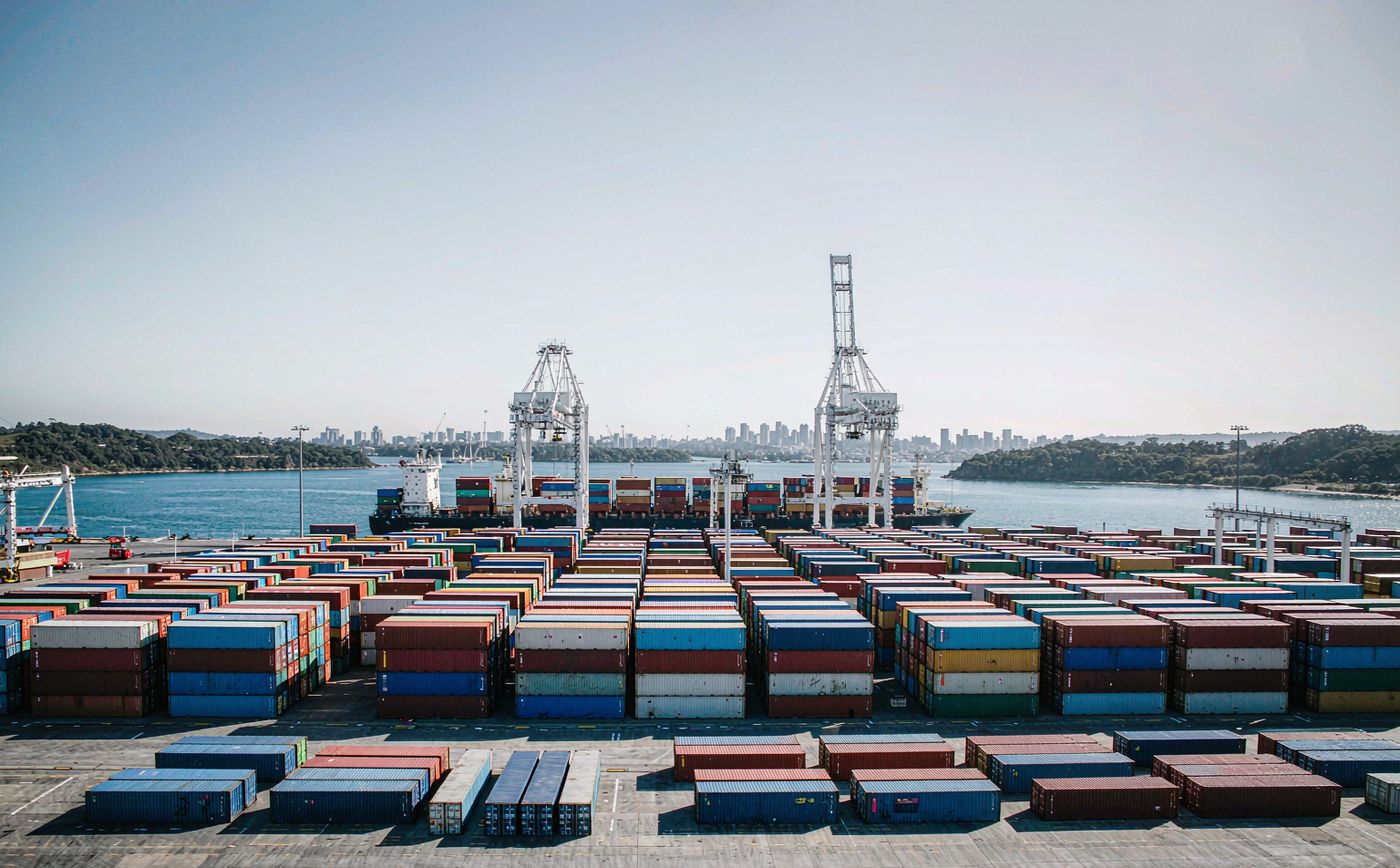
How to Ship from China to New Zealand: Auckland, GST & Biosecurity
The tariff has been zero for a decade. Under the New Zealand–China Free Trade Agreement, New Zealand removed all tariffs on imports from China by 1 January 2016 — the earliest and most complete elimination in this whole series. So if you are budgeting for duty, you are probably budgeting for the wrong thing. The money on this lane is the fifteen percent GST, the highest rate in any country covered here, plus a pair of fixed entry fees that matter disproportionately on small shipments.
The second thing is that New Zealand inspects the pallet as carefully as the product. The Ministry for Primary Industries runs a biosecurity regime built to keep an island nation's agriculture intact, and in practice that means timber, bamboo, soil and seeds are treated as cargo in their own right. A shipment whose paperwork is immaculate will still be held for what is underneath it.
The third thing is scale. New Zealand is a small market at the end of a long lane, and most cargo moving on it is less than a container. That makes consolidation, deconsolidation and the choice of port the decisions that actually move your landed cost — not the ocean freight rate you negotiate.
If you read one section: work out whether you are above or below NZ$1,000 of customs value, because it changes who collects the GST and what has to be filed; get the certificate of origin from your supplier before the goods sail; and specify treated wood and clean packing in your purchase order, because that is where New Zealand holds cargo.
How your cargo moves: China to New Zealand
Eight steps from your supplier's door to yours. The last four are the ones shaped by local rules.
- Pickup from your supplierWe collect the goods anywhere in China and bring them to our consolidation point.
- Export clearanceChina customs declaration filed and released before the goods move to the port.
- Loading and departureContainer loaded, sealed and handed to the carrier at the Chinese port.
- Main carriageOcean, air or rail movement booked on the route agreed for your cargo.
- Arrival at the gatewayDischarge at the port or airport of entry, recorded on the carrier's manifest.
- Import clearanceCustoms declaration filed locally, with duty and tax assessed on the declared value.
- Customs releaseGoods released into free circulation once duty and tax are settled.
- Final deliveryOnward movement to your delivery address, warehouse or nominated depot.
Duty rates, VAT rates and clearance times move, and the figure that applies to your goods is the one set for your commodity code on the day of clearance. We check the current position against your code before your goods sail and confirm it to you in writing — ask for that check when you request a quote.
Biosecurity, and a border that treats packaging as cargo
Every consignment entering New Zealand is cleared by two agencies: the New Zealand Customs Service, which handles value, classification and revenue, and the Ministry for Primary Industries, which handles biosecurity and food safety. Clearance is not complete until both are satisfied, and on this lane the second one is the one that costs days.
What MPI looks at
Timber and bamboo packaging, and whether it is treated and marked. Soil, seeds, bark and plant material on the goods or in the container. Used machinery, vehicles and equipment that have not been cleaned. Containers that arrive dirty. And during the seasonal pest window, goods that fall within the categories that attract intervention.
Why it bites harder here
New Zealand's primary sector is a large share of its economy, and the border is built around protecting it. The practical consequence for an importer is that a customs entry can be perfect and the consignment can still be directed for inspection or treatment, at the importer's cost, on the strength of a pallet.
The fix is at the factory, not at the port. Put it in the purchase order: treated and marked wood where wood is used, no soil, no organic matter, and a packing declaration that states accurately what is in the container. A declaration that says there is no timber when there is will cost more than one that says there is.
Auckland, Tauranga, Lyttelton and Port Chalmers
New Zealand is long and thin, with one main north-south road, so the port decision has an unusually direct effect on inland cost.
| Gateway | Region served | Notes |
|---|---|---|
| Auckland | Upper North Island | The largest commercial port and the main entry point for imported consumer goods, with the best inland connections through the North Island. Most first-time importers start here. |
| Tauranga | Bay of Plenty and Waikato | The busiest port in the country by cargo volume and a major logistics hub for manufacturing and distribution. Worth quoting even for Auckland-region consignees when the inland run works out shorter. |
| Lyttelton | Christchurch and the South Island | The main South Island gateway. Sailings are less frequent and often run through a transhipment, which is why transit is longer than to Auckland. |
| Wellington (CentrePort) | Lower North Island | Serves the capital region, with fewer direct services than the two main northern ports. |
| Port Chalmers and Napier | Dunedin and Hawke's Bay | Regional gateways worth asking about where the consignee sits nearby, because they can remove a long inland leg. |
| Auckland, Wellington and Christchurch airports | Air freight | Auckland takes most air cargo from China, with Wellington and Christchurch depending on the consignee. |
Ask for freight and inland delivery together. On this lane the headline ocean rate is the smallest of the decisions you will make, and a cheaper rate into the wrong island is not a saving.
How long into New Zealand by vessel and aircraft
| Mode | Typical transit | When it fits |
|---|---|---|
| Ocean FCL, Shanghai to Auckland | Commonly around fifteen to twenty two days port to port | Regular volume above roughly fifteen cubic metres, and the fastest of the main pairings. |
| Ocean FCL, Shenzhen to Auckland or Tauranga | Commonly around eighteen to twenty five days | South China origins. Direct services sit at the short end; anything transhipping through a regional hub sits at the long end. |
| Ocean FCL to Wellington | Roughly three days more than Auckland | Lower North Island consignees. |
| Ocean FCL to Lyttelton | Roughly five days more than Auckland | South Island consignees, often through a transhipment. |
| Ocean LCL | Commonly around three to four and a half weeks door to door | The default on this lane. Consolidation in China and deconsolidation in New Zealand each add their own days and their own fees. |
| Air freight | Around three to seven days airport to airport | Urgent, high value density, samples, components, and stock that missed a vessel cut-off. |
| Express courier | Around two to five days door to door | Documents, samples and small parcels, subject to the low value rules on the GST. |
| Clearance and biosecurity | Commonly two to five days, and more where the consignment is inspected | Plan for the longer figure during the pre-Christmas peak and for any product that attracts biosecurity attention. |
We do not publish freight rates here. Ask for base freight, origin charges in China, destination charges in New Zealand, GST, the import entry transaction fee, the biosecurity levy, and inland delivery as separate lines, so you can see what moved when the price changes. See our local charges page.
Two routes into New Zealand, decided by the customs value
The customs value is the value of the goods themselves: international freight and insurance sit outside it. That figure decides which of two quite different processes applies.
| Customs value | How it is declared | What you pay, and to whom |
|---|---|---|
| NZ$1,000 or less | An Inward Cargo Report or a Simplified Import Declaration | Since December 2019, GST on low value goods is collected by the merchant, the online marketplace or the redeliverer at the point of sale, so there is usually nothing to pay to Customs. Alcohol and tobacco are charged at the border at any value. |
| More than NZ$1,000 | An import declaration, lodged electronically through the Trade Single Window by a registered user | Duty at the rate for the goods, GST at fifteen percent, an import entry transaction fee, and a biosecurity system entry levy. All payable before release. |
| Either value, where a permit is needed | An import declaration, regardless of value | Restricted goods need their permit whatever they are worth, and the simplified route does not remove that. |
Three details matter. The threshold is based on the customs value, excluding transport and insurance, so a NZ$950 order with NZ$300 of freight is still under the line — but note that where GST is charged at the point of sale, it is charged on the customs value plus transport and insurance. Goods are aggregated: a consignment on the same craft, for the same importer, with a combined value above NZ$1,000 needs an import declaration even if each item is below it. And where GST has already been collected at the checkout, the right information on the import documents is what stops the buyer paying it a second time at the border.
Incoterms on a New Zealand booking, and who holds the client code
The trade term divides cost and risk. It does not decide who is the importer of record, and it does not remove the biosecurity assessment.
- EXW — you collect at the supplier's door and carry everything, including Chinese export formalities. Rarely sensible for a first import.
- FOB — the supplier loads and clears Chinese export; you take over at the Chinese port. The usual choice, and the term most Chinese factories quote as standard.
- CIF — the supplier pays freight and insurance to the New Zealand port, risk passes in China, and you still clear. Not delivered.
- DAP — delivered to a named place in New Zealand, with you handling the declaration, GST and the fees. Name the actual place, not just the port.
- DDP — the seller carries duty and taxes too, which requires a New Zealand party able to act as importer of record and to hold the client code. Ask who that is and who is liable, because a DDP offer with no New Zealand importer named is not a DDP offer.
The entry, the client code, and the Trade Single Window
Above NZ$1,000 you need two things you do not need below it: a client code, and someone registered on the Trade Single Window to lodge the declaration for you.
Register as an importer, and get a client code
A client code is your registration with the New Zealand Customs Service, applied for on the current Customs form. It identifies you on the entry. If you are using a broker, they normally provide and arrange the form as part of the service.
Classify the goods
Find the tariff classification in the Working Tariff Document. It drives the duty rate, the preferential rate under the agreement, and whether the goods are regulated or restricted. Do not copy the Chinese export code onto the New Zealand entry.
Lodge the declaration through the Trade Single Window
Import declarations are submitted electronically, and only registered users can do it. The platform is also where the supplier's GST information is reported, which is what prevents tax already collected at the checkout being charged again at the border. This is the main reason first-time importers use a broker.
Let MPI run its own assessment
The biosecurity side runs alongside the customs entry, not after it. Where goods are risk goods, or where the packing declaration is incomplete, the consignment is directed for inspection or treatment and the storage clock starts.
Pay, and take the release
Duty, GST, the import entry transaction fee and the biosecurity levy are paid and the goods are released. Nothing moves before that. Watch the free time at the terminal and the detention on the equipment: they run on separate clocks, and Customs is not responsible for storage incurred while a clearance is delayed.
Keep the file
Origin evidence, valuation evidence and the classification reasoning can all be asked for later. Keep the supplier's documentation and your own reasoning for every shipment, because reconstructing it later costs more than filing it once.
A consignment from Nansha, followed to a store in Auckland
Auckland is where most consumer imports land. This is a routine part-container movement into a retailer there.
Decide the route from the customs value
Above NZ$1,000 this needs an import declaration, a client code and a broker. Below it, a Simplified Import Declaration and GST already collected at the checkout. Everything downstream follows from that one number.
Get the origin evidence
A certificate of origin, or an origin declaration, from the supplier. Tariffs are already nil on the New Zealand side, but the claim still has to be supported, and the evidence is what survives an audit.
Specify the packing in the purchase order
Treated and marked wood, no soil, clean goods. On this lane this is the step that decides whether the consignment is inspected, and it costs nothing at the point where it is decided.
Collect and consolidate
Goods collected from the factory, or from several factories combined into one container, cleared for export, weighed for the verified gross mass and loaded. See our consolidated shipment page if you are buying from more than one supplier — on this lane it is usually the right answer.
Sail, and lodge ahead of arrival
Roughly eighteen to twenty five days from South China into Auckland. Documentation can be submitted in advance, which is the cheapest insurance against storage and detention.
Clear both agencies, then deliver
Customs releases, MPI releases, and the container moves inland. Add the deconsolidation step where the shipment is part of a shared container, because it has its own schedule and its own fees.
Duty by classification, and the fifteen percent GST
The New Zealand–China Free Trade Agreement entered into force in October 2008 and New Zealand's tariffs on Chinese goods reached nil across the board by 1 January 2016. That is the earliest full elimination of any lane in this series, and it means the duty line is usually the smallest number on the assessment.
GST is the opposite. At fifteen percent it is charged on the customs value, plus any duty, plus the international freight and insurance. A worked example:
- Customs value: NZ$10,000
- Freight and insurance: NZ$2,000
- Duty under the agreement: nil
- GST base: 10,000 + 0 + 2,000 = NZ$12,000
- GST at 15%: NZ$1,800
Creditable, if you are registered. A business registered for GST and using the goods in a taxable activity claims the GST paid on import as an input tax credit, so it is cash flow rather than cost. If you are not registered, or the goods are not for a taxable activity, the full NZ$1,800 is cost. Both answers are common on this lane, and the difference is the whole margin on a thin order.
The fees that sit alongside the tax
Two fixed charges attach to an import declaration, and neither is large on its own. Both matter because this lane runs on small shipments.
| Charge | What it is | Why it matters here |
|---|---|---|
| Import entry transaction fee | A fixed fee on each import entry | Industry figures commonly quoted are in the order of NZ$29 per entry, inclusive of GST. Confirm the current amount with your broker, because it is revised. |
| Biosecurity system entry levy | A levy funding the biosecurity system, charged on entries and higher for sea cargo than for air | Commonly quoted in the order of NZ$22 for sea cargo, inclusive of GST. Small per shipment, and material as a percentage on a low-value order. |
| Storage and detention | Charged by the terminal and the carrier, not by Customs | The fees above are predictable. These are not, and they are the ones that grow while a clearance is delayed. |
Where you are importing small and often, the arithmetic is worth doing before you choose a cadence: two fixed fees on every entry mean that consolidating three small orders into one shipment can cost less than clearing them separately, even where the freight is identical.
NZ-China FTA and RCEP, and the certificate that proves it
There are two pathways, and for most Chinese-origin goods the older one is the simpler.
| Agreement | In force | What it gives | How origin is evidenced |
|---|---|---|---|
| New Zealand–China Free Trade Agreement | October 2008, with all New Zealand tariffs on Chinese goods at nil from 1 January 2016 | Nil duty on goods that qualify | A certificate of origin or an origin declaration from the supplier, held at the time of import |
| RCEP | 1 January 2022 for both | A second pathway to preferential origin | Origin evidence under the RCEP rules of origin. Worth comparing where the product incorporates qualifying inputs from other member countries. |
Two habits make this work. Hold the evidence at the time of import rather than promising to produce it later, because a preference claimed without support is a liability that surfaces at audit. And ask for it while the goods are being made, not when the vessel is loading, because chasing a certificate after departure is the most common reason a zero-rate claim gets missed on an otherwise clean shipment.
The stink bug season, and what it means for a China sailing
Brown marmorated stink bug measures run over a seasonal window, which for 2026/27 is 1 September 2026 to 30 April 2027. The decisive date is the shipped-on-board date on the bill of lading, not the arrival date: a container loaded before the window opens can arrive inside it and fall outside the measures, and one loaded a day into the window can be caught.
Check the lists, do not assume them. Australia and New Zealand run the season over the same dates but publish their own country and goods lists, and both are reviewed and can be amended mid-season. Where goods do require treatment, the treatment provider must be approved, and untreated cargo can be refused discharge and redirected offshore. Confirm the current position with the Ministry for Primary Industries or your broker before you ship, and budget time for intervention where your goods or your sailing date fall inside the window.
Timber, soil and the risk goods that must be treated
ISPM 15, and the packing declaration
All solid wood packaging must be treated and carry the IPPC mark, and the packing declaration has to state accurately whether timber or bamboo is present and whether it has been treated. Untreated timber is the single most common reason a New Zealand consignment is directed for treatment at the importer's expense. Specify it in the purchase order and check it before loading, because the cost of the pallet is trivial next to the cost of the delay.
Used equipment, and the container
Used machinery, vehicles and agricultural equipment carry soil and plant material risk and need thorough cleaning before loading, with the cleaning declared. The container matters too: a dirty container, or one with organic matter in it, will be dealt with. Both are cheap to prevent in China and expensive to fix in New Zealand.
Electrical safety, energy efficiency and radio spectrum
These are pre-market requirements. They sit with you as the party putting the goods on the New Zealand market, and they are not part of the customs entry — but non-compliant goods cannot be sold.
The responsible supplier
Electrical equipment has to meet the safety and electromagnetic compatibility requirements and be declared by a New Zealand responsible supplier, who must be a local entity and who holds the evidence. The Regulatory Compliance Mark is used across both Australia and New Zealand, but an existing registration held by an Australian customer is not transferable to you. Ask your supplier for a declaration of conformity that names your New Zealand responsible supplier before production starts.
Energy and radio
Products that use energy fall under the energy efficiency requirements, which carry minimum performance standards and labelling. Anything with a radio transmitter in it needs to meet the radio spectrum rules administered locally. Both sit alongside electrical safety rather than replacing it, so one product can need all three.
Food, and the importer who has to be registered
Food is the category where New Zealand's paperwork is heaviest, and the obligation lands on the importer rather than on the factory.
- The importer must be registered for food importation, and the food has to arrive from a source New Zealand accepts.
- Expect documentation at the border, and expect MPI to hold and test where the product or its paperwork warrants it.
- Labelling must comply with the New Zealand requirements, including the information that has to appear in English. Artwork has to be right before production, not after.
- Plant and animal products have their own rules, and many need an import permit obtained before the goods ship.
If food is your category, treat the registration and the artwork as the critical path and the freight as the easy part.
Buying on a platform, and importing as a company
Through a platform
Below NZ$1,000 the parcel is declared on a simplified basis and the GST has been collected at the checkout, so nothing is payable at the border. For a sample or a one-off that is genuinely convenient, and the marketplace handles the mechanics.
What it does not give you is control: no classification of your choosing, no preference claim held in your name, no packing declaration prepared to your standard, and no file that will answer an audit question later.
As a company
You hold the client code, choose the classification, hold the origin evidence, control the packing and the declaration, and build a record that will survive a review. It is more work on the first shipment and far cheaper per unit at any scale.
It is also the only route on which you can claim the GST back where you are registered, and the only route on which a preferential claim is yours to make rather than the platform's.
Commercial stock, and personal effects arriving in New Zealand
Commercial imports are declared, assessed and released for sale or for use, with GST accounted for and creditable where the importer is registered and the goods feed a taxable activity. Personal imports work differently, and two things are worth knowing before you ship.
First, the low value rules are a GST rule, not a duty rule: below NZ$1,000 the tax is collected by the seller at the checkout, which is why nothing is asked for at the border. Second, household effects and personal belongings have their own treatment, separate from commercial importing, and they have to be claimed properly — a household relocation is not a commercial import with a smaller number on it. Where you are unsure which applies, ask before the goods ship rather than after they are held.
The forwarder in China, and the broker in New Zealand
What happens in China
Collecting from the factory or from several factories, consolidating where volume justifies it — and on this lane it usually does — Chinese export clearance, the verified gross mass, booking the service, issuing the bill of lading or air waybill, and tracking. We also press for the certificate of origin while the goods are being made, and we ask what the packaging is made of, because that question belongs here.
What happens in New Zealand
A customs broker lodges the declaration through the Trade Single Window, classifies the goods, claims any preferential rate, reports the supplier's GST information, settles duty, GST and the fees, and arranges release. MPI handles the biosecurity side, including the packing declaration and any direction to inspect or treat. The client code, the responsible supplier declaration, and the food or radio registrations belong to the importer.
Goodhope works port to port on ocean freight and airport to airport on air freight, naming the terminal rather than quoting a generic estimate. We coordinate with your broker and we do not pretend to do their job.
Checking a forwarder on a New Zealand booking
- Have they asked what the customs value is? It decides whether this is a simplified declaration or a full import declaration with a client code.
- Which port — Auckland, or Tauranga for a Waikato consignee? It should follow the delivery address, because inland cartage down a long thin country is not cheap.
- Has anyone asked what the pallets are made of? On this lane that question prevents more holds than any other.
- Is the certificate of origin being chased now? The tariff is already nil, but only if the claim is supported.
- Does the sailing fall inside the stink bug window? If it does, the intervention exposure needs to be part of the plan.
- Is LCL being quoted with the deconsolidation fees? A rate per cubic metre without the destination unpacking is not a quote.
- Are freight, GST, the entry fee and the biosecurity levy shown separately? A single all-in number hides what actually moved.
Red flags: a rate quoted before you have said what the goods are; a DDP offer with no New Zealand importer named; a per-cubic-metre LCL rate that omits deconsolidation; and any suggestion of declaring a lower value to keep the shipment under the threshold.
Three shipments into New Zealand, and the reason for each
The examples below are illustrative. They describe typical decisions on this lane, not specific customer shipments.
Electronics held for four days over one reused pallet
A part container of consumer electronics into Tauranga. The duty was nil under the agreement, the GST was routine and the declaration was clean. What held it was a wooden pallet the supplier had reused from a domestic run, untreated and unmarked. The consignment was directed for treatment, the storage ran, and the delay cost more than the whole pallet budget for the order. It was preventable at the factory with one line in the purchase order.
A consolidation that beat three separate entries
An importer bringing in small orders from two suppliers had been clearing them as they arrived. Each entry carried the import entry transaction fee and the biosecurity levy, plus its own deconsolidation handling. Combining them into one consolidated container removed one full set of fees and a deconsolidation step, and the saving was larger than the freight difference between the two approaches. On a lane with a fifteen percent GST and two fixed fees, cadence is a cost decision.
A Christchurch consignment where the wrong port was the whole problem
A first-time importer in Christchurch booked into Auckland because the sailing was faster and the rate was lower, then paid for the ferry and road leg to the South Island. On the repeat order the same cargo came into Lyttelton on a longer transit and a far shorter inland run. The lesson is not that one port is better: it is that the transit time you compare has to include the leg after the port.
Christmas, the summer shutdown and the stink bug window
- The pre-Christmas peak, roughly November to February, is the busiest period on the lane, and it runs through Golden Week, Black Friday, Christmas and the Chinese New Year lead-up.
- The New Zealand summer shutdown is real and it is long. Many businesses close from just before Christmas through much of January, and freight and logistics operators run on reduced staffing. A delivery promise made for late December needs to be a delivery promise for February.
- Chinese New Year stops production on the Chinese end, and the weeks before it compress bookings.
- The stink bug window, 1 September to 30 April, overlaps most of the peak, so seasonal measures and peak congestion arrive together.
- South Pacific storm season can delay sailings, and services that tranship add their own exposure to it.
Check our holidays page when you are fixing a production date, and treat a mid-January delivery as the earliest realistic promise for anything ordered in November.
What Goodhope handles on the New Zealand lane
- We ask the customs value first — because NZ$1,000 decides whether this is a simplified declaration or a full import declaration with a client code.
- Ocean freight port to port and air freight airport to airport — into Auckland, Tauranga, Wellington, Lyttelton, Napier or Port Chalmers by sea, and Auckland, Wellington or Christchurch by air, with the terminal named rather than a generic estimate.
- We quote the island you are going to — including the inland and inter-island leg where the consignee is not in the port city.
- Consolidation, which is the default on this lane — several factories, one container, one consistent document set, and one set of entry fees. See our consolidated shipment and warehouse and consolidation pages, and our LCL page for how the deconsolidation side is charged.
- We chase the certificate of origin while the goods are being made — under the New Zealand–China agreement, or RCEP where the inputs make it the better route.
- We ask what the pallets are made of — ISPM 15, the packing declaration and clean containers, because biosecurity is where the days go.
- We watch the stink bug calendar — and tell you when a sailing date puts the consignment inside the seasonal window.
- Regulated cargo handled properly — see our dangerous goods, non-DG chemicals to New Zealand and quarantine inspection pages.
- Plain answers on what we do not do — the client code, the import declaration, the classification, the GST, the biosecurity direction and the product compliance registrations belong to the importer of record and their broker. We coordinate with them and we do not pretend otherwise.
- NVOCC licensed, since 2012 — see our why partner with Goodhope page.
Why importers use Goodhope on this lane
Six things that are different about working with us on China to New Zealand shipments.
Ask for a New Zealand quote with the risk goods named
Send us the product and its tariff classification if you have it, the carton count and total weight or volume, the customs value, the supplier's city, and the delivery address in New Zealand — including the island. We will name the port, tell you whether this is a simplified declaration or an import declaration, ask what the packaging is made of, flag the stink bug window if the sailing falls inside it, and show freight, GST, the entry fee and the biosecurity levy as separate lines.
Frequently asked questions
What is the NZ$1,000 threshold for importing into New Zealand?
Goods with a customs value at or below NZ$1,000 can be declared on an Inward Cargo Report or a Simplified Import Declaration, and because GST on low value goods has been collected by the overseas supplier or marketplace at the point of sale since December 2019, there is usually nothing to pay to Customs. Above NZ$1,000 an import declaration is required and duty, GST at fifteen percent, an import entry transaction fee and a biosecurity system entry levy all apply. Alcohol and tobacco are charged at the border at any value. The threshold is based on the customs value of the goods, so international freight and insurance sit outside it.
Do I need a client code to import into New Zealand?
Yes for commercial imports with a customs value above NZ$1,000. A client code is your registration with the New Zealand Customs Service, applied for on the current Customs form, and it identifies you on the import declaration. If you use a customs broker they will normally arrange the form as part of their service. Above the threshold, only registered users of the Trade Single Window can submit an import declaration electronically, so in practice a first-time importer works through a broker rather than registering as a user themselves.
How much duty and GST will I pay importing from China into New Zealand?
Under the New Zealand–China Free Trade Agreement, New Zealand removed all tariffs on imports from China by 1 January 2016, so for goods that qualify the duty is nil. GST is fifteen percent, charged on the customs value plus any duty plus the international freight and insurance. On top of that, an import entry transaction fee and a biosecurity system entry levy apply to the entry. As an illustration, goods with a customs value of NZ$10,000 and NZ$2,000 of freight and insurance, with duty at nil, give a GST base of NZ$12,000 and GST of NZ$1,800. Confirm the current fee amounts with your broker, because they are revised.
Do goods from China enter New Zealand duty free?
Most do. The New Zealand–China Free Trade Agreement entered into force in October 2008, with a staged programme that removed all New Zealand tariffs on Chinese goods by 1 January 2016. To claim the preferential rate the goods have to satisfy the rules of origin and you have to hold the supporting evidence, normally a certificate of origin or an origin declaration from the supplier, and the claim is made on the import declaration. New Zealand and China are also both in RCEP, which is a second pathway where the product incorporates qualifying inputs from other member countries.
How long does shipping from China to New Zealand take?
Ocean freight from Shanghai into Auckland is commonly quoted at around fifteen to twenty two days port to port, with Shenzhen origins a little longer at around eighteen to twenty five days. Tauranga is broadly comparable to Auckland, Wellington adds a few days, and Lyttelton for Christchurch adds more again. LCL is commonly quoted at three to four and a half weeks because consolidation and deconsolidation sit on top of the sailing. Air freight into Auckland, Wellington or Christchurch is around three to seven days airport to port. Clearance is commonly two to five days, and a biosecurity inspection adds to that.
Which port does cargo from China arrive at in New Zealand?
Auckland is the largest commercial port and the main entry point for imported consumer goods, with the best inland connections through the North Island. Tauranga is the busiest port by cargo volume and a major logistics hub for manufacturing and distribution, and is worth quoting for Waikato and Bay of Plenty consignees. Lyttelton serves Christchurch and the South Island, Wellington serves the lower North Island, and Port Chalmers serves Dunedin. Because the country is long and thin with a single main north-south road, the port should be chosen from the delivery address rather than from habit.
What is the Trade Single Window, and do I need to use it?
The Trade Single Window is the platform through which import declarations are submitted electronically to Customs and to the Ministry for Primary Industries. Only registered users can lodge an import declaration through it, and registration requires the knowledge and systems to meet the requirements, which is why most importers use a licensed customs broker rather than becoming registered users themselves. Your broker reports the goods through the platform, including the GST information your supplier provides so that tax collected at the point of sale is not charged again at the border.
What is BMSB season and does it affect cargo from China?
Brown marmorated stink bug measures apply to targeted goods shipped during a seasonal window, which for the 2026/27 season runs from 1 September 2026 to 30 April 2027, with coverage determined by the shipped-on-board date rather than the arrival date. Australia and New Zealand run the season over the same dates but publish their own country and goods lists, and those lists are reviewed and can be amended mid-season. The practical instruction is to check the current list with the Ministry for Primary Industries or your broker before you ship, and to budget for additional intervention where your goods or your sailing date fall inside the window.
What compliance do electrical goods need in New Zealand?
Electrical equipment needs to meet the safety and electromagnetic compatibility requirements and to be declared by a New Zealand responsible supplier, who must be a local entity and who holds the evidence. The Regulatory Compliance Mark is used across both Australia and New Zealand, but a registration held by an Australian customer is not automatically available to you, so ask your supplier for a declaration of conformity that names your New Zealand responsible supplier before production starts. Products that use energy also fall under the energy efficiency requirements, and anything with a radio transmitter needs the radio spectrum rules met.
What documents does New Zealand Customs require?
A commercial invoice, a packing list, and a bill of lading or air waybill, plus the declaration itself: an Inward Cargo Report or a Simplified Import Declaration at or below NZ$1,000, or an import declaration above it. Where a preferential rate is claimed you need the certificate of origin or the origin declaration. For biosecurity, expect to provide a packing declaration and, where timber packaging is present, a treatment certificate. Permits are needed for restricted goods, and the details on the invoice, the transport document and the declaration need to agree, because inconsistency is a common cause of a hold.