
Home / Shipping to Nicaragua / How to Ship from China to Nicaragua
How to Ship from China to Nicaragua: Corinto, the FTA Schedule & DUCA-D
Nicaragua has a full free trade agreement with China, and it has been in force since 1 January 2024. That is not a technicality. It is the single biggest difference between importing here and importing into Guatemala, Honduras or the Dominican Republic: in those markets, Chinese origin pays the standard Central American tariff, full stop. Here, more than ninety-five percent of tariff lines are committed to end at zero — though the number that decides your landed cost is not the headline, it is which year your line gets there.
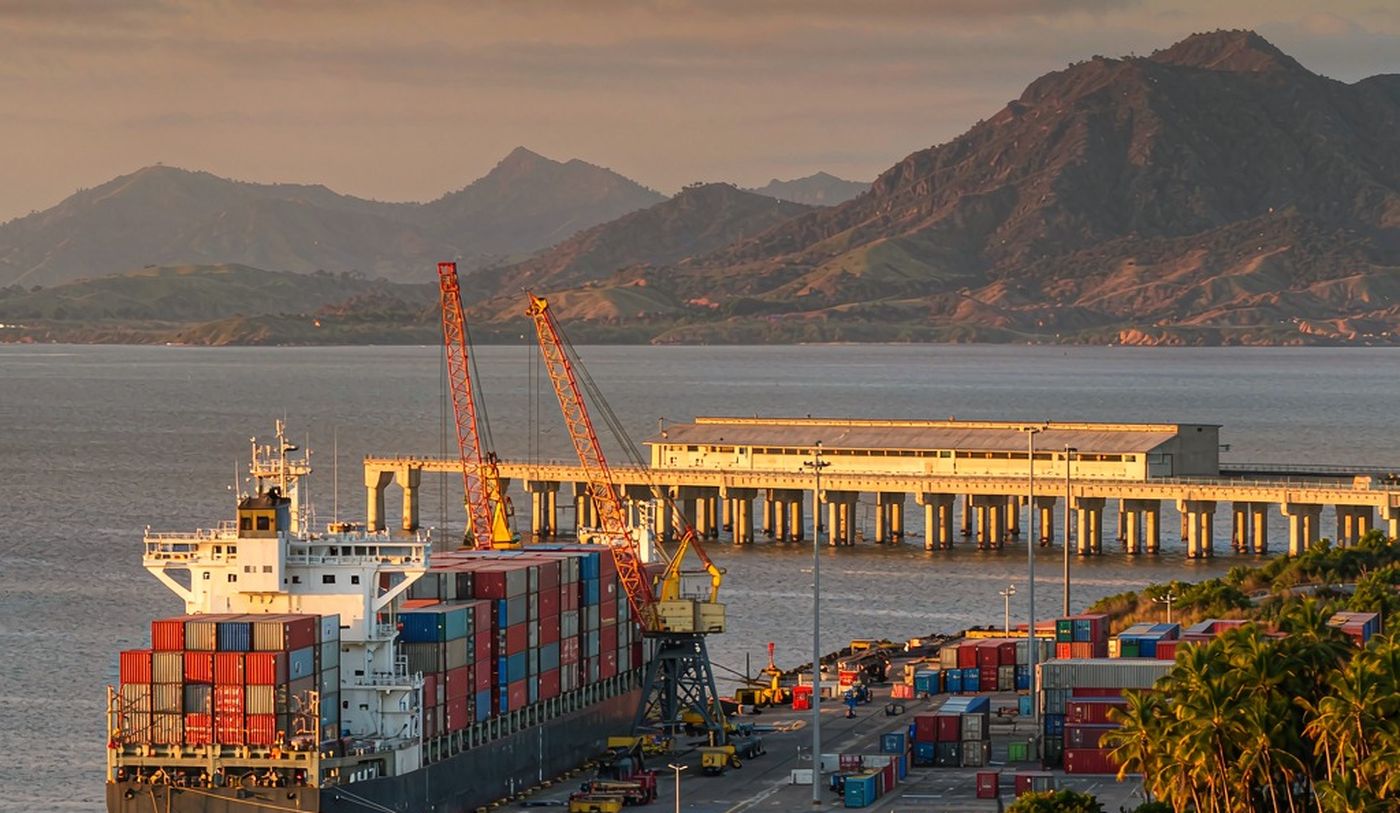
The second thing is geography, and it runs the opposite way from its neighbour. Honduras's working container port is on the Caribbean. Nicaragua's is on the Pacific. Corinto is the country's principal deep-water port and effectively the only general container gateway for intercontinental cargo; the Caribbean ports serve the Atlantic coast regionally rather than the country as a whole. A buyer who assumes Central America works the same way coast-to-coast will quote the wrong routing twice in a row.
The third thing is that the permit landscape is split across three regulators, not one. Telecommunications equipment needs TELCOR. Food, drink, cosmetics and pharmaceuticals need MINSA. Plants, animals and agricultural products need IPSA. Each is a separate application with its own clock, and all three run longer than the vessel.
At a glance
Preference: China–Nicaragua FTA, signed 31 August 2023, in force 1 January 2024 — over 95% of tariff lines committed to zero eventually, roughly 60% at zero from entry into force, the rest staged. · Main port: Corinto (Pacific), the principal deep-water container gateway. · Others: Puerto Sandino (petroleum and bulk); Bilwi / Puerto Cabezas, Bluefields and El Rama on the Caribbean side. · Overland: Peñas Blancas and El Guasaule carry significant import volumes by road. · Routing: transhipped via Panama or Mexico. · Transit: FCL commonly 30–45 days, LCL 35–50; air into Managua (MGA) 6–12 days; courier 4–8 days. · Duty: DAI 0–15% on most industrial goods, with published summaries showing a wider band up to 30%. · IVA: 15% on customs value + DAI + ISC. · ISC: alcohol, tobacco, vehicles, non-essential items. · De minimis: none. · Declaration: DUCA-D filed in SIDUNEA World via the VUCEN single window, by a licensed broker. · Clearance: commonly 2–5 days. · Inland: no rail network; the Pan-American Highway carries it. · Supply: 120 V at 60 Hz.
How your cargo moves: China to Nicaragua
Eight steps from your supplier's door to yours. The last four are the ones shaped by local rules.
- Pickup from your supplierWe collect the goods anywhere in China and bring them to our consolidation point.
- Export clearanceChina customs declaration filed and released before the goods move to the port.
- Loading and departureContainer loaded, sealed and handed to the carrier at the Chinese port.
- Main carriageOcean, air or rail movement booked on the route agreed for your cargo.
- Arrival at the gatewayDischarge at the port or airport of entry, recorded on the carrier's manifest.
- Import clearanceCustoms declaration filed locally, with duty and tax assessed on the declared value.
- Customs releaseGoods released into free circulation once duty and tax are settled.
- Final deliveryOnward movement to your delivery address, warehouse or nominated depot.
Duty rates, VAT rates and clearance times move, and the figure that applies to your goods is the one set for your commodity code on the day of clearance. We check the current position against your code before your goods sail and confirm it to you in writing — ask for that check when you request a quote.
What this guide covers, and the tariff schedule underneath it
This is written for a buyer bringing goods out of China for the first time and landing them in Nicaragua. It follows the shipment in the order the problems arrive: which coast, what route the vessel takes, what the agreement does for your specific product line, what the tax office charges, which regulator owns your permits, how long it takes, and what happens on the single highway that serves the interior.
It does not quote freight rates. Those move with the market and any figure printed here would be wrong within weeks. What it does instead is show where the money goes and which decisions change the total, so that a quotation can be read for what it leaves out as well as what it contains.
Nicaragua is a small market — around seven million people — and an import-dependent one: machinery, fuel, consumer goods and a large share of food arrive from abroad. Agriculture dominates its exports: coffee, beef, sugar, bananas, alongside mining and a growing services sector. The apparel and light manufacturing sector operating under free zone and temporary admission regimes is the part of the economy most relevant to a reader of this guide, because it shapes both the supply chain and the competitive landscape.
Corinto on the Pacific, and the ports on the other coast
| Port | Coast | Role | What it means for you |
|---|---|---|---|
| Corinto | Pacific | The principal deep-water port and Nicaragua's working container gateway. Handles fuel and containerised cargo, and most of what arrives from Asia. | The default, and for intercontinental container traffic effectively the only realistic answer. It sits on the Pacific, near the populated Pacific corridor and the Pan-American Highway. |
| Puerto Sandino | Pacific | Petroleum and bulk. | Not a general container gateway. Relevant only if you are moving fuel or bulk commodities. |
| Bilwi (Puerto Cabezas) | Caribbean | Serves the north Atlantic coast region. | Regional rather than national. Not where an Asia-origin container service calls. |
| Bluefields and El Rama | Caribbean | Serve the south Atlantic coast, with El Rama reached upriver. | Local and regional distribution on the Atlantic side; limited for general container imports. |
The practical consequence is that Nicaragua behaves like a Pacific-facing country for import purposes even though it has two coasts. If your consignee is in Managua, León, Chinandega or anywhere in the Pacific corridor, Corinto is straightforward. If your consignee is on the Atlantic coast — Bilwi, Bluefields, the Río San Juan area — the Corinto routing means a long haul across the country, and the honest comparison is against an overland routing from a neighbouring country's Caribbean port rather than against a direct call.
Ask for the overland comparison. For Atlantic-coast destinations, a container into a Caribbean port in a neighbouring country and then north or south by road can beat Corinto plus a full cross-country haul. It adds a border crossing and its own paperwork, so it is not automatically better — but on this geography it is worth quoting both ways rather than assuming the national port wins.
The overland door, and why some cargo never reaches Corinto
One of the less obvious features of Nicaraguan importing is how much of it arrives by road. The land borders carry significant volumes: Peñas Blancas on the Costa Rica frontier and El Guasaule on the Honduras frontier are both major entry points, alongside the ports.
There are three reasons a shipment might arrive overland rather than at Corinto. Goods bought through a regional distributor or consolidated in a neighbouring country cross at a border. Goods routed into a Caribbean port in Costa Rica or Honduras for Atlantic-side delivery cross by road. And goods moving within the Central American integration framework use the land transit declaration rather than a maritime one.
For a buyer importing direct from China, the main relevance is this: do not assume the routing you are quoted is the only routing. If a forwarder quotes a long inland haul from Corinto, ask what a regional hub plus overland looks like. And if you are buying from a regional distributor rather than from China directly, the border crossing is where your clearance happens, not a port.
Routing: through Panama, and the connection you are buying
There is no scheduled direct container service from China to Corinto. Cargo is transhipped, most commonly through Panama, with Mexico also used. Some services route via the United States West Coast or via a Pacific hub.
Because the hub is on the Pacific side, the geography is kinder than it is for the Caribbean ports of Honduras or the Dominican Republic: the feeder leg from a Pacific hub to Corinto is shorter and the services are more frequent. The principle is unchanged, though. What you are buying is a connection, and connections are missed. A container that does not make its onward sailing waits for the next one, and on a feeder network that is days, sometimes a week.
Two questions to put to a forwarder on this lane, and to put them in writing: which hub, and what is the published frequency from that hub to Corinto. A transit figure without both is a number you cannot plan against.
Sea freight is commonly reported at thirty to forty-five days for a full container and thirty-five to fifty days for a consolidated shipment, which is the band to quote to your own customer. Add a week of slack rather than subtracting one.
The China agreement, and the year your tariff line reaches zero
Now the part that makes Nicaragua genuinely different.
The China–Nicaragua Free Trade Agreement was signed on 31 August 2023 and entered into force on 1 January 2024. It covers goods, cross-border services and investment across more than twenty chapters, and it is China's twenty-first free trade agreement and Nicaragua's first comprehensive economic agreement with China. Nicaragua is China's fifth free trade partner in Latin America.
The commitments on goods are the part that matters to an importer:
- More than ninety-five percent of tariff lines on both sides are committed to eventual zero tariff.
- Roughly sixty percent went to zero immediately when the agreement entered into force.
- The remainder phases down on a schedule, with some lines staged over as long as fifteen years.
The headline is not your rate. "Ninety-five percent end at zero" does not mean ninety-five percent are zero today. It means ninety-five percent will be zero when the staging finishes, and the staging for some lines runs to fifteen years. The question to ask is: what does my HS code pay this year? That is a lookup in the tariff commitment schedule, and it is the highest-value fifteen minutes a broker can spend for you on this lane.
The agreement is also being actively administered. A joint committee met for the first time in March 2026 and signed a decision cancelling tariffs on certain products in Nicaragua's schedule, and Nicaragua removed tariffs on some products in May 2026. Practical reading: the schedule is moving. A rate you checked last year may not be the rate this year, in either direction — so re-check annually rather than treating a rate as fixed.
Ninety-five percent, sixty percent, and what the difference means
It helps to be concrete about what the three numbers mean for a purchasing decision.
| Staging category | What it means | How to treat it |
|---|---|---|
| Immediate zero | Around sixty percent of tariff lines went to zero on 1 January 2024. | Claim it. You need the origin certificate to do so, and nothing else. If your code is here, your duty line is zero and the only tax left is IVA and any ISC. |
| Staged reduction | A reduced rate that steps down annually toward zero over a defined period, up to fifteen years on the longest lines. | Look up the current-year rate, not the final one. Budget on this year's number and note when it next steps down. |
| Outside the commitments | A small share of lines not covered by the zero-tariff commitment. | Assessed at the standard Central American tariff rate. You are in the same position as an importer into Guatemala — plan for it rather than discovering it. |
Two things are worth saying about the claim itself. First, a preference is claimed with documents. The certificate of origin has to satisfy the agreement's rules of origin, it has to be the right form, and it has to match the commercial file. Without it there is no preference, whatever the schedule says.
Second, the rules of origin are about the goods, not the invoice. A product assembled in China from largely imported inputs may or may not qualify depending on the applicable rule for its heading. If your supplier cannot support origin, the preference does not apply — so establish that before you place the order, not when the container lands.
Contrast worth holding on to. In Guatemala and the Dominican Republic, Chinese origin pays the standard tariff. In Honduras, an early harvest arrangement covers a defined product list. In Nicaragua, a full agreement covers most of the tariff — but on a schedule. Three neighbouring markets, three completely different answers to the same question, and in all three the answer is "check your code".
DAI, IVA and ISC: three lines in a fixed order
Nicaragua's import tax stack works the way Central America generally does, in a fixed order where each line becomes part of the base for the next.
| Charge | Rate | Charged on | Notes |
|---|---|---|---|
| DAI Derecho Arancelario a la Importación | 0–15% for most industrial goods. Published summaries show a wider band reaching 30%, with an average around 5–15%. | The CIF value, under the Central American tariff system (SAC). | This is the line the FTA reduces or eliminates. Industrial machinery is commonly reported at 0–5%; clothing and footwear around 15%; books at zero. |
| ISC Impuesto Selectivo al Consumo | Varies by product. | Alcohol, tobacco, vehicles and non-essential items. | Assessed before IVA, so it enters the IVA base. |
| IVA Impuesto al Valor Agregado | 15% flat. | Customs value + DAI + ISC. | Collected by the tax authority, DGI. Basic foodstuffs, medicines and certain goods are reported exempt. |
The mechanics are straightforward once you have seen them once. A worked example, using the kind of figures a broker will show you: machinery at a CIF value of US$10,000 with DAI at 5% gives US$500 of duty; IVA at 15% is charged on US$10,500, giving US$1,575. Total tax US$2,075 — and note that the freight inside the CIF value is being taxed along with the goods.
That last point has the same consequence it has everywhere in the region: on a small consolidated shipment where freight is a large share of value, you are paying IVA on the transport. It is one more argument for consolidating properly rather than sending several small lots.
DUCA-D or DUCA-F: which declaration, and who files it
Nicaragua's customs is administered by the DGA, the Dirección General de Servicios Aduaneros, under the tax authority DGI. Clearance runs electronically through SIDUNEA World, the ASYCUDA-based system, and trade formalities go through the VUCEN single window.
The declaration is the Central American single customs declaration, the DUCA, and which version you use depends on origin:
DUCA-D
The version for goods originating outside Central America. This is what a shipment from China uses. If you see a DUCA-F quoted for Chinese cargo, something is wrong with the file.
DUCA-F and DUCA-T
DUCA-F is for Central American origin goods moving within the region. DUCA-T covers land transit — relevant to the overland routings described earlier.
The declaration is filed by a licensed customs broker, not by the importer directly. It needs:
- Commercial invoice — full seller and buyer details, an exact description of the goods, quantities, unit values and the Incoterm stated. A missing or wrong Incoterm is one of the most commonly reported causes of delay.
- Packing list — matching the invoice, with weights and dimensions.
- Bill of lading or airway bill.
- Certificate of origin — mandatory in practice if you want the FTA rate. This is the document that converts the schedule into money.
- Import permits where the product line requires one, obtained before arrival.
Nicaragua has introduced electronic clearance, so expect a system still bedding in. Clearance is commonly reported at two to five days for a compliant shipment, with other published summaries putting the typical band at three to seven. Postal and informal channels are reported at three to six weeks.
Registering as an importer, and the licences before the goods
To import in your own name you need to be registered with the tax authority, the DGI, as a taxpayer. As elsewhere in Central America, documentation is expected in Spanish, so get the Spanish product description onto the invoice and packing list at the factory rather than translating at the port.
Two operational cautions specific to this market. Get the HS classification right before the goods ship — it determines the duty, and under an FTA it determines which staging category you land in. And confirm your payment channel works: banking and payment routes into Nicaragua can be slower than in larger markets, and that is worth verifying before you commit to a supplier deposit rather than after.
TELCOR, MINSA and IPSA: three regulators, three permits
Three separate bodies issue permits, and each has its own clock. All three should be started before the goods ship.
| Regulator | Covers | What to expect |
|---|---|---|
| TELCOR | Telecommunications equipment. | Approval confirming compatibility with national networks. Applies to anything that connects to a network — routers, radio equipment, handsets in volume. A genuinely common oversight for buyers importing consumer electronics. |
| MINSA | Food and drink, pharmaceuticals, cosmetics. | Health registration verifying safety and labelling. Requirements for pharmaceuticals and cosmetics are stricter and are reported to include stability studies. The most commonly reported cause of a first food or cosmetics shipment stalling. |
| IPSA | Plants, animals and agricultural products. | Phytosanitary and zoosanitary permits. Applies to seed, planting material, animal products and agricultural inputs. |
Alongside these: controlled chemicals need authorisation by risk classification, and electrical and electronic equipment must meet the applicable technical regulations. Weapons, ammunition, explosives and narcotics need authorisations of their own, and some are prohibited outright.
One more specification worth checking at the factory: the mains supply is 120 volts at 60 hertz with United States pattern plugs. Equipment built for a 230 volt market will not run without a transformer, and that is a purchase-order problem rather than a shipping one.
No threshold here either: why small parcels are still assessed
Published customs summaries list Nicaragua's duty-free threshold as zero. There is no general de minimis floor, so duty and IVA are assessed from the first dollar of value.
This matches Honduras and differs from markets with a low-value floor, and it means the small-shipment decision is about channel rather than about tax avoidance:
- Courier for samples, documents, spares and small e-commerce parcels. DHL, FedEx and UPS serve Managua and the main cities, though coverage outside the capital is reported as limited — confirm for the specific address. Delivery is commonly reported at four to eight days. The courier clears and bills the tax, which is cheaper in admin than a formal entry on a small parcel.
- Postal is reported as unreliable and slow, at three to six weeks. Do not use it for anything with a date attached.
- Consolidated sea freight once the shipment is big enough that per-unit freight and tax matter more than admin. LCL into Corinto is reported at thirty-five to fifty days.
One highway, and the inland leg to Managua
Nicaragua has no rail network. Inland transport runs on the road system, with the Pan-American Highway as the spine, and infrastructure outside the main corridors is basic.
What that means practically:
- Corinto to Managua is a manageable haul on the Pacific corridor, but it is a road haul with no rail alternative and no resilience if the road is blocked.
- Atlantic-coast delivery from Corinto is a cross-country movement. Price it honestly, and compare it against an overland routing from a Caribbean port in a neighbouring country.
- Book the truck with the shipment, not on the arrival notice. A cleared container with no truck still accrues storage.
- Give a real delivery address. Street addressing outside the main districts is inconsistent; a landmark, a contact name and a phone number that answers are worth more than a formal address.
- Allow for the rainy season. The wet months affect road transit, and the effect is more pronounced on the Caribbean side of the country.
The rainy season, and what it does to the Atlantic side
Nicaragua has a tropical climate with a pronounced rainy season, and the rain falls harder and longer on the Caribbean side than on the Pacific. The practical effects are the usual ones, and they are worth planning for rather than discovering:
- Inland transit slows. Road conditions on secondary routes deteriorate in the wet months and journey times stretch.
- Port operations are exposed. Pacific ports are less exposed to Atlantic storms than Caribbean ones, but the transhipment hubs and the connecting services are not.
- Goods arrive wet. Which is a packing problem, covered below.
The second pressure on the calendar is the same one that runs through the whole region: Chinese New Year, which shuts factories for two to three weeks in the first quarter. For stock needed in Nicaragua by mid-year, ship before the shutdown or accept the gap.
Air freight into Managua, and the transit through Miami
Air cargo arrives at Augusto C. Sandino International Airport (MGA) in Managua, the country's main air cargo gateway. Most services connect through Miami or Mexico City rather than running direct from China.
Air freight is commonly reported at six to twelve days, and express courier at four to eight. Against thirty to forty-five days by sea that is roughly a month saved, and on the right cargo it is worth far more than the freight difference.
Two things to know before booking. Air freight on this lane is an airport-to-airport service: the consignee clears and collects at MGA rather than receiving at a door, so the inland leg and the clearance are still yours to arrange. And the connection through Miami or Mexico City is what sets the transit time — a missed connection there is the same arithmetic problem as a missed feeder at sea, just measured in days rather than weeks.
Fly when value per kilogram is high, when a stock-out costs more than the freight, when the goods are seasonal, or when it is a first order you need to validate before committing to a container. Ship when the value per kilogram is low or the volume fills a box. Courier when it is genuinely small — and remember there is no threshold, so the courier will bill the tax.
Following a box from Yantian to a warehouse in Managua
A full container out of South China to the Pacific corridor, with the numbers reported for this lane.
Day 0 — classification and booking
Confirm the HS code and, with it, where your line sits on the FTA staging schedule. Then book against actual packed dimensions and gross weight. The terminal cut-off is hard, and a missed sailing on a transhipped service moves everything by days.
Days 1–6 — export
Chinese export clearance and loading. The certificate of origin is issued here — obtain it now, because it is the document that delivers the preference at the other end.
Days 7–35 — the main leg
Yantian or Shekou or Nansha to the hub, commonly Panama. This is the most predictable block in the transit.
Days 35–43 — dwell and feeder
Waiting at the hub for the onward sailing, then the feeder run to Corinto. The least predictable block, and the one to ask about specifically.
Days 43–47 — discharge and clearance
Discharge at Corinto and the DUCA-D filed in SIDUNEA World through VUCEN by your broker, with the origin certificate attached. Commonly two to five days with a clean file.
Day 47–49 — the road to Managua
Corinto to a warehouse in Managua by road on the Pacific corridor. Book the truck in advance and the container moves the day it clears.
Total: roughly seven weeks door to door, with a week of slack either side. If your customer expects five weeks, either change the expectation or ship by air.
Packing for the wet season, and the damage that follows
A container from China to Nicaragua crosses several climate zones and arrives in a hot, humid country with a pronounced wet season. Condensation inside the box — "container rain" — plus damp cartons at loading is the most common cause of preventable damage on this lane, and it is also the most common cause of a rejected claim, because inadequate packing is a standard exclusion.
- Desiccant and a barrier. Desiccant in the container, and cartons not stacked hard against the container walls where condensation forms and wicks.
- Dry goods at loading. Cartons loaded in a humid Chinese warehouse in the wet season start damp. Put it in the purchase order.
- Blocked, braced and wrapped. Pallets dunnaged and shrink-wrapped so nothing shifts in the yard or on the feeder.
- Cartons rated for the stack. Consolidated cargo gets stacked; a carton rated for one tier fails under three.
- Photographs at both ends. At stuffing and at stripping. Without both, a claim becomes an argument about timing.
- Dangerous goods declared. Built-in batteries are routinely accepted with documentation; pure lithium batteries need dangerous-goods handling and proper UN certification. Declare in advance.
Specify packing in the purchase order, not in a message. "Export cartons, double-wall, palletised, shrink-wrapped, with desiccant" is enforceable. "Please pack well" is not.
Free zones and temporary admission, for those re-exporting
Nicaragua operates free trade zones for manufacturing and a temporary admission regime for goods brought in for processing and re-export. Both are used heavily by the apparel and light manufacturing sector, and both are worth knowing about for two reasons.
If you are importing components to assemble and ship out again, temporary admission means the duty and taxes that would apply to a definitive import are not paid, subject to the regime's conditions and to re-export within the permitted period. That is a materially different cost structure from a domestic import, and it is worth asking whether your activity qualifies.
If you are importing to sell domestically, neither applies to you — but both explain the market. A competitor sourcing inputs into a zone is not paying the DAI and IVA you are paying on the equivalent goods. That is not a reason to match their price; it is a reason not to be surprised by it.
Choosing a broker, and the origin certificate that unlocks the rate
In practice you need a licensed broker. The DUCA-D is filed through VUCEN by one, and the broker handles classification, valuation and any inspection.
The single highest-value thing a broker does for a Chinese-origin importer in Nicaragua is not form-filling. It is looking up your HS code in the FTA commitment schedule and telling you what it pays this year. On a staged line the answer changes annually, so it is worth re-asking rather than reusing last year's number.
Choose one before the first shipment, give them the product list while it is still a plan, and hold the same broker across shipments. And brief them on the origin certificate early: the preference exists on paper, and it is worth nothing without a certificate that satisfies the rules of origin for your heading.
Why importers use Goodhope on this lane
Six things that are different about working with us on China to Nicaragua shipments.
Tell us the product, and we will find where it sits on the schedule
Send us the commodity, the HS codes if you have them, the packed dimensions and gross weight, the pickup city in China and the delivery address in Nicaragua. We will check where your line sits on the China–Nicaragua tariff schedule and what it pays this year, quote Corinto and, where it applies, an overland alternative, name the hub and feeder we would use, and give you a transit time we would actually commit to.
Get a quote Talk to usRelated pages
Frequently asked questions
Is there a free trade agreement between China and Nicaragua?
Yes — a full one, signed 31 August 2023 and in force since 1 January 2024. Over 95% of tariff lines are committed to eventual zero, about 60% went to zero immediately, and the rest phases down. Nicaragua is China's fifth FTA partner in Latin America.
What duty does my product actually pay today?
Look up your HS code in the tariff commitment schedule and find its staging category. The headline coverage figure is not your rate — a line staged over fifteen years is not zero now. Ask your broker for the current-year rate and re-check annually.
How long does shipping from China to Nicaragua take?
FCL into Corinto commonly 30–45 days, LCL 35–50, transhipped via Panama or Mexico. Air into Managua (MGA) 6–12 days, usually via Miami or Mexico City. Courier 4–8 days.
Which port should I use?
Corinto on the Pacific — the principal deep-water container gateway. Puerto Sandino is petroleum and bulk; Bilwi, Bluefields and El Rama serve the Caribbean coast regionally. For Atlantic-side delivery, compare an overland routing from a neighbouring Caribbean port.
What taxes will I pay?
DAI at 0–15% on most industrial goods (published summaries show a wider band to 30%), ISC on alcohol, tobacco, vehicles and non-essentials, and IVA at 15% on customs value plus DAI plus ISC. Basic foods and medicines are reported exempt from IVA.
Is there a de minimis threshold?
No. Published summaries list it as zero, so duty and IVA apply from the first dollar. For small parcels use a courier and let them bill it — the admin cost of a formal entry exceeds the tax.
What is a DUCA-D?
The Central American single customs declaration for goods originating outside Central America — what a Chinese shipment uses. It is filed electronically in SIDUNEA World through the VUCEN single window by a licensed broker. DUCA-F is for Central American origin; DUCA-T for land transit.
Do I need a customs broker?
Yes in practice. Clearance is commonly 2–5 days with a clean file; other summaries put it at 3–7. Postal and informal channels are reported at 3–6 weeks. Electronic clearance is newly introduced, so expect some friction.
Which permits apply to my products?
Three regulators: TELCOR for telecommunications equipment, MINSA for food, drink, cosmetics and pharmaceuticals, IPSA for plant, animal and agricultural products. Controlled chemicals need authorisation, and electrical goods must meet technical regulations. Apply before you ship.
Can I import under a free zone or temporary admission?
Both exist and are used heavily by apparel and light manufacturing. Temporary admission defers duty and tax for goods processed and re-exported, subject to conditions and a permitted period. Neither applies to goods imported for domestic sale.