
Home / Shipping to Nigeria / How to Ship from China to Nigeria
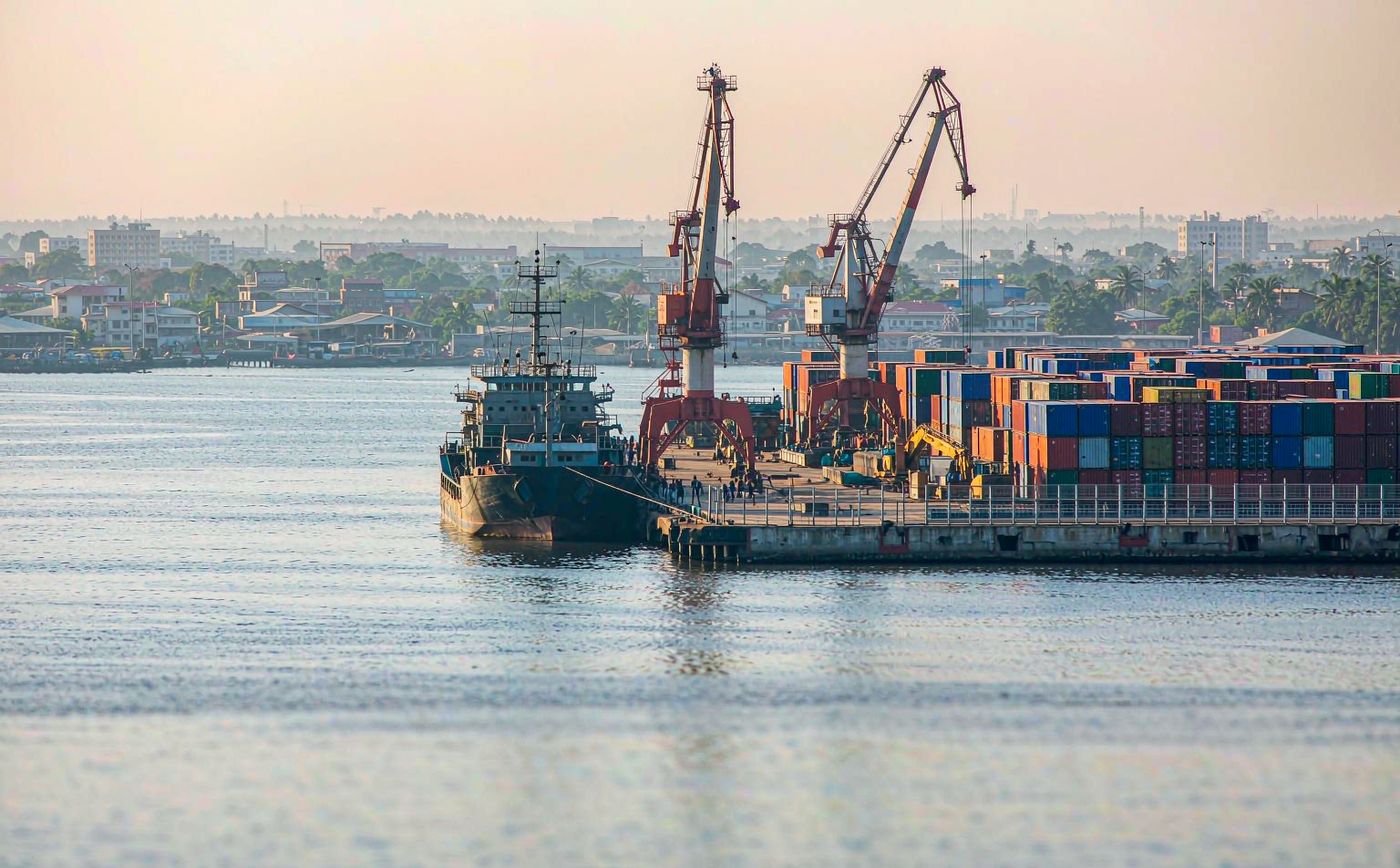
How to Ship from China to Nigeria: Lagos, Form M & SONCAP
The first thing that has to happen happens in a bank, not a port. Before a supplier in China can ship anything of value to you, a Nigerian commercial bank has to open a Form M — the declaration of intent to import — and register it on the central bank's trade monitoring system. It is the same idea as Egypt's ACID number, with one important difference: Egypt's number is applied for by the importer through a customs platform, whereas Nigeria's is processed by a bank, which means your banker is on the critical path and your banker's requirements come first.
The second thing is that there are two certificates, not one. Most manufactured goods fall under the Standards Organisation of Nigeria Conformity Assessment Programme, and it works in two tiers: a Product Certificate that belongs to the product and is obtained before shipment, and a Shipment Certificate issued for each consignment after inspection. Since late March 2026 both are started on the National Single Window rather than on separate agency portals, and the certificate activation that feeds the Form M and the clearance now runs through that one platform.
The third thing is that the cost that hurts is the days, not the freight. Nigeria is the lane in this series where a documentation mismatch is most expensive, because free days at the terminal are short and a container held for three weeks on an administrative query can cost more in demurrage and storage than the ocean freight did. Every section below is written with that in mind: what has to be right, and before when.
If you read one section: incorporate and get your tax number before you buy anything; open the Form M through your bank before you tell the supplier to ship; buy the insurance from a Nigerian insurer, because a foreign policy is not accepted; and get the Product Certificate started early, because the testing on some categories takes weeks rather than days.
How your cargo moves: China to Nigeria
Eight steps from your supplier's door to yours. The last four are the ones shaped by local rules.
- Pickup from your supplierWe collect the goods anywhere in China and bring them to our consolidation point.
- Export clearanceChina customs declaration filed and released before the goods move to the port.
- Loading and departureContainer loaded, sealed and handed to the carrier at the Chinese port.
- Main carriageOcean, air or rail movement booked on the route agreed for your cargo.
- Arrival at the gatewayDischarge at the port or airport of entry, recorded on the carrier's manifest.
- Import clearanceCustoms declaration filed locally, with duty and tax assessed on the declared value.
- Customs releaseGoods released into free circulation once duty and tax are settled.
- Final deliveryOnward movement to your delivery address, warehouse or nominated depot.
Duty rates, VAT rates and clearance times move, and the figure that applies to your goods is the one set for your commodity code on the day of clearance. We check the current position against your code before your goods sail and confirm it to you in writing — ask for that check when you request a quote.
Register the company before you register the shipment
Nigeria does not allow commercial importing by an unregistered individual. The registrations are ordinary company formalities, but they have to exist before anything else can, and they are the reason a first import takes longer than the freight suggests.
| What you need | Who issues it | What to watch |
|---|---|---|
| Corporate registration | Corporate Affairs Commission | Certificate of incorporation. Commercial imports are made by a registered entity, not a person. |
| Tax Identification Number | Federal Inland Revenue Service | The TIN is the identity used across the trade portal, the bank's Form M application and the customs system. Every other registration keys off it. |
| Corporate bank account with an authorised dealer | A commercial bank approved by the central bank | Only an authorised dealer bank can process a Form M, so the account matters as much as the company. Build the relationship before you need it. |
| Importer registration with customs | Nigeria Customs Service | Registered against the TIN and the corporate documents. The declaration is filed electronically and the registration is what it is filed against. |
| A licensed customs clearing agent | Licensed by the Nigeria Customs Service | Clearance is electronic and procedural. For a first import an agent is how it actually gets done. |
| Sector permits | NAFDAC, SON, NCC and others by product | See the sections below. These belong to the product and they cannot be obtained after the goods land. |
A foreign business with no Nigerian entity cannot open a Form M. The usual routes are to sell to a Nigerian company that holds its own registrations, or to appoint a Nigerian importer of record. Settle which it is before the pro forma invoice is signed, because the party named on the Form M is the party customs and the bank will deal with.
The Form M, and why the bank comes before the booking
The Form M is the single document that gates everything else. It is required for imports above roughly USD 1,000, it is processed through your bank rather than through customs, and nothing downstream — the shipment certificate, the assessment report, the release — can be generated without it.
| What you give the bank | Why they need it |
|---|---|
| Pro forma invoice from the supplier | Declares what is being bought, at what value, from whom. The final commercial invoice has to reconcile to it. |
| Product Certificate, where the goods are regulated | Proof the goods have been through conformity assessment. Activated on the platform so the Form M can reference it. |
| Insurance certificate from a Nigerian insurer | Local insurance is a legal requirement for opening a Form M. A policy issued outside Nigeria is not accepted. |
| Tax Identification Number and corporate documents | Identity and standing of the importer. |
| Sector permits where applicable | NAFDAC, NCC and other approvals by product category. |
| Banker's reference | Some banks ask for it as part of know-your-customer. |
The insurance rule is the one that surprises people. Importers routinely agree CIF or CIP terms with a Chinese supplier on the assumption that the supplier's policy covers the cargo. It does not count here: for the Form M, Nigeria wants a policy issued by a Nigerian-registered insurer. Buy it locally, before you apply, and treat it as a line in the budget rather than an afterthought.
The Form M is valid for six months for general goods and twelve months for machinery and equipment. If the goods do not arrive within the validity period, the form has to be renewed or revalidated through the same bank. Since late March 2026 the application runs through the National Single Window, and approval times have been reported as considerably shorter than the old thirty-day norm — but confirm with your bank, because the single window does not make your bank faster at asking you for documents.
Once the Form M is approved, its number goes onto the bill of lading and the commercial invoice. That number is what ties the physical shipment to the approved declaration, and a mismatch between the two is the classic cause of a container sitting at Apapa.
SONCAP: two certificates, and the window they run through
The Standards Organisation of Nigeria Conformity Assessment Programme covers most manufactured imports. Understanding that it has two levels, and that they do different jobs, removes most of the confusion.
The Product Certificate (PC)
Belongs to the product, obtained before the goods ship, on the basis of test reports and, on the registered and licensed routes, a documented quality management system. Three routes: unregistered, registered and licensed. It is the prerequisite for opening the Form M, so it is the earliest hard deadline in the chain.
The Shipment Certificate (SC)
Issued for one consignment, after inspection and where required testing, once the PC, the Form M and the final invoice exist. The importer uses it to trigger the Pre-Arrival Assessment Report. Without it, the assessment — and therefore the clearance — does not happen.
| Route | For | Validity | Inspection | Fee |
|---|---|---|---|---|
| Unregistered (PC-U) | One-off or infrequent shipments | 6 months, single use | Physical inspection and testing on every consignment | About USD 500 |
| Registered (PC-R) | Regular exporters with a quality management system | 1 year, multiple shipments | Four inspections a year, the first one mandatory | About USD 1,000 |
| Licensed (PC-L) | High-volume manufacturers with a compliance record | 1 year, multiple shipments | Surveillance, at least one shipment monitored every six months | About USD 2,000 |
| Shipment Certificate (SC) | Every consignment | One shipment | Issued after inspection and testing | About USD 350 |
The scope is wide: electrical and electronic goods, household appliances, lighting, cables and IT equipment; vehicles, motorcycles, tyres, batteries and spare parts; building materials including steel, cement, tiles and paints; gas appliances; toys; generators; food-contact materials; chemicals; fertiliser; textiles and footwear. Solar panels, storage batteries and inverters have been added to the regulated list. The statutory exemptions are narrow: food, drugs, non-equipment medical supplies, chemicals imported as raw material by a bona fide manufacturer, military goods, prohibited items, and second-hand goods other than vehicles — and used vehicles still need certification under the vehicle programme, with an age limit commonly quoted at eight years.
The 2026 changes worth knowing. From late March 2026, certification and permit applications are started on the National Single Window rather than on separate agency portals, and certificates are activated and used for the Form M, the PAAR and the clearance through that platform. A vehicle conformity programme now covers new and used vehicles. Paper certificates have been withdrawn in favour of electronic ones that customs can verify directly. Some pressure vessels, valves and tanks have moved onto a specialised route.
The practical warning is about timing. Testing is quick for ordinary products and slow for others — cables and batteries are commonly quoted at several weeks — and the Product Certificate has to exist before the Form M, which has to exist before the shipment. A first-time importer should start the Product Certificate at the point of choosing the product, not at the point of booking the container.
Lagos, Lekki, Onne and the rest
Nigeria's port choice matters more here than on most lanes, because the difference between gateways is measured in weeks of terminal time rather than in miles.
| Gateway | Region served | Notes |
|---|---|---|
| Apapa | Lagos, the south-west, the national market | The largest and busiest, with the widest range of carrier services. Also the most exposed to congestion and to the truck queues on the access roads. Berthing waits of five to fourteen days are reported in peak periods. |
| Tin Can Island | Lagos, alternative entry | The second Lagos port, comparable in cost, and preferred by some carriers for berth availability. Same congestion exposure as Apapa. |
| Lekki Deep Sea Port | Lagos, the south-west | Nigeria's deep-water port. Takes larger vessels directly instead of feeding them in, which is reported to save a week or more, and its terminal systems are integrated with the National Single Window. Fewer services call there, so check availability before you commit. |
| Onne (Port Harcourt) | Eastern Nigeria, oil and gas | Serves the eastern corridor and the energy sector. Rates to Onne are commonly quoted higher than to Lagos, and many services reach it by transhipment. |
| Calabar and Warri | Regional | Limited carrier service. Sensible only where your operation is genuinely close to them. |
The decision is usually between Lekki and the traditional Lagos ports, and it turns on whether your carrier runs a direct call to Lekki. If it does, the deeper water and the integrated clearance are worth having. If it does not, ask whether the routing feeds through a regional hub, because that is where the extra week comes from.
How long into Nigeria by vessel and aircraft
West Africa is a long haul from China, and most services now route round the Cape of Good Hope rather than through the Mediterranean and down. The ranges below are port to port for full containers and airport to airport for air cargo.
| Origin | Destination | Mode | Transit |
|---|---|---|---|
| Shanghai / Ningbo / Shenzhen | Lekki | FCL, direct | 30–35 days |
| Shanghai / Ningbo / Shenzhen | Apapa or Tin Can | FCL, direct | 35–42 days |
| Qingdao / Tianjin | Lagos | FCL, often transhipped | 42–50 days |
| Any major port | Lagos | LCL | 40–50 days door to door, consolidation included |
| China | Lagos, via a hub such as Addis Ababa or Dubai | Air freight | 8–12 days |
| China | Nigeria | Express courier | 3–5 days door to door |
Then add the Nigerian side. Port waiting and customs clearance is commonly quoted at five to fourteen days at the traditional Lagos ports, and under two days for a fully compliant container at Lekki — figures worth treating as best cases rather than averages. Door to door, from factory to Lagos warehouse, plan on six to seven weeks.
Duty, levies and the VAT on top
Nigeria's tax stack is the longest in this series. Duty is assessed on the CIF value under the ECOWAS Common External Tariff as adjusted by Nigeria, and then several separate charges sit on top of it — one of which is calculated on FOB rather than CIF, which is unusual and worth knowing.
| Element | How it is worked out | Illustrative figure (USD) |
|---|---|---|
| Invoice value of the goods | What you paid the supplier, FOB | 18,000 |
| International freight and insurance | Added to reach the CIF value | 2,500 |
| Customs value (CIF) | Invoice plus freight and insurance | 20,500 |
| Import duty at 20% | On the CIF value, at the HS code rate | 4,100 |
| Additional levy, where it applies | On the CIF value for certain categories | — |
| ECOWAS levy at 0.5% | On the CIF value | 103 |
| CISS charge at 1% | On the CIF value | 205 |
| Administrative levy at 4% | On the FOB value, not CIF | 720 |
| VAT base | CIF plus duty plus levies | 25,628 |
| VAT at 7.5% | On the VAT base | 1,922 |
| Total duty, levies and VAT | The cash out at clearance, before demurrage | 7,050 |
Two things stand out. The VAT rate is low by regional standards — seven point five percent, against fourteen in Egypt and fifteen in South Africa — but the base it is charged on has been inflated by every levy above it. And the combined effective rate on many categories exceeds half the CIF value, which is why the duty and levy schedule matters more to a Nigerian importer than the freight rate does.
The four percent levy is on FOB. Most of the stack is calculated on the CIF value, but the administrative levy that funds the customs service is calculated on the FOB value as declared on the approved Form M and the final invoice, and it does not include freight or insurance. It is a small difference in the arithmetic and a large one in an argument with an assessment.
Incoterms on a Nigeria booking, and who opens the Form M
The Form M is opened by the importer through a Nigerian bank, no matter what the Incoterm says. Incoterms change who pays for things, not who is the importer of record — but they do change how much of the process you are exposed to.
| Term | Who opens the Form M | What it really means |
|---|---|---|
| EXW / FOB | You | Full control, full exposure. You manage the Form M, the insurance, the certificates and the clearance. Cheapest on paper, and the most work. |
| CIF / CFR | You | The supplier books the carriage, but the insurance still has to be a Nigerian policy for the Form M, which means the supplier's CIF insurance does not discharge your obligation. This is the most misunderstood point on the lane. |
| DAP / DDP | Usually the seller's nominated importer | Often sold as the easy option. Find out whose Form M it is, because the importer named on the form is the party the bank and customs hold. If your goods are moving under someone else's declaration, you should know exactly what you do and do not control. |
Whatever the term, put three things in writing before production: who holds the Product Certificate, who arranges the Nigerian insurance, and by what date the Form M will be approved. Those three dates are the schedule.
The national single window, and the filing that goes through it
Nigeria runs its trade documentation electronically, and since late March 2026 the certification, permit, Form M and assessment steps are initiated on the National Single Window rather than on separate agency portals. Customs processing itself runs on the Nigeria Integrated Customs Information System, with a newer indigenous platform now in use alongside it.
- Form M, approved through your bank and registered on the trade monitoring system.
- Pre-Arrival Assessment Report, the document that sets the value, the HS code, the origin, the duty rate and any restrictions. Generated on the customs system once the Form M and supporting documents are in. Normally within a day or two of a complete submission.
- Single Goods Declaration, the electronic entry lodged for the consignment.
- Commercial invoice showing the true transaction value and carrying the Form M number. Under-valuation is treated as a criminal offence, not an error.
- Bill of lading or air waybill, carrying the Form M number and matching the invoice.
- Packing list with quantities, weights and dimensions, used for physical verification.
- CCVO, the Combined Certificate of Value and Origin, which declares value and origin together and is used to test both.
- Insurance certificate from a Nigerian insurer.
- Shipment Certificate under SONCAP, and NAFDAC or other sector permits where the product needs them.
- Certificate of origin, where a preferential rate is claimed.
Customs is increasingly automated and increasingly focused on valuation, and the delays now come from inconsistency rather than from absence. An invoice that says one thing and a manifest that says another produces a query, and a query produces days. Cross-check the documents before the vessel sails, not after it berths.
Following a shipment from Guangzhou to a warehouse in Lagos
A worked example, because the sequence is what catches people. A Lagos importer buys a container of LED lighting from a factory in Guangzhou.
Before the order: the certificates
Lighting is inside the SONCAP scope. The factory applies for a Product Certificate on the registered route, submits test reports and quality system documentation, and obtains a certificate valid for a year. Testing on lighting is quick; on cables or batteries it would not be. The importer registers the company, holds a TIN and has an account with an authorised dealer bank.
Pro forma, then the bank
The factory issues a pro forma invoice. The importer buys marine insurance from a Nigerian insurer and applies to the bank for the Form M, referencing the activated Product Certificate. The bank registers the form. This is the step that decides whether the goods can ever be cleared.
Production, and the number goes on the paperwork
The factory produces the goods and issues the final commercial invoice and packing list carrying the Form M number. The importer applies for the Shipment Certificate, which requires an inspection of the consignment in China before it is sealed.
Booking and loading
The forwarder books the container from Guangzhou to Lekki, collects the cargo, handles export clearance and loads it. The bill of lading is issued with the Form M number on it.
The voyage, and the assessment while it sails
The vessel sails, routing round the Cape, for a voyage of roughly thirty to thirty-five days to Lekki. Meanwhile the bank submits the documents and the Pre-Arrival Assessment Report is generated. The duty position is known before the ship arrives — which is the whole point of a pre-arrival report.
Arrival, payment and release
The container is discharged. Duty, levies and VAT are paid at an authorised bank. Customs scan or inspect, and where everything matches, release follows. The container is trucked to the warehouse, and the empty is returned within the free detention period.
Notice that the risk sat in the first three steps and not in the voyage. A factory without a Product Certificate, or a bank that sat on the Form M, would each have cost more than the most expensive freight quote on the table.
The tariff book, and the levies stacked on it
Nigeria applies the ECOWAS Common External Tariff as its baseline and adjusts it upward for certain categories. The rate you actually pay is the rate attached to your HS code, and the only reliable way to find it is to look it up.
| Charge | Charged on | Notes |
|---|---|---|
| Import duty | CIF value | Under the ECOWAS Common External Tariff as adjusted by Nigeria. Commonly quoted in the range of five to thirty-five percent by heading, higher on some categories. |
| Additional levy | CIF value | Applies to certain categories, reported in a range comparable to the duty itself. Where it applies it roughly doubles the headline rate. |
| ECOWAS levy | CIF value | Reported at 0.5 percent. |
| CISS charge | CIF value | The Comprehensive Import Supervision Scheme charge, reported at 1 percent, funding the pre-shipment inspection regime. |
| Administrative levy | FOB value | Reported at 4 percent, calculated on the FOB value rather than the CIF value. |
| VAT | CIF plus duty plus levies | 7.5 percent. Recoverable by a registered Nigerian business against output VAT. |
| Excise and special levies | Specific categories | Apply to alcohol, tobacco and some other goods. |
| Surcharge or anti-dumping | By HS code | Where a measure exists it is found by looking up the heading, and unlike VAT it is pure cost. |
The number to take away is the combined effective rate, which on many categories exceeds half the CIF value. Importers who price a Nigerian deal off the headline duty rate and then discover the levies usually find the margin was in the part they did not check.
NAFDAC, and the products that need a permit before they sail
Food, drugs, cosmetics and medical products fall to the National Agency for Food and Drug Administration and Control, and they are outside SONCAP precisely because they are regulated separately and more strictly.
What NAFDAC covers
Food and food-contact materials, pharmaceuticals and supplements, cosmetics and personal care products, medical devices and some chemicals. Regulated products need registration and, for many categories, an import permit issued before the goods ship.
Other sector regulators
Telecommunications equipment needs approval from the Nigerian Communications Commission. Broadcasting equipment, some agricultural products and radioactive materials each have their own regulator. A product can need more than one: a device that transmits radio and touches food is two problems.
The point of the timing rule is simple: these permits are issued to a product and a registrant before shipment, and they cannot be obtained once the goods are on the water. Importers who treat sector permits as part of the clearance paperwork rather than as part of the product decision lose containers to them.
Paying through the bank, and the foreign exchange question
Because the Form M is a bank instrument, the payment route and the import declaration are the same conversation. Your bank validates the transaction, registers the form, and — depending on the current foreign exchange framework — is the channel through which the supplier gets paid.
Nigeria has managed foreign exchange availability through the banking system rather than through customs, and the practical consequence for an importer is that access to foreign currency, and the rate at which it is obtained, can affect the timing and the cost of a shipment independently of anything happening at the port. A first-time importer should ask the bank three questions before signing a pro forma invoice: will you process this Form M, how long will it take, and how will the supplier be paid.
Ask the bank before you promise the supplier a date. The Form M is the one step on this lane that neither you, the supplier, nor the forwarder controls. It belongs to the bank. Everything downstream waits on it.
The invoice, and the Form M number on its face
The commercial invoice is where most mismatches start, and a mismatch is what turns into days.
- The Form M number appears on the commercial invoice and on the bill of lading or air waybill, and the two have to agree.
- The value has to reconcile to the pro forma invoice that the Form M was approved against. A final invoice that differs materially invites a query.
- The value has to be the true transaction value. Under-valuation is a criminal offence in Nigeria, not an administrative error, and customs valuation is one of the areas where enforcement has been tightened.
- The description has to match the HS code. "Electrical goods" is not a description that survives an assessment; "LED panel lights, 18 W, 6000 K, aluminium housing" is.
- The CCVO declares value and origin together, and it has to agree with both the invoice and the certificate of origin.
Pass the requirements to the supplier in writing before production, not at booking. A Chinese factory that has never shipped to Nigeria will produce a perfectly normal commercial invoice that is missing three of the five things above.
Ordering online, and the three hundred dollar line
Nigeria has a narrow duty-free pathway for low-value non-commercial courier parcels, reported at roughly USD 300 in FOB value. It is audited by the automated risk engine, and it does not apply where a parcel contains commercial quantities of a single product — so ten units of the same item at USD 25 each is a commercial import, not a small parcel.
For a business, the practical reading is that this is a route for samples, documents and prototypes, and not for stock. Anything you intend to resell should go through the Form M, the assessment and the full declaration, whatever the invoice says. Buying on a marketplace does not change that: the platform may handle the checkout, but the consignment still needs a Form M opened by a registered Nigerian importer.
Business imports, and personal effects into Nigeria
| Situation | What applies | What to expect |
|---|---|---|
| Business stock bought from a Chinese supplier | Form M, SONCAP where regulated, PAAR, full assessment | The complete process in this guide. Above roughly USD 1,000 the Form M is mandatory. |
| Household removals and personal effects | A separate treatment for used household goods, assessed differently | Still a declaration, still an inventory, and still capable of sitting in storage if the paperwork is wrong. |
| Samples and documents | Express channel, with a reported threshold around USD 300 FOB | Fast and cheap, and the reason to keep samples genuinely small. |
| Used vehicles | Vehicle conformity programme, with an age limit commonly quoted at eight years | Needs certification before shipment. The age limit is enforced, so check the build year before you buy. |
| Used machinery | Additional scrutiny, and in some categories restrictions | Check before shipping. Second-hand equipment that cannot be cleared is expensive to send back. |
The China forwarder and the Nigerian clearing agent
On this lane the two halves are more interdependent than usual, because the inspection that produces the Shipment Certificate happens in China and the clearance that uses it happens in Nigeria.
The forwarder in China
Books the vessel, collects the goods, handles export clearance and consolidation, and coordinates the pre-shipment inspection that the Shipment Certificate depends on. A forwarder that has not run a Nigerian inspection will learn the sequence on your container.
The clearing agent in Nigeria
Fixes the HS code, drives the Form M through the bank, generates the PAAR, arranges the assessment and payment, and manages the physical inspection and release. The agent is also who tells you whether the Product Certificate is needed before you have paid for the goods.
Get them talking before the booking. The question that matters is: what does the Shipment Certificate need, and when does the inspection have to happen relative to loading. If the container is sealed before the inspection, the certificate will not be issued, and the assessment will not be generated.
Checking a forwarder on a Nigeria booking
- Have you run a SONCAP inspection, and can you describe when it happens? The answer should be about the loading sequence, not about the certificate.
- Do you know the Form M number has to appear on the bill of lading? A forwarder that does not will produce a bill of lading customs cannot tie to the declaration.
- Which port does the service actually call, and is it direct? Lekki direct and Apapa via a feeder are a week apart.
- Can you produce a CCVO? It is a standard Nigerian requirement, and not every Chinese supplier knows what one is.
- Do you ask for the Product Certificate before booking? If the answer is "we ask when the cargo is ready," the sequence is wrong.
- What are the free days at the destination terminal? A forwarder who knows the number is a forwarder who has watched containers sit.
- Who pays the inspection and certificate fees? It should be in the quote.
Three shipments into Nigeria, and the reason for each
A container of LED lighting, Guangzhou to Lekki
FCL direct to Lekki, because the deep-water berth takes the vessel without feeding and the integrated clearance is worth days. SONCAP applies, so the Product Certificate exists before the Form M, and the pre-shipment inspection happens before the container is sealed.
Spare parts for a plant that has stopped, Shenzhen to Lagos
Air freight, eight to twelve days through a hub. The Form M still applies, and the bank still has to move, so the airline booking is not the constraint — the bank is. Worth it because the parts are worth more than the freight by a wide margin.
A first order from a new supplier, Ningbo to Apapa
LCL, because the volume does not justify a container and the buyer is testing the supplier. Expect forty to fifty days, and expect the deconsolidation at the destination to be slower than the consolidation at the origin. The buyer confirms the Product Certificate before paying the deposit, which is the only thing that protects a first order here.
Demurrage, and the days that cost more than the freight
This section exists because it is the difference between a Nigerian import that works and one that does not.
Demurrage is what the shipping line charges for a container held at the terminal beyond its free days. Storage is the terminal's own charge, on top of it. Neither is large per day in isolation, and both are large over three weeks. Free days on Nigerian imports are short, and the delays that consume them are almost always administrative: a value on the invoice that does not match the Form M, an HS code the assessment disagrees with, a Shipment Certificate that was never generated, a permit that belongs to a product nobody checked.
Do the arithmetic before you chase a freight discount. A quote that is a few hundred dollars cheaper is irrelevant next to a fortnight of demurrage and storage. On this lane the cheapest quote is frequently the most expensive shipment, because the saving is usually in the destination-side support that prevents the delay.
The things that actually prevent it are unglamorous: reconcile the invoice to the pro forma before the vessel sails; confirm the Form M number is on the bill of lading; make sure the Shipment Certificate has been generated; and have the agent ready with the assessment before the ship berths rather than after.
What Goodhope handles on the Nigeria lane
We work the China end, and on this lane the China end includes the inspection.
- Pre-shipment inspection coordination. We schedule the inspection that the Shipment Certificate depends on, before the container is sealed rather than after.
- Documents that reconcile. Commercial invoice with the Form M number, packing list, bill of lading, and CCVO — checked against each other before the vessel sails.
- Factory collection and consolidation across China, with loading photographs before sealing.
- FCL and LCL from Shenzhen, Guangzhou, Ningbo, Shanghai, Qingdao, Tianjin and Xiamen to Apapa, Tin Can, Lekki and Onne, plus air freight to Lagos.
- Routing stated plainly at quotation — direct or transhipped, and which port the service actually calls.
- Cargo insurance, inspection and dangerous goods handling where the shipment needs them.
We do not open your Form M, buy your Nigerian insurance, or act as importer of record — those belong to you, your bank and your agent. What we do is make sure the Chinese half is complete and internally consistent, which is where most of the avoidable delays start.
Why importers use Goodhope on this lane
Six things that are different about working with us on China to Nigeria shipments.
Ask for a Nigeria quote with the Form M step named
Send us the product, the HS code if you have it, the supplier's city, the weight and volume, and whether you already hold a Product Certificate. We will come back with the mode, the gateway, the transit range, and a written note on what has to be in place before the vessel loads.
Get a Quote Contact UsFrequently asked questions
What is a Form M and do I need one?
The Form M is the declaration of intent to import, processed electronically through a Nigerian commercial bank acting as an authorised dealer. It is required for imports above about USD 1,000 and it registers the transaction on the central bank's trade monitoring system. To open one you need a pro forma invoice from the supplier, a product certificate where the goods are regulated, an insurance certificate issued by a Nigerian insurer, your tax identification number and your corporate registration. It is valid for six months for general goods and twelve months for machinery and equipment. Without an approved Form M, goods cannot be cleared.
Why does the insurance have to be bought in Nigeria?
Nigeria requires imported goods to be insured by a Nigerian-registered insurance company, and a policy issued abroad is not accepted for the purpose of opening a Form M. This is unusual and it catches importers who have already arranged cover through their supplier or through a foreign broker. Buy the local policy before you apply for the Form M, because the bank will ask for the certificate as part of the application.
What is SONCAP and what are the two certificates?
The Standards Organisation of Nigeria Conformity Assessment Programme has two levels. The Product Certificate, or PC, belongs to the product and is obtained before shipment, usually on the basis of test reports and, for the registered and licensed routes, a quality management system. It lasts six months in the unregistered route and one year in the registered and licensed routes. The Shipment Certificate, or SC, is issued for each individual consignment after inspection and testing, and the importer needs it to trigger the Pre-Arrival Assessment Report. Most manufactured goods fall inside the programme.
What changed in Nigeria in 2026?
From late March 2026 all certification and import permit applications are started on the National Single Window platform rather than on separate agency portals, and the certificates are activated and used for the Form M, the PAAR and the clearance through that platform. A vehicle conformity programme now covers new and used vehicles, paper certificates have been withdrawn in favour of electronic ones that customs can verify directly, and some product categories have moved onto a specialised certification route. One reported effect is that Form M approval has shortened considerably, though you should confirm current timings with your bank.
How is import duty calculated in Nigeria?
Duty is assessed on the CIF value, which is the invoice value plus international freight and insurance, under the ECOWAS Common External Tariff as adjusted by Nigeria. Rates vary by HS code from about five percent to over thirty percent, with additional levies on some categories. On top of the duty there is VAT at seven point five percent, charged on the CIF value plus duty plus levies, plus a small ECOWAS levy, a one percent comprehensive import supervision scheme charge on the CIF value, and a separate administrative levy calculated on the FOB value rather than the CIF value. The combined effective rate on many goods exceeds half the CIF value.
What is a PAAR and when is it issued?
The Pre-Arrival Assessment Report is the customs document that sets out the goods, their value, their HS classification and their origin, and it determines the duty rate and any restrictions. It replaced the older Clean Report of Inspection and it is generated on the Nigeria Integrated Customs Information System once the Form M and the supporting documents have been submitted, typically through your bank. It is normally issued within a day or two of a complete submission, and customs will not begin clearance without it. Its whole purpose is that the assessment exists before the vessel arrives.
Which Nigerian port should I ship to?
Apapa and Tin Can Island are the two traditional Lagos ports and they carry most of the volume, but both are subject to congestion and to truck queues on the access roads. Lekki Deep Sea Port is the newer deep-water facility, takes larger vessels directly and is reported to clear faster because its systems are integrated with the National Single Window, though fewer services call there. Onne serves Port Harcourt and the oil and gas sector in the east. Calabar and Warri are regional. Ask your agent which port the carrier actually serves before you fix the destination.
How long does shipping from China to Nigeria take?
Direct sea services from the main Chinese ports to Lekki typically run about thirty to thirty-five days, and to Apapa or Tin Can about thirty-five to forty-two days, because shallower draughts mean cargo is sometimes fed in from a regional hub. Northern Chinese ports and transhipped routings run longer, around forty-two to fifty days. Less than container load adds consolidation and deconsolidation, so forty to fifty days is normal. Air freight runs about eight to twelve days through a hub, and express courier three to five days door to door.
What is demurrage and why does it matter so much here?
Demurrage is the charge the shipping line makes for a container held beyond its free days at the terminal, and storage is the terminal's own charge on top of it. On the Nigerian lane these are the costs that turn a cheap freight quote into an expensive shipment, because a documentation mismatch between the Form M, the manifest and the invoice can hold a container for weeks. Free days are short, the daily rates are significant, and the delay is nearly always administrative rather than physical. Getting the documents right before the vessel arrives is worth more here than negotiating the freight rate down.
Is there a duty-free threshold for small parcels from China?
A low-value non-commercial courier parcel below roughly USD 300 in FOB value is reported to clear on an expedited duty-free pathway, but the threshold is audited by the automated risk engine and it does not apply where a parcel contains commercial quantities of a single product. Treat it as a route for samples and documents, not for stock. A business importing for resale should expect to go through the Form M, PAAR and full assessment route regardless of the invoice value. Confirm the current threshold before relying on it.