
Home / Shipping to North Macedonia / How to Ship from China to North Macedonia | Thessaloniki Routing & 18% VAT
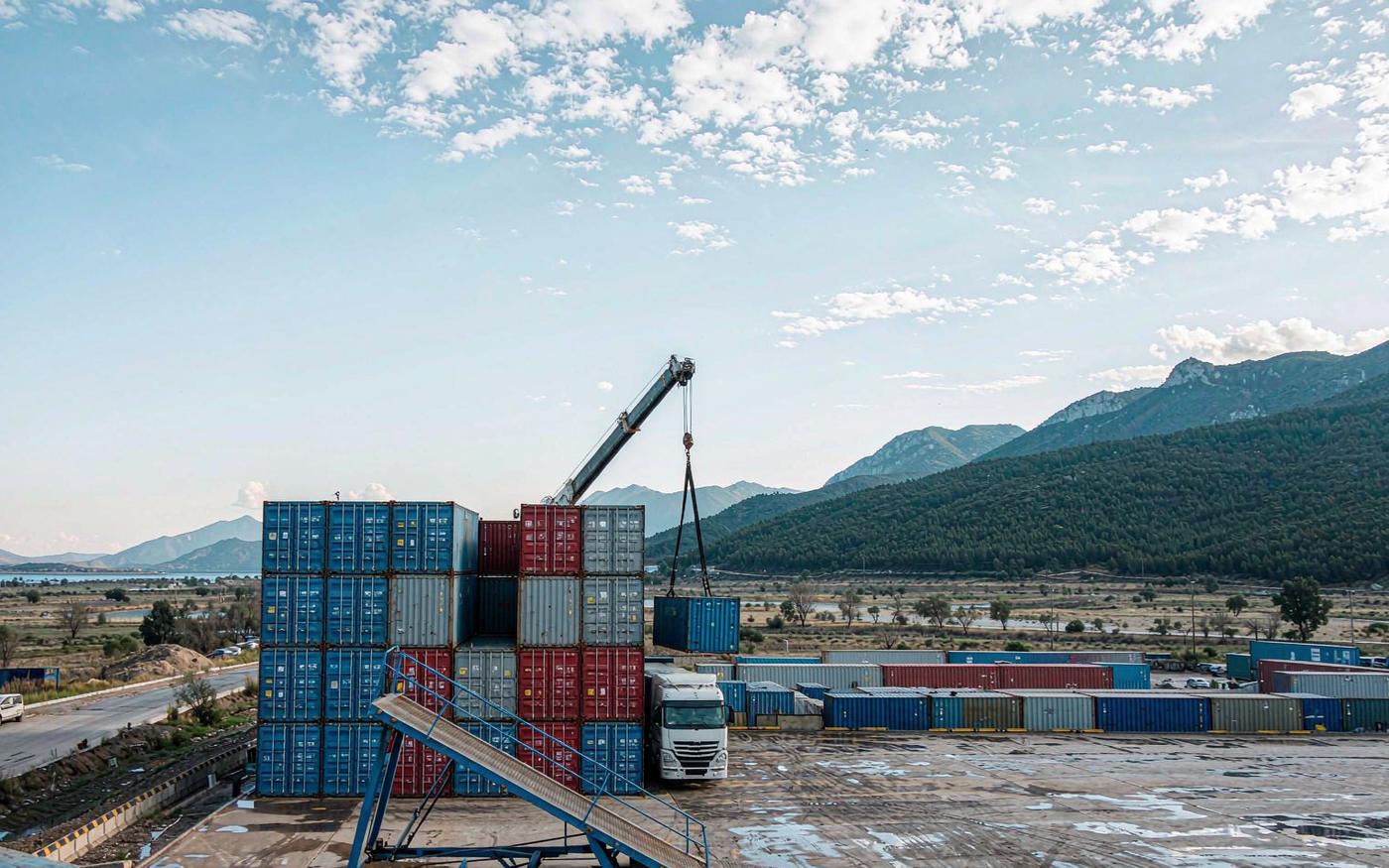
How to Ship from China to North Macedonia
North Macedonia sits in the middle of the Balkans with no coastline, which shapes every shipment plan before anything else does. Your goods will almost certainly be discharged at a Greek or Albanian port, moved inland by road or rail, and presented to Macedonian customs at a border or inland terminal. Getting that first decision right — which port, which inland mode — does more for your landed cost than any other choice in the chain.
The customs side is organised and increasingly digital. The Customs Administration handles declarations through its national electronic system, duty follows a tariff schedule that mirrors the EU model, and value added tax is charged at a flat standard rate with no relief for small commercial consignments. That last point is where new importers miscalculate most often.
This guide covers the routing, the declaration process, duty and tax, the labelling requirement that catches imported consumer goods out, and the valuation risk that carries the heaviest penalty in the system.
At a glance
Landlocked — main seaport Thessaloniki (Greece), with Durres (Albania) as an alternative — standard VAT 18% with no low-value commercial exemption — duty roughly 0–35% by HS code — currency MKD — clearance commonly 5–7 working days — retail labels in Macedonian and Albanian.
How your cargo moves: China to North Macedonia
Eight steps from your supplier's door to yours. The last four are the ones shaped by local rules.
- Pickup from your supplierWe collect the goods anywhere in China and bring them to our consolidation point.
- Export clearanceChina customs declaration filed and released before the goods move to the port.
- Loading and departureContainer loaded, sealed and handed to the carrier at the Chinese port.
- Main carriageOcean, air or rail movement booked on the route agreed for your cargo.
- Arrival at the gatewayDischarge at the port or airport of entry, recorded on the carrier's manifest.
- Import clearanceCustoms declaration filed locally, with duty and tax assessed on the declared value.
- Customs releaseGoods released into free circulation once duty and tax are settled.
- Final deliveryOnward movement to your delivery address, warehouse or nominated depot.
Duty rates, VAT rates and clearance times move, and the figure that applies to your goods is the one set for your commodity code on the day of clearance. We check the current position against your code before your goods sail and confirm it to you in writing — ask for that check when you request a quote.
A reliable landlocked route starting at Thessaloniki
There is no Macedonian seaport, so sea freight from China is discharged at a gateway in a neighbouring country and moved overland. Thessaloniki in Greece is the most widely used option: it is close, it handles containers efficiently, and the road and rail connection north to Skopje is well established. Durres in Albania is the common alternative when rates or capacity suit, and Bar in Montenegro or Constanta in Romania appear in some routings.
Air freight lands at Skopje (SKP), with Thessaloniki (SKG) used when flight availability or consolidation makes it cheaper. Express couriers serve the whole country and are usually the simplest option for samples and documents.
For a first shipment, ask your forwarder to quote the port and the inland leg as separate numbers. When they are bundled, you cannot tell whether a better port or a better trucking arrangement is what actually saved money — and on the second shipment you will want to know.
What the customs administration checks first, and why valuation matters most
Macedonian customs concentrates on three things on a first import: classification, valuation and origin. Classification means the HS code that determines your duty rate. Valuation means whether the invoice value is credible. Origin means whether the goods qualify for any preferential tariff treatment.
On origin, the answer for Chinese goods is usually no, and it is worth understanding why before you rely on it. North Macedonia has free trade arrangements with the EU, EFTA, Turkey, Ukraine and its CEFTA neighbours in the Western Balkans. None of those cover goods of Chinese origin. A certificate of origin is still needed in many cases, but it establishes where the goods were made rather than unlocking a lower rate.
On classification, do not let your supplier pick the HS code casually. The same product described two different ways can fall into two headings with materially different rates, and a code that was accepted once is not a guarantee for the next consignment if the description changes.
Duty bands that will apply to the goods you are buying
Import duty is set by HS code against the national tariff, which follows the structure of the EU's common customs tariff. Published ranges for the schedule run from zero up to roughly 35%, with the effective rate for most manufactured imports falling well below the top of that range.
As a rough working picture, many raw materials and industrial inputs enter at or near zero, manufactured consumer goods sit in the low single digits to mid teens, and a narrower set of protected or agricultural lines carries higher rates. Textiles and footwear are commonly cited in the mid single digits, while many electronics lines under chapter 85 are low or duty free. Treat any of these as indicative only — the confirmed number is the one your broker pulls for your specific code.
Duty is charged on the customs value, which is built on the CIF basis — goods, insurance and freight to the point of entry. Value added tax is then charged on top of the customs value plus duty. Both are payable before release unless your broker has a deferment arrangement.
VAT at 18% on every commercial parcel
The standard VAT rate is 18%, with reduced rates of 10% and 5% for defined categories including certain foods, pharmaceuticals, medical goods and some agricultural inputs.
The important detail for first-time buyers: there is no low-value exemption for commercial imports. Small parcels sent to a business are still assessed. A common misconception is that a consignment under a certain euro value passes free — that relief is described for low-value personal parcels in a different context, and a business importing goods for resale should not budget on the assumption that it applies.
Registered businesses can normally recover import VAT as input tax, so the cash impact is temporary for an established importer. For a company that is not yet registered, the VAT is a real cost paid at clearance, and it should be included in the landed cost from the start rather than discovered at the border.
Labels in Macedonian and Albanian, sorted before goods ship
Consumer goods sold in North Macedonia are expected to carry labelling in Macedonian, and in practice Albanian is widely required as well given the size of the Albanian-speaking market. This is a product-compliance requirement rather than a customs one, but it is the reason goods can clear customs successfully and then be unsellable.
The practical implication is that labelling has to be decided in China, at the production stage, not after arrival. Re-stickering a container's worth of cartons by hand in a Skopje warehouse is expensive and slow, and for some categories — food, cosmetics, electrical goods — the label content itself is regulated.
Electrical and electronic products are also expected to meet CE-type conformity standards, and food, plant and animal products require health or phytosanitary documentation. Confirm which of these apply to your product before you order, not after it ships.
Filing through the national portal, and the broker who does it
Declarations are submitted electronically through the customs administration's national system, generally referred to as e-Carina; some sources also reference the UNCTAD ASYCUDA World platform as the underlying system. Either way, filing is done by a licensed customs broker rather than by the importer directly, and your broker will need a power of attorney on file.
Documents required with the declaration normally include the commercial invoice, packing list, bill of lading or air waybill, and a certificate of origin. For consignments above a low value threshold, roughly EUR 150, a certificate of origin is generally expected. Controlled categories — chemicals, pharmaceuticals, medical devices, food, radio equipment — need permits or certificates issued by the relevant Macedonian authority.
A useful habit is to have your broker pre-check the document set while the goods are still at sea. Most clearance delays on first shipments are document problems that could have been fixed a fortnight earlier, at no cost, in China.
Why undervaluing an invoice is the most expensive mistake here
North Macedonia is notably strict on undervaluation. Where a declared value falls materially below the market level — a divergence of around 30% is the figure commonly cited — the declaration can be flagged automatically, and customs may assess duty on its own valuation instead of yours.
The consequences are not limited to paying the correct duty. Penalties for customs offences can reach the full value of the goods in serious cases, and published guidance refers to fines up to twice the value of the goods for significant misdeclaration. Against that exposure, the duty saved on an understated invoice is trivially small.
There is also a longer shadow. Customs records are retained, and a company that has been flagged once tends to face higher inspection rates on subsequent consignments. For a buyer planning to import regularly, the cost of a clean first declaration is measured over years.
Road and rail onward from Thessaloniki, compared
Road is the default for the Thessaloniki-to-Skopje leg: it is fast, frequent and flexible, and for full truckloads it is usually the cheapest door-to-port arrangement. Rail exists on the corridor and can be competitive for regular volumes, but it depends on terminal handling and schedule availability.
For full container loads, the container typically moves from the port by road or rail to an inland terminal or directly to the consignee's premises after clearance. For less-than-container loads, cargo is deconsolidated at a bonded warehouse near the border or in Skopje and then delivered. That deconsolidation step is a real cost — ask whether it is in your quote.
Rail freight from China to Central Europe, onward trucked to the Balkans, occupies the middle ground between sea and air on both cost and transit time. It is worth pricing when your cargo is time-sensitive but too heavy for air.
How long clearance takes when nobody has made a mistake
Official trade data puts the average time to clear imports at roughly 3.2 days on a measured basis, while practical reporting for commercial consignments more often describes 5 to 7 working days, and longer when a physical inspection is ordered. Plan on the longer figure for a first shipment.
A meaningful share of consignments is physically inspected — figures around 30% are cited for the general import population, and incomplete or inconsistent paperwork pushes a given shipment's odds up sharply. Inspection is not a problem if the documents match the cargo; it becomes one when the packing list does not describe what is actually in the boxes.
Add the inland leg. Thessaloniki to Skopje is a short drive, but border queues, weekend closures and the customs appointment itself all add days. A realistic first-time door-to-door plan for sea freight runs well past the pure sailing time once clearance and inland delivery are included.
Getting goods from the port through to Skopje
Skopje is the main destination and the best-served city for warehousing and final delivery. Deliveries to other towns — Bitola, Prilep, Tetovo, Kumanovo, Ohrid — are routine but should be quoted with the actual postcode, because the last leg changes with distance and road conditions.
For a small business without its own unloading facilities, a delivery appointment and a tail-lift vehicle are worth requesting. Palletised cargo moves far more easily here than loose cartons, and a supplier who palletises properly in China saves real money at the destination.
Winter matters in the Balkans. Mountain routes can be affected by snow between roughly December and February, and a day of buffer on inland legs in that period is cheap insurance.
Working with the broker who files your declarations
Declarations must be filed by a licensed customs broker, and for a first-time importer the broker is the most important local partner you will choose. Ask three questions: do they handle Chinese-origin cargo regularly, can they give you the HS code and estimated duty in writing before shipment, and do they offer deferment or will duty and VAT be payable in cash at release?
A good broker also tells you what they cannot do. If a product needs a permit from a sector regulator, that is your responsibility as importer, and a broker who says otherwise is one to avoid.
Finally, keep your own document archive. Customs retention rules require records to be kept for years, and being able to produce a complete file for a past consignment is the difference between a routine query and a problem.
Why importers use Goodhope on this lane
Six things that are different about working with us on China to North Macedonia shipments.
Straight cases when importing into North Macedonia
Five shipments bought in China and delivered into North Macedonia, told end to end — where the order came from, how it moved, where it nearly went wrong, and how it finished. Client names are withheld at their request; the situations and the handling are what we deal with on this lane.
Furniture · Alibaba order · Foshan to Thessaloniki to Skopje
The purchase. A buyer setting up a home furnishings shop ordered a container of furniture from a Foshan factory he found online, quoted EXW and told the factory to deliver to a port.
The move. We collected under EXW, loaded in Shenzhen, sailed to Thessaloniki and trucked the container up to Skopje with a local broker filing the declaration.
Where it nearly went wrong. The declared value came in well below market level for furniture of that specification. The customs administration treats a significant gap between declared and market value as a risk flag, and the penalty scale here reaches far beyond the duty saved.
How it finished. We reviewed the invoice before it was filed and had it reissued at the real transaction value. The container cleared cleanly, and he avoided the kind of flag that raises inspection rates on every later shipment.
Retail goods · labelling problem · Yiwu to Thessaloniki
The purchase. A retailer imported consumer goods bought across the Yiwu market, planning to sell them immediately on arrival.
The move. Consolidated in Yiwu, container to Thessaloniki, road to Skopje, cleared through a licensed broker.
Where it nearly went wrong. Retail goods are expected to carry labelling in Macedonian, and in practice Albanian as well. Nothing about the labelling affects customs — it affects whether the goods can legally be sold.
How it finished. We caught it before the second order shipped and had the labelling produced in China at the factory. Re-stickering the first consignment by hand in Skopje cost him more than the labelling would have.
Textiles · regular replenishment · Shaoxing to Skopje
The purchase. An apparel importer moved from samples to regular replenishment and needed a routing that was predictable rather than fast.
The move. Consolidated textile cargo from Shaoxing, sea freight to Thessaloniki, weekly trucking up the corridor with a standing broker arrangement.
Where it nearly went wrong. Textile duty bands are not punitive here, but inconsistent fabric composition on the invoice moves one product across two different rates, and that inconsistency is what customs remembers.
How it finished. We standardised product descriptions across his entire range so each line has one code and one description. Replenishment now clears without classification questions.
Samples · exhibition · Guangzhou to Skopje
The purchase. A buyer had to get product samples to a Skopje trade show and booked the freight four days before collection.
The move. Air freight from Guangzhou with customs handled on arrival, then same-day road delivery into Skopje.
Where it nearly went wrong. Small commercial consignments are still assessed VAT here. Assuming a low-value exemption exists for business parcels is the single most common budgeting error on this lane.
How it finished. We told him the VAT position before he shipped so nothing was a surprise at collection, and the samples reached the exhibition on time.
Regional delivery · beyond the capital · Ningbo to Bitola
The purchase. A manufacturer based outside Skopje assumed that delivery to the capital meant delivery to him.
The move. Container from Ningbo to Thessaloniki, cleared in Skopje, then onward regional delivery to Bitola by a smaller vehicle.
Where it nearly went wrong. Quoting to the capital rather than to the actual postcode hides a whole extra leg, and using the wrong vehicle for a regional address is a failed delivery waiting to happen.
How it finished. We quoted from the actual delivery address, arranged a tail-lift vehicle, and delivered in one attempt.
Why importers use Goodhope on this lane
Six things that are different about working with us on China to North Macedonia shipments.
Start a shipment into North Macedonia
Tell us what you are importing and where it needs to land. We will confirm the gateway port, the inland routing, the HS-based duty and VAT estimate, and the documents your broker will need before the goods sail.
Get a quote Talk to usRelated pages
Frequently asked questions
Which port do goods from China arrive at?
Thessaloniki in Greece is the most widely used gateway, with a road and rail corridor north to Skopje. Durres in Albania is the common alternative, and Bar or Constanta appear in some routings. Air freight lands at Skopje, with Thessaloniki used when consolidation or flight availability suits.
What is the import VAT rate?
The standard rate is 18%, with reduced rates of 10% and 5% for defined categories such as certain foods, pharmaceuticals and medical goods. There is no low-value exemption for commercial imports, so small business consignments are still assessed.
How much customs duty will I pay?
Duty depends on your HS code under the national tariff, which follows the EU common customs tariff structure. Published ranges run from zero to around 35%, with most manufactured goods falling well below the top. Ask your broker to confirm the rate for your specific code before you ship.
Do CEFTA or EU trade agreements reduce my duty?
No, not for Chinese-origin goods. North Macedonia has free trade arrangements with the EU, EFTA, Turkey, Ukraine and its CEFTA neighbours, but none of them cover goods originating in China. A certificate of origin is still usually required, but it establishes origin rather than unlocking a preferential rate.
Do labels need to be in Macedonian?
Retail goods are expected to be labelled in Macedonian, and in practice Albanian is widely required as well. This is a product-compliance matter rather than a customs one, and it needs to be handled at the production stage in China because re-labelling after arrival is expensive.
How long does customs clearance take?
Measured averages are around 3.2 days, but practical reporting for commercial consignments more often describes 5 to 7 working days, and longer when a physical inspection is ordered. Plan on the longer figure for a first shipment.
What happens if the declared value is too low?
Undervaluation is treated seriously. A declared value materially below market level — a divergence of around 30% is commonly cited — can be flagged automatically and reassessed, and penalties in serious cases can reach twice the value of the goods. It also raises your inspection risk on later shipments.
What documents are needed?
Typically a commercial invoice, packing list, bill of lading or air waybill, and a certificate of origin, which is generally expected above roughly EUR 150. Controlled categories such as chemicals, pharmaceuticals, medical devices, food and radio equipment need permits or certificates from the relevant authority.
Can I file the customs declaration myself?
No. Declarations are submitted electronically through the national customs system by a licensed customs broker, who will need a power of attorney from you. Your broker also advises on classification and valuation before the goods arrive.
Is rail a realistic option?
Rail exists on the Thessaloniki corridor and can be competitive for regular volumes, but road is the default for flexibility and speed. China-to-Europe rail with onward trucking to the Balkans sits between sea and air on both cost and transit time and is worth pricing for time-sensitive heavy cargo.