
Home / Shipping to Pakistan / How to Ship from China to Pakistan
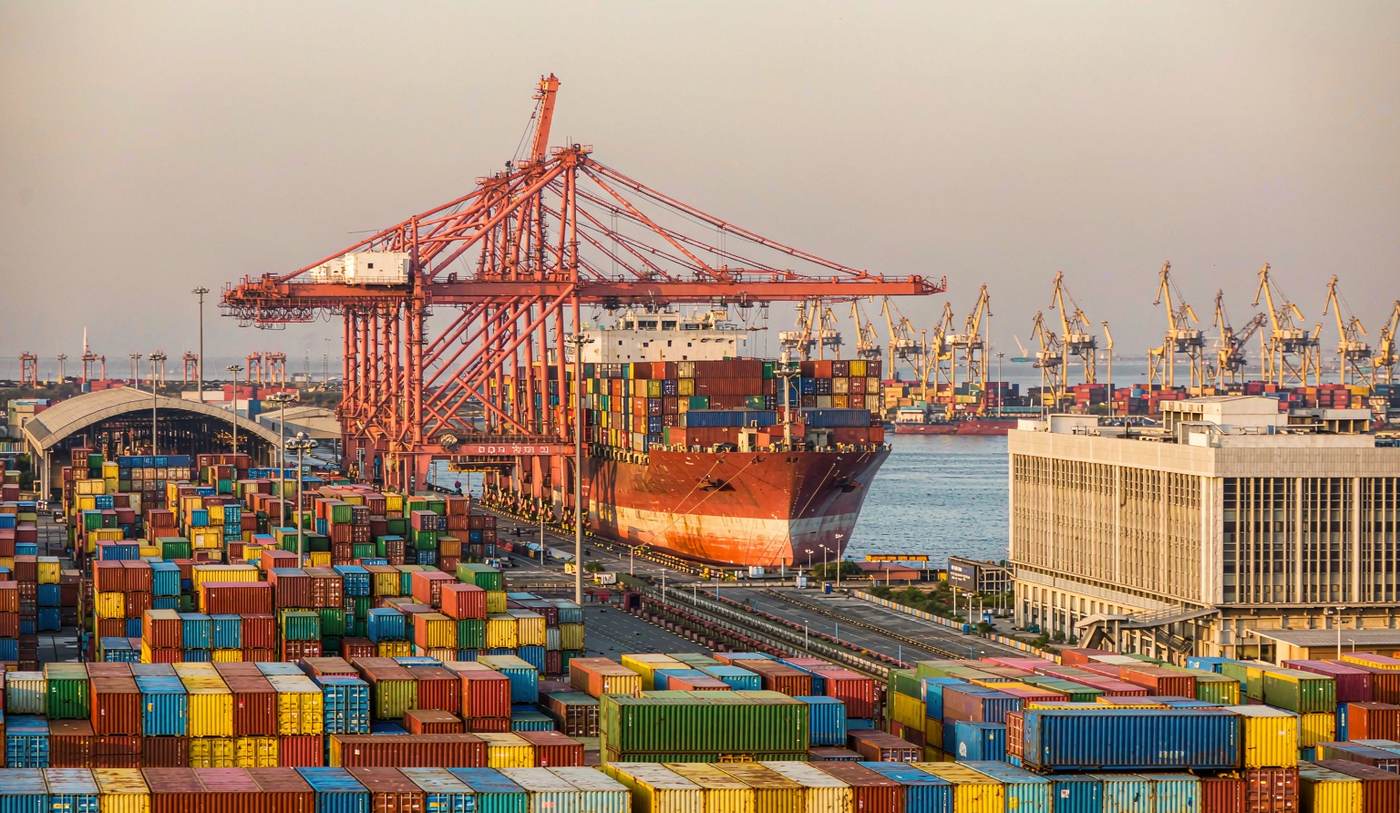
How to Ship from China to Pakistan: Karachi, WeBOC & the Five Charges
The first thing to understand about importing into Pakistan is that there is no single duty. A commercial consignment can attract customs duty, regulatory duty, additional customs duty, advance income tax and sales tax — five separate levies, calculated on different bases, all of which have to be settled before the shipping line will release the container. Published guidance puts the resulting landed cost at roughly 35 to 60 percent above the CIF value depending on the product.
That number is the reason this page exists. New importers routinely model "freight plus duty" and then meet a pay order that is half again as large as expected. The duty is often the smallest of the five.
The second thing is that the process is genuinely digital and genuinely strict. Declarations go in through WeBOC and the Pakistan Single Window, the bank's Electronic Import Form number has to be quoted on the declaration, and the consignee name on the transport document has to match the importer's registered name character for character. A mismatch stops the delivery order.
At a glance
Country: around 240 million people; capital Islamabad; a WTO and SAFTA member, with a free trade agreement with China whose second phase has been in force since the start of 2020. · Currency: the Pakistani rupee; foreign exchange is regulated by the State Bank of Pakistan. · Ports: Karachi, with the KICT and PICT container terminals, handling roughly 60 percent of imports; Port Qasim with QICT, about 35 km east; Gwadar; and inland dry ports at Lahore, Faisalabad, Peshawar and Islamabad. · Airports: Jinnah International at Karachi, Allama Iqbal at Lahore, and Islamabad. · Customs: Pakistan Customs under the Federal Board of Revenue, filing through WeBOC and the Pakistan Single Window. · Levies: customs duty 0–35 percent by HS code; regulatory duty 5–25 percent on specified goods; additional customs duty at 2 percent; advance income tax under Section 148 at 5.5 percent for filers and 8 percent for non-filers; sales tax at 18 percent on the duty-inclusive value. · Registration: National Tax Number, sales tax registration, and Active Taxpayer List status. · Channels: green, yellow and red, with red adding an estimated 1–3 days. · Transit: sea 15–25 days, air 3–7 days, express 2–5 days.
How your cargo moves: China to Pakistan
Eight steps from your supplier's door to yours. The last four are the ones shaped by local rules.
- Pickup from your supplierWe collect the goods anywhere in China and bring them to our consolidation point.
- Export clearanceChina customs declaration filed and released before the goods move to the port.
- Loading and departureContainer loaded, sealed and handed to the carrier at the Chinese port.
- Main carriageOcean, air or rail movement booked on the route agreed for your cargo.
- Arrival at the gatewayDischarge at the port or airport of entry, recorded on the carrier's manifest.
- Import clearanceCustoms declaration filed locally, with duty and tax assessed on the declared value.
- Customs releaseGoods released into free circulation once duty and tax are settled.
- Final deliveryOnward movement to your delivery address, warehouse or nominated depot.
Duty rates, VAT rates and clearance times move, and the figure that applies to your goods is the one set for your commodity code on the day of clearance. We check the current position against your code before your goods sail and confirm it to you in writing — ask for that check when you request a quote.
Karachi or Port Qasim
Karachi
Pakistan's busiest port, handling roughly 60 percent of the country's imports. It operates two container terminals, KICT and PICT, each with its own gate procedures and storage charges. It is where most services call, and it is more exposed to congestion in peak periods — around Ramadan and the run-up to Eid in particular.
Port Qasim
About 35 km east of Karachi, and generally less congested, with lower demurrage. It is often preferred for bulk cargo and for containerised shipments where the consignee is on that side of the city. Road access has improved with the port access highway. Where a service calls both, it is worth asking which terminal the carrier uses.
Beyond the two main ports, Gwadar exists on the coast and the inland dry ports at Lahore, Faisalabad, Peshawar and Islamabad handle imports moving onward by road or rail. Clearing at a dry port uses the same system and the same declaration, but adds transit time from the coast — published guidance puts Karachi to Lahore at another three to five days.
How to choose: confirm the terminal the carrier actually uses, then confirm it against the delivery address and the demurrage exposure. On a lane where a red channel examination can add days, the terminal with lower storage charges is worth more than the one that looks closer on a map.
The five separate charges on a single Pakistani import
Assessing an import in Pakistan is a cascade rather than a single calculation. Each levy sits on a base that already includes the previous ones, which is how a modest duty rate compounds into a large total.
Customs duty
The primary levy under the Customs Act, by HS code. Published rates run from 0 percent on raw materials to 25 percent and above on finished and luxury goods, with some references quoting up to 35 percent.
Regulatory duty
A protective levy imposed on specified goods through statutory notifications, reported at 5 to 25 percent on top of customs duty. Whether it applies is a product question, not a value question.
Additional customs duty
Described as a flat 2 percent applied to most imports in addition to the standard duty. Small, and easy to omit from a spreadsheet.
Advance income tax under Section 148
Collected at the import stage on the CIF value plus customs duty. Quoted at 5.5 percent for filers on the Active Taxpayer List and 8 percent for non-filers. Adjustable against your annual income tax return.
Sales tax
Federal sales tax at 18 percent, collected on the total import value including duties. Adjustable for registered businesses through the monthly return.
Two things follow from the structure. First, two of the five are adjustable — the advance income tax and the import sales tax can be credited in your income tax and sales tax filings respectively. That does not reduce the cash you need at the port, but it does mean the real cost to a registered, filing business is lower than the pay order suggests. Second, the published total of 35 to 60 percent above CIF is not an exaggeration; it is what the cascade produces.
The China-Pakistan FTA, and claiming the preference
Pakistan and China have a free trade agreement, and the second phase has been in force since the start of 2020. For an importer in Pakistan buying from China, that is the most valuable single fact on this page — provided it is actually claimed.
How claiming works in practice:
- Ask for the right certificate of origin at the time of order. A certificate issued under the agreement by the competent authority in China is what supports the preference. A generic certificate of origin does not.
- Check the concession list for your HS code. Preference schedules are line-by-line. Coverage at zero is not universal, and assuming it is will produce a costing that is wrong in the wrong direction.
- Quote the certificate on the declaration. The certificate is only useful if it reaches the goods declaration in WeBOC with the rest of the file.
- Keep the code consistent. The code on the certificate has to be the code on the invoice and the code on the declaration.
Published guidance notes that the certificate of origin is checked where origin decides admissibility or the application of anti-dumping duty, so this is not a formality. Where a preference applies, the saving is usually larger than any freight discount you could negotiate.
Filer or non-filer: the rate that depends on your tax status
This is unusual enough to be worth its own section. The advance income tax collected at the import stage is not a single rate — it depends on whether the importer appears on the Federal Board of Revenue's Active Taxpayer List.
| Importer status | Section 148 rate | Note |
|---|---|---|
| Filer on the Active Taxpayer List | 5.5% | On the CIF value plus customs duty; adjustable against the annual return |
| Non-filer | 8% | Same base, materially higher rate |
| Industrial undertaking importing raw materials | Lower band reported | Some references give a wider 1–6 percent range by importer category — |
The difference between 5.5 and 8 percent on the duty-inclusive value is real money on every container, and it repeats. If your Pakistani entity is not on the Active Taxpayer List, getting onto it is one of the highest-return administrative tasks available to an importer here. It also matters beyond the rate: filer status feeds the risk assessment that decides which channel your declaration is routed to.
WeBOC, the single window and the electronic import form
Pakistan's clearance process is a two-layer system and it helps to know which layer does what.
WeBOC — Web Based One Customs — is the automated clearance system built by Pakistan Revenue Automation Limited for the Federal Board of Revenue. The carrier files an electronic manifest on arrival, and the importer or their clearing agent files a Goods Declaration through it, with HS codes, declared value, origin and the duty and tax calculation. Most supporting documents are uploaded as scanned attachments rather than handed over a counter.
The Pakistan Single Window sits in front of WeBOC as the trader's single filing point, connecting the revenue authority with other agencies including trade development and the State Bank. Under it, the financial instrument — the letter of credit, contract or registered proforma invoice — is created by the bank as an Electronic Import Form, and that form's number is quoted on the goods declaration, linking the goods to the payment channel.
The sequence that matters: the bank creates the Electronic Import Form, the clearing agent files the goods declaration quoting it, customs assesses and issues a pay order, duties are paid through an authorised bank at the port, and only then does customs issue a release order. Then, and only then, does the shipping line issue the delivery order against the original bill of lading or a telex release. Four parties, one chain, and it only moves when the previous link is complete.
The channel your declaration is routed to
Pakistan Customs runs a three-channel risk system on the goods declaration:
- Green. No examination. The declaration clears after duty payment. The fastest path, and the one a well-prepared file earns.
- Yellow. Document review. An officer checks the paperwork without opening the container.
- Red. Full physical examination. Published guidance puts this at an additional one to three days, plus the examination and terminal handling costs that come with it.
Published figures describe roughly 60 percent of shipments going green, around 25 percent yellow and about 15 percent red. New importers, and categories such as textiles, electronics and auto parts, are described as more likely to be routed red.
What pushes a first shipment into the red channel
The risk system is not random, and the things that trigger an examination are the same things that are fixable before the vessel sails:
- Vague descriptions. "Spare parts", "general goods", "accessories" invite a query. The description drives the tariff classification and the value drives the assessment, so it has to be specific.
- A questionable HS code. Misclassification is described as one of the most common and costly errors, triggering valuation disputes, additional duty or an examination order.
- A declared value that looks low. Pakistan assesses on a CIF basis, and where goods are bought FOB or CFR, customs needs the actual insurance figure or applies a notional one. Under-declaration is penalised.
- Inconsistency across the set. Customs reads the invoice, packing list, transport document and certificates together. Mismatch between them is what opens an examination.
- A consignee name that does not match. The name on the bill of lading has to be exactly the name on the National Tax Number certificate, or the delivery order and the declaration both stop.
- No import history. First-time importers carry more risk by default, which is a reason to make the first file immaculate.
Product approvals that stop cargo before the duty does
Some products need an approval from a regulator before customs will even assess them. These are not duty questions, and they are not solvable at the port.
| Product | Approval | Note |
|---|---|---|
| Mobile devices and telecoms equipment | Pakistan Telecommunication Authority clearance | Non-personal quantities; devices are subject to the Device Identification Registration and Blocking System, and unapproved handsets are blocked |
| Pharmaceuticals, vaccines, medical devices | Drug Regulatory Authority of Pakistan import permit | A formal permit is required; individuals may import a limited personal supply without one |
| Food products | Halal certificate from an accredited certification body | Commonly required for food imports |
| Plants, seeds and plant material | Phytosanitary certification | Plant protection requirements apply |
Confirm whether your product is in scope before you book. A container that arrives without its regulator's approval is not a customs delay — it is a shipment that cannot be imported at all.
Transit times to Karachi and onward to the north
| Mode | Published transit | Notes |
|---|---|---|
| Sea freight, full container, to Karachi or Port Qasim | 15–25 days | Most economical for large shipments; add several days for consolidation and deconsolidation on LCL |
| Air freight via Karachi or Lahore | 3–7 days | Suits urgent, high-value and low-volume cargo |
| Express courier | 2–5 days | Small parcels and samples |
| Onward to a dry port such as Lahore | Add 3–5 days from Karachi | Same clearance system, additional transit |
| Red channel examination | Add 1–3 days | Plus examination and handling charges |
Those are port-to-port and airport-to-airport figures. Add clearance on top, and note that the peak periods around Ramadan and Eid slow both the terminals and the offices.
The document set Pakistan reads together
| Document | What it has to do |
|---|---|
| Commercial invoice | On the supplier's letterhead, with buyer and seller details, invoice number and date, a complete description of each item, quantity, unit price, currency, total value, delivery term and country of origin |
| Packing list | Carton, pallet or crate count, gross and net weight of each, dimensions, and the shipping marks that appear on the packages |
| Bill of lading or airway bill | Consignee and notify party matching the importer's registered name exactly as it appears on the NTN certificate |
| Certificate of origin | Issued by the chamber of commerce or designated authority in China; mandatory when claiming the free trade agreement preference |
| Electronic Import Form or letter of credit | Created by the bank through the single window; its number is quoted on the goods declaration |
| Insurance certificate | The actual figure, where goods are bought FOB or CFR, because assessment is on a CIF basis |
| Registration documents | National Tax Number, sales tax registration number, CNIC of the proprietor or directors, active WeBOC user ID, single window subscription, chamber membership |
| Sector permits | PTA, DRAP, halal and phytosanitary as the product requires |
| ISPM 15 evidence | Stamp on every wooden pallet or crate |
Where a Karachi clearing agent earns the fee
On this lane the clearing agent is doing more than submitting a form. The four things worth paying for:
- Classification, before the vessel sails. The HS code sets duty, regulatory duty and whether an approval applies. Getting it right in advance is the single biggest lever on the pay order.
- Modelling the five levies. So you know the pay order before it arrives, and can arrange the cash at the port rather than discovering a shortfall.
- Keeping the file consistent across the invoice, packing list, transport document, certificate and the single window record — which is what keeps you out of the red channel.
- Chasing the release chain — pay order, bank payment, release order, delivery order — because four parties have to move in sequence and none of them will move early.
Why importers use Goodhope on this lane
Six things that are different about working with us on China to Pakistan shipments.
Ask us to model the landed cost before you book
Tell us what you are shipping, the HS codes if you have them, the packed dimensions and gross weight, the pickup city in China and the delivery address in Pakistan. We will confirm the classification before anything is filed, tell you whether your product is covered by the China–Pakistan free trade agreement and what certificate you need, set out all five levies so you can see the pay order in advance, and confirm which terminal your carrier uses so you are not surprised by the demurrage.
Get a quote Talk to usRelated pages
Frequently asked questions
Karachi or Port Qasim?
Karachi handles roughly 60 percent of imports across the KICT and PICT terminals and is busier in peak periods. Port Qasim, 35 km east, is generally less congested with lower demurrage. Confirm which terminal your carrier uses, then match it to the delivery address.
What taxes apply?
Five: customs duty 0–35 percent by HS code, regulatory duty 5–25 percent on specified goods, additional customs duty at 2 percent, advance income tax under Section 148 at 5.5 percent for filers or 8 percent for non-filers, and sales tax at 18 percent on the duty-inclusive value. Published totals run 35–60 percent above CIF.
Can I claim a preference from China?
Yes, under the China–Pakistan free trade agreement, whose second phase has been in force since early 2020. You need a certificate of origin issued under the agreement, and your HS code has to be on the concession list. Ask for it at the time of order.
What does filer or non-filer mean?
Whether your entity is on the Federal Board of Revenue's Active Taxpayer List. Section 148 advance income tax is 5.5 percent for filers and 8 percent for non-filers on the CIF value plus duty. Being a filer is worth real money per shipment.
What are WeBOC and the single window?
WeBOC is the automated clearance system where the goods declaration is filed. The Pakistan Single Window sits in front of it as the trader's single filing point, and under it the bank creates the Electronic Import Form whose number is quoted on the declaration.
Will my container be examined?
Three channels: green clears without examination, yellow is a document review, red is a full physical examination adding 1–3 days. New importers and categories such as textiles, electronics and auto parts are more likely to be routed red.
Do I need product approvals?
Some products do: PTA clearance for mobile and telecoms equipment, a DRAP import permit for pharmaceuticals and medical devices, a halal certificate for food, phytosanitary certification for plants and seeds. These stop cargo before duty is assessed.
How long does shipping take?
Sea to Karachi or Port Qasim is commonly 15–25 days for FCL, with LCL adding several days. Air via Karachi or Lahore is 3–7 days and express 2–5 days. Add clearance, and 1–3 more days if you are routed to the red channel.
What documents are required?
Invoice on letterhead with HS codes, packing list with weights and marks, bill of lading with the consignee matching the NTN exactly, certificate of origin for any preference, the bank's Electronic Import Form, an insurance certificate showing the actual figure, and registration documents including NTN, sales tax registration, CNIC and active WeBOC and single window access.
Is there a de minimis threshold?
For low-value personal parcels a threshold of PKR 1,000 is published. It does nothing for a commercial shipment — every commercial consignment is assessed on its full declared value.