
Home / Shipping to Palestine / How to Ship from China to Palestine
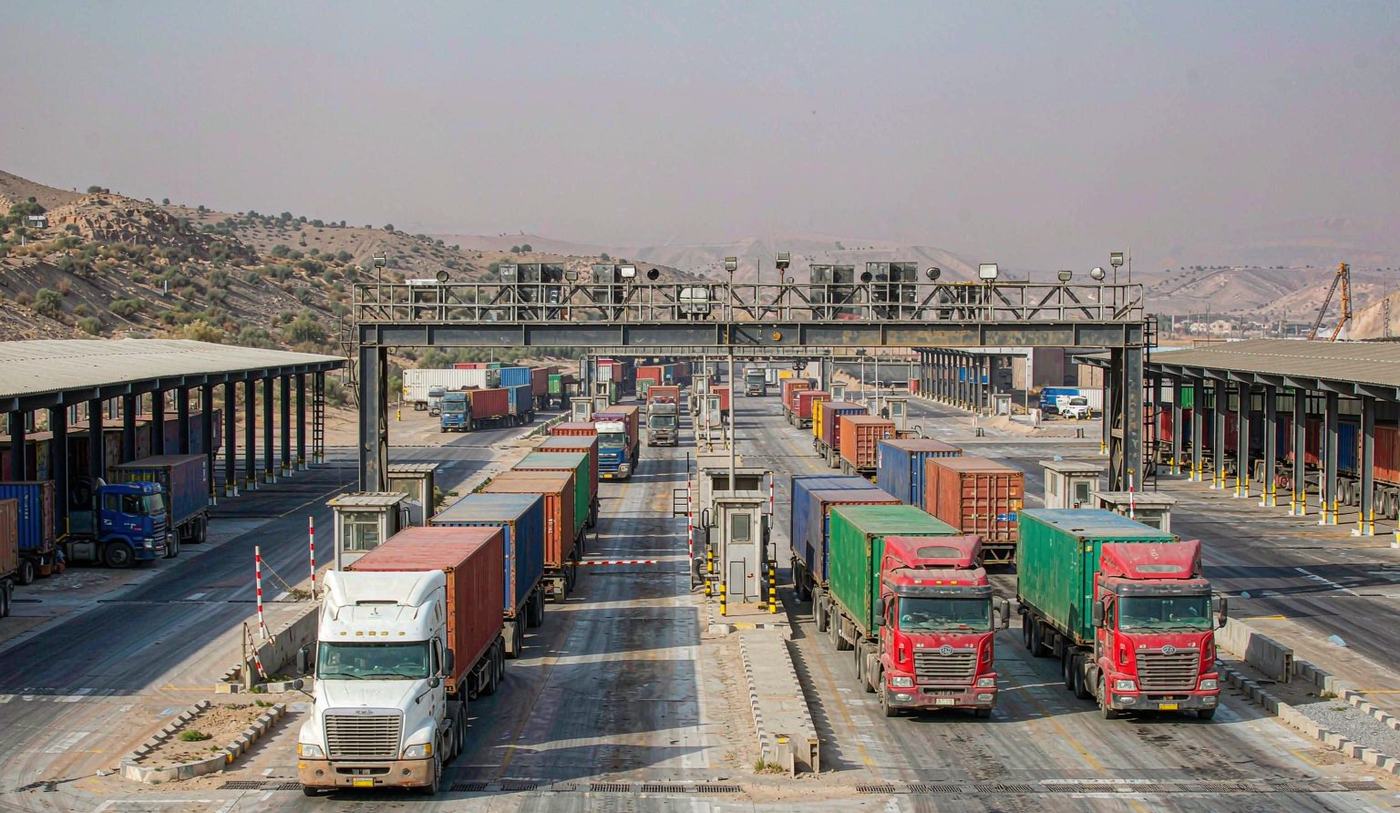
How to Ship from China to Palestine: the Crossing Comes Before the Port
No shipment into the Palestinian territories arrives direct. There is no direct ocean service, no direct air service into a Palestinian-controlled customs point, and no express courier that delivers without routing through Israel. A container from Shenzhen discharges at an Israeli port — usually Ashdod or Haifa — or arrives overland from Jordan, and then has to pass a commercial crossing before it reaches a Palestinian consignee.
That single fact reorders the whole shipment. On most lanes the port is the end of the transport problem and the start of the paperwork problem. On this one the port is the middle, and the crossing is the schedule.
The second thing to understand is that the tariff is not really a separate system. Under the Paris Protocol, the economic agreement concluded in 1994, the Palestinian Authority applies the same customs rates as Israel for most goods. So if you have imported into Israel before, the duty rates will look familiar — and if you have not, someone who has is the right person to ask.
A note on scope: this page is operational and commercial information about moving cargo. It is not legal or compliance advice. The arrangements described here are set by agreements and by border procedures that are not under the control of any freight forwarder, and they change. Confirm the position that applies to your specific shipment with your consignee, their broker and qualified advisers before you commit, and accept that quoted times on this lane are ranges, not promises.
At a glance
Arrival: no direct service; cargo lands at Ashdod or Haifa, or comes overland from Jordan across the King Hussein Bridge, then passes a commercial crossing. · Tariff: set under the Paris Protocol (1994), under which the Palestinian Authority applies the same customs rates as Israel for most goods; published rates for common categories run roughly 0–12 percent by HS code, with books at zero and clothing and footwear around 8–12 percent. · VAT: applied to the CIF value plus duty; quoted at 15 or 16 percent depending on the source —. · De minimis: one published reference gives around US$50. · Licensing: the Palestinian Authority issues import licences to registered traders against a pro-forma invoice; the Protocol requires notification of each import request, and some goods remain on the A1 and A2 quantitative restriction lists. · Screening: at the port and again at the crossing; roughly 70 percent of shipments are reported as scanned, the remainder scanned and opened manually. · Transfer: the back-to-back system — goods are unloaded from one truck and reloaded onto another at the crossing. · Clearance: published at 3 to 30 days or more, and described as unpredictable. · Express: all couriers route through Israel; there is no direct parcel service.
How your cargo moves: China to Palestine
Eight steps from your supplier's door to yours. The last four are the ones shaped by local rules.
- Pickup from your supplierWe collect the goods anywhere in China and bring them to our consolidation point.
- Export clearanceChina customs declaration filed and released before the goods move to the port.
- Loading and departureContainer loaded, sealed and handed to the carrier at the Chinese port.
- Main carriageOcean, air or rail movement booked on the route agreed for your cargo.
- Arrival at the gatewayDischarge at the port or airport of entry, recorded on the carrier's manifest.
- Import clearanceCustoms declaration filed locally, with duty and tax assessed on the declared value.
- Customs releaseGoods released into free circulation once duty and tax are settled.
- Final deliveryOnward movement to your delivery address, warehouse or nominated depot.
Duty rates, VAT rates and clearance times move, and the figure that applies to your goods is the one set for your commodity code on the day of clearance. We check the current position against your code before your goods sail and confirm it to you in writing — ask for that check when you request a quote.
Nothing arrives direct: the crossing comes before the port
Every other page in this series starts by asking which port to ship to. This one starts somewhere else, because on this lane the port is only where the container waits.
The sequence is: a sailing from China to an Israeli port; discharge into a designated storage area; customs clearance and the payment of duty and taxes; a security screening appointment; release from the port; a road movement to a commercial crossing; a second set of procedures at the crossing; the back-to-back transfer onto a Palestinian-registered truck; and finally delivery. Eight steps, sequential, each with its own clock and its own paperwork.
Two consequences follow. The first is that the freight quotation is a smaller part of the total than usual, because a large share of the cost is storage, handling and time at two separate facilities. The second is that the two things a forwarder can actually influence — the classification and the completeness of the file — are worth more here than on almost any other lane, because an error does not produce a short delay, it produces a container that sits.
The Paris Protocol, and why the tariff looks familiar
The Protocol on Economic Relations, signed in 1994 and generally called the Paris Protocol, governs the economic relationship under which Palestinian customs operate. The practical effect for an importer is that the Palestinian Authority applies the same customs rates as Israel for most goods, and that the movement of goods across the boundary is administered within that framework.
So the tariff schedule is not a separate document to learn. Published references put common rates in a band of roughly 0 to 12 percent by HS code, with these shapes:
| Category | Published duty band |
|---|---|
| Machinery | 0–8% |
| Electronics | 0–12% |
| Food and beverages | 0–12% |
| Clothing | 8–12% |
| Footwear | 8–12% |
| Cosmetics | 8–12% |
| Toys and games | 8–12% |
| Books | 0% |
On top of the duty sits a value-added tax applied to the CIF value plus duty. Published sources quote it at 15 or 16 percent, which is a difference worth resolving before you build a costing —. Some categories also carry excise.
What this means practically: because the tariff mirrors the Israeli schedule, an Israeli broker or a Palestinian broker with regular experience of the Protocol is the right person to confirm your HS code and your rate. Do not guess the code from a generic duty table — on this lane a reclassification costs weeks, not hours.
Ashdod and Haifa, then the crossing
Ashdod and Haifa
The two working sea gateways, and where the great majority of containerised cargo arrives. Ashdod is the larger and the busier of the two for container traffic; Haifa serves the north. Both apply the same sequence of clearance and security screening before a container is released for the road movement to a commercial crossing.
The King Hussein Bridge route
The overland alternative, running from Jordan across the bridge and into the West Bank. It is used where the consignee, the cargo or the routing suits it. Published reporting also notes restrictions specific to this crossing, including the closure of the Damya Bridge, so confirm current operating conditions before committing to it rather than assuming it is the easier path.
Which to use is decided by the delivery address and by what is actually moving, and it should be confirmed at the time of booking. Do not assume the routing that worked six months ago is still the one that works.
The back-to-back transfer and the second screening
This is the part that surprises importers who have read the duty tables and think they understand the lane.
Once a container clears the port it travels to a commercial crossing. There, the goods are unloaded from the Israeli-registered truck and reloaded onto a truck with Palestinian registration — the back-to-back system. It is a full transfer of the load, and it happens in addition to whatever screening the container already went through at the port.
The UNCTAD review of trade facilitation in the occupied Palestinian territory sets out the mechanics in useful detail:
- Two screenings, not one. Practically all shipments through Haifa and Ashdod undergo security procedures at the port and again at the West Bank commercial crossing.
- The appointment is the queue. After duties are paid, a security check appointment is made; published reporting puts the average at three to four days and the range at one to seven.
- Three classifications. Exit without scanning, which Palestinian shipments are seldom accorded; scanning only, reported at around 70 percent of shipments; and scanning plus manual inspection, where the container is opened, the merchandise unloaded, cartons possibly opened, and the goods reloaded — a process reported at one to 24 hours.
- Goods are not repacked as they were. Shippers report that this is where damage occurs.
- The clocks do not match. Crossing operating hours are limited and differ from port hours, and a container that misses the crossing day is stored overnight at the shipper's expense.
Where the time actually goes on this lane
Published figures put clearance at 3 to 30 days or more, and describe the range as unpredictable. That is not a cop-out; it is what the structure produces.
Ocean leg and discharge
The predictable part. Comparable to any eastern Mediterranean sailing.
Duty assessment and payment
Predictable if the HS code was settled in advance, unpredictable if it was not.
Security check appointment
Reported at one to seven days, averaging three to four. This is the step nobody plans for.
Screening and possible opening
Scanning only for most shipments; scanning plus manual inspection for the rest, reported at one to 24 hours of unloading and reloading.
Crossing and back-to-back transfer
Limited operating hours, a second procedure that is not standardised, and a complete reload of the cargo.
Final delivery
Short in distance, and the only step that feels normal.
Crossing hours, holidays and closures all sit outside any forwarder's control. The honest planning posture is to work with a range and to keep the consignee informed.
What the Palestinian Authority issues, and what it cannot
Import licences, where a product requires one, are issued by the Palestinian Authority. The importer must be a trader registered with the PA and must present a pro-forma invoice. Under the Paris Protocol, the PA must notify the Israeli ministry responsible for trade of each import request.
What the PA does not control is the physical border. That is the structural point to understand: the authority that issues your licence is not the authority that decides when your container moves. Both have to be satisfied, and they are satisfied in sequence.
Import licences, and the A1 and A2 lists
Beyond the licence itself, published guidance describes a layer of quantitative restriction. Some goods can be imported freely; others fall under quantitative limits set out in the A1 and A2 lists under the Paris Protocol. Agricultural produce and processed foods are the categories most often subject to quotas, negotiated annually.
Categories that attract additional scrutiny or approval:
| Category | What applies |
|---|---|
| Medicines and pharmaceuticals | Approval by health authorities; registration standards are described as closely aligned |
| Food and agricultural products | Health approval, and in many cases quantitative limits; quotas are negotiated annually |
| Wireless and remote-sensing telecoms equipment | A restricted category under published lists; confirm before shipping |
| Certain chemicals | Notified restrictions; confirm for your product |
| Dual-use goods | Separate and stricter control; assume a long lead time |
| Vehicles | High duties; confirm the rate before committing |
The rule is the same as on every restricted-goods lane, but the penalty for ignoring it is larger: a container that cannot be imported is not delayed, it is stuck.
The documents to close before the container lands
| Document | What it has to do |
|---|---|
| Commercial invoice | Complete description, value, HS code and Incoterm; the description drives classification and the value drives assessment |
| Packing list | Line-by-line contents, weights, dimensions and carton count, matching the invoice. It is what the screening officer works from |
| Bill of lading or air waybill | Consignee consistent with the licensed importing trader |
| Certificate of origin | Issued in China; needed for origin and for any preferential treatment claimed |
| Import licence | Where the product requires one, held by a trader registered with the Palestinian Authority |
| Sector approvals | Health, food and telecoms approvals as the product requires |
| Insurance certificate | Not less than 110 percent of CIF, with cover running through the port stay and the transfer |
| ISPM 15 evidence | Stamp on every wooden pallet or crate |
Packing and insurance, given how the cargo is handled
If there is one thing on this lane worth spending money on, it is the packing.
Assume the container will be opened at least twice: once at the port if it is routed to manual inspection, and again at the crossing for the back-to-back transfer. Published reporting states plainly that goods are frequently not repacked in their original state, and that this is a recurring cause of damage.
- Do not ship on retail cartons alone. Palletise, strap and wrap.
- Assume an open transfer in the weather. Protect against rain and sun.
- Make the packing list legible and physical. An officer working from a list should be able to find what it describes.
- Insure at not less than 110 percent of CIF, with cover running from the factory through the port stay, the transfer and the final delivery. The exposure here is handling damage and delay, not loss at sea.
What we can promise here and what we cannot
Being straight about this is more useful than being optimistic.
What we can do: get the HS code confirmed before the container sails so the assessment is not reopened at the port; assemble a file that survives a document review; tell you which crossing and which route are currently working and what the realistic range is; arrange a through quotation that covers the gateway, the crossing formalities and the delivery; and keep the consignee informed while the container waits.
What we cannot do: guarantee a clearance date. The crossing is not under our control, published clearance times run to 30 days and beyond, and any forwarder who quotes you a fixed day on this lane is either inexperienced or optimistic. We will give you a range, we will tell you what is currently moving, and we will not overstate it.
Why importers use Goodhope on this lane
Six things that are different about working with us on China to Palestine shipments.
Five shipments headed to Palestine
Five shipments bought in China and delivered into Palestine, told end to end — where the order came from, how it moved, where it nearly went wrong, and how it finished. Client names are withheld at their request; the situations and the handling are what we deal with on this lane.
Nothing direct · first enquiry · China to Palestine
The purchase. A buyer new to importing asked which Palestinian port his container would discharge at.
The move. Consolidated cargo landed at the Mediterranean port and moved through the commercial crossing, with both legs booked together.
Where it nearly went wrong. There is no direct service and no local discharge point. The crossing is the defining step on this lane, and it comes before any delivery planning rather than after it.
How it finished. He plans around the crossing now rather than around a port that is not in the routing.
Second screening · where the time goes · Shenzhen to Palestine
The purchase. A first-time buyer budgeted transit time as though the vessel schedule were the whole equation.
The move. Consolidated cargo with the transfer and second screening allowed for in the schedule.
Where it nearly went wrong. Goods are transferred rather than driven through, and screened again on the way. That is where the time goes, and it is not something a carrier's transit figure includes.
How it finished. We quote the realistic span. His customer commitments have held since.
Licence · the A1 and A2 lists · Ningbo to Palestine
The purchase. A buyer assumed any registered trader could import any product.
The move. Consolidated cargo with the licence obtained against a pro-forma invoice and the restriction lists checked first.
Where it nearly went wrong. Import licences are issued to registered traders against a pro-forma invoice, some goods sit on quantitative restriction lists, and each import request is notified. Whether a product is admissible is settled before it ships rather than at the crossing.
How it finished. We check admissibility before booking. Nothing has been turned back since.
Handling · packing · Guangzhou to Palestine
The purchase. A buyer packed to his usual standard for cargo with more handlings than he had planned for.
The move. Consolidated cargo packed and insured for the number of times it would be handled.
Where it nearly went wrong. The number of handlings on this lane is higher than on a normal import. Packing for a single delivery produces damage, and claims are refused when the packing was specified for fewer handlings than actually happened.
How it finished. We specify packing for the real journey. Nothing has arrived damaged since.
What we can promise · and what we cannot · any Palestine shipment
The purchase. A buyer asked us to guarantee a delivery date on a lane where the controlling steps are not ours.
The move. Consolidated cargo booked with the parts we control stated plainly and the parts we do not named as such.
Where it nearly went wrong. On this lane the steps that decide the date belong to the crossing rather than to the carrier, and we say so rather than promising around them. We also ask every customer to run their own sanctions and export-control check before we quote; we do not advise on that part.
How it finished. He plans with the uncertainty visible instead of discovering it. His commitments have been realistic ever since.
Why importers use Goodhope on this lane
Six things that are different about working with us on China to Palestine shipments.
Ask us what is moving through the crossings this week
Tell us what you are shipping, the HS codes if you have them, the packed dimensions and gross weight, the pickup city in China and the delivery address. We will confirm the classification before anything is filed, tell you which gateway and crossing are currently working for your cargo, flag any licence or sector approval your product needs, and give you a realistic range for clearance rather than a date we cannot stand behind.
Get a quote Talk to usRelated pages
Frequently asked questions
Can I ship direct to Palestine?
No. Cargo lands at Ashdod or Haifa, or comes overland from Jordan, then passes a commercial crossing. Express couriers also route through Israel. The crossing decides the schedule, not the sailing.
What duty and tax apply?
Under the 1994 Paris Protocol the Palestinian Authority applies the same rates as Israel for most goods — published bands run roughly 0–12 percent by HS code, with books at zero. VAT then applies to the CIF value plus duty, quoted at 15 or 16 percent depending on the source.
Ashdod and Haifa, or the King Hussein Bridge?
Ashdod and Haifa carry most containerised cargo. The Jordanian bridge route is the overland alternative, with its own restrictions. Choose against the delivery address and confirm conditions at booking.
What is the back-to-back transfer?
At West Bank commercial crossings, goods are unloaded from an Israeli-registered truck and reloaded onto a Palestinian-registered one — a full transfer after the container has already been screened at the port.
How long does clearance take?
Published at 3 to 30 days or more and described as unpredictable. UNCTAD reporting puts the port security appointment at one to seven days, averaging three to four, with about 70 percent of shipments scanned.
Who issues the import licence?
The Palestinian Authority, to registered traders against a pro-forma invoice. The Protocol requires notification of each import request, and some goods remain on the A1 and A2 quantitative restriction lists.
Are any products restricted?
Yes — medicines, food and agricultural products, plants and seeds, wireless and remote-sensing telecoms equipment, certain chemicals and dual-use goods all appear on published restricted lists. Vehicles carry high duties.
How should I pack?
Assume the container is opened at least twice. Palletise, strap, wrap, protect against weather during an open transfer, and do not rely on retail cartons. Goods are frequently not repacked as they were.
Should I insure?
Yes — at not less than 110 percent of CIF, with cover running from the factory through the port stay, the transfer and delivery. The exposure here is handling damage and delay, not loss at sea.
Do you deliver door to door?
We can quote a through price covering the gateway, crossing formalities and delivery. What no forwarder can promise is a fixed clearance date — we will give you a realistic range and tell you what is currently moving.