
Home / Shipping to Papua New Guinea / How to Ship from China to Papua New Guinea
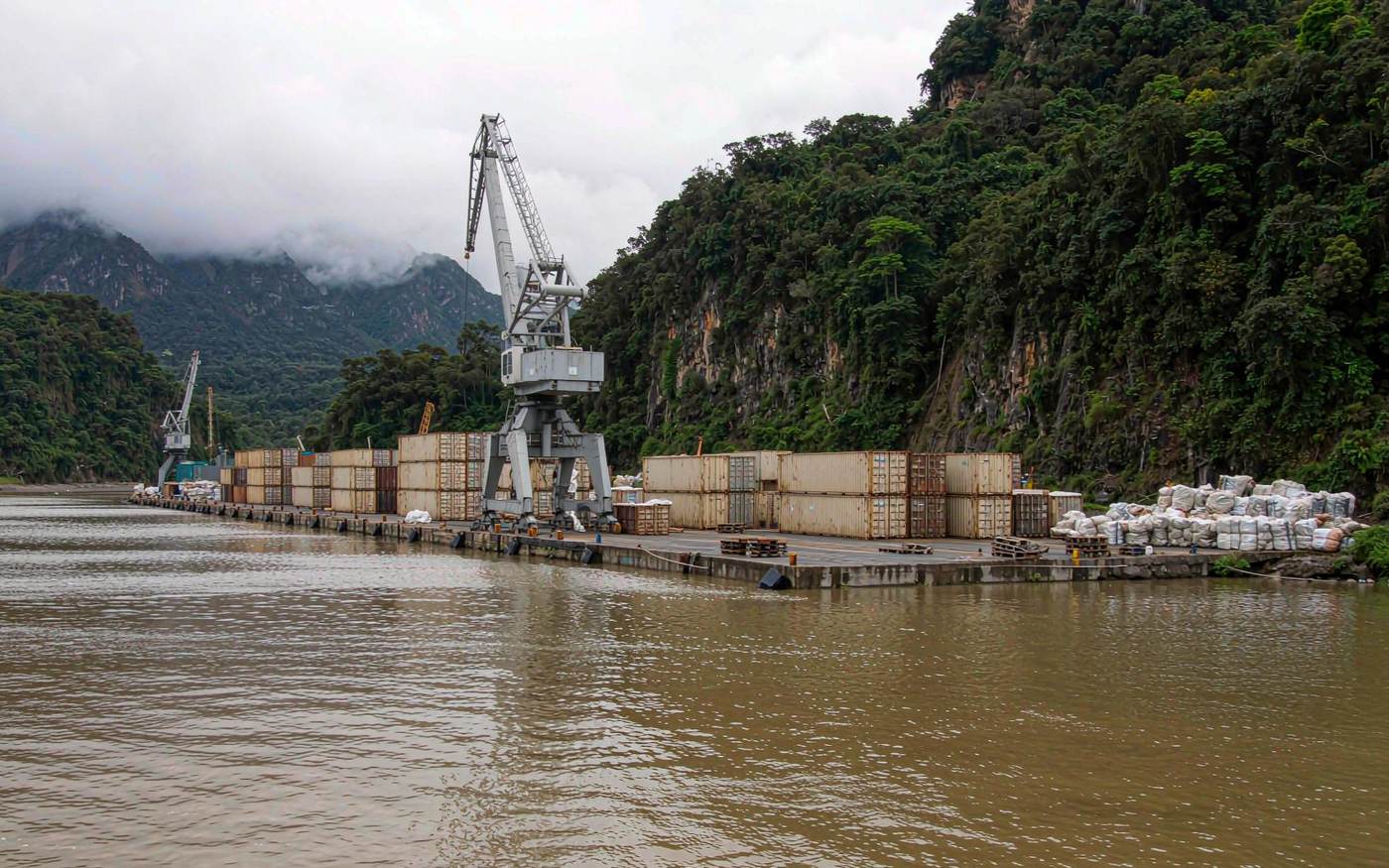
Shipping from China to Papua New Guinea, step by step
Goodhope Freight is a licensed NVOCC based in Shenzhen, registered as GD20230925153335, and has been moving cargo out of China since 2012. To Papua New Guinea we run full containers and shared containers port-to-port into Lae and Port Moresby, air freight airport-to-airport into Jacksons International, and express parcels dispatched from our depot. Every service stops at the port, the airport or the depot. Your consignee arranges import clearance and collection.
Papua New Guinea is the largest country in the Pacific by land area and one of the hardest to move freight inside. Lae and Port Moresby are the two working container gateways, with Lae the more important for cargo going to the Highlands and to the industrial and mining sectors. Beyond those two, road access is limited and much of the country is reachable only by air or river.
What shapes the landed cost here is not the freight. It is the tariff, which carries deliberately protective rates; the two separate inspections every consignment faces; and demurrage, which starts accruing the moment the vessel berths rather than when your paperwork is ready.
At a glance
Main ports: Lae and Port Moresby, with the Motukea terminal serving the capital · Main airport: Jacksons International (POM) · Currency: Papua New Guinean kina · Customs authority: PNG Customs Service under the Internal Revenue Commission, entries on ASYCUDA World · Duty commonly nil to 40 per cent of CIF, with protective rates on goods competing with local industry · Goods and services tax at 10 per cent · Excise on defined categories · Quarantine clearance by the national agricultural quarantine authority, separate from customs · A licensed customs broker is required
How your cargo moves: China to Papua New Guinea
Eight steps from your supplier's door to yours. The last four are the ones shaped by local rules.
- Pickup from your supplierWe collect the goods anywhere in China and bring them to our consolidation point.
- Export clearanceChina customs declaration filed and released before the goods move to the port.
- Loading and departureContainer loaded, sealed and handed to the carrier at the Chinese port.
- Relay through a regional hubServices into Lae and Port Moresby connect through Brisbane, Singapore or a Pacific hub, so the connection sets the arrival window.
- Discharge at Lae or Port MoresbyContainers are worked at the two main gateways; air cargo is handled at the POM cargo terminal.
- Entry filed by a licensed brokerYour broker lodges the declaration on ASYCUDA World with the commodity codes and the CIF value.
- Quarantine inspection alongside customsQuarantine examines plant, animal, food and timber packaging material as a separate process from the customs assessment.
- Charges settled and goods releasedDuty, excise and the 10 per cent tax are paid and demurrage is settled before the container leaves the port.
Duty rates, VAT rates and clearance times move, and the figure that applies to your goods is the one set for your commodity code on the day of clearance. We check the current position against your code before your goods sail and confirm it to you in writing — ask for that check when you request a quote.
Lae or Port Moresby, and why it matters
Lae is the larger and busier of the two container gateways and the natural entry for cargo destined for the Highlands, for mining and for the industrial sector. Port Moresby, served by the Motukea terminal, handles the capital and the southern corridor. Other ports exist but handle limited container volume.
The choice is not interchangeable. Once a container is discharged at the wrong port, moving it is not a local delivery, it is another sea leg or a very difficult overland one. Confirm with your consignee which gateway their broker and their trucks work from, and get it on the bill of lading.
Picking a mode for a heavy-industry lane
Below roughly 15 cubic metres a shared container is the practical answer, rated by volume with a weight conversion and a one cubic metre minimum. Between about 15 and 28 cubic metres, run the comparison between a 20GP and the per-cubic-metre rating both ways. Above that, a 40GP or 40HC normally wins for bulky light cargo.
Air freight into Jacksons works from about 45 kg and suits mining spares, medical supplies, urgent equipment parts and time-critical project cargo. The country's industrial and resource sectors move a lot of urgent freight, which is why air capacity into POM is better developed than the island's size would suggest.
Protective tariffs, and the rates at the top
Papua New Guinea applies duty by commodity code with a deliberately protective structure. Machinery and capital equipment commonly sit at nil to 10 per cent, while clothing, footwear and food carry rates that run up to 40 per cent where they compete with local production. Motor vehicles sit in a band of their own, with rates scaled by engine capacity that reach well above the general tariff.
The spread is the point. Two shipments of the same declared value can face very different duty bills purely on classification, so the commodity code is worth confirming with a broker before the order is placed rather than after the goods have sailed.
GST at 10%, applied on a wider base
Goods and services tax is charged at 10 per cent on most imports and is assessed on the CIF value plus duty, not on the invoice value alone. Excise duty applies to defined categories and feeds the same base, so the tax is calculated on a figure that already includes the other charges.
Ten per cent sounds modest and is, relative to most destinations. What moves the total on this lane is the duty rate rather than the tax rate, which is why we spend more time on classification here than on tax modelling.
Two inspections, not one
Every consignment faces customs assessment and quarantine inspection as separate processes run by separate authorities. Quarantine examines plant material, animal products, food and timber packaging, and it has the power to hold the whole consignment rather than the offending line.
All wood packaging and crating must be treated and marked to the international standard before departure. Untreated material triggers quarantine intervention, additional charges and delay, and because it runs in parallel with customs rather than after it, a quarantine hold does not wait for your paperwork to catch up.
Demurrage starts when the ship berths
Port demurrage and storage accrue from the time the vessel or aircraft arrives, not from the time your documents are ready. On a lane where clearance runs to a week or more, that is a meaningful line on the invoice and the one most often missing from a first-time importer's budget.
The way to control it is to have the entry prepared before the ship berths. We send the pre-alert with the documents attached as soon as the goods are on the connecting service, and we tell your consignee to have the broker ready to file on arrival rather than starting then.
Packing for quarantine inspection
Consignments are opened. If a container is selected for examination, it is unpacked and repacked, and goods that were adequate for a direct journey are not adequate for that. Palletise or strap wherever the commodity allows, keep like goods together so an inspection does not have to work through the whole container, and put anything that needs a permit where it can be reached.
Humidity and salt do the rest. Internal moisture protection for textiles, paper goods, electronics and metal finishes is cheap insurance. Timber packaging must meet the international standard, for the quarantine reason rather than for handling reasons.
Documents, and the permits that sit behind them
- Commercial invoice with a specific description, quantities, values, currency and country of origin.
- Packing list matching the invoice, with weights and dimensions.
- Bill of lading for sea freight or air waybill for air freight.
- Certificate of origin, including the regional form where the buyer asks for one.
- Import permit for regulated goods, including firearms, pharmaceuticals, used vehicles and certain agricultural products.
- Quarantine documentation for plant, animal and food products, and treatment marking for timber packaging.
Only a licensed customs broker registered with the customs service can lodge the declaration, so appointing one is not optional. Confirm the permit position with them before the goods sail rather than after they arrive.
Transit and clearance on a slow lane
Sea freight into Lae or Port Moresby typically runs in the region of 30 to 45 days port-to-port depending on the Chinese origin and how the service connects, with most cargo relaying through Brisbane, Singapore or a Pacific hub. Air cargo is governed by the connection.
Clearance is slower here than on most Pacific lanes, commonly measured in one to two weeks when both customs and quarantine are satisfied. Plan the stock cycle around that rather than around the sailing time, because the goods are usually still in the port long after the vessel has left.
Our side of the file, and the importer's
We handle collection from your supplier, consolidation and loading in Guangdong, export declaration, and the main carriage into Lae, Port Moresby or POM. We issue the transport document, send status updates at each handover, and name the relay on the quote.
Your consignee appoints a licensed broker, prepares the permits, satisfies customs and quarantine, settles duty, excise and the 10 per cent tax, and pays demurrage before collection. We set out those items before the goods sail. We do not offer door-to-door delivery to Papua New Guinea.
First shipment into PNG: the sequence
Send us the commodity, the volume and weight, the pickup address in China and which gateway your consignee works from. We will show the relay options, quote the charges line by line, and set out the duty band, excise and the 10 per cent tax on your codes.
Then do two things before the vessel sails: confirm whether the commodity needs an import permit, and confirm that every piece of timber packaging is treated and marked. Those two items decide whether the container clears or sits.
Five shipments bound for Papua New Guinea
Five shipments bought in China and delivered into Papua New Guinea, told end to end — where the order came from, how it moved, where it nearly went wrong, and how it finished. Client names are withheld at their request; the situations and the handling are what we deal with on this lane.
Mining support equipment into Lae, 40HC out of Shanghai
The purchase. A supplier was sending pumps, screening media, piping and spares for a resource project, buying from three manufacturers in China.
The move. We consolidated into one 40HC at our warehouse, shipped port-to-port to Lae with the relay named at booking, and pre-alerted the broker a week before arrival so the entry could be prepared.
Where it nearly went wrong. Piping and steel are dense, and the buyer had priced the job on volume. Payload, not space, is what stops a heavy container, and the consolidation was close to the ceiling.
How it finished. We weighed each lot before loading and rebalanced the load plan. The container sailed within limits, the entry was filed the day it berth, and demurrage stayed at a few days rather than a few weeks.
A quarantine hold over untreated crating
The purchase. A buyer imported machinery with the supplier building timber crates to domestic specification.
The move. One 20GP, shipped port-to-port to Port Moresby, entered by a licensed broker.
Where it nearly went wrong. The crating was neither treated nor marked to the international standard. Quarantine held the consignment as a separate process from customs, so a clean customs entry did not move it.
How it finished. On the repeat order we made certified treated timber a condition of packing and checked the marking before the container was sealed. The second shipment passed quarantine without intervention.
Retail goods where the duty band was misjudged
The purchase. A buyer was importing clothing and footwear for resale and had costed the order from a general consumer goods rate.
The move. Just over 25 CBM moved as a full 20GP to Lae, cleared by the consignee's broker.
Where it nearly went wrong. Clothing and footwear carry deliberately protective rates in Papua New Guinea, well above the general tariff. The buyer's margin had been built on the wrong band.
How it finished. We set out the duty position against the actual codes before the second order shipped. The buyer restructured the assortment towards lines that were not competing with local production, and the landed cost came back inside the plan.
Urgent spares by air into Jacksons
The purchase. A plant operator needed a pump assembly and control modules urgently after a failure, buying from a single supplier in Guangdong.
The move. Roughly 300 kg booked as air freight from Guangzhou, connecting into Jacksons International, collected at the cargo terminal.
Where it nearly went wrong. Air freight is rated on chargeable weight, whichever is greater, actual or volumetric, and machinery in export crates converts poorly. The buyer had quoted on actual weight.
How it finished. We had the supplier strip the outer crating to the minimum protective size before collection and quoted on the chargeable figure. The consignment moved on the first available connection and was collected within days.
Where demurrage ate the freight saving
The purchase. A buyer chose the cheapest sea routing available and treated the arrival date as the point at which clearance would begin.
The move. One 40HC of mixed consumer goods, shipped port-to-port to Port Moresby on a slower relay service.
Where it nearly went wrong. Demurrage and storage accrue from the time the vessel berths, not from when documents are ready. With clearance running past a week and the broker not appointed until arrival, storage charges exceeded what the cheaper routing had saved.
How it finished. On the next shipment we insisted on the broker being appointed before sailing and sent the document package early. Clearance started the day the vessel berthed and the storage line dropped to a few days.
Why importers use Goodhope on this lane
Six things that are different about working with us on China to Papua New Guinea shipments.
Get a PNG shipment priced
Tell us the commodity, the volume, the pickup address in China and whether the consignee works from Lae or Port Moresby. We will name the relay, flag any import permit, and quote duty, excise and the 10 per cent tax as separate lines.
Get a quote Talk to usRelated pages
Frequently asked questions
Should my container go to Lae or Port Moresby?
It depends entirely on where your consignee and their broker work. Lae is the larger container gateway and the natural entry for the Highlands and the industrial and resource sectors. Port Moresby, served by the Motukea terminal, serves the capital and the southern corridor. They are not interchangeable, so confirm before booking and get it on the bill of lading.
What is the GST rate on imports into Papua New Guinea?
Goods and services tax is charged at 10 per cent, assessed on the CIF value plus duty rather than on the invoice value alone. Excise duty on defined categories feeds the same base, so the tax is calculated on a figure that already includes the other charges.
How high are the duty rates?
Duty runs by commodity code with a protective structure, commonly from nil to 40 per cent of the CIF value. Machinery and capital equipment sit at the bottom and clothing, footwear and food at the top where they compete with local production. Motor vehicles carry their own band scaled by engine capacity.
Do I need a customs broker?
Yes. Only a licensed customs broker registered with the PNG Customs Service can lodge the declaration on ASYCUDA World. Appoint one before the vessel sails rather than after it arrives, because the entry is what determines how much demurrage you pay.
Why does my shipment need two inspections?
Customs assesses the duty and tax, and quarantine separately examines plant, animal and food products and timber packaging. They run in parallel rather than in sequence, so a clean customs entry does not move a consignment that quarantine has held. All wood packaging must be treated and marked to the international standard before departure.
When does demurrage start?
From the time the vessel or aircraft arrives, not from the time your documents are ready. On a lane where clearance commonly runs to one or two weeks, that is a material cost, and the way to control it is to have the broker ready to file on arrival.
Do you offer door-to-door delivery to Papua New Guinea?
No. Sea freight is port-to-port to Lae or Port Moresby, air freight is airport-to-airport to Jacksons International, and express courier dispatch ends at the depot. Your consignee appoints a broker, satisfies customs and quarantine, settles the charges and collects.
What documents are needed to clear goods?
A commercial invoice, a packing list, the bill of lading or air waybill, a certificate of origin, and an import permit for regulated goods including firearms, pharmaceuticals, used vehicles and certain agricultural products. Quarantine documentation is required for plant, animal and food products.
Can lithium batteries be shipped to Papua New Guinea?
Built-in and packed-with lithium batteries can be carried subject to proper documentation and packaging. Standalone battery shipments and other dangerous goods classes are assessed case by case and must be declared at quotation stage so we can book with a carrier that accepts the class.
What details do you need to price a shipment?
The commodity, the volume and weight, the pickup address in China, and the gateway your consignee works from. We will show the relay options, flag any permit requirement, and quote the charges line by line.