
Home / Shipping to Poland / How to Ship from China to Poland
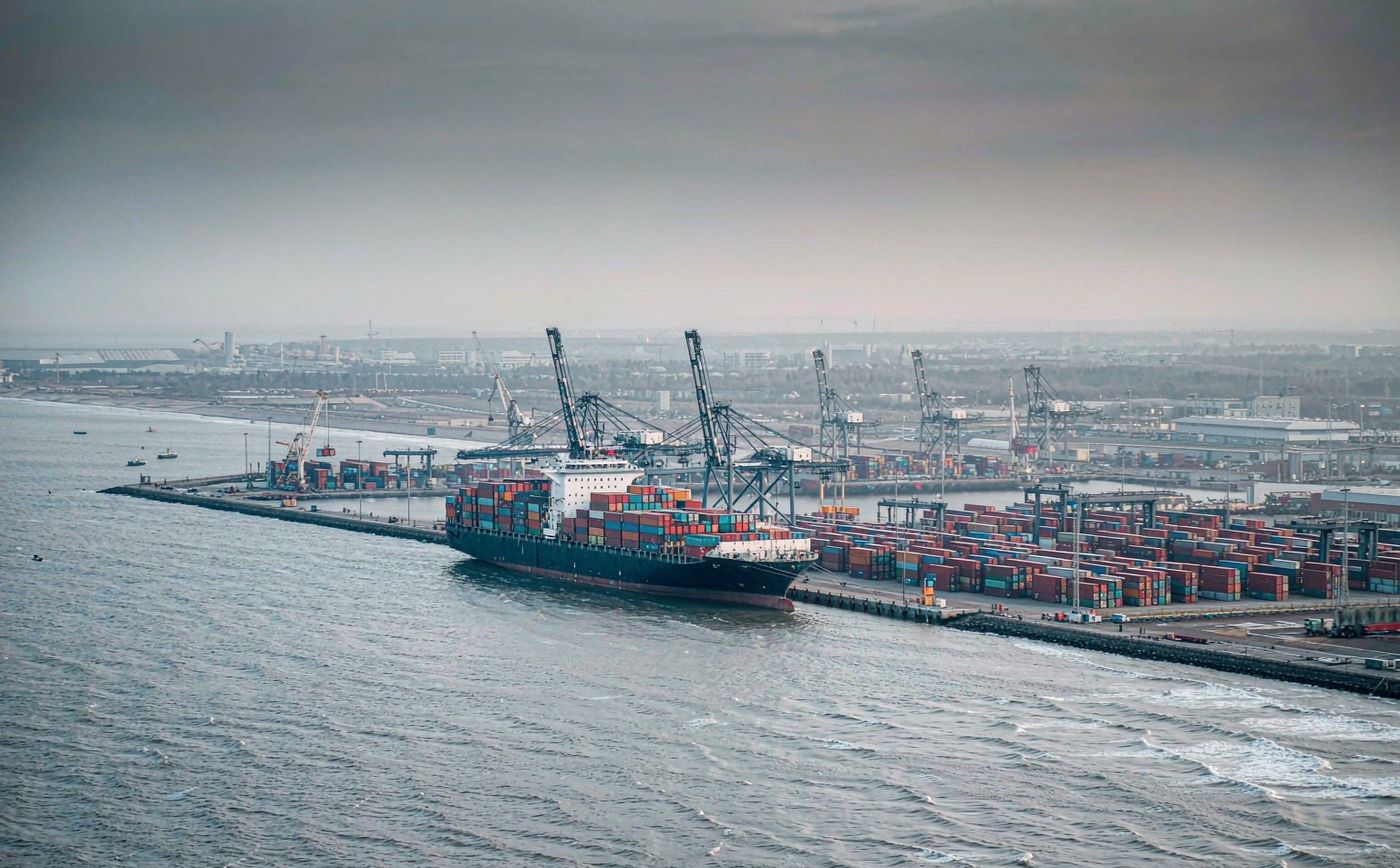
How to Ship from China to Poland: Gdańsk, Rail via Małaszewicze & 23% VAT
Poland is one of the few European countries where the geography itself changes how you should plan an import. Two things are true here and nowhere else in quite the same way. First, Gdańsk has the only deep-water container terminal on the Baltic that takes direct mainline calls from Asia, so a Polish shipment can skip the feeder leg through Rotterdam or Hamburg that most of the Baltic depends on. Second, almost every train from China physically enters the European Union on Polish soil, at the Małaszewicze and Terespol terminals on the Belarus border, because that is where the broad-gauge network ends and standard-gauge Europe begins.
Those two facts give Polish importers a genuine third option between slow and fast. Most European buyers choose between ocean and air. Polish buyers can put rail in the middle at roughly half the ocean transit time, and often have their EU import clearance happen inside Poland rather than at a port in another country.
The tax side also has a Polish particular worth knowing before you book. Poland charges 23% VAT, one of the highest rates in the EU, and paying that in cash at the border on every container is a real working-capital problem. A mechanism in the Polish VAT Act lets qualifying businesses account for it in their VAT return instead, which for a regular importer is worth more than any freight discount you are likely to negotiate.
This guide is written for buyers importing from China for the first time. It covers the transport choice, the ports and the rail gateway, transit times, trade terms, the documents Polish customs asks for, duty and VAT, the SENT transport register that catches out clothing and footwear importers, product rules, and how to tell whether a forwarder genuinely knows this lane.
Poland at a glance
- Gdańsk is the main gateway. The Baltic Hub terminal there handles direct Asia services, so you avoid a feeder leg via Rotterdam or Hamburg that adds five to ten days.
- Gdynia is the practical alternative when Gdańsk is congested; Szczecin–Świnoujście suits western Poland and German-border delivery addresses.
- Rail is a real option. Around 12 to 16 days station to station from Chinese inland hubs to Małaszewicze, versus 25 to 35 days by sea.
- EU member since 2004. EU customs union and single market. Duty comes from the TARIC code. There is no EU–China free trade agreement.
- VAT 23% standard, 8% and 5% reduced — among the highest in the EU, and recoverable if you are registered.
- Article 33a of the VAT Act lets qualifying Polish VAT payers settle import VAT in their VAT return rather than paying cash at clearance.
- KAS (Krajowa Administracja Skarbowa) runs customs and tax in one administration; declarations go through the PUESC portal using the AIS/IMPORT system.
- SENT monitors "sensitive" goods movements. Since March 2026 it includes clothing and footwear above set thresholds.
How your cargo moves: China to Poland
Eight steps from your supplier's door to yours. The last four are the ones shaped by local rules.
- Pickup from your supplierWe collect the goods anywhere in China and bring them to our consolidation point.
- Export clearanceChina customs declaration filed and released before the goods move to the port.
- Loading and departureContainer loaded, sealed and handed to the carrier at the Chinese port.
- Main carriageOcean, air or rail movement booked on the route agreed for your cargo.
- Arrival at the gatewayDischarge at the port or airport of entry, recorded on the carrier's manifest.
- Import clearanceCustoms declaration filed locally, with duty and tax assessed on the declared value.
- Customs releaseGoods released into free circulation once duty and tax are settled.
- Final deliveryOnward movement to your delivery address, warehouse or nominated depot.
Duty rates, VAT rates and clearance times move, and the figure that applies to your goods is the one set for your commodity code on the day of clearance. We check the current position against your code before your goods sail and confirm it to you in writing — ask for that check when you request a quote.
Ocean freight, rail and air into Poland, compared without jargon
Every mode into Poland is a trade between money and time, and the honest way to compare them is to ask what each one does to your cash and to your shelf. Ocean freight is cheapest per cubic metre but ties up stock for a month or more. Air is fast but priced by chargeable weight, so a light bulky carton costs far more than you expect. Rail sits between them and is the option that exists in Poland in a way it does not exist for most European destinations.
| Mode | Typical transit | What it suits | What to watch |
|---|---|---|---|
| Ocean FCL to Gdańsk | 25–35 days port to port on a direct service; 35–50 days if transhipped via Rotterdam or Hamburg | Full containers of furniture, building products, machinery, seasonal stock | Red Sea diversions and peak-season surcharges move both the schedule and the price. Ask for an all-in quote with a stated validity. |
| Ocean LCL to Gdańsk | 30–45 days port to port | 1–15 CBM where a full container makes no sense | Consolidation and deconsolidation add time at both ends, and LCL cargo loses priority for vessel space in peak season. |
| Rail FCL / LCL via Małaszewicze | 12–16 days station to station; commonly 21–26 days door to door | Medium-value, time-sensitive goods; regular replenishment to Warsaw, Łódź, Poznań and Silesia | Gauge change at the border can add three to five days in peak and winter months. Not all cargo classes are accepted. |
| Air freight to Warsaw Chopin (WAW) or Katowice (KTW) | 3–7 days airport to airport | High-value, urgent, or lightweight cargo; samples; production stoppages | Chargeable weight rules. A pallet of foam packaging can cost more than the goods inside it. |
| Express courier | 1–5 days door to door | Samples, documents, small urgent parcels | The courier clears customs for you, which is convenient but leaves you with less control over classification. |
A useful way to decide: work out what a week of delay costs you in lost sales or extra safety stock, and compare that to the gap between modes. If your container holds high-value electronics, the three weeks you save by choosing rail over ocean is inventory you do not have to finance, and the arithmetic often favours rail. If your container holds garden furniture for next spring, none of that matters and ocean is the correct answer.
Rule of thumb for a first shipment: use sea freight for anything bulky and low-value, air for anything urgent and small, and consider rail once your volumes are regular enough that a 12 to 16 day lane is worth building a schedule around. See our sea freight FCL, LCL, rail freight and air freight pages for what each service includes.
Why most trains from China enter the European Union through Poland
The reason is technical, and it is worth understanding because it determines where your cargo is when things go wrong. China's trunk network uses standard gauge, 1435 mm, the same as most of Europe. But Kazakhstan, Russia and Belarus use broad gauge, 1520 mm. So a train running west from China crosses a gauge boundary on the China–Kazakhstan border and has to cross back again somewhere before it can run on European track. For the northern corridor, that somewhere is the Brest–Terespol crossing on the Poland–Belarus border.
Three names get confused and it helps to keep them straight. Brest is the city on the Belarusian side where broad-gauge trains are marshalled. Terespol is the Polish border town with the road and rail crossing. Małaszewicze is the terminal area a few kilometres inside Poland where containers are actually lifted off one train and put onto another, and where EU import processing happens. When your tracking says a container has arrived at Małaszewicze, it is already on EU territory.
The consequence for a Polish buyer is straightforward and genuinely useful: your EU import clearance can happen in Poland, not in a foreign port, and onward delivery from Małaszewicze to most Polish cities is a short road or rail feeder rather than an international leg. It is also why Poland has become a distribution base for companies serving Germany, the Baltics, Czechia and Slovakia — goods cleared at Gdańsk or Małaszewicze move onward inside the single market without further customs formalities.
The other consequence is that this corridor gets congested. It handled severe backlogs in 2021 and 2022 when volumes surged, and peak autumn months and deep winter still add delay. European funding has been committed to expand the terminal, but completion is not expected before 2027, so build slack into any rail schedule rather than planning to the fastest number you are quoted.
Rail freight to Poland: what actually happens at Małaszewicze
A rail shipment is not simply a container on a train. Understanding the handling steps tells you where the days go.
Collection and consolidation in China
Your cargo is collected from the factory and taken to a rail terminal in a Chinese inland hub — Xi'an, Chengdu, Chongqing, Zhengzhou, Yiwu, Wuhan or Guangzhou are the common origins. For LCL, cartons are consolidated into a shared container here.
Export clearance and departure
Chinese export customs clearance is completed and the train departs. Weekly scheduled services run from the main hubs, and cut-off times and space are confirmed at booking rather than assumed.
The long haul and the first gauge change
The train runs through Kazakhstan and Russia. HS codes are screened against sanctions and export-control rules along the transit corridor, and electronics, machinery parts and certain chemicals attract more scrutiny than general merchandise. Some shipments travelling through Russia, Belarus and Kazakhstan now require an Eurasian Rail Transit navigation seal, which adds a cost line.
Transhipment at Małaszewicze
Containers are lifted by gantry crane from 1520 mm broad-gauge wagons onto 1435 mm standard-gauge wagons. On a normal day this takes hours. In peak season it can take three to five days, and operators have applied congestion surcharges in those periods.
EU import clearance
Clearance can take place at the hub. A commercial invoice, a packing list and an EU EORI number are the core requirements. LCL cargo is de-consolidated under bond in a CFS facility, so consignees can receive cleared goods without visiting a customs office.
Onward feeder to the delivery address
From Małaszewicze, cargo moves by road or rail feeder. Warsaw, Łódź, Poznań and Silesia are short runs; Berlin and Duisburg are same-day or next-day; Paris and Milan are roughly two days. Your forwarder should confirm the onward leg in writing rather than quoting only the station-to-station number.
Rail is not a universal answer. Dangerous goods of any class are not carried on this corridor, loose lithium batteries and most battery-powered products are excluded, and chemicals are accepted only with a non-hazardous safety appraisal issued before booking. If your product falls into one of those categories, sea or air is your route. We cover the restrictions on our dangerous goods to Poland and non-DG chemicals to Poland pages.
Gdansk, Gdynia and Szczecin: picking the right Polish port
Poland has three working container ports on the Baltic, and they are not interchangeable.
Gdańsk — the default
The Baltic Hub container terminal at Gdańsk is the deepest and highest-throughput container facility on the Baltic, and critically it handles direct calls from the largest vessels on the Asia–Europe trade. For an importer that means no feeder leg, fewer handlings, and generally a more reliable schedule than routing through a North Sea hub. If your delivery address is anywhere in northern or central Poland, this is where your container should be discharged.
Gdynia — the fallback
Gdynia sits a short distance from Gdańsk and is the sensible alternative when the main terminal is congested or when a service you want calls there instead. Transit times run slightly longer than the direct Gdańsk calls. Using it deliberately is fine; discovering your container has been diverted there without being told is not, so ask which terminal your booking actually specifies.
Szczecin–Świnoujście — western Poland
In the north-west, close to the German border, Szczecin–Świnoujście serves delivery addresses in western Poland and the German border regions. Volumes are smaller and services are more often feeder-based, so expect longer transit than a direct Gdańsk call, but the inland trucking leg is shorter if your warehouse is in the west.
The decision behind the port choice is usually not "which Polish port" but "direct or transhipped". A service that discharges at Rotterdam or Hamburg and moves your container into Poland by road or rail adds roughly five to ten days and an extra handling. On a tight schedule, paying for a direct Gdańsk call is often cheaper than paying for the delay.
One seasonal note: Polish winters are cold and Baltic weather can slow yard and road operations, and Polish industry slows noticeably in July and around the winter holidays. If your delivery date matters, plan around those windows rather than discovering them.
Incoterms on a China to Poland order, in plain language
The three letters at the end of your supplier's quotation decide who pays for what and, more importantly, who carries the risk at each point in the journey. New importers lose money here more often than anywhere else, usually by agreeing to a term they have not thought through.
| Term | What the supplier does | What you do | When it makes sense |
|---|---|---|---|
| EXW (Ex Works) | Makes the goods available at their factory door. Nothing more. | Everything: inland pickup, export clearance, main carriage, insurance, import clearance. | Rarely for a first import. You need your own agent in China to do this properly. |
| FOB (Free On Board) | Delivers the goods loaded on board the vessel at the Chinese port, with Chinese export clearance done. | Ocean or air carriage from that point, insurance, Polish import clearance, duty and VAT. | The usual recommendation. You control the main carriage and can see what it costs. |
| CIF (Cost, Insurance, Freight) | Pays carriage and insurance to the Polish port. | Import clearance, duty, VAT, and all destination charges. | Looks convenient and often is not. Destination charges in Poland are yours and are easy to underestimate. |
| DAP (Delivered At Place) | Delivers to your address. | Unloads, clears customs, pays duty and 23% VAT. | Good for established importers with their own EORI who want to reclaim VAT themselves. |
| DDP (Delivered Duty Paid) | Handles everything including duty and VAT. | Unloads. | Simple to receive, but you lose visibility of classification and you cannot reclaim VAT that someone else paid under their own name. |
The trap with CIF is the destination side. A CIF quotation from a Chinese supplier covers the ocean leg and nothing after it, yet the charges that land at the Polish end — terminal handling, documentation, delivery order, container release, inland trucking, and any storage if clearance is slow — can be substantial and are entirely yours. Ask your forwarder for a written list of destination charges before you accept a CIF price, so you are comparing like with like.
For most first-time importers, FOB plus your own forwarder is the right structure. You see the freight cost as a separate line, you choose the carrier and the routing, and you keep control of the documents that Polish customs will later examine. More detail is on our DDU and DDP and local charges pages.
The paperwork Polish customs will ask you for
Polish customs operates under the Union Customs Code like every other member state, but the national administration behind it is worth naming: KAS, the Krajowa Administracja Skarbowa, which combines tax and customs in a single body. That matters because the same authority that clears your goods can later audit your VAT, and Polish practice treats data consistency across documents as a compliance issue rather than a clerical one.
Declarations are submitted electronically through PUESC, the Platforma Usług Elektronicznych Skarbowo-Celnych. The systems behind it include AIS/IMPORT PLUS for imports, AES/ECS2 PLUS for exports, NCTS2 PLUS for transit, and AIS/CCI where centralised clearance is used. In practice your broker files through PUESC; what you need to supply is accurate source data.
The core set of documents for a commercial import is short:
- Commercial invoice showing buyer and seller, a product description that matches the declared commodity code, quantities, unit and total prices, the trade term, country of origin, and payment terms.
- Packing list with carton counts, and the gross and net weight and dimensions of each package. Customs weighs and measures; mismatches cause inspections.
- Transport document — bill of lading for sea, air waybill for air, or the CIM or CMR consignment note for rail and road.
- EORI number of the importer of record.
- Certificate of origin where a preference is claimed, and product certificates where the goods are regulated.
- Proof of CE conformity, the declaration of conformity and technical file, for anything in scope of EU product rules.
Two practical points that catch new importers. First, wood packaging must meet ISPM-15 and carry the stamp; non-compliant pallets are a classic cause of a container being held. Second, the EU's Import Control System 2 relies on advance cargo data, and vague descriptions like "parts", "samples" or "accessories" are no longer adequate. Give your supplier a rule: the invoice description must say what the item is, what it is made of, and what it is for.
More detail sits on our import clearance documents and customs regulations pages.
Polish VAT at 23 percent, and how to stop paying it at the border
Poland's standard VAT rate is 23%, with reduced rates of 8% and 5% for defined categories including basic food, books and children's clothing. Import VAT is not charged on the invoice value alone. The taxable base starts from the customs value and is increased by the customs duty and by specified incidental costs such as transport and insurance up to the first destination in the EU. In other words, you pay 23% on goods plus freight plus duty.
For a business, this VAT is normally recoverable as input tax, so it is not ultimately a cost. The problem is timing: if you pay it in cash at clearance on every container and reclaim it a month or two later, you are financing a large sum for nothing. On a container with a high declared value, that is a serious working-capital item, and it is the reason Polish importers care about the next section.
If you are importing as a private individual, none of the recovery applies. You pay the 23% and it stays paid. Budget for it as a real cost, not as a deposit.
Article 33a: settling import VAT in your Polish VAT return instead
Poland has its own version of postponed import VAT accounting, set out in article 33a of the VAT Act. In simple terms, a business that is registered as an active Polish VAT payer and meets the statutory conditions can declare the import VAT in its VAT return for the period in which the tax obligation arose, rather than paying that amount at the border. The VAT is declared and deducted in the same return, so the net cash effect is close to zero.
The conditions are real conditions, not formalities. They include being registered as an active VAT payer, using correct customs representation, reporting the VAT on time, holding the correct customs and tax documentation, and providing evidence or statements that tax and social security arrears are within statutory limits — commonly expressed as arrears not exceeding 3% of the amount due, with certificates that are not older than six months. Article 33b provides a corresponding route for certain imports cleared under centralised clearance.
One correction that is worth making, because it is widely repeated: AEO status is not a universal statutory prerequisite for using article 33a. Some specific customs arrangements, including certain centralised clearance structures, do bring extra requirements, but the mechanism should not be presented as available only to AEO holders. If a broker tells you it is AEO-only, ask them to point to the provision.
The practical question for a first-time importer is whether you will qualify at all, and that depends on having Polish VAT registration in place before the goods ship. If your business is established outside Poland, decide early whether you need to register for Polish VAT or use a fiscal representative, because the answer determines whether article 33a is available to you on your first container. We cover the service side on our shipping to Poland services page.
How the tariff code sets your Polish duty rate
Duty in Poland is EU duty. There is no separate Polish tariff: your product is classified under the Combined Nomenclature and the rate comes from TARIC, which also carries trade-remedy and restriction measures. There is no EU–China free trade agreement, and China has largely graduated out of the EU's generalised scheme of preferences, so most Chinese goods pay the standard MFN rate for their code. Do not budget on the assumption of a preference.
Rates vary widely by product. Typical ranges for common consumer categories look like this, though you must check your own code:
| Product category | Typical TARIC duty range | Note |
|---|---|---|
| Electronics and electrical goods | 0–5% | Classification disputes are common; get the code confirmed before shipping. |
| Machinery and mechanical parts | 0–4% | Function determines the code, not the marketing name. |
| Furniture and home goods | 0–5% | Material and construction affect the code. |
| Toys | 0–5% | Safety documentation is usually a bigger hurdle than duty. |
| Clothing and textiles | 8–12% | Also now in scope of SENT monitoring above threshold — see below. |
| Footwear | 8–17% | Material of the upper and sole drives the rate. |
| Ceramics and glassware | 3–8% |
Two changes to be aware of in 2026. The EU removed the customs-duty relief for consignments valued at €150 or less from 1 July 2026, replacing it with a flat charge of €3 per tariff line for consignments up to that value. Import VAT was never covered by that relief and applies regardless of value. Poland's own national VAT handling of low-value imports was still progressing through the legislative process at the time of writing, so confirm the current position with your broker rather than relying on a figure quoted by a marketplace.
Separately, if you import iron, steel, aluminium, fertiliser or cement, check whether CBAM applies. There is a de minimis exemption for importers whose cumulative annual volume of covered goods stays below 50 tonnes, which removes most small importers from scope — but you only benefit from it if you actually know your volumes.
On customs debt: under the Union Customs Code, customs can generally notify a customs debt within three years of it arising, and that period can be extended where criminal proceedings are involved. Treat a wrong commodity code as a liability that can be reopened years later, not as a one-off saving.
SENT: the Polish transport register that now catches clothing and footwear
This is the item most new clothing and footwear importers have never heard of, and it is worth reading carefully. SENT — System Elektronicznego Nadzoru Transportu — is Poland's electronic system for monitoring the road and rail transport of goods judged sensitive for tax fraud. It has long covered motor and heating fuels, lubricating oils, LPG, ethanol, dried tobacco, certain chemicals, solvents, waste and some agricultural goods. From 17 March 2026 it was extended to apparel under CN chapters 61 and 62, used clothing under CN 6309, and footwear under chapter 64.
The obligation was then narrowed by amendment in June 2026. As it now stands, the thresholds are a gross weight above 31.5 kg for apparel and used clothing, and more than 64 pieces for footwear, with mixed consignments from at least two of the groups covered above 31.5 kg. Exemptions cover domestic B2B sales inside Poland, intra-EU supply, export out of the EU, humanitarian aid, small consignments below the thresholds, postal parcels, AEO holders and AEO fulfilment operators. Imports from outside the EU remain in scope, which is precisely the case of a shipment arriving from China.
Figures move. The thresholds were first published at lower levels and then amended, and different industry notices still circulate different numbers. Treat the figures above as the current position to check, not as final. Confirm the current wording with your Polish broker or on the PUESC portal before you ship.
How it works in practice: the party sending, receiving or organising the transport registers the movement in PUESC and receives a SENT reference number, which is valid for ten days. The carrier then completes the entry with vehicle details and the identifier of the geolocation device, and the vehicle must transmit position data while it is in Poland. The driver needs the reference number available for inspection.
The penalties are severe. For a trader failing to declare, the sanction runs to 46% of the value of the goods, with a minimum of PLN 20,000; carriers face fines up to PLN 20,000 and drivers PLN 5,000 to 7,500. Checks are carried out by KAS, the road transport inspectorate and the Border Guard.
For a first-time importer the practical checklist is short: find out whether your commodity codes fall in CN 61, 62, 6309 or 64; check the gross weight or piece count against the threshold; agree in writing with your Polish side who files the SENT declaration before the truck or wagon moves; and make sure the carrier knows a geolocation device is required. Do this before the vessel arrives, not after.
Product rules to clear before a Polish customer can resell your goods
Customs clearance gets your goods into the country. Product compliance is what allows you to sell them, and the two are separate. A container can clear perfectly and still be unsaleable if the paperwork that EU market surveillance asks for does not exist.
- CE marking where the product is in scope — machinery, electrical equipment, toys, PPE, medical devices, construction products. The marking is meaningless without a declaration of conformity and a technical file behind it, and customs or market surveillance can ask for both.
- GPSR, the General Product Safety Regulation, requires an identifiable responsible person established in the EU for most consumer products, and it applies to online and distance selling. If you are the importer, that person may be you.
- REACH and CLP for chemicals, and separate rules for cosmetics, food-contact articles and biocides. A non-hazardous safety appraisal is usually needed before any chemical shipment can be accepted for rail.
- WEEE, batteries and packaging carry separate registration and reporting obligations in Poland, administered through the BDO register. If you place electrical goods, batteries or packaged products on the Polish market, check whether you need to register.
- Labelling in Polish for consumer-facing information. Customs will not check this, but your retail customer will, and non-compliant labelling is a common reason a distributor rejects a delivery.
The single most useful step you can take before the first container ships is to ask your supplier for the CE declaration of conformity, the test reports behind it, and labelled artwork for the retail packaging. If the factory cannot produce them, the problem is not shipping — it is the product.
Importing as an individual versus as a registered Polish business
Poland allows both, but they are not treated the same way and the difference shows up in the money.
As a private individual
You can import personal goods and pay duty and 23% VAT, and customs will ask for the same commercial invoice, packing list and transport document as for a commercial shipment. You cannot reclaim the VAT, you have no route to article 33a, and you will be asked to justify that the goods are for personal use rather than resale. Household effects moved on a genuine relocation can qualify for relief under EU rules if you lived outside the EU for at least twelve months and owned the goods for at least six months.
As a registered business
A Polish business — a sole trader, a jednoosobowa działalność gospodarcza, or a limited company, spółka z o.o. — needs an NIP tax identification number, REGON statistical number where applicable, VAT registration and an EORI number. In exchange, import VAT becomes recoverable, article 33a becomes available, and you can issue VAT invoices to Polish customers. A company established outside the EU will generally need an EU-established importer of record or a fiscal representative.
The deciding question is simple: are you going to resell? If yes, register before the first shipment, because retrofitting VAT registration onto a container that has already arrived is expensive and slow. If you are importing a one-off personal purchase, accept that the VAT is a cost and move on.
Buying from a Chinese marketplace instead of a factory
Most first-time importers meet their supplier on a screen rather than at a trade fair, and both routes work if you know what each one does not tell you.
Online marketplaces are fast and transparent on price. What they do not tell you is whether the seller is the manufacturer, whether the product has ever been tested for EU conformity, and whether the specification on the listing matches the specification that will ship. The two questions worth asking every marketplace seller are: can you provide a CE declaration of conformity and test report for this model, and will the invoice describe the goods the way customs requires? A seller who cannot answer the first is selling you a product you may not be able to sell in Poland.
Trade fairs and factory visits answer those questions but cost time and travel. The realistic middle path most importers take is to find suppliers online, shortlist three or four, order samples from each, and then visit the one that survives sampling. Sampling costs money and it is the cheapest insurance available.
There is also a consolidation decision hiding here. If you are buying small quantities from several suppliers, you can either ship each parcel separately by LCL, or have them consolidated into one container at a warehouse in China. Consolidation is usually faster and cheaper per cubic metre than multiple LCL shipments, and it gives you one set of documents and one clearance instead of four. See our warehouse and consolidation and consolidated shipment pages.
How to judge a freight forwarder on the China to Poland lane
Anyone can forward a container. Relatively few can do it on this lane without surprises. Here is what separates them, and every item is something you can test with a question before you pay anything.
- Can they name the terminal, not just the country? A forwarder who says "Poland" without asking whether you mean Gdańsk, Gdynia or a Małaszewicze rail arrival is quoting you a generic service.
- Do they quote all-in, in writing, with a validity period? Surcharges on the Baltic move. An all-in quote naming terminal handling, documentation, delivery order and inland delivery, valid for two to three weeks, is worth far more than a low headline number plus "plus local charges".
- Do they know SENT and article 33a? These are the two Polish-specific items that cause real cost and delay. If they have not heard of either, they do not run this lane regularly.
- Do they hold a Chinese NVOCC registration and operate their own consolidation warehouse? Both are checkable, and both are the difference between a forwarder who controls the cargo and one who is reselling someone else's space.
- Will they confirm the commodity code before booking? Classification errors are the most common cause of delay and of post-clearance assessments years later.
- Do they offer cargo insurance and explain what it excludes? See our cargo insurance page — carrier liability limits are far below cargo value.
- Do they tell you what they do not do? A forwarder who claims to handle Polish import VAT, SENT filings and inland delivery entirely under their own name is probably overstating it. Those are importer-of-record obligations.
Ask for two references from customers shipping the same product category into Poland, and ask what went wrong on the last shipment. A forwarder with an honest answer to that question is usually a better bet than one who claims nothing ever does.
A China to Poland shipment, step by step
Confirm the product and its commodity code
Before you order, get the CN code confirmed and check the duty rate, whether CE marking applies, and whether the goods fall in a SENT-covered chapter. This one step prevents most of the problems described above.
Agree the trade term
FOB for most first imports. Make sure the supplier's invoice will describe the goods properly, and that they can produce the certificates you will need.
Register on the Polish side
EORI first, VAT registration before the goods arrive if you intend to reclaim VAT or use article 33a. Set up PUESC access and authorise your broker.
Book the mode and the routing
Choose sea to Gdańsk, rail via Małaszewicze or air to Warsaw, and get the routing and the onward leg named in writing, not just the port-to-port transit time.
Collection, consolidation and export clearance in China
Goods are collected from the factory or factories, consolidated if needed, and cleared for export. This is where your forwarder earns their fee.
Main carriage
Ocean, rail or air. Track the shipment and watch for gauge-change or transhipment delays on the rail corridor. ICS2 advance data must be consistent with your invoice.
Arrival, import declaration and any SENT filing
Your broker files the import declaration through PUESC using AIS/IMPORT. If your goods are SENT-covered, the declaration is made before the transport starts on Polish territory, with geolocation active.
Duty and VAT, then release
Pay duty and either pay import VAT at clearance or account for it under article 33a. Goods are released and move inland. Keep every document: KAS combines tax and customs and can audit years later.
A first container into Gdansk, and the three things that went wrong
A Warsaw home-goods buyer came to us with a first order of kitchen textiles and ceramic tableware from two suppliers in Guangdong, totalling around 22 CBM — not enough for a 40ft container, comfortably more than makes sense as two separate LCL shipments. The plan was sea freight to Gdańsk, FOB Shenzhen, and clearance through a broker the buyer had found in Poland.
The first problem was the commodity code. The supplier's invoice listed "kitchen items", which is not a description customs can classify. The broker would have had to guess, and a guess that produces the wrong code is a liability that survives for years under the Union Customs Code. We went back to the factory before the vessel sailed and had the invoice rewritten by product line, with material composition stated for each. That cost a day and saved a clearance hold.
The second problem was VAT. The buyer was registered for Polish VAT but had assumed import VAT had to be paid in cash at the port. On a container of this value that would have taken a large sum out of working capital for a month or more. Because the business was already an active Polish VAT payer and could produce the required arrears certificates, the broker was able to settle the import VAT through the VAT return under article 33a instead. The money never left the business.
The third problem was one nobody had raised. The shipment included a substantial weight of textiles falling under CN chapter 63, and the Polish side had no plan for the SENT monitoring rules that had come into force for apparel and related categories earlier in 2026. The declaration had to be organised with the inland carrier, including the geolocation requirement, before the truck moved from the port. Arranged in advance it was a formality. Discovered at the port gate it would have been a penalty with a five-digit minimum.
The container cleared, and the goods reached the warehouse in Warsaw on schedule. What decided it: the problems were all paperwork problems, and all of them were visible a week before the vessel sailed if anyone had looked.
Why choose Goodhope for a Poland shipment
Goodhope Freight has been moving cargo out of China since 2012, operating as a licensed NVOCC (registration GD20230925153335) from Shenzhen. We work the part of the journey where things are actually decided: getting the goods out of the factory, consolidated if they need to be, classified correctly, cleared for export, and loaded onto the right service with the routing named in writing.
- Ocean freight port to port — FCL and LCL into Gdańsk, with Gdynia and Szczecin available where they suit the delivery address.
- Rail through Małaszewicze — we will tell you honestly whether your commodity is accepted on the corridor and how much gauge-change delay to allow.
- Air freight to the airport — Warsaw Chopin and Katowice, with chargeable weight worked out before you book, not after.
- Consolidation in China — several suppliers, one container, one set of documents, one clearance.
- Documents checked before the vessel sails — commodity codes, descriptions and certificates, because that is where Polish clearance problems start.
- Plain answers on what we do not do — Polish import VAT accounting, SENT filings and inland delivery belong to the importer of record or their Polish representative. We coordinate with them and we do not pretend otherwise.
Why importers use Goodhope on this lane
Six things that are different about working with us on China to Poland shipments.
Get a quote for a China to Poland shipment
Send us the product and its commodity code if you have it, the carton count and total weight or volume, the supplier's city, and whether you want Gdańsk, Małaszewicze or Warsaw. We will price the modes side by side, name the routing in writing, flag whether SENT or article 33a is relevant to your cargo, and itemise the destination charges.
Frequently asked questions
Which port should I use for shipping from China to Poland?
Gdansk is the answer for most importers. The Baltic Hub container terminal there is deep enough to take the largest vessels on the Asia to Europe trade, which means a direct call rather than a feeder from Rotterdam or Hamburg. That usually saves five to ten days compared with transhipping. Gdynia, a short distance away, is the sensible alternative when Gdansk is congested. Szczecin-Swinoujscie in the north-west suits delivery addresses in western Poland or close to the German border.
How long does shipping from China to Poland take?
Ocean freight to Gdansk runs about 25 to 35 days port to port on a direct service, and 35 to 50 days if the cargo tranships through Rotterdam or Hamburg and then moves on by road or rail. LCL is typically 30 to 45 days because consolidation and deconsolidation add time at both ends. Rail from Chinese inland hubs to Malaszewicze is about 12 to 16 days station to station, with door to door commonly 21 to 26 days. Air freight into Warsaw Chopin or Katowice is about 3 to 7 days airport to airport.
Why does so much rail freight from China pass through Poland?
Because of a break of gauge. The rail network east of the Polish border uses 1520 mm broad gauge, while the European Union uses 1435 mm standard gauge. Trains cannot simply roll through, so containers are lifted by gantry crane from one set of wagons to another at the Malaszewicze and Terespol terminals on the Polish side of the Brest crossing. The great majority of westbound China to Europe trains enter the EU at this point, which is why Poland is both a destination and a transit country on this lane.
Do I need an EORI number to import into Poland?
Yes. Any business importing goods into the European Union needs an EORI number, and one issued by any member state is valid throughout the EU, so you do not need a separate Polish one if you already hold one. It is a customs identifier, separate from a VAT number, and customs clearance cannot begin without it. Businesses established in Poland apply through the Polish customs administration; companies established outside the EU generally apply in the member state where they first carry out customs activity.
What VAT rate applies to imports into Poland?
The standard Polish VAT rate is 23%, one of the highest in the European Union, with reduced rates of 8% and 5% for specific categories such as basic food, books and children's clothing. Import VAT is charged on the customs value plus the duty plus specified incidental costs up to the first destination in the EU, not on the invoice value alone. Businesses registered for Polish VAT can normally reclaim it as input tax; private individuals cannot.
Can I avoid paying import VAT in cash at the Polish border?
Often yes, through article 33a of the Polish VAT Act. A business registered as an active Polish VAT payer that meets the statutory conditions can account for import VAT in its VAT return for the period in which the tax obligation arose, instead of paying the amount at clearance. Conditions include correct customs representation, timely VAT reporting and holding evidence that tax and social security arrears are within statutory limits, with certificates that are not older than six months. AEO status is not a universal prerequisite for using article 33a.
What is SENT and does it affect my shipment?
SENT is Poland's electronic system for monitoring the transport of goods considered sensitive for tax fraud. It has long covered fuels, lubricating oils, ethanol, dried tobacco and certain agricultural goods, and from 17 March 2026 it was extended to clothing under CN chapters 61 and 62, used clothing under CN 6309, and footwear under chapter 64. As amended in June 2026, the thresholds are a gross weight above 31.5 kg for apparel and above 64 pieces for footwear, and imports from outside the EU remain in scope. The declaration is made in the PUESC portal before the transport starts, the carrier adds vehicle and geolocation data, and penalties for failing to declare run up to 46% of the goods value.
Is there a duty-free threshold for small parcels from China into Poland?
The relief that used to exempt consignments valued at 150 euro or less from customs duty was removed at EU level from 1 July 2026 and replaced with a flat charge of three euro per tariff line for consignments up to that value. Import VAT has never depended on a threshold and applies regardless of value. Poland's own national VAT treatment of low-value imports was still moving through the legislative process, so confirm the current position with your broker or customs office before you rely on it.
Can I import into Poland as a private individual?
Yes, a private person can import personal goods into Poland and pay duty and 23% VAT, but you cannot reclaim the VAT and you will be asked for the same commercial invoice, packing list and transport document as a business. Anyone intending to resell should register a business, obtain an NIP tax number and register for VAT, because a Polish reseller will normally demand a VAT invoice and proof that the goods were legally placed on the EU market.
What does a Chinese freight forwarder actually do on a Poland shipment?
On the China side a forwarder collects the cargo from the factory or several factories, consolidates it if you are not shipping a full container, handles export customs clearance, books space with the carrier and issues the bill of lading, air waybill or rail consignment note, and gives you tracking. Goodhope works port to port on ocean freight and airport to airport on air freight, and coordinates with your Polish broker or agent for import clearance and inland delivery. The Polish side of customs clearance, VAT accounting and any SENT declaration is handled by the importer of record or their Polish representative.