
Home / Shipping to Puerto Rico / How to Ship from China to Puerto Rico: HTSUS Duty, the 11.5% IVU and the Jones Act
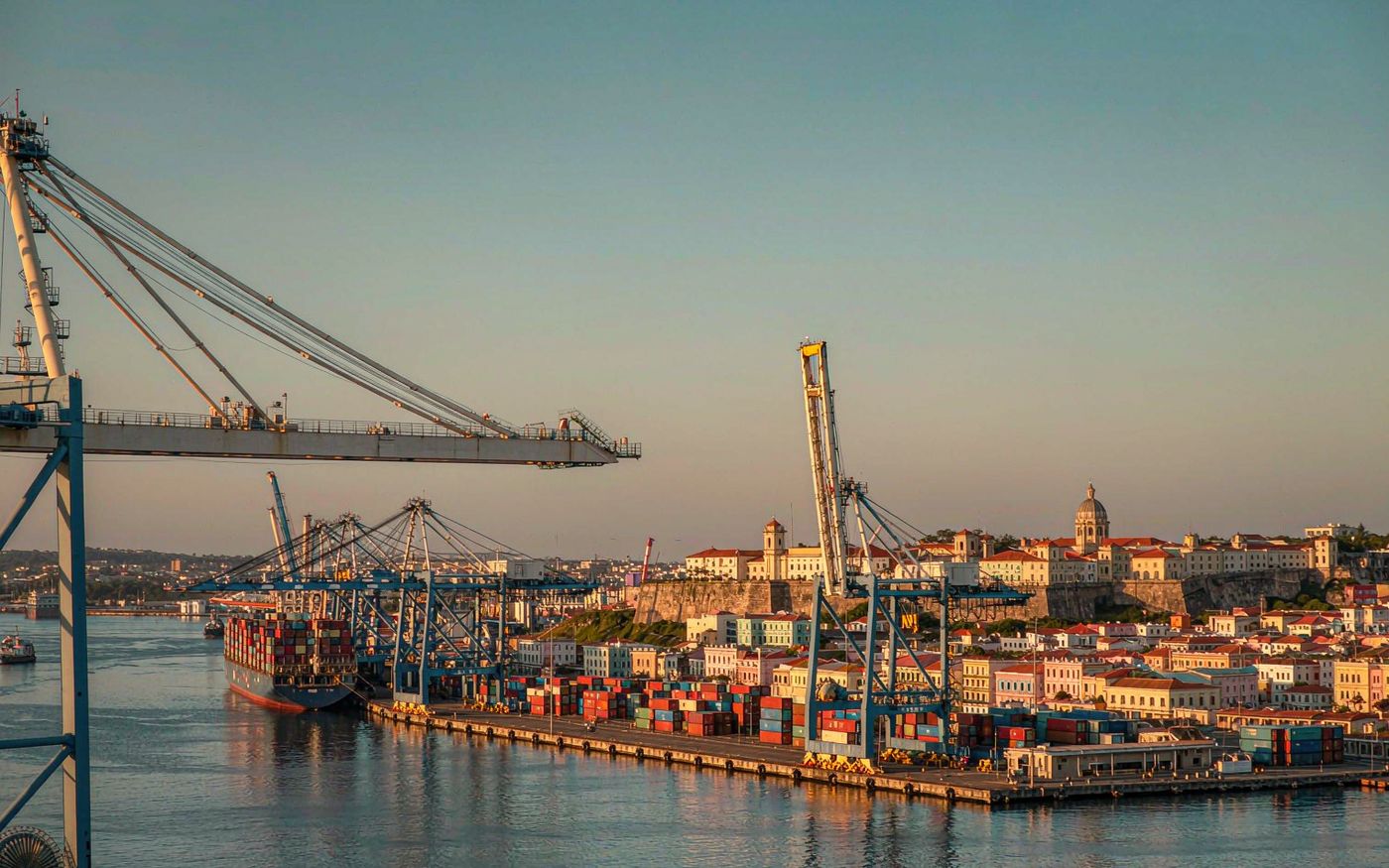
How to Ship from China to Puerto Rico: HTSUS Duty, the 11.5% IVU & the Jones Act
Puerto Rico and the US Virgin Islands are neighbours, and for customs purposes they are opposites. The USVI sits outside the United States customs territory and runs its own tariff. Puerto Rico sits inside it. A container from China arriving at San Juan is a United States import, cleared by Customs and Border Protection at Harmonized Tariff Schedule rates, with every federal trade remedy that applies on the mainland applying here too — including the China-specific measures that make this the most consequential line in the whole calculation.
The part that catches first-time importers out is what happens next. On top of the federal duty there is a Puerto Rico charge of 11.5 percent — the Impuesto sobre Ventas y Uso, or IVU, made up of a 10.5 percent commonwealth rate and a 1 percent municipal rate. It is administered by the Puerto Rico treasury, the Departamento de Hacienda, through its SURI platform. CBP does not collect it, so it will not appear on your customs bill, and a buyer who budgets only for the federal duty will be short by more than a tenth of the value of the goods.
The third thing worth knowing before you quote is the Jones Act — and specifically, when it does not apply. It restricts carriage between US points to US-built, US-flagged and US-crewed vessels. A direct sailing from a foreign port to San Juan is foreign trade, so it is not caught. Route the same goods through Florida first and the mainland-to-island leg is caught, which is why many shippers to Puerto Rico ship direct from origin rather than via the mainland.
At a glance
Status: unincorporated territory of the United States; inside the US customs territory under 19 CFR 101.1 · Federal duty: HTSUS rates applied by CBP, including Section 301 on Chinese-origin goods, Section 232 and any antidumping or countervailing duties · Local charge: IVU at 11.5% (10.5% commonwealth + 1% municipal), collected by the Departamento de Hacienda through SURI, not by CBP · De minimis: US$800 · ISF: 10+2 filed at least 24 hours before departure from the origin port; liquidated damages up to US$10,000 per violation · Jones Act: applies to mainland-to-island legs, not to a direct foreign sailing · Main port: San Juan, Puerto Nuevo · Airport: Luis Muñoz Marín International, SJU · Currency: US dollar
How your cargo moves: China to Puerto Rico
Eight steps from your supplier's door to yours. The last four are the ones shaped by local rules.
- Pickup from your supplierWe collect the goods anywhere in China and bring them to our consolidation point.
- Export clearanceChina customs declaration filed and released before the goods move to the port.
- Loading and departureContainer loaded, sealed and handed to the carrier at the Chinese port.
- Main carriageOcean, air or rail movement booked on the route agreed for your cargo.
- Arrival at the gatewayDischarge at the port or airport of entry, recorded on the carrier's manifest.
- Import clearanceCustoms declaration filed locally, with duty and tax assessed on the declared value.
- Customs releaseGoods released into free circulation once duty and tax are settled.
- Final deliveryOnward movement to your delivery address, warehouse or nominated depot.
Duty rates, VAT rates and clearance times move, and the figure that applies to your goods is the one set for your commodity code on the day of clearance. We check the current position against your code before your goods sail and confirm it to you in writing — ask for that check when you request a quote.
Puerto Rico sits inside the customs territory of the United States
This single fact determines almost everything else on the page. Because Puerto Rico is inside the US customs territory, an import from China is processed exactly as it would be at any mainland port: the same entry, the same classification under the HTSUS, the same federal agency requirements, and the same trade remedies.
What is the same as the mainland
HTSUS classification and rates. CBP entry and release. Section 301 tariffs on Chinese-origin goods. Section 232 on steel and aluminium. Antidumping and countervailing duties. The US$800 de minimis. FDA, USDA, APHIS, FCC and CPSC requirements, in full.
What is different
The IVU. It is a Puerto Rico tax collected by the Puerto Rico treasury, and it applies to goods entering the island for consumption from any origin — including from the US mainland, where no federal duty is due at all.
Two collectors, two bills: CBP takes the duty, Hacienda takes the IVU
The most useful thing an exporter can understand about this lane is that the money goes to two different places, at two different times, on two different systems. A buyer who understands that will not be surprised. A buyer who does not will blame the freight.
| Federal customs duty | Puerto Rico IVU | |
|---|---|---|
| Who | US Customs and Border Protection | Departamento de Hacienda, Puerto Rico treasury |
| What | HTSUS duty plus any trade remedy, on the transaction value | 11.5% on goods entering for consumption |
| How | Entry summary filed by a licensed US customs broker, normally through ACE | Declared and paid through SURI |
| When it bites | On foreign-origin imports | On goods entering the island from any origin, including the mainland |
| Where it shows up | On the customs bill | Separately — it is not on the customs bill |
The instruction to give your buyer. Budget for the duty and budget for the IVU as two separate lines. If the buyer's accountant is used to a mainland import, they will be looking for one number on one bill, and there are two.
Section 301 applies here, because this is the United States for tariff purposes
For a Chinese exporter this is the heaviest single fact on the page. All United States trade remedy measures apply to Puerto Rico identically to the mainland: Section 301 tariffs on Chinese-origin goods, Section 232 on steel and aluminium, and any antidumping or countervailing duty orders that cover the product.
That makes classification and origin more than an administrative exercise. The rate depends on the code, the code depends on the description, and on a Chinese-origin consignment the difference between two plausible codes can be the difference between a viable order and an unviable one. Get the code right before you quote, and state the origin clearly on the invoice.
What we will not do. We will not quote a duty rate as though it were settled. Trade remedy measures on Chinese-origin goods have moved repeatedly and the position at entry is the one that counts. Ask your broker to run the current rate for your code before you commit to a price.
The Jones Act does not touch a direct sailing from China
The Jones Act requires cargo moving between two United States points by sea to travel on US-built, US-flagged, US-owned and US-crewed vessels. That is why mainland-to-Puerto Rico sea freight carries a premium: the pool of qualifying vessels is small.
A sailing that arrives in San Juan directly from a foreign port is foreign trade, not domestic carriage, so the Act does not apply to it. Which produces a practical rule: if you are going to route through the US mainland, compare the result against shipping direct, because the direct option avoids both the domestic leg and the Jones Act premium that comes with it. Non-compliant routing on a domestic leg risks seizure and penalty, so this is a question for the routing decision, not an afterthought.
ISF 10+2, and the ten-thousand-dollar penalty for filing late
The Importer Security Filing is the deadline that most often damages a first booking on this lane, and it is a clock rather than a form.
- The rule. For ocean shipments from a foreign origin, the ISF must be filed at least 24 hours before the vessel departs the origin port.
- The exposure. Late, inaccurate or missing filings carry liquidated damages of up to US$10,000 per violation.
- The control. Name, in writing, who files it — and diarise the deadline against the origin port departure, not against arrival.
- The consequence of getting it wrong. CBP holds the cargo. Storage accrues while it is sorted out.
San Juan, Ponce and Mayaguez, but San Juan in practice
San Juan, through the Puerto Nuevo terminal complex, handles the overwhelming majority of foreign-origin containerised cargo. Ponce and Mayagüez handle smaller volumes and particular trades. For a Chinese-origin container the default answer is San Juan, and it is worth naming the terminal correctly on the paperwork.
Air freight arrives at Luis Muñoz Marín International Airport, SJU, and clears faster than sea for urgent cargo with complete documentation. Air is the sensible answer for spares, samples and anything where a missed sailing costs more than the freight premium.
Secured importer or unsecured importer: which one your buyer is
The Puerto Rico treasury distinguishes between importers who have posted a bond and been authorised by the Consumption Tax Bureau, and those who have not. Secured importers obtain release without a per-shipment payment hold. Unsecured importers pay the IVU per shipment through SURI at the time of importation.
Why this belongs in your quotation conversation. If your buyer is unsecured, the IVU has to be paid before release, which means funds have to be arranged in advance. If they are secured, the goods move without that hold. Ask which they are — it changes the cash-flow plan even though it does not change the amount.
Federal product rules apply in full, not in part
Being a territory rather than a state does not dilute federal regulatory reach. FDA requirements apply, including Prior Notice for food and registration and import permits for pharmaceuticals. USDA and APHIS rules apply to plants and agricultural commodities, with permits and phytosanitary certificates. FCC authorisation applies to telecommunications equipment. CPSC documentation applies to consumer products.
All wood packaging must comply with ISPM 15 and bear the mark. It is the cheapest failure on this lane to prevent and one of the most common causes of a hold.
From a Chinese factory to a Bayamon warehouse
| Stage | What happens | What decides it |
|---|---|---|
| Classification and origin | HS code fixed, Chinese origin stated, trade remedy exposure identified | Doing this before quoting, not at entry |
| Routing decision | Direct to San Juan, or via the mainland with the Jones Act premium | Which produces the lower landed cost, not the shorter map |
| Documents and ISF | Invoice, packing list, ISF filed 24 hours before origin departure | Having the data before the vessel loads |
| China export clearance | Declaration filed, goods released | Documents complete before the truck is booked |
| CBP entry at San Juan | Entry summary filed by a licensed broker, duty assessed | Classification accuracy and complete permits |
| IVU through SURI | 11.5% declared and paid to Hacienda | Whether the buyer is secured or unsecured |
| Release and delivery | Cargo released, moved inland | Whether the funds and the truck were arranged in advance |
Settle the duty and the IVU before you quote a Puerto Rico buyer
- What is the HTSUS code, and what trade remedy applies to Chinese origin on it? Ask the broker, not a search engine.
- Has the buyer budgeted the 11.5% IVU separately? CBP will not bill it.
- Direct sailing, or via the mainland? The Jones Act only bites on the second.
- Who files the ISF, and against which departure? The origin port, 24 hours before.
- Is the buyer a secured importer? It decides whether funds are needed before release.
- Does the product need FDA, USDA, APHIS, FCC or CPSC clearance? Assume yes and check.
- Is the wooden packaging ISPM 15 marked? Check before the container is sealed.
Why importers use Goodhope on this lane
Six things that are different about working with us on China to Puerto Rico shipments.
How it happens headed to Puerto Rico
Five shipments bought in China and delivered into Puerto Rico, told end to end — where the order came from, how it moved, where it nearly went wrong, and how it finished. Client names are withheld at their request; the situations and the handling are what we deal with on this lane.
Section 301 · the island surprise · Shenzhen to San Juan
The purchase. A buyer new to importing assumed an island in the Caribbean sat outside the tariff measures applied to Chinese-origin goods.
The move. Full container entered under the federal tariff schedule, with the additional duties modelled before the order was confirmed.
Where it nearly went wrong. This island is inside the customs territory of the United States for tariff purposes, so the measures that apply to Chinese goods apply here too. Costing the shipment as though it were a separate tariff jurisdiction understates the duty by a wide margin.
How it finished. We model the measures before he orders. His landed cost has been right every time since.
Two bills · duty and the local tax · Ningbo to Puerto Rico
The purchase. A first-time buyer expected one authority to collect everything and one payment to settle it.
The move. Full container with the federal duty and the local sales and use tax handled as two separate obligations, each to its own authority.
Where it nearly went wrong. Duty is one collector and the island sales and use tax is another, collected through the local revenue system at eleven and a half per cent rather than by the border authority. Assuming a single bill leaves a payment outstanding after you thought you were finished.
How it finished. He settles both up front now. No shipment of his has been held after payment since.
Twenty-four hours · the filing clock · Yiwu to San Juan
The purchase. A buyer's supplier treated the importer security filing as something to do before the vessel arrived.
The move. Consolidated cargo with the security filing lodged at least a day before departure from the Chinese port.
Where it nearly went wrong. The clock runs from departure at the origin port, not from arrival, and the exposure is quoted up to ten thousand dollars per violation. Filing on arrival is filing days late, every time.
How it finished. We file at booking now. He has never carried that exposure.
Direct, not via the mainland · the coastwise rule · Shanghai to San Juan
The purchase. A buyer was told the coastwise shipping rule would force his cargo onto a mainland leg first.
The move. Full container booked on a direct foreign sailing into San Juan.
Where it nearly went wrong. The coastwise rule governs mainland-to-island legs. It does not touch a direct sailing from China, so the requirement people warn about on this lane does not apply to how the cargo actually arrives.
How it finished. He books direct. Transit stayed short and no unnecessary leg was added.
Under eight hundred · small orders · Guangzhou to Puerto Rico
The purchase. A buyer assumed every parcel was assessed regardless of value and consolidated small orders that did not need consolidating.
The move. Small orders sent direct where they fell under the de minimis threshold, consolidated where they did not.
Where it nearly went wrong. Consignments below the eight hundred dollar threshold clear free of duty and tax. It is a real allowance, and knowing where it sits tells you when to consolidate and when sending direct is simply cheaper.
How it finished. He splits on value now. His small orders cost less than they used to.
Why importers use Goodhope on this lane
Six things that are different about working with us on China to Puerto Rico shipments.
Model the duty and the IVU separately before you quote
Tell us what you are shipping, the HS codes if you have them, the packed dimensions and gross weight, the pickup city in China and the delivery address. We will quote the sea leg into San Juan and the air alternative through SJU, confirm whether a direct sailing or a mainland routing makes more sense once the Jones Act is taken into account, flag the ISF deadline and who is filing it, and check the wood packaging requirement with you. Where the question belongs to a licensed US broker or to the Puerto Rico treasury — the current trade remedy rate on your code, the IVU treatment — we will say so plainly rather than guess.
Get a quote Talk to usRelated pages
Frequently asked questions
Is Puerto Rico inside the United States customs territory?
Yes. Puerto Rico is part of the US customs territory, so a Chinese-origin shipment is a US import cleared by CBP at Harmonized Tariff Schedule rates, with all federal trade remedies and federal agency requirements applying exactly as they do on the mainland. The US Virgin Islands next door are outside the customs territory and work quite differently.
What is the IVU and who collects it?
The Impuesto sobre Ventas y Uso, Puerto Rico's sales and use tax, charged at 11.5% — a 10.5% commonwealth rate plus a 1% municipal rate. It is administered by the Departamento de Hacienda through its SURI platform. Critically, CBP does not collect it, so it does not appear on the customs bill and has to be budgeted separately.
Do Section 301 tariffs on Chinese goods apply in Puerto Rico?
Yes. All United States trade remedy measures apply identically to the mainland, including Section 301 tariffs on Chinese-origin goods, Section 232 on steel and aluminium, and antidumping and countervailing duties. On a Chinese-origin consignment this is usually the largest single line in the calculation.
Does the Jones Act apply to a shipment from China?
Not to a direct foreign sailing. The Jones Act restricts carriage between two US points to US-built, US-flagged, US-owned and US-crewed vessels. Cargo arriving in San Juan directly from a foreign port is foreign trade. It applies if the goods land on the mainland first and then move to Puerto Rico as a domestic leg, which is why direct routing is often worth pricing against a mainland routing.
Is an Importer Security Filing required?
Yes for ocean shipments from a foreign origin: ISF 10+2 must be filed at least 24 hours before the vessel departs the origin port, with liquidated damages of up to US$10,000 per violation for late, inaccurate or missing filings. Name who files it before the booking is confirmed.
Which port and airport handle cargo from China?
San Juan, through the Puerto Nuevo terminal complex, handles the overwhelming majority of foreign-origin containerised cargo; Ponce and Mayagüez handle smaller volumes and specific trades. Air freight arrives at Luis Muñoz Marín International Airport, SJU, and clears faster for urgent cargo with complete documentation.
What is the de minimis threshold?
US$800, the same Section 321 threshold that applies on the mainland. Note that the Puerto Rico IVU is a separate consideration and applies to goods entering the island for consumption from any origin, including from the mainland where no federal duty arises.
What is a secured importer?
An importer authorised by the Consumption Tax Bureau that has posted a bond, allowing goods to be released without a per-shipment payment hold. An unsecured importer pays the IVU through SURI at the time of each importation, which means the funds have to be arranged before release.
Do federal product regulations apply in full?
Yes. FDA requirements including Prior Notice for food, USDA and APHIS permits and phytosanitary certificates for plant and agricultural products, FCC authorisation for telecommunications equipment, and CPSC documentation for consumer products. All wood packaging must meet ISPM 15.
Should the first shipment be FCL or LCL?
LCL is usually right for a first consignment, because it avoids committing a full container to a lane whose cost is dominated by classification and trade remedy exposure rather than by freight. Move to FCL once volume and timing are predictable, and use a licensed US customs broker.