
Home / Shipping to Réunion / How to ship from China to Réunion
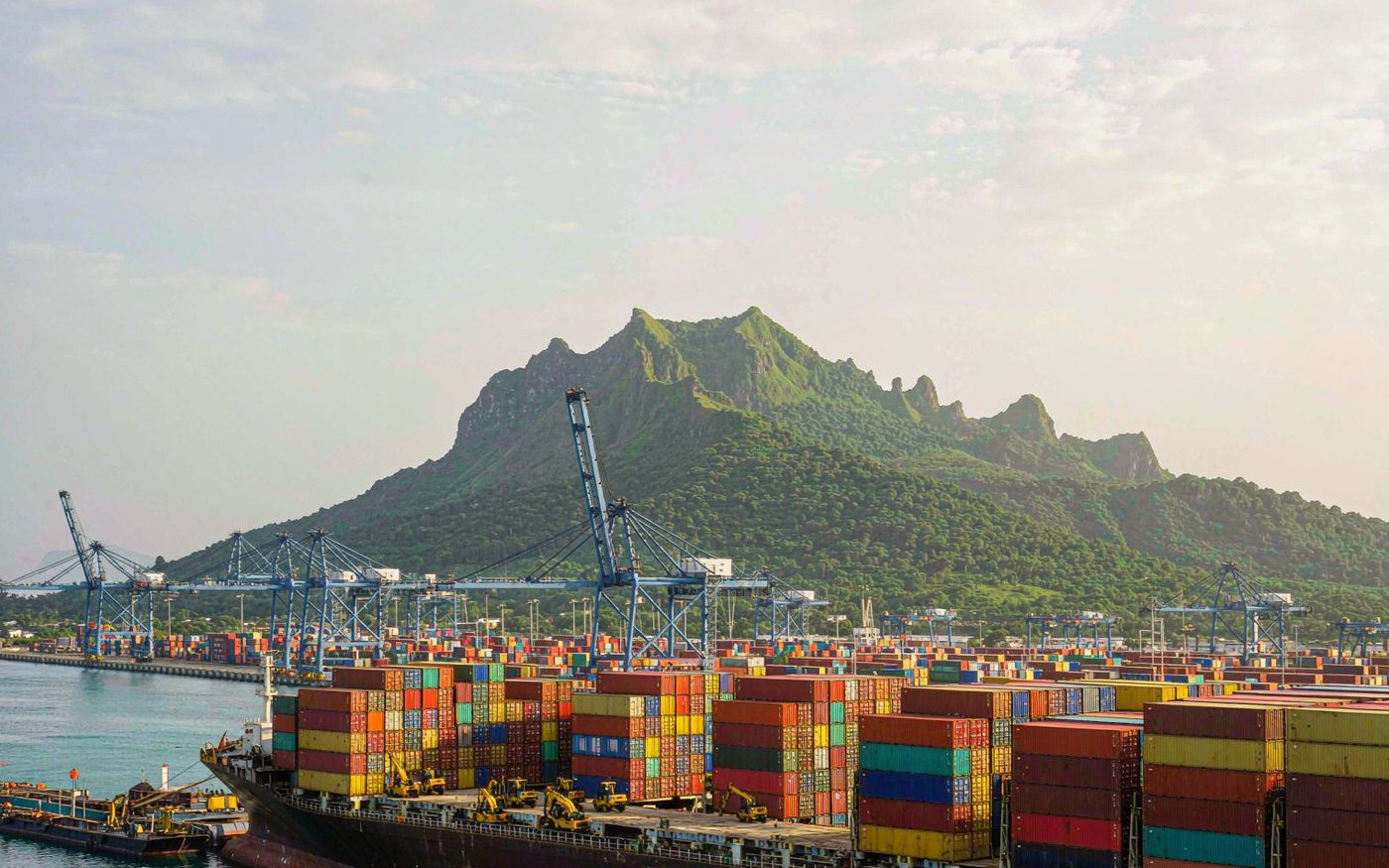
How to ship from China to Réunion
Réunion is a French overseas department in the Indian Ocean, roughly 700 kilometres east of Madagascar, with a population close to 880,000. It is also an outermost region of the European Union, which means the customs rulebook is European and the tax rulebook is not quite.
That distinction is where most quotations go wrong. Because Réunion is inside the EU customs territory, you file a European entry with an EORI number against the TARIC tariff. But it is outside the EU VAT area, so the tax charged at the border is the local DOM rate of 8.5 per cent, not the 20 per cent that applies in mainland France. Dock dues are then charged on top of the VAT, not instead of it.
This page covers the port, the tax stack, the paperwork and the timings you should plan around.
At a glance
Status: French overseas department and EU outermost region, inside the EU customs territory but outside the EU VAT area. Gateway: the port of Pointe des Galets at Le Port, the island's only commercial port; Roland Garros Airport, RUN, for air. Taxes: TVA at 8.5 per cent standard and 2.1 per cent reduced, plus dock dues typically 0 to 15 per cent and a regional addition of 1.5 to 2.5 per cent. Currency: euro. Population: about 880,000.
How your cargo moves: China to Réunion
Eight steps from your supplier's door to yours. The last four are the ones shaped by local rules.
- Pickup from your supplierWe collect the goods anywhere in China and bring them to our consolidation point.
- Export clearanceChina customs declaration filed and released before the goods move to the port.
- Loading and departureContainer loaded, sealed and handed to the carrier at the Chinese port.
- Main carriageOcean, air or rail movement booked on the route agreed for your cargo.
- Arrival at the gatewayDischarge at the port or airport of entry, recorded on the carrier's manifest.
- Import clearanceCustoms declaration filed locally, with duty and tax assessed on the declared value.
- Customs releaseGoods released into free circulation once duty and tax are settled.
- Final deliveryOnward movement to your delivery address, warehouse or nominated depot.
Duty rates, VAT rates and clearance times move, and the figure that applies to your goods is the one set for your commodity code on the day of clearance. We check the current position against your code before your goods sail and confirm it to you in writing — ask for that check when you request a quote.
An EU customs frontier in the Indian Ocean, with a VAT rate that is not the French one
Réunion sits inside the European Union's customs territory. The Union Customs Code applies, the tariff you classify against is TARIC, and goods released here are in free circulation in the European Union. If your buyer has onward distribution into the EU, the customs side is already done.
It does not sit inside the EU VAT area. The overseas departments have their own VAT regime, and Réunion's rates are far lower than the mainland ones. Neither fact cancels the other, and you need both in your landed-cost model.
The practical consequence for a first-time exporter: do not copy a quotation you prepared for Le Havre or Marseille. Same country, different tax outcome.
Eight and a half per cent, not twenty: the VAT rates that apply here
The standard VAT rate in Réunion is 8.5 per cent, with a reduced rate of 2.1 per cent applying to certain foodstuffs and medical goods. There is also a super-reduced 1.05 per cent for specific press and live-performance categories, and zero rating for exports.
Set that against the 20 per cent most shippers associate with France and the difference is large enough to change a quote. It is also the single most common error we see in freight calculators, which tend to default to the mainland rate.
There is a small-value relief worth knowing. Imports into the overseas departments are reported as exempt from VAT below roughly €22 in value, while customs duty follows the EU threshold and generally starts above €150. Confirm both figures with a Réunion broker, because the thresholds are administrative rather than statutory in the way mainland ones are.
Dock dues on top of VAT, and why neither one replaces the other
Dock dues are the local levy on goods entering the overseas departments. They are charged on imports from outside the department and, in many cases, on goods arriving from mainland France as well.
The structure has two parts: the dock dues proper, which are banded by HS code and commonly fall somewhere between zero and 15 per cent, and a regional addition that is usually set at 1.5 or 2.5 per cent. The local assembly sets the regional element, so it can change between one financial year and the next.
The point that matters: this is charged in addition to VAT, not instead of it. A landed-cost model that swaps one for the other will be wrong by a wide margin. Confirm the band that applies to your specific HS code in writing before you commit to a figure.
Pointe des Galets: one commercial port, and a schedule that slips
The port of Pointe des Galets, at Le Port on the north-west coast, is Réunion's only commercial gateway. It handles effectively all of the island's container traffic, along with bulk, reefer, Ro-Ro and liquid cargo, and it is run by the Grand Port Maritime de La Réunion.
It is also a regional transshipment hub. Cargo for Madagascar, Mayotte, Mauritius and parts of East Africa moves through it, which is useful if your buyer is serving the wider Indian Ocean, and a source of congestion if you are not.
Be realistic about schedule reliability. Publicly reported schedule data for this port has shown on-time arrival rates in the mid-teens to high-twenties in recent months, with average delays of around five to seven days. Treat a stated arrival date as an estimate, not a commitment.
Air freight to Roland Garros, and the shipments it suits
Roland Garros Airport, code RUN, sits about 21 kilometres from the port and handles the island's air cargo. Capacity comes largely through passenger services linking Réunion with mainland France and with regional points, rather than through dedicated freighters.
Air freight suits high-value, low-volume cargo: electronics, spare parts, medical supplies and samples. It does not suit heavy or bulky goods, because the cost per kilogram on this routing is high and the aircraft that serve the island constrain piece dimensions.
If your cargo has encryption functions or falls into controlled technology categories, expect additional permit requirements. That is a live issue here because Réunion has been positioning itself as a technology and data hub.
EORI, TARIC and the French-language paperwork
Because the entry is a European one, your consignee needs an EORI number and the declaration is filed through French customs against the TARIC tariff. Get the HS code settled in China, before the goods sail, and make sure the commercial invoice carries a description detailed enough for a French customs officer to accept it.
French is the working language of the administration. Product descriptions, labels and any handling instructions should be available in French, and the consignee details on the entry must match the importer's registration exactly.
Wood packaging must meet ISPM 15 and carry the mark. Réunion's isolation makes biosecurity enforcement active rather than nominal, and food, plant material and animal products face real controls.
What Reunion actually imports, and who you are competing against
The island imports most of what it consumes: food, fuel, building materials, machinery, vehicles and consumer goods. It exports sugar, rum and molasses, along with a growing volume of services.
That import profile tells you who you are up against. A large share of what arrives comes from mainland France and the rest of the European Union, often consolidated by established importers with long-standing forwarder relationships.
For a Chinese supplier the opening is usually price and product range rather than speed. Quote honestly on transit, and do not try to match a European supplier's delivery window, because the ocean leg will not let you.
Transshipping onward to Madagascar, Mayotte and Mauritius
Pointe des Galets functions as a hub for the south-west Indian Ocean. If your buyer is actually serving Madagascar, Mayotte or Mauritius, routing through Réunion can be cheaper than a direct service, and the customs release here puts the goods into EU free circulation.
It is not a free ride onward. Each of those destinations has its own entry and its own local taxes, and EU free circulation does not exempt goods from dock dues in the next territory.
If you are considering this, price the Réunion leg and the onward leg separately and confirm the onward service exists before you promise a date.
Packing for a humid tropic and a long wait on the quay
Réunion is tropical and humid, and containers stand on an open quay in the sun and in sudden rain. Use barrier packaging with desiccant for anything moisture-sensitive, and specify corrosion protection on machined metal parts.
Pack for the wait as much as for the voyage. With schedule slippage of several days common, cartons may sit longer than you planned, so double-wall them and avoid stacking configurations that collapse under their own weight over time.
Timings from a Chinese port, and where the delay sits
Sea freight from a Chinese port to Pointe des Galets typically runs 30 to 45 days including transshipment, most often through a South-East Asian or Indian Ocean hub. Air freight is commonly 7 to 12 days door to airport. Treat both as planning figures.
The delay concentrates in three places: waiting for the transshipment connection, waiting for a berth at the single commercial port, and waiting on an examination triggered by a thin commodity description.
Two of those are within your control. Write a precise description, and choose a transshipment hub with frequent onward sailings rather than simply the cheapest one.
Why importers use Goodhope on this lane
Six things that are different about working with us on China to Réunion shipments.
Confirm the dock dues band for your code before quoting
Send us the HS code, the weights and the dimensions, and we will confirm the dock dues band that applies, what Pointe des Galets will charge for handling, and whether your goods need a French-language label or a permit before they are loaded in China.
Get a quote Talk to usRelated pages
Frequently asked questions
Is Réunion inside the European Union for customs purposes?
Yes. It is an outermost region and part of the EU customs territory, so the Union Customs Code and the TARIC tariff apply and goods released here are in free circulation in the EU. It is not inside the EU VAT area.
What VAT rate applies on imports into Réunion?
The local DOM rate of 8.5 per cent standard, with 2.1 per cent reduced for certain foodstuffs and medical goods. It is not the 20 per cent mainland French rate, which is the figure most freight calculators default to.
Are dock dues charged instead of VAT?
No. Dock dues are charged in addition to VAT. They are banded by HS code, commonly somewhere between zero and 15 per cent, plus a regional addition usually set at 1.5 or 2.5 per cent. Confirm the band for your code.
Is there a low-value threshold?
Imports into the overseas departments are reported as exempt from VAT below roughly €22, while customs duty generally applies above the EU threshold of about €150. Confirm both with a Réunion broker.
Which port handles my container?
Pointe des Galets at Le Port, the island's only commercial port. It also serves as a regional transshipment hub for Madagascar, Mayotte, Mauritius and parts of East Africa.
How reliable are the sailings?
Publicly reported schedule data for Pointe des Galets has shown on-time arrival rates in the mid-teens to high-twenties with average delays of about five to seven days. Build that slippage into any delivery promise.
Do I need an EORI number?
Yes. The declaration is filed through French customs against TARIC, so your consignee needs an EORI number exactly as for any European entry.
Can I ship air freight?
Yes, through Roland Garros Airport, RUN, about 21 kilometres from the port. Capacity comes mainly through passenger services rather than dedicated freighters, so piece dimensions and weight matter more than on a mainlane air route.
What documents and packaging rules apply?
Commercial invoice with HS codes and a precise description, packing list, bill of lading or air waybill, and any certificate or permit required. French is the working language of the administration, and wood packaging must meet ISPM 15.
How long does shipping take from China?
Sea freight including transshipment is typically 30 to 45 days; air freight is commonly 7 to 12 days door to airport. Both are planning figures to be confirmed against a named service.