
Home / Shipping to Romania / How to Ship from China to Romania
How to Ship from China to Romania: Constanța, 21% TVA & RO e-Transport
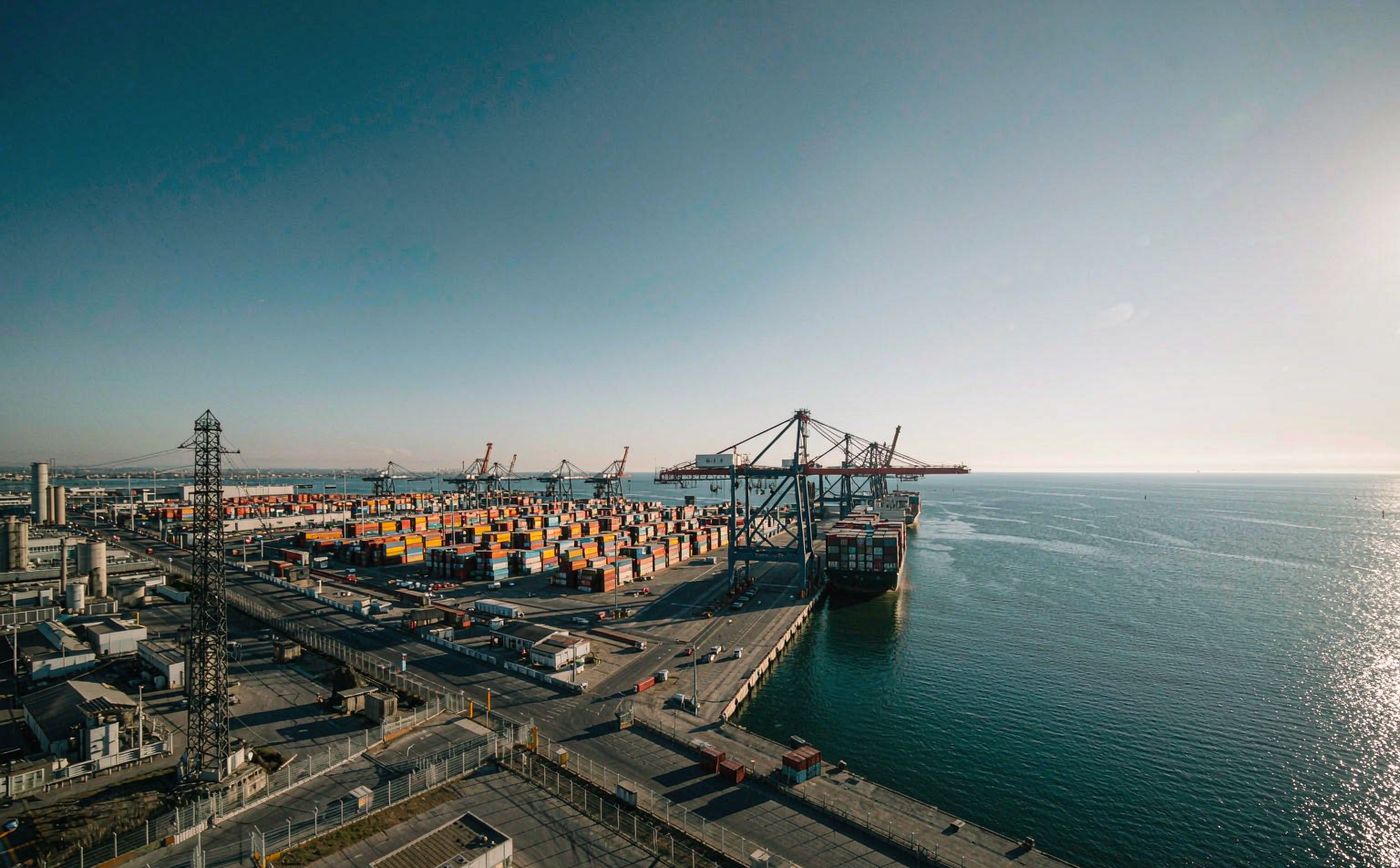
Romania is unusual among the countries around it, because it has its own deep-sea port. While neighbours ship through Hamburg, Koper or Rotterdam and truck the container across a border, a Romanian import can be discharged at Constanța, the largest port on the Black Sea and one of the busiest in Europe. That removes an entire inland leg and it changes the shape of the plan.
Two other things will surprise a first-time importer, and both cost money if discovered late. The first is that Romania raised its VAT rate to 21% on 1 August 2025, replacing 19%, and merged two reduced rates into a single 11% band. A great deal of published material, including marketplace help pages and comparison tables, still shows the old figures. The second is RO e-Transport, a GPS-tracked declaration system that Romania has widened to cover almost all goods above a modest threshold, with penalties that became fully enforceable from 1 January 2026.
Everything else follows EU rules. Romania joined the customs union and single market in 2007, duty comes from the TARIC code, and there is no EU–China free trade agreement — so assume the standard rate for your commodity code rather than a preference.
This guide is written for buyers importing from China for the first time. It covers why Constanța matters, why transit times on this lane vary more than almost anywhere else in Europe, the new VAT rates and what import TVA does to your cash, RO e-Transport and the digital reporting stack behind it, the documents Romanian customs asks for, the rail and Danube alternatives, product rules, and how to tell whether a forwarder genuinely books this lane.
Romania at a glance
- Constanța is the gateway. The largest port on the Black Sea, with road, rail and intermodal corridors to Bucharest, Pitești, Cluj and Timișoara.
- Most Asia services tranship. Expect a Mediterranean hub such as Piraeus or Istanbul in the routing rather than a direct call, which is why transit varies so widely.
- Transit spread is extreme: roughly 25 to 35 days is the commonly quoted range, but individual services are quoted from about 22 days to over 50.
- TVA 21% standard since 1 August 2025, replacing 19%. A single reduced rate of 11% replaced the old 9% and 5%. Budget on the new rates.
- RO e-Transport — a GPS-tracked declaration producing a UIT code, applying to all goods above threshold, with penalties enforced from 1 January 2026.
- e-Factura, SAF-T and e-TVA — the digital reporting stack that applies once you sell in Romania, and one of the heaviest in the EU.
- EU member since 2007. EU customs union and single market. Duty from the TARIC code. No EU–China free trade agreement.
- Danube access. The Danube–Black Sea Canal links Constanța to the river ports at Galați, Brăila and Tulcea.
How your cargo moves: China to Romania
Eight steps from your supplier's door to yours. The last four are the ones shaped by local rules.
- Pickup from your supplierWe collect the goods anywhere in China and bring them to our consolidation point.
- Export clearanceChina customs declaration filed and released before the goods move to the port.
- Loading and departureContainer loaded, sealed and handed to the carrier at the Chinese port.
- Main carriageOcean, air or rail movement booked on the route agreed for your cargo.
- Arrival at the gatewayDischarge at the port or airport of entry, recorded on the carrier's manifest.
- Import clearanceCustoms declaration filed locally, with duty and tax assessed on the declared value.
- Customs releaseGoods released into free circulation once duty and tax are settled.
- Final deliveryOnward movement to your delivery address, warehouse or nominated depot.
Duty rates, VAT rates and clearance times move, and the figure that applies to your goods is the one set for your commodity code on the day of clearance. We check the current position against your code before your goods sail and confirm it to you in writing — ask for that check when you request a quote.
Constanta is a real seaport, and that changes the routing
The contrast with Romania's neighbours is worth spelling out, because it affects how you read every quotation. An importer in Hungary, Czechia, Slovakia or Austria is choosing a foreign seaport and then paying for a cross-border inland leg. A Romanian importer is usually choosing one port, in their own country, with customs infrastructure on site and a domestic road and rail network beyond it.
Constanța is the largest port on the Black Sea and among the top ten in Europe by traffic volume. It handles containers from Shanghai, Ningbo, Xiamen, Qingdao, Shenzhen and Hong Kong, and it serves not only Romania but Bulgaria, Moldova and Central European markets. Road, rail and intermodal corridors run from the port to Bucharest, Pitești, Cluj and Timișoara and onward into Europe.
One useful consequence: you can clear at Constanța or at any inland customs office in Romania. Clearing at the port is the default and suits most importers. Moving the container under transit and releasing it at an inland office near your warehouse can work better if your broker, your bonded storage and your delivery address are all inland.
The honest caveat is that most services from Asia reach Constanța through a transhipment hub rather than direct — Piraeus, Istanbul, Ambarli and Singapore appear in routings. That is not a problem in itself, but it does mean your schedule depends on a feeder connection as well as the mainline vessel, and a missed connection at the hub can add a week.
Why one Romania service takes 22 days and another takes 54
This lane has a wider spread of quoted transit times than almost any other in Europe, and the reason is the combination of origin port and transhipment hub. Two services from the same Chinese port to the same Romanian port can differ by three weeks.
| Origin port | Typical quoted range to Constanța | What drives the spread |
|---|---|---|
| Shenzhen / Yantian | About 22 to 35 days | South China services often have the shortest quoted times, via Istanbul or Piraeus. |
| Ningbo | About 30 to 50 days | High volume, many service options; the hub and the number of transhipments make the difference. |
| Shanghai | About 34 to 60 days | The widest spread on the lane. The cheapest base rates are frequently attached to the longest routings. |
| Qingdao / Tianjin | About 30 to 50 days | Northern origins add domestic positioning before the mainline even starts. |
The commercial trap: a low headline freight rate on this lane is often the rate attached to the slowest service. A container quoted at 54 days instead of 29 is not cheaper if the extra 25 days costs you a stockout. Compare all-in cost per week of transit, and ask what the transhipment hub is.
The other variable that has moved more than once since 2023 is whether the service runs via Suez or around the Cape of Good Hope. Constanța services dependent on Suez routing are exposed to that decision, and it has changed and changed back. Ask for the routing that applies to your cargo-ready date, and ask for a quote validity of two to three weeks so you are not pricing a market that has already moved.
Romania raised VAT in 2025, and most tables are still wrong
On 1 August 2025, under Law 141/2025, Romania's standard VAT rate — TVA — went from 19% to 21%, and the two reduced bands of 9% and 5% were merged into a single reduced rate of 11%. This is more than a year old, and a surprising amount of published material has not caught up.
| Rate | What it covers |
|---|---|
| 21% standard | Everything not reduced or exempt, plus alcohol, drinks under CN 2202, high-sugar foods and food supplements. |
| 11% reduced | Medicines for human use, most food without added sugar or alcohol, drinking water and sewage, books and school textbooks on physical media, hotel accommodation and camping, restaurant and catering services excluding alcohol, cultural admissions, firewood, thermal energy, fertilisers and pesticides, water for irrigation, social housing. |
| 0% | Exports outside the EU, intra-EU supplies, international transport, and some related services. |
| Exempt | Financial and insurance services, healthcare, education, postal services, certain property transactions. |
Import TVA is charged on the customs value plus the duty plus the costs of moving the goods to their first destination in the EU. It is not charged on the invoice value alone, which is the assumption most first-time importers make.
Registration thresholds also moved. The Romanian VAT registration threshold was raised to RON 395,000 from September 2025, and for non-resident businesses there is no threshold at all — registration is triggered by taxable activity.
Practical warning: if you built a selling price or a margin calculation on 19% TVA, that calculation is now wrong by two percentage points. Re-run it. Several transitional reduced rates for housing also expire during 2026, so check the current treatment for anything in that category rather than assuming.
Paying import TVA at clearance, and the deferment question
For most importers the cycle is straightforward: import TVA is paid at customs clearance, then reclaimed as input tax through the periodic VAT return, the D300, which is normally filed monthly and is due on the 25th of the month following the period. Quarterly filing is available to smaller businesses that did not exceed €100,000 turnover in the previous year and have no intra-EU acquisitions.
The cash-flow consequence is the same one that applies in Hungary and Poland, only with a higher rate than most: on a container with a landed customs value of €10,000, the TVA line is €2,100, and it is your money until the return is filed.
Romania does provide for deferred import VAT payment in some circumstances. It is not automatic, it depends on conditions, and published guidance varies on how accessible it is. The right approach is to ask ANAF or a Romanian tax adviser directly about your own position before you plan around it — and to budget on the assumption that you will pay at clearance and reclaim, treating any deferment as upside.
For businesses established outside the EU, a fiscal representative is required, and VAT refunds to foreign businesses are subject to reciprocity conditions. That is worth settling before the first container rather than after.
RO e-Transport: the GPS declaration Romania applies to everything
This is the Romanian rule that most often catches new importers, and it is worth comparing with Hungary's EKAER, because the two countries went in opposite directions. Hungary narrowed its system to risk-product categories in 2021. Romania widened its system, and from July 2024 RO e-Transport applies to all goods above the thresholds, regardless of category.
RO e-Transport is run by ANAF and tracks the road transport of goods in real time by GPS. Each movement must be declared before departure, generating a UIT code that accompanies the goods.
| Element | What applies |
|---|---|
| Threshold | A vehicle of at least 2.5 tonnes, and at least one lot of goods above 500 kg gross weight or 10,000 RON in value (roughly €2,000). |
| Scope | All international transport linked to Romania — import, export and intra-EU movements — regardless of goods type. Pure transit through Romania without loading or unloading is excluded. |
| UIT validity | Five days for domestic movements, fifteen days for international movements. |
| Who declares | Depends on the transaction: for a customs import, the consignee. The obligation sits with whoever controls the Romanian-side commercial documentation, not necessarily the carrier. |
| Penalties | Fines up to 100,000 RON, and in serious cases confiscation of the full value of the goods. Full enforcement with penalties began on 1 January 2026 after the grace period ended. |
The practical rule: if you are the consignee of goods moving by road in Romania, assume you need a UIT code and check before the vehicle is dispatched. A container load is far above the 500 kg and 10,000 RON thresholds, so almost every commercial movement by road is in scope.
The good news is that the declaration itself is not complicated. The difficulty is entirely that nobody mentioned it. Agree in writing, before dispatch, who files the UIT, and make sure the carrier knows the movement is monitored.
e-Factura, SAF-T and e-TVA: the reporting stack that follows you
None of this is an import requirement, and all of it arrives the moment you start selling in Romania. It is worth knowing about in advance, because it affects which accounting software you can use.
- RO e-Factura — mandatory electronic invoicing. B2B invoicing through the ANAF platform has been mandatory since 1 July 2024, with B2C brought in from January 2025 and the B2C edge narrowed by legislation in May 2026. Invoices are submitted as structured XML through the ANAF portal, commonly within five calendar days of issue.
- SAF-T, the D406 file — a structured audit file submitted monthly. Large taxpayers have filed since 2022, medium since 2023, and small and non-resident VAT-registered companies since January 2025. It is due by the last calendar day of the month following the reporting period, with fines for non-submission.
- RO e-TVA — a pre-filled VAT return introduced in August 2024 that ANAF compares against your D300 and uses to generate discrepancy notices. From 2026 the obligation to answer those notices and the associated fines were removed, so they are informational — but they still drive audit selection, which makes reconciling the three data streams worth doing.
- Intrastat — thresholds of RON 1,000,000 per year for both arrivals and dispatches, declared monthly by the 15th of the following month. The Romanian deadline does not shift when the 15th falls on a weekend or public holiday.
The honest summary is that Romania's domestic reporting burden is among the heaviest in the EU. It should not stop you importing, but it should be in the budget before the first sale rather than discovered in the first quarter.
What the Romanian customs office wants to see in writing
Romanian customs operates under the Union Customs Code, with the Single Administrative Document (SAD) import declaration filed electronically by your broker. EDI submission through the Romanian e-customs system supports faster clearance at Constanța, which is worth confirming your broker actually uses.
The standard document set:
- Commercial invoice with HS codes, unit prices and total value.
- Packing list with weights and dimensions for each package.
- Transport document — bill of lading for sea, air waybill for air, CMR for road, CIM for rail.
- Certificate of origin where required, and the importer's EORI number.
- Sector certificates for food, cosmetics, pharmaceuticals, medical devices and electronics.
- Insurance certificate, which is worth having even though it is not strictly a customs document.
Two points deserve emphasis. An incorrect HS code produces an incorrect duty calculation and delays, and it stays on file. Undervaluation is treated seriously and risks fines and seizure, so the declared value has to match the invoice and the underlying contract. Used machinery, vehicles and some equipment attract additional technical inspection or national approval, which is much cheaper to arrange before shipping than after arrival.
More detail on our import clearance documents page.
Trade terms when the cargo lands at your own port
Because Romania has a real port, the trade terms work slightly more cleanly here than they do for a landlocked destination. CIF Constanța is a valid term — a named Romanian port — where "CIF Budapest" or "CIF Prague" would not be. That said, the same inland question remains: Constanța to Bucharest, Cluj or Timișoara is a separate leg that CIF does not cover.
| Term | Supplier handles | You handle | Note for Romania |
|---|---|---|---|
| EXW | Goods at the factory door. | Everything from pickup onward. | Only sensible with your own agent in China. |
| FOB | Goods on board at the Chinese port, export clearance done. | Main carriage, insurance, Romanian clearance, duty, TVA, inland leg. | The usual recommendation — you choose the service and can see what the transhipment is costing you in days. |
| CIF | Carriage and insurance to Constanța. | Clearance, duty, TVA, inland leg, destination charges. | Valid here, but still does not cover port-to-warehouse. Ask for the destination charges separately. |
| DAP | Delivery to your Romanian address. | Unloading, clearance, duty and TVA. | Works well if you are VAT-registered and want to reclaim the TVA yourself. |
| DDP | Everything including duty and taxes. | Unloading. | Simple to receive. Ask who is importer of record and whether the RO e-Transport declaration is being handled. |
See our DDU and DDP and local charges pages for what lands at the destination end.
Rail, air and the Danube: the alternatives to Constanta
Rail is a genuine option for western Romania. Trains reach Arad in roughly 15 to 20 days, which is faster than the sea route and cheaper than air. If your delivery address is in Bucharest or further east, the sea route via Constanța usually wins; if it is in the west, rail is worth pricing. The standard northern-corridor restrictions apply: dangerous goods of any class are not carried, loose lithium batteries and most battery-powered products are excluded, and chemicals need a non-hazardous safety appraisal before booking. See our dangerous goods to Romania and non-DG chemicals to Romania pages.
Air freight lands at Bucharest Henri Coandă (OTP), with some direct services from southern Chinese hubs and others routing through Frankfurt, Amsterdam or Istanbul. Airport-to-airport is about three to seven days. Express courier delivers door to door in roughly five to seven days and clears customs for you, which is convenient but leaves you with less control over classification.
The Danube is the option most routing plans ignore. The Danube–Black Sea Canal connects Constanța to the river, giving access to the river ports at Galați, Brăila and Tulcea and onward barge traffic upriver. For heavy, non-urgent cargo, or for serving markets further into Central Europe, it is worth asking about — with the usual caveat that river capacity and water levels make it less predictable than road or rail.
CE marking and product rules before a Romanian retailer stocks you
Customs release is not permission to sell. Romanian retailers and market surveillance ask for documentation, and they ask early.
- CE marking with a declaration of conformity and technical file behind it, for machinery, electrical equipment, toys, PPE, medical devices and construction products.
- GPSR, the General Product Safety Regulation — most consumer products need an identifiable responsible person established in the EU, and if you are the importer that may be you.
- Romanian-language documentation. Instructions, safety information and consumer labelling generally need to be in Romanian. Customs will not check this; your retail customer will.
- Sector certificates for food-contact articles, cosmetics, pharmaceuticals and medical devices, plus REACH and CLP obligations for chemicals and mixtures.
- EPR obligations for packaging, electrical equipment and batteries placed on the Romanian market, usually handled through a collective compliance scheme.
The cheapest insurance remains asking the factory for the declaration of conformity, the test reports behind it and Romanian-language artwork before the container ships.
A private buyer and a Romanian company after the 2025 changes
As a private individual
You can import personal goods and pay duty plus 21% TVA, and customs will ask for the same documents as for a commercial shipment. You cannot reclaim the TVA, deferment is not available to you, and you may need to show the goods are for personal use. For a one-off personal purchase this is fine. For anything you intend to sell, it is an expensive way to operate.
As a registered business
A Romanian company — commonly an SRL — needs tax registration and an EORI number, and registers for VAT once turnover passes RON 395,000. A business established outside the EU has no threshold: registration is triggered by taxable activity, and a fiscal representative is required. In exchange import TVA becomes recoverable and you can invoice Romanian customers properly.
The deciding question is whether you will resell. If yes, register before the goods arrive, because retrofitting VAT registration onto a container already in the country is slow and expensive. And if you built any pricing on the old 19% rate, correct it now.
Choosing a supplier you can still trust at thirty days
There is a Romania-specific reason to be more careful about supplier selection than you would be on a short lane. With a sea transit of roughly 25 to 35 days and, on the slowest services, considerably more, a quality problem you discover on arrival has already cost you two months. On a lane where a replacement order takes another month to arrive, a bad supplier is not an inconvenience — it is a lost season.
So the sequence matters more here. Order samples from three shortlisted suppliers. Insist on a pre-shipment inspection before the balance is paid. Ask for the CE declaration of conformity and test report for the exact model, and confirm the commercial invoice will describe the goods the way customs requires. Then visit the supplier who survives all of that.
Many Romanian buyers start by purchasing through a distributor in the EU and only move to direct import once volume justifies it. That is a reasonable path: going direct changes your margin, and it also moves classification, product compliance, TVA and RO e-Transport obligations onto you.
On consolidation: several small suppliers into one container at a Chinese warehouse is usually faster and cheaper per cubic metre than several LCL shipments, and gives you one set of documents and one clearance. See our warehouse and consolidation and consolidated shipment pages.
Tests that show whether a forwarder actually books Constanța cargo
Each item below is one question you can ask before paying anything.
- Which service, and via which transhipment hub? If they cannot name the hub, they have not looked at the routing for your date.
- What is the quoted transit, and is it the fast service or the cheap one? On this lane those are often different services, and the gap can be three weeks.
- Do they warn you about RO e-Transport? A forwarder who has booked Constanța cargo knows consignees need a UIT code for the road leg.
- Do they quote 21% TVA? Anyone still saying 19% is working from material that is more than a year out of date.
- Do they offer the Arad rail option when your address is in the west? It is a real alternative and a generic quote will not mention it.
- Have they heard of the Danube route? For heavy cargo it is worth asking about.
- Do they quote all-in, in writing, with a validity period? An all-in figure naming terminal handling, documentation and inland delivery beats a low headline plus "plus local charges".
- Do they hold a Chinese NVOCC registration and run their own consolidation warehouse? Both are checkable.
- Do they offer cargo insurance and explain the exclusions? See our cargo insurance page — carrier liability limits sit far below cargo value.
- Do they say what they do not do? Romanian import clearance, TVA accounting and the RO e-Transport declaration belong to the importer of record.
From the factory to a Romanian warehouse, in order
Classify the product and check the paperwork
Settle the commodity code, confirm whether sector certificates apply, and get the CE declaration of conformity and test reports from the factory before anything is booked.
Pick the service, not just the price
Ask for the routing, the transhipment hub and the quoted transit, and compare on all-in cost per week rather than on the headline rate.
Agree the trade term
FOB for most first imports. If CIF Constanța is offered, confirm in writing who pays the inland leg to your warehouse.
Register on the Romanian side
EORI first, VAT registration before the goods arrive if you intend to reclaim TVA, and a fiscal representative if your business is outside the EU.
Collection, consolidation and export clearance in China
Goods are collected from one or several factories, consolidated if needed, inspected if you have arranged it, and cleared for export.
Main carriage to Constanța
Ocean, with a transhipment at the hub in most cases. Track the container and watch whether the feeder connection was made.
Clearance, duty and TVA
Your broker files the SAD declaration, at Constanța or at an inland customs office. Duty is paid, and import TVA is paid at clearance or deferred if a facility is in place.
Road delivery and the UIT code
Before the truck is dispatched, confirm who files the RO e-Transport declaration and obtain the UIT code. Then final delivery to your address.
A first container into Constanta, and the number that was missing
A Bucharest home and garden importer came to us with a first consolidated order from a furniture factory in Foshan and a lighting supplier in Ningbo, around 26 CBM. They had chosen the lowest sea quote they had been given, and had built a retail price list the month before.
The first problem was the service. The cheap quote transhipped via Piraeus, and the container missed its feeder connection. The quoted transit was 54 days rather than the 29 days the competing service offered, and the extra three weeks arrived in the middle of the selling season. The freight saving was real and it was smaller than the margin on the sales that did not happen. We had flagged the difference at quotation; the decision was made on the headline number.
The second problem was the VAT rate. The price list had been built on 19% TVA, and by the time the container shipped the standard rate had been 21% for months. Two percentage points on import TVA does not sound dramatic, and on this container it was a real erosion of margin that nobody had modelled. It is the kind of error that comes from working from an old comparison table rather than from the current law.
The third problem was the missing number. The road leg from Constanța to Bucharest needed a UIT code under RO e-Transport, and as consignee the obligation sat with the importer. Nobody had mentioned it, and enforcement with penalties had only recently begun. It was arranged before the truck was dispatched, and it cost an hour. Had it been discovered at a roadside check, the exposure would have been measured in tens of thousands of lei and, in a serious case, the value of the goods.
The container cleared and sold through, later than planned. What decided it: all three problems were visible at quotation stage, and two of them were questions nobody thought to ask.
What Goodhope does before a Romanian container sails
Goodhope Freight has been moving cargo out of China since 2012, operating as a licensed NVOCC (registration GD20230925153335) from Shenzhen. On a Romanian shipment our value sits in what happens before the vessel leaves, because that is where the expensive mistakes on this lane are made.
- Ocean freight port to port — FCL and LCL to Constanța, with the service, the transhipment hub and the quoted transit named in writing so you can compare properly. See our FCL to Romania, LCL to Romania and Romania freight rates 2026 pages.
- We show you the spread — if the cheap service is the slow one, we say so, with the day count next to the price.
- Rail to Arad where the delivery address makes it the better answer, with an honest statement of what the corridor will not carry.
- Air freight to Bucharest Henri Coandă — airport to airport, with chargeable weight worked out before you book. See our air freight to Romania page.
- Consolidation in China — several suppliers, one container, one set of documents, one clearance.
- Documents checked before sailing — commodity codes, descriptions and conformity paperwork, because that is where Romanian clearance problems start.
- Plain answers on what we do not do — Romanian import clearance, TVA accounting and the RO e-Transport declaration belong to the importer of record or their Romanian representative. We coordinate with them and we do not pretend otherwise.
Why importers use Goodhope on this lane
Six things that are different about working with us on China to Romania shipments.
Straight cases headed to Romania
Five shipments bought in China and delivered into Romania, told end to end — where the order came from, how it moved, where it nearly went wrong, and how it finished. Client names are withheld at their request; the situations and the handling are what we deal with on this lane.
The old VAT figure · costing · Shenzhen to Constanta
The purchase. A buyer new to importing costed his first container using a rate taken from a marketplace help page.
The move. Full container with value-added tax applied at the rate in force since August 2025.
Where it nearly went wrong. The standard rate moved to twenty-one per cent on 1 August 2025 and a single reduced band replaced the two old ones. A great deal of published material still shows the previous figures, and costing from it understates the tax on every line.
How it finished. We confirm the current rate before quoting. His landed cost has matched the assessment every time since.
The UIT code · at the frontier · Ningbo to Romania
The purchase. A first-time buyer had never heard of the GPS declaration and arrived at the border without one.
The move. Full container with the tracked declaration raised and the code issued before the goods reached the frontier.
Where it nearly went wrong. The declaration system applies to goods above a modest threshold and produces a code the movement must carry, with penalties fully enforceable from the start of 2026. Treating it as an arrival formality turns a border crossing into a stop.
How it finished. We raise the code during transit. No shipment of his has stopped at the frontier since.
Twenty-two or fifty-four · quoting · Shanghai to Constanta
The purchase. A buyer quoted his customer the fastest transit figure he had been given and missed it by three weeks.
The move. Full container booked on a named service, with the realistic span quoted rather than the best case.
Where it nearly went wrong. Published ranges on this lane run from roughly twenty-two days to over fifty because most services tranship through a Mediterranean hub rather than calling direct. Quoting the short end of that range is quoting one service out of many.
How it finished. He quotes the span now. His customer commitments have held ever since.
Not through Rotterdam · routing · Guangzhou to Romania
The purchase. A buyer's previous forwarder routed everything through a North European port and trucked it across a border.
The move. Full container discharged at the Black Sea port, with the inland leg removed entirely.
Where it nearly went wrong. This country has its own deep-sea port with road, rail and intermodal corridors inland. Routing through another country's port adds a border crossing and an inland leg that were never necessary.
How it finished. He discharges locally now. Transit and inland cost both came down.
Cash at clearance · the import VAT · Yiwu to Bucharest
The purchase. A buyer budgeted the import tax as a bookkeeping entry and did not hold the cash for it.
The move. Full container with the import tax modelled as cash due at clearance and the deferment option assessed first.
Where it nearly went wrong. Import value-added tax is payable on release unless a deferment arrangement is in place, and at twenty-one per cent that is a material sum on the day. Discovering it at clearance is discovering it while the container waits.
How it finished. He holds the cash or uses deferment now. No release of his has waited on funds since.
Why importers use Goodhope on this lane
Six things that are different about working with us on China to Romania shipments.
Price a Romania shipment with the charges itemised
Send us the product and its commodity code if you have it, the carton count and total weight or volume, the supplier's city and your delivery address in Romania. We will show you the service options side by side with their actual transit times, name the transhipment hub, and itemise the destination charges so the TVA line is not a surprise.
Frequently asked questions
Which port should I use for shipping from China to Romania?
Constanta, on the Black Sea, is the answer for almost everything. It is the largest port on the Black Sea and one of the busiest in Europe, with road, rail and intermodal corridors to Bucharest, Pitesti, Cluj and Timisoara, and it serves Bulgaria, Moldova and Central European markets as well. Most services from Asia reach Constanta through a Mediterranean transhipment hub rather than direct, so ask which hub your service uses. Goods can be cleared at Constanta or at any inland customs office in Romania.
How long does shipping from China to Romania take?
Port to port into Constanta is commonly quoted at around 25 to 35 days, but individual services are quoted anywhere from about 22 days to over 50 depending on the Chinese origin port and the transhipment hub. LCL typically runs 26 to 34 days or longer because of consolidation and deconsolidation. Rail into Arad in western Romania is roughly 15 to 20 days. Air freight into Bucharest Henri Coanda is about three to seven days airport to airport, and express courier five to seven days door to door.
What is the VAT rate on imports into Romania?
The standard Romanian VAT rate, TVA, is 21%, which took effect on 1 August 2025 under Law 141/2025 and replaced the previous 19% rate. A single reduced rate of 11% replaced the former 9% and 5% bands and covers medicines, most food, water and sewerage, books, accommodation and restaurant services. Exports and intra-EU supplies are zero-rated. Import TVA is charged on the customs value plus duty plus the costs to the first destination in the EU. Many published comparison tables still show the old rates, so budget on 21%.
What is RO e-Transport and does it apply to my shipment?
RO e-Transport is Romania's system, run by ANAF, for tracking road transport of goods in real time by GPS. Each movement must be declared before departure and generates a UIT code that travels with the goods. It began with high fiscal risk goods and was widened in July 2024 to all goods above the thresholds, which are a vehicle of at least 2.5 tonnes and at least one lot of goods above 500 kg gross or 10,000 RON in value. It covers international transport linked to Romania, including imports, regardless of goods type. Penalties of up to 100,000 RON and, in serious cases, confiscation of the goods have been enforced since 1 January 2026.
Do I need an EORI number to import into Romania?
Yes. Any business importing into the European Union needs an EORI number, and one issued by any member state is valid throughout the EU, so a number you already hold works in Romania. Businesses established in Romania apply through the Romanian customs authority. It is a customs identifier, separate from a VAT number, and clearance cannot start without it.
Can I defer paying import VAT in Romania?
The normal route is to pay import TVA at clearance and reclaim it through the periodic VAT return, the D300, which is normally filed monthly and is due on the 25th of the month following the period. Romania does provide for deferred import VAT payment in some circumstances, but it is subject to conditions and is not automatic, so confirm your own position with ANAF or a Romanian tax adviser before you build a cash-flow plan around it.
What documents does Romanian customs require?
A commercial invoice showing HS codes, unit prices and total value, a packing list with weights and dimensions, the transport document being a bill of lading, air waybill, CMR or CIM note, a certificate of origin where required, and the single administrative document import declaration filed by your broker. Sector certificates apply to food, cosmetics, pharmaceuticals and electronics. Undervaluation and incorrect HS codes are the two most common causes of delay, fines or seizure.
Is there a duty-free threshold for goods from China into Romania?
The EU relief that exempted consignments valued at 150 euro or less from customs duty was removed from 1 July 2026 and replaced with a flat charge, commonly described as a few euro per tariff line, for consignments up to that value. Import TVA has never depended on a threshold and is charged regardless of value at 21% or 11% where the goods qualify.
Is rail freight from China to Romania a real option?
Yes, for western Romania. Trains reach Arad in roughly 15 to 20 days, which is faster than the sea route into Constanta and cheaper than air. The usual northern corridor restrictions apply: dangerous goods of any class are not carried, loose lithium batteries and most battery-powered products are excluded, and chemicals need a non-hazardous safety appraisal before booking. If your delivery address is in Bucharest or further east, the sea route via Constanta usually wins.
What does a Chinese freight forwarder handle on a Romanian shipment?
On the China side a forwarder collects goods from the factory or factories, consolidates them if needed, clears them for export, books space and issues the bill of lading, air waybill or rail consignment note, and provides tracking. Goodhope works port to port on ocean freight and airport to airport on air freight, names the service and its transhipment hub, and coordinates with your Romanian broker. Romanian import clearance, TVA accounting and the RO e-Transport declaration belong to the importer of record or their Romanian representative.