
Home / Shipping to Saint-Martin / How to ship from China to Saint-Martin (French side)
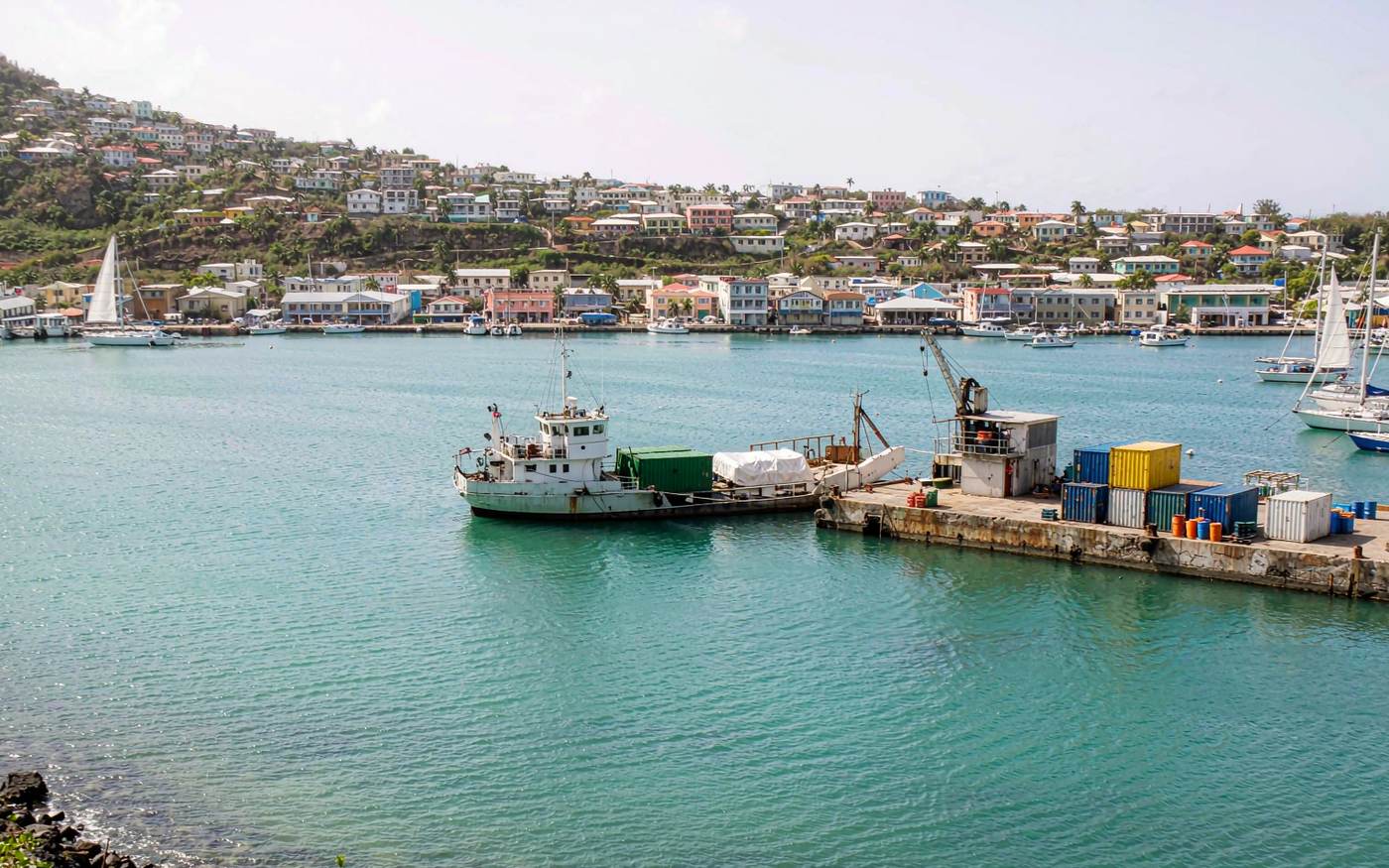
How to ship from China to Saint-Martin
Saint-Martin is one island with two administrations, and the difference between them is not cosmetic. The northern, French side is a French overseas collectivity and an outermost region of the European Union, with its own tax position. The southern, Dutch side is Sint Maarten, a constituent country of the Kingdom of the Netherlands, with a completely separate customs regime. This page is about the French side.
The French side carries a feature that changes the whole calculation: it holds free port status, which means imports are not subject to customs duty in the way they would be elsewhere in the European Union. That is a real advantage, and it is also the source of most of the confusion, because the exemption does not follow the goods once they leave. Understanding where the exemption stops is the single most useful thing a first-time importer can take from this page.
At a glance
French overseas collectivity and EU outermost region, but a free port: no customs duty and no TVA collected on arrival. Cargo lands at Galisbay near Marigot, which is a general quay rather than a container terminal. Most international air freight arrives at Princess Juliana on the Dutch side. Euro is the official currency; US dollars are widely accepted. Hurricane season runs June to November.
How your cargo moves: China to Saint-Martin
Eight steps from your supplier's door to yours. The last four are the ones shaped by local rules.
- Pickup from your supplierWe collect the goods anywhere in China and bring them to our consolidation point.
- Export clearanceChina customs declaration filed and released before the goods move to the port.
- Loading and departureContainer loaded, sealed and handed to the carrier at the Chinese port.
- Main carriageOcean, air or rail movement booked on the route agreed for your cargo.
- Arrival at the gatewayDischarge at the port or airport of entry, recorded on the carrier's manifest.
- Import clearanceCustoms declaration filed locally, with duty and tax assessed on the declared value.
- Customs releaseGoods released into free circulation once duty and tax are settled.
- Final deliveryOnward movement to your delivery address, warehouse or nominated depot.
Duty rates, VAT rates and clearance times move, and the figure that applies to your goods is the one set for your commodity code on the day of clearance. We check the current position against your code before your goods sail and confirm it to you in writing — ask for that check when you request a quote.
One island split in two: which side this page is about
The island has been divided since the Treaty of Concordia in 1648, and the border is open in the everyday sense: people, cars and goods cross without formalities. Customs does not work that way. The two halves have different tariff codes, different tax systems and different procedures, and a shipment cleared on one side is not automatically cleared on the other.
The French side, Saint-Martin, became a separate overseas collectivity in 2007, having previously been administered as part of Guadeloupe. It remains an outermost region of the European Union, which puts it inside the EU customs territory for legal purposes. The free port status is a carve-out layered on top of that position, and it is the carve-out rather than the EU membership that determines what you actually pay on arrival.
If your consignee is a hotel, restaurant, shop or residence on the French side, route the shipment to the French side and clear it there. If the goods are going to the Dutch side, or to a neighbouring island, the calculation changes and the Dutch side may be the better entry point. Decide the entry side first, because almost everything else follows from it.
The French side sits in the EU customs area, yet no duty is collected
Because Saint-Martin is an outermost region, the Union Customs Code, the TARIC tariff and the EORI registration system are the legal framework. In practice the free port status means customs duty is not collected on goods arriving for local use. For a buyer new to importing, the practical outcome is that the duty line on the landed-cost calculation is not the one you would use for France, Guadeloupe or Martinique.
What still applies is the process. Goods are declared, classified against HS codes, and screened. The exemption removes a charge; it does not remove customs. A shipment can still be held for classification, for a permit, or for a check, and a shipment with the wrong codes will be held regardless of whether duty is payable.
Confirm the current treatment of your commodity in writing before you quote. Free port status has been described consistently in official sources, but the way it is applied to specific goods and to onward movements is exactly the kind of detail a broker should confirm against your HS codes rather than in general terms.
Sanctions and export controls are separate from duty and are not waived by free port status. See the section on dual-use screening below.
The exemption ends at the quay when goods move on to Guadeloupe
This is the part that costs people money. The free port treatment applies to goods arriving and staying on the French side. If the goods are then forwarded to Guadeloupe, to another French overseas department, or to metropolitan France, the receiving territory treats them as an import in its own right and charges its own taxes.
In practice that means a shipment routed through Saint-Martin to reach Guadeloupe meets VAT and dock dues at the destination, not at Saint-Martin. The intermediate stop does not confer any lasting exemption. If Guadeloupe is the real destination, shipping direct to Guadeloupe is usually simpler than transshipping through the free port, and it avoids two sets of handling.
The same logic applies to re-exports to neighbouring islands. Before you route anything through Saint-Martin on the assumption that it is a duty-free back door, ask what the final destination will charge. A free port is a benefit for goods consumed locally, not a transit trick.
Dock dues on the French side: two sources, two answers
Dock dues, known in French as octroi de mer, are the local levy charged in the French overseas departments on top of duty and VAT. Whether it applies on the French side of Saint-Martin is genuinely disputed in the sources we reviewed. One official position states that the tax does not apply in Saint-Martin because of its free port status. Other commercial references describe rates of roughly 4 to 12 per cent, with the higher band applied to alcohol, tobacco and luxury goods.
We are not going to pick a number for you here, because getting it wrong is expensive and the sources do not agree. Ask the broker clearing the entry to state whether dock dues are assessed on your commodity, and at what rate, before you commit to a purchase order. If the answer affects the viability of the order, get it in writing.
Where dock dues do apply elsewhere in the French overseas territories, they are charged on goods arriving from outside the territory and also, importantly, on goods arriving from metropolitan France. The exemption on arrival at Saint-Martin and the treatment on onward movement are therefore two different questions, and you need an answer to both.
Galisbay takes the cargo, and it is not a container berth
The commercial port on the French side is Galisbay, just outside Marigot. It is a general cargo quay rather than a deep-water container terminal, and it is limited to vessels of roughly 5,000 gross tonnes. Container traffic for the island is frequently handled through larger regional ports and brought across, or through the Dutch side, depending on the service and the carrier.
For a shipper in China the practical implication is that "port of discharge: Saint-Martin" is not a promise of a direct call. Ask which vessel actually carries the container and where it is discharged. If the container is discharged elsewhere and fed across, there is an extra leg, an extra handling and an extra document set, and your transit time estimate has to include them.
Storage at the port is limited, and the island is small. Goods that are not collected promptly have nowhere to go. Make sure the consignee knows the vessel is in, has transport arranged, and has the documents in hand before discharge begins.
Most air freight arrives on the Dutch side, at Princess Juliana
The French side has a regional airport at Grand Case, which handles inter-island and regional traffic. It is not the gateway for freight from China. The international airport is Princess Juliana (SXM) on the Dutch side, and most air freight for the French side arrives there and crosses the open border by road.
That routing is normal and works well, but it does mean an air shipment involves a customs consideration on the side where it lands. Depending on how the shipment is documented, the clearance may be done on the Dutch side before the goods move north, or the goods may move in transit to a French-side entry. Agree which of the two it is before the aircraft departs, because the document set differs.
Air freight suits urgent, compact, high-value cargo: hospitality fit-out items, spare parts for equipment that is down, medical supplies, seasonal stock that missed the sailing. It does not suit bulk. See air freight from China for how the long-haul leg is built, and treat the final sector into SXM as a booking with its own cargo constraints.
Hurricane season runs from June to November
The Atlantic hurricane season covers June to November, with the peak generally from August to October. On a small island with limited port capacity, a storm does not just delay a vessel; it can close the quay, damage storage, and push the whole supply rhythm back by weeks.
Plan around it rather than through it. Critical shipments should be landed before June or after November where the timing allows. If you must ship during the season, build extra margin into the order, keep the goods insured, and make sure the consignee has a plan for collecting early when a storm is forecast.
Insurance is not a formality here. A container sitting on an exposed quay in September is a genuinely different risk from the same container in February, and the policy should reflect that. See cargo insurance.
Euro pricing with US dollars accepted, and what goes on the invoice
The euro is the official currency on the French side, and the US dollar is widely accepted in the tourism economy. Customs declarations, however, are made in euro terms. A commercial invoice in US dollars is normal and workable, but the value has to be convertible and stated clearly, and the currency should be named on the invoice rather than implied.
For a Chinese supplier this rarely causes a problem, because they will quote and be paid in US dollars regardless. What matters is that the invoice states the currency, the Incoterm, the country of origin and the HS code, and that the values reconcile with the packing list. Discrepancies between documents are a far more common cause of delay than the currency itself.
EU dual-use and sanctions screening applies here without exception
Because the French side is an EU outermost region, the EU dual-use regulation applies directly, as do EU sanctions regimes. Free port status does not override either. Goods that look ordinary can fall into a controlled category: certain communications equipment, encryption-capable devices, drones and some sensors, lasers, and some advanced materials.
China's own export controls apply at the other end, and a product that needs an export licence from China needs it regardless of where in the Caribbean it is going. Screening has to happen before booking, not after the goods are on the water.
Send us the technical specification, not just the product name, if there is any chance the goods fall into a controlled category. A two-day check before shipment is cheaper than a container held on the quay.
Documents for a French-side customs entry
French customs declarations are filed electronically, and the local broker will need a complete set before the entry can be lodged. The standard set is:
- Commercial invoice with a specific description, quantity, unit price, total value, currency, HS code, country of origin and Incoterm.
- Packing list with piece count, net and gross weights and dimensions, matching the invoice.
- Bill of lading or air waybill, with consignee and notify party correctly named.
- EORI number for the importer of record, where the declaration requires one.
- Certificate of origin where it supports the classification.
- Permits or licences for controlled, restricted or regulated goods.
- Insurance certificate.
Vague descriptions are the most common cause of a hold. "Hotel supplies" or "electronic items" will be queried; "stainless steel tableware, 240 pieces, HS 7323.93" will not. Our shipping documents page gives the format we ask suppliers to use.
When the French side is the right routing choice
The decision is usually simple once you know where the goods will be used.
- The consignee is a French-side business or residence and the goods stay there
- You are supplying hospitality, retail or construction projects on the French side
- The commodity is one where the local treatment on the French side is clearly better, confirmed in writing
- The real destination is Guadeloupe, Martinique or metropolitan France, in which case ship direct and clear once
- The consignee is on the Dutch side of the island
- The cargo needs a deep-water container terminal, which the French side does not have
Ask the question early, because the routing decision fixes the document set, the clearance point, and the set of taxes you will meet. Changing it after the vessel sails is expensive on any route and worse on a small island.
Why importers use Goodhope on this lane
Six things that are different about working with us on China to Saint-Martin shipments.
Honest cases headed to Saint-Martin
Five shipments bought in China and delivered into Saint-Martin, told end to end — where the order came from, how it moved, where it nearly went wrong, and how it finished. Client names are withheld at their request; the situations and the handling are what we deal with on this lane.
Free port, not duty-free onward · re-export · China to Marigot
The purchase. A buyer new to importing assumed nothing would ever be assessed because no duty is collected on arrival.
The move. Consolidated cargo entered as a local arrival, with the onward movement to the neighbouring French island declared separately.
Where it nearly went wrong. No duty and no value-added tax are collected at the quay here, but that exemption ends the moment the goods move on. Treating a free port as though it conferred duty-free status everywhere produces a bill at the next island rather than a saving.
How it finished. We declare the onward leg up front. Nothing of his has been reassessed since.
A quay, not a container berth · handling · Shenzhen to Galisbay
The purchase. A first-time buyer packed for a container terminal and watched his cargo handled as break bulk.
The move. Consolidated cargo packed and declared for handling at a general quay rather than for a container crane.
Where it nearly went wrong. The cargo lands at a general quay, which changes how it is lifted and how it should be packed. Packing for a container terminal here means packing for equipment that is not there.
How it finished. He packs for the quay now. Nothing has been damaged in discharge since.
The other-side airport · air freight · Guangzhou to Saint-Martin
The purchase. A buyer booked air freight to the island and assumed it would be delivered from whichever airport it landed at.
The move. Air freight landed at the international airport on the Dutch side and moved across as a booked leg.
Where it nearly went wrong. Most international air freight arrives on the other side of the island. Booking to the island without booking the crossing produces cargo sitting at an airport in a different jurisdiction.
How it finished. We book the crossing with the air freight. Every air shipment of his has completed the journey.
June to November · hurricane season · Ningbo to Saint-Martin
The purchase. A buyer scheduled a seasonal delivery without looking at when the season runs.
The move. Consolidated cargo booked outside the storm window where the timing allowed, and covered where it did not.
Where it nearly went wrong. Hurricane season runs from June to November and it stops quays and airports rather than slowing them. Planning a launch into that window without a contingency is planning to explain a delay.
How it finished. He plans around the window now. His seasonal stock has arrived on time every year since.
Euro or dollars · the invoice · Shanghai to Saint-Martin
The purchase. A buyer invoiced in one currency and settled the local charges in the other without planning the conversion.
The move. Consolidated cargo with the currency stated on the invoice and the local charges quoted in the currency they would actually be paid in.
Where it nearly went wrong. The euro is the official currency and US dollars are widely accepted, which tempts buyers into assuming the two are interchangeable on a duty and tax assessment. They are not, and the conversion is your cost rather than the authority's.
How it finished. He states the currency on every invoice now. No payment of his has come up short since.
Why importers use Goodhope on this lane
Six things that are different about working with us on China to Saint-Martin shipments.
Getting a quote for Saint-Martin
Tell us the commodity, the HS codes if you know them, the weight and dimensions, and whether the goods stay on the French side or move on. We will confirm the routing, flag what needs written confirmation from the broker, and quote the transport leg.
Get a quote Talk to usRelated pages
Frequently asked questions
Which part of Saint-Martin does this page cover?
The northern, French side. The southern half is Sint Maarten, part of the Kingdom of the Netherlands, with its own customs and tax system. The border is open, but the two halves are separate customs territories and a shipment cleared on one side is not cleared on the other.
Is French Saint-Martin in the European Union?
It is an outermost region of the European Union and sits inside the EU customs territory, so the Union Customs Code, TARIC and EORI are the legal framework. The free port status is a separate carve-out that removes the duty charge on arrival.
Are customs duties charged on imports from China?
No, not for goods arriving and staying on the French side. Free port status means duty is not collected. The goods are still declared, classified and screened, so the paperwork matters just as much as it would anywhere else.
Is TVA charged on the French side?
Official sources state that the tax does not apply in Saint-Martin because of its free port status, so no TVA is collected on arrival. If the goods are then moved to Guadeloupe or metropolitan France, the destination territory charges its own taxes.
Do dock dues apply here?
Sources disagree. One official position says dock dues do not apply because of the free port status; commercial references describe rates of roughly 4 to 12 per cent. Do not budget on either figure without written confirmation from the broker handling your entry.
Which port handles the cargo?
Galisbay, near Marigot, on the French side. It is a general cargo quay rather than a deep-water container terminal, limited to vessels of roughly 5,000 gross tonnes, so container traffic is often discharged at a larger regional port and brought across.
Can I fly cargo in from China?
Yes, but expect it to land at Princess Juliana (SXM) on the Dutch side, because the French-side airport at Grand Case handles regional traffic. Agree before departure whether clearance happens on the Dutch side or the goods move in transit to a French-side entry.
Can goods move freely between the French and Dutch sides?
People and vehicles cross freely, but customs does not. The two halves are separate customs territories with different tariffs and taxes, and goods moved between them are subject to the rules of the side where they are declared.
What currency should the commercial invoice be in?
The euro is official and customs declarations are made in euro terms, although US dollars are widely accepted commercially. A US dollar invoice is normal; what matters is that the currency is named and the values reconcile with the packing list.
How does hurricane season affect shipping?
The season runs June to November, peaking August to October. On a small island it can close the quay and disrupt storage as well as delay vessels. Land critical shipments outside that window where possible, build in extra margin, and keep the cargo insured.