
Home / Shipping to Saint Vincent and the Grenadines / How to Ship from China to Saint Vincent and the Grenadines
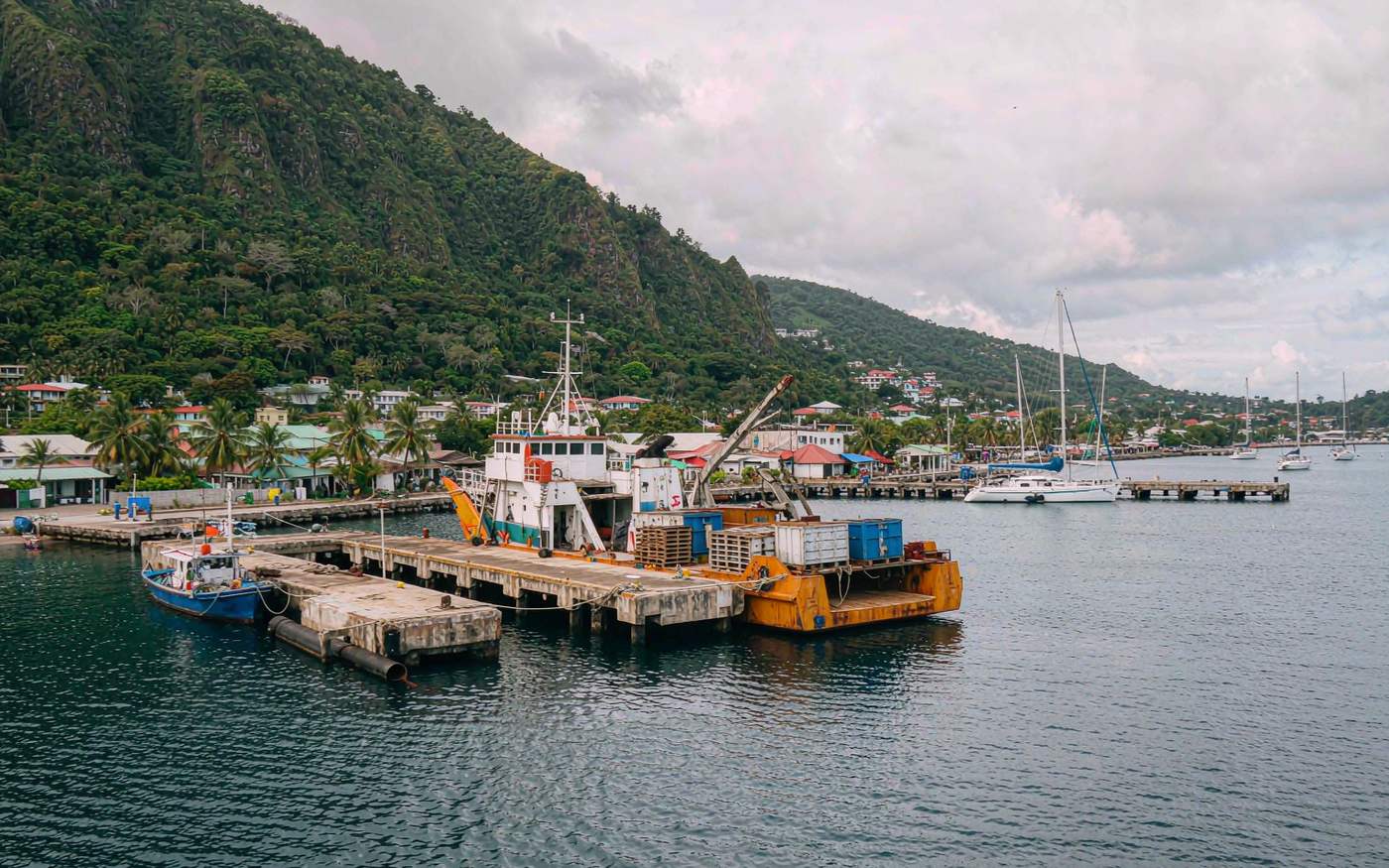
Shipping from China to Saint Vincent and the Grenadines, step by step
Goodhope Freight is a licensed NVOCC based in Shenzhen, registered as GD20230925153335, and has been moving cargo out of China since 2012. To Saint Vincent and the Grenadines we run full containers and shared containers port-to-port into Kingstown, air freight airport-to-airport into Argyle International, and express parcels dispatched from our depot. Every service stops at the port, the airport or the depot. Your consignee arranges import clearance and collection.
The country is the main island of St Vincent plus a chain of smaller islands running south, and the two are not served the same way. Kingstown on the main island is where containerised imports are worked. Bequia, Mustique, Canouan and Union Island are supplied onward by inter-island vessel, which is a separate cost and a separate schedule rather than a local delivery.
Three things decide how a shipment to this lane goes. The first is the tax structure, where value-added tax sits at 16 per cent and a customs service charge applies on top of duty. The second is whether the final address is on the main island or in the Grenadines. The third is biosecurity, which on agricultural and plant material is applied strictly.
At a glance
Main port: Kingstown, on St Vincent · Main airport: Argyle International (SVD), opened in 2017 · Grenadines served onward by inter-island vessel from Kingstown · Currency: Eastern Caribbean dollar, pegged to the US dollar · Duty: CARICOM Common External Tariff, commonly nil to 20 per cent of CIF, with protective rates above that on some agricultural lines · Customs service charge, commonly 3 to 6 per cent · Value-added tax at 16 per cent · Entries filed through the ASYCUDA system · No direct service from China
How your cargo moves: China to Saint Vincent and the Grenadines
Eight steps from your supplier's door to yours. The last four are the ones shaped by local rules.
- Pickup from your supplierWe collect the goods anywhere in China and bring them to our consolidation point.
- Export clearanceChina customs declaration filed and released before the goods move to the port.
- Loading and departureContainer loaded, sealed and handed to the carrier at the Chinese port.
- Relay through Trinidad, Barbados or a Florida hubFeeder services connect Kingstown to the wider region, and the hub rather than the ocean leg sets the arrival window.
- Discharge at KingstownContainers are worked on the main island; air cargo is handled at the Argyle cargo terminal.
- Entry filed through ASYCUDAYour broker lodges the declaration, classified under the CARICOM tariff, using the value on your invoice.
- Assessment and any biosecurity inspectionDuty, service charge and the 16 per cent tax are assessed and settled. Plant, food and animal products are inspected separately.
- Release, plus an island transfer if neededGoods are released to your consignee. A Bequia, Mustique, Canouan or Union Island address adds an inter-island leg arranged separately.
Duty rates, VAT rates and clearance times move, and the figure that applies to your goods is the one set for your commodity code on the day of clearance. We check the current position against your code before your goods sail and confirm it to you in writing — ask for that check when you request a quote.
Kingstown first, and a second booking for the Grenadines
Kingstown on the main island handles containerised imports, and Argyle International, opened in 2017, handles the international air cargo. The Grenadines chain running south is supplied through the main island, and the onward movement is by inter-island vessel on a timetable that has nothing to do with your vessel's arrival.
If your consignee is on Bequia, Mustique, Canouan or Union Island, tell us at quotation stage. That leg needs to be quoted and scheduled alongside the ocean leg, and the goods clear at Kingstown before they move on. Treating it as a local delivery is the single most common planning error on this lane.
Matching the mode to a small-island volume
Below roughly 15 cubic metres a shared container is the practical answer, rated by volume with a weight conversion and a one cubic metre minimum. Between about 15 and 28 cubic metres, run the comparison between a 20GP and the per-cubic-metre rating both ways. Above that a 40GP or 40HC normally wins for bulky light cargo.
Air freight into Argyle works from about 45 kg and suits electronics, medical supplies, urgent spares and resort equipment with a fixed opening date. There is no direct service from China, so consignments connect through Miami, Barbados or Port of Spain, and the connection sets the transit. Express courier handles documents, samples and single cartons, and ends at the depot.
How a Vincentian entry adds up, charge by charge
Saint Vincent and the Grenadines applies the CARICOM Common External Tariff to goods arriving from outside the region. For most general cargo the rate runs between nil and 20 per cent of the CIF value, and some agricultural lines carry deliberately protective rates above that band. Value-added tax is then charged at 16 per cent, assessed on the customs value plus duty rather than on the invoice value alone.
Accommodation supplies carry a reduced rate and a defined basket of basic food items is zero-rated, so the treatment depends on the commodity code. Confirm it against your codes before you price the order, rather than reusing a figure from a previous shipment.
The service charge, and excise on a narrow set of goods
A customs service charge applies to imports across several Eastern Caribbean states including this one, commonly between 3 and 6 per cent, assessed on the same base as the duty. Excise duty applies to alcohol and tobacco, and motor vehicles carry their own treatment. Each is modest alone and noticeable together.
The compounding of duty, service charge and tax on a CIF base is what separates an accurate landed cost from an optimistic one. We set out the whole assessment against your commodity codes before the goods sail, so the number your buyer budgets is the number they pay.
Biosecurity, and the shipments it stops
Plant material, seeds, food and animal products are inspected substantively rather than waved through. Phytosanitary certificates are required for plant products, health certificates for food and animal products, and an import permit is needed for a defined list of goods. Untreated wood packaging attracts particular attention.
This is where shipments to the eastern Caribbean are held. Goods that would clear on tariff grounds alone are stopped for inspection, and an inspection that finds untreated timber or an undisclosed plant product costs you time and possibly the goods. Declare anything borderline at booking and use packaging that meets the international standard for wood packaging material.
Why a small establishment changes how you plan
The customs establishment here is small and handles a modest volume of entries. Clearance with correct documentation and a licensed broker is normally a matter of a few working days, but a query is handled by people covering many files at once, and a hold runs longer than it would in a larger office.
The practical response is to do the work at origin. Get the commodity code right, keep the invoice description specific, and send the documents to your broker while the cargo is still on the feeder rather than after it discharges. We send the pre-alert as soon as the goods are on the feeder for exactly this reason.
Samples and trial orders on a Vincentian entry
The dividing line is the process rather than a value. A personal item cleared under the carrier's simplified process is treated differently from a commercial consignment entered formally with the Customs and Excise Department by a licensed broker, and the commercial route carries duty, the service charge and the 16 per cent tax.
Postal service into the Grenadines is slow, and courier coverage thins out away from the main island. For a buyer testing a new supplier, the cheaper and faster structure is usually to add the trial quantity to the first real consolidated shipment rather than send it separately.
Packing for an inter-island transfer
If the goods are going beyond Kingstown, they will be lifted more times than on a mainland lane: off the vessel, onto a lighter or the quay, onto an inter-island vessel, and off again. Cartons that were adequate for a single journey are not adequate for four. Strap or palletise wherever the commodity allows.
Humidity and salt air do the rest. Internal moisture protection for textiles, paper products and electronics is cheap insurance, and any wood packaging needs to meet the international standard. Mark handling instructions on the outside, because the last leg is worked by a small crew with limited equipment.
What the entry needs on paper
- Commercial invoice with a specific description, quantities, values, currency and country of origin.
- Packing list matching the invoice, with weights and dimensions.
- Bill of lading for sea freight or air waybill for air freight.
- Certificate of origin where the buyer asks for one.
- Import permit, phytosanitary or health certificate where the commodity requires one.
The declared value is what your broker has to defend, so a vague invoice invites a reassessment rather than a delay. Keep the description specific and the commodity code consistent across the invoice, the packing list and the declaration.
Timing, including the second leg to the Grenadines
Consolidated shipments into Kingstown typically run in the region of 36 to 50 days port-to-port depending on the Chinese origin and how the feeder connects, and the feeder leg runs a few days on top. Full container routings vary with the relay chosen. Air cargo is governed by the connection.
For a Grenadines address, add the inter-island leg on top of both figures, and build buffer into each rather than into one. Resort furniture, fixtures and equipment face the feeder risk first and the island transfer second, both against fixed seasonal deadlines.
The line between our service and the importer's
We handle collection from your supplier, consolidation and loading in Guangdong, export declaration, and the main carriage into Kingstown or Argyle. We issue the transport document, send status updates at each handover, and name the relay ports on the quote rather than hiding them behind a single transit figure.
Your consignee appoints a licensed broker, lodges the entry, settles the duty, the service charge and the 16 per cent tax, collects from the port or airport, and arranges any onward island movement. We set out those charges before the goods sail. We do not offer door-to-door delivery to Saint Vincent and the Grenadines.
If this is your first Kingstown shipment
Send us the commodity, the volume and weight, the pickup address in China, and whether the final address is on the main island or in the Grenadines. We will show the relay options, quote the charges line by line, and set out how the three charges combine on your commodity codes.
Ask for the sequence in writing, and ask for the relay and the onward island leg to be named on the quote. On a lane where the last leg is a small vessel running to its own timetable, knowing both schedules is the difference between planning and waiting.
True stories on the China to Saint Vincent and the Grenadines lane
Five shipments bought in China and delivered into Saint Vincent and the Grenadines, told end to end — where the order came from, how it moved, where it nearly went wrong, and how it finished. Client names are withheld at their request; the situations and the handling are what we deal with on this lane.
Bequia resort, goods landed at Kingstown then transferred
The purchase. A small resort on Bequia was refurbishing rooms and public areas, buying furniture, lighting, joinery and outdoor settings from three factories in Guangdong.
The move. We consolidated into one 40HC, shipped port-to-port to Kingstown, and arranged the onward inter-island vessel to Bequia at the same time as the ocean booking.
Where it nearly went wrong. The buyer had assumed the Grenadines address was a local delivery off Kingstown. It is a separate vessel with its own schedule and charges, and booking it after arrival would have left the container sitting on the quay through a holiday period.
How it finished. We quoted and scheduled both legs together and pre-alerted the broker while the container was still on the feeder. The goods cleared at Kingstown, transferred on the first available sailing, and arrived before the resort reopened.
School and office furniture, 40HC out of Guangzhou
The purchase. A supplier was fitting out a school building with desks, chairs, storage and office partitions, buying from two manufacturers.
The move. Both lots were consolidated at our warehouse and moved as one full container to Kingstown, collected by the consignee.
Where it nearly went wrong. Flat-pack furniture is bulky and light, so volume set the chargeable figure, and the buyer had specified a 40GP on the basis of weight. That was within a few cubic metres of not fitting.
How it finished. We measured the packed volume before confirming the equipment and moved the booking to a 40HC. Everything travelled on one bill of lading and cleared on a single entry, which also kept the broker's fee to one filing.
Urgent spares by air into Argyle
The purchase. A utility operator needed pump spares and control modules urgently after a plant failure, buying from a single supplier in Guangdong.
The move. Roughly 180 kg was booked as air freight from Guangzhou, connecting through a regional hub into Argyle International, with the consignee collecting at the cargo terminal.
Where it nearly went wrong. Air freight is rated on chargeable weight, whichever is greater, actual or volumetric, and spares in oversized crates convert poorly. The buyer had quoted on actual weight alone.
How it finished. We had the supplier reduce the crate sizes before collection and quoted on the chargeable figure. The consignment moved on the first available connection and the consignee collected it the day after arrival.
Agricultural inputs held for inspection
The purchase. A buyer was importing irrigation fittings together with a small quantity of seed and growing media in the same container.
The move. One 20GP consolidated from two suppliers, shipped port-to-port to Kingstown, entered by the consignee's broker.
Where it nearly went wrong. Plant material and seeds are subject to phytosanitary inspection and an import permit, and the buyer had treated the whole container as ordinary hardware. The presence of the seed line held the entire entry.
How it finished. We flagged it at quotation stage and had the buyer obtain the permit and phytosanitary certificate before sailing, with the plant material packed separately and declared on the invoice. The container cleared without a hold, and the buyer applied the same discipline on the repeat order.
Retail stock where the tax was under-budgeted
The purchase. A retailer on the main island was placing a first container order of mixed consumer goods and had costed the import from a figure quoted by a previous supplier.
The move. Just under 30 CBM, moved as a full 20GP to Kingstown and cleared by a licensed broker.
Where it nearly went wrong. The earlier figure covered duty and value-added tax but not the customs service charge, and it had assumed a lower tax rate than the 16 per cent that applies. The gap was enough to change the margin on the order.
How it finished. We set out the full assessment against the actual commodity codes before the container sailed. The buyer adjusted the order mix, and the landed cost came in on the revised number rather than the original estimate.
Why importers use Goodhope on this lane
Six things that are different about working with us on China to Saint Vincent and the Grenadines shipments.
Get your Kingstown shipment priced
Tell us the commodity, the volume, the pickup address in China, and whether the goods are going to the main island or onward to the Grenadines. We will name the relay, quote both legs, and set out duty, service charge and the 16 per cent tax as separate lines.
Get a quote Talk to usRelated pages
Frequently asked questions
Is there a direct sea freight service from China to Saint Vincent and the Grenadines?
No. Containers move on a mainline service to a regional hub and then onward by feeder, most often through Trinidad, Barbados, a Florida hub or one of the larger Caribbean relay ports. We quote port-to-port to Kingstown and name the relay on the quote.
How are goods delivered to Bequia, Mustique, Canouan or Union Island?
They land at Kingstown, clear there, and move onward by inter-island vessel, which is a separate cost and a separate schedule rather than a local delivery. If your consignee is in the Grenadines, say so at quotation stage so both legs are quoted and scheduled together.
What is the VAT rate on imports?
Value-added tax is charged at 16 per cent, assessed on the customs value plus duty rather than on the invoice value alone. Accommodation supplies carry a reduced rate and a defined basket of basic food items is zero-rated, so the treatment depends on your commodity code.
What is the customs service charge?
A charge levied on imports across several Eastern Caribbean states including Saint Vincent and the Grenadines, commonly between 3 and 6 per cent, assessed on the same base as the duty and separate from both duty and VAT. It is often left out of published tariff comparisons, so ask for it in any landed-cost estimate.
Which goods are most likely to be held on import?
Plant material, seeds, food and animal products, which require phytosanitary or health certificates and, for a defined list, an import permit. Untreated wood packaging is also a common cause of holds. Declare anything borderline at booking and use compliant wood packaging.
Which airport does air cargo arrive at?
Argyle International (SVD), opened in 2017, handles international air cargo. There is no direct freighter service from China, so consignments connect through Miami, Barbados or Port of Spain and the connection determines the transit time.
Do you offer door-to-door delivery?
No. Sea freight is port-to-port to Kingstown, air freight is airport-to-airport to Argyle, and express courier dispatch ends at the local depot. Your consignee appoints a licensed broker, settles the charges, collects the goods and arranges any onward island movement.
What documents are needed to clear goods here?
A commercial invoice, a packing list, and the bill of lading or air waybill, plus a certificate of origin where the buyer asks for one and import permits, phytosanitary or health certificates where the commodity requires them. Keep the description specific, because the declared value is what your broker has to defend.
Can lithium batteries be shipped to Saint Vincent and the Grenadines?
Built-in and packed-with lithium batteries can be carried subject to proper documentation and packaging. Standalone battery shipments and other dangerous goods classes are assessed case by case and must be declared at quotation stage so we can book with a carrier that accepts the class.
What details do you need to price a shipment?
The commodity, the volume and weight, the pickup address in China, and the final island. We will show the relay options, quote the charges line by line, and set out how the tariff, service charge and 16 per cent tax combine on your codes.