
Home / Shipping to San Marino / How to Ship from China to San Marino | Italian Gateway & EU Customs Union
How to Ship from China to San Marino
San Marino is one of the smallest states in Europe and one of the easiest to mis-plan for. It has no seaport and no commercial airport, it is entirely surrounded by Italy, and it sits inside a customs union with the European Union that is administered together with Italian customs. In practice this means your goods are processed in Italy and then move the short distance inland.
That structure has an upside: the customs side follows the familiar EU tariff and documentation system, and the Italian ports and airports that serve San Marino are well connected and efficient. It also has a limit that matters commercially: because the final leg runs into a small mountain state, most service offers stop at the port or airport rather than extending to a door.
This guide explains where cargo actually lands, how the customs union works for a Chinese-origin shipment, what the single-phase import tax is, which documents the Italian customs office will ask for, and what you should expect on the inland leg up the mountain.
At a glance
No seaport or airport — sea freight via Rimini, Ancona or Ravenna, air via Rimini (RMI) or Bologna (BLQ) — customs union with the EU, administered with Italy — import tax applied as a single-phase charge — not in the EU VAT area — currency EUR — service normally port-to-port, airport-to-airport or express pickup.
How your cargo moves: China to San Marino
Eight steps from your supplier's door to yours. The last four are the ones shaped by local rules.
- Pickup from your supplierWe collect the goods anywhere in China and bring them to our consolidation point.
- Export clearanceChina customs declaration filed and released before the goods move to the port.
- Loading and departureContainer loaded, sealed and handed to the carrier at the Chinese port.
- Main carriageOcean, air or rail movement booked on the route agreed for your cargo.
- Arrival at the gatewayDischarge at the port or airport of entry, recorded on the carrier's manifest.
- Import clearanceCustoms declaration filed locally, with duty and tax assessed on the declared value.
- Customs releaseGoods released into free circulation once duty and tax are settled.
- Final deliveryOnward movement to your delivery address, warehouse or nominated depot.
Duty rates, VAT rates and clearance times move, and the figure that applies to your goods is the one set for your commodity code on the day of clearance. We check the current position against your code before your goods sail and confirm it to you in writing — ask for that check when you request a quote.
Why your goods clear in Italy before they ever reach San Marino
San Marino has no sea coast and no airport capable of handling freight, so every consignment physically passes through Italy. Under its customs arrangements, the goods are presented to an Italian customs office, cleared there, and then moved into San Marino under the transit procedure that covers goods already in free circulation.
There is no border control between Italy and San Marino for goods that have already cleared. That sounds like a formality, and in day-to-day terms it is — but the consequence is that the whole customs event happens in Italy, on Italian terms, in Italian systems. Your broker needs to be able to file in Italy, not in San Marino.
For planning, the useful mental model is this: treat your shipment as an import into Italy, and treat San Marino as the short final delivery leg after clearance. Once you think of it that way, the routing and the paperwork make sense.
The customs union behind a border you will not even notice
San Marino has been in a customs union with the European Union since 1991, operating alongside a long-standing customs and monetary arrangement with Italy. The practical effect is that the EU common customs tariff is what determines your duty rate, and EU-aligned import rules — product standards, restricted goods, licensing — are what your goods are measured against.
Chinese-origin goods do not benefit from a preferential trade agreement here, because there is no EU–China free trade agreement. Standard most-favoured-nation rates apply under the tariff, and where anti-dumping or safeguard measures exist for a product category, they apply as they would for any EU entry.
The administrative side is handled by the San Marino tax office for domestic matters, while frontier customs work is carried out by the Italian authorities. Importers usually work through a customs broker licensed to file in Italy, with a San Marino-side representative handling local formalities.
How the single-phase import tax is calculated
San Marino is not part of the EU VAT area, and imports are subject to a domestic single-phase tax rather than Italian VAT. The figure commonly cited for this charge is 17%, applied on the customs value plus duty — that is, on the CIF value increased by any duty payable. Some sources describe Italian VAT treatment instead, so confirm the current position with your broker before you finalise a landed-cost calculation.
The mechanism matters more than the number. A single-phase tax is charged once, at importation, and is not recovered through the periodic VAT return system that an Italian importer would use. For a business budgeting a first order, that means the tax is a genuine cost at clearance rather than a recoverable input.
Duty itself follows the EU tariff by HS code. Get the code confirmed before you ship, because duty feeds directly into the base on which the single-phase tax is calculated, so an error compounds.
Rimini, Ancona and Ravenna: the ports that actually serve you
Sea freight for San Marino is discharged at Italian Adriatic ports. Rimini is the closest and the natural first choice, with Ancona and Ravenna as the other ports normally used for this destination. All three handle containers and have road connections that make the inland run short.
Air freight arrives at Rimini (RMI) or Bologna (BLQ), with Bologna handling the larger volumes and offering more flight options. For urgent or high-value cargo this is usually the cleanest option, because the airport-to-destination drive is short.
Express couriers cover San Marino as part of their Italian network and are the simplest route for samples, documents and small parcels. Note that carriers sometimes treat the destination as a remote area, and a surcharge may apply — worth asking about before you ship.
Transit documents from the Italian seaport, step by step
Goods arriving at an Italian port and destined for San Marino typically move under the EU transit procedure. The container is declared for transit at the port and travels under a T1 transit document to a designated Italian customs office, where the import declaration is lodged and duty and tax are assessed.
Once cleared, the goods are in free circulation and move into San Marino under the procedure that covers that movement — commonly referred to as T2SM for San Marino goods. The paperwork is handled by your broker, but it is worth knowing the sequence, because it explains why clearance can happen away from the port.
The Italian customs offices designated for this work include a defined list covering cities such as Rimini, Ravenna, Forli, Bologna, Genoa, Livorno, Milan, Rome and Trieste. Which one is used is a routing decision your broker makes, and it affects where the container physically stops.
What the Italian customs office will ask for, and when
The standard package is a commercial invoice, a packing list and the transport document — bill of lading for sea, air waybill for air. The invoice should carry complete product descriptions, values, the delivery term, and the country of origin, and it is normally prepared in Italian or English with the HS code shown.
A certificate of origin is commonly required, and for San Marino shipments it is issued by the San Marino Chamber of Commerce where the importer is established. Where a preferential rate is claimed, the relevant EU proof of origin applies — though for Chinese-origin goods no preference is available.
Product-specific documents follow EU rules: CE conformity documentation for electrical and electronic goods, phytosanitary and veterinary certificates checked at the Italian point of entry for plant and animal products, and licences for controlled categories such as dual-use items or regulated substances. Confirm what your product needs before it ships, not after it lands.
Getting cargo up the mountain roads to the old town
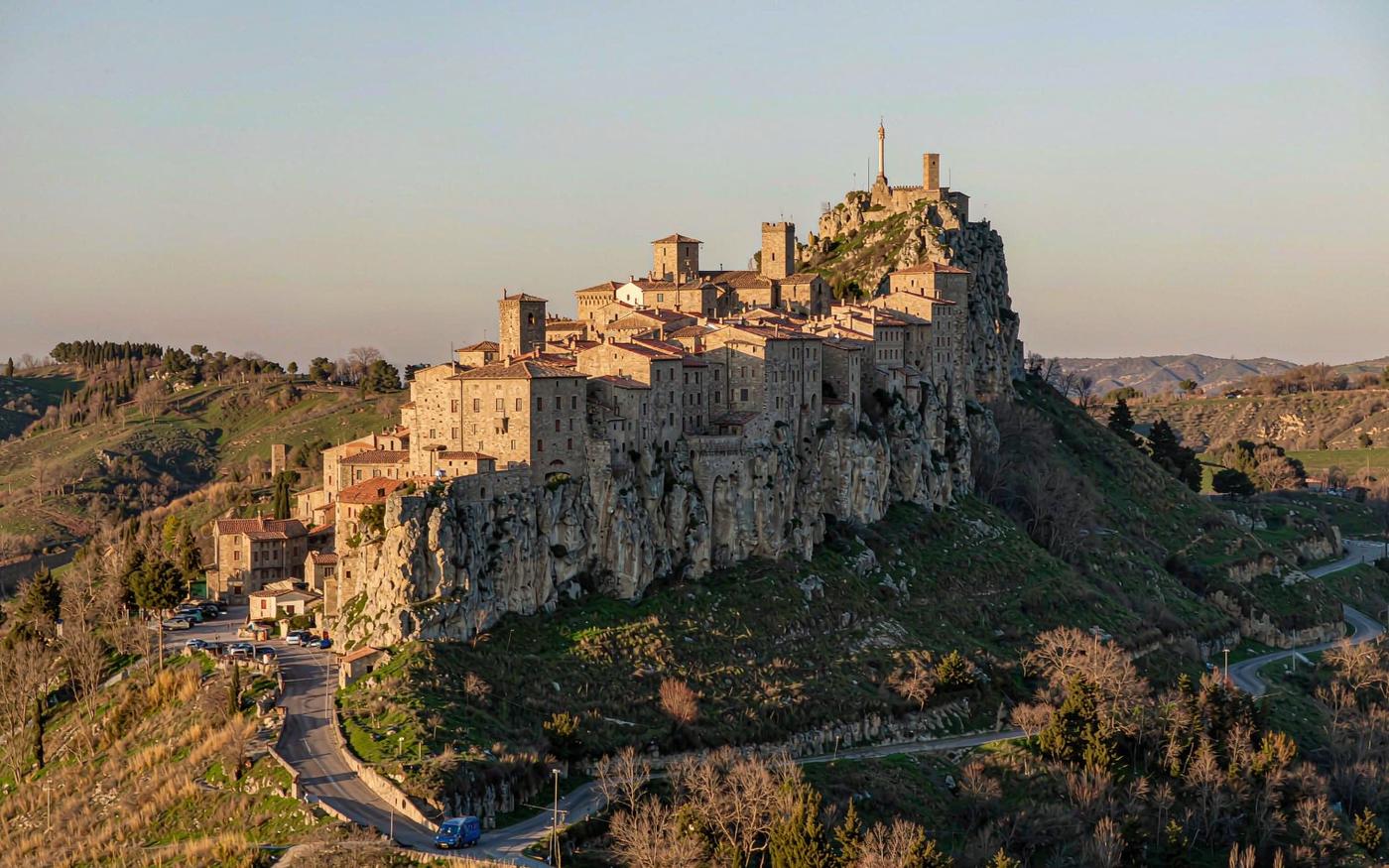
San Marino sits on and around Mount Titano, and access to the historic centre involves steep, narrow streets with tight turns. That is charming and inconvenient in equal measure: a full-size delivery truck cannot reach every address, and large or heavy items are usually transferred to a smaller vehicle for the last stretch.
Plan for a cross-dock. Containers are normally devanned at a facility near the port or at an Italian warehouse, and the goods are then delivered by van or small truck. That transfer is a real cost line, and it is the one most often missing from a first quote — ask whether devanning and reloading are included.
For fragile, bulky or high-value goods, request a two-person delivery or white-glove service. Narrow access, stairs and limited parking make single-driver handling risky, and the cost of a damaged first delivery is much higher than the cost of the extra crew.
What we can and cannot deliver here, stated plainly
Being clear about scope avoids disappointment. For San Marino, the standard service is port-to-port, airport-to-airport, or express pickup — meaning the consignee collects the goods at the port, the airport or the carrier's depot, and arranges its own clearance, taxes and inland transport.
Door-to-door service into San Marino is generally not offered as a standard product, because of the mountain access constraints and the way clearance is split between Italian and San Marino formalities. Where a full door delivery is needed, it is arranged as a customised move and quoted case by case.
If you need more than port delivery, say so at enquiry stage. It is far easier to build the inland leg into the original plan than to add it once a container is sitting at Ravenna.
Product rules that follow the standards your market expects
Because the customs union brings EU tariff and import rules with it, product compliance is effectively EU compliance. Electrical and electronic goods need CE marking with a technical file; toys, machinery, personal protective equipment and medical devices follow their respective EU directives and regulations; chemicals fall under REACH and CLP obligations.
For goods placed on the EU market, an authorised representative established in the Union is required for several categories, and extended producer responsibility registrations apply to packaging, electronics and batteries in the relevant national scheme. These are importer obligations, not freight obligations — but they determine whether your goods can legally be sold once they arrive.
Labelling should be prepared with the destination in mind, and invoices and transport documents should state the destination clearly rather than using a generic country reference. Small details like this are what keep a clearance moving.
A workable timeline for a first San Marino order
The long part of any shipment from China is the ocean or air leg. Sea freight from Chinese ports to an Adriatic port is a multi-week journey; air freight compresses that to days. Clearance in Italy, once documents are complete, is normally a short step.
What adds time unexpectedly is the transfer and inland leg. Devanning, arranging the smaller vehicle, and the mountain delivery itself each take scheduling. For a first shipment, assume one to three extra days beyond a straightforward port-to-port estimate.
The most effective way to protect a delivery date is to have the document package reviewed before departure. An invoice that needs correcting costs a few hours in China and several days in Ravenna.
Who handles clearance, Italian broker or San Marino agent
You need two parties, and they are not interchangeable: an Italian-licensed customs broker to lodge the import declaration and handle the transit procedure, and a San Marino-side representative or agent for local formalities and the onward movement. Some firms cover both; many do not, and assuming otherwise is a common first-shipment mistake.
Ask the broker three questions before appointing them: do they file at the customs office your routing will use, can they quote the duty and import tax in writing against your HS code before sailing, and do they handle the transit document end to end?
And confirm who pays. Under DDP terms the seller's side clears and pays; under most other terms the buyer does. Agreeing this in writing before the goods move is what prevents a release delay at the port.
Why importers use Goodhope on this lane
Six things that are different about working with us on China to San Marino shipments.
Five shipments to your door in San Marino
Five shipments bought in China and delivered into San Marino, told end to end — where the order came from, how it moved, where it nearly went wrong, and how it finished. Client names are withheld at their request; the situations and the handling are what we deal with on this lane.
Furniture · port-to-port misunderstanding · Foshan to Rimini
The purchase. A buyer ordered a container of shop fittings from Foshan and assumed the quote included delivery to his premises up in San Marino.
The move. Container from Shenzhen to Rimini, cleared through an Italian customs office, then cross-docked for the final steep access.
Where it nearly went wrong. Standard service for San Marino stops at the port, airport or carrier depot. Nothing about the Italian leg pays for the mountain delivery, and full-size vehicles cannot reach every address.
How it finished. We arranged the full inland move as a separate quoted step with a smaller vehicle, and he now books it explicitly every time rather than discovering the gap at Rimini.
Electronics · paperwork problem · Shenzhen to Bologna
The purchase. A buyer imported consumer electronics sold locally and treated the documentation as a formality.
The move. Air freight to Bologna with customs handling at the Italian side, then onward movement into San Marino.
Where it nearly went wrong. Products in this category need conformity documentation and technical files aligned to the standards applied here. Missing paperwork holds goods regardless of how well the freight was routed.
How it finished. We reviewed the documentation before shipment and had the missing declarations produced in China. Nothing waited at the Italian office.
Tax expectation gap · invoice surprise · Ningbo to Ancona
The purchase. A first-time importer budgeted using an assumption about Italian VAT rather than the single-phase import tax applied on entry.
The move. Sea freight from Ningbo to Ancona with clearance at the Italian customs office.
Where it nearly went wrong. The import figure applied here is charged once at importation and is not recovered the way a registered Italian importer would recover VAT through a periodic return.
How it finished. We set out the calculation before he confirmed the order, so his retail pricing reflected the real landed cost rather than an assumption.
Steep access · white glove required · Guangzhou to Rimini
The purchase. A buyer ordered large fragile display units for premises in the historic centre, where streets are narrow and turning space is minimal.
The move. Consolidated in Guangzhou, container to Rimini, cleared, then cross-docked and delivered by small vehicle with a two-person crew.
Where it nearly went wrong. A single-driver delivery into streets like these risks both the goods and the delivery appointment, and a failed attempt usually means waiting for the next day.
How it finished. We specified the small vehicle and two-person handling in advance. Everything went up in one trip with no damage.
Courier surcharge · samples · Shenzhen to Rimini
The purchase. A buyer was quoted one courier rate for samples and billed a different one.
The move. Express courier from Shenzhen through the carrier's Italian network.
Where it nearly went wrong. Carriers sometimes treat San Marino as a remote delivery area and apply a surcharge that does not appear in the headline rate.
How it finished. We flagged the likely surcharge at enquiry so the quote he approved was the quote he paid.
Why importers use Goodhope on this lane
Six things that are different about working with us on China to San Marino shipments.
Plan a shipment bound for San Marino
Send us your product details, volume and whether you need port delivery or a full inland move. We will confirm the Italian gateway, the clearance route, the documents required and the realistic timing before you book.
Get a quote Talk to usRelated pages
Frequently asked questions
Does San Marino have its own customs?
Frontier customs work is carried out by the Italian authorities under San Marino's customs union with the European Union, which has been in place since 1991. The EU common customs tariff determines duty rates, and goods are cleared at an Italian customs office before moving into San Marino.
Which port should I ship to?
Rimini is the closest Adriatic port and the natural first choice, with Ancona and Ravenna also commonly used. Air freight arrives at Rimini (RMI) or Bologna (BLQ), with Bologna handling larger volumes.
What import tax applies?
San Marino is not in the EU VAT area. Imports are subject to a domestic single-phase tax, commonly cited at 17% applied on customs value plus duty. Some sources describe Italian VAT treatment instead, so confirm the current position with your broker before finalising your landed cost.
Do I need an EORI number?
Because clearance takes place in Italy under EU customs rules, an EORI number is the standard economic operator registration used for the declaration. Confirm the requirement with your broker, who will file on your behalf.
What documents are needed?
A commercial invoice with full descriptions, values, delivery terms, origin and HS code; a packing list; the bill of lading or air waybill; and a certificate of origin, which is issued by the San Marino Chamber of Commerce where the importer is established. Controlled categories need additional permits, and plant or animal products are checked at the Italian point of entry.
How do goods move from the port into San Marino?
They travel under an EU transit document, typically T1, from the port to a designated Italian customs office where the import declaration is lodged. After clearance the goods move into San Marino under the procedure covering that movement, commonly referred to as T2SM.
Can you deliver door to door in San Marino?
Standard service is port-to-port, airport-to-airport or express pickup, with the consignee arranging clearance and inland transport. Door-to-door delivery is generally not a standard product here because of mountain access constraints, but a full inland move can be arranged and quoted case by case.
Can a full truck reach my address?
Often not. Streets in the historic centre are steep and narrow, so large items are usually transferred to a smaller vehicle after devanning at a facility near the port. Ask whether your quote includes devanning, reloading and the final small-vehicle delivery.
Do EU product standards apply?
Yes, in practice. The customs union brings EU-aligned import and product rules, so CE conformity, technical documentation and, for several categories, an EU-based authorised representative are needed. Packaging, electronics and batteries may also carry extended producer responsibility obligations.
How long does a shipment take?
Transit depends on mode: sea freight from China to an Adriatic port is a multi-week journey, while air freight takes days. Clearance in Italy is normally short once documents are complete. Allow one to three extra days for devanning, transfer and the inland delivery.