
Home / Shipping to Saudi Arabia / How to Ship from China to Saudi Arabia
How to Ship from China to Saudi Arabia: Jeddah, SABER & 15% VAT
Saudi Arabia is the other kind of Gulf market. Where Dubai is a place goods pass through, Saudi Arabia is a place goods stop. It is the largest economy in the region, it imports to consume and to build, and the overwhelming majority of what lands at its ports goes no further. That single difference shapes everything else on this page: there is no free-zone re-export logic to lean on, and in exchange you get a market where the paperwork, once done, stays done.
The gate is conformity. SABER, the platform run by Saudi standards body SASO, requires two certificates for regulated products — one for the product model, valid a year, and one for each individual shipment. Neither can be produced at the port. Both rest on laboratory testing that takes weeks, which means the real deadline for compliance is not the sailing date, it is the production date.
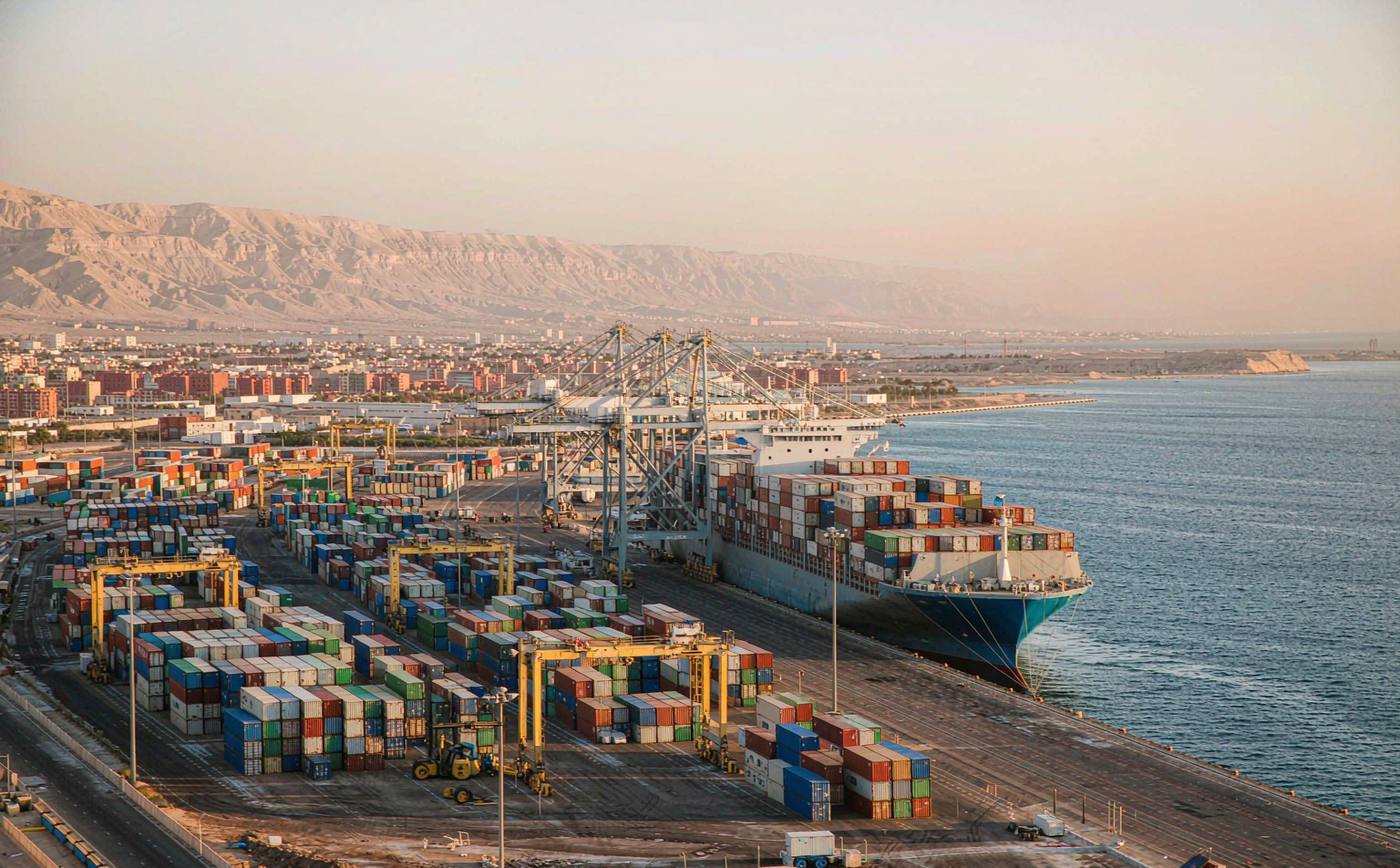
The second thing to understand is geography. Saudi Arabia has two coastlines and a very long inland leg. Jeddah Islamic Port sits on the Red Sea and handles the largest share of the country's containers; King Abdulaziz Port at Dammam sits on the Gulf and connects by rail to the Riyadh Dry Port. Choose the wrong one for your consignee and you add hundreds of kilometres of road to every shipment. Saudi ports handled 8.32 million TEU in 2025, up about 10.6% on the year, with Jeddah accounting for the largest share by TEU and Dammam leading on inbound tonnage.
And the tax stack is the highest in the GCC: 5% duty and 15% VAT on a base that already includes the duty, which works out at roughly 20% of CIF on a standard-rated import. It is not a reason to avoid the market — it is a reason to model it properly before you quote your customer.
This guide is written for buyers importing from China for the first time. It covers why the container stops here, the Jeddah versus Dammam decision and the inland leg behind it, transit times by sea, air and road, trade terms and who is allowed to file a declaration, the two SABER certificates and the approvals that sit alongside them, the duty and VAT arithmetic, ZATCA and FASAH, the customs broker, Arabic labelling, the calendar including Ramadan and the Hajj season, and how to tell whether a forwarder genuinely works this lane.
How your cargo moves: China to Saudi Arabia
Eight steps from your supplier's door to yours. The last four are the ones shaped by local rules.
- Pickup from your supplierWe collect the goods anywhere in China and bring them to our consolidation point.
- Export clearanceChina customs declaration filed and released before the goods move to the port.
- Loading and departureContainer loaded, sealed and handed to the carrier at the Chinese port.
- Main carriageOcean, air or rail movement booked on the route agreed for your cargo.
- Arrival at the gatewayDischarge at the port or airport of entry, recorded on the carrier's manifest.
- Import clearanceCustoms declaration filed locally, with duty and tax assessed on the declared value.
- Customs releaseGoods released into free circulation once duty and tax are settled.
- Final deliveryOnward movement to your delivery address, warehouse or nominated depot.
Duty rates, VAT rates and clearance times move, and the figure that applies to your goods is the one set for your commodity code on the day of clearance. We check the current position against your code before your goods sail and confirm it to you in writing — ask for that check when you request a quote.
Why a shipment to Saudi Arabia usually ends there
The UAE guide on this site makes the opposite point, and the contrast is worth holding in your head. In Dubai, a very large share of imports are stored, repacked and sent onward — to neighbouring Gulf markets and to East Africa — which is why free zones and customs suspension matter so much there. In Saudi Arabia the import is the end of the journey. The goods are sold, installed or consumed inside the Kingdom.
Three practical consequences follow.
- Duty is paid, not deferred. There is no equivalent move to "declare into a free zone and never pay it". On a standard import you should expect to pay the 5% at clearance. If you are budgeting landed cost, put it in from the first quote.
- Compliance is per-market, not per-region. A conformity certificate that clears goods in Dubai does not clear them in Riyadh. Saudi technical regulations are enforced by SASO through SABER, and the product has to be registered for this market specifically.
- Volume is domestic demand driven. Government programmes under Vision 2030 and a large, young population mean demand for construction materials, consumer goods, electronics and machinery is real and sustained. It also means peak construction cycles tighten vessel space, so book early.
The upside of all this: because goods are cleared for the Saudi market and stay there, you generally do not have to plan a second leg with a second set of cut-offs. One port, one declaration, one inland move. Simpler than a re-export flow, and stricter about paperwork.
Jeddah or Dammam: the port choice that decides your inland leg
| Port | Coast | Best for | Inland leg |
|---|---|---|---|
| Jeddah Islamic Port | Red Sea | The largest container port and the usual entry for the western and central regions, including Jeddah, Mecca and Medina. | Road to Riyadh of roughly 950 kilometres, commonly ten to twelve hours by truck. |
| King Abdulaziz Port, Dammam | Arabian Gulf | The Eastern Province, and cargo headed for Riyadh where the rail connection is an advantage. | Rail link to the Riyadh Dry Port, plus road. The reason to consider Dammam for capital-bound cargo. |
| King Abdullah Port | Red Sea, at KAEC | A modern terminal north of Jeddah, used by some services and worth asking about when Jeddah is tight. | Road, similar catchment to Jeddah. |
| Jubail and Yanbu | Gulf / Red Sea | Industrial and bulk cargoes tied to the petrochemical and industrial cities. | Industrial corridors, project cargo. |
The rule of thumb is simple: match the port to the consignee's region. If the warehouse is in Riyadh, ask your broker to compare Jeddah plus road against Dammam plus rail before you book, because the difference is not just cost — it is also how much of the journey is exposed to road capacity constraints around the Hajj season.
Air cargo enters through Riyadh, Jeddah and Dammam, with Riyadh the main gateway for central-region freight and Jeddah handling a large share of passenger-belly capacity. See our cargo airports page for the wider list.
Modes into Saudi Arabia, and how many days each really takes
| Mode | Typical transit | When it fits |
|---|---|---|
| Sea freight FCL | Around 18 to 27 days port to port from Chinese ports to Jeddah | Volume above roughly 15 to 20 cubic metres. The default for commercial imports. |
| Sea freight LCL | The vessel time plus consolidation and deconsolidation, usually a further five to ten days at the ends | Small and trial orders. Slower door to door than the vessel figure suggests. |
| Air freight | Around 3 to 7 days airport to airport into Riyadh, Jeddah or Dammam | High value density, launch deadlines, spare parts. |
| Express courier | Around 2 to 4 days door to door | Samples, documents and small parcels. Duty and VAT still apply. |
| Road from the UAE | Used occasionally when a Gulf service is unavailable; the UAE leg plus border and overland transit | A fallback, not a default. It adds a border crossing and more handling. |
Figures quoted for this lane vary because routing conditions in the Red Sea have pushed some services onto longer passages. Treat any number as tied to a specific rotation and ask for that rotation. We do not publish freight rates here, and you should treat any site that does with caution: the durable part of your cost model is the structure — base ocean freight, origin charges in China, destination charges at the Saudi port, duty and VAT, and the inland leg. See our local charges page for how the destination side is built up.
Trade terms on a Saudi shipment, and who may file the declaration
The trade term sets who pays and where risk transfers. It does not change the fact that the declaration is filed by a party with a Saudi commercial registration, normally through a licensed customs broker.
- EXW (Ex Works) — you take the goods from the supplier's door and carry everything from there, including Chinese export formalities. Cheapest-looking invoice, most work, and export compliance lands on you.
- FOB (Free On Board) — the supplier loads and clears Chinese export; you take over at the Chinese port. The term most experienced buyers use.
- CIF — the supplier pays freight and insurance to the Saudi port, but risk passes in China and you still clear. Buyers routinely mistake this for delivered. It is not.
- DAP or DDU — delivered to a named point, with duty and VAT for you.
- DDP — duty paid. On this lane that means someone with a Saudi registration is acting as importer of record. Ask who, and understand that you lose visibility of the declared value.
Port to port, airport to airport. Goodhope's ocean service runs port to port and our air service runs airport to airport. We handle the international leg and the export side in China; Saudi import clearance, SABER registration, the duty and VAT and the inland delivery belong to the importer of record and their broker. We coordinate with that broker rather than implying we can clear in a country where we cannot hold the licence.
One warning specific to this market: the declared value. ZATCA assesses duty on the CIF value and has the invoice, the manifest and the SABER shipment certificate in front of it. Under-declaring to save 5% invites a valuation query, and a valuation query on a first shipment tends to make the second shipment slower as well.
One container from Ningbo to Riyadh, and the legs in between
The commodity code is fixed, and checked against the current SABER mapping
Everything downstream depends on the code: the duty rate, whether the product is regulated, and which technical regulation applies. SABER product-to-code mapping has been revised in the past, with re-registration required for affected categories, so confirm the current mapping rather than reusing a code from an old shipment.
Product registration runs while the goods are being made
The Saudi-licensed importer registers the product model and obtains the product certificate, supported by test reports from an accredited laboratory. This is the step that takes weeks, and it is the reason the compliance deadline sits at the start of production rather than at the end.
Collection and consolidation in China
We collect from one factory or several and consolidate where the volumes justify it. Several suppliers, one container, one declaration, one certificate set — see our consolidated shipment page.
Export clearance, the VGM, and the sailing
Chinese export customs and the verified gross mass are completed, the vessel sails, and we issue the bill of lading and tracking. Ask at this point whether the service calls Jeddah directly or tranships.
The shipment certificate is issued for this consignment
Separately from the product certificate, a shipment certificate is issued for this specific consignment, confirming it matches the certified model. Without it, the declaration will not release.
Declaration on FASAH, before the vessel berths if possible
The broker files on FASAH with the invoice, packing list, bill of lading, origin certificate and the shipment certificate. Filing before arrival is what keeps you inside the free time at the terminal.
Assessment, inspection risk and payment
Duty, VAT and the service fee are calculated on the declared value. Compliant declarations can release quickly; anything inconsistent invites an inspection.
The inland leg to Riyadh or wherever the consignee sits
From Jeddah that is roughly 950 kilometres of road. From Dammam it can move by rail to the Riyadh Dry Port. This leg is part of the plan, not an afterthought.
Five percent duty, fifteen percent VAT, and what that adds up to
Saudi Arabia applies the GCC Common Customs Law. Standard duty is 5% of the CIF value, some categories run higher, and goods of GCC origin enter duty-free against a valid certificate of origin. Then comes VAT.
| Step | Calculated on | Effect |
|---|---|---|
| Customs value | CIF: goods, insurance and freight to the Saudi port | The base for everything else |
| Customs duty | 5% of CIF for most goods; higher for some categories; 0% for GCC-origin goods | Adds to the VAT base |
| VAT | 15% of CIF + duty | Recoverable as input tax if you are registered |
| ZATCA service fee | A small percentage of the declared value | Confirm the current basis and any cap with your broker |
| Effective burden | Roughly 20% of CIF on a standard-rated import | The highest combined import tax stack in the GCC |
A VAT-registered business reclaims the import VAT as input tax. Mandatory registration starts at 375,000 riyals of annual taxable supplies, with voluntary registration from 187,500. Below that, the 15% is a cost rather than a cash-flow timing item.
Budget the tax, not just the freight. New importers routinely model ocean freight carefully and then discover that duty plus VAT is a larger number than the freight itself. On a standard-rated import it is roughly a fifth of the goods' CIF value, and it is due at clearance, before the container is released.
SABER: two certificates, and both before the vessel sails
SABER is the Saudi product conformity platform operated by SASO, the Saudi Standards, Metrology and Quality Organization. For any product covered by a Saudi technical regulation, customs release depends on it. Regulated categories are broad: electrical and electronic equipment, machinery, building materials, children's products, textiles, chemicals, food contact materials and much of the general consumer goods universe.
Product Certificate of Conformity (PCoC)
Registers the product model against the applicable Saudi standard. Issued once per product by a SASO-accredited certification body, valid for one year, and supported by test reports from an approved laboratory. Existing IEC or CB reports can often be reviewed with gap testing where needed.
Shipment Certificate of Conformity (SCoC)
Issued for each individual consignment, confirming the physical shipment matches the certified model. This is the document linked to the customs declaration on FASAH. A shipment presented without a valid SCoC will not be released.
The practical implication is about timing, and it is the single most useful thing on this page. Laboratory testing and registration commonly take several weeks for a first application, and longer where full testing is required rather than a report review. That work has to run alongside production. If you finish the goods first and think about SABER afterwards, the container arrives at Jeddah with no path to release, and storage accrues while you start a process that was always going to take weeks.
Ask, before you place the order: is this product inside a Saudi technical regulation? If yes, who is the Saudi-licensed party that will apply for the product certificate? And do we have the test reports that application rests on? Those three questions, asked early, are the difference between a three-week process running quietly in the background and a container waiting at the port.
What else needs approval: CST, SFDA and Halal
SABER is the big one, but it is not the only gate. Depending on what you are shipping, three more regulators can be involved.
- CST — the Communications, Space and Technology Commission, formerly CITC, regulates telecom and radio equipment. Anything with Wi-Fi, Bluetooth, cellular, RFID or satellite capability needs type approval, and it must be registered against the specific model and SKU. A generic approval does not cover an unregistered variant, which is a mistake importers make when a supplier ships a slightly different version of a product that was approved before.
- SFDA and SALEEM — the Saudi Food and Drug Authority regulates medical devices, diagnostics and health products through the SALEEM programme. Commercial import requires product registration through a licensed Saudi authorised representative, and a first registration can take six to eighteen months. If you are in this category, registration is a project that starts before sourcing, not a formality before shipping.
- Halal certification — required for food products, food contact materials and some cosmetics, and it must come from a Saudi-approved certification body. Arrange it with the factory before production rather than as a document request at the end.
The documents ZATCA expects, filed through FASAH
ZATCA, the Zakat, Tax and Customs Authority, runs Saudi customs. Declarations are filed on FASAH, the national single window, which consolidates the customs declaration, the SABER check and the agency approvals into one place.
- Commercial invoice — commodity code, a specific product description, country of origin, the trade term, currency and value.
- Packing list — quantities, weights and dimensions.
- Bill of lading or air waybill — matching the consignee and notify party.
- Certificate of origin — issued in China; confirm the attestation level your broker needs before the goods ship, because obtaining it afterwards is slow.
- SABER shipment certificate — for regulated products.
- Sector approvals — CST, SFDA, Halal, or others depending on the product.
- Arabic labelling and documentation — checked at clearance.
Wood packaging must meet ISPM-15. It is inspected, and non-compliant pallets or crates can hold a shipment regardless of the rest of the file.
A licensed importer, a customs broker, and what one person cannot do
Commercial declarations are filed by a party holding a Saudi commercial registration, and in practice by a customs broker licensed by ZATCA, known locally as a mukhallas. Very large importers can self-clear, but almost everyone uses a broker, and the broker is the one who classifies the goods, files on FASAH, calculates duty and handles queries and inspections.
A foreign company without a Saudi entity cannot file directly. If you are not registered in the Kingdom, you need either a distributor that imports on its own registration, or an importer of record arrangement. That matters most when a Chinese supplier offers DDP: someone has to be the licensed party, and that party carries responsibility for the declaration, the valuation and the tax. Ask who they are.
An individual can receive goods for personal use, and those shipments are assessed like any other. But an individual cannot act as a commercial importer of record. If you are testing the market with small volumes, buy through a distributor or on a term that puts clearance with a licensed party, and treat VAT registration as a question to answer once your supplies approach the threshold.
Buying online versus buying at a trade show
Where the supplier came from changes what the first shipment looks like, mostly through volume and the number of factories involved.
- Online sourcing — orders from Alibaba or 1688 usually start small and come from one factory. Expect LCL, air or courier for the first shipment, with unit costs that only improve at the second or third order. The temptation is to skip conformity work on a trial shipment; resist it, because an unregistered product is still an unregistered product when the real order comes. See our Alibaba and 1688 sourcing page.
- Trade shows — Canton Fair and sector exhibitions produce larger orders and, often, several suppliers at once. Consolidation turns that into one container and one declaration, and it is also the moment to collect the specifications and test reports that the SABER application will need, while you are still in the room with the factory.
Remember that samples sent by courier are imports too. They are assessed for duty and VAT, and there is no low-value relief to rely on.
The two forwarders a Saudi import needs, and what each does
The shipping line moves the container. It does not consolidate your suppliers, chase a test report, or tell you that your product sits inside a Saudi technical regulation. You need a forwarder at each end, and they do different jobs.
- The China-side forwarder collects from the factory or factories, consolidates, clears export and files the VGM, books the service, issues the bill of lading, prepares the documents the FASAH declaration depends on, and tells you early when a conformity certificate is going to be a problem.
- The Saudi-side broker holds the local licence, registers the product on SABER or coordinates it, files on FASAH, handles inspection, pays or accounts for duty and VAT, and arranges the inland move.
Most expensive delays happen in the gap between them: a bill of lading issued before the commodity code was confirmed, a shipment certificate that does not match the goods, an origin certificate without the attestation. Goodhope works the China end, hands documents over early, and coordinates directly with your broker on FASAH.
Questions that separate a Jeddah booker from a reseller
- Which port, and why? Jeddah, Dammam or King Abdullah Port — a forwarder who cannot explain the choice in terms of your consignee's location is quoting from a schedule.
- Which service, and is the call direct? Transhipment is not a problem, but it changes the arrival date and you should be told.
- Have they asked for the commodity code before quoting? Without it, the duty rate, the SABER question and the whole compliance path are unknown.
- Do they know whether your product needs SABER, CST or SFDA? If they have never heard of SABER, they have not cleared regulated goods into Saudi Arabia.
- What is the free time at the destination terminal, and who pays demurrage? "Don't worry about it" is a warning sign.
- Can they name the inland leg? Riyadh from Jeddah is a real road move; Riyadh from Dammam can be rail. If that has not come up, the quote is incomplete.
- On a DDP quote, who is the importer of record? A vague answer means the arrangement runs through a licence you know nothing about.
Red flags: a rate quoted before you have said what the goods are; "everything included" with no broker named; pressure to declare a lower value; silence on SABER; and any suggestion that documentation can be sorted out after arrival. In Saudi Arabia, it usually cannot.
Product categories that face extra checks in Saudi Arabia
| Category | What is required or checked |
|---|---|
| Electrical and electronic equipment | SABER conformity against the relevant Saudi standard, energy efficiency requirements for some appliances, Arabic manuals and labels. |
| Wireless and telecom devices | CST type approval registered to the specific model and SKU, in addition to SABER. |
| Building materials | SABER coverage for cement, steel, cables, insulation and fittings; documentation is checked closely and volumes under Vision 2030 are large. |
| Toys and children's products | SABER conformity, with safety standards and Arabic labelling. |
| Food, food contact and some cosmetics | Halal certification from a Saudi-approved body, SFDA requirements where applicable, Arabic labelling with origin and shelf life. |
| Medical devices and diagnostics | SFDA registration through a Saudi authorised representative under SALEEM. Plan for months, not weeks. |
| Chemicals | A safety data sheet, and a correct classification between ordinary non-DG cargo and regulated dangerous goods — decided in China. See our dangerous goods page. |
| Vehicles and machinery | Age and condition rules apply to imported vehicles, with strict limits and prohibitions on some categories. Check before you buy, not after. |
| Anything on wood | ISPM-15 compliant pallets and crates, with the mark visible. |
Three shipments into the Kingdom, and the reasons behind each
The examples below are illustrative. They describe typical routing decisions on this lane, not specific customer shipments.
A container of lighting products for a Riyadh distributor
Discharged at Jeddah, then moved roughly 950 kilometres by road to Riyadh. The deciding factor was not freight cost but the SABER timeline: product registration and testing ran during production, and the shipment certificate was issued before the vessel sailed, so the declaration on FASAH released without inspection. Had the buyer booked first, the same container would have waited at Jeddah for weeks while a conformity application that always took weeks got started.
Machinery parts into Dammam for the Eastern Province
Bound for an industrial customer near Dammam, so the Gulf coast port was the obvious choice and the inland leg was short. For cargo bound for Riyadh instead, the rail connection to the Riyadh Dry Port would have made Dammam competitive with Jeddah despite the longer sea leg — which is why the comparison is worth doing for capital-bound freight rather than defaulting to Jeddah.
Air freight for a launch deadline, and what it bought
A consignment of consumer electronics with a fixed launch date flew from Guangzhou to Riyadh. Air freight cost several times the sea rate per kilo but removed roughly three weeks from the timeline, and because the product certificates were already in place the goods cleared without a conformity hold. The lesson is that speed in the air does not help if the paperwork is not already done — a fast flight into a certificate problem is slower and more expensive than a well-prepared sea shipment.
Seasonality, Ramadan and the calendar around your delivery date
Saudi Arabia's calendar moves freight in ways that catch first-time importers out.
- Hajj season. Jeddah is the gateway for Mecca. Around the Hajj, pressure builds on the port, the roads to the holy cities and inland transport capacity. If your delivery window sits near it, plan weeks rather than days of margin.
- Ramadan. Working hours shorten and approvals, bank transactions and broker responses slow down. Ports keep operating; offices do not run at normal speed.
- Public holidays and the weekend. They do not line up with China's. A Chinese national holiday that stops production and a Saudi holiday that stops clearance can land either side of your sailing.
- Peak construction cycles. Large government and Vision 2030 projects create real demand for vessel space and inland trucks. Book earlier than feels necessary.
Check our holidays page when you are fixing a production date, and build a buffer you can defend to your customer.
What Goodhope does on a China to Saudi shipment
- We treat Saudi Arabia as a domestic market, not a transit point — we ask where the consignee is before we quote, because Jeddah and Dammam are not interchangeable.
- Ocean freight port to port and air freight airport to airport — into Jeddah, Dammam or King Abdullah Port by sea, into Riyadh, Jeddah or Dammam by air, with the service and rotation named.
- We ask what the goods are before we quote — because on this lane that determines whether SABER, CST or SFDA applies, and when the clock starts.
- Consolidation across suppliers — several factories, one container, one declaration, one certificate set. See our consolidated shipment and pick up pages.
- Documents prepared for FASAH, not for the file — the invoice, packing list and origin documents your broker actually needs, prepared in China while there is time to fix them. See our import clearance documents page.
- Regulated cargo handled properly — see our dangerous goods and quarantine inspection pages.
- Cargo insurance arranged on request — see our cargo insurance page.
- Plain answers on what we do not do — Saudi import clearance, the commercial registration, SABER and CST registration, and duty and VAT payment belong to the importer of record and their broker. We coordinate with them and we do not pretend otherwise.
- NVOCC licensed, since 2012 — see our why partner with Goodhope page.
Why importers use Goodhope on this lane
Six things that are different about working with us on China to Saudi Arabia shipments.
Costing a Saudi shipment while it is still in China
Send us the product and its commodity code if you have it, the carton count and total weight or volume, the supplier's city, and the delivery city in Saudi Arabia. We will name the service and the port, tell you the rotation, and flag the approvals and attestations that apply before the vessel sails — so duty at 5% and VAT at 15% are numbers you have modelled rather than discovered at the port.
Frequently asked questions
Which port should cargo from China go to in Saudi Arabia?
Jeddah Islamic Port on the Red Sea is the largest container port and the usual entry point for goods destined for the western and central regions, including Riyadh, Mecca and Jeddah itself. King Abdulaziz Port at Dammam on the Gulf serves the Eastern Province and connects by rail to the Riyadh Dry Port, which makes it competitive for cargo bound for the capital. King Abdullah Port at King Abdullah Economic City is a third option. The decision is usually driven by where your consignee sits: Jeddah leaves you with a road leg of roughly 950 kilometres to Riyadh, while Dammam offers a rail connection to the dry port.
How long does shipping from China to Saudi Arabia take?
Sea freight from Chinese ports to Jeddah is commonly quoted at around 18 to 27 days port to port for a full container, with LCL adding time for consolidation and deconsolidation at both ends. Air freight into Riyadh, Jeddah or Dammam is around 3 to 7 days airport to airport, and express courier around 2 to 4 days door to door. Door-to-door totals add clearance and inland transport. Red Sea routing conditions have affected schedules on some services, so confirm the rotation rather than relying on a headline transit figure.
What is SABER and do I need it before shipping?
SABER is the Saudi product conformity platform run by SASO. For products covered by Saudi technical regulations you need two certificates: a Product Certificate of Conformity, which registers the product model and is valid for a year, and a Shipment Certificate of Conformity, which is issued for each individual consignment and is required at customs clearance. Both rest on test reports from a SASO-accredited laboratory. The practical consequence is that registration and testing have to happen while the goods are still being produced, because a shipment presented on the FASAH platform without a valid shipment certificate will not be released.
How much duty and tax will I pay importing into Saudi Arabia?
Standard customs duty is 5% of the CIF value under the GCC Common Customs Law, with some categories higher and goods of GCC origin duty-free against a valid certificate. VAT is then charged at 15% on a base that includes the CIF value and the duty, which makes the combined burden roughly 20% of CIF on a standard-rated import. ZATCA also levies an import service fee calculated as a small percentage of the declared value. A VAT-registered business reclaims the import VAT as input tax; the mandatory registration threshold is 375,000 riyals of annual taxable supplies, with voluntary registration from 187,500.
Can I import into Saudi Arabia without a Saudi company?
Commercial declarations are filed through FASAH by a party with a Saudi commercial registration, and in practice by a licensed customs broker known as a mukhallas. A non-resident company without a Saudi entity cannot file directly, so it needs an importer of record that is licensed to do so, or a distributor that imports on its own registration. That is worth settling before you agree a delivery duty paid term with a Chinese supplier, because someone has to be the party customs holds responsible.
What documents does Saudi customs require?
A commercial invoice with the commodity code and a specific product description, a packing list, the bill of lading or air waybill, a certificate of origin, the SABER shipment certificate where the product is regulated, and any sector approval such as CST type approval, SFDA registration or a Halal certificate. The declaration itself is filed on FASAH, the national single window run by ZATCA, and Arabic labelling is mandatory on regulated consumer products. Confirm the attestation required on the certificate of origin before the goods ship.
How long does customs clearance take in Saudi Arabia?
Two to five days is a realistic expectation for a shipment with complete documentation, and ZATCA has published much faster targets for fully compliant declarations. The delays that actually occur are almost always conformity related: a product that was never registered on SABER, a shipment certificate that does not match the goods, a commodity code that has been remapped, or a certificate of origin without the attestation the broker needs. Those are all problems to solve in China, weeks before the vessel sails.
Do I need Arabic labelling on products imported into Saudi Arabia?
Yes, for regulated consumer products. Arabic labelling is mandatory and is checked, covering the product name, composition, country of origin, the importer's name and address, instructions for use and safety warnings, with specified minimum text sizes. Labels and manuals in Arabic should be produced with the goods in China rather than added afterwards, because relabelling at the port is slow and expensive.
Does the Hajj season or Ramadan affect my shipment?
Yes. Jeddah is the gateway for Mecca, and the weeks around Hajj bring heavy pressure on the port, the roads to the holy cities and inland transport capacity. During Ramadan working hours shorten and approvals and bank transactions move more slowly. Saudi public holidays and the weekend fall on different days from China's, so build those into your production and booking schedule rather than discovering them when you are chasing a delayed container.
What does a Chinese freight forwarder handle on a Saudi shipment?
On the China side we collect from the factory or from several factories, consolidate, handle export customs clearance and the verified gross mass, book the service and issue the bill of lading or air waybill, and provide tracking. Goodhope works port to port on ocean freight and airport to airport on air freight, names the service and the rotation, and coordinates with your Saudi broker on FASAH. Saudi import clearance, the commercial registration, SABER and CST registration, and the duty and VAT payment belong to the importer of record. Where a conformity certificate is likely to be needed, we raise it before the vessel sails.