
Home / Shipping to Senegal / How to Ship from China to Senegal
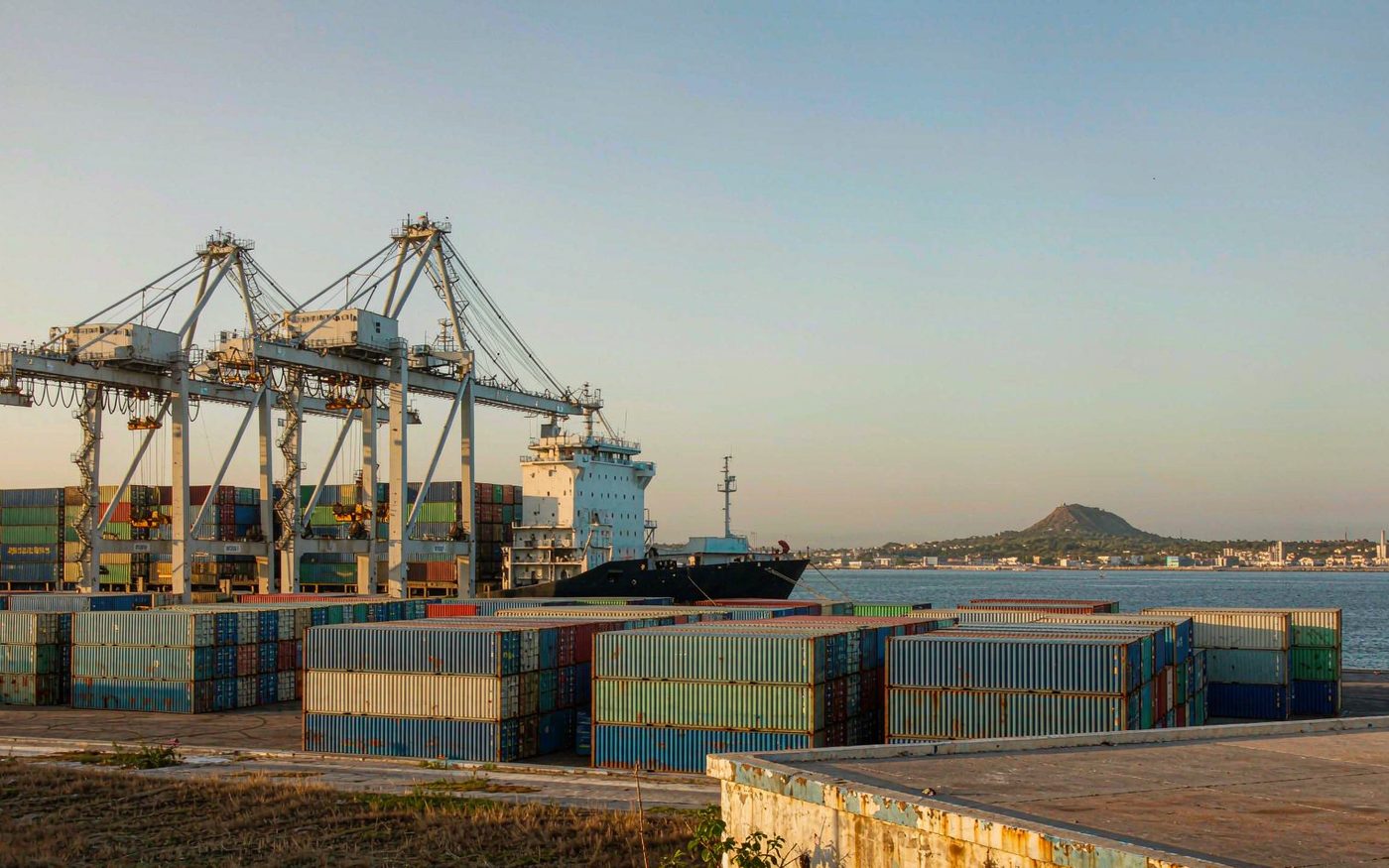
How to ship from China to Senegal
Senegal is one of the more orderly import markets in West Africa, and Dakar is a port with real capacity and a functioning electronic customs system. For a buyer importing from China for the first time, the country is more forgiving than its neighbours in one respect and less forgiving in another.
The forgiving part is the clearance itself: documents are processed electronically through the GAINDE system, declarations are made by licensed brokers, and a clean file moves in days rather than weeks. The unforgiving part is a single document. Senegal requires a BSC, a cargo tracking note, and it has to be issued before the vessel loads. A container shipped without one is a problem that cannot be fixed after arrival.
This guide covers the BSC in detail, the inspection threshold that decides whether your goods are physically verified before loading, how duty and VAT are calculated, what French labelling means for consumer goods, and how the whole sequence runs from a Chinese supplier to a Dakar address.
At a glance
Customs is administered by the Direction Générale des Douanes et Droits Indirects, with declarations processed through the GAINDE system and the Orbus platform, and filed by licensed brokers. A BSC, or bordereau de suivi de cargaison, is required and must be issued before loading. Pre-shipment inspection applies above roughly XOF 3,000,000 FOB, about US$6,000, and is carried out by an appointed inspection company. Duty follows the ECOWAS common external tariff at 0, 5, 10, 20 or 35 per cent of CIF value, with VAT at 18 per cent. Smaller levies include a statistical fee, a community levy and a shipper's council charge.
How your cargo moves: China to Senegal
Eight steps from your supplier's door to yours. The last four are the ones shaped by local rules.
- Pickup from your supplierWe collect the goods anywhere in China and bring them to our consolidation point.
- Export clearanceChina customs declaration filed and released before the goods move to the port.
- Loading and departureContainer loaded, sealed and handed to the carrier at the Chinese port.
- Main carriageOcean, air or rail movement booked on the route agreed for your cargo.
- Arrival at the gatewayDischarge at the port or airport of entry, recorded on the carrier's manifest.
- Import clearanceCustoms declaration filed locally, with duty and tax assessed on the declared value.
- Customs releaseGoods released into free circulation once duty and tax are settled.
- Final deliveryOnward movement to your delivery address, warehouse or nominated depot.
Duty rates, VAT rates and clearance times move, and the figure that applies to your goods is the one set for your commodity code on the day of clearance. We check the current position against your code before your goods sail and confirm it to you in writing — ask for that check when you request a quote.
What makes importing into Senegal different from its neighbours
The first difference is the BSC. Senegal operates a cargo tracking note regime, and unlike some countries where the note can be regularised late, here it is expected to exist before the vessel sails. The number appears on the bill of lading and on the manifest, and a consignment without it faces penalties and delays that no amount of explanation afterwards will remove.
The second difference is who can file. Declarations are made by licensed customs brokers through GAINDE and the Orbus platform, and the system is genuinely electronic rather than electronic in name only. That makes a good broker worth more here than the fee suggests, because the whole process runs through them.
The third is that Dakar is a compact market with a strong services economy and a growing construction and retail sector. Volumes per importer tend to be smaller than in Nigeria or Côte d'Ivoire, which means more first-time buyers arrive by LCL, and the LCL deconsolidation step matters more here than the ocean leg does.
Choosing a mode: full container, consolidated cargo, or air to Blaise Diagne
A full container suits cargo above roughly 15 cubic metres, and it is what you want for anything fragile, heavy or high-value, because the box is sealed at origin and opened at destination. Senegal-bound full containers typically move direct or with one transhipment depending on the carrier.
Consolidated cargo, or LCL, is the common entry point for smaller buyers. You pay by the cubic metre with a minimum, and you accept extra handling at both ends. On this lane the extra days usually come from deconsolidation at Dakar rather than from consolidation in China.
Air freight lands at Blaise Diagne International Airport (DSS), which replaced the old city airport and handles cargo properly. It suits urgent spare parts, pharmaceuticals, electronics and samples. Courier works for single cartons and documents, and the carriers clear them under their own procedures.
| Mode | Transit commonly quoted | What it suits |
|---|---|---|
| Sea FCL to Dakar | 30 to 45 days port to port | Volume above about 15 cbm, fragile or high-value goods |
| Sea LCL to Dakar | Add 5 to 10 days | Two to twelve cubic metres |
| Air to DSS | 3 to 7 days airport to airport | Urgent, high-value or perishable cargo |
| Courier | 3 to 6 days door to door | Samples, documents, small parcels |
Trade terms in plain language on a Dakar shipment
EXW, ex works, means you collect from the supplier's door and own every risk from there. It looks cheap and it is rarely a bargain for a new importer, because you are responsible for export formalities you do not control.
FOB, free on board, means the supplier delivers the goods onto the vessel at the Chinese port and the risk passes to you at the ship's rail. You control the main carriage. This is the term most experienced buyers use, because it separates the supplier's cost from the freight and leaves you in charge of the routing.
CIF and CIP mean the seller pays carriage and insurance to the destination port, but the risk still passes at the Chinese port. The word that misleads people is insurance: the seller buys it, but you hold the risk during the voyage.
DAP and DDP shift the whole burden to the seller, who delivers at the named place, and under DDP also pays the Senegalese duty and VAT. DDP looks attractive to a first-time buyer and it is legitimate, but understand what you are buying: someone else is choosing the broker, declaring the value and paying the tax, and you are relying on them to do it correctly.
The sequence from a Chinese supplier to a Dakar address
Order confirmed, Incoterm agreed
Get the Incoterm from Incoterms 2020 written into the contract, and confirm at the same time whether the goods fall into a category needing inspection.
Apply for the BSC
This has to be issued before the vessel loads, and it needs the bill of lading details. Start it as soon as you have a booking, not when the ship is alongside.
Book the inspection if the value triggers it
Above the FOB threshold, an appointed inspection company verifies the goods before loading and issues an attestation. Build it into the production calendar.
Pickup, consolidation and export declaration in China
Your forwarder collects or receives the cartons, consolidates if needed, and declares the export. Ask for the seal number and stuffing photographs.
Ocean leg and bill of lading
The BSC number and the consignee details appear on the bill of lading and the manifest. Check the draft carefully; correcting it after issue costs time and money.
Arrival at Dakar and the broker's declaration
Your licensed broker files the declaration through GAINDE with the supporting documents attached.
Risk channel, assessment and payment
The declaration is routed by risk: a green channel file moves on documents, orange or red brings questions or a physical examination. Duty and VAT are then assessed and paid.
Release, port charges and delivery
After release come the line's delivery order, the port charges and the truck to your address. Keep the broker chasing until the box is on your site.
The BSC number, and why it has to be issued before loading
The BSC, the bordereau de suivi de cargaison, is Senegal's cargo tracking note. It is applied for through the appointed agent, it carries a unique number, and that number has to appear on the bill of lading and on the cargo manifest. It exists so that customs knows what is coming before it arrives.
The timing is the whole difficulty. The BSC needs shipping details that only exist once you have a booking, and it must be issued before the vessel loads. Treat it as a booking milestone: the same week you book the space, start the BSC. Late or missing BSC numbers are a well-documented cause of penalties and delay at Dakar.
Because the number ends up on the bill of lading, it also has to match the final document exactly. If the bill of lading is reissued with a different vessel or a different consignee after the BSC was issued, the BSC has to be amended too. Tell your forwarder about any change to the booking immediately.
Where COTECNA inspection starts: the FOB threshold worth knowing
Senegal runs a pre-shipment inspection programme through an appointed inspection company, and it applies above an FOB value threshold of roughly XOF 3,000,000, about US$6,000. Below that, your goods are not subject to the physical verification step.
Above it, the inspection company verifies the goods in the country of export before loading and issues an attestation de vérification, and the declaration at Dakar leans on that document. Practically, this means an inspector needs access to the packed goods in China, which has to be scheduled.
The consequence for a buyer is about timing more than money. An inspection that has to happen at the factory cannot be arranged the day before the cut-off. Tell your supplier at order stage that the goods must be packed and available for inspection a week before loading, and tell your forwarder which supplier is involved.
Duty, VAT and the four small levies on a Senegalese entry
| Charge | Indicative rate | Base |
|---|---|---|
| Customs duty | 0, 5, 10, 20 or 35 per cent by HS code | CIF value |
| VAT | 18 per cent | CIF plus duty plus other charges |
| Statistical fee (RS) | Around 1 per cent | CIF value |
| Community preference levy (PCS) | Around 1 per cent | CIF value |
| ECOWAS levy | Around 0.5 per cent | CIF value |
| Shippers' council charge (COSEC) | Around 0.4 per cent | CIF value |
Individually those smaller lines look like rounding errors. Together they add several percentage points on top of the duty and VAT, and they are charged on the same base, so on a container they are real money. Ask your broker for an assessment before you commit to a selling price.
Senegal is a member of ECOWAS and applies the common external tariff, so goods originating in China pay the standard rates. A certificate of origin is still needed, and it is needed for the declaration whether or not it changes the rate.
French labelling, food clearance and other restricted lines
French is the language of commerce. Textiles need fibre composition and care instructions in French, and food, cosmetics and medical products need French labelling, which usually means working with your supplier to produce market-specific packaging rather than shipping whatever carries a Chinese or English label.
Food and beverages need clearance from the health authority as well as the customs entry, and pharmaceuticals and medical devices need their own authorisations. Start those applications before the goods ship, because a permit obtained after arrival is a permit obtained after storage charges have started.
Restricted and controlled lines include plants and seeds, certain chemicals, telecommunications equipment and lithium batteries carried with electronics. Prohibitions cover the familiar list: narcotics, counterfeit goods, and weapons. If a product looks unusual, check it against the customs list before booking rather than after.
The document set for a Dakar clearance
| Document | What it has to show |
|---|---|
| Commercial invoice | French descriptions, Incoterm, unit and total values, supplier and consignee |
| Packing list | Carton count, weights, dimensions, marks and numbers |
| Bill of lading or air waybill | Showing the BSC number and the consignee details |
| BSC | Cargo tracking note issued before loading |
| Attestation de vérification | Where the FOB threshold is exceeded |
| Certificate of origin | Issued by CCPIT or China customs |
| Permits and licences | Food, pharmaceuticals, plants, chemicals and other controlled lines |
The importer's tax identification number is required on the declaration, so register before the goods ship. Consistency across the invoice, packing list and bill of lading does more to keep a file in the green channel than anything else you can do.
A clean air freight file at DSS is commonly quoted at one to two days, and a clean sea file at a handful of working days. Those numbers assume the documents were right the first time; every correction resets the clock.
Importing under your own name or under a registered Senegalese company
A private individual can import personal effects and genuinely non-commercial goods. For commercial importing, the declaration needs a registered entity with a tax identification number, and the trader registration that goes with it.
The difference that matters is VAT recovery. A registered business accounting for VAT can normally recover the import VAT against its output tax. A private individual pays it and it stops there. On a container where duty and VAT together can approach half the CIF value, that is a serious difference.
Register before the vessel sails. The declaration cannot be completed without the number, and storage accrues while you wait for it.
If you are outside Senegal and have no local entity, you will be working through a licensed broker throughout. Choose them before the goods ship, agree the scope in writing, and agree who pays storage if clearance stalls.
Two forwarders, two jobs: what yours does at each end
At the China end your forwarder collects the cartons or receives them into a consolidation warehouse, books the space, handles the export declaration, arranges the inspection if one is needed, obtains the bill of lading and makes sure the BSC number lands on it. They are also the only party who can chase a carrier effectively when a schedule slips.
At the Senegal end a licensed customs broker files the declaration through GAINDE, responds to queries, arranges the physical examination if one is ordered, and pays the duty and VAT on your behalf. You need the forwarder and the broker, and one does not substitute for the other.
How to judge them: ask for the legal entity name, how long it has traded, and a written quotation split into origin charges, freight and the destination charges you will owe separately. Ask who pays storage if clearance is delayed. A quotation with no destination charge line at all is not a cheap quotation, it is an incomplete one.
Warning signs are the same everywhere: pressure to declare a lower value, no written breakdown, an address that is only a phone number, and vague answers about who carries the risk during the voyage.
Three sample shipments into Senegal
These three examples are illustrative, not client records. They show how the routing follows the cargo.
Eight cubic metres of furniture and lighting from three suppliers around Foshan. Consolidated in Shenzhen and shipped as LCL. The FOB value sits below the inspection threshold, so no pre-shipment verification step, and the BSC is obtained on the strength of the booking. The lesson is that a small first order is simpler than it looks, provided the BSC is handled in time.
A 40ft high-cube of ceramic tile from Foshan. Full container, factory stuffed, heavy cargo. The FOB value exceeds the threshold, so an inspection is arranged at the factory before loading and an attestation is issued. The lesson is that inspection belongs in the production calendar, not the shipping calendar.
Two hundred kilograms of pharmaceutical products with a short shelf life. Air freight to DSS with health authority clearance arranged in parallel. The lesson is that for controlled goods the permit, not the aircraft, is the critical path.
Why importers use Goodhope on this lane
Six things that are different about working with us on China to Senegal shipments.
Get your Senegal shipment moving
Send us the commodity, the volume and the ready date, and we will come back with a routing that puts the BSC and the inspection threshold on the calendar before you book the vessel.
Get a quote Talk to usRelated pages
Frequently asked questions
What is a BSC and when do I need it?
The BSC, or bordereau de suivi de cargaison, is Senegal's cargo tracking note. It is issued by the appointed agent, carries a unique number, and that number must appear on the bill of lading and on the manifest. It has to be issued before the vessel loads, so apply as soon as you have a confirmed booking.
Do my goods need pre-shipment inspection?
Above an FOB value of roughly XOF 3,000,000, about US$6,000, yes: an appointed inspection company verifies the goods in China before loading and issues an attestation de vérification. Below that threshold the inspection step does not apply.
How much duty and VAT will I pay in Senegal?
Duty follows the ECOWAS common external tariff at 0, 5, 10, 20 or 35 per cent of CIF value depending on the HS code, and VAT is 18 per cent on CIF plus duty plus other charges. Smaller levies, including a statistical fee, the community levy and a shippers' council charge, sit on top.
How long does clearance take at Dakar?
A clean air freight file is commonly quoted at one to two days and a clean sea file at a few working days. Those figures assume correct documents submitted on time; a query or a physical examination adds days.
Which airport handles cargo from China?
Blaise Diagne International Airport (DSS), which handles air cargo for Dakar. Air freight suits urgent, high-value or perishable goods and is charged on chargeable weight.
Can I import as an individual?
Yes for personal and genuinely non-commercial goods. For resale you need a registered entity with a tax identification number, and that route is also the one that allows you to recover the import VAT.
Do labels have to be in French?
Yes in practice. Textiles need fibre composition and care instructions in French, and food, cosmetics and medical products need French labelling, which usually means arranging market-specific packaging with your supplier.
Can I use FOB terms with my Chinese supplier?
FOB is the term most experienced buyers use: the supplier loads the goods onto the vessel at the Chinese port and risk passes to you there, while you control the main carriage and the choice of forwarder.
What happens if my goods arrive without a BSC?
A missing or late BSC is a documented cause of penalties and delay at Dakar, and it cannot be fixed after the fact. Apply for it at booking stage and make sure the number appears on the final bill of lading.
Do I need both a forwarder in China and a broker in Senegal?
Yes. The forwarder handles pickup, consolidation, export declaration, booking and the bill of lading. The licensed broker files the declaration through GAINDE, handles queries and pays the duty and VAT. Neither substitutes for the other.