
Home / Shipping to Serbia / How to Ship from China to Serbia | Adriatic Routing & 20% VAT
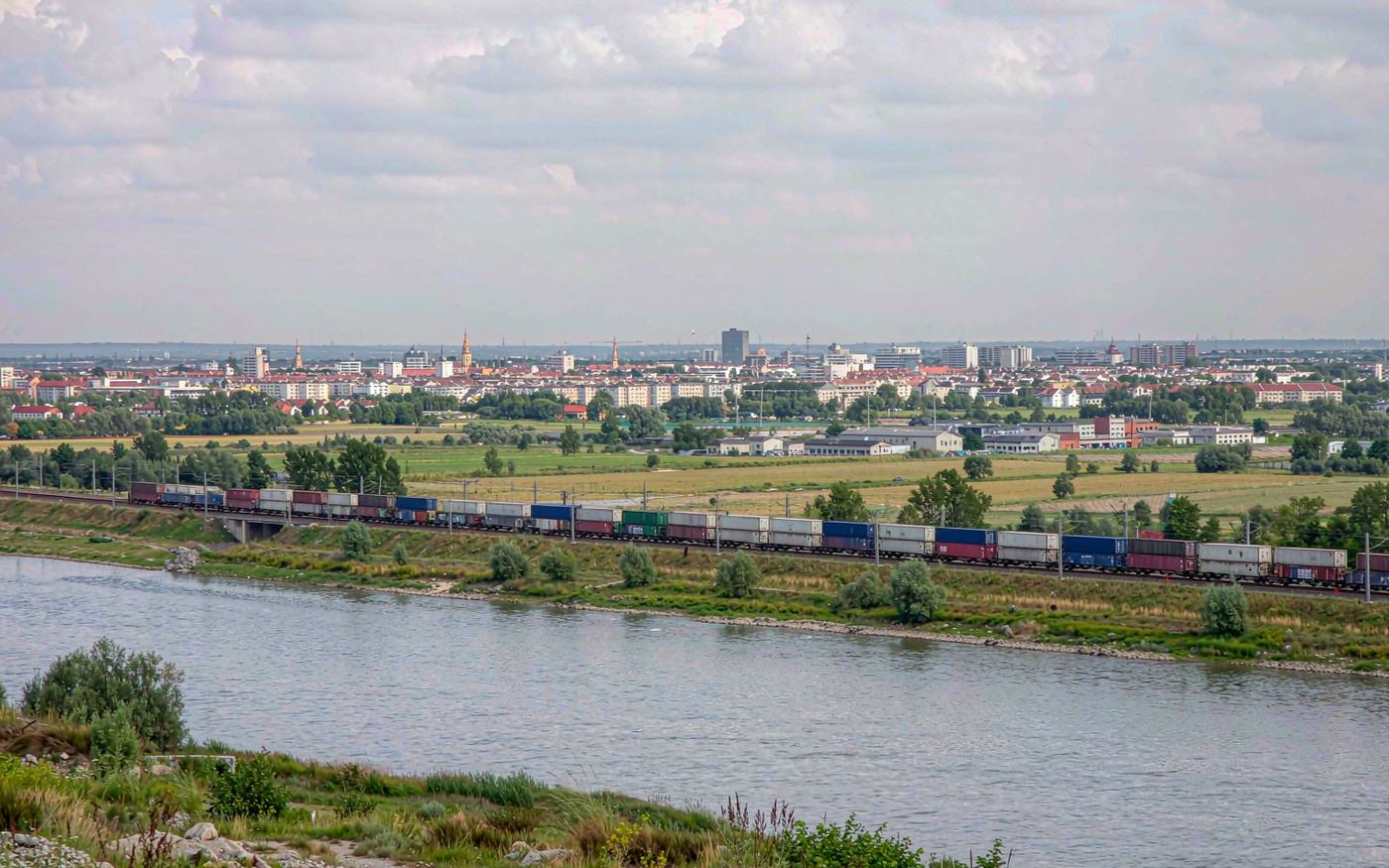
How to Ship from China to Serbia
Serbia sits at the crossroads of the Balkans with no sea coast, and that single fact shapes the first decision you make. Your container will be discharged at a port in Slovenia, Montenegro, Croatia, Greece or Romania and moved inland by road or rail. Choosing well on that one point matters more than most of the other choices combined, because the inland leg is a large share of the total cost.
Serbia is not a member of the European Union, so it runs its own customs system — but that system is closely modelled on the EU's, and the tariff structure, product standards and documentation will feel familiar to anyone who has imported into Europe before. Duty is moderate, value added tax is charged at a flat standard rate, and declarations are filed electronically by a licensed broker.
This guide covers the port choice, the declaration mechanics, duty and tax, the trade agreements that do not help a Chinese-origin shipment, the inland delivery options and the documents to have ready before the goods sail.
At a glance
Landlocked — gateways include Koper, Bar, Rijeka, Thessaloniki and Constanta — standard VAT 20% — duty commonly 0–15% by HS code — customs union: none, but tariff modelled on the EU — currency RSD, invoices usually in EUR — clearance commonly 3–7 working days — main airport Belgrade (BEG).
How your cargo moves: China to Serbia
Eight steps from your supplier's door to yours. The last four are the ones shaped by local rules.
- Pickup from your supplierWe collect the goods anywhere in China and bring them to our consolidation point.
- Export clearanceChina customs declaration filed and released before the goods move to the port.
- Loading and departureContainer loaded, sealed and handed to the carrier at the Chinese port.
- Main carriageOcean, air or rail movement booked on the route agreed for your cargo.
- Arrival at the gatewayDischarge at the port or airport of entry, recorded on the carrier's manifest.
- Import clearanceCustoms declaration filed locally, with duty and tax assessed on the declared value.
- Customs releaseGoods released into free circulation once duty and tax are settled.
- Final deliveryOnward movement to your delivery address, warehouse or nominated depot.
Duty rates, VAT rates and clearance times move, and the figure that applies to your goods is the one set for your commodity code on the day of clearance. We check the current position against your code before your goods sail and confirm it to you in writing — ask for that check when you request a quote.
Why Serbia keeps its own customs rules outside the EU
Serbia is not in the European Union and not in the EU customs union, so importing into Serbia is a genuine customs entry rather than an internal EU movement. Goods arriving from an EU port do so under a transit procedure and are then declared to Serbian customs at the border or at an inland terminal.
What makes this easier than it sounds is that Serbian customs law and tariff practice are closely aligned with the EU model. The tariff structure, the valuation rules and much of the documentation will look familiar if you have imported into an EU country, and product standards such as CE conformity are widely accepted in practice.
Registration matters. Importers normally register with the customs administration and obtain an EORI identification number, which is used on declarations. Your broker handles the filing, but the registration belongs to the importing entity, so it needs to be in place before the first consignment arrives.
Which port your container lands in, Koper or Bar
Serbia is landlocked, so the port is a foreign one. The most commonly used gateways are Koper in Slovenia, which offers the shortest and best-developed road and rail corridor into northern Serbia; Bar in Montenegro, which connects by rail toward Belgrade; Rijeka in Croatia; Thessaloniki in Greece for southern and eastern Serbia; and Constanta in Romania for cargo moving via the Danube corridor.
The choice is not simply distance. Koper is close but its handling and inland rates reflect that demand. Bar has a rail link that suits heavy or bulk cargo. Thessaloniki often wins on ocean freight rates. Constanta opens up barge movement up the Danube. The right answer depends on where the goods are going inside Serbia and on what your forwarder holds capacity on.
Ask for the two components quoted separately — ocean freight to the port, and the inland leg from it. When they are bundled you cannot see which gateway is actually cheaper, and you will want to know on the second shipment.
The single customs document every Serbian import uses
Serbian imports are declared on the country's single customs document, known locally as the JCI (Jedinstvena carinska isprava). It carries the importer's details, the classification and value of the goods, the origin, and the calculation of duty and tax.
Declarations are lodged electronically through the customs administration's systems. The national platform generally used is referred to as e-Carina, and the underlying customs management system is reported to be ASYCUDA World. Filing is done by a licensed customs broker holding a power of attorney from the importer, and brokers typically recommend submitting before the goods physically reach the border.
Serbia also participates in the Common Transit Convention and can use the New Computerised Transit System for goods moving under transit to or from the EU, which simplifies the leg between the port and the Serbian border. Ask whether your routing uses it — it affects both paperwork and border time.
Duty and tax on a Chinese-origin shipment, worked through
Duty is set by HS code against the Serbian tariff, which follows the structure of the EU common customs tariff. Published figures for most goods fall in the range of roughly 0% to 15%, with some sources citing a wider band up to around 20% for particular categories. Industrial inputs and raw materials tend toward the bottom of the range, finished consumer goods sit in the middle, and a narrower set of protected agricultural lines sits higher.
Value added tax is charged at a standard rate of 20%, applied on the customs value plus duty, with reduced rates available for defined categories and excise duty on alcohol, tobacco and petroleum products. Customs value is built on a CIF basis — goods, insurance and freight to the point of entry.
Registered businesses can generally recover import VAT as input tax, so for an established importer it is a cash-flow item. For a first shipment by an entity that is not yet registered, it is payable at clearance and should be funded in advance.
The trade agreements that will not reduce your duty
Serbia has an unusually wide set of free trade arrangements: CEFTA with its Western Balkan neighbours, agreements with EFTA and Turkey, a Stabilisation and Association Agreement with the EU, and a long-standing arrangement with Russia. That list makes it easy to assume a shipment gets preferential treatment.
It does not, if the goods are Chinese in origin. Preferential duty depends on the origin of the goods, not on the country importing them, and none of Serbia's agreements cover Chinese-origin products. A certificate of origin will still be required in many cases, but it establishes where the goods were made rather than unlocking a lower rate.
Budget on standard most-favoured-nation rates and treat any preference as a bonus you have not been promised. This is one of the most common and most expensive assumptions a first-time importer makes on this lane.
Product standards Serbia borrows from Brussels
Even though Serbia is outside the EU, product compliance in practice follows EU lines. Electrical and electronic goods are expected to carry CE conformity documentation, machinery and toys follow comparable requirements, and Serbian technical regulations largely mirror EU directives.
Certain categories need permits or certificates issued by Serbian authorities before importation — pharmaceuticals, medical devices, plant and animal products, chemicals, radio equipment and weapons-related items among them. Sanitary and phytosanitary certificates for food and agricultural goods are checked at the border.
Confirm the requirements for your exact product before the goods ship. A missing permit is not something a broker can fix at the border, and cargo held pending a sector approval accrues storage for as long as the approval takes.
Inland from Koper and Bar, road against rail
From Koper, the run to Belgrade is a well-established road corridor, and rail is available for regular volumes. It is the default choice for northern Serbia and for cargo that needs to reach Belgrade, Novi Sad or the northern industrial belt quickly.
From Bar, the distinguishing feature is the rail connection toward Belgrade, which suits heavy or high-volume cargo where rail beats road on cost. It is slower but often cheaper per tonne, and it avoids road congestion at border crossings.
For less-than-container loads, cargo is deconsolidated at a bonded warehouse near the border or in Belgrade and then delivered. That devanning step is a real cost — ask whether your quote includes it, because it is the line most often added later.
Documents ready before the container leaves China
The standard set is the commercial invoice, the packing list and the bill of lading or air waybill. The invoice should show buyer and seller in full, complete product descriptions with material and intended use, quantities, unit and total values, the delivery term and the country of origin. Pricing in euros and stating the delivery term as CIF Belgrade is commonly recommended for this lane.
Where royalties, licence fees or software charges form part of the transaction, they should be shown separately, because they can form part of the customs value. Customs also cross-checks declared values against payment records, so the invoice and the bank transfer should agree.
Add whatever your product attracts: certificate of origin, conformity documentation, sanitary or phytosanitary certificates, or an import licence for controlled categories. Have the broker pre-check the package while the goods are at sea — most delays on first shipments are document problems that could have been fixed in China at no cost.
How clearance timing works when the paperwork is right
Once a complete declaration is lodged, clearance is commonly reported in the range of 3 to 7 working days, with some sources describing shorter processing where documents are clean and pre-filed. Planning on the longer figure is sensible for a first consignment.
Inspection rates are material. Figures around 30% of consignments undergoing physical or documentary examination are cited for this market, and incomplete paperwork raises the odds substantially. An inspection is routine when the packing list matches the cargo and expensive when it does not, because examination and storage charges start accruing while the container is opened.
Pre-submission is the best lever available. Brokers commonly advise filing roughly 72 hours before the goods reach the border so the system can complete risk screening in advance. For a first shipment, insist on it.
Paying in dinars, invoicing in euros
The Serbian dinar is the local currency, but commercial trade on this lane is routinely invoiced in euros, and customs valuation is worked in a way that accommodates that. Pricing your contract in euros removes one layer of conversion from your landed cost.
Duty and VAT are assessed in the local currency at the rate applied on the day of clearance, so a movement between order and arrival changes the final figure. Build a small buffer rather than quoting to the cent.
Payment channels are normal for this corridor, but as with any market, confirm with your bank before the first transfer that it will process the payment to this destination and counterparty. A payment that cannot be executed stops the shipment regardless of how well the freight is planned.
Choosing the broker who will file for you in Belgrade
Declarations must be filed by a licensed Serbian customs broker, and on a first shipment the broker is the most important local partner you will pick. Ask whether they handle Chinese-origin cargo regularly, whether they will give you the HS code and estimated duty in writing before sailing, and whether they pre-file or wait for the truck to arrive.
Ask too about deferment. If duty and VAT must be paid in cash at release, you need the funds available on the day, which is a real working-capital consideration for a first import.
Finally, keep your own archive. Customs retention rules require records to be held for years, and being able to produce a complete file for a past consignment is what makes any later query short rather than expensive.
Why importers use Goodhope on this lane
Six things that are different about working with us on China to Serbia shipments.
End to end to your door in Serbia
Five shipments bought in China and delivered into Serbia, told end to end — where the order came from, how it moved, where it nearly went wrong, and how it finished. Client names are withheld at their request; the situations and the handling are what we deal with on this lane.
First container · Alibaba sourcing · Ningbo to Koper to Belgrade
The purchase. A buyer found a Ningbo manufacturer online and ordered his first container of hardware products, quoted FOB and unsure who was responsible for anything after loading.
The move. Container to Koper, then transit onward into Serbia and clearance inland in Belgrade rather than at the port.
Where it nearly went wrong. Clearing where the goods are going rather than where they land means any customs question is answered by a broker handling his file locally, in his own time zone, instead of through an office in another country.
How it finished. The container cleared without delay and he has used inland clearance for every shipment since.
Heavy equipment · rail beats road · Shanghai to Bar to Belgrade
The purchase. A manufacturer imported heavy equipment where road transport cost more than he expected for the weight involved.
The move. Sea freight Shanghai to Bar, then inland movement up the rail corridor toward Belgrade rather than by truck.
Where it nearly went wrong. Rail is slower than road from Koper but materially better on heavy or high-volume cargo. Nobody had offered him the comparison.
How it finished. We quoted both. He took rail for the heavy shipments and keeps road for urgent ones.
Budgeting error · duty and VAT · Shenzhen to Koper
The purchase. A buyer was working out landed cost from the invoice value alone.
The move. Container to Koper with inland clearance in Novi Sad.
Where it nearly went wrong. Duty is charged on the customs value built on goods, insurance and freight, and VAT is then charged on that figure plus the duty. Working it out on invoice value alone understates the real number.
How it finished. We walked him through the order of calculation before he placed the second order, and he priced his margin accordingly.
False hope about duty · trade agreements · Yiwu to Thessaloniki
The purchase. A buyer had been told Serbia had lots of free trade agreements and assumed his goods qualified for reduced duty.
The move. Consolidated cargo from Yiwu to Thessaloniki, then road into southern Serbia with local clearance.
Where it nearly went wrong. Preferential duty depends on where the goods originate, not on which country is importing them. Goods made in China do not fall under Serbia's agreements.
How it finished. We corrected the assumption before he committed to pricing, and he budgeted on standard rates.
Trail order · air to Belgrade · Guangzhou to BEG
The purchase. A buyer wanted a small trial shipment before committing to a container, working to a production schedule rather than a freight budget.
The move. Air freight from Guangzhou to Belgrade with a Belgrade broker handling clearance and local delivery.
Where it nearly went wrong. A trial order shipped by air is expensive per kilo but buys certainty about the product, the documents and the clearance route before committing to sea volumes.
How it finished. The trial cleared cleanly, which told him everything he needed about the documents, and the container order followed with no surprises.
Why importers use Goodhope on this lane
Six things that are different about working with us on China to Serbia shipments.
Move your first order into Serbia
Tell us your product, volume and delivery city. We will compare the gateway ports, quote the inland leg separately, confirm the HS-based duty and VAT estimate, and set out the documents your Belgrade broker will need.
Get a quote Talk to usRelated pages
Frequently asked questions
Which port does cargo for Serbia arrive at?
Serbia is landlocked, so sea freight is discharged at a neighbouring country's port. Koper in Slovenia is the most widely used, with Bar in Montenegro, Rijeka in Croatia, Thessaloniki in Greece and Constanta in Romania also common. The right choice depends on the destination city and on inland rates.
Is Serbia in the EU customs union?
No. Serbia is not an EU member and runs its own customs system, though its tariff and procedures are closely modelled on the EU's. Importers normally register with the customs administration and obtain an EORI number, and a licensed broker files the declaration.
What is the import VAT rate?
The standard rate is 20%, applied on the customs value plus duty. Reduced rates apply to defined categories and excise duty applies to alcohol, tobacco and petroleum products. Registered businesses can generally recover import VAT as input tax.
How much duty will I pay on Chinese goods?
Duty is set by HS code under the Serbian tariff, which follows the EU common customs tariff structure. Most goods fall in the range of roughly 0% to 15%. Serbia's free trade agreements do not cover Chinese-origin goods, so standard rates apply.
Can I use CEFTA or the EU agreement to reduce duty?
No, not for Chinese-origin goods. Serbia has agreements with CEFTA partners, EFTA, Turkey, the EU and Russia, but preferential duty depends on the origin of the goods. Goods made in China do not qualify under any of them.
What documents are required?
A commercial invoice with full product descriptions, values, delivery terms and origin; a packing list; and the bill of lading or air waybill. Pricing in euros with CIF Belgrade terms is commonly recommended. Controlled categories need permits, and food or plant products need sanitary or phytosanitary certificates.
How long does customs clearance take?
Commonly 3 to 7 working days once a complete declaration is lodged, with shorter processing reported where documents are clean and pre-filed. Around 30% of consignments are examined, so accurate packing lists matter.
Should the declaration be filed before the goods arrive?
Yes. Brokers commonly advise submitting roughly 72 hours before the goods reach the border so the customs system can complete risk screening in advance. Pre-filing is the single most effective way to avoid a first-shipment delay.
Is rail a good option for the inland leg?
It can be. The Bar to Belgrade rail link suits heavy or high-volume cargo where rail beats road on cost, though it is slower. From Koper, road is the default for speed and flexibility while rail is competitive for regular volumes.
Do I need a customs broker?
Yes. Declarations are lodged electronically by a licensed Serbian customs broker holding your power of attorney. Ask whether they handle Chinese-origin cargo, whether they will confirm the HS code and duty estimate in writing before sailing, and whether they offer tax deferment.