
Home / Shipping to the Solomon Islands / How to Ship from China to the Solomon Islands
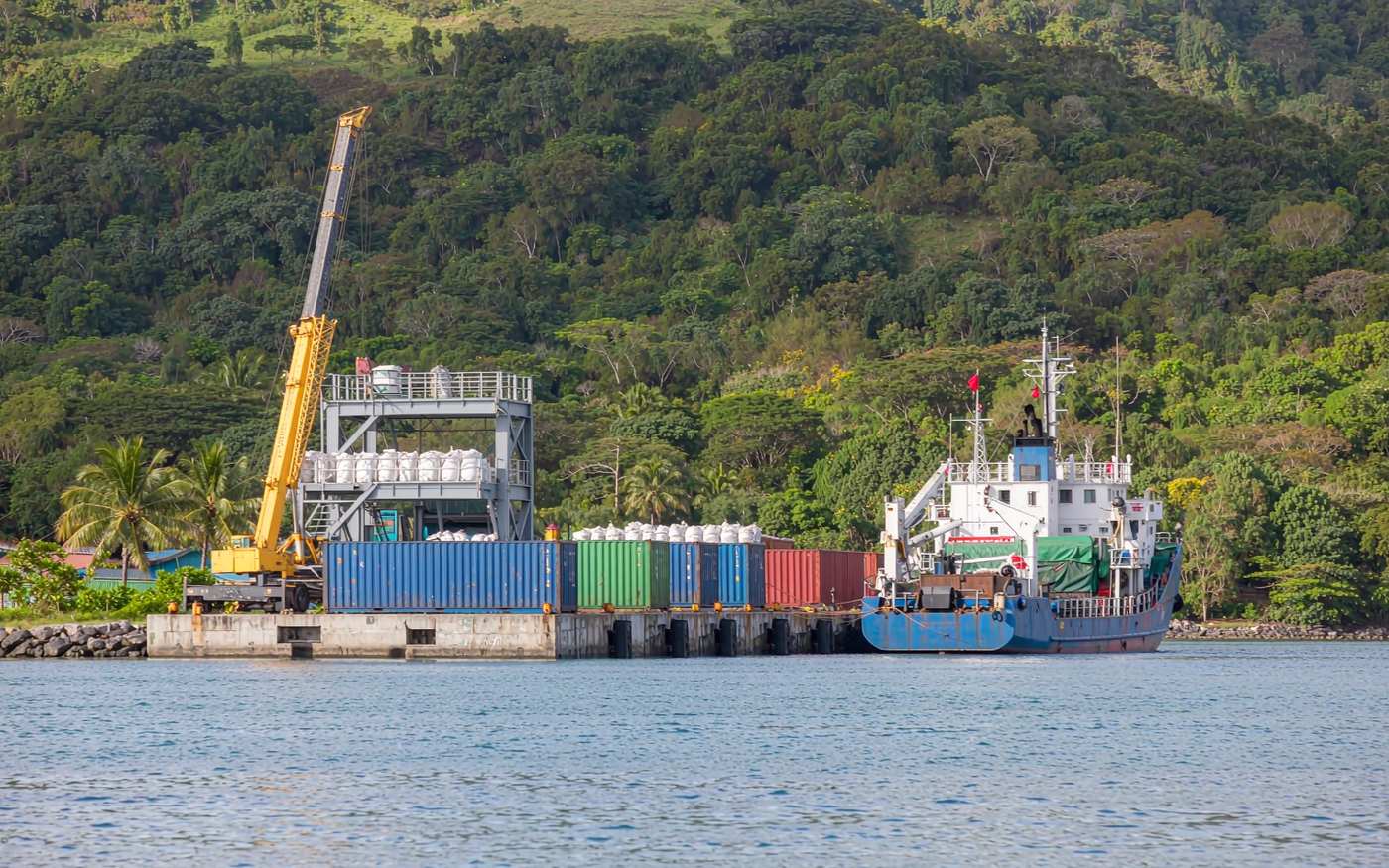
Shipping from China to the Solomon Islands, step by step
Goodhope Freight is a licensed NVOCC based in Shenzhen, registered as GD20230925153335, and has been moving cargo out of China since 2012. To the Solomon Islands we run full containers and shared containers port-to-port into Honiara, air freight airport-to-airport into Henderson International, and express parcels dispatched from our depot. Every service stops at the port, the airport or the depot. Your consignee arranges import clearance and collection.
The Solomon Islands is a scattered Melanesian archipelago where almost everything arrives through one berth. Point Cruz at Honiara on Guadalcanal is the main port, Noro in Western Province serves the industrial and fisheries side, and Henderson International handles the air freight. Customs is administered by the Customs and Excise Division and entries are filed electronically.
What decides whether a shipment here goes well is not the ocean leg. It is whether your consignee is registered before the vessel arrives, whether the commodity sits in the right duty band, and whether you have budgeted for the time cargo spends waiting at a port that is working through reconstruction.
At a glance
Main port: Honiara, with Point Cruz the main berth on Guadalcanal · Second port: Noro in Western Province, serving the industrial and fisheries side · Main airport: Henderson International (HIR) · Currency: Solomon Islands dollar · Customs authority: Customs and Excise Division, with electronic declaration filing · Four ad valorem import duty bands: 5, 10, 15 and 20 per cent · A goods tax is charged on imports, currently at 10 per cent on most goods · The importer needs a tax identification number · Biosecurity clearance by the quarantine authority · Courier coverage is limited to Honiara
How your cargo moves: China to the Solomon Islands
Eight steps from your supplier's door to yours. The last four are the ones shaped by local rules.
- Pickup from your supplierWe collect the goods anywhere in China and bring them to our consolidation point.
- Export clearanceChina customs declaration filed and released before the goods move to the port.
- Loading and departureContainer loaded, sealed and handed to the carrier at the Chinese port.
- Relay through Australia, Fiji or SingaporeCargo into Honiara connects through Brisbane, Fiji or Singapore, so the hub and the sailing date together set the arrival window.
- Discharge at HoniaraContainers are worked at Point Cruz; air cargo is handled at the Henderson cargo terminal.
- Importer already registeredYour consignee needs a tax identification number before the entry can be filed, and permits are needed for regulated lines.
- Declaration filed electronicallyThe broker lodges the entry with the commodity codes, and the duty band and goods tax are assessed on the customs value.
- Charges settled and goods collectedDuty, the goods tax and any port charges are paid, biosecurity is satisfied, and the consignee collects. Build in time for port congestion.
Duty rates, VAT rates and clearance times move, and the figure that applies to your goods is the one set for your commodity code on the day of clearance. We check the current position against your code before your goods sail and confirm it to you in writing — ask for that check when you request a quote.
Honiara, Noro, and a port under reconstruction
Point Cruz at Honiara handles most containerised imports, and Noro in Western Province serves the industrial and fisheries side of the economy. Henderson International handles the air freight. Beyond those, cargo moves by inter-island vessel to provinces that have no road connection to the capital.
Honiara has been working through port reconstruction, and berth availability is tighter than it was. Build a contingency of seven to ten days into your planning for berth waiting and yard congestion, because that is the delay that actually happens on this lane rather than the one people imagine.
Choosing a mode where the courier does not reach
Below roughly 15 cubic metres a shared container is the practical answer, rated by volume with a weight conversion and a one cubic metre minimum. Between about 15 and 28 cubic metres, run the comparison between a 20GP and the per-cubic-metre rating both ways. Above that, a 40GP or 40HC normally wins for bulky light cargo.
Air freight into Henderson works from about 45 kg and suits mining and fisheries spares, medical supplies and urgent equipment parts. International courier coverage effectively stops at Honiara, so for an address anywhere else the realistic options are sea freight to Honiara plus an inter-island leg, or air freight collected at the airport.
The four ad valorem bands, plain and simple
The tariff is built around four ad valorem rates of 5, 10, 15 and 20 per cent applied to most imported goods, with exemptions and concessions set out in the customs legislation for capital goods, manufacturers' raw materials and defined investment projects.
That structure is simpler than most, and the useful consequence is that the classification question is narrower: your broker needs to establish which of the four bands your commodity falls in. Do that before the order is placed, because it is the largest single determinant of the landed cost.
The goods tax, and a tax system being rewritten
A goods tax is charged on imports, currently at 10 per cent on most goods. The revenue office has a value-added tax reform programme under public consultation, so have your broker confirm the rate in force at the time of entry rather than relying on a figure carried over from an earlier shipment.
Practical advice follows from that: ask for a fresh assessment close to the arrival date rather than one made at booking. It costs nothing to ask and it removes the one variable on this lane that can move without notice.
Registration first, because the entry depends on it
Your consignee needs a tax identification number before an entry can be processed, and permits are required for a defined list including firearms, alcohol, tobacco, pharmaceuticals and some agricultural products. Vehicles need their own permit.
From the China side none of that is visible, which is exactly why it gets left too late. Ask your buyer to confirm registration and any permit requirement while the goods are still on the water, and treat it as a condition of booking rather than a detail of arrival.
When a one-off parcel becomes a dutiable import
Personal effects sent to residents and commercial stock imported for resale are treated differently, and the allowances that apply to the first do not extend to the second. A commercial consignment is assessed on duty and the goods tax whatever its value.
The distinction matters more here than on better-documented lanes, because the administration has been tightening the treatment of split e-commerce consignments. Document commercial stock as commercial, on one invoice, with the real value on it.
Packing for humidity, rain and limited handling gear
Handling equipment at Honiara is limited, and containers are worked slowly. Goods that would be fine on a deep-water terminal get knocked about here. Strap or palletise wherever the commodity allows, and do not rely on the port having the gear to rescue a badly packed container.
Heat, humidity and heavy rain do the rest. Internal moisture protection for textiles, paper goods, electronics and metal finishes is not optional on this lane. Timber packaging must be treated and marked to the international standard, because quarantine will hold it otherwise.
Documents, and the TIN that goes with them
- Commercial invoice with a specific description, quantities, values, currency and country of origin.
- Packing list matching the invoice, with weights and dimensions.
- Bill of lading for sea freight or air waybill for air freight.
- Certificate of origin, including the regional preference form where the buyer asks for one.
- Import permit for regulated lines, and phytosanitary or health certificates for food, plant and animal products.
- Tax identification number for the importer, registered before the entry is filed.
Because declarations are filed electronically, clean structured data matters. A vague description or a packing list that does not match the carton count holds the whole entry rather than the line in question.
Timing, and the congestion buffer nobody budgets
Sea freight into Honiara typically runs in the region of 35 to 50 days port-to-port depending on the Chinese origin and how the service connects, with most cargo relaying through Brisbane, Fiji or Singapore. Air cargo is governed by the connection.
Then add the part that is not in most quotes: berth waiting and yard congestion at a port working through reconstruction. Seven to ten days of contingency is a realistic figure, and it is the difference between a stock cycle that works and one that does not.
The handover at Point Cruz
We handle collection from your supplier, consolidation and loading in Guangdong, export declaration, and the main carriage into Honiara or Henderson. We issue the transport document, send status updates at each handover, and tell you which service the booking targets.
Your consignee registers for a tax identification number, obtains any permit, has the broker file the entry, settles the duty band and the goods tax, satisfies biosecurity and collects. We set out those requirements before the goods sail. We do not offer door-to-door delivery to the Solomon Islands.
Before you book into Honiara
Send us the commodity, the volume and weight, the pickup address in China and whether the consignee collects at Honiara or Noro. We will show the service options, quote the charges line by line, and set out which duty band your codes fall in.
Confirm two things before booking: that your consignee holds a tax identification number, and whether any line needs a permit. Then build the congestion buffer into your stock cycle, because on this lane waiting time at the port is a normal cost of doing business.
Case notes through the Solomon Islands
Five shipments bought in China and delivered into the Solomon Islands, told end to end — where the order came from, how it moved, where it nearly went wrong, and how it finished. Client names are withheld at their request; the situations and the handling are what we deal with on this lane.
Fisheries plant equipment into Noro, 40HC out of Qingdao
The purchase. A processor was importing refrigeration equipment, stainless fabrication and packaging lines for a plant in Western Province, buying from two suppliers.
The move. We consolidated into one 40HC, shipped port-to-port with the discharge port and the onward movement to Noro planned together, and pre-alerted the broker before arrival.
Where it nearly went wrong. Refrigeration plant is dense and awkward, and the buyer had priced the job on volume. Payload and handling, not space, were the constraints.
How it finished. We weighed and measured at the warehouse before loading and specified the equipment from the real figures rather than the estimate. The container discharged without a weight query and moved to Noro on the planned sailing.
A first container with no tax identification number
The purchase. A buyer new to importing placed a container order of mixed retail stock and expected to register on arrival.
The move. One 20GP, shipped port-to-port to Honiara, with the entry to be filed by the consignee's broker.
Where it nearly went wrong. The importer needs a tax identification number before an entry can be processed, and customs has been tightening electronic filing. The container waited at the port while registration was completed, and storage accrued throughout.
How it finished. On the repeat order we made registration a precondition of booking and had the buyer apply while the goods were on the water. The second container was entered the day it discharged.
Where the duty band decided the order
The purchase. A buyer was importing two product lines that turned out to sit in different bands.
The move. Just over 26 CBM moved as a full 20GP to Honiara, cleared by the consignee's broker.
Where it nearly went wrong. One line sat in the lowest ad valorem band and the other two bands higher. The buyer had costed both at the same rate, and the difference was enough to change which line was worth importing at all.
How it finished. We had the broker confirm the band for each code before the second order shipped. The buyer reweighted the assortment towards the lower band, and the landed cost came back inside the plan.
Congestion at a port working through reconstruction
The purchase. A supplier was restocking on a fixed cycle and had planned on the published transit time plus a few days.
The move. One 40HC of mixed consumer goods, shipped port-to-port to Honiara on the scheduled service.
Where it nearly went wrong. Berth availability at Honiara is tighter than it was, and the vessel waited before it could discharge. The buyer had no contingency in the stock cycle and ran short.
How it finished. We built a seven to ten day congestion buffer into the next cycle and moved the order date earlier rather than paying for a faster service. Stock then arrived inside the cycle without a premium.
Timber packaging that failed quarantine
The purchase. A buyer imported building materials with the supplier packing heavy lines on untreated timber pallets.
The move. One 20GP, shipped port-to-port to Honiara, entered by the consignee's broker.
Where it nearly went wrong. The pallets were neither treated nor marked to the international standard. Quarantine held the consignment, and having the customs entry in order did not release it.
How it finished. On the repeat order we made certified treated timber a condition of packing and verified the marking before the container was sealed. The second shipment passed quarantine without intervention.
Why importers use Goodhope on this lane
Six things that are different about working with us on China to the Solomon Islands shipments.
Get a Solomon Islands shipment priced
Tell us the commodity, the volume, the pickup address in China and whether the consignee collects at Honiara or Noro. We will name the service, flag any permit, and quote the duty band and the goods tax as separate lines.
Get a quote Talk to usRelated pages
Frequently asked questions
Is there a direct sea freight service from China to the Solomon Islands?
No. Cargo connects through Brisbane, Fiji or Singapore on regional services, and we quote port-to-port to Honiara with the relay and the target service named on the quotation.
What duty rates apply?
The tariff is built around four ad valorem rates of 5, 10, 15 and 20 per cent applied to most imported goods, with exemptions and concessions in the customs legislation for capital goods, manufacturers' raw materials and defined investment projects. Have your broker confirm which band your commodity falls in.
What goods tax is charged on imports?
A goods tax is charged on imports, currently at 10 per cent on most goods. The revenue office has a value-added tax reform programme under public consultation, so ask your broker to confirm the rate in force at the time of entry rather than relying on a figure from an earlier shipment.
Does my consignee need to register before the goods arrive?
Yes. A tax identification number is needed before an entry can be processed, and permits are required for a defined list including firearms, alcohol, tobacco, pharmaceuticals and some agricultural products. Arrange it while the goods are on the water.
Should my container go to Honiara or Noro?
Honiara, with the Point Cruz berth, handles most containerised imports. Noro in Western Province serves the industrial and fisheries side. Confirm which one your consignee and their broker work from, and get it on the bill of lading.
How much contingency should I build in?
Seven to ten days for berth waiting and yard congestion at Honiara, on top of the transit figure. The port has been working through reconstruction and berth availability is tighter than it was, which is the delay that actually happens on this lane.
Do you offer door-to-door delivery to the Solomon Islands?
No. Sea freight is port-to-port to Honiara, air freight is airport-to-airport to Henderson International, and express courier dispatch ends at the depot. Courier coverage effectively stops at Honiara. Your consignee clears the entry, settles the charges and collects.
What documents are needed to clear goods?
A commercial invoice, a packing list, the bill of lading or air waybill and a certificate of origin, plus an import permit for regulated lines and phytosanitary or health certificates for food, plant and animal products. Because declarations are filed electronically, clean structured data matters.
Can lithium batteries be shipped to the Solomon Islands?
Built-in and packed-with lithium batteries can be carried subject to proper documentation and packaging. Standalone battery shipments and other dangerous goods classes are assessed case by case and must be declared at quotation stage so we can book with a carrier that accepts the class.
What details do you need to price a shipment?
The commodity, the volume and weight, the pickup address in China, and the port your consignee collects from. We will show the service options, quote the charges line by line, and set out which duty band your codes fall in.