
Home / Shipping to Somalia / How to Ship from China to Somalia
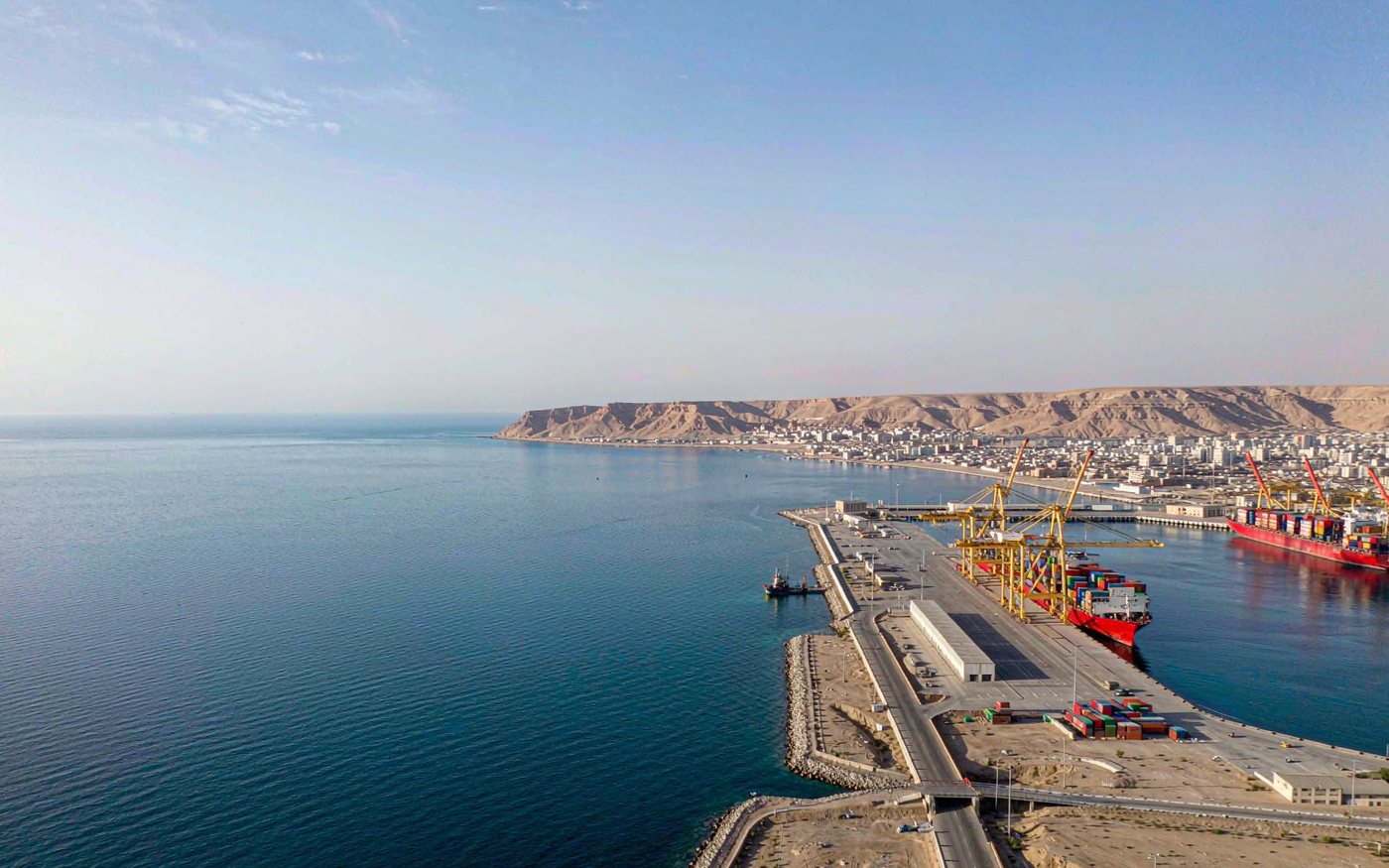
How to Ship from China to Somalia
Note on scope. This page is an operational logistics guide only. It describes how cargo is moved and cleared, and it takes no position on political, constitutional or territorial questions. Somalia has more than one customs administration in practice, and where this guide refers to them, it does so purely as a matter of shipping procedure. Importers are responsible for checking that their own transaction complies with all applicable sanctions, export control and security regulations in their own jurisdiction and in the jurisdictions they trade through. Requirements in this market change frequently - confirm every point with your broker before you book.
Somalia is not a difficult country to ship to in the mechanical sense, but it is a country where the port you choose determines which customs administration handles your cargo, and that in turn determines your paperwork, your duty calculation and your timeline. Getting this decision right at the start is the single most valuable thing a first-time importer can do.
This guide covers how to choose the port, the container and the routing, what the mandatory cargo certificate is and why it gates release, how duty and sales tax are calculated on a CIF base, which certificates accompany sensitive goods, and the compliance checks you should run before booking. As elsewhere in this series, we do not publish freight rates; what follows is the structure that lets you plan a shipment and read a quotation properly.
At a glance
Main ports: Mogadishu, Berbera and Bosaso, each with its own customs administration. Mandatory for sea freight: ECTN cargo certificate, filed before the vessel leaves China. Duty: 0 to 30 per cent of CIF depending on HS code. Sales tax: 5 per cent at federal level, higher in some regions. Air: no direct service from China - routed via Gulf or East African hubs.
How your cargo moves: China to Somalia
Eight steps from your supplier's door to yours. The last four are the ones shaped by local rules.
- Pickup from your supplierWe collect the goods anywhere in China and bring them to our consolidation point.
- Export clearanceChina customs declaration filed and released before the goods move to the port.
- Loading and departureContainer loaded, sealed and handed to the carrier at the Chinese port.
- Main carriageOcean, air or rail movement booked on the route agreed for your cargo.
- Arrival at the gatewayDischarge at the port or airport of entry, recorded on the carrier's manifest.
- Import clearanceCustoms declaration filed locally, with duty and tax assessed on the declared value.
- Customs releaseGoods released into free circulation once duty and tax are settled.
- Final deliveryOnward movement to your delivery address, warehouse or nominated depot.
Duty rates, VAT rates and clearance times move, and the figure that applies to your goods is the one set for your commodity code on the day of clearance. We check the current position against your code before your goods sail and confirm it to you in writing — ask for that check when you request a quote.
Pick the port that matches your consignee: Mogadishu, Berbera or Bosaso
This is the decision that shapes everything else. Somalia does not operate a single unified customs administration across its territory in practice. The port of Mogadishu operates under the federal authorities, Berbera operates its own customs administration, and Bosaso serves the Puntland region under a further administration. Your cargo will be cleared by whichever administration governs the port it lands at.
That matters in three concrete ways. The documentation requirements differ. The duty and tax schedules differ. And the clearance performance differs - published trade commentary generally describes Berbera as the more predictable of the three and Mogadishu as the largest but the most variable. These are operational observations about port administration, not political statements.
The rule for importers is therefore simple and strict: choose the port that matches where your consignee will actually clear, and confirm that your forwarder has a working, vetted customs broker at that specific port. A forwarder with a good agent in Mogadishu does not automatically have clearance capability at Berbera or Bosaso.
There is an added wrinkle if the clearance port and the final destination differ. Goods cleared at one port and then moved to another administration's area encounter internal checkpoints. That is a real operational step with its own documentation and delay risk, and it should be planned for rather than discovered.
FCL and LCL into Somali ports and how berth choice affects risk
Below roughly 15 to 18 cubic metres, consolidation usually costs less; above that, a full container usually wins. That arithmetic is the same here as anywhere. What is different is the risk dimension, which on this route is material enough to change the decision.
A consolidated container is opened and deconsolidated at destination, which means your goods are handled in a shared environment and released on the consolidator's schedule rather than yours. Where port dwell is variable, that can add days. A full container delivered to a single consignee involves fewer handling events and gives you more control over when it moves after discharge.
Ask your forwarder for the destination charges as a separate line: terminal handling, deconsolidation, documentation and delivery order. On routes into the Horn of Africa these are a significant share of the total, and a low ocean freight figure paired with heavy destination charges is not a cheap shipment.
Also ask about container free time at your chosen port, and tell your consignee what it is. Where clearance timelines are variable, the exposure to demurrage and detention is real, and the difference between a consignee who knows the clock and one who does not is measured in weeks of charges.
Air freight to Somalia and the transit hubs it depends on
There is no regular direct freighter service from China to Somali airports in normal circumstances. Air cargo is routed through hubs - Dubai, Doha and Nairobi are the common transit points - and then carried onward. Build both the transit stop and the handling at the hub into your planning, rather than assuming the flight time is the transit time.
Air earns its place on this route more often than on many others, because the sea routing is long and the destination risk profile is higher. For high-value, compact goods - pharmaceuticals, electronics, spare parts - the premium buys both speed and a shorter exposure window.
Air cargo is also the realistic option where security conditions make an overland leg inadvisable. If your consignee is remote or the inland route is uncertain, air to the closest viable airport changes the risk calculation substantially.
For very small consignments, express courier is worth comparing against consolidated air freight, and it may offer broader delivery coverage inside the country. Coverage is subject to security conditions, so confirm what is actually deliverable before promising your customer a door-to-door date.
Sailing time to Somali ports and the transhipment routes used
Services from China to Somali ports are generally routed via the Suez and Red Sea corridor, or transhipped through Gulf or East African hubs such as Jebel Ali, Salalah or Djibouti. Transit ranges widely depending on the routing - published figures for direct routings are shorter than for transhipped cargo, and inland movement adds further time on top.
Regional conditions in the Red Sea have at times caused carriers to reroute, which lengthens voyages and changes schedules. This is an operational fact that affects shipping times, and you should ask your forwarder what the current routing is at the time you book rather than relying on a figure quoted months earlier.
At destination, clearance time depends heavily on documentation quality. Published trade commentary describes clearance of two to five working days where documents are complete, stretching well beyond that where they are not. That gap is almost entirely within your control.
The final leg, if your consignee is not at the port, is a road move that adds days and carries its own considerations. Get it quoted separately and confirmed with the consignee before dispatch.
The Somali document set, including the cargo certificate that gates release
The standard set is the commercial invoice, the packing list, the bill of lading and the certificate of origin. The invoice must carry accurate HS codes and a declared value - errors here are the most frequently cited cause of clearance delay on this route. The packing list must reconcile exactly with the invoice.
The document specific to Somalia is the electronic cargo tracking note, known as the ECTN, and sometimes referred to in the same context as an advance cargo information certificate. Trade sources describe it as mandatory for sea freight into Somali ports, to be applied for and approved before the vessel departs from China. Without a valid one, cargo is liable to be held at the port and penalised.
Practically, this means two things. First, confirm explicitly in your booking instruction that the ECTN is being handled, and by whom - do not assume it is included. Second, supply the information it needs early: shipper and consignee details, vessel and voyage, container numbers, HS codes, cargo description and value, and the bill of lading or air waybill reference. Processing takes working days, so a late application is a late departure.
Depending on the commodity, further documents apply: fumigation certificates for wood packaging, third-party inspection certificates for regulated goods, and halal certification for food products. Confirm which apply with your broker before the goods ship.
Somali duty runs off the CIF figure, and sales tax follows it
Duty in Somalia is assessed on the CIF value - cost, insurance and freight - not on your supplier's invoice value. This is the point that catches first-time buyers. If your goods cost USD 10,000 FOB, freight is USD 2,600 and insurance USD 80, your CIF figure is USD 12,680, and a 10 per cent duty is charged on USD 12,680, not on USD 10,000.
Duty rates vary by HS code and, importantly, by the port of entry, because the tariff schedules are not identical across the administrations. Published indicative ranges for the Mogadishu schedule run from zero per cent on some machinery and industrial equipment up to around 30 per cent or more on finished consumer goods such as textiles and furniture. Treat any single figure as indicative and confirm the rate for your commodity at your chosen port with your broker.
Sales tax is applied on top, calculated on the CIF value plus the duty amount. Published figures describe 5 per cent at the federal level, with higher rates of up to 10 to 15 per cent reported in some regions. The variation is one more reason to confirm the position at your specific port before you commit to a budget.
Worked simply: on a CIF value of USD 12,680 with duty at 10 per cent, duty is USD 1,268; sales tax at 5 per cent on USD 13,948 is about USD 697. Your tax before port, handling and inland charges is roughly USD 1,965. Do this for your own commodity and your own port.
Controlled goods and certificates that Somali port authorities ask for
Beyond the standard document set, categories of goods attract additional requirements. Food products generally need a health certificate and, where relevant, halal certification. Pharmaceuticals and medical supplies need health authorisation. Telecommunications equipment may need approval from the relevant regulator. Wood packaging needs fumigation certification under the international standard.
Some goods require third-party inspection. Where inspection applies, it is arranged before shipment, and the certificate travels with the documents. Ask your broker whether your commodity is in scope.
Prohibited items follow the familiar pattern, and buyers should note that certain categories are more firmly restricted here than in many markets - alcohol, pork products, narcotics, weapons and related items, and obscene or religiously offensive material. Confirm the current list rather than assuming.
Because requirements vary by port administration, the reliable method is the same one that works everywhere: give your broker the full commodity list before booking and get written confirmation of what is needed. On this route that step is worth more than on most.
Packing and marking for heat, salt air and a long port stay
Cargo to Somali ports travels through some of the hottest sea routes in the world and then sits in a hot, saline environment at the port. Packing should assume heat, humidity, salt and a dwell longer than you planned for.
Use export-grade cartons, palletise where the volume justifies it, wrap against moisture, and use desiccant for anything sensitive. Electronics, paper goods, textiles, adhesives and anything with a coated metal finish are the categories that suffer most. The packaging your supplier uses for the domestic Chinese market is rarely adequate for this routing.
Mark cartons clearly and consistently with the packing list, and mark the consignee's contact details on the outside. Where containers are opened for inspection, clear marking speeds up reassembly and reduces the chance of a short shipment.
Wood packaging must meet the international phytosanitary standard and carry the mark. Given how much documentation scrutiny applies on this route, it is an avoidable risk worth eliminating with one instruction to your supplier.
Incoterms, insurance and who bears the risk on Somali cargo
Under FOB, the seller loads in China and you take over from there. Under CIF, the seller pays freight and insurance to the named Somali port but risk still transfers at loading - the seller is not responsible once the goods are on the vessel. Under DAP or DDP, the seller carries more, and DDP includes clearing the goods and paying duty and sales tax, subject to what is actually deliverable.
On this route, FOB with a forwarder who controls the through move is usually the most transparent. DDP can be attractive, but ask precisely what it covers: who is the declarant, whether duty and sales tax are really included, and whether delivery extends beyond the port given security conditions.
Insurance deserves specific emphasis here. Given the risk profile of the Horn of Africa corridor, shipping uninsured is a decision most professional importers would not make. Marine cargo insurance covering physical loss or damage is typically quoted at a small fraction of the declared cargo value - commonly cited in the range of 0.3 to 0.5 per cent. On a USD 20,000 shipment that is tens of dollars, and it is the cheapest significant risk transfer available to you.
Agree currency and payment mechanics in writing. Formal banking channels into Somalia are limited and compliance-sensitive, so confirm with your bank that the payment can be processed, and use documented, traceable channels.
Inland movement after clearance and the internal checkpoint question
Clearance at the port is not the end of the journey. If your consignee's warehouse is inland, the goods move by road, and the conditions of that move - road quality, security, escort requirements - vary by region and over time. Ask what the current position is on the specific route your cargo will take.
If you cleared at one port and are moving into another administration's area, there will be internal checkpoints. That is an operational reality with documentation and time implications. Plan for it explicitly, and make sure whoever is moving the goods has the papers those checkpoints require.
Get the inland move quoted as a separate line and confirmed with the consignee before dispatch. A failed delivery on this route is expensive, because the truck and driver are being paid while the problem is sorted out.
For remote destinations and security-sensitive periods, consider whether air to the nearest viable airport plus a shorter road leg is the more reliable plan, even at a higher freight cost.
Compliance checks before you book: sanctions, screening and local brokers
Before you book, screen your counterparties. Somalia is subject to United Nations sanctions measures, and several jurisdictions maintain their own listings and restrictions. Whether a specific transaction is permissible depends on the parties, the goods and your own jurisdiction. This is not a box to tick lightly - verify against the official lists that apply to you, and take advice where there is any doubt.
Screen the goods as well as the parties. Items with potential military or dual-use application attract particular scrutiny, as do goods destined for restricted end users. Keep the end-use and end-user information in your file.
Confirm your broker. The single most important operational decision after the port choice is which licensed customs broker will handle your entry at that port. Ask your forwarder to name them, and ask whether they are currently active at the port in question.
Finally, confirm the current security and advisory position for the port and the inland route at the time of shipping, through official sources in your own country. Conditions in this market change, and a plan built on information several months old may no longer be sound.
Why importers use Goodhope on this lane
Six things that are different about working with us on China to Somalia shipments.
Honest cases to your door in Somalia
Five shipments bought in China and delivered into Somalia, told end to end — where the order came from, how it moved, where it nearly went wrong, and how it finished. Client names are withheld at their request; the situations and the handling are what we deal with on this lane.
Which port · first booking · China to Somalia
The purchase. A buyer new to importing asked for a rate to Somalia without naming a port.
The move. Full container booked to the port his consignee could actually collect from, with that confirmed before the booking was fixed.
Where it nearly went wrong. Three ports handle this trade and each runs its own customs administration. Naming the country without naming the port leaves the discharge point to be decided later, and by then the container is on a vessel going somewhere specific.
How it finished. He confirms the port at quotation now. Every container has landed where it was needed.
The cargo certificate · gates release · Shenzhen to Mogadishu
The purchase. A first-time buyer treated the cargo certificate as an arrival document.
The move. Full container with the electronic cargo certificate filed before the vessel left China.
Where it nearly went wrong. The certificate is mandatory for sea freight and it gates release. Filing it on arrival means the goods are already discharging before the process even starts, and every day of that is storage.
How it finished. We file it at booking now. No shipment of his has waited on the certificate since.
Zero to thirty · on CIF · Ningbo to Berbera
The purchase. A buyer applied a mid-range rate to his whole consignment.
The move. Consolidated cargo with each line classified and duty assessed on the CIF value rather than on the invoice.
Where it nearly went wrong. Duty runs from zero to thirty per cent by classification and it is calculated on CIF, which includes the freight. Applying one rate to an invoice and forgetting that freight is inside the base gets the answer wrong twice over.
How it finished. We classify and cost on CIF now. His duty bills have matched the assessment every time.
Regional sales tax · not one figure · Guangzhou to Bosaso
The purchase. A buyer budgeted a single federal sales tax figure for a delivery outside the capital region.
The move. Consolidated cargo with the sales tax position checked for the region of delivery before the price was agreed.
Where it nearly went wrong. Sales tax is set at federal level and is higher in some regions. Budgeting the federal figure for a delivery into a region that sets its own leaves a shortfall the consignee discovers at clearance.
How it finished. We check the region before quoting. No consignee of his has been short since.
What we check, and what you must · any Somalia booking
The purchase. A buyer asked us to confirm that a shipment was clear to proceed and treat our answer as covering the compliance side as well.
The move. Consolidated cargo booked with the documentation and port side handled by us, and the sanctions and end-use screening named as the customer's own responsibility in writing.
Where it nearly went wrong. We handle the movement and the paperwork that belongs to it. Sanctions screening, end-use checks and local broker due diligence belong to you or to your compliance adviser, and we say so rather than implying our quote covers them.
How it finished. He runs his own screening before we quote. Every booking since has started cleanly.
Why importers use Goodhope on this lane
Six things that are different about working with us on China to Somalia shipments.
Get our team involved before a Somali booking is fixed
Tell us the commodity, volume and which port your consignee will clear at. We will confirm the ECTN handling, the applicable tariff and sales tax at that port, and the broker who will file your entry - and we will tell you plainly what we can and cannot cover before you commit.
Get a quote Talk to usRelated pages
Frequently asked questions
Which Somali port should I ship to?
The one your consignee will actually clear at. Mogadishu, Berbera and Bosaso each operate their own customs administration, with different documentation, duty schedules and clearance performance. Confirm that your forwarder has an active, vetted broker at that specific port - capability at one does not imply capability at another.
Is an ECTN required for shipments to Somalia?
Trade sources describe the electronic cargo tracking note as mandatory for sea freight into Somali ports, to be applied for and approved before the vessel departs from China, with cargo held and penalised where it is missing. Requirements do change, so confirm the current position with your broker at booking and state explicitly in your instructions who is filing it.
How is import duty calculated in Somalia?
Duty is assessed on the CIF value - cost, insurance and freight - not on the supplier's invoice value. Rates vary by HS code and by the port of entry, with published indicative ranges running from zero per cent on some machinery to around 30 per cent or more on finished consumer goods. Confirm the rate for your commodity and port.
What sales tax applies on imports into Somalia?
Sales tax is charged on the CIF value plus the duty. Published figures describe 5 per cent at the federal level, with rates of up to 10 to 15 per cent reported in some regions. Because the position varies by port, confirm it for your specific entry point before budgeting.
How long does shipping from China to Somalia take?
Sea routings run via the Suez and Red Sea corridor or tranship through Gulf or East African hubs, so transit ranges widely with the routing. Air cargo has no regular direct service from China and moves via hubs such as Dubai, Doha or Nairobi. Ask for the current routing at booking, because regional conditions have caused rerouting at times.
Should I ship FCL or LCL to Somalia?
Below roughly 15 to 18 cubic metres, consolidation is usually cheaper; above that, a full container usually wins. On this route the risk dimension also matters - a full container involves fewer handling events and gives more control over timing after discharge, which is worth something where dwell is variable.
Do I need cargo insurance for Somalia?
Yes, it is strongly advisable. Given the risk profile of the Horn of Africa corridor, marine cargo insurance is typically quoted at a small fraction of declared cargo value - commonly cited around 0.3 to 0.5 per cent - and it is the cheapest significant risk transfer available.
What documents are required to clear goods in Somalia?
A commercial invoice with accurate HS codes and declared value, a packing list reconciling with it, the bill of lading or air waybill, and a certificate of origin, plus the ECTN for sea freight. Depending on the commodity you may also need health certificates, halal certification, fumigation certificates and third-party inspection reports.
Is DDP available for Somalia?
DDP to Somali destinations is offered subject to what is actually deliverable at the time. If you take it, confirm exactly what is included: who is the declarant, whether duty and sales tax are really covered, and whether delivery extends beyond the port given security conditions.
What compliance checks should I run before booking?
Screen your counterparties against the sanctions lists that apply in your jurisdiction, check whether your goods have dual-use or restricted characteristics, confirm your broker is licensed and active at the chosen port, and verify the current security and travel advisory position for the port and inland route through official sources in your own country.