
Home / Shipping to South Korea / How to Ship from China to South Korea
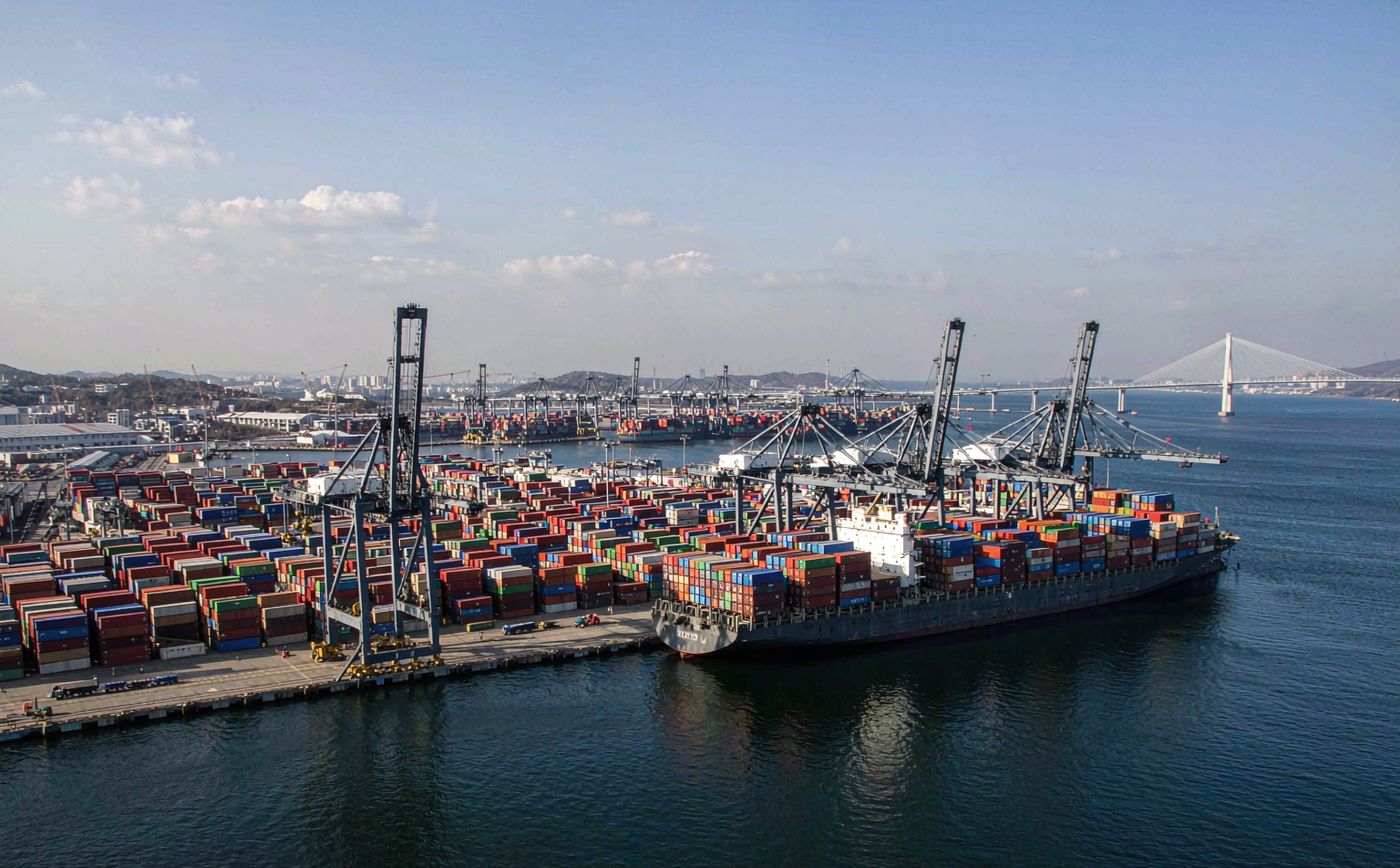
How to Ship from China to South Korea: Busan, KC Marks & FTA Duty
Korea is one of the shortest lanes we run. A container out of Shanghai, Ningbo or Qingdao reaches Busan or Incheon in a matter of days port to port, sailings are frequent, and air freight from a Chinese gateway to Incheon is a one to two day proposition. Compared with a month to northern Europe, the transport is almost a non event.
So the money on this lane is not in the freight. It is in the duty. China and Korea have three preferential arrangements running at the same time — the bilateral Korea–China Free Trade Agreement, the Asia-Pacific Trade Agreement, and RCEP. Each has its own rules of origin, its own product specific rules and its own schedule of concessions. Which certificate you present decides what you pay, and a first time importer who never asks simply pays the general rate and never finds out.
The second thing worth knowing is that Korea's duty free allowance does not apply to a business. The widely quoted 150 or 200 dollar line is a personal import allowance for goods for own use. A registered company importing for resale pays duty and the 10% VAT from the first unit, with no threshold at all.
And the third is that regulated goods need the KC mark before they can be sold, held by a Korean party — safety certification through the Korean Agency for Technology and Standards, electromagnetic compatibility as a separate application, and radio approval from the Radio Research Agency for anything that transmits.
This guide is written for buyers importing from China for the first time. It covers why the duty bill is the interesting part, the ports, transit times by mode, trade terms and the registration number the declaration needs, UNI-PASS clearance, duty and VAT, the three agreements and how to choose between them, KC and Korean labelling, the ministry approvals that run beside customs, and how to tell whether a forwarder genuinely works this lane.
How your cargo moves: China to South Korea
Eight steps from your supplier's door to yours. The last four are the ones shaped by local rules.
- Pickup from your supplierWe collect the goods anywhere in China and bring them to our consolidation point.
- Export clearanceChina customs declaration filed and released before the goods move to the port.
- Loading and departureContainer loaded, sealed and handed to the carrier at the Chinese port.
- Main carriageOcean, air or rail movement booked on the route agreed for your cargo.
- Arrival at the gatewayDischarge at the port or airport of entry, recorded on the carrier's manifest.
- Import clearanceCustoms declaration filed locally, with duty and tax assessed on the declared value.
- Customs releaseGoods released into free circulation once duty and tax are settled.
- Final deliveryOnward movement to your delivery address, warehouse or nominated depot.
Duty rates, VAT rates and clearance times move, and the figure that applies to your goods is the one set for your commodity code on the day of clearance. We check the current position against your code before your goods sail and confirm it to you in writing — ask for that check when you request a quote.
Days rather than weeks, and a duty bill you can genuinely cut
On most lanes we write about, the freight is the variable and the duty is fixed. On this one the freight is short and predictable and the duty is where a careful importer wins or loses real money.
- Three agreements, three schedules. The same product can qualify under one arrangement and fail another, because the origin criteria differ — a change of tariff heading under one, a regional value content of 40% under another.
- The certificate has to be right, not merely present. It must be issued by an authorised body, at the right time relative to shipment, with product name, code and value matching the invoice and the bill of lading exactly. A mismatch loses the preference.
- The claim is made at declaration. It is not automatic. If the entry does not claim the preference, the general rate is assessed, and recovering it later is a correction exercise rather than a formality.
- Records have to survive scrutiny. Keep raw material invoices and production records for years, because origin verification is a real process and it lands on the exporter.
Where this leaves a first time importer: ask your supplier which certificate they can actually issue for your product, and ask your Korean broker which of the three agreements gives the better rate for your code. That one conversation, held before production rather than after arrival, is usually worth more than any negotiation on the freight.
Busan, Incheon, and the feeder ports behind them
| Gateway | Role | Notes |
|---|---|---|
| Busan | The main container gateway | One of the world's busiest container ports and a major transhipment hub. Most China origin containers land here. |
| Incheon | Serves Seoul and the capital region | Often the better choice when the consignee is in or near Seoul, because it shortens the inland leg. |
| Gwangyang | Southwest | Industrial and bulk oriented, useful for cargo destined for the southwest. |
| Pyeongtaek | Close to the Seoul industrial belt | Growing gateway serving the manufacturing belt south of the capital. |
| Ulsan | Industrial and energy cargo | The natural entry for heavy industrial and petrochemical related shipments. |
| Incheon International (ICN) | Air freight | The main air cargo gateway, with high frequency from Shanghai, Guangzhou, Shenzhen and Qingdao. |
On a lane this short the choice of port matters for the inland move rather than the ocean leg. A container landed at Busan for a consignee in Seoul adds a road or rail leg that a direct Incheon call would avoid. Ask which terminal the service actually calls.
Transit times into Korea by ocean, air and courier
| Mode | Typical transit | When it fits |
|---|---|---|
| Ocean FCL | Roughly three to seven days port to port on the main China to Korea services | Volume above roughly 13 to 15 cubic metres, or anything where a few days either way does not matter. |
| Ocean LCL | Longer than FCL once consolidation and deconsolidation are counted | Trial orders and part loads. Note that consolidation can add more time than the crossing. |
| Air freight | One to two days airport to airport into Incheon | High value density, production deadlines, samples that cannot wait. |
| Express courier | A day or two door to door | Documents, samples and small parcels. |
Because the ocean alternative arrives inside a week, air is a narrower decision here than on long haul lanes. See our air freight and LCL pages for how the modes compare.
We do not publish freight rates here. Ask for base freight, origin charges in China, destination charges in Korea, duty, VAT and inland delivery as separate lines so you can see what moved when the price changes. See our local charges page.
Trade terms on a Korea booking, and who the declaration names
The trade term sets who pays and where risk transfers. It does not change what the Korean declaration requires: an identifiable importer with a registration number. A commercial entry carries the importer's business registration number; an individual importing for personal use uses a personal customs clearance code instead.
- EXW — you collect at the supplier's door and carry everything including Chinese export formalities. Rarely sensible for a first import.
- FOB — the supplier loads and clears Chinese export; you take over at the Chinese port. The term most experienced buyers use.
- CIF — the supplier pays freight and insurance to the Korean port, risk passes in China, and you still clear. Not delivered.
- DAP or DDU — delivered to a named point, with duty and VAT for you.
- DDP — duty and tax paid. Note that DDP does not solve KC: a regulated product still needs its conformity evidence before it can be sold, whoever arranged the freight.
Also agree early who recovers the import VAT. If a distributor or a third party imports under their own name, the VAT credit sits with them rather than with you — which is a reason to think about the importing entity before the first booking, not after the first invoice.
Port to port, airport to airport. Goodhope's ocean service runs port to port and our air service runs airport to airport. We handle the international leg and the export side in China; Korean import clearance, the certificate of origin claim, KC conformity, the VAT and the duty belong to the importer of record and their Korean broker. We coordinate with that broker directly and we say so.
UNI-PASS and the filings behind a same day release
UNI-PASS is the Korea Customs Service electronic clearance system, and it is genuinely fast. A commercial shipment with complete, consistent documentation is commonly cleared within a day or two, and you can watch the status change.
Speed depends entirely on what was prepared before arrival.
- The ten digit code. Korea classifies to ten digits. Chinese and Korean classification practice differ, so do not simply copy the code the factory offers.
- Consistency across the three documents. Invoice, packing list and bill of lading have to agree. Discrepancies are what turn a one day clearance into a manual review.
- Value that stands up. Korea Customs compares declared values against market data and platform prices. An under declaration is treated as evasion, with penalties and a suspension of clearance privileges, not as a clerical error.
- Declaring on the right day. Filing outside working hours, or into a weekend, delays the human response that an inspection or a query needs.
- AEO status. Authorised Economic Operator certification lowers examination rates meaningfully. Smaller importers often reach the same practical result by working through a certified partner.
A container from Qingdao to a warehouse near Incheon
The product is classified in ten digits
Confirm the Korean code before production. It drives the duty rate, the preferential rate if any, and which ministry permits apply.
The agreement is chosen, and the certificate is requested
Decide which of the three arrangements gives the better outcome for your code, and have the supplier apply for that certificate. Request it before shipment, not after.
KC exposure is settled
Establish whether the product is a regulated category and who in Korea will hold the certificate. This is the step that takes weeks to months, and it belongs to the production phase.
Collection and consolidation in China
We collect from one factory or several and consolidate where the volumes justify it — several suppliers, one container, one declaration, one certificate set. See our consolidated shipment page.
Export clearance, VGM and the short sailing
Chinese export customs and the verified gross mass are completed and the vessel sails. The crossing is only a few days, so documents must be finished here.
The UNI-PASS declaration
The broker files electronically with the importer's registration number, the ten digit code, the CIF value and the certificate of origin, and claims the preference explicitly.
Duty and VAT, release, inland delivery
Duty on the CIF value and VAT on the duty inclusive value are assessed and paid, the container is released, and the inland leg to the Seoul region is short.
Three agreements, three certificates, one shipment
| Arrangement | What it gives you | What to watch |
|---|---|---|
| Korea–China Free Trade Agreement | The bilateral schedule between the two countries, now in its second decade of staged reductions | Product specific rules were written against an older HS edition; the two sides agreed in 2026 to update them and to introduce approved exporter self certification, so confirm the current form. |
| Asia-Pacific Trade Agreement | A smaller but sometimes better schedule for particular lines | Different origin criteria and a different certificate. Sometimes succeeds where the bilateral rules fail. |
| RCEP | Regional cumulation across fifteen members | Useful where inputs come from more than one Asian country, because regional value content can be accumulated across members. |
The practical consequence is that "we have a certificate of origin" is not an answer. The question is which agreement it was issued under, whether the origin criterion claimed is actually satisfied for your product, and whether that agreement gives a better rate for your code than the others would. Two certificates for the same carton can produce two different duty bills.
Get this wrong in the mild version and you pay the general rate. Get it wrong in the sharp version — a certificate whose details do not match the invoice, or a claim made after the fact — and you are into corrections, possible penalties, and a relationship with the customs authority you did not want.
Timing rule: have the certificate applied for before the goods ship, in the correct form for the agreement you intend to claim, and check that the product description, code and value match the commercial invoice character for character. Ask your broker to confirm the form currently accepted, because origin documentation rules have been moving.
Duty, VAT, and why the duty free line does not help a business
| Charge | Rate | Basis |
|---|---|---|
| Customs duty | By ten digit HS code. Many industrial goods sit in the high single digits; apparel and some agricultural lines are higher | CIF value |
| Value added tax | 10% | CIF value plus duty, plus any excise |
| Excise and education surtax | Varies by category | Luxury goods, vehicles, tobacco, alcohol and similar |
| Personal import allowance | Duty and VAT relief for personal use goods up to a low value limit | Personal imports only, not commercial |
| Commercial import allowance | None | Duty and VAT apply from the first unit |
The cascade to understand is that VAT is charged on a base that already includes the duty. At 8% duty on a CIF value of ten thousand dollars, duty is eight hundred dollars and VAT is ten percent of ten thousand eight hundred — one thousand and eighty. Small in itself, but it compounds with the duty rate, and it is why a preferential rate is worth two savings rather than one.
On the allowance: the figure usually quoted is 150 US dollars for personal imports for own use, with 200 US dollars applied to goods of United States origin under the Korea–US agreement. It does not help a business, because a registered company importing for resale has no threshold. It does not cover alcohol, tobacco, medicines or health functional foods regardless of value. And splitting one order into several small parcels does not work where they arrive together for the same recipient — consignments can be aggregated and reassessed.
KC marks, Korean labelling and the model that must match
KC is Korea's national conformity mark, and unlike a voluntary quality badge it is a precondition for selling. The structure is worth understanding because there are three parallel tracks.
| Track | Administered by | What it covers |
|---|---|---|
| KC safety certification | Korean Agency for Technology and Standards | Electrical and electronic products and other regulated categories. The strictest track requires testing plus a factory audit and annual maintenance. |
| Safety confirmation | KATS | Medium risk products: sample testing, no factory audit, certificate valid for a fixed period. |
| Supplier's declaration of conformity | The manufacturer | Lowest risk categories: test and hold the evidence, no third party certificate issued. |
| KC electromagnetic compatibility | KATS | A separate application. It does not come bundled with safety. |
| Radio approval | Radio Research Agency | Anything with a transmitter — Bluetooth, Wi-Fi, cellular, IoT modules. Required on top of safety where both apply. |
Three practical points decide whether this goes smoothly. The certificate holder is a Korean party, so a foreign manufacturer cannot hold it directly and needs a Korean importer or authorised representative. The mark goes on the product, with the certificate number and Korean language labelling, and label failures are a common reason goods are stopped. And the approval is per model — a family of products is not covered by one certificate unless the application said so.
2026 changes worth checking: certification bodies report that several household appliance categories moved from mandatory safety certification to the lighter safety confirmation route from April 2026, that certificates against superseded standards are no longer being accepted for some categories, and that connected products are increasingly asked for a network security assessment. These are reported by testing laboratories rather than read from the primary regulation — confirm the current position for your product with your Korean partner before you commit to a timeline.
Food, cosmetics and the ministry approvals beside customs
Product approvals in Korea sit with ministries rather than with Customs, and they can stop goods that Customs has already cleared.
- Food and food contact materials. Import declaration through the Ministry of Food and Drug Safety, per shipment, with labelling in Korean. Functional and health claims attract additional review.
- Cosmetics. MFDS oversight, with a responsible person registered in Korea for functional products such as whitening, anti wrinkle and sunscreen.
- Medicines and medical devices. MFDS licensing, with a Korean licence holder in the structure.
- Plants, animals and their products. Quarantine through the animal and plant quarantine agency, with phytosanitary and health certificates from China, and ISPM-15 marking on wood packaging.
- Chemicals. K-REACH registration obligations arise at volume thresholds for substances, and safety data sheets are expected for mixtures. See our dangerous goods page for the transport side.
Finding suppliers on a marketplace, and meeting them in person
On a marketplace
A listing is not conformity evidence. Ask for the exact model number and the rating plate details, because KC is assessed per model and a "similar" product approved last year does not cover the one you are buying.
In person, at a fair or the factory
You can check the production line, the labelling and the packaging, and raise conformity while tooling is still open. It costs a trip. For anything regulated it usually pays for itself the first time.
Either way, our Alibaba and 1688 sourcing page covers what to verify before ordering, and our China inspection service page covers checking goods before they leave.
A registered business, or a private buyer
- Registered business. The declaration carries a business registration number. Import VAT paid at clearance is recoverable through the VAT return where the importing entity is registered, which is why the importing entity question matters commercially and not just legally.
- Private buyer. Personal imports for own use use a personal customs clearance code, and the low value allowance can apply. Commercial stock declared as personal is treated as an under declaration.
- Cross-border sellers. Korea has tightened the registration expected of e-commerce businesses selling into the country, including a dedicated identification number and data submission for platform sellers. If you sell direct to Korean consumers, check the current requirement with your broker before the first shipment; if you ship B2B into a Korean company, it does not apply to you.
The China forwarder and the Korean broker
- The China side forwarder collects from the factory or factories, consolidates, clears export, files the verified gross mass, books the service, issues the bill of lading, and hands over documents early enough for the entry to be filed on a working day.
- The Korean broker files the UNI-PASS declaration, classifies to ten digits, claims the preference, handles ministry permits and quarantine coordination, accounts for duty and VAT, and arranges release and delivery.
The gap between them is where delays live: a certificate of origin requested after sailing, a code copied from a Chinese document that does not resolve in Korea, or a KC mark nobody checked. Goodhope works the China end, sends documents ahead of the vessel, and coordinates directly with your broker.
Checking a forwarder on a Korea booking
A forwarder who works this lane will ask more questions than you expect, and that is a good sign.
- What is the ten digit code? Without it, duty rate and permit routing are unknown.
- Which agreement is the certificate being issued under, and why that one? If they cannot name the alternatives, they are not managing your duty.
- Is the product KC regulated, and at which level? If they have never heard of KC, they have not cleared regulated goods into Korea.
- Does it transmit? Then radio approval as well.
- Who is the importer of record, and do they hold the VAT credit?
- Which terminal does the service call — Busan or Incheon?
- What is the free time at the terminal, and who pays demurrage?
Red flags: a rate quoted before you have said what the goods are; "everything included" with no broker named; a six or eight digit code offered as though it were Korean; a certificate of origin treated as a formality; and any pressure to declare a lower value.
Three shipments into Korea, and the reason for each
The examples below are illustrative. They describe typical decisions on this lane, not specific customer shipments.
Consumer electronics that needed two approvals
A shipment of Bluetooth audio products. They needed safety certification and a separate radio approval, both held by the Korean importer, with Korean labelling printed before production rather than stuck on afterwards. The freight was three days. The approvals were the schedule, and they were started while tooling was still open.
A general goods order that left money on the table
A first time importer shipped general merchandise without asking about preferential origin. The entry was filed at the general rate and the duty was paid in full. On the next shipment the same product was entered with the correct certificate under the arrangement that suited its code, and the duty line dropped materially. Nothing about the goods changed; only the paperwork did. This is the most common and most avoidable cost on the lane.
A food and cosmetics consolidation
Small quantities from three factories, consolidated into one container in China. Each product line needed its own ministry documentation, and the consolidation only worked because the documents were collected before the container was built. Consolidating goods is easy; consolidating compliance is the actual work. See our warehouse and consolidation page.
Lunar New Year, Chuseok and the production calendar
- Chinese New Year stops production in China and congests the weeks either side of it.
- Seollal, the Korean lunar new year, and Chuseok in the autumn are multi day holidays that shorten processing, banking and inland delivery in Korea.
- Typhoon season in late summer can affect sailings and terminal operations.
- Peak retail seasons tighten space. Book earlier than feels necessary, because on a three day lane a rolled booking is a large proportional delay.
Check our holidays page when you are fixing a production date.
What Goodhope handles on the Korea lane
- We raise the origin question before you book — which of the three arrangements suits your code, and what the supplier can actually issue.
- Ocean freight port to port and air freight airport to airport — into Busan, Incheon, Gwangyang or Pyeongtaek by sea and Incheon International by air, with the terminal and the service named rather than a generic estimate.
- We ask for the ten digit code before we quote — because Chinese classification practice differs from Korean and the code drives duty, permits and preference.
- Consolidation across suppliers — several factories, one container, one declaration, one certificate set. See our consolidated shipment and pick up pages.
- Documents prepared for the UNI-PASS entry — in the form your broker needs, handed over early so the declaration lands on a working day.
- Regulated cargo handled properly — see our dangerous goods, non-DG chemicals to South Korea and quarantine inspection pages.
- Plain answers on what we do not do — Korean import clearance, the certificate of origin claim, KC conformity, the VAT and the duty belong to the importer of record and their broker. We coordinate with them and we do not pretend otherwise.
- NVOCC licensed, since 2012 — see our why partner with Goodhope page.
Why importers use Goodhope on this lane
Six things that are different about working with us on China to South Korea shipments.
Ask for a Korea quote with the certificate named
Send us the product and its ten digit code if you have it, the carton count and total weight or volume, the supplier's city, and the delivery address in Korea. We will name the terminal and the service, tell you whether a conformity mark is needed before production, and ask the question most importers on this lane never ask — which agreement your certificate should be issued under.
Frequently asked questions
How long does shipping from China to South Korea take?
Ocean freight from Shanghai, Qingdao or Ningbo to Busan or Incheon is commonly quoted at roughly three to seven days port to port for a full container, with LCL running longer once consolidation and deconsolidation are counted. Air freight from a Chinese gateway to Incheon is typically one to two days airport to airport, and express courier is a day or two door to door. It is one of the shortest lanes we run, so the freight time is rarely where a schedule slips.
How much duty and VAT will I pay importing into South Korea?
Customs duty is charged on the CIF value at the rate for your ten digit HS code, with most general merchandise somewhere in the high single digits and some categories such as apparel and a few agricultural lines higher. Value added tax is then charged at 10% on the CIF value plus the duty, plus any excise and education surtax that applies to luxury or sin goods. There is no de minimis relief for a commercial import: duty and VAT apply from the first unit.
Can I use the China-Korea FTA to reduce duty?
Yes, and it is usually the largest single saving available on this lane. China and Korea have three preferential arrangements running in parallel: the bilateral Korea China Free Trade Agreement, the Asia Pacific Trade Agreement, and RCEP. Each has its own rules of origin, its own product specific rules and its own schedule of concessions, so the same product can qualify under one and fail another. Pick the agreement that gives the better outcome for your code and make sure the certificate is issued in the right form, at the right time, with details that match the invoice and the bill of lading exactly.
Which port does cargo from China arrive at in South Korea?
Busan is the main container gateway and one of the busiest transhipment ports in the world, and it is where most China origin containers land. Incheon serves the Seoul metropolitan area and is often the better choice when the consignee is in or near the capital. Gwangyang serves the southwest, Pyeongtaek is close to the Seoul industrial belt, and Ulsan handles industrial and energy cargo. Air freight arrives mainly at Incheon International Airport.
What is KC certification and when is it needed?
KC is Korea's national safety mark for regulated products, covering electrical and electronic goods, some consumer products and children's products. Safety certification is administered by the Korean Agency for Technology and Standards, electromagnetic compatibility is a separate application, and anything with a radio transmitter also needs approval from the Radio Research Agency. There are three levels of stringency, from mandatory certification with a factory audit through safety confirmation to a supplier's declaration of conformity. The certificate holder is a Korean party, so a foreign manufacturer cannot hold it directly, and the mark and Korean language labelling go on the product itself.
Is there a duty free threshold for importing into South Korea?
There is a duty free allowance for personal imports for own use, commonly quoted as goods valued at 150 US dollars or less, with a higher allowance of 200 US dollars applied to goods of United States origin under the Korea US agreement. It does not apply to commercial imports by a registered business, which pay duty and VAT regardless of value, and it does not apply at all to categories such as alcohol, tobacco, perfume above the allowance, medicines and health functional foods. Splitting one order into several small parcels to stay under the line does not work where the parcels arrive together for the same recipient.
What documents does Korea Customs require?
A commercial invoice showing the HS code, origin and CIF value, a packing list agreeing with it, the bill of lading or air waybill, a certificate of origin if a preferential rate is being claimed, and the importer's business registration number or personal customs code. Regulated goods add KC evidence, food import declarations through the Ministry of Food and Drug Safety, quarantine certificates, and safety data sheets for chemicals. Product descriptions need to be specific, naming material and use rather than a generic category.
Do I need a Korean business registration to import?
A commercial import needs a Korean party or a registered business. The declaration carries the importer's business registration number, and individuals importing for personal use use a personal customs clearance code instead. A foreign company without a Korean entity typically imports through a Korean distributor, a third party importer of record, or a locally incorporated subsidiary, and that choice should be made before the first booking because it changes who appears on the invoice and who can recover the import VAT.
What does a Chinese freight forwarder handle on a Korea shipment?
On the China side we collect from the factory or from several factories, consolidate where the volumes justify it, handle export customs clearance and the verified gross mass, book the service and issue the bill of lading or air waybill, and provide tracking. Goodhope works port to port on ocean freight and airport to airport on air freight, and we name the terminal and the service. Korean import clearance, the certificate of origin claim, KC conformity, the VAT and the duty belong to the importer of record and their Korean broker; we coordinate with them and hand documents over early.
Are there seasonal risks on the China to Korea lane?
Yes. Chinese New Year stops production in China and congests the weeks either side of it. Seollal, the Korean lunar new year, and Chuseok in the autumn are both multi day holidays that shorten processing and inland delivery in Korea. Typhoon season can affect sailings and terminal operations in late summer. Because the crossing is only a few days, a single missed cutoff moves your arrival proportionally far more than it would on a long haul lane.