
Home / Shipping to Spain / How to Ship from China to Spain
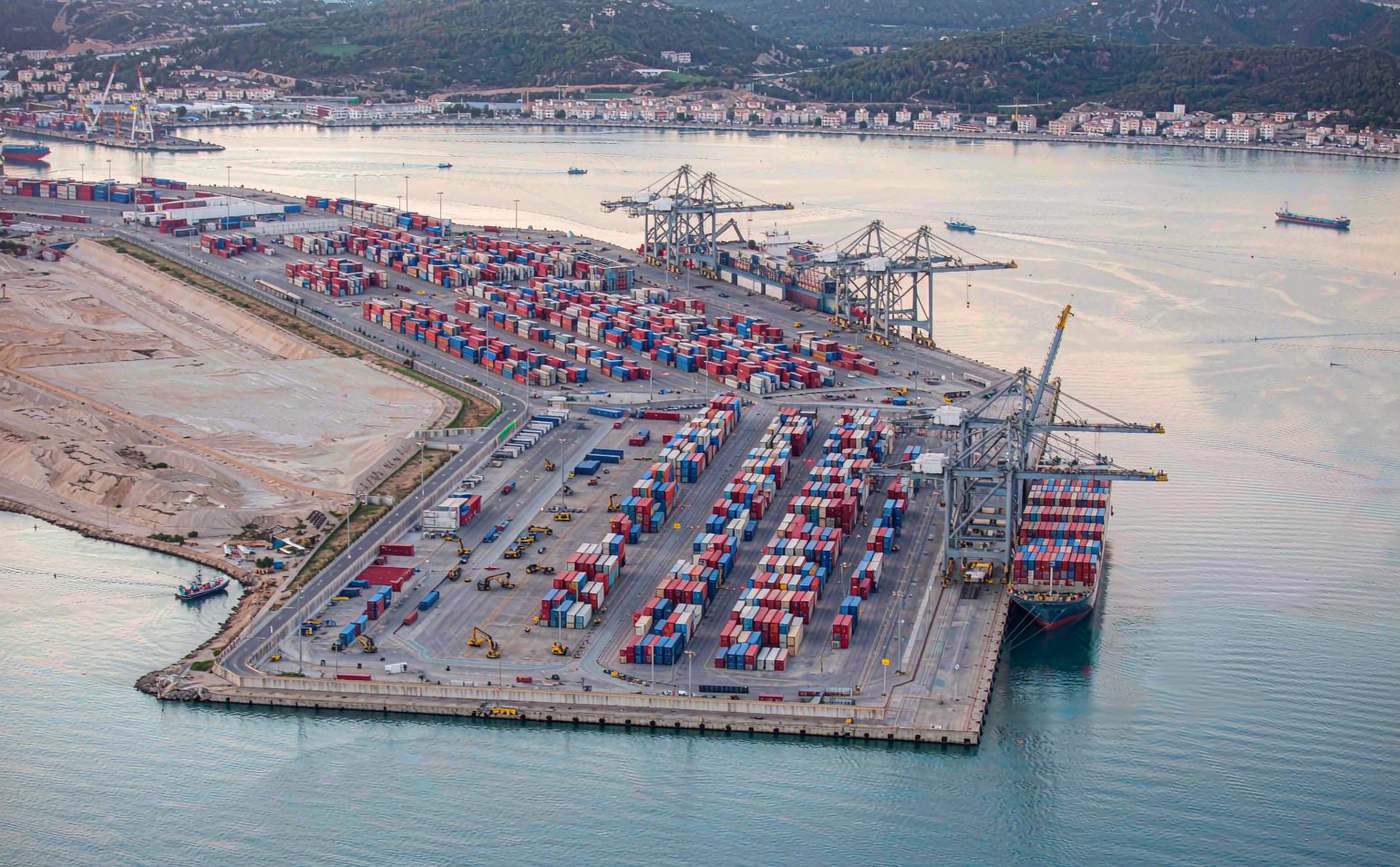
How to Ship from China to Spain: Ports, IVA Diferido and Customs
Spain is a large, straightforward import market with one complication that catches a surprising number of first-time buyers: it is not one customs territory, it is three. Mainland Spain and the Balearic Islands use Spanish IVA at 21%. The Canary Islands do not use IVA at all — they apply a local tax called IGIC at 7%. And Ceuta and Melilla, on the North African coast, sit outside the EU customs territory entirely.
If your delivery address is in the Canaries and you plan the shipment as though it were going to Madrid, the paperwork will be wrong in a way that is expensive to fix once the container has sailed. So that is the first question to settle, before the freight quote.
Beyond that, Spain is a well-served lane: three major container ports with direct services from China, a rail service from Yiwu to Madrid, and air freight into Madrid, Barcelona and Valencia. There is also a VAT deferral mechanism — IVA Diferido — that lets regular importers stop pre-financing 21% at the port.
This guide is written for buyers who are new to importing from China. It covers the three territories, how to pick a port, transit times, what the trade terms mean, the deferral, the step-by-step process, product paperwork, duty and tax, and how to tell a forwarder who knows Spain from one who does not. No prior logistics knowledge assumed.
If you only remember three things. Confirm which territory your delivery is in — mainland, Canaries, or Ceuta/Melilla — because the tax regime is different in each. Book FOB with your supplier and control the main leg yourself. And if you import regularly, opt into IVA Diferido in November for the following year, so 21% stops leaving your account at the port.
How your cargo moves: China to Spain
Eight steps from your supplier's door to yours. The last four are the ones shaped by local rules.
- Pickup from your supplierWe collect the goods anywhere in China and bring them to our consolidation point.
- Export clearanceChina customs declaration filed and released before the goods move to the port.
- Loading and departureContainer loaded, sealed and handed to the carrier at the Chinese port.
- Main carriageOcean, air or rail movement booked on the route agreed for your cargo.
- Arrival at the gatewayDischarge at the port or airport of entry, recorded on the carrier's manifest.
- Import clearanceCustoms declaration filed locally, with duty and tax assessed on the declared value.
- Customs releaseGoods released into free circulation once duty and tax are settled.
- Final deliveryOnward movement to your delivery address, warehouse or nominated depot.
Duty rates, VAT rates and clearance times move, and the figure that applies to your goods is the one set for your commodity code on the day of clearance. We check the current position against your code before your goods sail and confirm it to you in writing — ask for that check when you request a quote.
Three customs territories behind one flag
| Territory | Which tax applies | What that means for your shipment |
|---|---|---|
| Mainland Spain and the Balearic Islands | Spanish IVA: 21% standard, 10% and 4% reduced | The standard case. EU customs territory, EU VAT area, one DUA declaration, IVA on the customs value plus duty. |
| Canary Islands | IGIC at a general rate of 7%, not IVA | Outside the EU VAT area. A separate customs and tax flow from the mainland, so it must be declared as such at origin. Ports of entry are Las Palmas and Santa Cruz de Tenerife. |
| Ceuta and Melilla | IPSI, with rates from about 0.5% to 10% | Outside the EU customs territory altogether. Goods moving between mainland Spain and these cities face customs formalities like any other extra-EU border. |
Tell us the islands at quotation stage. If your consignee is in Las Palmas, Tenerife, Ceuta or Melilla, say so before the booking is made. Changing the destination territory after the vessel has sailed means amending the manifest and the customs paperwork, and that is far more expensive than getting it right the first time.
Valencia, Barcelona or Algeciras: which Spanish port fits
| Port | Character | Choose it when |
|---|---|---|
| Valencia | Spain's busiest container port and the main gateway for Chinese imports. Fast direct services from South China and strong road links to Madrid. | Most containerised general cargo destined for the mainland. This is the default for the majority of importers. |
| Barcelona | Second main gateway, with the Zona Franca free zone attached and good rail and road links north and into France. | Cargo for Catalonia and the north-east, or where you want goods held in a free zone before duty is paid. |
| Algeciras | On the Strait of Gibraltar; functions substantially as a transhipment hub. | Cargo being relayed onwards to other destinations rather than delivered locally. |
| Bilbao | Northern Spain's main port. | Deliveries into the Basque Country and the north coast. |
| Las Palmas / Santa Cruz de Tenerife | Canary Islands gateways. | Any Canaries delivery — and remember IGIC applies, not IVA. |
Spain also operates free zones (zonas francas) at Barcelona, Cádiz, Vigo and Las Palmas. Goods can be held in a free zone without duty or VAT becoming due until they are withdrawn into the Spanish market, which is useful if you are importing to re-export or want to align duty payment with sales.
Freight modes into Spain, from slowest to fastest
| Mode | Typical transit | Best for | What to watch |
|---|---|---|---|
| Sea FCL (20ft / 40ft / 40HQ) | Direct from South China: Valencia 22–26 days, Barcelona 24–28 days port to port. East China origins 1–2 days slower. Transhipment services 30–38 days. | Planned volume and the lowest cost per unit. The default once you import regularly. | Transhipment via Singapore or Piraeus can exceed 40 days when those hubs are congested. Ask which routing the service uses rather than assuming direct. |
| Sea LCL | Sea transit plus roughly 5–8 days for consolidation and deconsolidation. | Small volumes, or several suppliers combined into one shipment. | Above roughly 15 CBM, price a full container as well — it is frequently cheaper once both sets of CFS charges are counted, and the container stays sealed. |
| Rail | Yiwu to Madrid about 16 days station to station; roughly 28–35 days door to door. | The middle option when five weeks is too long and air is too expensive. | Station to station. Capacity is booked ahead and is seasonal, and the door-to-door figure is much closer to sea than the headline suggests. |
| Air freight | 5–10 days airport to airport into Madrid, Barcelona or Valencia; some origins 4–8 days. | Launch stock, urgent replenishment, high-value and low-weight goods. | Charged on chargeable weight — the greater of actual and volumetric. |
| Express courier | Roughly 2–5 working days door to door. | Samples and documents. | Since 1 July 2026 even small consignments carry the flat low-value duty. |
The two terms suppliers use loosely: port to port covers only the ocean leg from loading in China to discharge in Spain. Airport to airport is the air equivalent. For a realistic door-to-door number on sea freight, add about two to three days at origin for collection and export clearance, and three to seven days at destination for deconsolidation, clearance and delivery — which is why a 26-day sailing is realistically a 32- to 36-day delivery.
Trade terms: who signs the DUA
Spanish customs declarations are filed electronically through the tax agency (AEAT) using the DUA — the Documento Único Administrativo, the EU single administrative document with Spanish national fields. Whoever is importer of record signs it, and that is what the Incoterm really decides.
| Term | Who controls the shipment | What it means for you |
|---|---|---|
| EXW (Ex Works) | You, from the factory door. | You handle Chinese export clearance, which is hard without a Chinese entity. Avoid it. |
| FOB (Free On Board) | You, from loading. | The supplier handles Chinese export formalities and delivery to port. This is the term to ask for — you control the main leg and the pricing stays visible. |
| CIF (Cost, Insurance, Freight) | The supplier, to the Spanish port. | Looks comparable to FOB, but the supplier picks the carrier and often holds a margin on freight you cannot see. Destination charges are yours and are commonly higher than expected. |
| DAP / DDU | The supplier, to your address. | You clear and pay duty and IVA, and you keep your own VAT position — but the supplier controls transport. |
| DDP (Delivered Duty Paid) | The supplier, end to end. | Simplest on paper. Someone else is importer of record, so you cannot use IVA Diferido — the VAT is pre-financed by whoever clears and priced into your landed cost. |
If your business is not established in the EU you cannot simply file in your own name. You will normally need a Spanish fiscal representative to hold a NIF-IVA, and you may need indirect customs representation, where the representative acts in its own name and carries the heavier customs liability. Decide this before the goods ship.
IVA Diferido: how to stop pre-financing 21%
This is the Spanish mechanism worth knowing about, and it is the one new importers most often miss.
Normally you pay IVA at the port and reclaim it later through your VAT return. IVA Diferido lets an approved business account for the import VAT on its monthly return instead — declaring it and deducting it in the same return, so the cash impact is broadly neutral.
How it works in practice:
- You opt in through a census declaration — Modelo 036, box 530 — filed during November for the following calendar year. It renews automatically unless you renounce it.
- Eligibility depends on your VAT period. It is available to importers whose VAT settlement period is the calendar month — typically businesses registered for monthly returns or REDEME. It is not available to quarterly filers.
- Non-established businesses need a fiscal representative. Without one, the route is generally closed.
Do the arithmetic on your own volumes. A business importing EUR 120,000 of goods a month is advancing roughly EUR 25,000 of IVA to customs every month and waiting for it back. Holding that inside the business instead is worth more than most freight savings you will negotiate in a year — and it costs one census declaration filed in November.
Conditions and filing channels change; confirm the current AEAT requirements with your Spanish broker or tax adviser before relying on this.
How a Spanish import moves, from factory to warehouse
Confirm the territory and the commodity code
Your 10-digit TARIC code sets the duty rate and any licensing requirements. At the same time, confirm whether the delivery is mainland, Canary Islands, or Ceuta/Melilla — because the tax regime and the paperwork differ. Both before anything moves.
Book on FOB and nominate your forwarder
Tell the supplier who collects and which port the goods go to. Agree the term while the price is being negotiated; changing Incoterms afterwards rarely works in your favour.
Collection and consolidation in China
Your forwarder collects from the factory — or from several factories — and consolidates at a warehouse. Damage gets checked here, while it is still cheap to argue about.
Chinese export clearance and loading
Export declaration filed, container loaded and sealed, vessel or flight departed. You receive the bill of lading or air waybill.
ICS2 entry summary before arrival
The entry summary declaration must be filed ahead of arrival. Spanish customs expects a precise six-digit HS code before loading, the consignee's EORI and VAT number, and real product descriptions — vague entries such as "gift" or "medicine" are rejected. Textiles need material composition declared.
Clearance at the Spanish port
Your broker files the DUA through AEAT. Duty is paid; IVA is either paid at the port or, if you have opted into IVA Diferido, accounted for on your monthly return. If customs selects the shipment for examination, this is where the delay happens.
Inland delivery
Truck from the port to your warehouse. Valencia to Madrid is roughly 320–420 km depending on route; Barcelona to Madrid a little further. Build this in as a cost line rather than assuming it is included.
What different products need before Spanish customs will release them
Textiles, garments and footwear
Among the more heavily dutied categories — garments commonly around 12% and footwear around 8–17%. Material composition must be declared accurately. Under-declaring fibre content is a classic trigger for an examination.
Electronics and batteries
CE marking where applicable, WEEE registration for electrical equipment, and UN 38.3 test documentation plus correct dangerous-goods declaration for lithium cells. See our battery shipping to Spain page.
Chemicals
REACH registration evidence, a safety data sheet in the correct format, correct UN number and classification, and ADR (road) or IMDG (sea) documentation. See non-DG chemicals to Spain and dangerous goods.
Food, drink and food-contact goods
Health certificates and, where applicable, phytosanitary documentation. Note that many basic foods fall into the 10% or 4% reduced IVA bands, so the commodity code affects your VAT as well as your duty.
Furniture and household goods
Lighter paperwork — wooden furniture is typically low-dutied — but wood packaging must meet ISPM-15, and plastic household items are dutied noticeably higher than wooden equivalents.
Anything where the declared value looks low
Spanish customs runs an automated anti-fraud system that benchmarks declared values against market averages. A commercial invoice well below typical market pricing for the commodity is flagged automatically. Price honestly: as importer, you carry the liability for under-declaration.
Across every category, keep the commercial invoice, packing list, transport document and any certificates consistent with one another. Inconsistency between documents is the single most common cause of an examination.
Duty, 21% IVA and what 2026 changed
Spain applies the EU common customs tariff. There is no free trade agreement between the EU and China, so Chinese-origin goods receive no preferential rate.
- Customs duty at the TARIC rate for your commodity. Indicative ranges: cotton and synthetic garments around 12%, footwear 8–17%, consumer electronics roughly 0–4.5%, wooden furniture 0–4.7%, plastic household items around 6.5%, bags and luggage 3–9.7%.
- Spanish IVA at 21% standard, calculated on the customs value (generally CIF) plus duty. Reduced rates of 10% and 4% apply to certain foods, books and essentials.
A worked example on EUR 12,000 CIF of fashion textiles at 12% duty:
| Line | Amount |
|---|---|
| Customs value (CIF) | EUR 12,000 |
| Customs duty at 12% | EUR 1,440 |
| IVA base (value + duty) | EUR 13,440 |
| Spanish IVA at 21% | EUR 2,822 |
| Total duty and IVA | EUR 4,262 |
| Landed cost before inland delivery | EUR 16,262 |
Indicative only. Duty rates vary by commodity code and change over time — confirm the current TARIC rate for your product before committing to a landed cost.
Three changes that landed in 2026.
- From 1 July 2026 the old EUR 150 duty-free threshold ended. Consignments up to EUR 150 now carry a flat duty of roughly EUR 3 per tariff line during a transition expected to run to 2028. The previous EUR 22 VAT relief was also removed, so all imports now carry VAT regardless of value.
- ICS2 entry summary declarations must be filed ahead of arrival with a precise six-digit HS code and the consignee's EORI and VAT number. Vague descriptions are rejected, and multi-line consignments are charged per tariff line.
- Structured e-invoicing has been phasing in for B2B transactions, under which a PDF invoice is no longer sufficient evidence for input VAT deduction and invoice data is reported to the tax authority within a short window. If you establish a Spanish company, build this into your systems from day one — the same shift Belgium made mandatory on 1 January 2026.
A further fee has been reported from 1 November 2026: a flat customs handling charge on non-EU business-to-consumer parcels. Confirm with your broker before you model it into parcel economics.
Buying as a person or as a Spanish company
As a private individual
You can receive goods, and genuinely personal shipments are treated differently from commercial ones. But commercial quantities sent as personal parcels to avoid duty are treated as misdeclaration, and the consequences are back taxes and penalties. Since July 2026 the low-value reliefs no longer apply in any case, so the small-parcel route has lost most of its appeal.
As a company
You need an EORI number — one issued in any EU member state is valid across all 27 — and a Spanish VAT registration (NIF-IVA) for the import VAT. If your business is not established in the EU you will normally need a fiscal representative. If you want IVA Diferido, the registration has to be in place and your VAT period must be monthly.
Two ways to meet a supplier, two different first orders
Sourcing online (Alibaba, 1688, Made-in-China)
Samples, then a trial order, then repeats. Samples go by courier; trial orders are usually too small to fill a container, so they move as LCL or air. The saving comes later: once you are buying from several online suppliers, consolidating them into one container in China turns multiple shipments into a single DUA and a single entry fee.
Sourcing at a trade fair (Canton Fair and similar)
You have met the factory and often negotiated on the spot, but samples still need to go home for evaluation and the first production order is usually bigger than an online trial. Expect samples by courier straight after the fair, then a consolidated sea shipment once production finishes. Agree FOB at the fair, while the price is still on the table.
Who you need on a Spanish import
Worth being blunt, because it is the mistake new importers make most often: the company you need is a freight forwarder — not a shipping line, not a trucking company and not a warehouse. A shipping line sells port-to-port space and will not collect from three factories, consolidate, handle Chinese export formalities, or arrange Spanish clearance and delivery. Each of the others does one piece of the chain.
Your forwarder in China
Collects from suppliers, consolidates, warehouses if needed, prepares documentation, handles Chinese export clearance, books vessel, train or flight space, and reports to you in one thread. Errors are cheapest to fix here — a wrong commodity code caught in Shenzhen costs nothing; the same error found in Valencia costs demurrage.
Your customs broker in Spain
Files the DUA through AEAT, arranges duty and IVA payment or deferment, handles any examination, and organises delivery. Broker fees are commonly quoted in the range of EUR 80–180 for a straightforward single-code declaration, rising for multi-code shipments or where certificates need validation — confirm the figure with your broker before booking.
Your fiscal representative (if you are outside the EU)
Supports your Spanish VAT registration. Separate from the customs representative: one secures your VAT position, the other files the DUA. Non-EU businesses are also frequently required to use indirect customs representation.
Five questions a Spanish-lane forwarder can answer and a generalist cannot
| Ask | A competent answer sounds like |
|---|---|
| "Is this going to the mainland, the Canaries, or Ceuta or Melilla?" | They ask before quoting and explain that the Canaries use IGIC at 7% and Ceuta/Melilla sit outside the EU customs territory. |
| "Can I use IVA Diferido?" | They know it is opted into via Modelo 036 box 530 during November, that it needs monthly VAT filing, and that quarterly filers cannot use it. |
| "Is this service direct or does it tranship?" | A specific answer about Valencia versus Barcelona and whether the rotation goes via Singapore or Piraeus — because that is a 10-day difference. |
| "What HS code will go on the ICS2 filing?" | They ask for a precise six-digit code up front and warn that vague descriptions get rejected. |
| "Does the quote include destination charges and inland delivery?" | They itemise terminal handling, broker fees and the port-to-warehouse leg rather than quoting only the ocean freight. |
The general signs apply too. Green flags: they ask about your commodity before quoting; they quote the whole route; they hold an NVOCC licence and will give you the number; you get a named contact. Red flags: a price far below every other quote; reluctance to put the cost breakdown in writing; no questions about cargo or commodity code; and any suggestion to declare a lower value "to save you duty" — that is fraud, and as importer you carry the liability.
Four Spanish imports and the choices behind them
A fashion retailer restocking seasonally
Sea FCL into Valencia on a direct South China service — 22–26 days port to port beats a transhipment rotation by a margin that matters when the season is fixed. Garments sit around 12% duty, so the real cost drivers are the ocean leg and the inland truck to Madrid. IVA Diferido keeps the 21% inside the business.
An online seller testing a new product line
LCL on the first order, moving to FCL once volume passes about 15 CBM. From July 2026 the per-unit economics had to be rebuilt: consignments up to EUR 150 now carry the flat duty, and the old EUR 22 VAT relief is gone.
A distributor supplying the Canary Islands
Routed via Las Palmas rather than a mainland port. IGIC at 7% applies instead of IVA at 21%, and the shipment runs as a separate customs and tax flow — declared that way at origin, not corrected after sailing.
A buyer consolidating three factories into one container
Collected across Guangdong and Zhejiang, consolidated in China, shipped FCL to Barcelona and held in the Zona Franca so duty is not paid until stock is withdrawn into the Spanish market. One DUA, one entry fee, duty aligned to sales.
Frequently asked questions
What is IVA Diferido and how do I use it?
IVA Diferido is Spain's import VAT deferral. Instead of paying 21% IVA at the port, an approved business accounts for it on its monthly VAT return and deducts it in the same return, which removes the cash-flow hit. You opt in through a census declaration on Modelo 036 at box 530, filed during November for the following calendar year, and it renews automatically unless you renounce it. It is available to importers whose VAT settlement period is the calendar month — monthly filers, typically those registered for REDEME — and not to quarterly filers or to non-established businesses without a fiscal representative.
How long does shipping from China to Spain take?
Direct sea services from South China reach Valencia in about 22 to 26 days port to port and Barcelona in about 24 to 28 days; East China origins are typically one to two days slower. Services that tranship through Singapore or Piraeus run 30 to 38 days and can exceed 40 when the transhipment port is congested. Add roughly two to three days at origin and three to seven days at destination for a door-to-door figure of about 28 to 40 days. Rail from Yiwu to Madrid runs about 16 days station to station and roughly 28 to 35 days door to door. Air freight is 5 to 10 days airport to airport.
Do the Canary Islands use Spanish VAT?
No. The Canary Islands sit outside the EU VAT area, so Spanish IVA does not apply. Instead a local indirect tax called IGIC applies at a general rate of 7%. Shipments to the Canaries run as a separate customs and tax flow from the Spanish mainland, so tell your forwarder at quotation stage if your delivery address is in the islands. Ceuta and Melilla are different again: they are outside the EU customs territory altogether and apply a local tax called IPSI with rates ranging from 0.5% to 10%.
What taxes will I pay importing from China into Spain?
Customs duty under the EU common tariff, set by your TARIC commodity code, plus Spanish IVA at the standard 21% rate calculated on the customs value plus duty. Reduced rates of 10% and 4% apply to certain goods such as some foods, books and essentials. There is no free trade agreement between the EU and China, so Chinese-origin goods receive no preferential rate. Since 1 July 2026 the old EUR 150 duty-free threshold no longer applies, and consignments up to EUR 150 carry a flat duty of roughly EUR 3 per tariff line.
What changed for imports into Spain in 2026?
Three things matter. From 1 July 2026 the EUR 150 duty-free threshold ended and a flat duty of roughly EUR 3 per tariff line applies instead during a transition period, with the previous EUR 22 VAT relief also removed so all imports now carry VAT. ICS2 entry summary declarations must be filed before arrival with the consignee EORI and VAT number and a precise six-digit HS code, and vague descriptions are rejected. Spain has also been phasing in mandatory structured e-invoicing for B2B transactions, under which a PDF invoice is no longer sufficient evidence for input VAT deduction.
Which Spanish port should I ship to?
Valencia is the busiest container port and the main gateway for Chinese imports, with the fastest direct services from South China and good road links to Madrid. Barcelona is the second main gateway and has a free zone. Algeciras sits on the Strait of Gibraltar and functions largely as a transhipment hub, which suits cargo being relayed onwards rather than delivered locally. Bilbao serves the north, and Las Palmas and Santa Cruz de Tenerife serve the Canary Islands.
Do I need a Spanish fiscal representative?
If your business is not established in the EU, yes, in practice. You will normally need a fiscal representative to register for Spanish VAT and hold a NIF-IVA for customs purposes. Note that this is separate from customs representation: the fiscal representative secures your VAT position, while the customs representative files the DUA. Non-EU companies are also frequently required to use indirect customs representation, where the representative acts in its own name and carries the heavier customs liability.
Should I use DDP shipping to Spain?
DDP is convenient for a first shipment because the seller's side handles Spanish clearance and pays duty and IVA. The trade-off is that someone else is importer of record, so you cannot use your own IVA Diferido arrangement — the VAT is pre-financed by whoever clears and priced into your landed cost. If you import regularly and are registered for Spanish VAT with monthly returns, clearing under your own NIF is usually cheaper over a year.
What we handle on the China–Spain lane
We ask about the territory before we quote
Mainland, Canaries, or Ceuta and Melilla change the tax regime and the paperwork. We establish it at quotation stage so it is not corrected after the vessel sails.
Multiple suppliers, one shipment
We collect from several factories across China, consolidate at our warehouse, check for damage, and move everything as one shipment with one DUA and one entry fee.
Compliance flagged before you book
Batteries, chemicals, wood packaging and certification are identified at quotation stage — while they are still cheap to fix. See our dangerous goods, non-DG chemicals and battery shipping pages.
Since 2012, NVOCC licensed
NVOCC licence GD20230925153335. One named contact from factory collection in China through to Spanish delivery.
Goodhope Freight handles sea, rail, air and express from China to Spain, including consolidation, export clearance and cargo insurance. We are not a Spanish customs broker; we coordinate with yours and make sure everything on the China side is correct before the cargo leaves.
Why importers use Goodhope on this lane
Six things that are different about working with us on China to Spain shipments.
Quoting a first container into Valencia or Barcelona?
Send us the commodity, HS codes if you have them, dimensions and weight, origin city and Spanish delivery postcode — and tell us whether the consignee is mainland, Canary Islands, or Ceuta or Melilla. We will price direct and transhipment services side by side, flag any compliance exposure, and itemise the destination charges.