
Home / Shipping to Syria / How to Ship from China to Syria
How to Ship from China to Syria: Latakia, Compliance Screening & the Document Chain
Read this first. This page describes the operational side of moving commercial cargo — routing, documents, fees, and the order in which things have to happen. It is not legal or compliance advice, and it is not a statement about whether any particular shipment is permitted. Trade restrictions relating to Syria are maintained by several jurisdictions, are structured differently in each, and have been amended more than once in recent years — including amendments in February 2026 that removed certain broad sectoral measures while retaining restrictions aimed at listed persons and at specific categories of goods. Before you book anything, obtain a screening outcome for your specific product, consignee, end user and end use from a qualified legal or compliance adviser in every jurisdiction whose rules apply to you, and satisfy yourself that the transaction is permitted. We can move cargo only where that work is already done.
On this lane the sequence is inverted compared with almost anywhere else. Normally you would ask what the freight costs, then work out the paperwork. For Syria, the screening comes first: of the goods, the consignee, the end user, and every intermediary in the chain, against the lists maintained by each jurisdiction whose rules apply. That has to be settled before a freight quote means anything, because the outcome can rule the shipment out entirely.
Once that is done, the physical move is conventional enough. Sea cargo arrives at Latakia or Tartous on the Mediterranean coast, the two working commercial gateways, usually after transhipment through a regional hub. The documentation is where it gets demanding: customs-facing documents are required in Arabic, and certificates of origin commonly have to pass through a chamber of commerce and then consular legalisation — a chain with its own timeline that runs independently of the vessel.
And the step that most often sets the actual delivery date is banking. Correspondent relationships into the market are limited, enhanced due diligence applies, and the payment has to be documented to the satisfaction of both the sending and receiving institutions. Agree the payment method in writing before production starts, and treat its approval as a lead time in your plan.
At a glance
Country: on the eastern Mediterranean, bordered by Turkey, Iraq, Jordan, Lebanon and Israel; capital Damascus; commercial centre Aleppo. · Currency: the Syrian pound. · Ports: Latakia and Tartous, the two working commercial gateways. · Air: Damascus International, subject to carrier availability. · Duty: assessed against the tariff schedule for the declared HS code, plus port handling and administrative fees; confirm current rates with a licensed broker. · Port fees: a revised container handling fee framework at Latakia and Tartous took effect on 1 February 2026. · Documents: commercial invoice, packing list, transport document, certificate of origin, import declaration, sector permits — in Arabic or certified Arabic translation, with consular legalisation on the origin certificate. · Importer: a properly registered Syrian consignee, filing through a licensed customs broker. · Gating step: screening first, banking approval second, freight third. · Environment: published trade guidance describes high inflation, reduced purchasing power and constrained liquidity. · Verify every figure and every requirement with qualified advisers before you commit.
How your cargo moves: China to Syria
Eight steps from your supplier's door to yours. The last four are the ones shaped by local rules.
- Pickup from your supplierWe collect the goods anywhere in China and bring them to our consolidation point.
- Export clearanceChina customs declaration filed and released before the goods move to the port.
- Loading and departureContainer loaded, sealed and handed to the carrier at the Chinese port.
- Main carriageOcean, air or rail movement booked on the route agreed for your cargo.
- Arrival at the gatewayDischarge at the port or airport of entry, recorded on the carrier's manifest.
- Import clearanceCustoms declaration filed locally, with duty and tax assessed on the declared value.
- Customs releaseGoods released into free circulation once duty and tax are settled.
- Final deliveryOnward movement to your delivery address, warehouse or nominated depot.
Duty rates, VAT rates and clearance times move, and the figure that applies to your goods is the one set for your commodity code on the day of clearance. We check the current position against your code before your goods sail and confirm it to you in writing — ask for that check when you request a quote.
Start with the compliance check, not the freight quote
Every other section of this page is conditional on this one, so it comes first.
Trade restrictions relating to Syria are maintained by multiple jurisdictions and they are not identical. Some measures are broad and sectoral; some are targeted at listed persons and entities; some are product-specific, covering military goods, certain dual-use items, and goods associated with specified end uses. The picture has also changed materially in recent years, with amendments in February 2026 repealing certain broad sectoral measures in at least one jurisdiction while retaining targeted listings and product restrictions. What was prohibited last year may not be prohibited now, and what is permitted in one jurisdiction may not be in another.
The practical consequence for a buyer is that there is no general answer to "can I ship this to Syria". There is only a specific answer, for a specific product, a specific consignee, a specific end user and a specific end use, under a specific set of rules. That answer is what a screening exercise produces, and it is worth obtaining properly.
What a freight forwarder can and cannot do here: we can tell you the routing, the document set, the fee structure and the sequence. We can decline cargo where the screening position is unclear. We cannot complete the screening for you, and we cannot advise you on whether a transaction is permitted. That determination is yours, made with qualified legal or compliance advice in the jurisdictions that apply to you. We ask for the outcome before we quote, and that is not a formality — it is the condition on which the rest of the plan is built.
Latakia and Tartous, the two working gateways
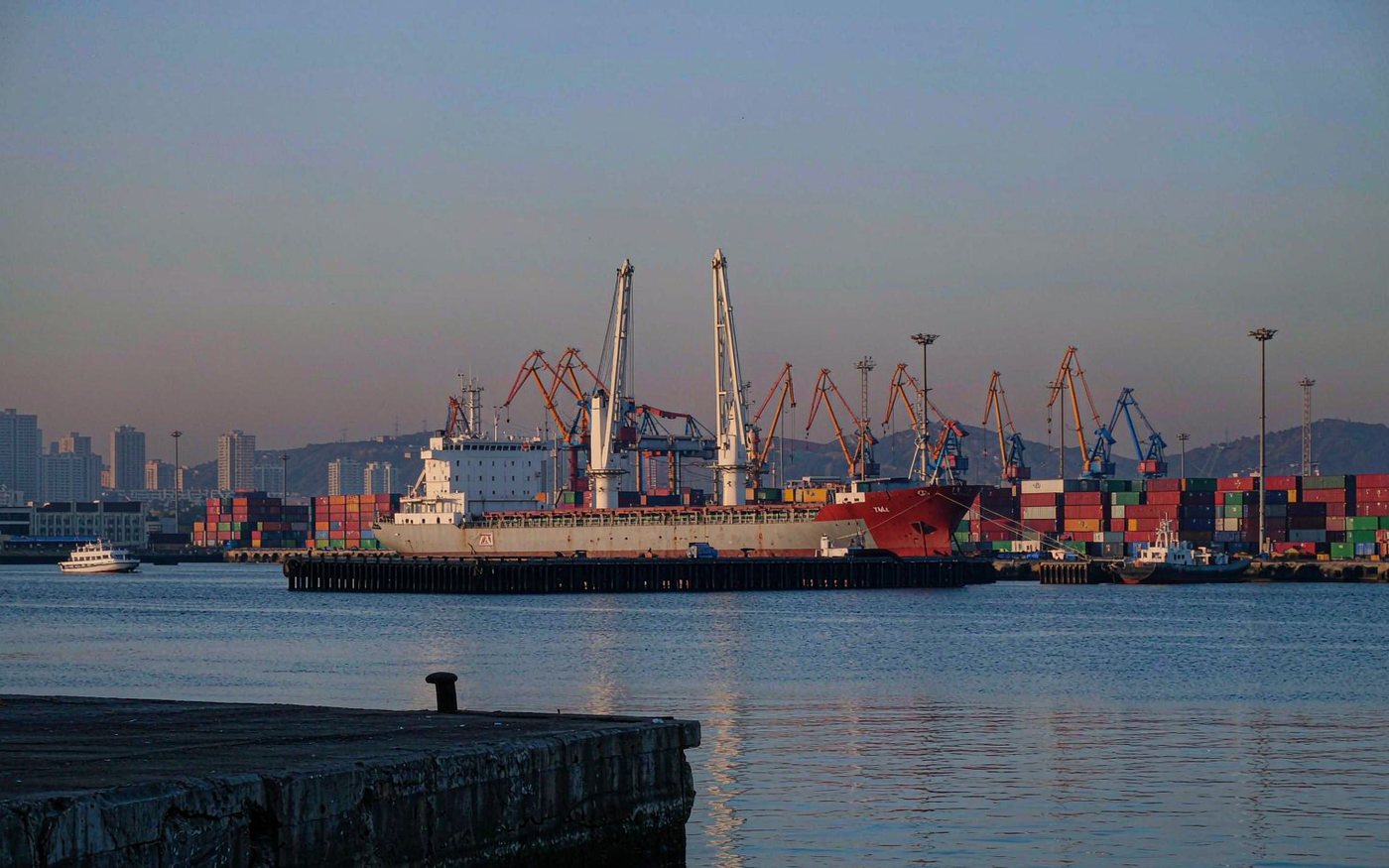
The Mediterranean coast carries Syria's maritime trade, and two ports do the work. Latakia is the larger of the two and the principal container gateway. Tartous is the second commercial port and handles a share of general cargo and containers. A third port at Baniyas is associated with petroleum traffic rather than general imports.
Which of the two your carrier calls at depends on the service, and it is worth asking at booking rather than assuming — because the inland leg from one or the other to your consignee is not the same journey, and because terminal capacity and berth windows differ.
One thing that has changed recently and is worth knowing: the General Authority for Ports and Customs issued a revised container handling fee framework for Latakia and Tartous, taking effect on 1 February 2026, which replaced earlier directives with a single structure covering how fees are collected from shipping agents and consignees. Related administrative measures around the same period addressed vehicle import documentation and technical verification. If you have an older cost model for this lane, it is out of date.
Sea routing, and why transhipment is normal here
Plan on transhipment through a regional hub unless your carrier confirms a direct call when you book. Services from Asia into the eastern Mediterranean commonly work through a hub, which means your container is discharged, waits, and is loaded onto a feeder. That adds a leg and — more importantly — a wait whose length depends on the hub's schedule rather than on distance.
The effect on planning is straightforward: ask for the full rotation, not just the transit time. Which hub, how long the connection is, and how often the feeder runs. A nominally shorter routing with a poor connection can arrive later than a longer one with a clean handover.
Air freight, where carriers serve the route and where the shipment is compliant, is the answer for light, urgent or high-value consignments. It removes the transhipment risk entirely and usually shortens the clearance path. For anything bulky, the economics point back to sea.
On terms, the usual caution applies twice over. CIF Latakia means the supplier pays freight and insurance to the port — and nothing after it. DDP to a Syrian address requires whoever promises it to control clearance, permits, currency and local delivery; on this lane that is a large promise, and it is worth establishing exactly which parties are behind it before you rely on it. Port to port stops at the terminal, as always.
Duties, fees and the currency behind them
Customs duty is assessed against the tariff schedule for the declared HS code, alongside port handling charges and administrative fees. Published guidance on the market describes the tariff and fee framework as subject to periodic revision, and — as noted above — the container handling framework at the two working ports was revised with effect from February 2026. Treat any figure you find in a general reference as a starting point to be confirmed, not a number to budget against.
The variable that actually worries importers on this lane is not the duty rate, it is currency. Published trade guidance describes high inflation, reduced purchasing power and constrained liquidity as features of the operating environment. In practice that has two consequences worth planning around: the local-currency cost of a consignment can move between order and arrival, and the availability of funds to settle can be the thing that determines when the goods are released.
What that means for you is simple. Price in a currency you can actually settle in, and agree it in writing. Model the landed cost with an allowance for movement rather than at a fixed rate. And build the payment step into the timeline as a lead time, not an assumption.
Documents, legalisation and the Arabic requirement
The document set is conventional in shape and demanding in execution.
| Document | What to watch for |
|---|---|
| Commercial invoice | Product description, quantity, value, currency and terms of sale; required in Arabic or with a certified Arabic translation |
| Packing list | Contents, weights and dimensions per package, agreeing with the invoice |
| Bill of lading or airway bill | The original transport document; consignee details matching the registered importer |
| Certificate of origin | Issued by the chamber of commerce in the exporting country, then consular legalisation — start this first, it has its own clock |
| Import declaration | Filed by a licensed Syrian customs broker on behalf of a registered consignee |
| Sector permits | Pharmaceuticals, food, chemicals, telecommunications and other controlled categories each have an authority and a process |
Two execution points cause most of the avoidable delay. The first is legalisation: a certificate of origin that has to pass through the chamber of commerce and then a consulate takes time that has nothing to do with the vessel, and it cannot be compressed at the end. Start it when you place the order.
The second is internal consistency across the Arabic translation. Where documents are translated, the translation has to agree with the original on description, quantity and value, and the original has to agree with the declaration. On a lane where an inspecting officer has discretion and the file is read closely, a mismatch is an invitation to a query that costs days.
A note on permits: controlled categories need approval from the relevant authority before the goods move, and the permit is usually held by the registered importer rather than by the overseas supplier. Establish early who holds the permit for your product and how long it takes to obtain — that is a question for the consignee and their broker, and it belongs at the start of the plan.
Banking and payment, the slowest part of the move
If you take one operational lesson from this page, take this one: the payment is usually the constraint.
Correspondent banking into the market is limited, banks apply enhanced due diligence, and the documentation supporting a payment has to satisfy both the sending and the receiving institution. On top of that, published guidance describes constrained liquidity and reduced purchasing power in the domestic economy. The combination is what makes banking approval, rather than the vessel, the thing that sets the delivery date.
Three things help. Agree the payment method and currency in writing before production starts, so that the supplier's schedule and the money's schedule are built around the same assumptions. Ask the receiving bank what documents it needs and how long it takes, and treat that as a lead time. And keep the payment trail consistent with the commercial invoice, because the same file gets read by the bank and by customs, and the two have to tell the same story.
Goods that need extra approval, and goods that cannot go
Beyond the general screening outcome, two categories need particular attention.
- Controlled products. Pharmaceuticals and medical supplies, food products, chemicals, telecommunications equipment and agricultural inputs each sit with an authority that issues a permit, and the permit is generally held by the registered importer. Where a product needs registration rather than a shipment permit, that is a project with its own timeline, not a form.
- Dual-use and restricted items. Goods with a potential dual-use application, and military-related items, are covered by restrictions maintained in several jurisdictions. These are not matters of paperwork — if your product falls into a restricted category for the applicable rules, the shipment does not proceed, and no amount of documentation changes that.
There is also a mundane category that causes its own share of problems: vehicles and machinery, where documentation requirements around identification numbers and technical verification have been revised recently, and where age and specification rules commonly apply. Check before shipping rather than after arrival.
The honest summary is that the answer is product-specific. Ask early, in writing, and get the answer before you commit to production rather than after.
Three illustrative shipments into Syria
These are illustrative composite examples of how the sequence works, not descriptions of specific shipments, and they are not a statement that any particular cargo is permitted.
The one that did not proceed
A buyer asked for a quote on industrial equipment. The screening question was asked first, and the product turned out to fall within a restricted category for the rules that applied to the transaction. The shipment did not proceed. Asking before booking cost nothing; asking after would have cost the goods.
The one that waited on legalisation
General cargo, compliant, routed through a regional hub to Latakia. The certificate of origin was applied for a week after the order rather than at the time of it, and the consular legalisation finished after the vessel had berthed. The container waited. The lesson is not about Syria specifically — it is that legalisation has its own clock.
The one that worked
Screening completed and documented before the enquiry. Payment method and currency agreed with the supplier in writing before production. Certificate of origin started at the point of order and legalised in time. Consignee's registration and permits confirmed before the goods left China. The container arrived, was declared and was released — because the sequence was followed rather than reversed.
Choosing partners who will tell you what they cannot do
The most useful signal on this lane is a partner who is willing to say no. A forwarder that quotes without asking about screening, that promises a clearance timeline it does not control, or that is vague about legalisation, is not being flexible — it is telling you that the hard parts have not been thought about.
What to ask, and what a good answer sounds like:
- What do you need from me before you can quote? A professional answer names the screening outcome, the consignee's registration, and the product's permit position.
- Which port, and what is the full rotation? Named port, named hub, named connection.
- Which documents need legalisation, and how long does it take? An answer that gives you a number of weeks rather than "we'll handle it".
- What is the current fee schedule at that terminal? The framework changed on 1 February 2026; if they are working from an older schedule, they are not current.
- What happens if a permit is not in place when the vessel berths? The honest answer involves storage charges, and the honest broker will tell you how to avoid them.
- What can you not carry? A partner with a clear answer to this is more useful than one who says yes to everything.
Why importers use Goodhope on this lane
Six things that are different about working with us on China to Syria shipments.
Send the screening outcome with the enquiry
If you are moving commercial cargo from China to Syria, tell us the product and its HS codes, the packed dimensions and gross weight, the pickup city in China, the delivery address, and the status of your screening and permits. We will tell you the working routing and the transhipment point, which documents need legalisation and how long that takes, and the current fee structure at the terminal — or we will tell you plainly that we cannot carry it. We will not quote a shipment whose compliance position has not been established, and we will not promise a clearance timeline we do not control.
Get a quote Talk to usRelated pages
Frequently asked questions
What has to be checked before shipping?
Restricted-party and sanctions screening of the goods, consignee, end user and every intermediary, against the lists of every jurisdiction whose rules apply. Before the quote, not after.
Which ports handle container cargo?
Latakia and Tartous on the Mediterranean coast. A revised container handling fee framework at both took effect on 1 February 2026.
Is there a direct sailing from China?
Assume transhipment through a regional hub unless your carrier confirms a direct call at booking. Ask for the full rotation, not just the transit time.
What documents are required?
Commercial invoice, packing list, transport document, certificate of origin, import declaration and sector permits — in Arabic or certified translation, with consular legalisation on the origin certificate.
Why is banking the slowest step?
Limited correspondent relationships, enhanced due diligence, and documentation that has to satisfy both banks. Agree the payment method in writing before production and treat approval as a lead time.
What needs extra approval or cannot go?
Pharmaceuticals, food, chemicals, telecom equipment and dual-use items need permits or are restricted. The reliable answer is a screening outcome for your specific product, consignee and end use.
How are duties and fees assessed?
Against the tariff schedule for the declared HS code, plus port handling and administrative fees. Confirm current rates with a licensed Syrian broker — the fee framework was revised in February 2026.
Do I need a Syrian importer of record?
Yes. A properly registered consignee holding the declaration and permits, filing through a licensed customs broker. Confirm registration and permit capacity before the goods leave China.
How long does shipping take?
Ocean transit plus transhipment plus clearance. Published averages are unreliable here — use the rotation your carrier confirms at booking, plus a clearance allowance that reflects whether permits and legalised documents are already in hand.
What should I look for in a forwarder?
One that tells you what it cannot do: asks for the screening outcome before quoting, names the routing and hub, is specific about legalisation timelines, and does not promise a clearance date it does not control.