
Home / Shipping to Tanzania / How to ship from China to Tanzania
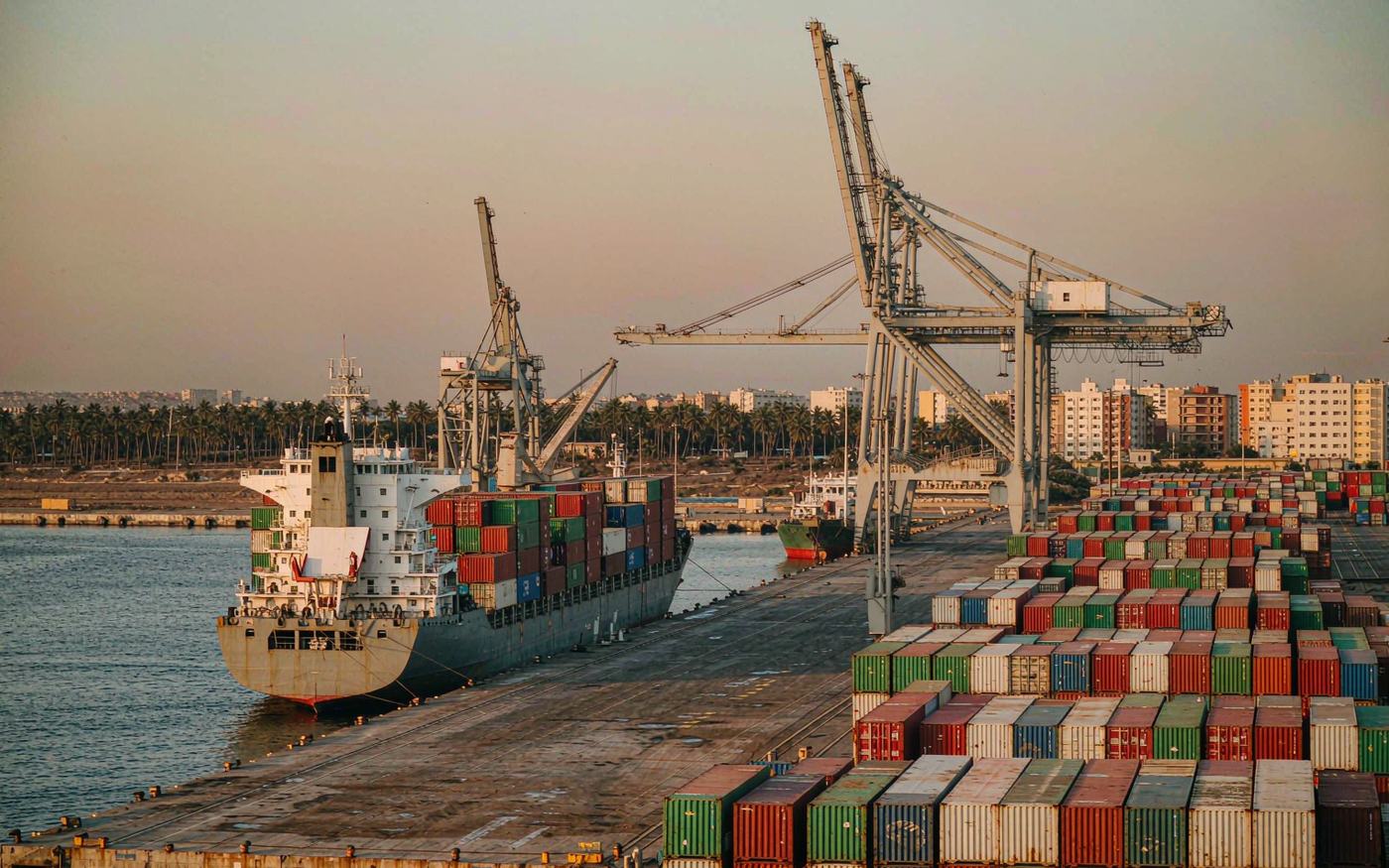
How to ship from China to Tanzania
Tanzania sits on the Indian Ocean and serves both its own market and the landlocked countries behind it. Most sea freight arrives at Dar es Salaam, which is not just Tanzania's principal port but a working gateway for Zambia, the Democratic Republic of the Congo, Malawi, Rwanda, Burundi and Uganda.
Two features of importing here are worth understanding before you book. The first is that a conformity inspection has to happen in China before the goods are loaded, not at the port afterwards. The second is that the single window system is mandatory for commercial imports above a modest value, and it requires the documents to be uploaded before the vessel arrives.
At a glance
Customs is administered by the Tanzania Revenue Authority under the East African Community Customs Management Act. A pre-export verification of conformity under the standards bureau is required before loading, and goods arriving without one face re-export or destruction. The single window is mandatory for commercial imports above USD 500. Duty runs 0 to 25 per cent of CIF value with VAT at 18 per cent, plus a declaration fee and excise where applicable. HS codes were re-aligned to the 2022 nomenclature for 2026.
How your cargo moves: China to Tanzania
Eight steps from your supplier's door to yours. The last four are the ones shaped by local rules.
- Pickup from your supplierWe collect the goods anywhere in China and bring them to our consolidation point.
- Export clearanceChina customs declaration filed and released before the goods move to the port.
- Loading and departureContainer loaded, sealed and handed to the carrier at the Chinese port.
- Main carriageOcean, air or rail movement booked on the route agreed for your cargo.
- Arrival at the gatewayDischarge at the port or airport of entry, recorded on the carrier's manifest.
- Import clearanceCustoms declaration filed locally, with duty and tax assessed on the declared value.
- Customs releaseGoods released into free circulation once duty and tax are settled.
- Final deliveryOnward movement to your delivery address, warehouse or nominated depot.
Duty rates, VAT rates and clearance times move, and the figure that applies to your goods is the one set for your commodity code on the day of clearance. We check the current position against your code before your goods sail and confirm it to you in writing — ask for that check when you request a quote.
Dar es Salaam is the gate, and the corridor runs inland
Dar es Salaam is the country's principal port and handles the overwhelming majority of container traffic. It is also one of the busiest ports in East Africa, which means it has both good carrier coverage and real congestion risk. Other ports, including Tanga in the north and Mtwara in the south, handle specific flows but far smaller volumes.
A large share of what lands at Dar es Salaam does not stay in Tanzania. It moves onward by road and rail into Zambia, the DRC, Malawi, Rwanda, Burundi and Uganda. If your consignee is in one of those countries, the Tanzanian clearance is the first of two, and the transit regime matters as much as the import one.
For planning purposes, decide early whether this is a Tanzanian import or a transit movement. The documents, the clearance route and the cost structure are different, and mixing the two up is a common and expensive error.
PVoC: the inspection that has to happen before loading
Tanzania runs a Pre-Export Verification of Conformity scheme under its national standards bureau. Where it applies, goods are inspected and verified against Tanzanian standards in the country of export before they are shipped, and a certificate is issued.
This is a pre-export requirement, not a destination-side formality. Goods arriving without the certificate face re-export or destruction. On a route as long as this one, that is a severe outcome, and it is entirely avoidable if the inspection is booked early enough.
Build the inspection into the production schedule rather than the shipping schedule. It needs to happen after the goods are packed and before they are loaded, which in practice means telling your supplier that the shipment cannot leave the factory until the inspection is complete.
Where goods are food, pharmaceuticals or cosmetics, additional approval from the relevant authority applies on top. Establish which certificates your product needs at the same time as you confirm the order, not when the goods are ready.
The single window is mandatory above USD 500
Tanzania operates a single window system for trade documentation, and for commercial imports above a modest value threshold it is mandatory. All supporting documents, including the commercial invoice, packing list, bill of lading or air waybill, certificate of origin and import declaration form, have to be uploaded before the vessel arrives.
The practical implication is that the final document set has to be ready well before arrival. Guidance from local agents suggests lodging at least five days ahead of the vessel. Sending documents after the ship berths costs days of storage.
The threshold means this applies to almost every commercial shipment. If you are sending a small sample consignment, check whether it falls inside the formal regime, because the answer affects both the process and the cost.
HS codes were re-aligned for 2026
The Tanzania Revenue Authority moved to updated HS code alignment with the 2022 World Customs Organization nomenclature with effect from January 2026. That changes the duty rate for some product categories, with electronics, vehicles and agricultural inputs among those mentioned.
If you have shipped to Tanzania before, do not reuse last year's codes without checking them. A code that was correct in 2025 may have been reclassified, and a reclassification changes the duty rate and can trigger a query.
Have a licensed agent review your classification before the next shipment. It is a small cost against the risk of a misclassification penalty, and Tanzanian customs has been visibly active on exactly this: published enforcement records show containers held for misclassification as well as for undervaluation and non-declaration.
Duty, VAT and the declaration fee on a CIF base
| Charge | Indicative rate | Base |
|---|---|---|
| Import duty | 0% to 25% by HS code | CIF value |
| VAT | 18% | CIF value plus duty |
| Import declaration fee | A fixed percentage | CIF value |
| Excise | Varies | Selected goods |
| Withholding tax | Varies | Imports |
Valuation follows the WTO transaction value method, so undervaluation triggers reassessment and penalties. Published enforcement ranges run from additional duty and fines of up to fifty per cent of CIF value to forfeiture and prosecution in serious cases, so the incentive to declare accurately is not subtle.
Bonded warehousing is available where the final use is not yet settled, which defers the duty, and a temporary import permit is available for exhibition goods and professional equipment against a bank guarantee with a commitment to re-export. Both are worth knowing about if your shipment is not a straightforward sale.
Transit cargo has thirty days to leave
If your cargo is moving through Tanzania to a landlocked neighbour, it travels under a transit regime with its own rules. Transit cargo has to leave the country within thirty days and moves under a regional electronic cargo tracking system.
That deadline is the one to plan around. A transit movement that misses it has stopped being transit, and regularising it afterwards is slow and expensive. Make sure whoever is handling the onward leg knows the clock starts at the port.
Transit also changes who is liable for what. The bond, the escort and the tracking all sit with someone, and it should be clear before the container moves who that is. Ask us to spell it out in the quotation rather than assuming it is included.
Electronic tax stamps on cigarettes, alcohol and drinks
Tanzania requires electronic tax stamps on certain excisable goods before they can be released, including cigarettes, alcohol, bottled water and soft drinks. Goods in those categories arriving without valid stamps are liable to forfeiture.
This is a narrow rule that bites hard. If your shipment contains anything in those categories, establish how the stamps are obtained and by whom well before the vessel arrives, because the stamps have to exist before release rather than being applied afterwards.
Prohibited imports are the familiar list, with a couple of distinctive entries: narcotics, counterfeit currency, used undergarments and unlicensed firearms are absolutely prohibited. Check anything unusual before booking.
Green channel and red channel: two very different weeks
Clearance time at Dar es Salaam depends heavily on which risk channel the declaration lands in. Low-risk consignments processed through the green channel are commonly quoted at three to five working days; those selected for physical inspection under the red channel run seven to ten working days or more.
The channel is assigned by risk assessment, which is driven by documents. Consistent, specific, correctly classified paperwork is the single biggest lever you have on how long the container sits.
After customs release there is still a sequence to run: the shipping line delivery order, the port authority payment, the truck announcement into the cargo system, and then yard collection and gate checks. Customs release is not the same as cargo in hand, and the gap between the two is where collection planning usually fails.
Packing for a port that works outdoors
Cargo at Dar es Salaam spends time outdoors, in heat and humidity, sometimes for longer than expected. Pack accordingly.
- Use waterproof wrapping and desiccant inside cartons and crates.
- Palletise so units can be moved rather than handled piece by piece.
- Keep individual pieces liftable with the equipment available at the destination.
- Use ISPM 15 compliant wood, or provide a no-wood declaration.
- Mark every piece with the consignee and a contact, in characters that survive weather.
Insurance should cover the storage period as well as the voyage. See cargo insurance, and tell the insurer this is a port with outdoor storage and variable dwell times.
The document set for a TRA clearance
Appoint a registered clearing and forwarding agent early and give them readable final documents. The working set is:
- Commercial invoice with a specific description, HS codes, values, currency and Incoterm.
- Packing list matching the invoice exactly.
- Bill of lading or air waybill.
- Certificate of origin, and the right form where a preference is claimed.
- Import Declaration Form, uploaded to the single window before arrival.
- Certificate of conformity from the pre-export verification.
- Permits or product certificates for regulated goods.
- Transit documentation where the cargo is moving onward.
Use specific descriptions rather than "parts" or "general goods", and check that the consignee name, package count, weight, description, values and transport references are identical across every document. See shipping documents.
Who ships through Tanzania, and onward to where
Tanzania works well as both a destination and a corridor, and it is worth deciding which one your shipment is.
- Imports for the Tanzanian market landed at Dar es Salaam
- Transit cargo to Zambia, DRC, Malawi, Rwanda, Burundi and Uganda with the onward leg planned
- Shipments where the pre-export inspection can be scheduled into production
- Consolidated cargo where the documents can be finalised before arrival
- The goods cannot be inspected in China before loading
- The onward leg has no confirmed operator, given the thirty-day transit rule
- You are reusing HS codes from before the 2026 re-alignment
- The cargo includes excisable goods needing tax stamps
Get the inspection booked early, upload the documents before the vessel arrives, and name whether this is an import or a transit movement. Those three decisions determine most of the outcome.
Why importers use Goodhope on this lane
Six things that are different about working with us on China to Tanzania shipments.
How it happens through Tanzania
Five shipments bought in China and delivered into Tanzania, told end to end — where the order came from, how it moved, where it nearly went wrong, and how it finished. Client names are withheld at their request; the situations and the handling are what we deal with on this lane.
Before loading · the conformity check · Shenzhen to Dar es Salaam
The purchase. A buyer new to importing assumed conformity was checked on arrival as it is on many lanes.
The move. Full container verified before loading in China, with the certificate in the document set.
Where it nearly went wrong. Verification of conformity has to happen before the goods are loaded, and cargo arriving without it faces re-export or destruction. There is no post-arrival route to fix it, which is what makes this the single most expensive assumption on the lane.
How it finished. We book the verification with the freight. Nothing of his has been turned back since.
Above five hundred · the single window · Ningbo to Dar es Salaam
The purchase. A first-time buyer sent a commercial consignment through without the single window because his previous forwarder had never mentioned it.
The move. Consolidated cargo lodged through the single window, which is mandatory for commercial imports above the threshold.
Where it nearly went wrong. The single window is compulsory above five hundred dollars rather than a faster option. Bypassing it does not save a step, it creates a declaration that has to be done again.
How it finished. We lodge through it every time. No entry of his has been rejected since.
Re-aligned codes · 2026 · Guangzhou to Tanzania
The purchase. A buyer classified his goods on codes he had used for years.
The move. Consolidated cargo classified against the re-aligned nomenclature before the declaration was filed.
Where it nearly went wrong. Codes were re-aligned to the current nomenclature for 2026. Classifying on the old alignment produces a declaration that does not match what the authority expects, and duty assessed on the wrong code is duty you will not get back without a fight.
How it finished. We re-check every code now. His classifications have been accepted every time since.
Green or red · two very different weeks · Yiwu to Dar es Salaam
The purchase. A buyer quoted a delivery date as though every consignment clears through the same channel.
The move. Consolidated cargo with the declaration prepared to the standard that keeps it in the faster channel.
Where it nearly went wrong. Consignments are routed to different channels, and the difference between them is measured in weeks rather than hours. Which one you get is decided by the quality of the declaration you filed, which is decided long before the vessel arrives.
How it finished. We file to the higher standard. His containers have moved through the fast channel since.
Thirty days · transit cargo · Shanghai to Tanzania
The purchase. A buyer moving goods onward to a neighbouring country did not realise the clock on transit cargo was running.
The move. Consolidated cargo booked as transit with the thirty-day window built into the onward arrangement.
Where it nearly went wrong. Transit cargo has thirty days to leave, and that window is short once documentation and inland movement are counted. Exceeding it converts a transit movement into a local import with duty attached.
How it finished. He plans the onward leg against the window. Nothing of his has converted to a local entry since.
Why importers use Goodhope on this lane
Six things that are different about working with us on China to Tanzania shipments.
Getting a quote for Tanzania
Tell us the commodity, HS codes if you have them, weight and dimensions, and whether the goods stay in Tanzania or move onward. We will confirm the conformity inspection, the single window timing, and what the transit regime requires.
Get a quote Talk to usRelated pages
Frequently asked questions
Which port handles the cargo?
Dar es Salaam handles the overwhelming majority of container traffic and is also the gateway for landlocked neighbours. Tanga and Mtwara handle smaller, specific flows. Decide early whether your shipment is a Tanzanian import or a transit movement, because the process differs.
What is PVoC and when does it happen?
Pre-Export Verification of Conformity under the national standards bureau. It is carried out in the country of export before the goods are loaded, and goods arriving without the certificate face re-export or destruction. Build it into the production schedule, not the shipping schedule.
What is the single window, and when must documents go in?
The Tanzania Single Window System, mandatory for commercial imports above USD 500. All supporting documents must be uploaded before the vessel arrives, and agents commonly recommend lodging at least five days ahead.
Have HS codes changed?
Yes. Updated alignment with the 2022 WCO nomenclature took effect in January 2026, changing duty rates for some categories including electronics, vehicles and agricultural inputs. Do not reuse last year's codes without having an agent check them.
What duty and VAT apply?
Import duty of 0 to 25 per cent of CIF value by HS code, VAT at 18 per cent on CIF plus duty, an import declaration fee, and excise on selected goods. Valuation follows the WTO transaction value method and undervaluation is penalised.
How long does clearance take?
Commonly three to five working days for low-risk consignments on the green channel, and seven to ten or more for red channel physical inspections. Customs release is not the same as collection: the delivery order, port payment, truck announcement and gate checks still follow.
What if my cargo is going to another country?
It travels under a transit regime and must leave Tanzania within thirty days, moving under the regional electronic cargo tracking system. Confirm who holds the bond and the escort before the container moves.
Are there special rules for drinks or tobacco?
Yes. Cigarettes, alcohol, bottled water and soft drinks must carry valid electronic tax stamps before release. Without them the goods are liable to forfeiture, so arrange the stamps before the vessel arrives.
What is prohibited?
Narcotics, counterfeit currency, used undergarments and unlicensed firearms are absolutely prohibited. Penalties for customs breaches run from additional duty and fines up to fifty per cent of CIF value to forfeiture and prosecution.
Can I store goods without paying duty?
Yes, in a bonded warehouse where the final use is not yet settled, which defers the duty. A temporary import permit is also available for exhibition goods and professional equipment, against a bank guarantee and a commitment to re-export.