
Home / Shipping to Timor-Leste / How to Ship from China to Timor-Leste
How to Ship from China to Timor-Leste: Tibar Bay, TILeSW & the Flat Duty
Timor-Leste has one of the simplest tariff structures in Asia. Import duty is a flat five percent of the value of the goods. Sales tax is two and a half percent, charged on the customs value plus the duty plus any excise. There is no VAT. On a standard consignment the whole calculation takes thirty seconds.
What is less simple is getting to the point where you are allowed to make a declaration at all. The customs authority requires an authorised system user or a licensed broker, a tax identification number issued in Timor-Leste, a debts certificate and a business registration certificate. Those four things are the actual gate, and they are administrative rather than logistical — which is why they catch people out.
The third thing worth knowing is that the US dollar is the official currency. The goods are bought in dollars, the duty is assessed in dollars, and the excise schedule is published in dollars per litre or per kilogram. On a lane this small, removing currency risk from the model is a genuinely useful thing.
At a glance
Country: around 1.4 million people on the eastern half of the island of Timor; capital Dili; a WTO member since 2024 and the eleventh ASEAN member from October 2025. · Currency: the US dollar, with centavo coins for small transactions. · Import duty: a flat 5 percent of the value of the goods. · Sales tax: 2.5 percent of the customs value plus import duty plus any excise. · Excise: charged by unit, not by percentage, on sugars, beverages, beer, wine, spirits, tobacco, fuel, vehicles, arms and lighters. · No VAT. · Customs: the Timor-Leste Customs Authority, filing through ASYCUDA World via the Timor-Leste Electronic Single Window, which connects eight agencies. · To file you need: authorised system user or licensed broker, valid TIN, Debts Certificate, Business Registration Certificate, and the supporting documentation. · Lanes: blue, green, yellow and red. · Payment: within five days of the assessment notice. · HS code: eight digits, the last four combining an HS and an ASEAN subheading. · Port: Tibar Bay, near Dili. Airport: Presidente Nicolau Lobato International (DIL). · De minimis: duty of US$10 or less is not imposed.
How your cargo moves: China to Timor-Leste
Eight steps from your supplier's door to yours. The last four are the ones shaped by local rules.
- Pickup from your supplierWe collect the goods anywhere in China and bring them to our consolidation point.
- Export clearanceChina customs declaration filed and released before the goods move to the port.
- Loading and departureContainer loaded, sealed and handed to the carrier at the Chinese port.
- Main carriageOcean, air or rail movement booked on the route agreed for your cargo.
- Arrival at the gatewayDischarge at the port or airport of entry, recorded on the carrier's manifest.
- Import clearanceCustoms declaration filed locally, with duty and tax assessed on the declared value.
- Customs releaseGoods released into free circulation once duty and tax are settled.
- Final deliveryOnward movement to your delivery address, warehouse or nominated depot.
Duty rates, VAT rates and clearance times move, and the figure that applies to your goods is the one set for your commodity code on the day of clearance. We check the current position against your code before your goods sail and confirm it to you in writing — ask for that check when you request a quote.
A young customs system with a flat duty
Timor-Leste is a young state — independent since 2002 — and its customs system reflects that: modern in design, small in scale, and built on a standard platform rather than a bespoke one. For an importer the practical reading is that the rules are simple enough to learn in an afternoon, and the administration is small enough that an incomplete file takes longer to fix than on a larger lane.
The country joined the WTO in 2024 and became the eleventh member of ASEAN in October 2025, with the ASEAN trade in goods agreement being introduced. Both point the same way: a small, open, import-dependent economy whose trade rules are converging with its neighbours.
Import duty at five, then sales tax on the total
Three charges can apply, and the second one is the one people mis-model.
Import duty at 5 percent
Calculated on the value of the goods. Flat, with no band to look up — which is unusual and welcome.
Sales tax at 2.5 percent
Charged on the customs value plus the import duty plus any excise duty paid. The base is the sum of all three, not the goods value alone.
Excise, where the product is on the schedule
Charged by unit on the cost of the goods. This is the one that can dwarf the duty, because the rates are per litre or per kilogram.
There is no VAT and no sales tax at the point of sale in the sense most importers are used to. The 2.5 percent is an import charge, not a retail one, and it is assessed at the border.
What this means for costing: on most general cargo the total import tax is roughly 7.6 percent of value after the compounding. That is low by any standard. If your landed-cost model shows a large tax number for Timor-Leste, the most likely explanation is excise rather than duty.
Tibar Bay, and what it changed about this lane
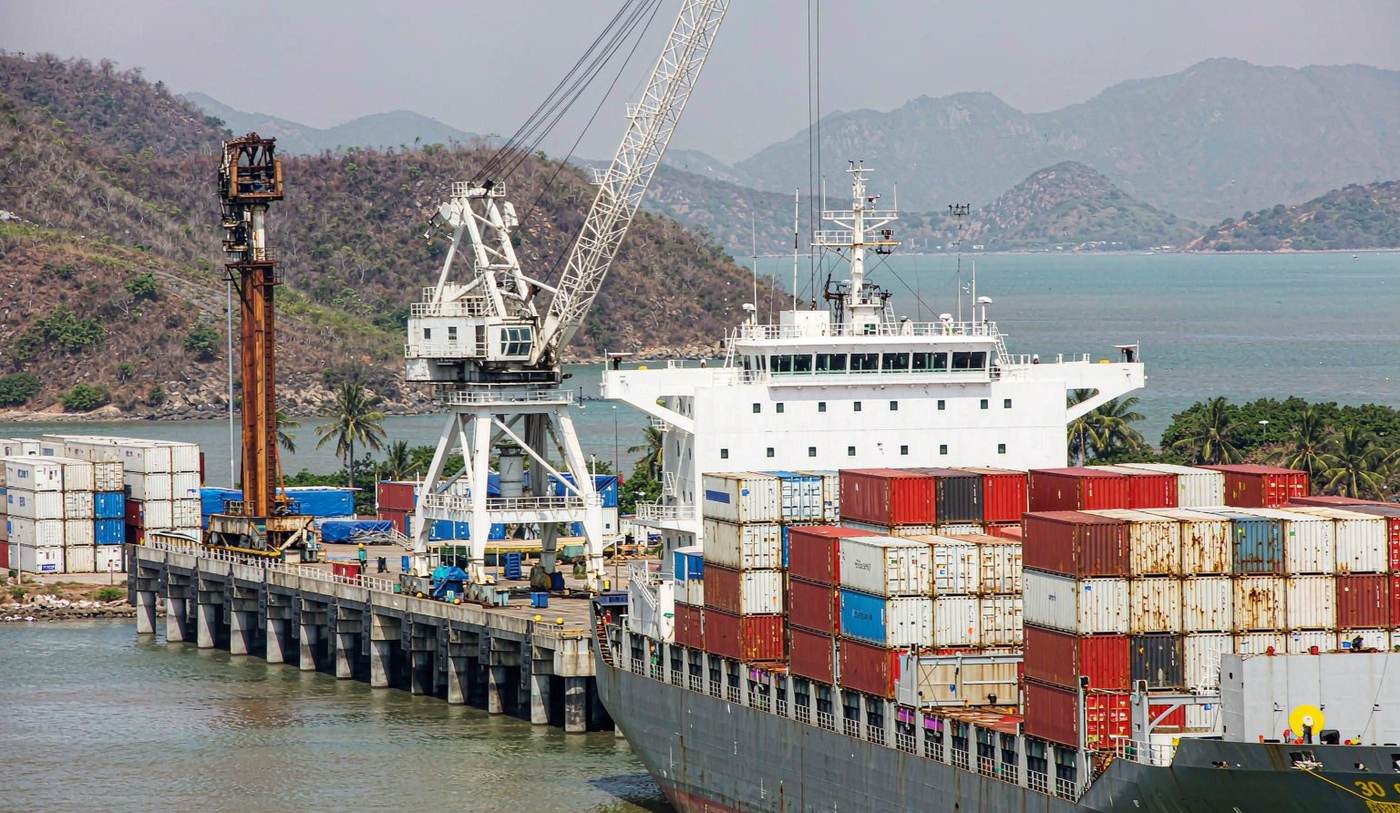
For most of the country's modern history, Dili's port was the constraint. It had limited capacity, and larger vessels and container volumes were handled awkwardly. The Tibar Bay deep-sea port, built near Dili as a public-private partnership, is the change that matters.
Tibar Bay
The deep-water container gateway, and the reason this lane now works for containerised cargo rather than only for breakbulk and relay. If you are shipping a container, this is the entry point to plan around.
Presidente Nicolau Lobato International (DIL)
The air gateway at Dili. Used for urgent, high-value and low-volume cargo, and for anything where the relay schedule does not suit the delivery date.
The road network is the remaining constraint on the land side: published commentary describes it as weather-sensitive in the highlands, with a pronounced rainy season from November to April. If your delivery is outside Dili, ask about the last leg rather than assuming it.
TILeSW and ASYCUDA World
Declarations are filed in ASYCUDA World, accessed through the Timor-Leste Electronic Single Window, or TILeSW. The single window connects eight government agencies responsible for approving the release of goods, so the permits that used to be chased separately are handled through one gateway.
What you can do through it:
- Complete customs clearance — the core function.
- Obtain a certificate of origin — also handled through the single window.
- Complete the import vehicle procedure, which matters if you are shipping vehicles.
- File early. Published guidance describes advance clearance as possible up to six months before the goods arrive, which is generous and worth using on a project shipment.
The declaration itself is the Declaração Aduaneira Única, or DAU. Duties and taxes assessed on the DAU must be paid within five days of the assessment notice, by cash or electronic transfer.
The four lanes, and what each one means
| Lane | What happens |
|---|---|
| Green | Released without further scrutiny |
| Blue | Released without documentary or physical scrutiny at clearance, but subject to post-clearance control |
| Yellow | Documents are inspected for compliance |
| Red | Full physical inspection together with a documentary check |
Blue is the interesting one, because it is a trusted-trader concept: you are released immediately and audited afterwards. That makes the accuracy of the file more important, not less — a post-clearance control that finds a discrepancy is a worse conversation than an inspection that catches it first.
Registering: the tax number and the debts certificate
This is the section that decides whether your first shipment clears or waits. The customs authority is explicit about what is needed to make a commercial import declaration:
- Authorised ASYCUDA World user, or a licensed customs broker. Brokers are licensed by the customs authority after technical training, a final exam and a security deposit. Most importers use one.
- The supporting documentation the declaration is based on — the invoice, packing list and transport document.
- A valid Tax Identification Number (TIN) issued in Timor-Leste.
- A Debts Certificate — the Certidão de Dívidas, confirming no outstanding customs debts.
- A Business Registration Certificate.
The practical point: three of those five are business registrations, not shipment documents. They have to exist before there is a container to declare, and none of them can be created by a forwarder. Get them in place during the quoting stage.
Excise, and the rates charged by the litre
Excise is where a simple tariff stops being simple. The rates are published per unit, and on some categories they are large:
| Category | Published excise |
|---|---|
| Sugars and confectionery | US$1.00 per kilogram |
| Sweetened and flavoured non-alcoholic beverages | US$3.00 per litre |
| Beer under 4.5% alcohol | US$2.70 per litre |
| Beer at or above 4.5% alcohol | US$4.50 per litre |
| Wine, vermouth and other fermented beverages | US$4.50 per litre |
| Ethyl alcohol and other alcoholic beverages | US$8.90 per litre |
| Tobacco and tobacco products | US$100.00 per kilogram |
| Gasoline, diesel and other petroleum products | US$0.06 per litre |
| Passenger cars | 0% under US$10,000; 10%, 20% or 30% of excise value above US$10,000, US$25,000 and US$50,000 respectively |
| Arms and ammunition | 200% of excise value |
| Cigarette lighters and smoking pipes | 12% of excise value |
Note the structure: excise is charged on the cost of the goods, and it then feeds into the base on which the 2.5 percent sales tax is calculated. So a beverage or tobacco shipment is not a 7.6 percent tax event — it is a completely different calculation, and it should be modelled before you order rather than after the assessment notice arrives.
Transit times via Singapore and Darwin
Timor-Leste is served by relay rather than by direct deep-sea services from China. Published routings run through Singapore, Darwin or Indonesian hubs, with the final leg into Tibar Bay.
| Mode | Planning range | Note |
|---|---|---|
| Sea freight, relayed through a regional hub | Several weeks | Confirm the current relay and schedule at booking |
| Air freight into Dili | Under a week | The answer where the schedule matters |
| Express courier | Faster, limited coverage | Confirm service at the delivery address |
Why we do not print a day count: on a lane with this few services, the published average is less useful than the actual sailing. Ask us what is running this month and what the relay is, and treat that rather than a generic range as your plan.
The documents the declaration rests on
| Document | What it has to do |
|---|---|
| Commercial invoice | Description, value and Incoterm; the value is what the flat 5 percent is calculated on |
| Packing list | Line-by-line contents, weights and dimensions |
| Bill of lading or air waybill | Matching the invoice and identifying the consignee |
| Customs declaration (DAU) | Filed through ASYCUDA World via TILeSW |
| Import licence or permit | Where the product requires one — weapons, explosives, pharmaceuticals and similar |
| Certificate of origin | Obtainable through the single window; relevant where origin affects treatment |
| Phytosanitary certificate | For plant and agricultural products |
| ISPM 15 evidence | Stamp on every wooden pallet or crate |
Correct classification is a legal requirement under the Customs Code, and the eight-digit code is worth confirming before the goods ship. Where you are unsure, use the advance clearance facility rather than guessing and correcting afterwards.
Where a Dili agent is worth the fee
Three things, and none of them are about the freight:
- Being the authorised filer. Unless your business is registered and authorised in Timor-Leste, a licensed broker is how the declaration gets made at all.
- Holding the registrations. TIN, Debts Certificate and business registration are local documents; an agent will tell you which are missing before the cargo moves.
- Knowing the excise schedule. On a lane where duty is flat and excise is not, the value is in classifying the product correctly the first time.
Why importers use Goodhope on this lane
Six things that are different about working with us on China to Timor-Leste shipments.
Ask us to confirm the routing before you book
Tell us what you are shipping, the HS codes if you have them, the packed dimensions and gross weight, the pickup city in China and the delivery address in Timor-Leste. We will tell you which relay is currently running into Tibar Bay and what the realistic schedule is, whether your product sits on the excise schedule and what that does to the landed cost, and which local registrations need to be in place before a declaration can be filed.
Get a quote Talk to usRelated pages
Frequently asked questions
What duty and tax apply?
Import duty at a flat 5 percent of the value of the goods, then sales tax at 2.5 percent of the customs value plus duty plus any excise. Excise applies by unit to defined categories. There is no VAT.
Which port does cargo arrive at?
Tibar Bay, the deep-sea container port near Dili. Presidente Nicolau Lobato International Airport (DIL) handles air freight. Dili's older port had limited capacity, which is why Tibar Bay changed the lane.
What system are declarations filed in?
ASYCUDA World, accessed through the Timor-Leste Electronic Single Window (TILeSW), which connects eight government agencies. You need to be an authorised user or use a licensed broker.
What do I need before filing?
An authorised ASYCUDA World user or a licensed broker, the supporting documentation, a valid TIN issued in Timor-Leste, a Debts Certificate and a Business Registration Certificate.
What are the clearance lanes?
Four: green releases without further scrutiny; blue releases at clearance but is subject to post-clearance control; yellow is a documentary check; red is a full physical inspection plus a documentary check.
How quickly must duties be paid?
Within five days of the assessment notice, by cash or electronic transfer. The broker or declarant is responsible.
What HS code format is used?
Eight digits — two for the chapter, two for the heading, and four for the subheading, combining an HS and an ASEAN subheading. Correct classification is a legal requirement under the Customs Code.
Does the US dollar help?
Yes. The US dollar is the official currency, so goods, duty and excise are all in dollars. There is no conversion to model and no currency risk to hedge.
How long does shipping take?
The lane is served by relay, typically through Singapore, Darwin or Indonesian hubs. Plan on several weeks for sea and under a week for air, and confirm the current routing with us at booking.
Is there a duty-free threshold?
Duty of US$10 or less is not imposed. That is a rounding threshold, not a planning tool — it does nothing for a commercial shipment.