
Home / Shipping to Tokelau / How to ship from China to Tokelau
How to ship from China to Tokelau
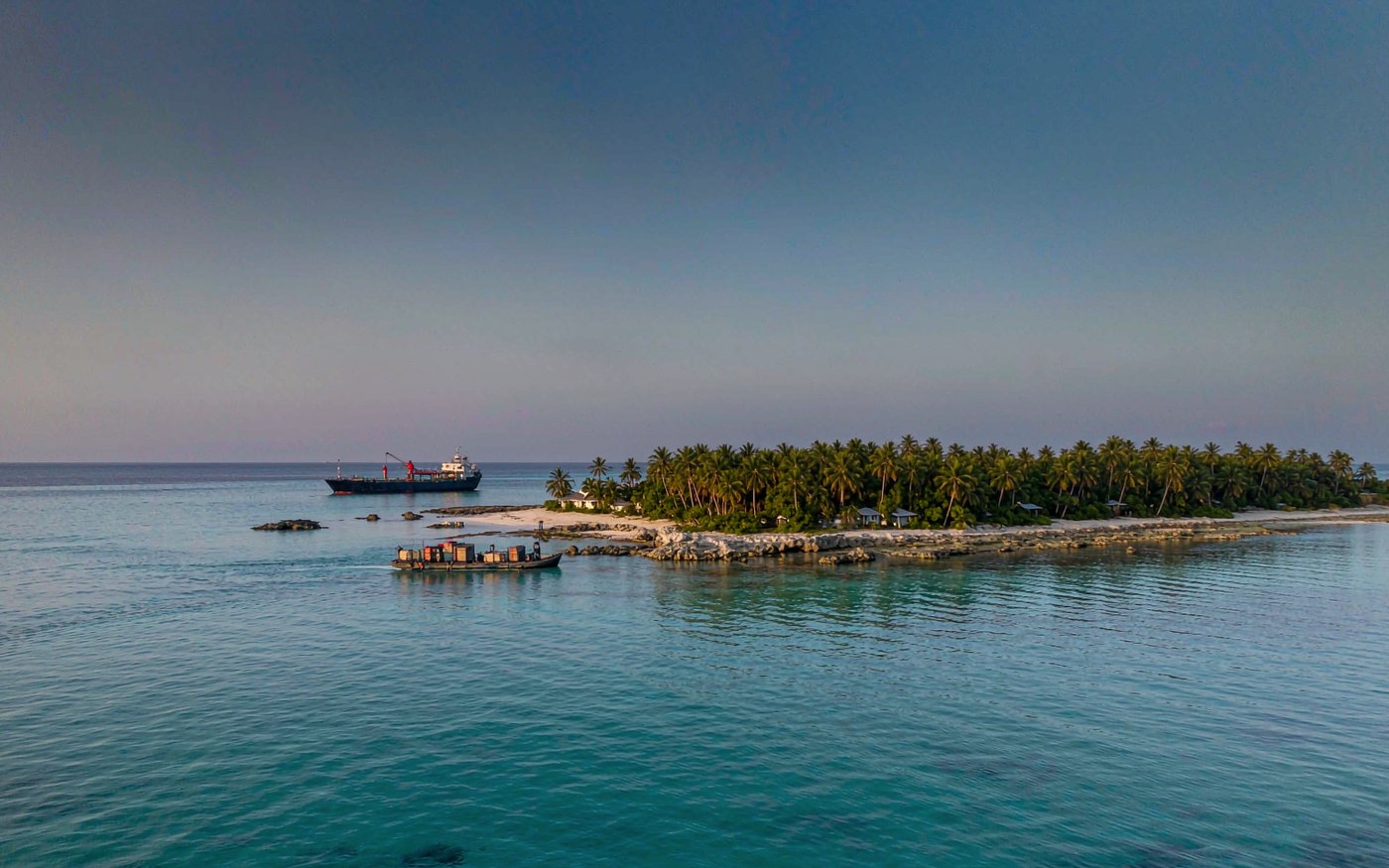
Tokelau is three coral atolls in the South Pacific, administered by New Zealand, with a combined population in the low thousands. It has no airport, no harbour and no deep-water anchorage in the usual sense. Every piece of cargo that arrives, from a bag of rice to a generator, comes off a ship that stands off the reef and is ferried ashore in small boats.
That single fact shapes everything else. There is no container terminal to receive your goods, no bonded warehouse to hold them, and no second sailing next week if something goes wrong. If you are shipping here for the first time, the useful question is not how much the freight costs but whether your goods can survive the last leg and whether the consignee can actually receive them.
At a glance
Three atolls, no port, no airstrip. Cargo routes via Apia in Samoa and travels on the government vessel MV Mataliki, which runs roughly fortnightly with a round trip of several days to over a week. Goods are lightered ashore from the anchorage. Customs under the Tokelau Regulations 1991 taxes only a narrow list, mainly commercial imports, alcohol and tobacco. Currency is the New Zealand dollar. Cyclone season runs November to April.
How your cargo moves: China to Tokelau
Eight steps from your supplier's door to yours. The last four are the ones shaped by local rules.
- Pickup from your supplierWe collect the goods anywhere in China and bring them to our consolidation point.
- Export clearanceChina customs declaration filed and released before the goods move to the port.
- Loading and departureContainer loaded, sealed and handed to the carrier at the Chinese port.
- Main carriageOcean, air or rail movement booked on the route agreed for your cargo.
- Arrival at the gatewayDischarge at the port or airport of entry, recorded on the carrier's manifest.
- Import clearanceCustoms declaration filed locally, with duty and tax assessed on the declared value.
- Customs releaseGoods released into free circulation once duty and tax are settled.
- Final deliveryOnward movement to your delivery address, warehouse or nominated depot.
Duty rates, VAT rates and clearance times move, and the figure that applies to your goods is the one set for your commodity code on the day of clearance. We check the current position against your code before your goods sail and confirm it to you in writing — ask for that check when you request a quote.
Three atolls, and none of them has a port or an airstrip
Tokelau is made up of Atafu, Nukunonu and Fakaofo. Each is a ring of coral islets around a lagoon, with the settled village on one islet of the ring. The land rises only a few metres above sea level, which means there is no high ground, no sheltered deep water, and nowhere to build a wharf that a conventional cargo ship could use.
The three atolls are not connected by road, because there is no road between them. They are separated by open ocean, and moving between them is itself a sea voyage. There is no airstrip on any of them. An aircraft cannot land here, which means air freight as a concept does not apply, and neither does the express-courier model that most first-time importers have in mind.
For planning purposes, treat the three atolls as three separate delivery points reached by the same vessel on the same voyage. That has consequences for how the manifest is written and for how the cargo is loaded, which we come to below.
Everything comes through Apia, on the government vessel
The working route is through Apia, the capital of Samoa. Goods travel by sea from China to Apia, are landed and cleared or held there, and then wait for the Tokelau service. The government vessel MV Mataliki runs the Apia to Tokelau route, and additional charter capacity is taken up from commercial operators when there is demand.
The frequency is roughly fortnightly, and a round trip takes somewhere between a few days and over a week depending on the run and the weather. The vessel is not a container ship. It carries a mix of passengers and cargo, and it calls at each atoll in turn. Space is allocated rather than sold per container slot, and the allocation is decided by need as much as by booking date.
Two practical consequences follow. First, your transit time estimate has to be built as a range, not a date, because the Apia connection and the vessel call both move. Second, the cargo should be consolidated into as few pieces as possible, because fewer, well-packed pieces are easier to load onto a small vessel and easier to lighter ashore.
The Tokelau Apia Liaison Office in Apia handles the administrative side of the territory, and it is the practical point of contact for arrangements on the Samoan end. Confirm with your forwarder who is holding the cargo in Apia and for how long, because that period is billable.
Cargo is lightered in from the anchorage
The vessel cannot come alongside a wharf, because there is no wharf. It anchors off the reef and cargo is transferred to small boats, which run it in through the reef passage to the village landing. This is the highest-risk moment in the whole journey, and it is the moment most first-time shippers fail to plan for.
What survives that leg? Pieces that can be man-handled by a small crew, that are waterproof, and that will not be destroyed by salt spray. What does not survive? Long or awkward pieces that cannot be balanced in an open boat, unsealed cartons, and anything too heavy for a handful of people to lift over a gunwale.
Ask your supplier to pack in units that a small crew can move, and to seal them against water. A crate that is perfect for a container terminal is often wrong for a boat landing, and the difference is not the packing cost, it is whether the goods arrive usable.
Weather closes the passage. If the sea state is wrong on the day the vessel calls, the landing can be deferred, and the vessel may sail on to the next atoll and come back, or not. This is normal, and it is one more reason to treat transit time as a range.
Naming the right atoll when you book the space
Because the vessel calls at each atoll in turn, cargo for Atafu has to be accessible when Atafu is called, and not buried under cargo for Fakaofo. On a small vessel with limited hold space, that means the load plan matters, and the load plan is built from the manifest.
Put the atoll name on every piece, not just on the bill of lading. Mark it on the outside of each crate or carton in large, weather-resistant characters, along with the consignee name. A piece that cannot be identified on a rolling deck tends to be the piece that gets carried past its atoll and comes back on the next voyage.
If you are shipping to more than one atoll from a single supplier, pack them as separate, clearly marked groups and tell the forwarder the split at booking. It costs nothing to plan and it prevents a very expensive mistake.
Customs under the Tokelau Regulations 1991: a short list of dutiable goods
Tokelau does not run a general value-added tax or GST. Its customs system is set out in the Tokelau Customs Regulations 1991, and it is deliberately narrow. Rather than taxing everything entering the territory, it applies duty to a defined list of goods, and the published descriptions point to commercial imports, alcohol and tobacco as the categories that attract duty. Village cooperative stores are commonly treated differently from ordinary commercial importers.
What that means for a buyer in China is that the duty line on a landed-cost calculation may be zero or near zero for many ordinary goods, but that you cannot assume it. The classification question comes first: whether your goods count as a commercial import is the thing that determines whether duty is charged, not the value alone.
Alcohol and tobacco are the clearest cases, and they are dutiable almost everywhere they turn up. If your shipment contains either, declare it plainly and expect duty and any applicable licensing requirement.
Because the territory is administered by New Zealand, people often assume New Zealand's customs tariff and GST apply here. They do not automatically. Confirm the treatment of your commodity with the office handling the entry rather than applying New Zealand mainland rates.
A de minimis threshold may or may not exist here
Some commercial references give Tokelau a de minimis threshold of around NZD 400 below which duty is not charged, together with duty rates of zero to ten per cent by category. Other sources describe the territory as effectively free of import duty for most goods, consistent with the narrow list in the regulations. We could not reconcile the two from a primary source, so we are not going to present either as settled.
The practical advice is the same as for any remote destination where the published data conflicts: get the answer in writing from whoever is clearing the entry, against your actual HS codes and your actual declared value, before you commit to a purchase order. If the duty outcome changes the economics of the order, you need to know that before the goods ship rather than after they land.
Budget for the administrative cost separately. On a route this thin, handling, agency and landing charges can matter more than duty, and they are charged whether or not duty is payable.
Payments run in New Zealand currency, and clearing takes time
The currency is the New Zealand dollar. Your Chinese supplier will quote and expect payment in US dollars or RMB, so the currency exposure sits with you. Local payments, including any duty, handling and agency costs, are settled in New Zealand dollars.
Banking here is slow by the standards of a European or North American importer. Transfers take time to clear, and correspondents are not always direct. Allow for that when you are arranging payment to a local agent, because a delay in payment can hold a release just as effectively as a missing document.
Plan the payment chain in advance: who pays the supplier in China, who pays the agent in Apia, who pays any duty on arrival, and how long each transfer takes. On a route where the vessel runs fortnightly, a payment that arrives a day late can cost a fortnight.
Cyclone season covers November through April
The wet and cyclone season runs from November to April. On atolls that sit three to five metres above sea level, this is not a minor scheduling consideration. Storms disrupt the vessel, close the reef passages, and can damage cargo waiting on a beach or in an open landing area.
Ship critical items outside that window where the timing allows. If you have to ship during the season, pack for water exposure as a matter of course rather than as a precaution, keep the cargo insured, and accept that the schedule is indicative.
Insurance matters more here than on almost any other route we handle. There are many moments where cargo is outdoors, on a boat, or on a beach, and none of them are covered by a standard assumption of care. See cargo insurance and tell the insurer this is a lighterage destination.
Biosecurity screening on the Samoa leg
Goods arriving from China will pass through Samoa, and Samoa applies its own biosecurity rules. Because Tokelau's agriculture and environment are fragile, the screening that happens on the way through matters as much as anything that happens on arrival.
The usual problem categories apply: soil, seeds, plant material, fresh food, meat and dairy, untreated wood, and anything of animal origin. Wooden packaging must meet the ISPM 15 standard and carry the mark, and this should be specified to the Chinese supplier in writing rather than assumed.
Where a permit or certificate is needed, apply before the goods leave China. A permit applied for after arrival on a fortnightly vessel route costs you a full cycle, not a few days. Our quarantine inspection page covers the export-side process.
Paperwork that has to be right the first time
On a route with a fortnightly vessel, a document problem is measured in fortnights. Get these right before the goods leave the factory.
- Commercial invoice with a specific description of each item, quantity, value, currency, HS code, country of origin and Incoterm.
- Packing list with piece count, weights and dimensions, matching the invoice.
- Bill of lading showing Apia as the discharge point, plus the onward leg to the atoll.
- Atoll marking on every physical piece, which is as important as any document.
- Permits and certificates for food, plant or animal-origin goods.
- Insurance policy that names lighterage as part of the transit.
Writing "goods" or "general merchandise" on an invoice guarantees a query. Describe the contents as if the reader has never seen the product, because they may not have. See shipping documents for the format we ask suppliers to use.
Where shipping to Tokelau makes sense
This route is not for every shipment, and it is better to decide that early than to discover it on the quay at Apia.
- Community, government, school or clinic supply on a planned cycle
- Durable, non-perishable goods that tolerate water exposure
- Pieces small enough for a small crew to handle over a gunwale
- Shipments where a delivery range of weeks is acceptable
- Anything needed by a fixed date
- Food, perishables or temperature-sensitive goods
- Long, heavy or awkward pieces that cannot be boated ashore
- Anything that may need to be returned, because reverse logistics is not realistic here
If you decide to ship, ship in one consolidated consignment sized to a full restock cycle. On this route the fixed costs of a shipment dominate, and each additional shipment is another opportunity for a vessel to be missed.
Why importers use Goodhope on this lane
Six things that are different about working with us on China to Tokelau shipments.
Working examples through Tokelau
Five shipments bought in China and delivered into Tokelau, told end to end — where the order came from, how it moved, where it nearly went wrong, and how it finished. Client names are withheld at their request; the situations and the handling are what we deal with on this lane.
No port, no airstrip · first enquiry · China to Tokelau
The purchase. A buyer new to importing asked for a container rate and a berth booking.
The move. Consolidated cargo booked on the government vessel through Apia, lightered ashore at the atoll, with the whole routing set out first.
Where it nearly went wrong. Three atolls, none with a port or an airstrip. Asking for a container berth is asking for something that is not there, and the quote you get back from a forwarder who does not say so is a quote you cannot use.
How it finished. He works to the vessel schedule now. His expectations match what the atolls can receive.
Which atoll · booking space · Shenzhen to Tokelau
The purchase. A buyer's consignee was on one atoll and the space was booked for another.
The move. Consolidated cargo booked to the named atoll, confirmed with the consignee before the vessel loaded.
Where it nearly went wrong. The vessel serves three separate atolls. Booking to Tokelau without naming which one leaves the last leg to chance, and on a fortnightly service the next attempt is weeks away.
How it finished. We name the atoll at booking now. Every delivery has reached the right one.
Lightered ashore · packing · Guangzhou to Tokelau
The purchase. A buyer packed for a crane lift and watched his cargo handled from an anchorage.
The move. Consolidated cargo packed into units that could be lightered, protected against water.
Where it nearly went wrong. Goods come ashore from the anchorage rather than across a quay. Packing for a crane is packing for equipment that will never touch the cargo, and water is the real risk on that last leg.
How it finished. He packs for the lightering now. Nothing has arrived water-damaged since.
The short list · what is taxed · Ningbo to Tokelau
The purchase. A buyer budgeted duty across his whole consignment on the assumption everything was assessed.
The move. Consolidated cargo declared with only the taxable lines identified, and the rest shown as outside the list.
Where it nearly went wrong. Only a narrow list of goods is dutiable here, mainly commercial imports, alcohol and tobacco. Dutying the whole consignment inflates your landed cost and prices you out of an order you could have won.
How it finished. We identify the taxable lines up front. His quotes have been accurate ever since.
November to April · cyclone season · Shanghai to Tokelau
The purchase. A buyer scheduled a delivery into the cyclone window without a fallback.
The move. Consolidated cargo booked outside the window where the timing allowed, and covered where it did not.
Where it nearly went wrong. Cyclone season runs from November to April and it stops a fortnightly vessel rather than delaying it. On a service with this few sailings, one cancelled voyage is a two-month gap.
How it finished. He plans around the window now. His deliveries have arrived every season since.
Why importers use Goodhope on this lane
Six things that are different about working with us on China to Tokelau shipments.
Getting a quote for Tokelau
Send us the commodity, weights and dimensions, which atoll it is going to, and how urgently it is needed. We will tell you what the Apia connection looks like, what needs confirming before you buy, and how to pack for the boat landing.
Get a quote Talk to usRelated pages
Frequently asked questions
Does Tokelau have a port or an airport?
Neither. There is no wharf that a conventional cargo ship can use and no airstrip on any of the three atolls. Cargo is carried from Apia by the government vessel and lightered ashore from the anchorage in small boats.
How does cargo actually get from China to Tokelau?
By sea to Apia in Samoa, then onwards on the Tokelau service. The government vessel MV Mataliki runs roughly fortnightly, with a round trip of several days to over a week depending on the run and the weather. Additional charter capacity is taken up when there is demand.
Can I send goods by air or by courier?
Not to Tokelau. There is no airstrip, so air freight and the express-courier model do not apply. Every shipment goes by sea and is boated ashore.
Which atoll should I ship to?
Whichever one your consignee is on: Atafu, Nukunonu or Fakaofo. Mark the atoll name on every physical piece in large characters, because the vessel calls at each in turn and unidentified cargo tends to be carried past its stop.
Is there import duty or GST?
There is no general value-added tax or GST. Under the Tokelau Customs Regulations 1991, duty applies to a narrow list, generally described as commercial imports, alcohol and tobacco. Whether your goods count as a commercial import is the question that determines the outcome.
Is there a de minimis threshold?
Sources conflict. Some commercial references give around NZD 400 with rates of zero to ten per cent; others describe the territory as effectively duty-free for most goods. Confirm in writing against your HS codes before committing to an order.
What currency is used?
The New Zealand dollar. Your Chinese supplier will still want US dollars or RMB, so the exposure sits with you, but local duty, handling and agency costs are settled in New Zealand dollars. Banking is slow, so plan transfer times.
How should I pack for this route?
In units a small crew can lift over the side of a boat, sealed against water and salt spray. Long or awkward pieces, unsealed cartons and heavy single units are the usual failures. Wooden packaging must meet the ISPM 15 standard.
What biosecurity rules apply?
Goods pass through Samoa, which applies its own biosecurity screening, and Tokelau's environment is fragile. Soil, seeds, plant material, fresh food, meat, dairy and untreated wood are the problem categories. Apply for permits before the goods leave China.
When is the worst time to ship?
November through April, which is the wet and cyclone season. Storms disrupt the vessel and close the reef passages. Where timing allows, land critical goods outside that window and always keep the cargo insured.