
Home / Shipping to Trinidad and Tobago / How to Ship from China to Trinidad and Tobago
How to Ship from China to Trinidad and Tobago: Port of Spain, Point Lisas & the TT$20,000 Broker Line
Trinidad and Tobago is not a resort-island market, and it should not be planned like one. It is the largest economy in CARICOM and the energy and petrochemical hub of the southern Caribbean — natural gas, oil, ammonia, methanol — with a substantial manufacturing sector alongside it. What arrives here is machinery, industrial spares, project cargo, building materials and chemicals rather than hotel supplies. That shapes the ports, the paperwork and the equipment available, and it is why this country can handle cargo that its neighbours cannot.
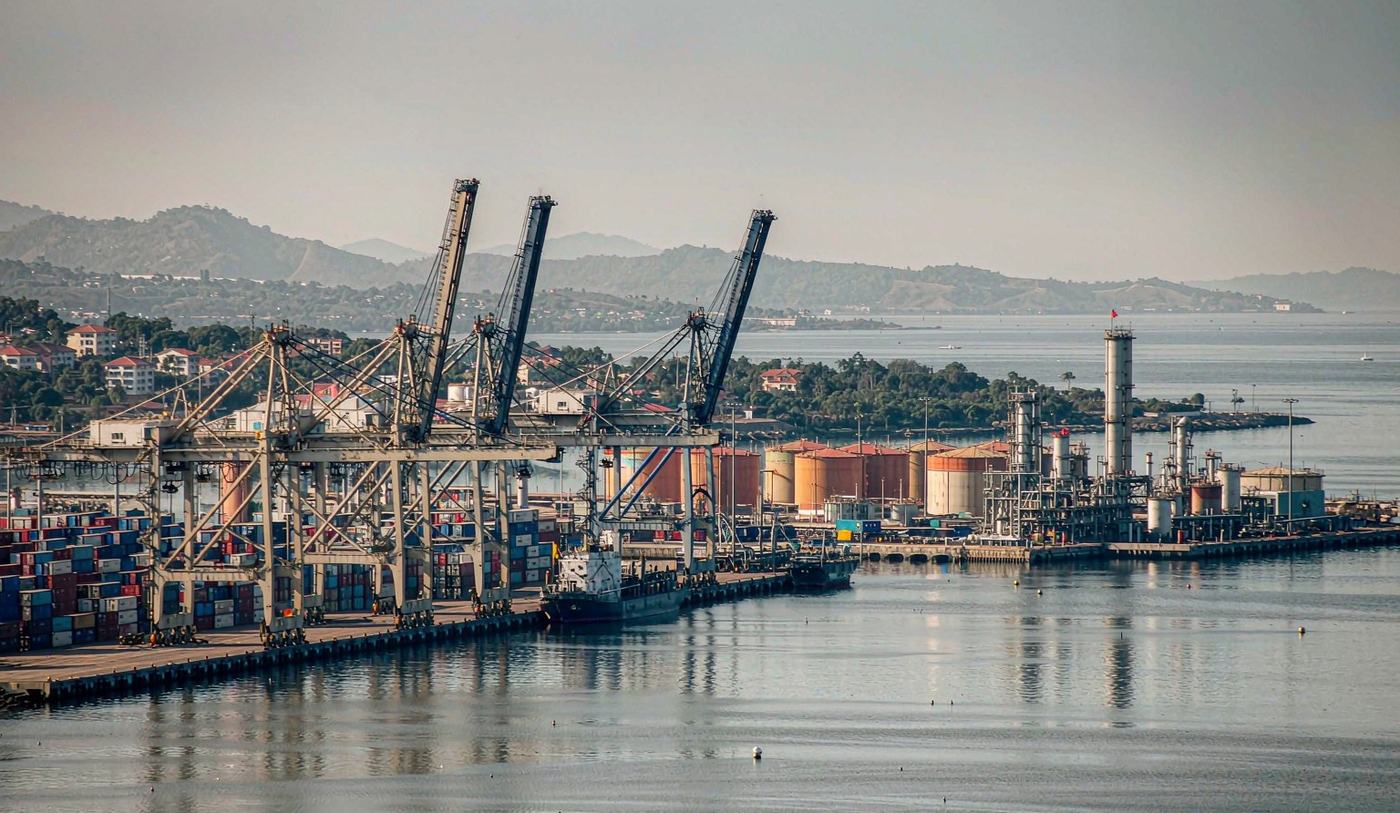
The second thing is that there are two working ports with genuinely different jobs. Port of Spain is the largest commercial port and handles the majority of containerised imports, doubling as a distribution base for the southern Caribbean. Point Lisas, run by PLIPDECO, serves the industrial estate and is the right gateway for heavy plant and project cargo. Choosing between them by default rather than by cargo type is the most common avoidable error on this lane.
The third thing is a hard line rather than a rule of thumb: above a goods value of TT$20,000, a licensed customs broker is reported as compulsory. At the prevailing exchange rate that is roughly US$3,000, which means effectively every commercial shipment crosses it. This is not a market where you file your own entry as a beginner, and pretending otherwise is how containers come to sit.
At a glance
Country: about 1.4 million people across Trinidad and Tobago, 5,130 km², with the capital at Port of Spain; the islands sit just off the Venezuelan coast. · Currency: the Trinidad and Tobago dollar (TTD). · Ports: Port of Spain — largest commercial port, containers and regional distribution; Point Lisas — PLIPDECO, heavy industry and project cargo; Scarborough for Tobago. · Airport: Piarco International (POS). · Customs: Customs and Excise Division under the Ministry of Finance; Customs Act Ch. 78:01; ASYCUDA World in use since December 2010; the C82 entry; the ttbizlink single window and the Online Import Permit system. · Registration: importer registration with the Ministry of Trade and Industry plus a Company Registration Number. · Broker: compulsory above a goods value of TT$20,000. · Duty: CARICOM tariff on CIF, commonly quoted 0–20 percent, with vehicles 25–45 percent new and 35–50 percent used. · VAT: 12.5 percent on the duty-paid value. · Online purchases: a reported 7 percent online purchase tax. · De minimis: sources disagree — about US$50 per one reference, none per another. Confirm. · Clearance: commonly 2–5 days; courier 2–3 days; postal 2–3 weeks. · Transit: FCL 30–45 days, LCL 33–48 days, air 6–12 days, express 4–8 days. · Rainy season: June to December.
How your cargo moves: China to Trinidad and Tobago
Eight steps from your supplier's door to yours. The last four are the ones shaped by local rules.
- Pickup from your supplierWe collect the goods anywhere in China and bring them to our consolidation point.
- Export clearanceChina customs declaration filed and released before the goods move to the port.
- Loading and departureContainer loaded, sealed and handed to the carrier at the Chinese port.
- Main carriageOcean, air or rail movement booked on the route agreed for your cargo.
- Arrival at the gatewayDischarge at the port or airport of entry, recorded on the carrier's manifest.
- Import clearanceCustoms declaration filed locally, with duty and tax assessed on the declared value.
- Customs releaseGoods released into free circulation once duty and tax are settled.
- Final deliveryOnward movement to your delivery address, warehouse or nominated depot.
Duty rates, VAT rates and clearance times move, and the figure that applies to your goods is the one set for your commodity code on the day of clearance. We check the current position against your code before your goods sail and confirm it to you in writing — ask for that check when you request a quote.
What this guide covers, and why this is not a tourist-island lane
This is written for a buyer bringing goods out of China into Trinidad and Tobago for the first time. It follows the shipment in the order the problems arrive: which port does which job, the broker threshold that is written into the rules, the entry and the single window, the registrations and licences, how the tax is calculated, and how long it all takes.
It does not quote freight rates. Those move with the market and any figure printed here would be wrong within weeks. What it does instead is show where the money and the time go, so that a quotation can be read for what it leaves out as well as what it contains.
The country is a twin-island republic: Trinidad carries almost all of the population, the industry and the ports; Tobago is smaller and tourism-led. It is a parliamentary democracy, a member of the Commonwealth, CARICOM and the CSME, and a party to the CARIFORUM–EU economic partnership agreement. Inland transport is entirely by road — the railway closed decades ago — on a reasonably developed network, which matters if you are moving heavy plant from the port to a site.
Trade preference is worth stating plainly: goods of CARICOM origin may qualify for reduced or zero duty; Chinese-origin goods do not. There is no China–Trinidad preference to claim, so the tariff line you declare is the rate you pay.
Port of Spain or Point Lisas: two ports with different jobs
Port of Spain
The largest commercial port and the gateway for the majority of containerised imports. It is also a distribution hub in its own right, with cargo routinely re-forwarded onward into the southern Caribbean. This is the default for containerised goods, retail, building materials and general cargo. It is also the port most often reported as congested.
Point Lisas
Operated by PLIPDECO and built to serve the Point Lisas industrial estate — petrochemicals, heavy manufacturing, bulk and project cargo. If you are importing plant, structural steel, large vessels, transformers or anything that needs heavy-lift handling, this is usually the port to ask for.
Scarborough serves Tobago, where a separate island leg applies. Most services from China do not call directly: cargo commonly tranships through Miami, Panama or Barbados before the final leg.
Confirm the port at booking, and confirm it against two things — the nature of the cargo and the final delivery address — rather than against whichever name appeared on a previous quote.
A licensed broker is compulsory above TT$20,000
This is the clearest rule on the lane and the one most worth knowing before you start. Published guidance states that above a goods value of TT$20,000 a licensed customs broker is mandatory. At the prevailing exchange rate that threshold is around US$3,000, so in practice it covers essentially every commercial import and leaves the self-filing option to the smallest personal shipments.
What this means for you: appoint the broker early, not on arrival. The broker classifies the goods, files the C82, handles permits through ttbizlink, and represents the entry if customs selects it for examination. On a lane where Port of Spain can be congested, having someone already acting for you before the vessel berths is worth more than the fee.
Ask what the fee covers. The questions that matter are whether it includes classification work, permit handling, representation at examination, and what happens if the container is held and storage starts to accrue.
The C82 entry, ASYCUDA World and the ttbizlink window
Trinidad and Tobago's customs administration is the Customs and Excise Division, part of the Ministry of Finance, working under the Customs Act. The mechanics you will encounter are:
- ASYCUDA World — the automated customs system, in use since December 2010.
- The C82 — the import declaration, with an electronic version, the e-C82.
- ttbizlink — the trade single window through which declarations and permits are filed.
- The Online Import Permit (OIP) system — used for import permits.
None of this is difficult for an experienced broker, but all of it rewards preparation. Send the documentation before the goods arrive, and send it complete: description, value, HS code, weights and the transport document, consistent across every piece of paper. Discrepancies between the invoice, the packing list and the entry are what generate questions, and questions are what generate days.
Registering as an importer, and the CRN behind it
Before anything can be entered, the importing business has to exist in the local system. The sequence is:
Register the company
Register the business with the Registrar of Companies and obtain a business registration certificate.
Register as an importer
Complete importer registration with the Ministry of Trade and Industry and obtain a Company Registration Number (CRN). This is a legal requirement for businesses and individuals importing.
Check the control list
Check the Consolidated List of Import Controls, published by the Ministry of Trade and Industry, to see whether your product needs an import licence before it ships.
That third step is the one people skip. The list covers pharmaceuticals, agricultural products, chemicals, weapons and other categories, and a licence applied for after the goods have landed is a licence that arrives with storage charges attached.
What the CET charges on the things people actually import
Duty is assessed on the CIF value at rates from the CARICOM tariff, by HS code. The commonly quoted overall range is 0–20 percent, with some product groups well above it. Published category rates look roughly like this:
| Category | Reported duty range | Note |
|---|---|---|
| Building materials | 5–25% | Some materials are duty free for development projects |
| Electronics | 5–20% | Computers and phones are often duty free |
| Textiles and clothing | 20–25% | Varies by classification |
| Food products | 0–40% | Essential foods are frequently duty free |
| Motor vehicles, new | 25–45% | By engine capacity and type |
| Motor vehicles, used | 35–50% | Additional age-based surcharges apply |
| Alcoholic beverages | 25% plus excise | Specific excise duties on top |
| Tobacco products | 20% plus excise | Specific excise duties on top |
Two observations follow. The first is that the spread inside a single category is wide, which makes classification the decisive step — get the code confirmed in writing, with the specification in front of your broker, before you book. The second is that CARICOM-origin goods may qualify for reduced or zero rates and Chinese-origin goods do not, so there is no preference to soften a bad classification.
VAT at 12.5 percent, and the online purchase tax
VAT is 12.5 percent, charged on the duty-paid value — the CIF value plus the duty. That is lower than the fifteen percent charged in several neighbouring markets, and some basic food items and medicines are zero-rated.
Duty on CIF
Under the CARICOM tariff, by HS code. This is the first line.
VAT on the duty-paid value
12.5 percent on CIF plus duty. Not on CIF alone — this is the step that catches people budgeting from the tariff rate.
Then the rest
Environmental levy where it applies, excise duty on alcohol, tobacco, vehicles and fuels, processing fees, and storage if clearance is delayed.
A worked illustration with round numbers: goods with a CIF value of US$10,000 and duty at 15 percent. Duty is US$1,500. The VAT base is US$11,500, so VAT at 12.5 percent is US$1,437.50. That is US$2,937.50 before the broker, the levy, the port charges and the inland movement.
One extra item specific to this market: a 7 percent online purchase tax is reported on imports purchased online. If you are selling direct to Trinidadian consumers from a webshop rather than importing commercially, that is a different calculation from the one above, and worth checking with a local adviser.
The environmental levy and the smaller add-ons
Beyond duty and VAT, published guidance lists several further charges that can appear:
- Environmental levy — on certain products.
- Excise duties — on alcohol, tobacco, vehicles and fuels, sometimes as specific rather than ad valorem amounts.
- Processing and administrative fees — on the entry.
- Storage fees — where clearance is delayed, and Port of Spain does experience congestion.
None of these are in the tariff rate. Ask your broker for the full computation on your specific HS code before you commit, and ask for it as a number rather than a description.
Import licences, the CFDD and the Bureau of Standards
Several regulators sit between a shipment and its release, and which ones apply depends entirely on the product.
| Authority | What it covers |
|---|---|
| Trade Licensing Unit, Ministry of Trade and Industry | Import licences for controlled goods — firearms, pharmaceuticals, motor vehicles, certain agricultural products, and used goods, among others |
| Chemistry, Food and Drugs Division (CFDD) | Food imports |
| Trinidad and Tobago Bureau of Standards (TTBS) | Standards compliance for regulated products |
| Ministry of Health | Health certificates, drug import permits and related documentation |
| Customs and Excise Division | The entry itself, the C82, and the assessment |
Two specific rules are worth knowing. Used goods are restricted, and importing them is not the straightforward exercise it is elsewhere. Motor vehicles need a Motor Vehicle Import Permit, and given the duty bands above, the paperwork and the tax both need checking before the vehicle ships.
Where de minimis sits, and why sources disagree
You will find two answers to this question and they do not agree:
- About US$50. One published reference gives a duty-free threshold at roughly this level.
- No de minimis at all. Another states plainly that VAT at 12.5 percent applies to all imports, with no threshold.
For a commercial shipment of any meaningful size the threshold does not change the outcome — but for samples, small parcels and e-commerce it does, and the online purchase tax adds a second consideration for goods bought through a webshop.
Exemptions and concessions worth checking before you order
There is a substantial list of categories reported as duty free or concessionary, and it is worth walking through with your broker before you place the order rather than after:
- Raw materials for local manufacturing, and equipment used in production.
- Medical equipment and pharmaceuticals.
- Educational materials and books.
- Renewable energy equipment.
- Agricultural inputs and equipment.
- Goods for charitable organisations, and diplomatic and consular goods.
Alongside these sit investment incentives — manufacturing incentives, tourism development concessions, free zone benefits and renewable energy concessions — which approved investors may qualify for under various programmes. Eligibility is a question for the relevant authority and for your accountant, not for a freight quotation, but it is worth knowing that the list exists before you build a landed-cost model on the standard rate.
Sea transit, and the transhipment hubs behind it
Published transit for this lane: full containers about 30–45 days, LCL about 33–48 days. The spread reflects the relay rather than the ocean leg.
| Mode | Typical transit | Notes |
|---|---|---|
| Sea FCL | 30–45 days | Suited to shipments over about 15 CBM; ends at Port of Spain or Point Lisas |
| Sea LCL | 33–48 days | Economical for roughly 2–15 CBM; consolidation sits at both ends |
| Air freight | 6–12 days | To Piarco; routed via Miami, Panama City or Barbados |
| Express courier | 4–8 days | Door to door, subject to carrier coverage at the address |
Most services tranship through Miami, Panama or Barbados, and Port of Spain is reported as prone to congestion at the receiving end. Add the two seasonal factors — Chinese New Year, which empties sailings out of China for weeks, and the rainy season from June to December — and the sensible planning number sits at the upper end of the range.
Our sea service is port to port and our air service is airport to airport. Clearance and inland delivery are handled by the consignee with their broker. Ask for a DDP quotation if you want a through price.
Air freight into Piarco, and what it is good for
Piarco International Airport (POS) is the main air cargo gateway and serves Trinidad and the wider Caribbean region. Air freight from China runs about six to twelve days, routed via Miami, Panama City or Barbados.
Air is the right answer for a specific set of goods here, and it is a different set from the resort islands: high-value electronics, pharmaceuticals, oil and gas equipment, and urgent industrial parts. On an energy-driven economy, a pump impeller or a control board that has stopped a plant is worth the freight many times over.
Remember that air is airport to airport. The consignee clears and collects. Express courier — DHL, FedEx, UPS — is the door-to-door option at roughly four to eight days, subject to coverage at your specific address.
LCL or FCL on a lane with a congested main port
The published guidance is straightforward: LCL for roughly 2–15 CBM, FCL above about 15 CBM. On this lane there is an additional reason to weigh the container side a little more heavily than the arithmetic alone suggests.
Port of Spain is reported as congested. An LCL shipment has to be deconsolidated in that yard, which adds a step in the busiest place in the chain; a full container is one box, one entry and one gate movement. If your cargo is project-critical or the timing is tight, that simplicity is frequently worth more than the marginal cost difference.
At the other end of the scale, for anything urgent under about 100 kg, air freight or express is often competitive with LCL on both price and time, and dramatically faster.
Dangerous goods and oilfield cargo: this country handles them
This is one of Trinidad and Tobago's genuine advantages. Because the economy runs on oil, gas and petrochemicals, the port, the airport and the broker community handle hazardous and chemical cargo routinely, and DG handling capability here is rated high relative to the rest of the Caribbean.
That does not make the rules optional. What it means in practice:
- Declare in advance. Dangerous goods and non-DG chemicals both need to be declared at booking, with an MSDS and the correct UN classification.
- Pack and label to the standard — IMDG for sea, IATA for air. Do not assume a domestic Chinese packing standard travels.
- Batteries are the common case. Goods with batteries installed move with an MSDS and correct declaration; standalone lithium batteries are dangerous goods and must be handled as such.
- Confirm the port can take it. Some DG classes and some package sizes are handled at one port and not the other.
Trinidad as a distribution base for the southern Caribbean
Port of Spain is not only a destination. It functions as a distribution hub for the southern Caribbean, and cargo landed there is routinely re-forwarded onward — to Guyana, Suriname, the Windward and Leeward islands, and beyond.
If that is your plan rather than your accident, three things change:
- Packaging. Cargo that will be broken down and re-forwarded needs to survive an extra handling cycle and possibly an extra leg on a feeder.
- Documentation. The onward movement is a separate shipment with its own entry, and the papers have to support both.
- Routing. Tell us the final destination at booking, not after the box lands. The routing, the packaging and the paperwork all follow from it.
Rainy season, and the congestion overlay
Trinidad's rainy season runs June to December, with high humidity year-round. On its own that is manageable. Combined with congestion at Port of Spain, it is the reason to build slack into a schedule rather than to plan to the optimistic end of a range.
Three practical responses: add a buffer for anything arriving between June and December; keep the file complete so that a yard delay does not become a paperwork delay as well; and make sure the packing accounts for humidity, because a box sitting on a humid quay for an extra few days is exactly when moisture damage shows up.
Packing and insurance on an industrial lane
The cargo profile here is heavier and dearer than on most Caribbean lanes, and the packing should reflect that.
- Weight and centre of gravity. Machinery, transformers, generators and pumps need proper blocking, bracing and lashing, not just a strap. Declare weights accurately — a misdeclared gross weight is a safety and legal problem, not just an administrative one.
- Humidity and corrosion. Desiccant in the container, and VCI or barrier protection for machined metal parts. Several weeks at sea followed by days in a humid port is how rust starts.
- Wood packaging. Every pallet and crate must meet ISPM 15 — heat treated or fumigated, and stamped.
- Multiple handling. If the cargo will be transhipped and possibly re-forwarded, rate the cartons and crates for more than one lift.
- Insurance. Normally at not less than 110 percent of CIF. Check that the policy responds to machinery and electronic equipment rather than only to a total loss, and check the period of cover while the goods sit at the port.
The dossier we close out while the ship is still at sea
The list is not long, and on this lane it is mostly a question of timing: everything below should be settled before the vessel berths, because Port of Spain charges for waiting.
| Document | What it has to do |
|---|---|
| Commercial invoice | Description, value, HS code and Incoterm, with FOB, freight and insurance shown separately so the CIF value is visible |
| Packing list | Line-by-line contents, weights, dimensions and piece count, matching the invoice |
| Bill of lading or air waybill | Consignee and notify party consistent with the rest of the file |
| C82 entry | Filed through ASYCUDA World and ttbizlink, by a licensed broker above TT$20,000 |
| Certificate of origin | Establishes origin; CARICOM documentation only where the goods genuinely are of CARICOM origin |
| Import licence | From the Trade Licensing Unit where the Consolidated List of Import Controls requires one |
| Sector permits | CFDD for food, TTBS where standards apply, Ministry of Health for health-related goods |
| Insurance certificate | Not less than 110 percent of CIF |
| MSDS and DG declaration | For chemicals, batteries and anything hazardous, at booking rather than after |
| ISPM 15 evidence | Stamp on every wooden pallet or crate |
| Importer registration | Company registration plus CRN in place before the entry is filed |
Where a forwarder earns the fee on this lane
On an industrial lane the useful work happens before the booking. That means matching the port to the cargo rather than to habit, confirming whether the shipment needs a licensed broker or an import licence, making sure hazardous cargo is declared at the right moment, and setting out the duty plus VAT plus levy as a number rather than a description.
None of that appears as a line on a freight quotation. All of it costs more than the freight when it goes wrong.
Why importers use Goodhope on this lane
Six things that are different about working with us on China to Trinidad and Tobago shipments.
Send us the specification and we will price this lane
Tell us what you are shipping, the HS codes if you have them, the packed dimensions and gross weight, the pickup city in China and the delivery address in Trinidad and Tobago. We will tell you whether Port of Spain or Point Lisas is the right gateway for your cargo, confirm whether it needs an import licence, a broker or a dangerous goods declaration, quote the routing we would actually use including the transhipment hub, and lay out the duty plus VAT plus levy so you can see the landed cost before you commit.
Get a quote Talk to usRelated pages
Frequently asked questions
Do I have to use a customs broker?
Above a goods value of TT$20,000, yes — a licensed broker is reported as compulsory. At the prevailing rate that is roughly US$3,000, so effectively every commercial shipment crosses it. Given that the C82 runs through ASYCUDA World and permits through ttbizlink, most importers appoint one regardless. Appoint early.
How long does shipping from China to Trinidad take?
FCL about 30–45 days, LCL about 33–48 days, with most services transhipping through Miami, Panama or Barbados. Air into Piarco is 6–12 days, routed via Miami, Panama City or Barbados. Express courier is roughly 4–8 days door to door, subject to coverage.
Which port should I use?
Port of Spain is the largest commercial port and handles most containerised imports, doubling as a distribution hub. Point Lisas, run by PLIPDECO, serves the industrial estate and suits heavy plant and project cargo. Confirm the port against the cargo type and the delivery address at booking.
What taxes will I pay on an import?
Duty under the CARICOM tariff on CIF, then VAT at 12.5 percent on the duty-paid value, which is CIF plus duty. Plus an environmental levy where it applies, excise duty on alcohol, tobacco, vehicles and fuels, processing fees, and storage if clearance is delayed. Online purchases may attract a 7 percent tax.
Is there a de minimis threshold?
Sources disagree: one reference gives about US$50, another says there is none and VAT applies to all imports. Confirm the current treatment with your broker. For a commercial shipment of any size it will not change the outcome.
Do I need to register before I can import?
Yes. Register the company with the Registrar of Companies, then register as an importer with the Ministry of Trade and Industry and obtain a Company Registration Number. Also check the Consolidated List of Import Controls to see whether your product needs a licence.
Are there duty exemptions or concessions?
Reported duty-free categories include raw materials for local manufacturing, medical equipment and pharmaceuticals, educational materials and books, renewable energy equipment, and agricultural inputs and equipment. Investment incentives cover manufacturing, tourism development, free zones and renewable energy. Confirm eligibility with the authority.
Can you ship chemicals or dangerous goods?
Yes — this is one of the better-equipped Caribbean markets for it, because the energy sector means hazmat is handled routinely. It still needs declaring in advance with an MSDS, correct UN classification, and IMDG or IATA packaging and labelling. Batteries installed move with an MSDS; standalone lithium batteries are dangerous goods.
Do you deliver door to door?
Sea is port to port and air is airport to airport, with clearance and inland delivery by the consignee. Express courier is door to door, subject to coverage. Ask for a DDP quote for a through price on sea or air.
What documents do I need?
Commercial invoice with description, value, HS code and Incoterm; packing list; bill of lading or air waybill; the C82 entry filed through ASYCUDA World and ttbizlink; certificate of origin; import licence where controlled; insurance certificate; ISPM 15 on wood packaging; and importer registration with a CRN.