
Home / Shipping to the UAE / How to Ship from China to the UAE
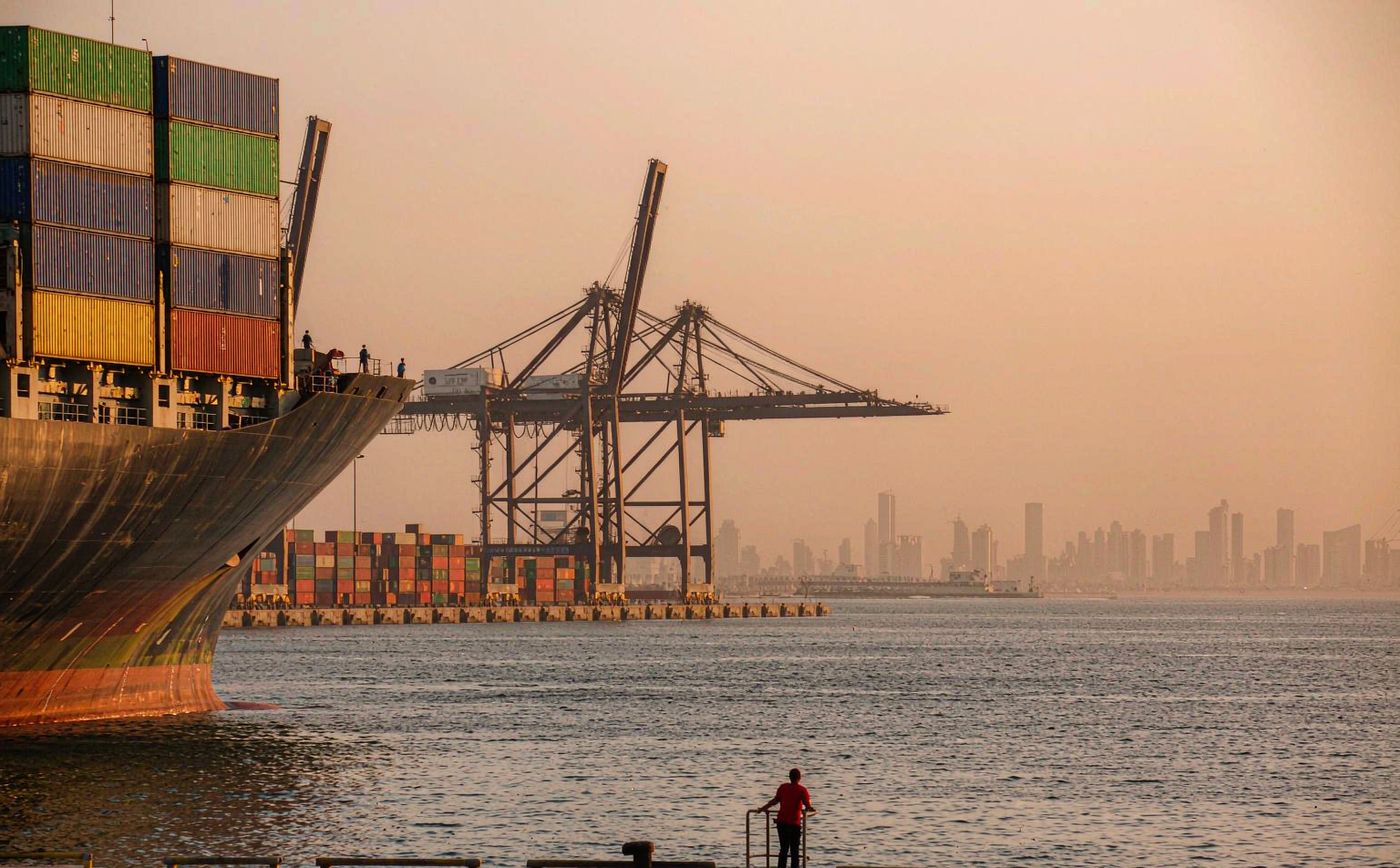
How to Ship from China to the UAE: Jebel Ali, 5% Duty & Free Zone Rules
The United Arab Emirates is the easiest large market in the Gulf to import into and the easiest one to mis-plan. Three things decide how a shipment goes here, and the first of them surprises most first-time importers: Dubai is usually a distribution point, not a destination. A large share of what lands at Jebel Ali is not consumed in the UAE at all. It is stored, split, re-packed and sent onward to neighbouring Gulf markets and to East Africa. If that describes your business, your container should be planned as the first leg of a two-leg move, not as a delivery.
The scale behind that is real. Jebel Ali handled around 15.6 million TEU in 2025, its highest annual figure since 2015, and ranked among the ten busiest container ports in the world — the first Arab port to do so. It connects to more than 150 shipping lanes. Trade between China and the UAE has grown with it: China–UAE non-oil trade passed 111 billion US dollars in 2025, up sharply on the year before and crossing the 100 billion mark for the first time.
The second thing is the tax structure, which is genuinely low but not as low as the headline suggests. Customs duty is 5% for most goods, and a great many categories sit at 0%. But VAT at 5% is then charged on a base that already includes the duty, so the real burden on a standard-rated import is about 10.25% of the CIF value rather than 10%. The mechanism matters more than the percentage: if goods go into a free zone instead of the mainland, the duty is not triggered until they leave it.
The third is timing, and it is the one that costs first-time importers money. Product conformity approvals — ECAS, and TDRA for anything with a radio in it — have to be finished before the goods leave China. They rest on laboratory testing that takes weeks. A container that arrives without them does not get a quick fix at the port; it sits, and storage at Jebel Ali accrues daily after a short free period.
This guide is written for buyers importing from China for the first time. It covers the re-export question, the choice of emirate and port, transit times by sea, air and courier, trade terms and what port-to-port actually means, the duty and VAT arithmetic, free zones and the moment duty becomes payable, the approvals to finish in China, the documents and the attestation behind them, the clearance systems, the routing risk that has been affecting schedules, and how to tell whether a forwarder genuinely works this lane.
How your cargo moves: China to the UAE
Eight steps from your supplier's door to yours. The last four are the ones shaped by local rules.
- Pickup from your supplierWe collect the goods anywhere in China and bring them to our consolidation point.
- Export clearanceChina customs declaration filed and released before the goods move to the port.
- Loading and departureContainer loaded, sealed and handed to the carrier at the Chinese port.
- Main carriageOcean, air or rail movement booked on the route agreed for your cargo.
- Arrival at the gatewayDischarge at the port or airport of entry, recorded on the carrier's manifest.
- Import clearanceCustoms declaration filed locally, with duty and tax assessed on the declared value.
- Customs releaseGoods released into free circulation once duty and tax are settled.
- Final deliveryOnward movement to your delivery address, warehouse or nominated depot.
Duty rates, VAT rates and clearance times move, and the figure that applies to your goods is the one set for your commodity code on the day of clearance. We check the current position against your code before your goods sail and confirm it to you in writing — ask for that check when you request a quote.
What shipping to the UAE looks like when Dubai is not the final stop
Ask most new importers where their goods are going and they will say Dubai, even when the buyer is in Riyadh, Doha, Kuwait City, Muscat or Dar es Salaam. That is not sloppiness — it is how the region's logistics actually work. Jebel Ali is the deepest, best-connected port between Asia and the Gulf, and the free zone next to it, JAFZA, lets goods sit under customs suspension, be re-packed or re-labelled, and move onward without UAE duty ever being paid on the import leg.
Planning for that changes four concrete things.
- How the bill of lading is consigned. A container destined for a free zone has to be declared into that zone. If your forwarder books it as an ordinary mainland import, the duty is assessed at the border and you will struggle to recover it.
- Whether duty is paid at all. Goods that land in JAFZA and leave again by sea or air to another country pay no UAE customs duty. Goods that cross from JAFZA into the Dubai mainland pay the 5% at that moment, on the original CIF value.
- Whether you need one certificate set or two. If the final destination is a third country, that country's conformity rules still apply at the end, and its paperwork has to be right at the point of re-export.
- How much time you allow. A two-leg move has two sets of cut-offs. Missing the onward sailing in Dubai is as expensive as missing the first one in Shenzhen.
If your goods are genuinely for the UAE market, say so plainly when you book, and say whether the consignee is a mainland-licensed company or a free zone entity. It is the single piece of information that decides whether you pay 5% at the border or nothing at all.
There is also a sourcing reason this matters. If a Chinese supplier offers you DDP to Dubai, ask who the importer of record is. A Chinese company cannot hold a UAE trade licence, so a DDP quote on this lane depends on a licensed local entity acting as importer. That arrangement can be perfectly legitimate, but you should know whose licence is being used, because that party is the one customs will hold responsible for the declaration, the valuation and the duty.
Choosing the emirate: Jebel Ali, Khalifa and the northern ports
The UAE is a federation of seven emirates, and customs administration runs partly at emirate level. In practice your choice is usually made for you by where the importer's trade licence sits, but it is worth knowing what the options are.
| Port or airport | Emirate | What it is good for |
|---|---|---|
| Jebel Ali | Dubai | The main gateway. Most China services call here directly, and JAFZA sits alongside it. Best connectivity, most forwarder options, deepest re-export ecosystem. |
| Khalifa Port | Abu Dhabi | Serves the capital and the industrial base around it. Useful when your consignee's licence and warehouse are in Abu Dhabi, and increasingly relevant for industrial cargo. |
| Khorfakkan and Fujairah | Sharjah / Fujairah | East coast ports outside the Gulf. They appear on some services and can be relevant when routing inside the Gulf is constrained. |
| Port Khalid and Hamriyah | Sharjah | Alternatives for northern emirates, and sometimes used when Jebel Ali terminals are congested. |
| DXB and DWC | Dubai | Air cargo. Dubai International handles high volumes of belly and freighter capacity; Dubai World Central at Al Maktoum handles a large share of pure freight and is built for growth. |
| AUH and SHJ | Abu Dhabi / Sharjah | Air alternatives. Sharjah in particular is a significant air freight gateway for the northern emirates. |
The declaration system follows the emirate: Mirsal2 for Dubai Customs, FASAH for Abu Dhabi Customs, and a federal portal run by the Federal Customs Authority that has been harmonising the picture across the country. For a first-time importer this mostly means one thing — your broker needs to be licensed in the emirate you are clearing in, and the documents your forwarder prepares in China have to match what that system expects.
Free zones follow a similar logic. JAFZA at Jebel Ali is the largest and the one most China re-export flows use. DAFZA sits at Dubai airport and suits air cargo. DMCC is set up for commodities trading. KIZAD serves Abu Dhabi, and SAIF Zone and Hamriyah serve Sharjah. Each has its own registration and its own documentation, and a forwarder who is not registered with the zone in question cannot clear into it.
Three ways in from China, and the days each one takes
There are three realistic ways to move commercial cargo from China to the UAE. There is no rail option, and road is not a through-mode on this lane.
| Mode | Typical transit | When it fits |
|---|---|---|
| Sea freight FCL | Around 18 to 25 days port to port from Shanghai, Shenzhen or Ningbo to Jebel Ali | Volume above roughly 15 to 20 cubic metres, or anything where the landed cost per unit matters more than the calendar. |
| Sea freight LCL | Around 20 to 28 days, plus consolidation and deconsolidation at both ends | Smaller volumes, often five to ten days slower door to door than the vessel time alone suggests. |
| Air freight | Around 3 to 7 days airport to airport from Shanghai Pudong or Guangzhou to Dubai | High value density, launch dates, spare parts, samples that are too big for courier. |
| Express courier | Around 2 to 4 days door to door | Documents, samples and small e-commerce parcels. Duty and VAT still apply. |
Two qualifiers matter more than the numbers themselves. First, these are port-to-port and airport-to-airport figures. Add export handling in China, clearance in the UAE and local delivery, and the door-to-door total is meaningfully longer — for LCL, the consolidation and deconsolidation steps at each end are usually what surprise people. Second, transit on some China–Gulf services has run a few days longer than it did in 2024, because vessels have at times been routed the long way round rather than through the region's normal approaches. Treat any figure your forwarder gives you as an estimate tied to a specific rotation, and ask for the rotation.
We do not publish freight rates on this page, and you should be sceptical of any site that does for this lane. Ocean freight on China–Gulf services moves with capacity, bunker costs and season, and the number that matters for your budgeting is the structure: base ocean freight, plus origin charges in China, plus destination charges in the UAE, plus duty and VAT, plus inland delivery. Ask a forwarder to quote those separately so you can see which part moved when the price changes. See our local charges page for how the destination side is typically built up.
Trade terms on a UAE shipment, and who clears it
The trade term you agree with your supplier decides who pays for what and, more importantly, who carries the risk at each point. It does not decide who is legally the importer — that is always the party named on the customs declaration, and in the UAE that party must hold a trade licence.
- EXW (Ex Works) — the supplier's responsibility ends at their door. You arrange collection in China, export clearance, everything. Cheapest on the invoice, most work for you, and it puts Chinese export paperwork on your shoulders.
- FOB (Free On Board) — the supplier gets the goods onto the vessel and clears Chinese export. You take over from there. This is the term most experienced buyers use on this lane because it keeps export compliance with the party who can actually do it.
- CIF (Cost, Insurance and Freight) — the supplier pays freight and insurance to Jebel Ali, but risk passes at the Chinese port, and you still handle import clearance. Buyers often assume CIF means "delivered". It does not.
- DAP or DDU (Delivered At Place / Delivered Duty Unpaid) — delivered to a named address, with import duty and VAT for you.
- DDP (Delivered Duty Paid) — the supplier or their agent handles everything including duty and tax. Convenient, but on this lane it depends on a licensed UAE importer of record. Ask who that is before you accept the quote, and understand that you lose visibility of the declared value.
Port to port versus airport to airport. Goodhope's ocean service runs port to port and our air service runs airport to airport. That means we handle the international leg and the export side in China, while UAE import clearance, duty and VAT payment and the final delivery are arranged by the importer of record and their broker. We coordinate directly with that broker, and we say so rather than pretending to be a door-to-door carrier in a country where we cannot hold the licence.
One more point that catches first-time buyers: the declared value. UAE customs assesses duty on the CIF value, and it has access to the invoice, the bill of lading and the manifest. Under-declaring to save 5% is not a clever trick here — it is a valuation dispute waiting to happen, with penalties and a much slower second shipment.
How one container travels from a Shenzhen factory to a Dubai door
The product is classified before anything is booked
You or your broker fix the commodity code for each item. That code sets the duty rate, tells you whether the product is regulated, and determines whether an ECAS certificate is needed. Doing this after the goods are made is the most common and most expensive mistake on this lane.
Conformity approvals are finished in China
For regulated categories, testing and registration run in parallel with production, not after it. Laboratory testing takes weeks, and the application is made by the UAE-licensed importer. See the approvals section below.
Collection and consolidation
We collect from the factory, or from several factories if you are buying from more than one supplier, and consolidate into one container where that is what the volumes call for. Our consolidated shipment and warehouse services exist for exactly this.
Export clearance and the verified gross mass
The shipment clears Chinese export customs, and the container's verified gross mass is filed. A wrong or late VGM means the container does not load.
The ocean leg, and the bill of lading
The vessel sails. We book the service, issue the bill of lading and give you tracking. Ask at this stage whether the call at Jebel Ali is direct or whether the container tranships — it affects the arrival date more than anything else.
Arrival, manifest and declaration
The carrier files an advance manifest before arrival. Your broker files the import declaration, through Mirsal2 in Dubai or FASAH in Abu Dhabi, with the commodity code, the value and the supporting documents. Having this ready before the vessel berths is what keeps you inside the free time.
Assessment, and the risk channel
The system assesses duty and VAT and either releases or flags the shipment for inspection. A first-time importer, an unusual commodity code or an inconsistent value increases the chance of an examination.
Payment, delivery order and drayage
Duty, VAT and any excise are paid, the delivery order is released, and the container moves by truck to the consignee. If that consignee is a free zone entity, the movement is a zone transfer rather than a mainland release.
The empty container goes back
Free time covers both the loaded container at the terminal and the empty one at your door. Overrun either and you pay demurrage or detention by the day. Confirm both allowances with your forwarder before the vessel sails.
Duty at five percent, and the VAT stacked on top of it
The UAE applies the GCC common external tariff. In practice that means 5% on the CIF value for most goods, with a long list of strategic categories — many foods, medicines, raw materials and industrial inputs — at 0%. Alcohol carries 50% and tobacco 100%, and excise tax applies on top for tobacco, energy drinks, carbonated drinks and sweetened drinks.
Then comes VAT. It is 5%, introduced in 2018 and among the lowest in the world, and it is charged on a base that includes the CIF value plus the duty — plus any excise. The arithmetic for a standard-rated mainland import looks like this:
| Step | Calculated on | Effect |
|---|---|---|
| Customs value | CIF: goods, insurance and freight to the UAE port | The base everything else sits on |
| Customs duty | 5% of CIF (0% for exempt categories) | Adds to the VAT base |
| Excise, where applicable | Tobacco, energy drinks, carbonated and sweetened drinks | Adds to the VAT base as well |
| VAT | 5% of CIF + duty + excise | Recoverable as input tax if you are registered |
| Effective burden | Around 10.25% of CIF for a standard-rated import | Not 10% — the duty is inside the VAT base |
A VAT-registered business reclaims the import VAT as input tax on its return. Businesses with taxable supplies above 375,000 dirhams a year must register, and those above 187,500 dirhams may register voluntarily. Below that, the 5% is a real cost, not a cash-flow item, and it belongs in your landed cost model from the first quote.
On the low-value question, be careful. There is no federal threshold that exempts small consignments from duty across all seven emirates. Dubai Customs put an exemption in place in 2026 for cross-border e-commerce consignments valued at 1,000 dirhams or less, effective from August 2026, but it is a Dubai rule, it does not cover tobacco, vaping products, nicotine liquids or alcohol, and it does not remove the 5% VAT. Confirm the current position at your actual port of entry rather than assuming relief applies. See our customs regulations page for the wider picture.
On preferences: the UAE has been signing Comprehensive Economic Partnership Agreements at speed, but those preferences apply to goods originating in the partner country, and they are not something a Chinese-origin shipment can claim. China and the GCC have been negotiating a free trade agreement for years and talks were given fresh momentum in 2025. Whether any tariff lines are already in force for your specific commodity code is exactly the kind of question to put to your broker rather than assume either way.
If you are importing to sell on, remember that corporate tax exists here too — a 9% federal corporate tax applies to business profits above a threshold, from financial years starting in mid-2023. It is not an import tax and it is not collected at the border, but it belongs in the model if you are setting up a UAE entity.
Free zones, and why the duty clock starts when goods leave them
A UAE free zone is not a tax-free island in the vague sense the brochures suggest. It is a customs concept: goods inside a free zone are outside the UAE customs territory for duty purposes, held under customs suspension.
| Movement | Duty | What it means for you |
|---|---|---|
| China into a free zone | 0% | The import leg costs no duty. This is why Dubai works as a regional distribution base. |
| Free zone to free zone | 0% | Goods can move between zones without triggering duty. |
| Free zone to the UAE mainland | 5% on the original CIF value | The duty becomes payable at that moment — on the CIF value, not on your selling price to the mainland buyer. |
| Free zone to another country | 0% | Re-export. Duty was never paid, and none is due on the way out. |
Two traps sit inside that table. The first is procedural: clearing into a zone is not the same as clearing into the mainland, and it has to be done by an agent registered with that zone. A forwarder who is not registered cannot do it, and a shipment declared wrongly can be treated as a mainland import and assessed at the border. The second is commercial: if you import into JAFZA at a low CIF value and later sell into the mainland at a large markup, the duty is still calculated on the original CIF value, which is favourable — but only if the paperwork supports the value you declared at import.
For VAT, some free zones are Designated Zones, treated as outside the UAE for VAT purposes. Whether your zone is one affects the VAT treatment of the movement, so ask your broker rather than generalising from another importer's experience.
Product approvals to finish in China: ECAS, TDRA and food rules
This is the section that most first-time importers wish they had read three months earlier. The UAE runs a federal product conformity scheme, and for regulated categories the goods cannot clear without it.
ECAS, the conformity certificate
ECAS is run by the Ministry of Industry and Advanced Technology, MoIAT, the successor to ESMA. Regulated categories include low-voltage electrical goods and appliances, lighting, toys, cosmetics and personal care, detergents, textiles, food contact materials, construction materials such as cement, steel and cables, tyres and auto parts, and selected foods.
- The application is made by a UAE-licensed importer or their local representative, not by the Chinese factory. Your buyer, or a distributor, has to be the applicant of record.
- It rests on test reports from an accredited laboratory mapped to the applicable standard. Existing IEC or CB reports can often be reviewed, with gap testing where needed.
- The certificate runs for one year and is renewed annually. Some categories also require a factory assessment.
- Arabic labelling and documentation are required — labels, user manuals and the declaration of conformity.
- EQM, the Emirates Quality Mark, is a voluntary higher tier built on a factory audit, valid for three years. It is for established manufacturers shipping repeatedly.
Plan the timing honestly. Product registration and testing commonly take several weeks for a first application, sometimes longer for categories that need full testing rather than a report review. That work has to happen while the goods are being produced, not while they are on the water.
TDRA, for anything with a radio in it
Telecom and radio equipment sits under a separate regulator. If your product has Wi-Fi, Bluetooth, cellular or any radio module, you need TDRA type approval, which is a product-level approval valid for three years, plus a customs release permit for the shipment, plus a conformity card on the packaging. Missing type approval on wireless devices is one of the most common reasons telecom goods are held at UAE customs. And it is not limited to phones: smart home devices, wireless earbuds, Bluetooth speakers, trackers and anything with a radio module are in scope.
Food, cosmetics and chemicals
Food imports into the mainland need a municipality food import permit, Arabic labelling with origin and shelf-life information, and Halal certification for meat and poultry products. Cosmetics fall within ECAS. Chemicals sit on a spectrum: many are ordinary non-DG cargo needing a safety data sheet, some are genuinely dangerous goods needing full DG handling. The classification has to be made in China, because it determines whether the shipment can fly at all. See our dangerous goods page and the air freight to the UAE page for how that works on this lane.
The paperwork Dubai Customs expects, and the attestations behind it
The document set is conventional, and the failures are conventional too — a vague description, a value that does not match the manifest, an origin certificate without the right attestation.
- Commercial invoice — showing the commodity code, a specific product description rather than "machine parts" or "gifts", country of origin, the trade term, the currency and the value.
- Packing list — item-level quantities, weights and dimensions.
- Bill of lading or air waybill — matching the consignee and the notify party your broker expects.
- Certificate of origin — issued in China, and depending on the product and the emirate it may need attestation or legalisation. Establish which level is required before the goods ship, because obtaining it afterwards is slow and the container is meanwhile accruing storage.
- Import permit or sector approval — for food, pharmaceuticals and medical devices, chemicals, telecom and other regulated categories.
- ECAS and TDRA documents — where the category is regulated.
- Insurance certificate — where the term requires it, and worth having regardless. See our cargo insurance page.
- Delivery order — released by the carrier's agent once duty, VAT and fees are settled.
Wood packaging, including pallets and crates, must meet ISPM-15, with the mark visible. It is checked, and non-compliant wood packaging can hold a shipment regardless of how good the rest of the paperwork is.
The attestation question is worth a phone call before you ship. Which level of certification your certificate of origin needs depends on the product, the emirate and the current practice at that port. Get it in writing from your broker, and build the time for it into your production schedule.
Clearance itself is usually quick — one to three days for a clean, unregulated import. What delays shipments is nearly always upstream: a certificate that was never obtained, a code that does not match, or a declaration filed after the vessel arrived. Free time at the terminal is commonly a matter of five to seven days, after which storage charges accrue daily and escalate. Our import clearance documents page lists what we ask for and why.
A private buyer and a UAE company holding a trade licence
Commercial importing in the UAE is done by a licensed entity. The importer of record on the declaration must hold a trade licence whose activity covers the product category — a licence that does not cover, say, food or medical devices will be rejected even when every other document is perfect. This is a genuinely different setup from Europe, where an EORI number and a VAT registration are usually enough to get started.
An individual can receive goods for personal use, and those shipments are assessed for duty and VAT like any other, with no general low-value relief to rely on. But an individual cannot act as a commercial importer of record. If you are starting out and your volumes do not justify a UAE entity yet, the usual routes are to trade through a licensed distributor, or to buy on a term that puts import clearance with the party that holds the licence.
A free zone entity is a third path and a popular one. It can import into its zone, store and re-export without paying duty, and it is cheaper to set up than a mainland company with the same reach. What it cannot do is sell directly into the UAE mainland — that needs a mainland-licensed distributor, which is precisely the moment the 5% becomes payable.
Sourcing online or at a fair in Guangzhou, and how each order ships
Where you found the supplier changes what the first shipment looks like.
Online sourcing
Orders from Alibaba or 1688 usually start small and come from one factory. That typically means LCL, air freight or courier for the first shipment, with the unit economics improving only at the second or third order. The risk to watch is that small shipments carry a higher cost per unit and a higher chance of a documentation shortcut, because nobody wants to spend three weeks on a conformity certificate for a trial order. Our Alibaba and 1688 sourcing page covers how we handle these.
Sourcing at a fair
Orders placed at the Canton Fair or a sector show tend to be larger and to come from several factories at once. That is where consolidation earns its money: several suppliers, one container, one declaration, one set of certificates. It also means collecting the right documents from each factory at the fair, while you are still face to face with them, rather than chasing them weeks later.
Either way, samples deserve a note. A sample sent by courier is still an import: it is assessed for duty and VAT, and there is no general relief threshold to shelter behind. If you are sending samples to several prospects in the region, say so when you book, because there are ways to structure that which do not cost you a surprise bill at the recipient's door.
Two forwarders on one shipment: the China end and the UAE end
New importers often ask whether they need a freight forwarder at all, or assume the shipping line will handle it. The line moves the container. It does not consolidate your five suppliers, clear Chinese export, chase a certificate or tell you which free zone your goods belong in.
What you actually need is a forwarder at each end, and they are not interchangeable.
- The China-side forwarder collects from the factory or factories, consolidates, handles export clearance and the VGM, books the service, issues the bill of lading, prepares the documents that the UAE declaration depends on, and tells you honestly when a certificate is going to be a problem.
- The UAE-side broker or forwarder holds the local licence, files the declaration in Mirsal2 or FASAH, arranges inspection if the shipment is flagged, pays or accounts for duty and VAT, and handles the delivery order and the inland move.
They have to talk to each other. Most of the expensive delays on this lane happen in the gap between them — a bill of lading issued before the commodity code was confirmed, a certificate of origin without the attestation the broker needs, a consignee line that does not match the trade licence. Goodhope works the China end and coordinates directly with your broker, and we would rather hand you the documents early than explain a storage bill later.
How to judge a forwarder who claims to book Jebel Ali
Nearly every forwarder in China will tell you they ship to Dubai. Here is what separates one that does from one that resells the booking.
- Ask whether the call is direct. A service that tranships is not wrong, but it changes the arrival date. A forwarder who cannot tell you the rotation is quoting from a schedule, not a booking.
- Ask which terminal and which system. Jebel Ali or Khalifa? Mirsal2 or FASAH? These are basic.
- Ask whether the destination is a free zone or the mainland, and whether they are registered with that zone. If they have not asked you this before quoting, they are guessing at the duty treatment.
- Ask what the free time is at destination, and who pays demurrage. An answer of "don't worry" is a warning sign.
- Ask what the commodity code is. A quote given without one is a placeholder, because the code sets the duty rate and the certificate requirement.
- Ask whether ECAS or TDRA applies to your product. If they have never heard of either, they have not cleared regulated goods into the UAE.
- Ask who the importer of record is on a DDP quote. If the answer is vague, the arrangement is probably being brokered through a licence you know nothing about.
Red flags: a rate quoted before you have said what the goods are; a promise that "everything is included" without naming the broker; pressure to declare a lower value; silence on free time; and any suggestion that documentation can be fixed after arrival. On this lane, it usually cannot.
Categories that arrive in the UAE with conditions attached
| Category | What is required or checked |
|---|---|
| Consumer electronics and appliances | ECAS conformity, often ECAS-Ex or RoHS coverage, energy efficiency labelling for some appliances, Arabic manuals and labels. Battery-powered goods need a battery declaration for air freight. |
| Wireless and telecom devices | TDRA type approval, a customs release permit for the shipment, and the conformity card on the packaging. This catches Bluetooth and Wi-Fi products, not just phones. |
| Cosmetics and personal care | ECAS, Arabic ingredient labelling, and product registration before sale — Montaji in Dubai, Jawdah in Abu Dhabi. |
| Food and food contact | Municipality food import permit, Arabic labels with origin and shelf life, Halal certification for meat and poultry, and for food contact materials the relevant UAE standard. |
| Textiles | Covered by the UAE textile scheme, with labelling and fibre composition requirements. |
| Building materials | Regulated standards for cement, steel, cables, insulation and plumbing fittings. Documentation is checked closely on these. |
| Tyres and auto parts | Conformity to the UAE standards for tyres, brakes, filters and child restraints. |
| Chemicals | A safety data sheet, and a correct classification between ordinary non-DG cargo and regulated dangerous goods — decided in China, not at the port. |
| Everything on wood | ISPM-15 compliant pallets and crates, with the mark visible. |
Finally, the calendar. The UAE working week and public holidays do not line up with China's, and office hours shorten during Ramadan, which affects how quickly approvals, bank transfers and broker responses move. Ports and terminals keep running, but the paperwork slows. Check our holidays page when you are fixing a production date around a launch.
Three shipments into the UAE, and why each one went that way
The examples below are illustrative. They describe typical routing decisions on this lane, not specific customer shipments.
Twelve cubic metres of small appliances from two Shenzhen factories
Two suppliers, one buyer in Dubai, and a product with Bluetooth in half the range. LCL was the obvious mode at that volume, but the real decision was timing: ECAS registration and TDRA type approval ran during production, because the Bluetooth models could not have cleared without them. The container was consolidated in Shenzhen so both factories shipped as one declaration, and the declaration was filed before the vessel berthed to stay inside the free time. Had the buyer booked first and asked about certificates later, the same goods would have sat at Jebel Ali while testing was arranged.
A forty-foot high cube of building materials into JAFZA for onward sale
A regional trader importing to re-export. The container was consigned into the free zone rather than the mainland, so no UAE duty was paid on the import leg, and the goods were stored and split for onward movement to neighbouring markets. The duty clock only starts if any part of that stock is sold into the UAE mainland, at which point 5% is due on the original CIF value. The critical detail was booking a forwarder registered with JAFZA — without that, the shipment would have been assessed at the border.
Three hundred kilograms of spare parts with a line down
Urgent, high value relative to weight, and needed in days. Air freight from Guangzhou to Dubai was the right mode, priced on chargeable weight rather than actual weight, and the buyer's broker had the declaration ready so the goods cleared the same week they landed. Express courier would have been faster door to door but costlier at that weight, and sea freight was simply not an option on the timeline. Duty and VAT were still assessed — urgency does not exempt anything.
Red Sea and Gulf routing, and the buffer worth building in
Schedules on China–Gulf services have been less predictable than they were a few years ago. Vessels have at times been routed the long way round rather than through the region's usual approaches, adding days to the voyage and prompting carriers to publish advisories and surcharges. Capacity on the lane has broadly stabilised, but the routing question is a live one.
What that means practically:
- Ask for the rotation, not just the transit figure. A quoted number is meaningless without knowing whether the service calls Jebel Ali directly or tranships, and by which route.
- Build a buffer of a week or two around any date you cannot move — a store opening, a project milestone, a contract delivery date.
- Book earlier than feels necessary. Space on the popular China–Gulf rotations tightens before peak seasons, and a container that misses its sailing waits for the next one.
- Ask whether an east coast port is an option. Khorfakkan and Fujairah sit outside the Gulf and appear on some services; depending on your consignee's location they can be worth considering.
None of this is a reason to avoid the lane. It is the largest and best-served trade corridor between China and the Gulf, and it works every day. It is simply a reason to plan with a margin and to ask two more questions than you would on a short, predictable route.
Why choose Goodhope for China to UAE freight
- We work this lane as a re-export lane, not just a delivery lane — we ask whether the goods are for the UAE mainland or for onward movement before we quote, because that decides the duty treatment.
- Ocean freight port to port and air freight airport to airport — into Jebel Ali or Khalifa by sea, into DXB, DWC, AUH or SHJ by air, with the service and the rotation named rather than a generic "about three weeks".
- We ask what the goods are before we quote — because on this lane that determines whether ECAS, TDRA or a municipality permit is going to be needed, and when.
- Consolidation across suppliers — several factories, one container, one declaration, one set of certificates. See our consolidated shipment and pick up pages.
- Documents prepared for the declaration, not for the file — the invoice, packing list and origin documents your broker in Mirsal2 or FASAH actually needs, prepared in China while there is still time to fix them.
- Regulated cargo handled properly — see our dangerous goods and quarantine inspection pages.
- Plain answers on what we do not do — UAE import clearance, the trade licence, ECAS and TDRA registration and the duty and VAT payment belong to the importer of record and their representatives. We coordinate with them and we do not pretend otherwise.
- NVOCC licensed, since 2012 — see our why partner with Goodhope page.
Why importers use Goodhope on this lane
Six things that are different about working with us on China to the UAE shipments.
Price a shipment into the UAE with the duty question settled first
Send us the product and its commodity code if you have it, the carton count and total weight or volume, the supplier's city, and whether the consignee is a mainland company or a free zone entity. We will name the service and whether it calls Jebel Ali directly, tell you the rotation, and flag the approvals and attestations that apply before the vessel sails — so the 5% and the 5% on top of it are numbers you have modelled rather than discovered.
Frequently asked questions
Which port should cargo from China go to in the UAE?
Jebel Ali in Dubai handles the overwhelming majority of UAE container volume and is the port most China services call at directly. Khalifa Port serves Abu Dhabi. Khorfakkan and Fujairah sit on the east coast outside the Gulf and appear on some services. The decision is usually made by three things: which emirate holds the importer's trade licence, whether the destination is a free zone or the mainland, and which service your forwarder can actually book with a direct call rather than a transhipment connection. Air cargo runs through Dubai International, Dubai World Central, Abu Dhabi and Sharjah.
How long does shipping from China to the UAE take?
Sea freight from Shanghai, Shenzhen or Ningbo to Jebel Ali is commonly quoted at around 18 to 25 days port to port for a full container, with LCL around 20 to 28 days plus the time for consolidation and deconsolidation at both ends. Air freight from Shanghai Pudong or Guangzhou to Dubai is around 3 to 7 days airport to airport, and express courier around 2 to 4 days door to door. Door-to-door totals add clearance and local delivery on top. Regional routing disruption has lengthened some sailings by a few days compared with 2024, so treat any figure as an estimate to be confirmed against the actual rotation.
How much duty and tax will I pay importing into the UAE?
Most goods carry a customs duty of 5% calculated on the CIF value under the GCC common external tariff, and hundreds of strategic categories including many foods, medicines and raw materials are at 0%. Alcohol and tobacco carry far higher rates. On top of the duty, VAT at 5% is charged on a base that already includes the CIF value and the duty, so the effective burden on a standard-rated import is about 10.25% of CIF rather than 10%. Excise tax applies additionally on tobacco, energy drinks, carbonated drinks and sweetened drinks. If the goods go into a free zone rather than the mainland, the duty is not triggered until they move out of it.
Is there a duty-free threshold for small parcels into the UAE?
There is no federal low-value threshold that exempts small consignments from duty across the whole UAE. Dubai Customs issued a declaration in 2026 that exempts cross-border e-commerce consignments valued at 1,000 dirhams or less from customs duty, effective from August 2026, but it is a Dubai rule rather than a federal one, it excludes tobacco, vaping products, nicotine liquids and alcohol, and it does not remove the 5% VAT. Confirm the position at your actual port of entry with your broker rather than assuming a threshold applies.
What is the difference between importing into a free zone and into the UAE mainland?
Goods imported into a free zone such as JAFZA are held under customs suspension: no duty is payable while they stay there, they can be stored, processed and re-exported, and duty is triggered only when they are transferred into the mainland for local sale, calculated on the original CIF value rather than your selling price. That makes free zones the natural base for regional distribution. The catch is that the clearance has to be done by an agent registered with that zone and declared into it correctly, otherwise goods can be treated as a mainland import and assessed at the border.
Do I need ECAS or TDRA approval before shipping from China?
Often yes, and it has to be arranged before the goods ship rather than after they land. ECAS is the federal product conformity scheme run by MoIAT, formerly ESMA. It applies to regulated categories including low-voltage electrical goods, lighting, toys, cosmetics and personal care, detergents, textiles, food contact materials, building materials, tyres and auto parts. The certificate is applied for by the UAE-licensed importer or their local representative, rests on test reports from an accredited laboratory, runs for one year and needs Arabic labelling and documentation. Telecom and radio products additionally need TDRA type approval plus a customs release permit for the shipment and a conformity card on the packaging.
Can an individual import from China into the UAE?
Commercial importing is done by an entity holding a UAE trade licence whose activity covers the product category, because the importer of record on the customs declaration must be licensed. An individual buying for personal use can receive goods, but the shipment is still assessed for duty and VAT, and there is no general low-value relief. If you are buying for resale, the practical route is to trade through a licensed entity, either your own or a distributor's, and to hold a VAT registration once taxable supplies pass the mandatory threshold.
What documents does UAE Customs require?
A commercial invoice showing the commodity code, a specific product description, country of origin, the trade term and the value in a stated currency, a packing list with weights and dimensions, the bill of lading or air waybill, a certificate of origin which may need attestation depending on the product and the emirate, and any sector permit for regulated goods such as food, pharmaceuticals or chemicals. ECAS and TDRA documents are added where they apply. The declaration is filed electronically, through Mirsal2 in Dubai and FASAH in Abu Dhabi, and carriers file an advance manifest before arrival.
How long does customs clearance take in the UAE?
With clean documents and an unregulated product, clearance is commonly one to three days. The delays that hurt are almost never the customs assessment itself: they are a missing conformity certificate, a commodity code that does not match the product, an attestation that was not obtained in China, or a container sitting past its free time because the declaration was filed after arrival. Free time at the terminal is commonly a matter of five to seven days, after which storage accrues daily, so the goal is to have the declaration ready before the vessel berths.
What does a Chinese freight forwarder handle on a UAE shipment?
On the China side we collect from the factory or from several factories, consolidate where that makes sense, handle export customs clearance and the verified gross mass, book space and issue the bill of lading or air waybill, and provide tracking. Goodhope works port to port on ocean freight and airport to airport on air freight, names the service and whether it calls Jebel Ali directly or through a connection, and coordinates with your UAE broker. UAE import clearance, the trade licence and VAT position, ECAS and TDRA registration and the duty and VAT payment belong to the importer of record. Where a conformity certificate is likely to be needed, we raise it before the vessel sails.