
Home / Shipping to Uganda / How to Ship from China to Uganda
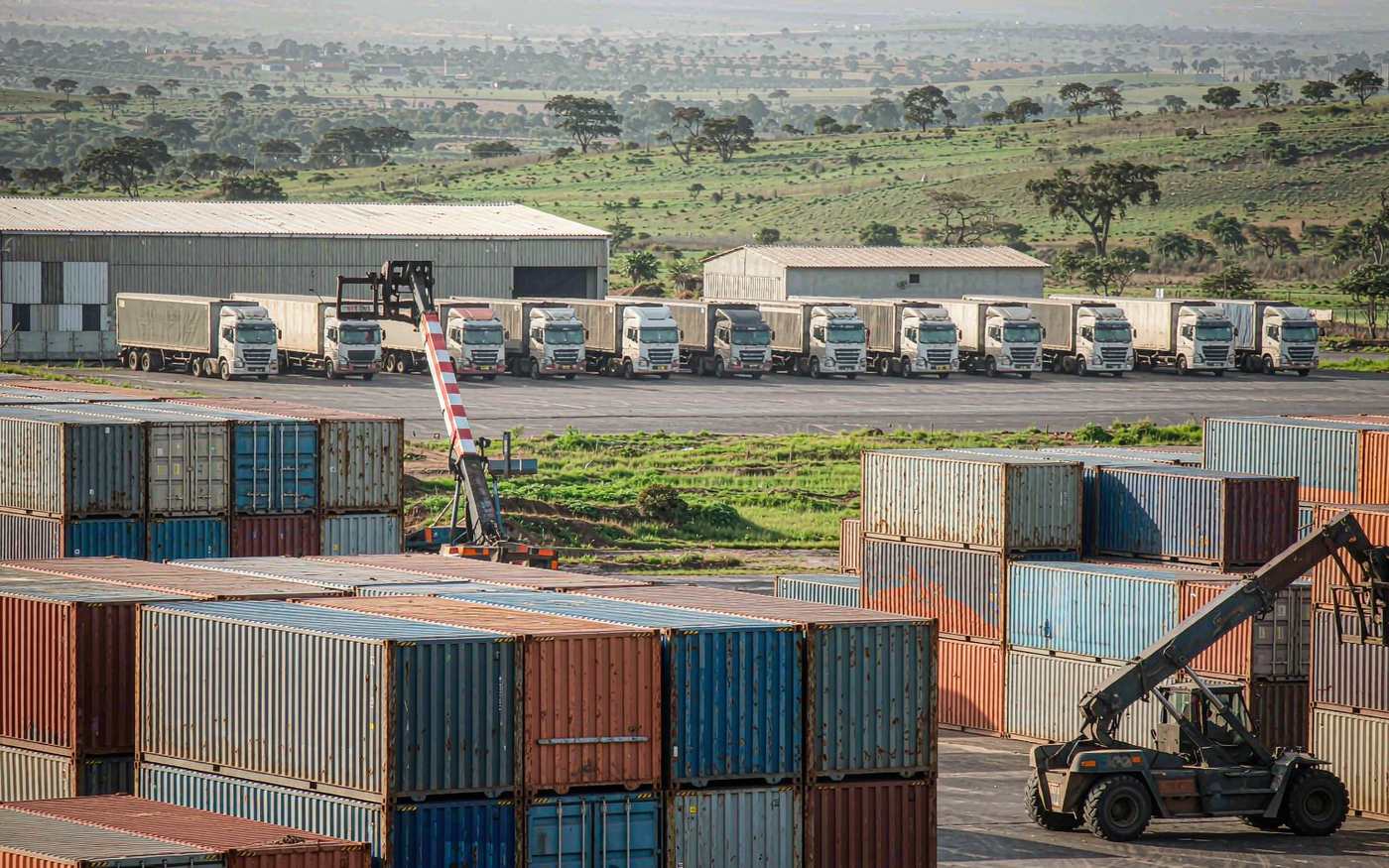
How to ship from China to Uganda
Uganda is landlocked, and every container arrives at a port in Kenya or Tanzania and travels overland across a border before it can be cleared. That makes the corridor choice the first real decision, and it means your shipment has a transit regime and an import regime to satisfy rather than just one.
The single document that decides whether a first shipment goes smoothly is the certificate of conformity. Regulated goods are inspected in China before they load, and the compulsory standards list was revised at the start of 2026, so products that were outside the scheme last year may now be inside it.
This guide covers how the two corridors compare, what the certificate involves, how the declaration is filed, how duty and the several taxes stack up, the rules on used vehicles and used clothing, and the sequence from a Chinese supplier to a Kampala address.
At a glance
Customs is administered by the Uganda Revenue Authority under the East African Community Customs Management Act, with declarations lodged in ASYCUDA World and documents submitted through the Uganda Electronic Single Window. Duty follows the East African Community common external tariff at 0, 10, 25 or 35 per cent of CIF value by band. VAT is 18 per cent on CIF plus duty, a withholding tax of 6 per cent applies to many importers, an import declaration fee of 1 per cent applies from July 2025, and an infrastructure levy of 1.5 per cent sits on the customs value. Regulated goods need a certificate of conformity from the Uganda National Bureau of Standards before shipment, and the compulsory standards schedule was revised with effect from January 2026.
How your cargo moves: China to Uganda
Eight steps from your supplier's door to yours. The last four are the ones shaped by local rules.
- Pickup from your supplierWe collect the goods anywhere in China and bring them to our consolidation point.
- Export clearanceChina customs declaration filed and released before the goods move to the port.
- Loading and departureContainer loaded, sealed and handed to the carrier at the Chinese port.
- Main carriageOcean, air or rail movement booked on the route agreed for your cargo.
- Arrival at the gatewayDischarge at the port or airport of entry, recorded on the carrier's manifest.
- Import clearanceCustoms declaration filed locally, with duty and tax assessed on the declared value.
- Customs releaseGoods released into free circulation once duty and tax are settled.
- Final deliveryOnward movement to your delivery address, warehouse or nominated depot.
Duty rates, VAT rates and clearance times move, and the figure that applies to your goods is the one set for your commodity code on the day of clearance. We check the current position against your code before your goods sail and confirm it to you in writing — ask for that check when you request a quote.
Landlocked, and reached through Kenya or Tanzania
Sea freight for Uganda is discharged at Mombasa in Kenya or at Dar es Salaam in Tanzania, and then moves overland. This is not one shipment with a long tail, it is a sea leg, a transit regime and an import clearance, and each has its own documents.
The practical consequence is that the inland leg is a first-class cost, not an afterthought. It is frequently larger than the ocean freight, and a quotation that ends at the port is not comparable with one that ends in Kampala. Always ask whether the inland movement is included and get it as a separate figure if it is not.
Air freight lands at Entebbe, avoids the transit regime entirely and suits urgent or high-value cargo. For a first shipment with a tight deadline, that avoidance is often worth more than the rate difference suggests.
The Northern Corridor or the Central Corridor: how the choice is made
The Northern Corridor runs from Mombasa through Malaba or Busia, roughly 1,150 kilometres to Kampala. It generally offers more sailings and faster inland transit, and is the default for most Uganda-bound cargo.
The Central Corridor runs from Dar es Salaam through Mutukula or by lake route, roughly 1,400 kilometres or more. It can price competitively and it diversifies risk when the northern route is congested.
| Corridor | Port | Usually suits |
|---|---|---|
| Northern Corridor | Mombasa, Kenya | Most Uganda-bound cargo; more sailings, faster inland transit |
| Central Corridor | Dar es Salaam, Tanzania | Competitive pricing and risk spreading when the north congests |
Inland transit from Mombasa to Kampala is commonly quoted at three to seven days by truck once the goods are cleared, and border inspections at Malaba or Busia typically add one to three days. Air freight from China is commonly three to seven days door to door.
Goods usually travel under a transit bond and are cleared at inland terminals, and the transit bond and the regional electronic seal record have to be in place. A missing or expired transit bond is a well-documented cause of long delays at the border.
Incoterms when the goods cross two borders before they are cleared
EXW leaves you with the Chinese export formalities and no control over the loading. On a lane with a pre-shipment certificate tied to the goods, that is the wrong place to start.
FOB is the term most experienced buyers use: the supplier loads in China, risk passes there, and you control the carriage, the corridor and the forwarder. It also keeps the inland leg visible as its own number.
CIF and CIP cover carriage and insurance to the port of discharge, which is Mombasa or Dar es Salaam, not Kampala. Read the term carefully; CIF Mombasa does not include the haul into Uganda.
DAP or DDP to a named place in Uganda moves the whole burden to the seller, including under DDP the Ugandan duty and taxes. It is convenient, but you are delegating the corridor choice, the certificate and the declaration of value.
From a Chinese supplier to a Kampala warehouse, stage by stage
Order confirmed, corridor chosen, trade term agreed
Decide the corridor at quotation stage and write an Incoterms 2020 term into the contract.
Register for a TIN and check your EFRIS position
The importer needs a Uganda Revenue Authority tax identification number, and VAT-registered importers need it linked to the electronic invoicing system.
Obtain the UNBS certificate of conformity
Regulated goods are inspected in China before loading, and the compulsory standards list changed at the start of 2026.
Lodge the import declaration before the goods depart
The declaration is filed electronically, with documents uploaded through the single window.
Pickup, consolidation and export declaration in China
Your forwarder collects or consolidates, declares the export and provides the seal number and loading photographs.
Sea leg and transit bond
The container is discharged at Mombasa or Dar es Salaam and moves inland under bond with an electronic seal record.
Border inspection and arrival inland
Physical inspection may take place at Malaba, Busia or Mutukula.
Assessment and payment
The authority assesses duty, VAT, withholding tax and the levies through ASYCUDA World, and the goods are released on payment.
Delivery to the final address
Release, then delivery to Kampala or another inland destination.
The UNBS certificate, and what changed in the January 2026 standard list
Uganda runs a pre-export verification of conformity under the Uganda National Bureau of Standards. Regulated products are inspected in China and covered by a certificate of conformity before they ship, and in practice very few product categories are exempt.
The compulsory standards schedule was revised with effect from 1 January 2026, with dozens of changes reported including new standards and amendments. If your product was outside the list last year, check again before you book. Assuming last year's answer still holds is the most common way to arrive uncovered.
Arriving without a certificate where one is required carries a penalty reported as a surcharge of 15 per cent of CIF value plus inspection fees and the delay that comes with them. Small consignments below a low FOB threshold may sail without one but remain subject to destination inspection.
Amendments to an issued certificate are now tightly controlled, and some elements cannot be amended at all, so get the invoice, the HS code and the consignee details right before the certificate is issued.
Lodging the import declaration before the goods arrive
The import declaration form is lodged electronically before the cargo arrives, and the supporting documents are uploaded through the Uganda Electronic Single Window. That window is where the several government agencies involved see your file, so a document uploaded late is a document nobody has seen.
Declarations are lodged by a licensed clearing agent. Self-clearing is technically possible and practically rare. Once lodged, the authority applies risk channels: green for release, yellow for a document check, red for physical verification.
Valuation is the chronic friction point. Undervalued paperwork looks cheaper until the authority reprices the consignment and adds penalties, and post-clearance audits reconcile declared values against your books and payment records. Genuine invoices matched by documented payments to the supplier are the reliable way through.
EAC duty rates, VAT, withholding tax and the levy
| Charge | Indicative rate | Base |
|---|---|---|
| Import duty | 0, 10, 25 or 35 per cent by EAC band | CIF value |
| VAT | 18 per cent | CIF plus duty, plus excise where it applies |
| Withholding tax | 6 per cent, exemptions available | Customs value |
| Import declaration fee | 1 per cent from July 2025 | Customs value |
| Infrastructure levy | 1.5 per cent, with exemptions | Customs value |
| Excise | Product-specific | Drinks and some others |
The bands follow the East African Community common external tariff: raw materials and most capital goods at zero, semi-finished goods at 10 per cent, finished consumer goods at 25 per cent, and finished goods also available within the community at 35 per cent.
Stacked together, the taxes on a typical finished consumer goods shipment commonly add a substantial share on top of CIF value. Plan the full stack into your selling price before you order, because the landed figure is not the invoice figure plus freight.
Used vehicles at fifteen years, and the levy on used clothing
Used vehicles must be covered by a pre-export certificate of conformity or roadworthiness before shipping, and arriving without one brings a penalty reported at 15 per cent of CIF value plus destination inspection.
The age limit is fifteen years. A proposal to cut it to thirteen was withdrawn in 2026, so the fifteen-year cap remains in force. If a broker tells you the limit has already changed, they are working from a draft that did not become law.
Used clothing and worn articles carry an environmental levy, reported at 30 per cent of CIF and increased from 15 per cent in the 2026/27 measures. That is a large number and it applies to a category many first-time importers assume is cheap to bring in.
Other controlled lines need permits before importation, including agricultural products, pharmaceuticals and chemicals, issued by the relevant ministries and authorities, and wood packaging must carry the ISPM-15 treatment mark.
The paperwork behind a Kampala release
| Document | What it has to show |
|---|---|
| Bill of lading or air waybill | Consignee matching the importer of record |
| Commercial invoice | Matching the packing list line by line |
| Packing list | Weights, dimensions, carton count |
| Import declaration form | Lodged electronically before arrival |
| Certificate of conformity | From the standards bureau, obtained before shipment |
| Certificate of origin | Issued by CCPIT or China customs; a preference form where one applies |
| Transit bond and seal record | For cargo moving through Kenya or Tanzania |
| Permits | Agricultural, pharmaceutical and chemical lines |
The tax identification number has to be active, and for VAT-registered importers it needs to be linked to the electronic invoicing system, because input VAT on imports is only recoverable where the supporting invoices comply.
Keep every document for several years. Post-clearance audits reconcile declared values against records, and the file is your evidence.
Importing in your own name or through a registered Ugandan business
An individual can import personal and non-commercial goods, and small consignments are handled more simply. Commercial importing is done by a registered entity holding a tax identification number, and that route is also the one that lets you account for and recover VAT.
The VAT difference matters. At 18 per cent on CIF plus duty, the recoverable amount on a container is significant, and an individual pays it with no route to recovery.
Register before the goods ship, because the declaration needs the number. If you have no Ugandan entity, appoint a licensed clearing agent before the container sails, agree the scope in writing, and agree who pays storage if the file stalls at the border.
A China forwarder plus a URA-licensed agent
In China your forwarder collects or consolidates, books the space, handles the export declaration, arranges the certificate inspection and obtains the bill of lading. At destination a licensed clearing agent lodges the declaration, manages the transit bond and deals with the border.
On a landlocked lane the most useful question you can ask is which corridor they would use and why. A good answer names the port, the border post and a reason tied to sailings or congestion. A vague answer means they are selling you a rate, not a route.
Judge them on specifics: legal entity name, years trading, a written quotation split into origin charges, ocean freight, the inland leg and the destination charges, and a clear statement of who pays storage if clearance is delayed. Ask whether they will handle the certificate of conformity, because that question separates agents who work this corridor from those who do not.
Warning signs are consistent: pressure to declare a lower value, no written breakdown, an address that is only a phone number, and vagueness about who carries the risk during the voyage.
Three sample orders into Uganda
These three examples are illustrative, not client records. They show how the route follows from the cargo.
A 40ft container of furniture for a Kampala retailer. Full container through Mombasa on the Northern Corridor, with the certificate of conformity obtained in China before loading and the declaration lodged before departure. The lesson is that the certificate and the declaration are both pre-departure steps.
Twelve cubic metres of electronics from three suppliers in Shenzhen. Consolidated and shipped as LCL, with the compulsory standards list checked against each product line first, because the January 2026 revision brought new categories in. The lesson is to check the list, not last year's answer.
A used vehicle for a small business. Pre-export roadworthiness certificate obtained before shipping, and the fifteen-year age rule confirmed before the purchase was committed. The lesson is that the age rule is the gate, and the certificate is the penalty you avoid.
Why importers use Goodhope on this lane
Six things that are different about working with us on China to Uganda shipments.
Get your Uganda shipment moving
Tell us the commodity, the volume and the delivery town, and we will come back with a corridor-by-corridor comparison that puts the certificate of conformity on the calendar before you book.
Get a quote Talk to usRelated pages
Frequently asked questions
Which corridor should I use for Uganda?
The Northern Corridor through Mombasa is the default, offering more sailings and faster inland transit at roughly 1,150 kilometres to Kampala. The Central Corridor through Dar es Salaam can price competitively and spreads risk when the northern route congests.
Do I need a certificate of conformity?
For regulated products, yes, obtained in China before shipment. Very few categories are exempt, and the compulsory standards schedule was revised with effect from January 2026, so check the current list rather than last year's.
What happens if goods arrive without the certificate?
A penalty reported as a 15 per cent surcharge on CIF value, plus inspection fees and the resulting delay. Small consignments below a low FOB threshold may sail without one but are still inspected on arrival.
How much duty and tax will I pay?
Duty follows the East African Community bands at 0, 10, 25 or 35 per cent of CIF value. VAT is 18 per cent on CIF plus duty, withholding tax is 6 per cent for many importers, there is a 1 per cent import declaration fee and a 1.5 per cent infrastructure levy.
What is the age limit for used vehicles?
Fifteen years. A proposal to reduce it to thirteen was withdrawn during 2026, so the fifteen-year cap remains in force. A pre-export certificate is also required, with a penalty reported at 15 per cent of CIF for arriving without one.
How long does clearance take?
Compliant shipments are commonly quoted at two to five working days, with border inspections at Malaba or Busia adding one to three days. Missing documents are the main cause of delays measured in weeks.
Can an individual import commercially?
Not really. Personal and non-commercial goods can be imported by an individual, but commercial importing needs a registered entity with a tax identification number, which is also the route that allows VAT recovery.
Do I need a transit bond?
Yes for cargo moving through Kenya or Tanzania, together with an electronic seal record. A missing or expired transit bond is a documented cause of long delays at the border.
How long does sea freight take from China to Kampala?
Sea transit plus inland movement is commonly quoted in the range of 30 to 45 days or more door to door depending on the corridor and the border, with air freight around three to seven days door to door.
Do I need both a forwarder in China and a clearing agent in Uganda?
Yes. The forwarder handles origin work and the certificate inspection. The licensed agent lodges the declaration, manages the transit bond and clears at the border or inland terminal.