
Home / Shipping to Vanuatu / How to Ship from China to Vanuatu
Shipping from China to Vanuatu, step by step
Goodhope Freight is a licensed NVOCC based in Shenzhen, registered as GD20230925153335, and has been moving cargo out of China since 2012. To Vanuatu we run full containers and shared containers port-to-port into Port Vila and Luganville, air freight airport-to-airport into Bauerfield International, and express parcels dispatched from our depot. Every service stops at the port, the airport or the depot. Your consignee arranges import clearance and collection.
Vanuatu is an archipelago of eighty-three islands, and the customs structure reflects a country that raises most of its revenue at the border rather than through income tax. That single fact explains both the duty rates and the strictness of the assessment. The Customs and Inland Revenue Department administers clearance on the ASYCUDA platform, and declarations are lodged by licensed customs agents rather than by importers directly.
Three things catch first-time importers here. The importer code, which has to be obtained before a declaration can be filed. The duty bands, which run higher than most people expect. And the two-month deadline, after which uncollected goods may be seized.
At a glance
Main ports: Port Vila on Efate and Luganville on Espiritu Santo · Main airport: Bauerfield International (VLI) · Currency: Vanuatu vatu · Customs authority: Customs and Inland Revenue Department, declarations on ASYCUDA World and lodged by licensed customs agents · Import duty commonly nil to 40 per cent of CIF, with higher rates on luxury lines · Value-added tax at 15 per cent, assessed on the CIF value plus duty · An importer code is required before a declaration can be filed · Goods must be cleared within two months of arrival · Official customs exchange rates are updated monthly
How your cargo moves: China to Vanuatu
Eight steps from your supplier's door to yours. The last four are the ones shaped by local rules.
- Pickup from your supplierWe collect the goods anywhere in China and bring them to our consolidation point.
- Export clearanceChina customs declaration filed and released before the goods move to the port.
- Loading and departureContainer loaded, sealed and handed to the carrier at the Chinese port.
- Relay through Australia or FijiVanuatu is served by regional services out of Brisbane, Sydney and Fiji, so the hub and the sailing date together set the arrival window.
- Discharge at Port Vila or LuganvilleContainers are worked at the two main ports; air cargo is handled at the Bauerfield cargo terminal.
- Importer code already in placeYour consignee must hold an importer code issued by the Customs and Inland Revenue Department before an agent can file.
- Declaration lodged by a licensed agentThe agent converts the CIF value into vatu at the official rate, applies the duty and then the 15 per cent tax.
- Charges settled and goods collectedDuty and tax are paid and the goods are collected. Clearance must be completed within two months of arrival.
Duty rates, VAT rates and clearance times move, and the figure that applies to your goods is the one set for your commodity code on the day of clearance. We check the current position against your code before your goods sail and confirm it to you in writing — ask for that check when you request a quote.
Port Vila and Luganville, and the outer islands
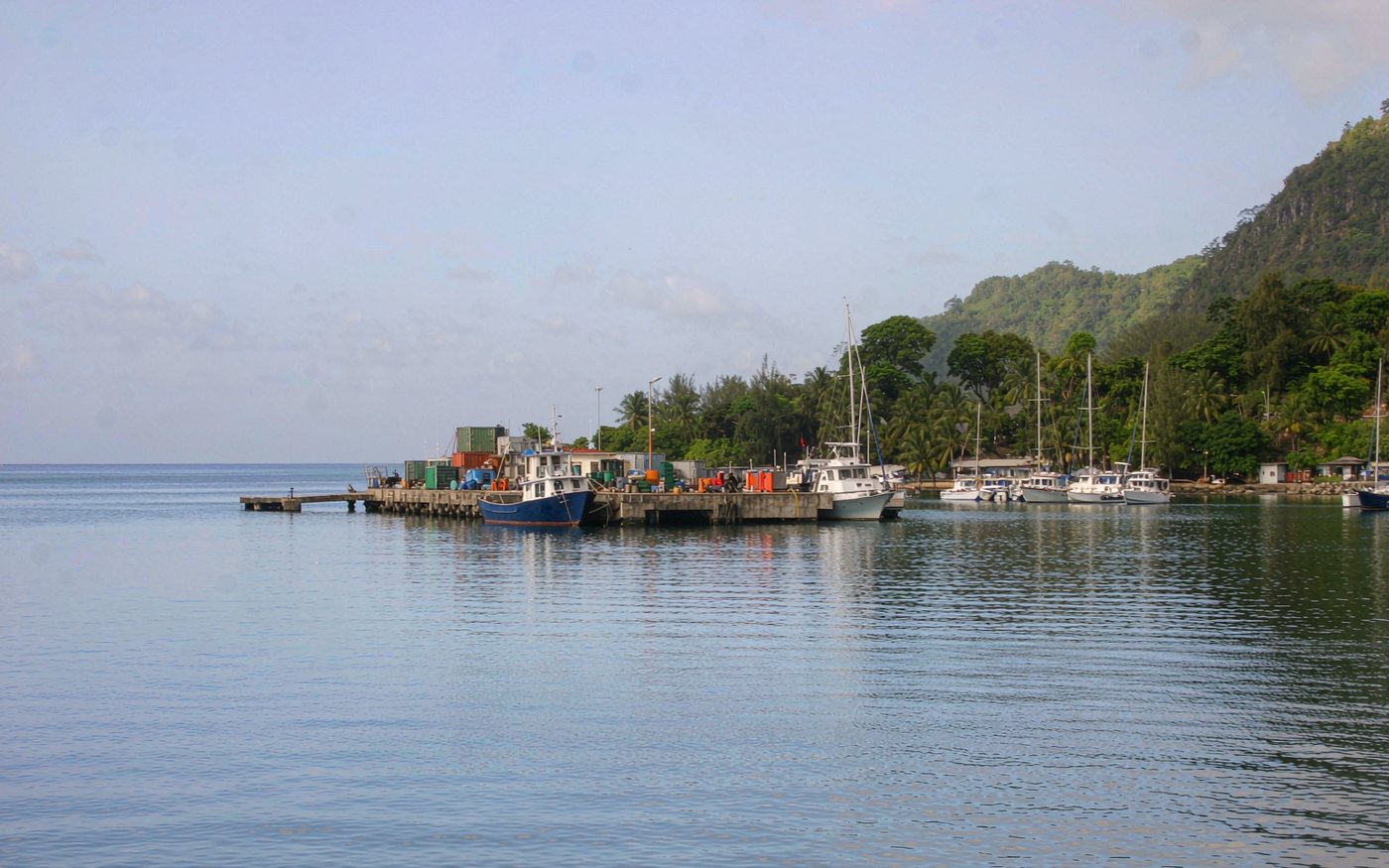
Port Vila on Efate is the main port and handles most imports. Luganville on Espiritu Santo is the second working port and serves the northern islands. Bauerfield International, just outside Port Vila, handles the air freight.
Cargo for Tanna, Ambrym and the other outer islands is transhipped from Port Vila by inter-island vessel, which is a separate leg with its own schedule. If the final address is not on Efate or Espiritu Santo, tell us at quotation stage so that leg is quoted rather than discovered.
Matching the service to an archipelago order
Below roughly 15 cubic metres a shared container is the practical answer, rated by volume with a weight conversion and a one cubic metre minimum. Between about 15 and 28 cubic metres, run the comparison between a 20GP and the per-cubic-metre rating both ways. Above that, a 40GP or 40HC normally wins for bulky light cargo.
Air freight into Bauerfield works from about 45 kg and suits electronics, medical supplies, urgent spares, marine equipment and resort supplies with a fixed opening date. There is no direct service from China, so consignments connect through Australia or Fiji, and the connection sets the transit.
Duty that runs high, because there is no income tax
Vanuatu raises most of its government revenue at the border, and the tariff reflects that. Typical rates run from nil to 20 per cent for most items, with basic necessities such as food and clothing often in the 5 to 15 per cent range and luxury goods attracting rates that reach considerably higher.
The practical consequence is that the duty line on a Vanuatu entry is usually the largest single component of the landed cost after the goods themselves. Model it against your actual commodity codes before you commit to a purchase order, not after the container has sailed.
VAT at 15%, and the exchange rate that feeds it
Value-added tax is charged at 15 per cent and is assessed on the CIF value plus the duty, not on the invoice value alone. The customs value is converted into vatu before the calculation, using official exchange rates that are updated on a schedule published by the department.
That conversion is worth knowing about, because the figure your buyer pays depends partly on the rate in force when the entry is lodged. On a large order, ask the agent for an assessment close to the arrival date rather than relying on one made at booking.
The importer code, and the two-month deadline
A commercial importer must hold an importer code issued by the Customs and Inland Revenue Department before a declaration can be filed, and the application needs business registration documents. Without it, the goods sit at the port while the importer is registered, which is the most avoidable delay on this lane.
There is also a hard deadline: goods must be cleared from customs control within two months of arrival, after which they may be seized and forfeited. That sounds generous and is, until a permit is missing or the importer code is still being processed. Get both in hand before the vessel sails.
Where a chandler's order differs from a personal parcel
Vanuatu has a substantial marine and tourism sector, and a great deal of what arrives is yacht and resort equipment rather than retail stock. Those are commercial imports and are assessed as such, regardless of who ends up using them.
Personal effects and household goods are treated differently, and eligibility for reduced treatment depends on the importer's status and needs confirming with the department in advance. If you are shipping commercial stock, document it as commercial from the outset, because the entry basis follows the documents.
Packing for a volcanic island with a wet season
Goods are lifted several times and then sit on an exposed wharf in a hot, humid climate with a pronounced wet season from November to April. Cartons adequate for a direct journey are not adequate for a Pacific relay. Palletise or strap wherever the commodity allows.
Internal moisture protection for textiles, paper goods, electronics and metal finishes is cheap insurance here, more so than on most lanes. Timber packaging must be treated and marked to the international standard, and quarantine enforces it.
Documents and permits for a Vanuatu entry
- Commercial invoice with a specific description, quantities, values, currency and country of origin.
- Packing list matching the invoice, with weights and dimensions.
- Bill of lading for sea freight or air waybill for air freight.
- Certificate of origin, including the regional preference form where the buyer asks for one.
- Import permit for restricted goods, including agricultural products, food and pharmaceuticals, and for vehicles.
- Importer code issued to the consignee before the declaration is lodged.
Declarations are lodged by licensed customs agents, so appointing one is not optional. Give them the documents before the vessel arrives rather than after, because the two-month clock starts at arrival.
How port choice shifts your Vanuatu calendar
Sea freight into Port Vila typically runs in the region of 35 to 50 days port-to-port depending on the Chinese origin and how the service connects, with most cargo relaying through Australia or Fiji. Air cargo is governed by the connection.
Clearance is commonly measured in days rather than weeks with a complete file and a licensed agent. For an outer island address, add the inter-island leg on top and build buffer into each leg rather than into one.
Our scope, and the consignee's scope
We handle collection from your supplier, consolidation and loading in Guangdong, export declaration, and the main carriage into Port Vila, Luganville or Bauerfield. We issue the transport document, send status updates at each handover, and tell you which service the booking targets.
Your consignee obtains an importer code, appoints a licensed customs agent, settles the duty and the 15 per cent tax, and collects within the clearance deadline. We set out those requirements before the goods sail. We do not offer door-to-door delivery to Vanuatu.
Setting up your first Port Vila shipment
Send us the commodity, the volume and weight, the pickup address in China and whether the consignee collects at Port Vila or Luganville. We will show the service options, quote the charges line by line, and set out the duty band and the 15 per cent tax on your codes.
Before we book, confirm two things with your buyer: that they hold an importer code, and whether any line in the container needs a permit. Those two answers decide whether the shipment clears in days or sits on the wharf.
Actual moves headed to Vanuatu
Five shipments bought in China and delivered into Vanuatu, told end to end — where the order came from, how it moved, where it nearly went wrong, and how it finished. Client names are withheld at their request; the situations and the handling are what we deal with on this lane.
Resort supplies for an outer island, 40HC out of Shenzhen
The purchase. A resort on an island beyond Efate was importing furniture, kitchen equipment, linens and maintenance stock from three factories in Guangdong.
The move. We consolidated into one 40HC, shipped port-to-port to Port Vila, and arranged the inter-island transfer at the same time as the ocean booking.
Where it nearly went wrong. The buyer had assumed the outer island address meant a local delivery off Port Vila. It is a separate vessel with its own schedule, and booking it after discharge would have left the container on the wharf through a wet-season week.
How it finished. We quoted and scheduled both legs together and pre-alerted the agent while the container was still on the feeder. The goods cleared at Port Vila, transferred on the first available sailing, and arrived before the resort reopened.
A first container with no importer code
The purchase. A buyer new to importing placed a container order of mixed retail stock and expected to arrange registration on arrival.
The move. One 20GP, shipped port-to-port to Port Vila, with a licensed customs agent appointed by the consignee.
Where it nearly went wrong. A declaration cannot be filed until the importer holds a code issued by the Customs and Inland Revenue Department. The goods sat at the port while registration was completed, and storage accrued the whole time.
How it finished. On the repeat order we made the importer code a precondition of booking and told the buyer to apply while the goods were on the water. The second container was entered the day it discharged.
Marine equipment where the duty band surprised
The purchase. A marine supplier was importing winches, rigging, electronics and spare parts for the charter fleet.
The move. Just over 18 CBM moved as a full 20GP to Port Vila, collected by the consignee.
Where it nearly went wrong. Marine electronics and finished equipment sit well above the basic-necessity bands, and the buyer had costed the order from a general consumer goods rate. The duty line came out as the largest single component of the landed cost.
How it finished. We set out the assessment against the actual codes before the second order shipped. The buyer restructured the order towards lines that were classed more favourably, and the landed cost came back inside the plan.
Air freight of boat spares into Bauerfield
The purchase. A charter operator needed a gearbox and control units urgently during the season, buying from a single supplier in Guangdong.
The move. Roughly 210 kg booked as air freight, connecting through Australia into Bauerfield, collected at the cargo terminal.
Where it nearly went wrong. Air freight is rated on chargeable weight, whichever is greater, actual or volumetric, and a gearbox in an export crate converts poorly. The buyer had quoted on actual weight.
How it finished. We had the supplier build the smallest crate that still protected the casting, and quoted on the chargeable figure. The consignment moved on the first available connection and was collected within days.
Timber packaging that failed quarantine
The purchase. A buyer imported building materials with the supplier packing heavy lines on untreated timber pallets.
The move. One 40HC, shipped port-to-port to Luganville because the consignee works from the northern port.
Where it nearly went wrong. The pallets were neither treated nor marked to the international standard. Quarantine held the consignment, and having the customs entry in order did not release it.
How it finished. On the repeat order we made certified treated timber a condition of packing and checked the marking before the container was sealed. The second shipment passed quarantine and cleared on schedule.
Why importers use Goodhope on this lane
Six things that are different about working with us on China to Vanuatu shipments.
Get a Vanuatu shipment priced
Tell us the commodity, the volume, the pickup address in China and which port your consignee collects from. We will name the service, flag any permit, and quote the duty band and the 15 per cent tax as separate lines.
Get a quote Talk to usRelated pages
Frequently asked questions
What is an importer code and do I need one?
It is a code issued by the Customs and Inland Revenue Department to registered commercial importers, and a declaration cannot be filed without it. Apply while the goods are still on the water, because without it the consignment sits at the port and storage accrues.
What is the VAT rate on imports into Vanuatu?
Value-added tax is charged at 15 per cent, assessed on the CIF value plus the duty rather than on the invoice value alone. The customs value is converted into vatu at the official rate in force, which the department updates on a published schedule.
How high are the duty rates?
Typical rates run from nil to 20 per cent for most items, with basic necessities such as food and clothing often in the 5 to 15 per cent range and luxury goods attracting considerably higher rates. The duty line is usually the largest single component of the landed cost.
Is there a deadline for clearing goods?
Yes. Goods must be cleared from customs control within two months of arrival, after which they may be seized and forfeited. That is comfortable with a complete file and uncomfortable if a permit is missing or the importer code is still being processed.
Should my container go to Port Vila or Luganville?
It depends on where your consignee works. Port Vila on Efate is the main port and handles most imports. Luganville on Espiritu Santo serves the northern islands. Cargo for other islands tranships from Port Vila by inter-island vessel, which is a separate leg.
Which airport does air cargo arrive at?
Bauerfield International (VLI) just outside Port Vila. There is no direct service from China, so consignments connect through Australia or Fiji and the connection sets the transit time.
Do you offer door-to-door delivery to Vanuatu?
No. Sea freight is port-to-port, air freight is airport-to-airport, and express courier dispatch ends at the depot. Your consignee holds an importer code, appoints a licensed customs agent, settles the charges and collects.
What documents are needed to clear goods?
A commercial invoice, a packing list, the bill of lading or air waybill and a certificate of origin, plus an import permit for restricted goods including agricultural products, food, pharmaceuticals and vehicles. Timber packaging must meet the international standard.
Can lithium batteries be shipped to Vanuatu?
Built-in and packed-with lithium batteries can be carried subject to proper documentation and packaging. Standalone battery shipments and other dangerous goods classes are assessed case by case and must be declared at quotation stage so we can book with a carrier that accepts the class.
What details do you need to price a shipment?
The commodity, the volume and weight, the pickup address in China, and the port your consignee collects from. We will show the service options, quote the charges line by line, and set out the duty band and the 15 per cent tax on your codes.