
Home / Shipping to Western Sahara / How to ship from China to Western Sahara
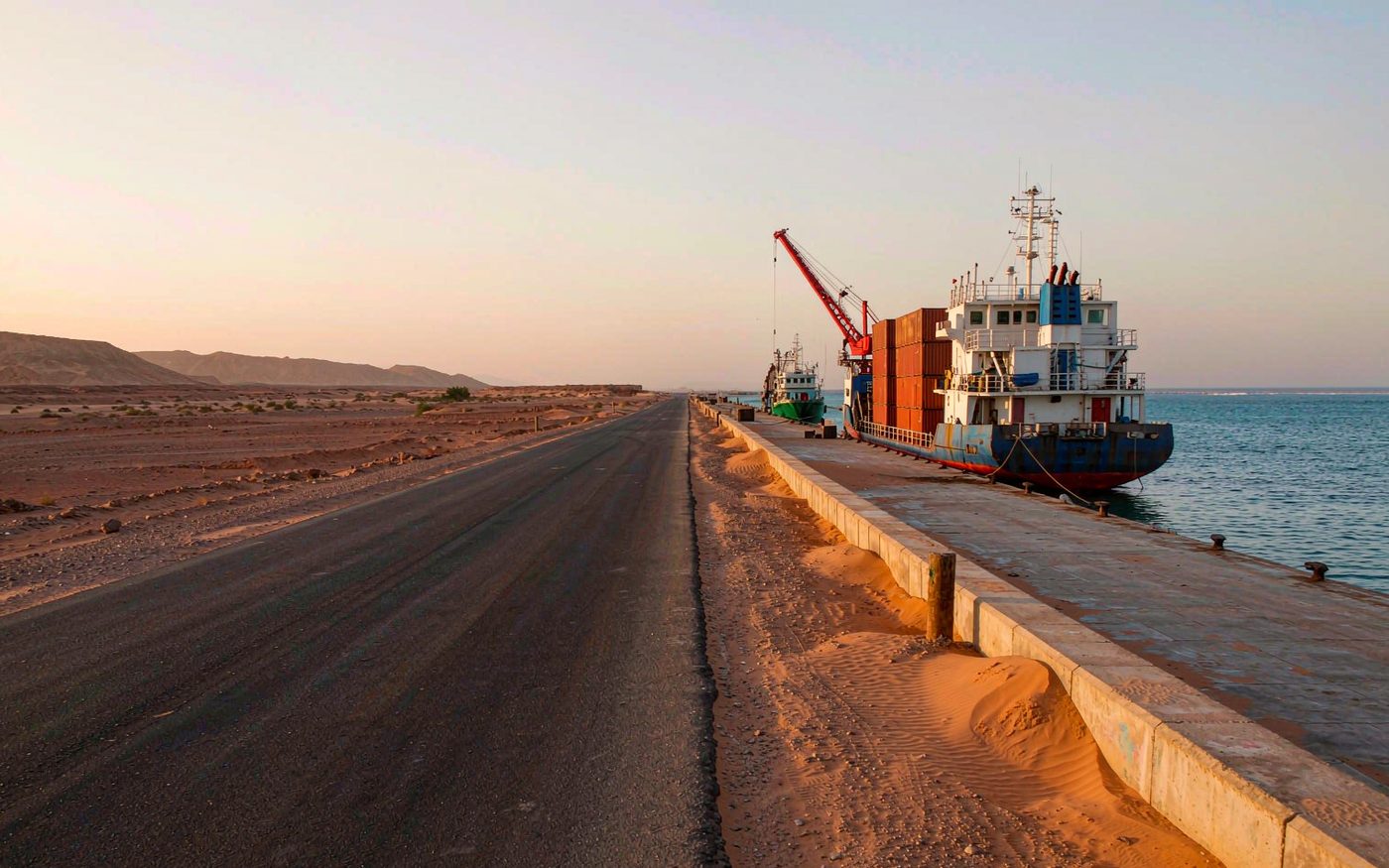
How to ship from China to Western Sahara
Note on status. Western Sahara is a territory whose status is the subject of an unresolved international dispute, and this page takes no position on it. What follows is operational only: how commercial cargo physically reaches the territory, which administrative procedures it is cleared under in practice, and what a shipper needs to arrange. It is not legal advice and not a determination of sovereignty.
The practical consequence for a freight quotation is that there is no separate tariff, no separate customs authority and no separate currency to plan against. Commercial cargo destined for the territory is routed and cleared through the procedures applied by the administration that controls the area, which in practice means Moroccan customs documentation, Moroccan import credentials and the Moroccan dirham.
That is not a complication to be afraid of, but it is one to be honest about. Below are the two ports, the routing that actually works, the credentials your buyer needs, and the categories of goods that attract scrutiny.
At a glance
Gateways: the ports of Laayoune and Dakhla; Hassan I Airport at Laayoune and Dakhla Airport for air. Currency: Moroccan dirham. Clearance: Moroccan customs procedures and import credentials in the areas administered by Morocco. Routing: no direct deep-sea service, so container cargo transships at Tangier Med or Casablanca and moves south by road. Sea transit from China is typically 30 to 45 days; air is commonly 7 to 14 days.
How your cargo moves: China to Western Sahara
Eight steps from your supplier's door to yours. The last four are the ones shaped by local rules.
- Pickup from your supplierWe collect the goods anywhere in China and bring them to our consolidation point.
- Export clearanceChina customs declaration filed and released before the goods move to the port.
- Loading and departureContainer loaded, sealed and handed to the carrier at the Chinese port.
- Main carriageOcean, air or rail movement booked on the route agreed for your cargo.
- Arrival at the gatewayDischarge at the port or airport of entry, recorded on the carrier's manifest.
- Import clearanceCustoms declaration filed locally, with duty and tax assessed on the declared value.
- Customs releaseGoods released into free circulation once duty and tax are settled.
- Final deliveryOnward movement to your delivery address, warehouse or nominated depot.
Duty rates, VAT rates and clearance times move, and the figure that applies to your goods is the one set for your commodity code on the day of clearance. We check the current position against your code before your goods sail and confirm it to you in writing — ask for that check when you request a quote.
A territory with no tariff of its own: which rulebook clears your goods
Start here, because it determines everything else. Western Sahara does not publish its own customs tariff and does not operate an independent customs administration that an international carrier can file against. Commercial imports into the areas administered by Morocco are processed under Moroccan customs procedure.
For you as the shipper, that means the document set, the importer credentials and the duty calculation are Moroccan ones. Your buyer must be able to receive as a Moroccan-registered importer, not as an importer in a separate jurisdiction.
Plan the shipment as a Morocco shipment with a long southern road leg, and confirm with your consignee which authority will process the entry before you book.
Laayoune and Dakhla, the two ports that take commercial cargo
Laayoune, on the Atlantic coast, is the larger of the two commercial ports and handles the majority of regional cargo. Dakhla, several hundred kilometres to the south, is the second gateway and takes general cargo and containers.
Both are working ports with container handling, but neither is a deep-sea hub. Neither appears on the rotation of the major east-west mainline services from China, which is why the transshipment step below is not optional.
Naming the correct port matters. If your buyer is in Dakhla and you ship to Laayoune, the inland leg is a long one on a road with limited freight capacity, and the cost of that mistake lands on the quotation.
Routing through Tangier Med or Casablanca, then the long road south
The routing that works for container cargo is China to a Moroccan Mediterranean or Atlantic hub, then south. Tangier Med is the usual transshipment point, with Casablanca as the alternative, and from there the container moves by road or by a domestic coastal service to Laayoune or Dakhla.
Treat the road leg as a leg in its own right with its own transit time and its own risk, not as a footnote to the ocean freight. It is long, it crosses remote country, and it is subject to checkpoint delays.
Book the ocean leg and the southern leg against the same plan. A container that arrives at Tangier Med without a confirmed onward movement will wait, and demurrage on a hub port is expensive.
Air freight into Hassan I and Dakhla, and where cargo changes aircraft
Air cargo goes to Hassan I Airport at Laayoune or to Dakhla Airport. Neither is served by a direct freighter from China, so goods fly from a Chinese hub to Casablanca or to a European gateway and then transfer to a domestic sector.
The domestic sector is the constraint. Frequency is limited and the aircraft are narrow-bodied, so a pallet that flies easily out of Guangzhou may not fit the onward service. Confirm the aircraft type and the door dimensions before you promise an air delivery date.
For time-critical cargo this routing typically lands at 7 to 14 days door to airport, but the variance is wide and sits almost entirely in the domestic connection.
The ICE number and the Moroccan import credentials your consignee needs
A Moroccan importer needs an ICE number, the common company identifier used across Moroccan tax and customs filings, together with tax registration and, where relevant, a foreign trade register entry. Your buyer must hold these and they must appear on the declaration.
Ask for them before you ship, not after. A consignment that arrives with an importer who cannot be identified in the system does not get released, and the storage charges start immediately.
If your buyer is a new or small business, this is the single most common cause of a stalled first shipment to the territory. Make it the first question you ask.
Dirham invoicing, exchange control and how payment actually clears
The Moroccan dirham is the currency in use. It is not freely convertible, so the mechanics of getting money in and out matter more here than in most destinations.
In practice, the export sale is usually invoiced in a convertible currency such as US dollars or euros, while the destination charges, duty and local transport are settled in dirham by the importer. Confirm with your buyer how they will fund the dirham side before you agree a delivery term.
Avoid quoting a duty-and-tax-inclusive delivered price unless you have a Moroccan broker confirming the calculation. There are too many variables on the southern leg to absorb them into a fixed price.
Duty and tax figures to treat as indicative rather than final
You will find freight websites quoting a duty range of roughly zero to 30 per cent by HS code and a standard 20 per cent VAT figure for this destination. Treat both as indicative. They derive from Moroccan schedules rather than from any separate territorial tariff, and the applicable treatment depends on how and where the entry is processed.
There is also no reliable de minimis threshold published for the territory. Do not assume small consignments pass free.
Before you quote, have a Moroccan broker confirm three things for your specific HS code: the duty rate, whether VAT applies and at what rate, and whether any additional internal tax is levied on entry.
Vehicles, drones and telecoms gear: the shipments that draw scrutiny
Three categories attract more attention than most. Vehicles, including used vehicles, are tightly regulated and often restricted by age. Drones and radio transmitting equipment need authorisation. Telecommunications equipment can require type approval.
Anything that could plausibly have a military application will be examined closely given the territory's security situation. That includes night-vision equipment, GPS trackers, certain batteries and ruggedised communications gear.
Declare precisely and include model numbers, serial numbers where applicable, and an end-use statement from the consignee. A generic description on a shipment of electronics into this region is an invitation to an examination.
Packing for a long road convoy in desert heat
After the ocean leg your container spends a long time on a road in extreme heat with high diurnal temperature swings. Pack for that, not only for the voyage.
Use moisture barriers and desiccant, avoid adhesives and plastics that fail above 45 degrees Celsius, and strap and block anything that can shift on an uneven road. Marking in French as well as English helps at checkpoints.
Documents and the sequencing that keeps the truck moving
The core set is the standard one: commercial invoice with HS codes and a precise description, packing list, bill of lading or air waybill, certificate of origin, and any permit your goods require.
Sequencing is what keeps things moving. Get the certificate of origin issued in China before sailing, send the document set to the broker while the container is still at sea, and confirm the consignee's ICE number is on file before the vessel arrives.
Then insure it. A cargo policy at 110 per cent of invoice value is cheap relative to the exposure on a multi-leg move ending with a long desert road.
Why importers use Goodhope on this lane
Six things that are different about working with us on China to Western Sahara shipments.
Straight cases unpacked: Western Sahara
Five shipments bought in China and delivered into Western Sahara, told end to end — where the order came from, how it moved, where it nearly went wrong, and how it finished. Client names are withheld at their request; the situations and the handling are what we deal with on this lane.
Which rulebook · first enquiry · China to Laayoune
The purchase. A buyer new to importing asked what tariff this territory sets on its own.
The move. Consolidated cargo cleared under the customs procedures that apply in practice here, with the clearance path confirmed with the consignee's broker before booking.
Where it nearly went wrong. This territory sets no tariff of its own, and clearance runs under whichever administration processes the entry. Establishing that path with the consignee's broker is the first task, because it decides which documents exist at all.
How it finished. He confirms the path before booking. No entry of his has been prepared to the wrong rulebook since.
No direct service · routing · Shenzhen to Dakhla
The purchase. A first-time buyer asked for a direct sailing and planned around one.
The move. Consolidated cargo transshipped at a northern port with the road leg south booked together with the ocean freight.
Where it nearly went wrong. Container cargo transships and then moves by road, because there is no direct deep-sea service here. Quoting a direct transit is quoting a service that does not run, and the road leg is a substantial part of the journey.
How it finished. He books both legs together now. His transits have been realistic ever since.
The credentials · on the consignee · Ningbo to Laayoune
The purchase. A buyer assumed his own company documents were enough to clear the goods.
The move. Consolidated cargo with the consignee's import identification and credentials confirmed before the goods shipped.
Where it nearly went wrong. Clearance depends on the importer holding the right credentials, and those belong to the consignee rather than to the shipper. Confirming them after the vessel sails is confirming them while the container is already on the road.
How it finished. We confirm the credentials during production. Nothing of his has waited on them since.
Desert convoy · packing · Guangzhou to Western Sahara
The purchase. A buyer packed to his usual standard for a journey that ended with a long road convoy.
The move. Consolidated cargo packed and insured for heat and for the number of times it would be handled.
Where it nearly went wrong. The road leg south is long, hot and involves more handling than a normal import. Packing for the ocean leg alone produces damage that arrives after the sea journey went perfectly.
How it finished. He specifies packing for the whole journey now. Nothing has arrived damaged since.
Indicative figures · confirm before quoting · Shanghai to Western Sahara
The purchase. A buyer costed duty and tax from a comparison table and quoted his customer on it.
The move. Consolidated cargo with the duty and tax position confirmed for the actual entry before the price was agreed.
Where it nearly went wrong. Duty and tax figures for this territory are indicative rather than final, because they follow the administration that processes the entry. Quoting an indicative figure as a firm one is the fastest way to lose money on the lane.
How it finished. We confirm the position before quoting. His landed costs have been accurate every time since.
Why importers use Goodhope on this lane
Six things that are different about working with us on China to Western Sahara shipments.
Settle the clearance path before a carrier booking is made
Tell us the commodity, the HS code and the delivery town, and we will confirm which port to name, how the container moves south from Tangier Med or Casablanca, and what your consignee needs on file in Morocco before the vessel sails.
Get a quote Talk to usRelated pages
Frequently asked questions
Does Western Sahara have its own customs tariff?
No separate tariff or customs administration is published for the territory. Commercial cargo is in practice routed and cleared through Moroccan customs procedures, with Moroccan import credentials and the dirham. This page takes no position on the territory's international status.
Which port should I ship to?
Laayoune is the larger commercial port and handles most regional cargo; Dakhla is the second gateway to the south. Confirm which one your consignee actually uses, because the road leg between them is long.
Is there a direct service from China?
No. Container cargo transships at a Moroccan hub, usually Tangier Med or Casablanca, and then moves south by road or domestic coastal service. Air cargo transfers at Casablanca or a European gateway onto a domestic sector.
What credentials does the importer need?
An ICE number, the Moroccan common company identifier, together with tax registration and any foreign trade register entry. Without these on the declaration the consignment will not be released and storage charges begin.
What currency is used and how is payment made?
The Moroccan dirham, which is not freely convertible. Exports are normally invoiced in US dollars or euros while the importer settles duty and local charges in dirham, so confirm how your buyer funds the local side before agreeing a delivery term.
What duty and VAT should I budget for?
Freight reference sites commonly quote a duty range of about zero to 30 per cent by HS code and a standard 20 per cent VAT figure, both derived from Moroccan schedules. Treat them as indicative and have a Moroccan broker confirm the rate for your code.
Is there a de minimis threshold?
No reliable de minimis figure is published for the territory. Do not assume small consignments pass free of duty or tax.
Which goods attract extra scrutiny?
Vehicles including used vehicles, drones and radio transmitting equipment, telecommunications hardware needing type approval, and anything with a plausible military application such as night vision, GPS trackers or ruggedised communications gear.
How long does shipping take from China?
Sea freight including transshipment and the southern road leg is typically 30 to 45 days. Air freight is commonly 7 to 14 days door to airport, with most of the variance in the domestic connection.
Should I buy cargo insurance?
Yes. A multi-leg move ending in a long desert road leg carries more handling and more exposure than a standard port-to-port shipment. All-risk cover at 110 per cent of invoice value is the usual recommendation.