
From a single trading floor, Nanhua moves the widest range of wild mushrooms on the continent: 1,021 known species, 354 of them edible, and 14,800 tonnes traded county-wide in 2025. This is an objective overview for international buyers sourcing matsutake, boletus and truffle from Yunnan — covering scale, variety, export capability and the practical purchasing process.
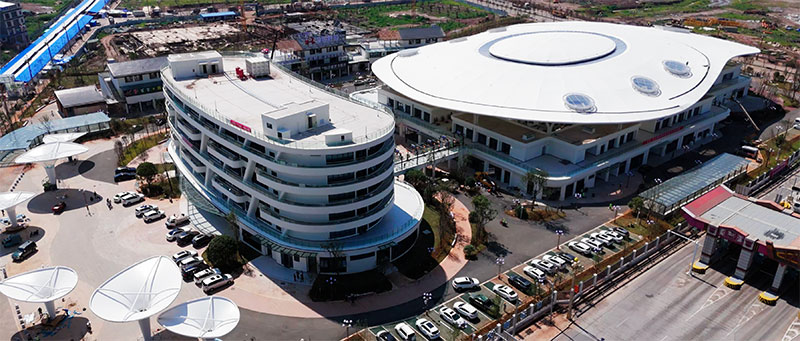
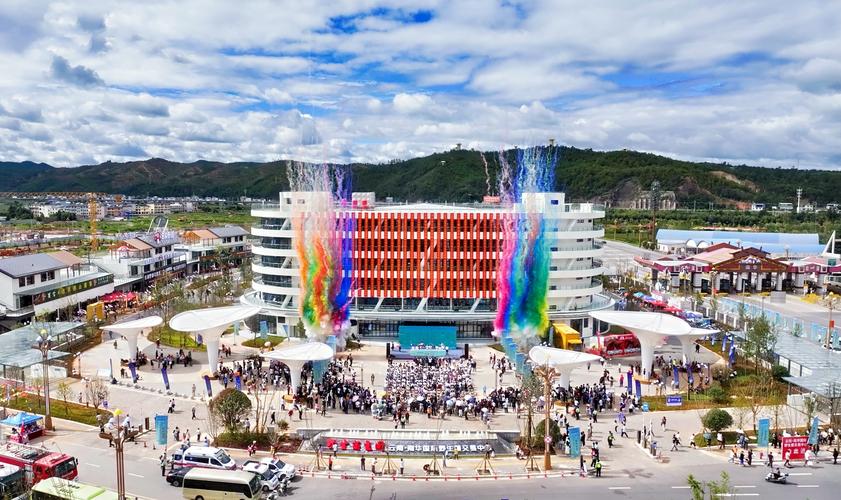
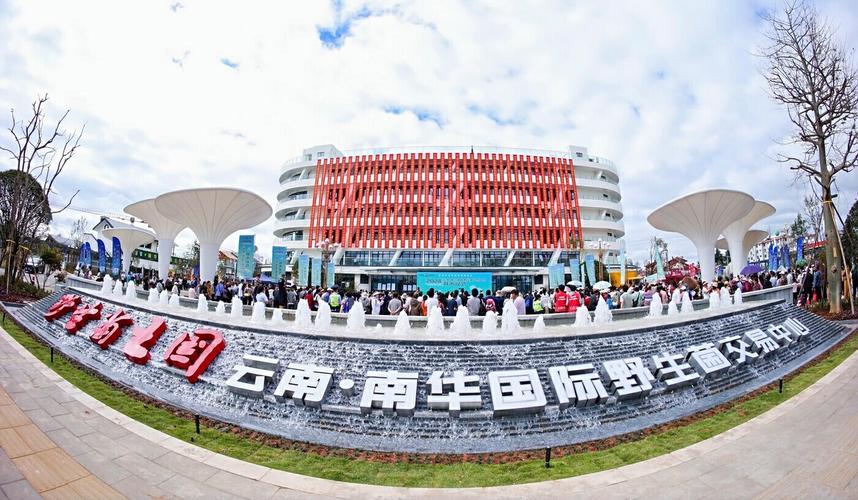
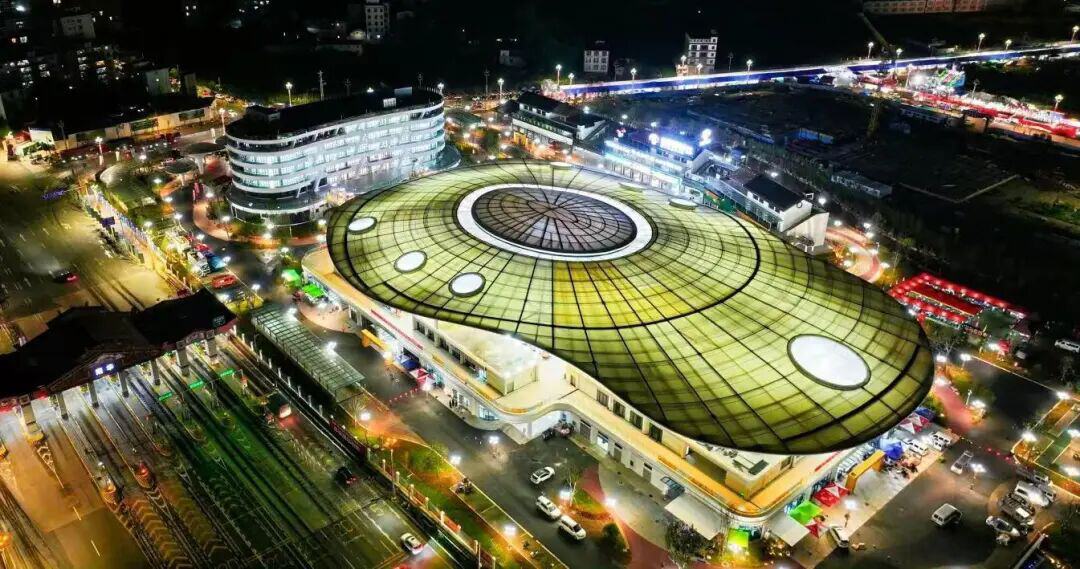
Opened in 2024, the Nanhua International Wild Mushroom Trading Centre is the largest single wild-mushroom trading facility in China. Around 26,000 m² of floor space holds 137 shops and 200 trading stalls, and the campus integrates an e-commerce centre, cold-chain warehousing, commercial logistics and digital-smart management in one location.
Nanhua sits at the heart of Yunnan's wild-mushroom belt in Chuxiong Prefecture — a county that records 1,021 known wild-mushroom species (354 edible), an annual natural reserve of more than 15,000 tonnes, and in 2025 moved 14,800 tonnes through the county with a mushroom-industry output value above CNY 7 billion. It is the self-styled "World Wild Mushroom Kingdom" and "Hometown of China's Wild Mushrooms".
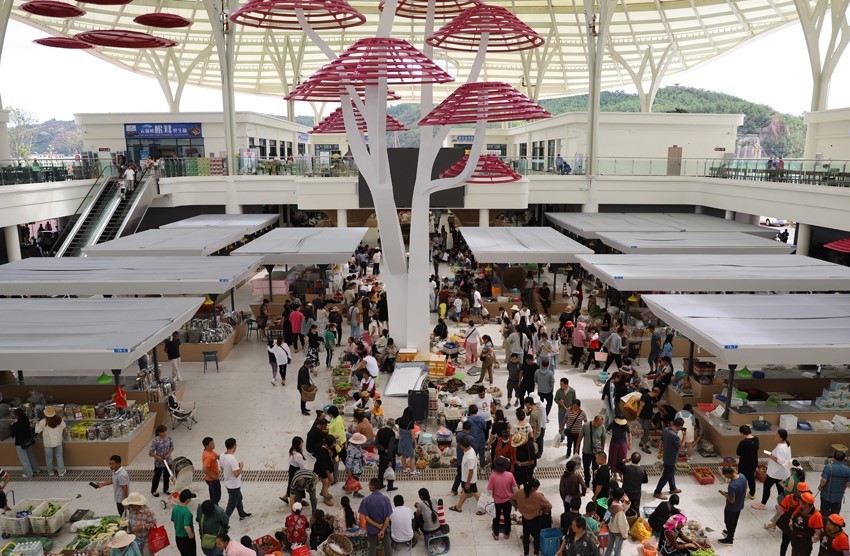
Beyond raw scale, Nanhua gives importers six things no smaller source can match: breadth of species, single-facility volume, certified origin, a cold chain built in, a proven export record, and one-stop customs readiness.
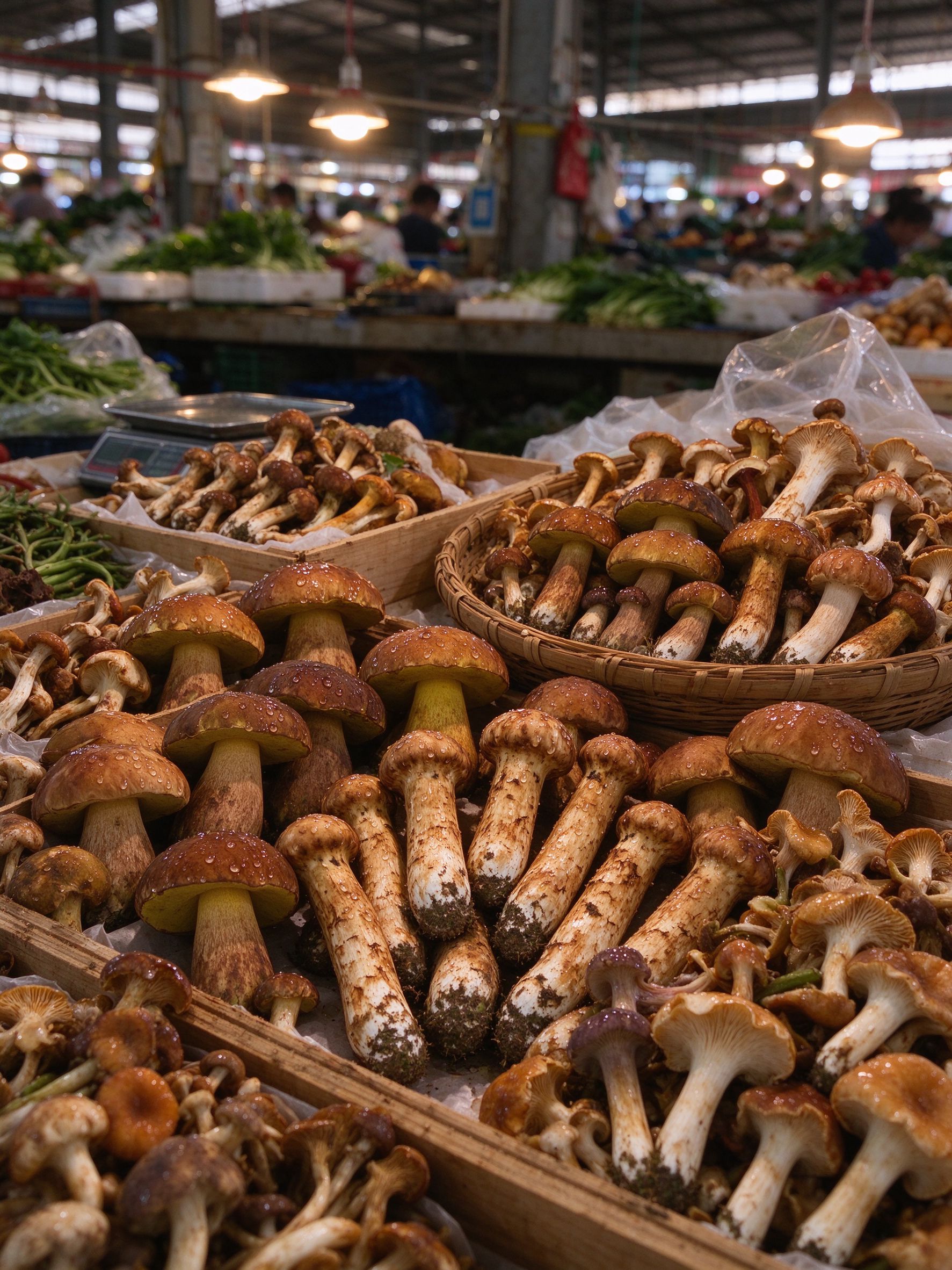
1,021 known species, 354 edible — matsutake, boletus, termite mushroom, trumpet, truffle and more, all converging on one trading floor for one-lot sourcing.
26,000 m², 137 shops, 200 stalls and 14,800 t of county-wide trade in 2025 — the deepest inventory a buyer can walk in one building.
Geographical-indication protection for Nanhua matsutake; quality grades (premium / grade-1 / grade-2) and colour-coded baskets make specification and QC reproducible.
51 cold stores, 25,000 m³ of warehousing, 13 direct routes; fresh mushrooms reach Beijing, Shanghai, Guangzhou & Shenzhen in 12 h and 264 cities in 24 h.
1,500+ tonnes/yr to Europe via -30°C IQF flash-freezing; self-operated export to Germany (2026) and long-running IQF matsutake & boletus exports to France and Japan.
Customs declaration, inspection, quarantine and documentation are handled from the same campus — so a purchase clears the border and moves on freight without friction.
Nanhua concentrates the wild-mushroom species international buyers actually ask for. Because every one of them is foraged wild from Yunnan's forests — not cultivated — each has its own season, grade and handling rules. Know them and you can spec, price and ship with confidence.
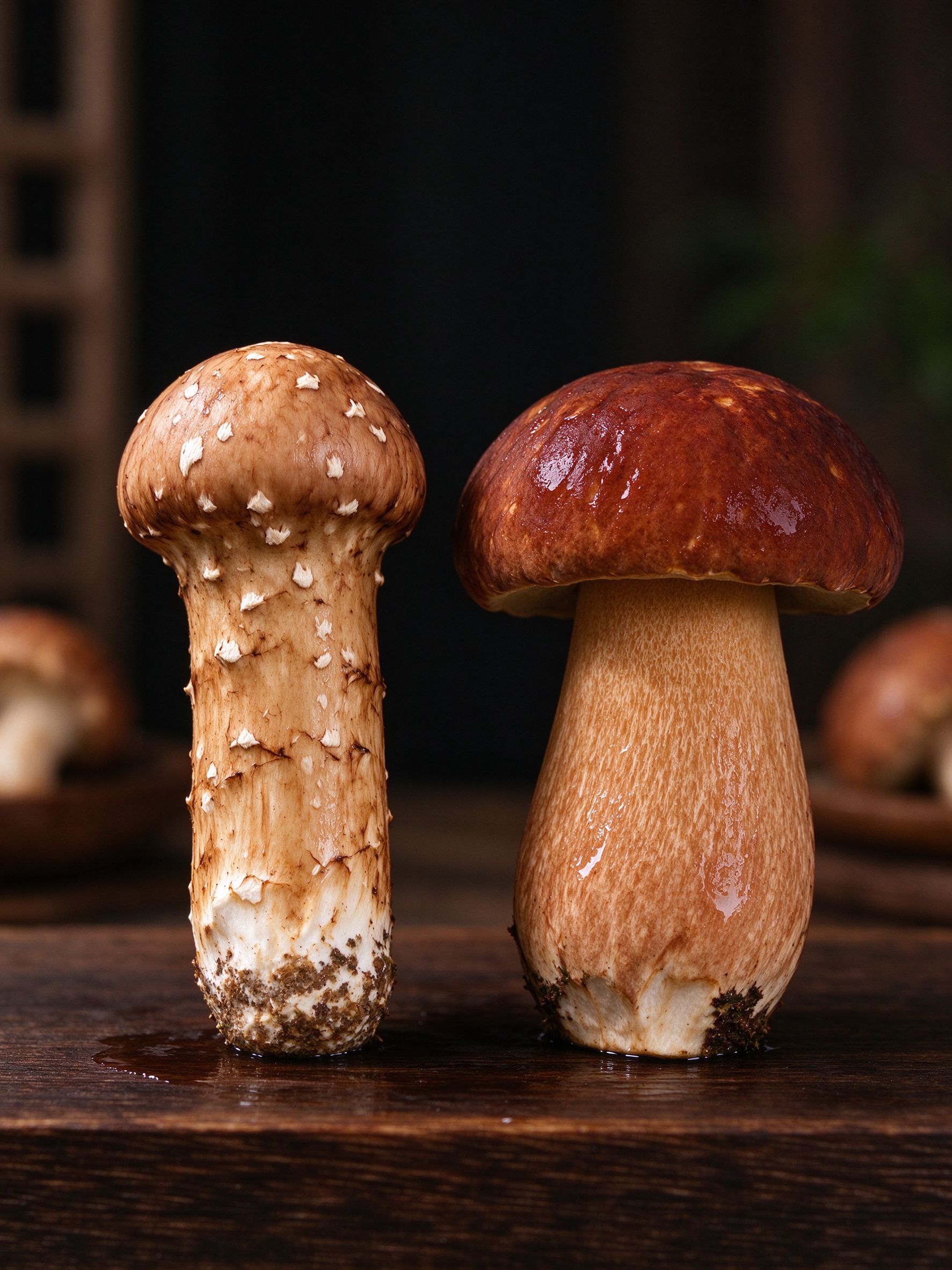
Indicative wholesale market pricing and handling for the eight core wild mushrooms. Prices are seasonal reference levels (CNY/kg), not quotations.
Yunnan's flagship export mushroom and the one most international buyers come to Nanhua for. Harvested 7–12 days after emergence, at its best in the mid-autumn window. Nanhua matsutake holds geographical-indication (GI) protection.
One of the world's most prized edible fungi — thick, meaty, versatile. Nanhua's boletus is the backbone of the county's European exports; a 22-tonne self-operated IQF export shipment to Germany cleared in September 2026.
Grows in a natural symbiosis with termites, giving it a crisp texture and a fleeting, highly seasonal window. Low volume and strong demand make it one of the market's pricier short-season items.
Yunnan's most intensely aromatic wild mushroom, with a distinctive dried-meat-like fragrance. Its strong flavour and scarcity place it among the highest-priced wild fungi in the region.
A mild, everyday mushroom with the broadest consumer base in China — steady volume and a stable price make it the easiest first product for a new importer to test the market.
Yunnan's underground treasure — a high-value, low-volume premium line with strong demand from European and East Asian chefs. Buy small, grade strictly, ship fast.
A rare striated mushroom named for its tiger-paw-like pattern. Prized in Asian gourmet markets for texture and aroma; production is limited, so contract ahead of season.
Flesh turns blue-green the moment it is cut — a group of boletes prized in local cuisine for flavour, but containing toxins that are only destroyed by thorough cooking. Never ship or serve raw.
Fresh and frozen wild mushrooms leave Nanhua through a purpose-built cold chain. 51 cold stores, 25,000 m³ of warehousing and 13 direct routes move product to China's coastal markets in 12–24 h, and a postal air-cargo line to Kunming Changshui airport (opened 2023) puts Yunnan mushrooms onto international flights quickly.
IQF (-30°C) flash-freezing locks in texture and extends shelf life for long ocean legs — the method behind Nanhua's 1,500+ tonnes/yr to Europe, including the September 2026 self-operated export of 22 tonnes of frozen boletus to Germany, and long-running IQF matsutake/boletus exports to France and Japan.
For export, a professional freight forwarder handles the phytosanitary certificate, IQF/reefer sea booking, customs declaration and import paperwork — turning Nanhua's freshness into dependable international delivery.
| Export route | Typical transit | Mode |
|---|---|---|
| Yunnan → Europe (IQF boletus, matsutake) | 30–40 days | Sea, reefer (LCL/FCL) |
| Yunnan → France · Japan (IQF) | 30–40 days sea / 3–5 days air | Sea + air (KMG) |
| Yunnan → Germany (2026 first export) | 30–40 days | Sea, IQF reefer |
| Asia short-haul (fresh) | 1–3 days | Air (KMG) |
| China — 264 cities (fresh) | 12–24 h | Cold-chain road |
Four practical blocks for a first-time foreign buyer — timing, inspection, grading and choosing the right product form for your freight mode.
The bulk of wild species appear between June and November; plan orders inside this window.
Highest volume and widest selection — and the most competitive pricing for matsutake and boletes.
Fresh lots are sorted and priced before dawn; the best grades move first.
Cap colour and evenness, cap margin (for matsutake: unopened, well-rounded), no bruising or rot.
Fresh wild aroma, no musty or fermented off-note; ganba and matsutake should be intensely fragrant.
Firm, dense stem that springs back; limp or soggy specimens are past their prime.
Premium / grade-1 / grade-2 / broken; state size, cap and stem spec so "one lot, one grade, one price".
Stalls sort by grade into marked baskets — ask the stall's code before you compare prices.
Wholesale prices are set per kilo by grade and volume; confirm the pack unit and tare before agreeing.
Best for nearby or high-value markets; book refrigerated air space and move within 24 h.
Flash-frozen at -30°C suits long ocean legs to Europe/Japan; matches LCL/FCL reefer containers.
Brined or dried product ships economically at ambient temperature without a cold chain.
Wild mushrooms are a high-value, perishable, tightly-regulated category. These are the most common ways a deal goes wrong — and how to head each one off.
"Wild-foraged" stock that is actually farmed. Inspect for uniform size and ask for harvest origin.
Premium baskets filled with grade-2 or broken pieces. Grades shift value sharply.
Cheaper species mixed into a premium lot to pad weight or value.
Last season's stock re-sold as this season's. Mushrooms age fast once picked.
Product from other regions presented as Nanhua/Yunnan origin for a premium.
Break in refrigeration between stall and freight — the fastest route to spoilage and customer claims.
Shipment without phytosanitary, IQF records or correct customs declaration is stopped or destroyed.
Some species (e.g. see-hand-green boletes) carry toxins destroyed only by full cooking; mislabelling endangers end users.
Species, grade, size, quantity, product form and destination port — agreed in writing before anything moves.
Pre-season samples establish the quality benchmark; you quote against a verified grade, not a photo.
The lot is picked, graded, packed and — where required — IQF-frozen to the agreed spec and shelf life.
Origin inspection, species identification, temperature records and food-safety documentation per lot.
Refrigerated to Kunming Changshui or the port, customs-cleared, and on ocean/air to your port of destination.
The twelve questions first-time wild-mushroom importers ask most often — on season, freshness, grading, forms, compliance and safety. Tap any question to expand.
The main wild-mushroom season runs June–November, with the July–August peak offering the highest volume and widest selection of matsutake and boletes. Fresh lots are graded and priced before dawn, so early mornings get the best grades.
Most wild species are seasonal. Outside the natural season, supply continues through IQF-frozen, salted/brined and dried forms held in cold storage and processing plants — so a contract can run year-round even if fresh lots cannot.
Yes. The centre has 137 shops and 200 stalls, and foreign buyers can walk the floor. For large or repeat orders, many importers work through a local sourcing agent or broker who knows grading, pricing and pack units.
Look — cap colour and margin even, no bruising or rot. Smell — clean wild aroma, no musty or fermented note. Feel — firm, springy stem, not limp or soggy.
Grade and size drive most of the gap — premium picks are 5–9 cm, unopened cap, firm stem — plus seasonality (typical ~¥200/kg; ¥100–300 in the Jul–Aug peak) and origin. GI-certified Nanhua matsutake commands a premium over non-certified origin.
Wild mushrooms are foraged from forests — variable size, stronger flavour, seasonal and higher-priced. Cultivated are farmed — uniform, cheaper, milder. Nanhua's market specialises in wild product; ask for origin certificates to confirm.
Fresh: 0–4°C cold chain, air for short hauls. IQF: -18°C reefer container, ideal for ocean legs. Salted/dried: ambient temperature. Keep temperature logs across every transfer point.
Match the form to your freight mode and shelf life: fresh for nearby markets and air short-haul; IQF for long ocean legs to Europe/Japan; salted/brined and dried for cost-efficient ambient sea freight.
Export compliance — phytosanitary certificate, customs declaration, species identification and food-safety certification. Work with a freight forwarder who manages documentation and customs from the same campus to avoid border delays or destruction.
Edible species are safe when correctly identified and fully cooked. A few, such as see-hand-green boletes, contain toxins destroyed only by thorough cooking — never ship them raw for table use without clear handling guidance.
Yes. Arrange pre-season samples, volume and grade agreements, and freight booking before you travel — especially for scarce, high-value lines like tiger-paw and truffle, where forward contracts lock supply.
Asia's largest single trading facility, 1,021 known species (354 edible), GI-certified origin, a built-in cold chain (51 cold stores, 13 routes), a proven export record (1,500+ t/yr to Europe) and one-stop customs readiness — all on one campus.
International wild-mushroom & cross-border logistics from China.