Since 2012 NVOCC GD20230925153335 24h Response
+86 13392162503 sales8015@goodhopefreight.com Login
Goodhope Freight
Home›Resources›Pu-erh & Ancient Tree Tea Wholesale Markets
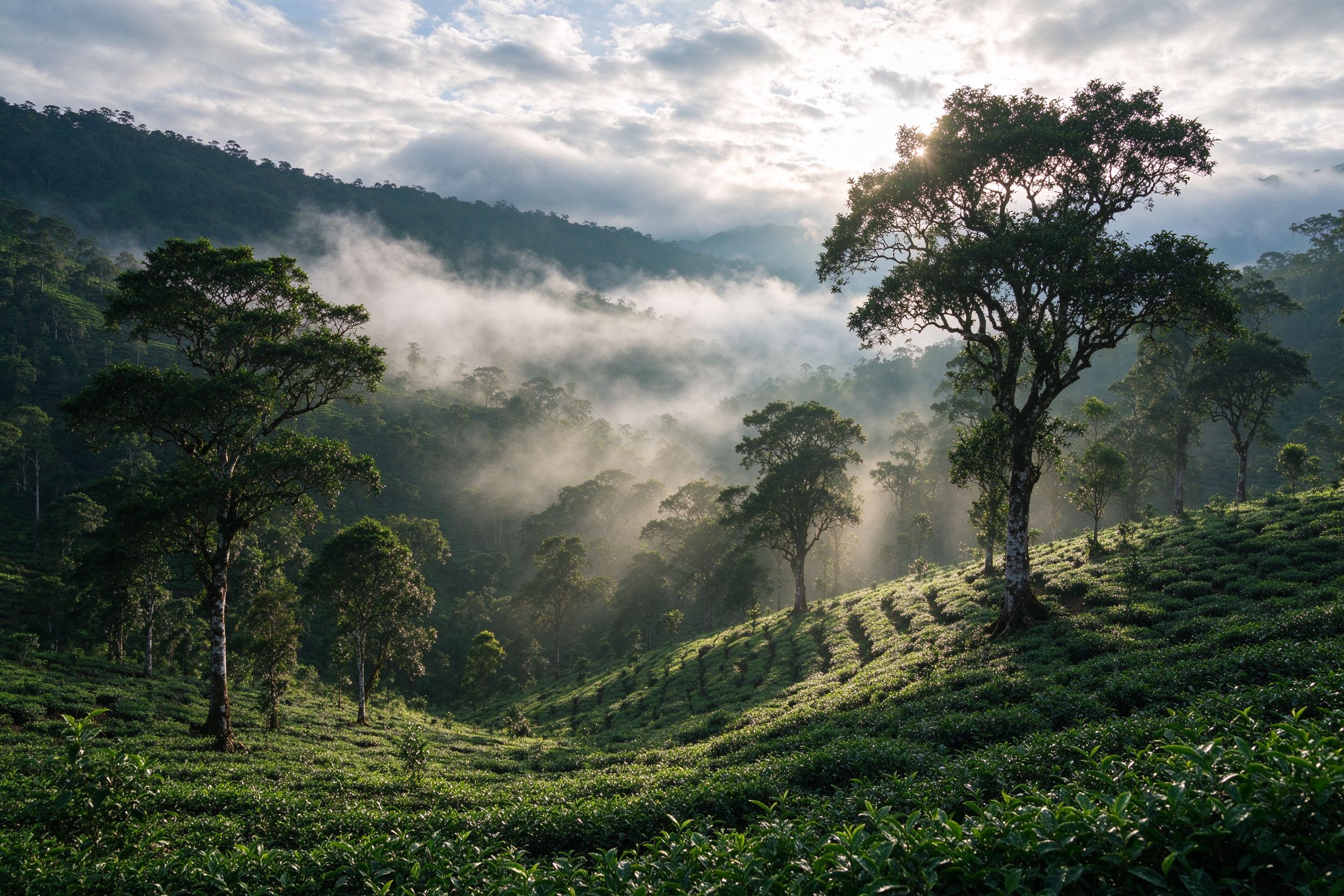
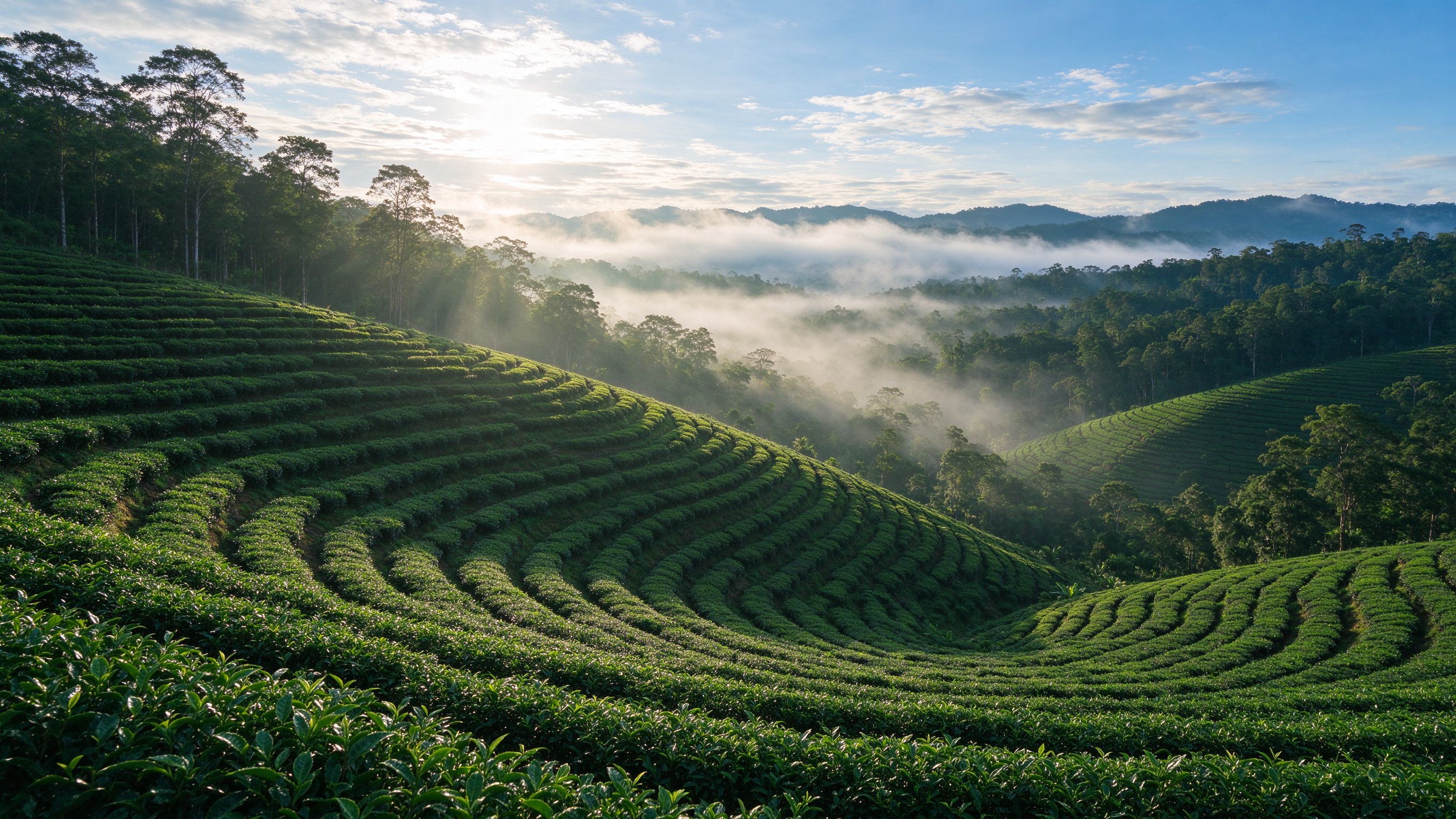
Yunnan high-mountain pu-erh tea garden in morning mist
International Sourcing Guide · Objective Overview

China's Leading Pu-erh & Ancient Tree Tea Wholesale Markets

From Guangzhou Fangcun — the world's largest tea distribution hub — to Yunnan's Kangle Tea City, Xiongda Tea City and the Pu-erh International Tea City, and on to the ancient-tree origins of Bingdao, Laobanzhang, Yiwu and Jingmai Mountain: this guide helps international buyers sourcing pu-erh and ancient-tree tea from China understand the market landscape, the key producing areas, and the practical international shipping logistics of getting the tea to market.

Topic: Pu-erh & Ancient Tree Tea Wholesale Markets Audience: International Tea Buyers Language: English (US)
Know the Product

Pu-erh & Ancient Tree Tea: Two Concepts to Clarify First

Before discussing origins, clarify the difference between "pu-erh tea" and "ancient tree tea" — it shapes every sourcing decision.

Pu-erh Tea

Made from Yunnan large-leaf sun-dried green tea (maocha) and finished through post-fermentation — naturally aged in the case of raw (sheng) pu-erh, or pile-fermented for ripe (shou) pu-erh. It is most commonly pressed into cakes, bricks and tuo (nest) shapes, and is prized for improving with age.

Ancient Tree Tea

Tea harvested from old tea trees — generally 100 years or older — growing in natural forest environments. Deeper root systems and richer internal compounds give ancient-tree tea a fuller, more layered flavor and a higher market value. It is most associated with famous mountains such as Bingdao, Laobanzhang, Yiwu and Jingmai.

Why Source from China

China is the birthplace and core producing region of pu-erh tea. The Xishuangbanna, Pu-erh and Lincang prefectures of Yunnan are recognized as the center of the world's tea-origin belt, giving international buyers access to the most complete range of origins, grades and warehouse-aging resources.

Sourcing Note

"Ancient tree" labeling can be unreliable — some ordinary terrace-grown or young-tree tea is repackaged and sold as ancient-tree tea. International buyers should verify origin and traceability, request third-party testing, and avoid relying on a single "ancient tree" label.

Trading & Distribution Hubs

China's Major Pu-erh Wholesale Trading Centers

For international buyers, these markets offer concentrated stock and convenient sourcing — the usual first stop for bulk purchases and side-by-side supplier comparison.

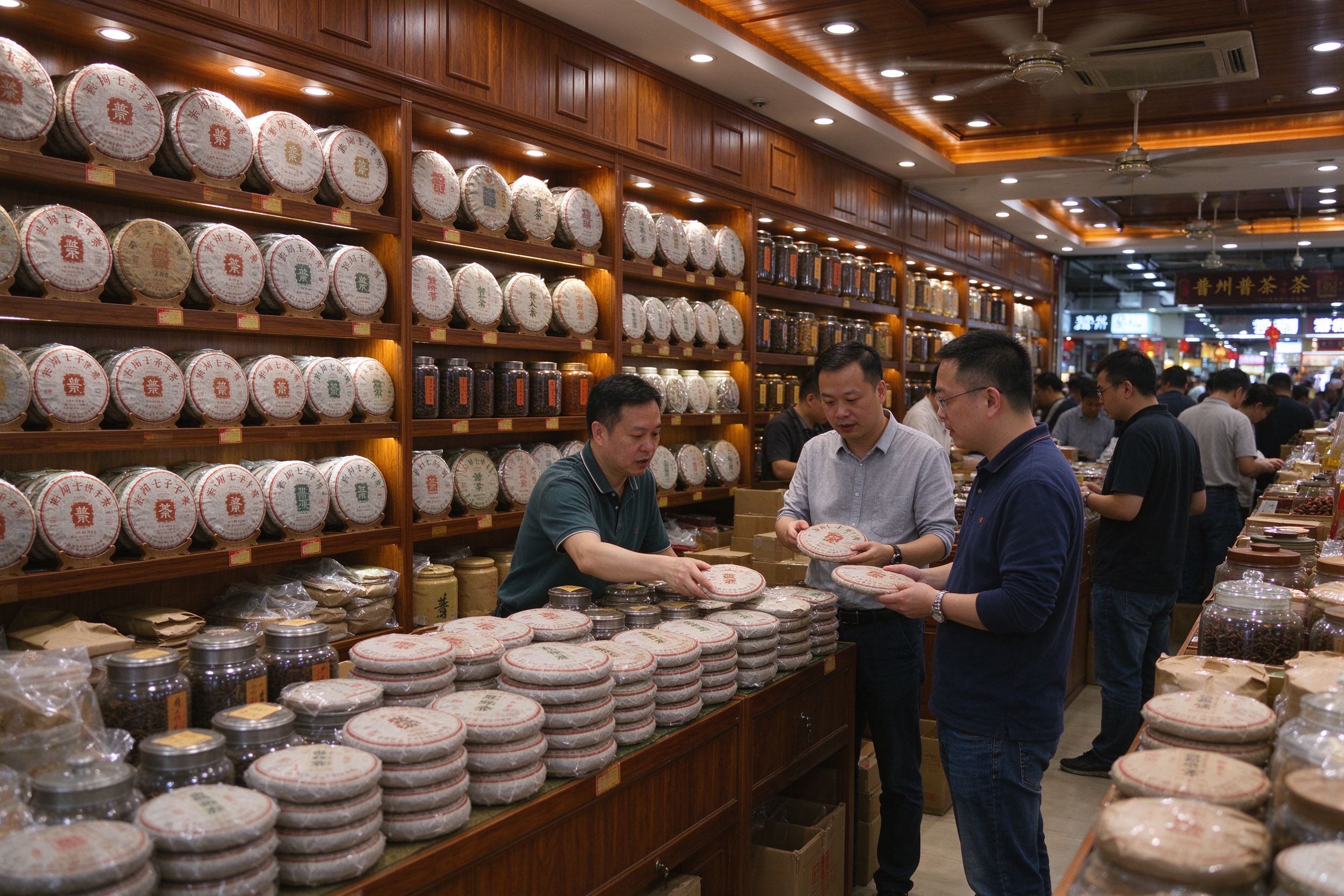
Guangzhou Fangcun tea wholesale market interior
Guangdong · Guangzhou

Guangzhou Fangcun Tea Market

China's largest professional tea wholesale market and distribution hub, formed by more than 20 interlinked tea markets. Insiders often call it "the center of the universe." Pu-erh wholesale circulation holds a core position here, with reach across China and Southeast Asia.

  • Roughly 20,000 tea shops clustered in the district
  • Yunnan pu-erh accounts for ~80% of Fangcun's tea sales
  • Fangcun Tea City covers about 103,000 m²
  • All major tea categories, with pu-erh leading
Largest Distribution Hub
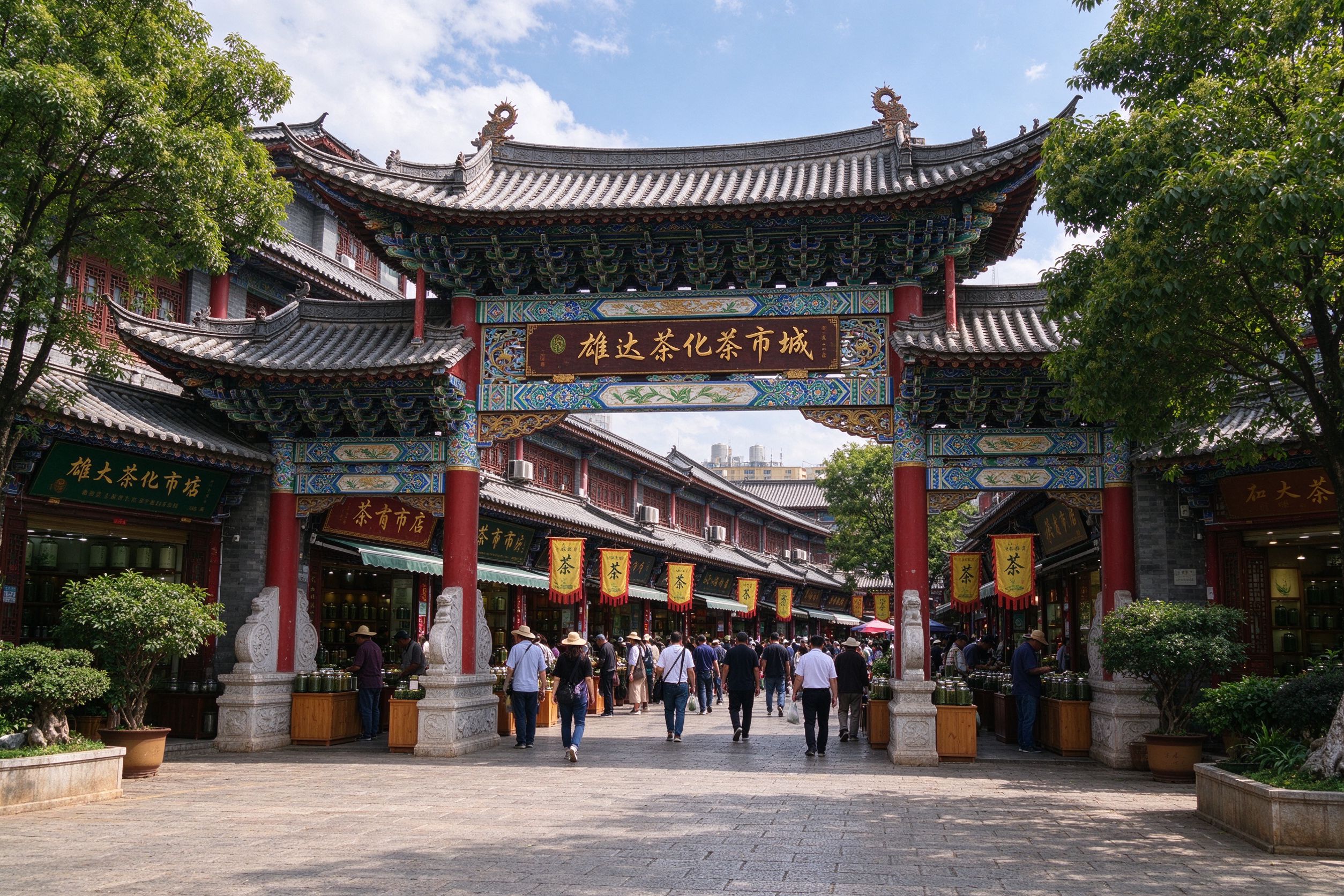
Kunming Xiongda Tea Culture City entrance
Yunnan · Kunming

Kunming Xiongda Tea Culture City

China's only classical garden-style brand tea culture city, converted in 2003 as the pu-erh industry took off. It hosts merchants from Lincang and Pu-erh, combining wholesale, showroom display and tea-culture functions.

  • About 46,600 m² with 600+ shops
  • Approximately 432 merchants in residence
  • Ming-Qing style architecture + gardens, ~46% green coverage
  • Merchants from Lincang & Pu-erh
Classical Garden-Style Tea City
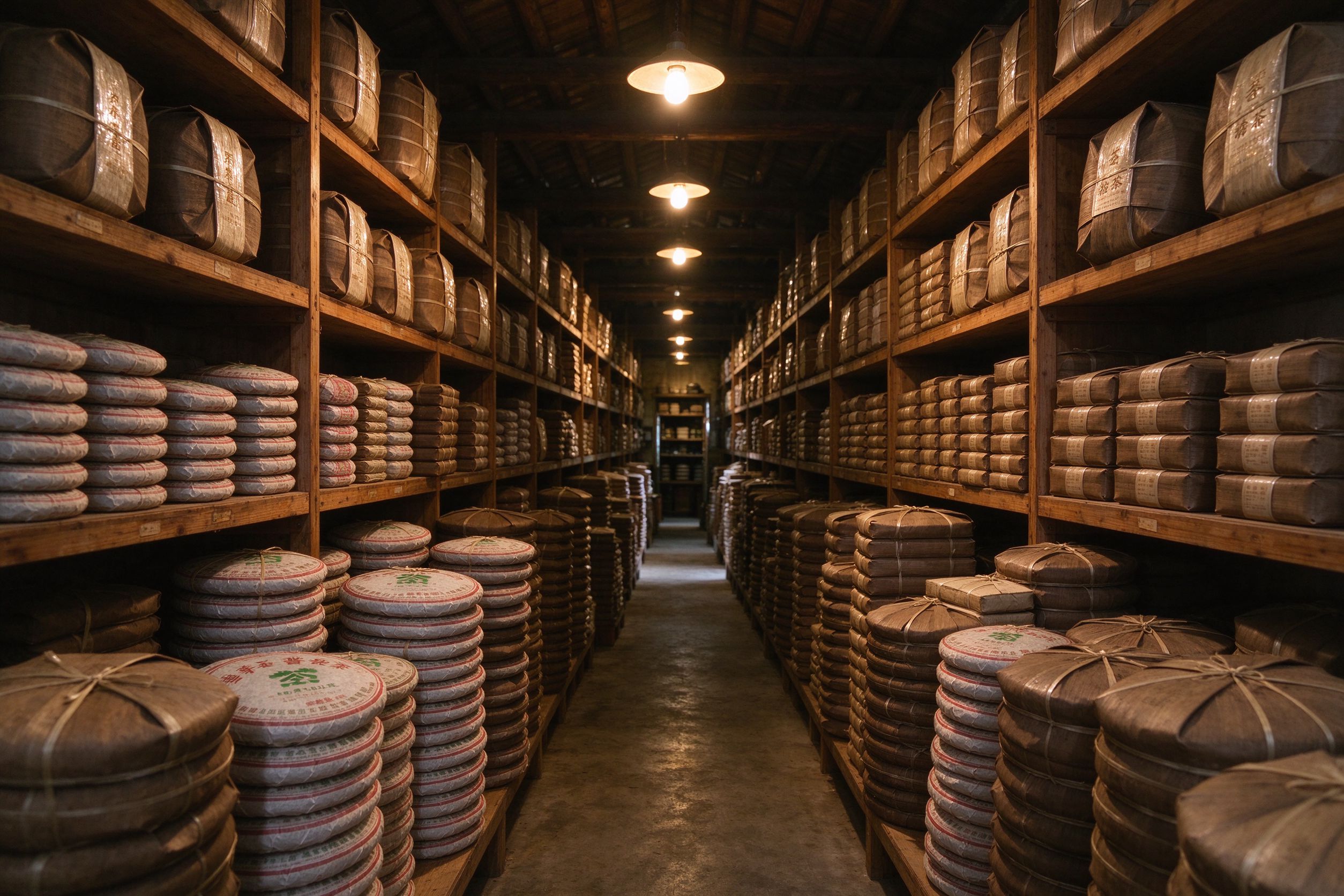
Pu-erh tea cakes and bricks stacked on warehouse shelving
Yunnan · Kunming

Yunnan Kangle Tea Culture City

On Guannan Avenue, Guandu District, Kunming. One of southwest China's largest tea sales markets and the region's largest professional tea market — a major window for Yunnan tea reaching the national and export market.

  • Opened 2004, covering nearly 140 mu (~9 ha)
  • 600+ merchants and 4,000+ staff
  • Average annual turnover of about RMB 11 billion
  • Directly/indirectly serves 6+ million tea farmers
Largest Southwest Professional Tea Market
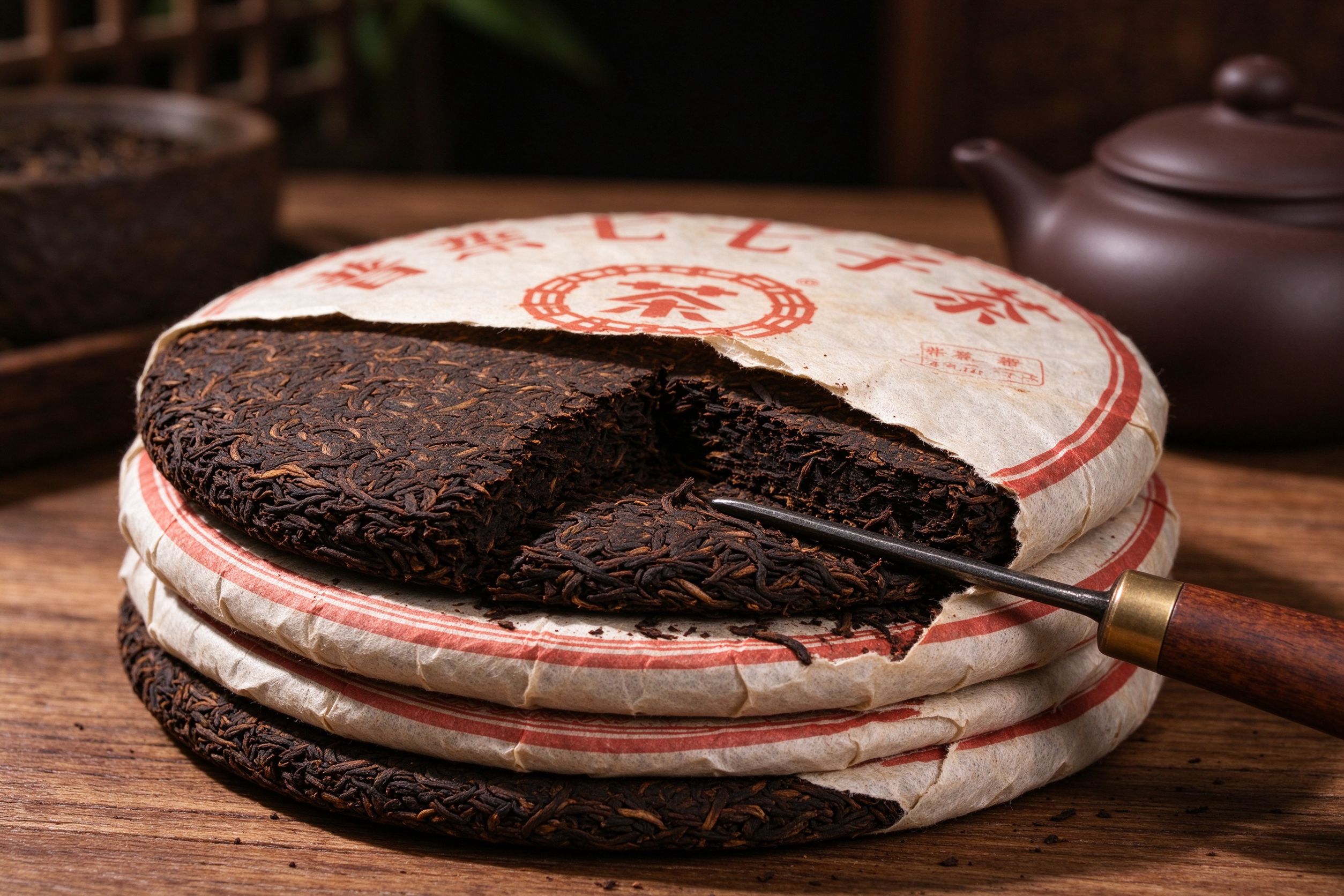
Pu-erh seven-cake set and tea bricks
Yunnan · Pu-erh

Pu-erh International Tea City

Located in Simao District, Pu-erh City, at the heart of the pu-erh producing region. A comprehensive market combining tea-culture exchange, display and sales, and tea-tourism integration — a direct gateway to producing-area stock.

  • Land area of 85.5 mu (~5.7 ha), ~30,000 m² floor space
  • 300+ fixed stalls and 40+ temporary stalls
  • Located in the core producing region
  • Tea-tourism integrated, display and trade combined
Producing-Area Hub
Side-by-Side

The Four Markets at a Glance

Compare city, positioning and scale to help international buyers choose a first destination.

Comparison of China's Major Pu-erh Wholesale Markets
MarketCityPositioningScale & Key Features
Guangzhou Fangcun Tea MarketGuangzhou, GuangdongLargest distribution hub~20,000 tea shops; core of pu-erh wholesale; reaches China & Southeast Asia
Yunnan Kangle Tea Culture CityKunming, YunnanLargest southwest tea market~140 mu; 600+ merchants; ~RMB 11B average annual turnover
Kunming Xiongda Tea CityKunming, YunnanClassical garden-style tea city~46,600 m²; 600+ shops; ~432 merchants
Pu-erh International Tea CityPu-erh, YunnanProducing-area hub85.5 mu; 300+ fixed stalls; at the core of the pu-erh producing region
Note: Scale figures come from each market's public introduction and industry reporting. Stalls, outlets and trading conditions can change — verify current stock and supplier credentials on the ground or through a trusted sourcing agent before placing orders.
On Location

Yunnan Ancient Tea Gardens · A Glimpse

See the source of pu-erh and ancient-tree tea — high-mountain gardens and centuries-old trees.

Yunnan Xishuangbanna high-mountain pu-erh tea garden · short location film (~8 seconds)
Ancient Tree Tea Origins

Famous-Mountain Ancient Tree Tea: Reading the Origin

The value of ancient-tree tea is highly origin-dependent. These "famous mountains" are key coordinates for international buyers to read grade and provenance.

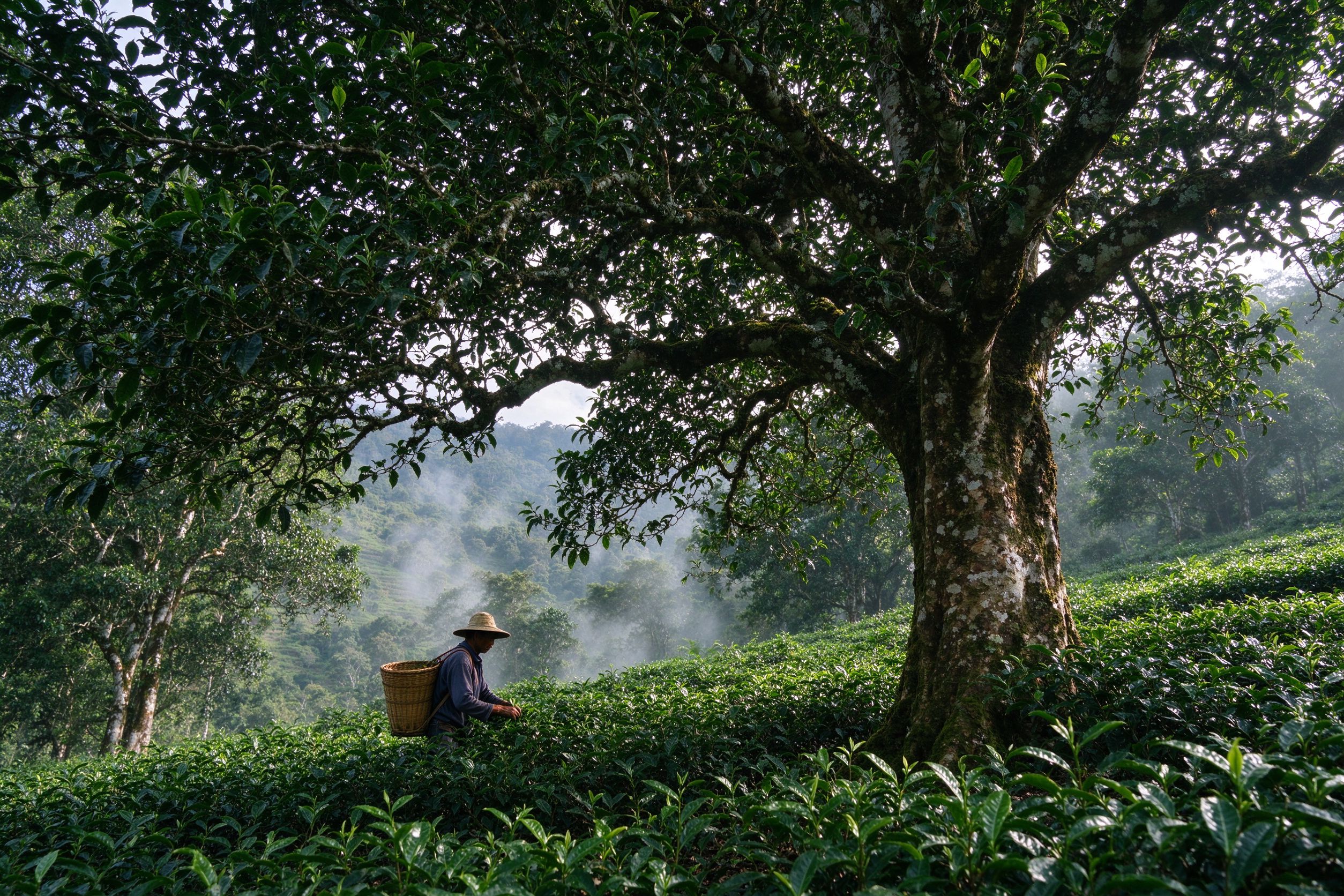
Laobanzhang ancient tea trees on Bulang Mountain, Menghai
Laobanzhang · Bulang Mountain, Menghai

Laobanzhang · Bulang Mountain

On Bulang Mountain, Menghai County, Xishuangbanna. Widely regarded as the "King of Pu-erh" — bold, powerful tea energy with a fast, deep returning sweetness. A benchmark of premium ancient-tree tea.

King of Pu-erh
Bingdao ancient tea garden in Shuangjiang, Lincang
Bingdao · Shuangjiang, Lincang

Bingdao · Shuangjiang

Bingdao village spans five hamlets — Bingdao, Dijie, Nuowu, Bawai and Nanpo — with old Bingdao village the core producing area. Famous for its distinctive "rock-sugar sweetness."

Rock-Sugar Sweetness
Yiwu and Jingmai Mountain ancient tea forests
Yiwu · Jingmai Mountain

Yiwu · Jingmai

Yiwu (Mengla, Xishuangbanna) tea is fragrant and smooth; Jingmai Mountain's ancient tea forest in Lancang, Pu-erh was inscribed as a UNESCO World Heritage Site in 2023.

Aromatic & Smooth · World Heritage
Additional origins: Ancient-tree tea is also widely produced in Lincang Xigui (Bangdong Manglu Mountain, sometimes called "the Laobanzhang of Lincang"), Menghai's Nannuo Mountain and Mengsong, and Pu-erh's Qianjiazhai, among others. Evaluate by origin, tree age, harvest season and warehouse conditions together.
Sourcing & Shipping Practice

International Buyer's Practical Guide

From selecting tea to cross-border delivery — the key steps and cautions for buying from China.

1

Define your sourcing scope & budget

Decide raw vs. ripe pu-erh, loose vs. pressed tea, whether to target a specific famous-mountain ancient-tree tea, and the target vintage and volume. This determines whether you visit a wholesale market or work directly with a tea factory.

2

Verify origin & traceability

Prefer suppliers with their own tea-garden base, processing records and third-party testing. Request origin certificates, lab reports and samples. Beware of "terrace tea sold as ancient tree."

3

Approve samples & set quality standards

Request and compare samples before bulk orders. Agree on moisture content, leaf grade, appearance and warehouse condition, and clarify packaging, labeling and export-compliance requirements.

4

International shipping & customs

Tea is a food commodity and exports must meet destination-country import and quarantine requirements. Pressed pu-erh is compact and efficient to consolidate — ideal for LCL sea freight or air freight. Work with a freight forwarder experienced in tea to manage customs clearance, documentation, and any fumigation or warehousing.

5

Compliance & intellectual property

Some pu-erh brands and Geographical Indications (GIs) are legally protected. When sourcing and reselling, respect trademark licenses and GI usage rules to avoid infringement.

Note: This guide is an objective overview of origins and markets — it does not include pricing or sales promotion. For specific prices, supplier qualifications and logistics solutions, rely on actual quotations and official channels.

References

Public sources used to verify market positioning, scale and producing-area information.

  1. Runchangyuan Pu-erh Tea: "Fangcun Tea Market — the Largest Pu-erh Wholesale & Recycling Market"
  2. China Tea Marketing Association: "The Sales Landscape of Yunnan Tea at Fangcun, the Nation's Largest Pu-erh Distribution Center"
  3. Yunnan Kangle Tea Culture City official website: Market overview
  4. Huanqiu (Global Times): Reporting on Guandu District, Kunming market clusters
  5. Kunming Xiongda Tea Culture City official website: Tea city introduction
  6. People's Daily Yunnan / China Tea Marketing Association: "Pu-erh Tea in Transformation" — Pu-erh International Tea City
  7. China Economic Net: Lincang tea-country reporting (Bingdao ancient-tree producing area)
  8. Yunnan Publicity Network: "The Thousand-Year Tea Charm of Jingmai Mountain"