
Home / Shipping to Zimbabwe / How to Ship from China to Zimbabwe
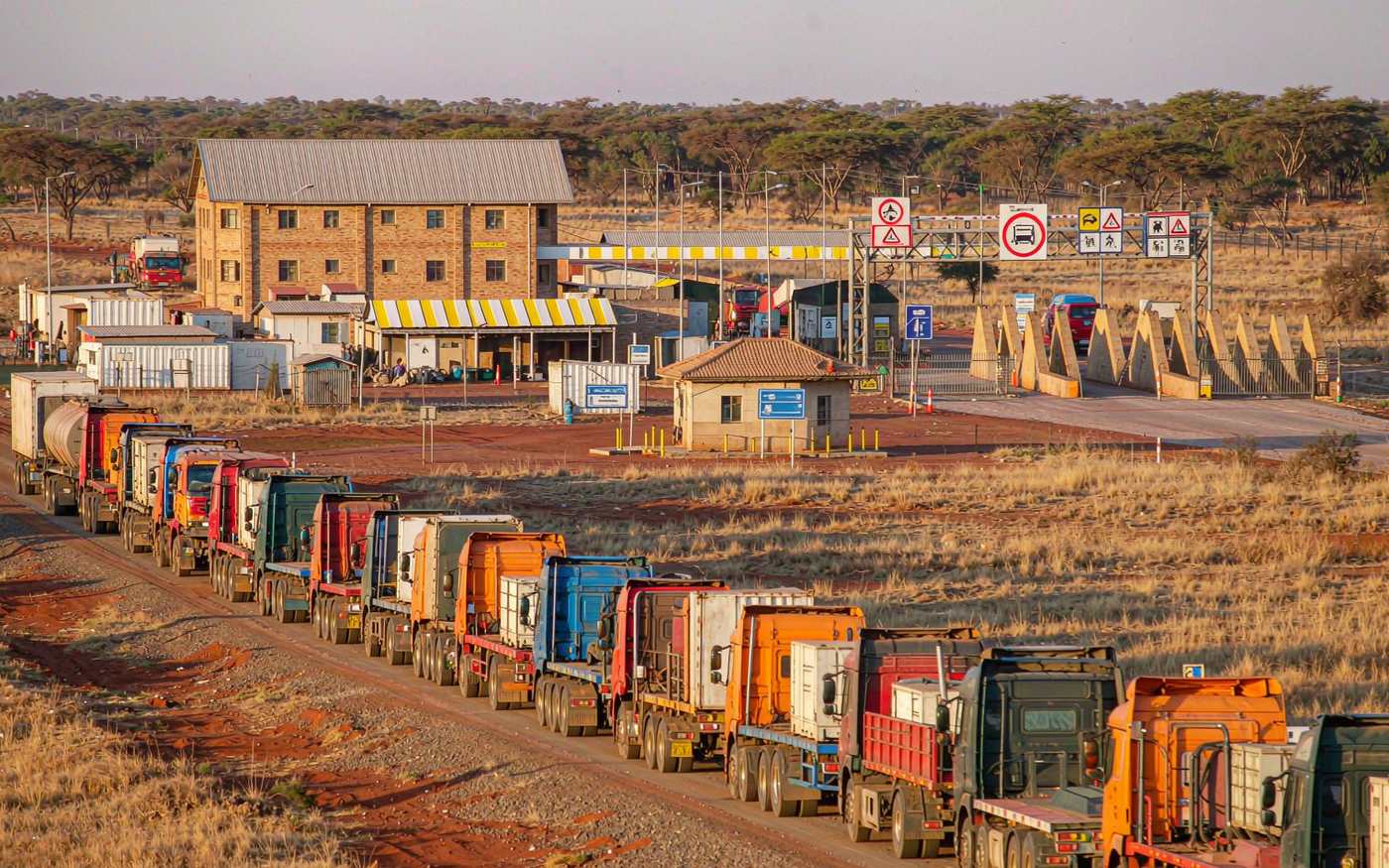
How to ship from China to Zimbabwe
Zimbabwe is landlocked, and its two working routes are a long road through South Africa from Durban and a shorter haul from Beira in Mozambique. Choosing between them is the first decision, and it is a trade-off between sailing frequency and distance rather than a simple comparison of rates.
Two things decide whether a first shipment clears cleanly. The first is the conformity assessment: regulated goods are inspected and certified in the country of export before they ship, and discovering this at the border is expensive. The second is the in-bond movement through South Africa, which is paperwork-critical and is the most common place trucks come to a stop.
This guide covers how the corridors compare, how in-bond transit works, what the conformity assessment involves, how duty, surtax and VAT stack up, what needs a permit, and the sequence from a Chinese supplier to a Harare address.
At a glance
Customs is administered by the Zimbabwe Revenue Authority, with commercial consignments declared electronically through ASYCUDA World on Form 21, the bill of entry, which only licensed clearing agents can lodge. Duty runs 0 to 40 per cent or more by HS code, a surtax applies to selected finished consumer goods, and VAT is 15 per cent on the duty-inclusive value. Regulated categories require a consignment based conformity assessment, known as CBCA, carried out in the country of export before shipment. Goods routed through South Africa move in bond and are cleared by Zimbabwe at the border, so no South African duty is due provided the in-bond paperwork is correct.
How your cargo moves: China to Zimbabwe
Eight steps from your supplier's door to yours. The last four are the ones shaped by local rules.
- Pickup from your supplierWe collect the goods anywhere in China and bring them to our consolidation point.
- Export clearanceChina customs declaration filed and released before the goods move to the port.
- Loading and departureContainer loaded, sealed and handed to the carrier at the Chinese port.
- Main carriageOcean, air or rail movement booked on the route agreed for your cargo.
- Arrival at the gatewayDischarge at the port or airport of entry, recorded on the carrier's manifest.
- Import clearanceCustoms declaration filed locally, with duty and tax assessed on the declared value.
- Customs releaseGoods released into free circulation once duty and tax are settled.
- Final deliveryOnward movement to your delivery address, warehouse or nominated depot.
Duty rates, VAT rates and clearance times move, and the figure that applies to your goods is the one set for your commodity code on the day of clearance. We check the current position against your code before your goods sail and confirm it to you in writing — ask for that check when you request a quote.
Two corridors into a landlocked market: Durban or Beira
The Durban route carries the majority of Zimbabwe-bound freight: a container ship to Durban, then road through Beitbridge to Harare or Bulawayo. It offers the most sailings and the widest range of consolidation options.
The Beira route through Mozambique is geographically shorter to Harare and can be cheaper for full containers, but sailings are fewer and port performance is less consistent. Cargo on this route is cleared by Zimbabwe at Forbes, the border post at Machipanda.
| Corridor | Port and border | Usually suits |
|---|---|---|
| Durban route | Durban, then Beitbridge | Most cargo; most sailings and consolidation options |
| Beira route | Beira, then Forbes at Machipanda | Full containers to Harare where the schedule works |
Sea freight to Harare is commonly quoted at 40 to 55 days port to port with the inland leg and border crossing on top, and air freight to Harare at roughly 7 to 14 days. Build a border buffer: Beitbridge can add a day or it can add a week, and promising a customer the best case is how delivery dates are missed.
Choosing how it travels: sea to Durban or Beira, air to Harare
A full container suits volume above roughly 15 cubic metres and is what you want for anything fragile or high-value, because the box is sealed at origin. Groupage, or LCL, is paid by the cubic metre with a minimum and suits two to twelve cubic metres, with consolidation and deconsolidation days added at both ends.
Air freight into Harare suits urgent spare parts, pharmaceuticals and samples and is charged on chargeable weight. Courier services handle documents and single cartons under their own clearance procedures.
| Mode | Transit commonly quoted | What it suits |
|---|---|---|
| Sea FCL to Durban or Beira | 30 to 40 days to port, then inland | Volume above about 15 cbm |
| Sea LCL | Add 5 to 10 days | Two to twelve cubic metres |
| Air freight to Harare | 7 to 14 days door to door | Urgent or high-value cargo |
| Courier | 5 to 10 days door to door | Samples and documents |
Whichever mode you use, ask whether the quotation includes the inland leg and the border handling. On a landlocked lane, the answer changes the comparison more than the ocean rate does.
What your trade term actually hands you on this lane
EXW leaves you with the Chinese export formalities and no control over the loading, which is the wrong place to start when a conformity certificate is tied to the goods.
FOB is what most experienced buyers use: the supplier loads in China, risk passes there, and you control the carriage, the corridor and the forwarder. It keeps the freight and the inland leg visible as separate numbers.
CIF and CIP cover carriage and insurance to the port of discharge, which is Durban or Beira, not Harare. A frequently used alternative on this lane is CIF to Beira combined with DAP to Harare, which hands the inland leg to a nominated forwarder while the supplier manages the ocean booking.
DDP moves everything to the seller, including the Zimbabwean duty and VAT. It is convenient and widely offered here, but you are delegating the declared value, the conformity certificate and the tax payment, and the exposure still attaches to your goods.
From a Chinese factory to a Harare address, one leg at a time
Order confirmed, corridor chosen, trade term agreed
Durban or Beira at quotation stage, and an Incoterms 2020 term written into the contract.
Register for a tax number
The importer needs a business partner number or taxpayer registration with the revenue authority. Do it before the vessel sails.
Check whether CBCA applies, and book it
Regulated categories are inspected in the country of export before shipment. Confirm this while you are still negotiating with the factory.
Pickup, consolidation and export declaration in China
Your forwarder collects or consolidates, declares the export and provides the seal number and loading photographs.
Ocean leg and arrival at the port
The container is discharged at Durban or Beira. It has not entered Zimbabwe yet.
In-bond transit to the border
Goods are cleared at the port as cargo in transit and move under bond to Beitbridge or Forbes. The in-bond paperwork has to be right.
Bill of entry on Form 21
The clearing agent submits the declaration with the invoice, packing list, bill of lading and certificate of origin.
Assessment, channel and payment
Duty, surtax and VAT are assessed, the entry is routed to a green, yellow or red channel, and payment releases the goods.
Delivery to the final address
Release, then delivery to Harare, Bulawayo or beyond. Accurate packing lists and matching container seals save hours at the border.
Moving in bond through South Africa, and the border that follows
Zimbabwe-bound cargo routed through Durban is not imported into South Africa. It is cleared at the port as goods in transit and travels under bond to the border, where the Zimbabwe Revenue Authority assesses Zimbabwean duty and VAT.
The in-bond paperwork is the weak point on this route. Errors in it are the most commonly reported cause of trucks sitting at Beitbridge, and sitting trucks accrue demurrage and storage. Use a forwarder who runs this corridor every week rather than occasionally.
At the border the entry is routed by risk: green for release, yellow for document checks, red for physical examination. A red channel examination is much shorter if the packing list is accurate and the container seal matches the documents.
CBCA: the conformity programme that runs before loading
Zimbabwe operates a consignment based conformity assessment programme for a range of regulated product categories. The goods are inspected and certified in the country of export before they ship, and cargo in an affected category arriving without a certificate faces penalties and clearance delays.
The practical rule is to check whether your product category falls under the programme while you are still negotiating with the factory, because the inspection has to be arranged in China before loading. It is a routine step when planned and an expensive one when discovered at the border.
Electrical and mechanical items are among the categories most often cited as requiring it. Ask your forwarder to confirm applicability at quotation stage rather than at booking stage.
Customs duty, surtax, and VAT charged at fifteen
| Charge | Indicative rate | Base |
|---|---|---|
| Customs duty | 0 to 40 per cent or more by HS code | CIF value at the border |
| Surtax | Applies to selected finished consumer goods | Customs value |
| VAT | 15 per cent | Duty-inclusive value |
| Excise | Varies | Alcohol, tobacco, fuel and others |
Zimbabwe is not a member of the Southern African Customs Union, so goods pay duty under Zimbabwe's own tariff. The spread is wide: production machinery often attracts low or zero duty, while surtaxed consumer goods sit at the top of the range.
That spread is why classification comes before the deposit. Duty, surtax and the conformity requirement all hang off the HS code, so confirming all three before you pay the factory is the single most valuable hour you can spend on a first order.
There is no general duty-free threshold on commercial imports, so duty applies from the first dollar.
Product rules: permits, used goods and controlled lines
Zimbabwe uses import licensing extensively, and permits are required for many goods. Firearms, pharmaceuticals and chemicals are strictly controlled, and used clothing and used vehicles each have their own regulations.
Food and plant products need phytosanitary certificates, and the standards association runs conformity requirements for some products. Wood packaging must carry the ISPM-15 treatment mark, and Mozambique phytosanitary rules apply where cargo passes through Beira.
Prohibited imports include narcotics, firearms without authorisation, pornography, counterfeit goods, hazardous waste, products from endangered species, used undergarments and skin-lightening creams containing mercury.
On the certificate of origin: Zimbabwe has not ratified the regional preferential arrangement that would allow a preference form, so a standard certificate of origin issued by CCPIT or China customs is the document to use. Do not budget for a preference your cargo cannot claim.
The documents behind a ZIMRA bill of entry
| Document | What it has to show |
|---|---|
| Commercial invoice | True transaction value, HS code, unit price, FOB and CIF values, country of origin |
| Packing list | Container seal number, package count, gross and net weights, dimensions |
| Bill of lading or air waybill | Originals endorsed where required, consignee matching the importer |
| Certificate of origin | Standard certificate issued by CCPIT or China customs |
| Bill of entry, Form 21 | Lodged by a licensed clearing agent through ASYCUDA World |
| CBCA certificate | Where the category is regulated, obtained before shipment |
| Import licence or permit | Controlled goods, applied for before arrival |
| Fumigation certificate | Where wooden pallets or dunnage are used |
Consistency is the cheapest insurance you have. The invoice, the packing list and your payment records must tell the same story, because value discrepancies are a standard inspection trigger.
Clearing in a personal capacity or as a Zimbabwean company
An individual can import personal and non-commercial goods, and declarations in that case use a national identity number rather than a business partner number. Commercial importing is done by a registered entity, and that route is also the one that allows VAT to be accounted for.
The VAT difference is material. At 15 per cent on the duty-inclusive value, the recoverable amount on a container is significant, and an individual pays it with no route to recovery.
Register before the goods ship, because the declaration needs the number. If you have no Zimbabwean entity, appoint a licensed clearing agent before the container sails, agree the scope in writing, and agree who pays demurrage and storage if the file stalls at the border.
Shortlisting a China forwarder and a ZIMRA agent
In China your forwarder collects or consolidates, books the space, handles the export declaration, arranges the conformity inspection where it applies and obtains the bill of lading. At destination a licensed clearing agent lodges the bill of entry, manages the in-bond transit and clears at the border.
On a landlocked lane the most useful question you can ask is which corridor they run weekly. A forwarder who moves Zimbabwe cargo every week will have the in-bond paperwork right by habit; one who does it occasionally will learn on your container.
Judge them on specifics: legal entity name, years trading, a written quotation split into origin charges, ocean freight, the inland leg and the destination charges, and a clear statement of who pays demurrage and storage if clearance is delayed. Ask whether they check CBCA applicability at quotation stage.
Warning signs are consistent: pressure to declare a lower value, no written breakdown, an address that is only a phone number, and vagueness about who carries the risk during the voyage.
Consignments we have moved into Zimbabwe
These three examples are illustrative, not client records. They show how the corridor follows from the cargo.
A 40ft container of production machinery for Harare. Routed through Beira, geographically shorter to Harare, with in-bond transit to Forbes and duty at the low end of the tariff. The lesson is that machinery lands well here when the classification is confirmed first.
Ten cubic metres of consumer goods from several suppliers. Consolidated and shipped through Durban, because that route offers the most consolidation options, with the surtax position checked before the deposit was paid. The lesson is that surtax on finished consumer goods can dominate the landed cost.
Three hundred kilograms of spare parts for a plant stoppage. Air freight to Harare, avoiding the transit regime entirely. The lesson is that air avoids the border paperwork as well as the ocean leg, which changes the comparison more than the rate alone suggests.
Why importers use Goodhope on this lane
Six things that are different about working with us on China to Zimbabwe shipments.
Get your Zimbabwe shipment moving
Send us the commodity, the volume and the delivery town, and we will come back with a corridor comparison that puts the conformity check and the in-bond paperwork on the calendar before you book.
Get a quote Talk to usRelated pages
Frequently asked questions
Which route should I use, Durban or Beira?
Durban carries most Zimbabwe-bound freight and offers the most sailings and consolidation options. Beira is geographically shorter to Harare and can be cheaper for full containers, but sailings are fewer and port performance less consistent. Quote both.
What is CBCA and when must it be done?
The consignment based conformity assessment applies to regulated categories and is carried out in the country of export before shipment. Check applicability while negotiating with the factory, because the inspection happens in China before loading.
Do goods transiting South Africa pay South African duty?
No, provided they move in bond. Cargo is cleared at Durban as goods in transit and Zimbabwean duty and VAT are assessed at the border. Errors in the in-bond paperwork are a common cause of delays at Beitbridge.
How much duty and VAT will I pay?
Duty runs 0 to 40 per cent or more by HS code, with machinery often at the low end and finished consumer goods at the top. A surtax applies to selected consumer goods, and VAT is 15 per cent on the duty-inclusive value.
Is there a duty-free threshold?
No general threshold for commercial imports, so duty applies from the first dollar.
Which certificate of origin do I need?
A standard certificate issued by CCPIT or China customs. Zimbabwe has not ratified the regional arrangement that would allow a preference form, so the preference form is not currently usable for Zimbabwe.
Can an individual import commercially?
Not really. Personal and non-commercial goods can be imported by an individual, but commercial importing needs a registered entity with a tax number, which is also the route that allows VAT recovery.
How long does shipping take from China?
Sea freight to Harare is commonly quoted at 40 to 55 days port to port with the inland leg and border crossing on top, and air freight at roughly 7 to 14 days. Build a border buffer of at least a few days.
What goods are prohibited?
Narcotics, firearms without authorisation, pornography, counterfeit goods, hazardous waste, products from endangered species, used undergarments and skin-lightening creams containing mercury, among others.
Do I need both a forwarder and a clearing agent?
Yes. The forwarder handles origin work, the conformity inspection and the booking. A licensed clearing agent is required to lodge the bill of entry through ASYCUDA World, which only licensed agents can access.