
Home / Shipping to Albania / How to Ship from China to Albania
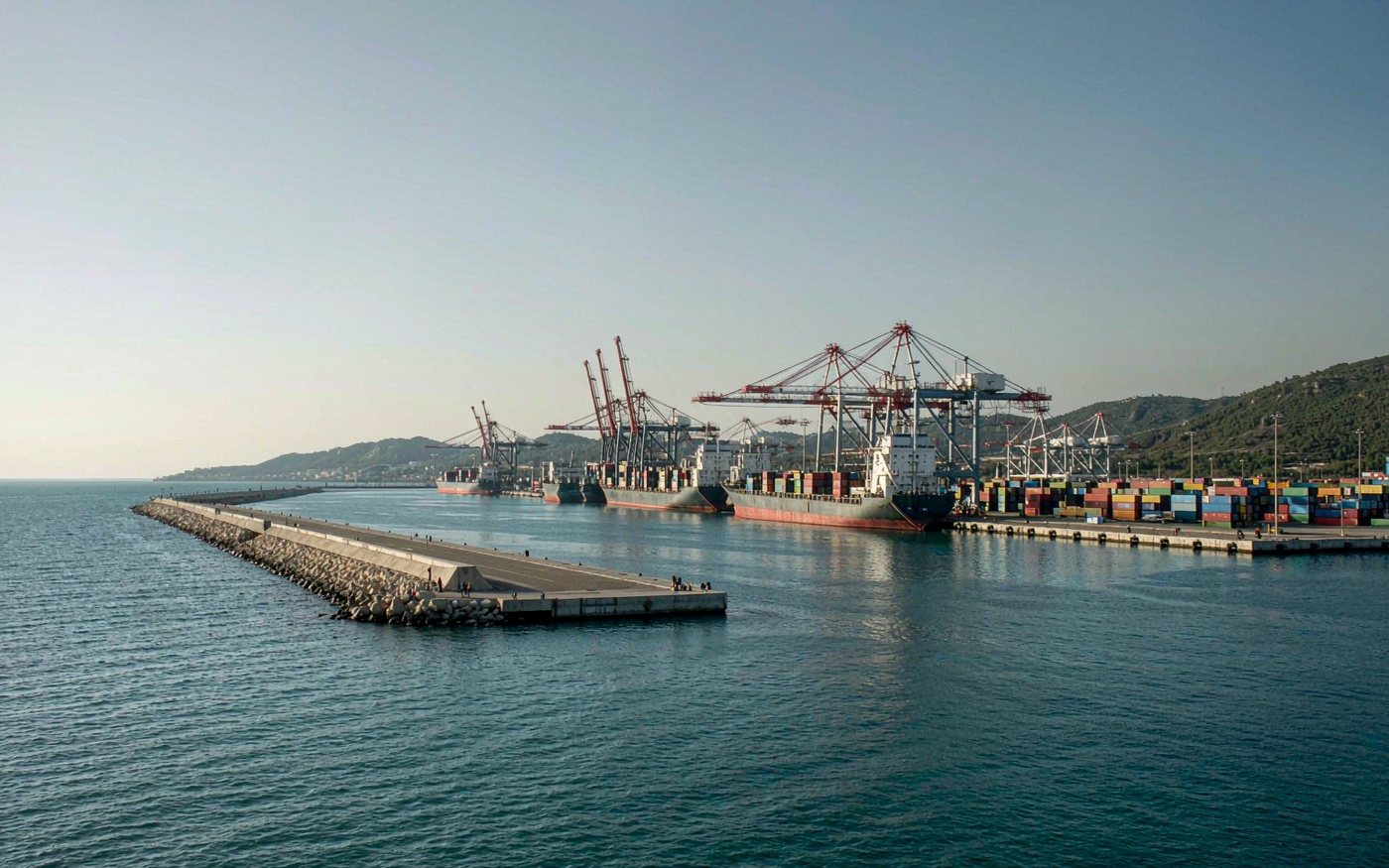
How to Ship from China to Albania
Albania is a small market with one dominant port, an electronic customs system that has been in place for several years, and a tax structure that is uncomplicated once you know how the base is calculated. It is not a difficult destination. What trips up first-time importers is the same thing that trips them up almost everywhere: paperwork that does not agree with itself, and a landed cost that was never fully worked out.
This guide covers the port and airport gateways, how to choose between a full container and consolidation, realistic transit times, what the customs administration expects and who is allowed to file, how duty and VAT are calculated, which products attract conformity or permit requirements, and how inland delivery and bonded storage work. We do not publish freight rates here; the aim is to give you the structure to plan a shipment and read a quotation properly.
At a glance
Main gateway: Port of Durres, handling the large majority of Albanian container traffic. Air gateway: Tirana International Airport. Customs: Albanian Customs Administration on ASYCUDA World, filed by a licensed broker. VAT: 20 per cent on the duty-inclusive value, with a reduced 6 per cent rate. Typical transit from China: 28 to 35 days via a Mediterranean hub.
How your cargo moves: China to Albania
Eight steps from your supplier's door to yours. The last four are the ones shaped by local rules.
- Pickup from your supplierWe collect the goods anywhere in China and bring them to our consolidation point.
- Export clearanceChina customs declaration filed and released before the goods move to the port.
- Loading and departureContainer loaded, sealed and handed to the carrier at the Chinese port.
- Main carriageOcean, air or rail movement booked on the route agreed for your cargo.
- Arrival at the gatewayDischarge at the port or airport of entry, recorded on the carrier's manifest.
- Import clearanceCustoms declaration filed locally, with duty and tax assessed on the declared value.
- Customs releaseGoods released into free circulation once duty and tax are settled.
- Final deliveryOnward movement to your delivery address, warehouse or nominated depot.
Duty rates, VAT rates and clearance times move, and the figure that applies to your goods is the one set for your commodity code on the day of clearance. We check the current position against your code before your goods sail and confirm it to you in writing — ask for that check when you request a quote.
Durrës carries the load: what Albania's main port can and cannot do
The port of Durrës handles roughly ninety per cent of Albania's container throughput and is where a Chinese import will almost certainly be discharged. It sits on the Adriatic, about forty kilometres from Tirana by road, which makes the inland leg short and cheap by regional standards.
Services from China are generally not direct. Cargo is typically relayed through a Mediterranean hub - Istanbul is a common transhipment point on this trade - before the short final leg across the Adriatic. That matters because the connection is the main source of schedule variance, and a missed connection on a thin service costs more than a day.
The port does have limits worth knowing. Draft and berth capacity constrain the very largest vessels, and the Adriatic crossing is a feeder leg rather than a mainline call. Practically, that means planning in weeks rather than assuming the fastest possible routing.
There are secondary Albanian ports, but for a first-time importer moving general merchandise they are not realistic alternatives. Treat Durrës as the answer and focus your planning on service selection and documentation instead.
Whole containers or consolidated cargo into Durrës, plus the Tirana leg
Below roughly 15 cubic metres, consolidation usually costs less, because you pay only for the space you use and share the container's destination charges. Above that, a full container usually wins. That arithmetic is the same here as anywhere.
The local twist is that the inland leg is short and inexpensive, which makes full containers slightly more attractive than they would be on a route with a long haul inland. Durrës to Tirana is a straightforward road move of roughly forty kilometres.
Ask for the destination charges separately - terminal handling, deconsolidation, documentation and delivery order. They are a meaningful share of the total on Adriatic feeder routes, and a low ocean freight figure paired with heavy destination charges is not a cheap shipment.
Consolidation has one operational caution: your goods must reach the consolidator's warehouse in China by a cut-off, and the consolidation sails when it sails. Get the cut-off in writing and work backwards from it, especially if your service runs fortnightly rather than weekly.
Air freight to Tirana and the European hubs it comes through
Air cargo arrives at Tirana International Airport and is worth considering for the familiar reasons: high value relative to weight, urgency, spare parts for equipment that is down, and goods with a short selling window.
There is no direct freighter service from China to Tirana in most schedules. Cargo moves via a European or regional hub - Istanbul, Frankfurt, Vienna and Rome are the sort of transit points used - so the transit includes a handling stop and a connection.
For small consignments, express courier is worth comparing against consolidated air freight, and it may be simpler door to door. Coverage within Albania is thinner than in larger European markets, so confirm what is actually deliverable to your consignee's address before promising a date.
Air does not remove the customs work. The document set is the same, the declaration still runs through the Albanian system, and duty and VAT are still assessed. What you gain is days, not exemptions.
Transit time to Albania and why routing via Istanbul is common
Total transit is the sum of three things: the ocean leg from China, the transhipment at a Mediterranean hub, and the short Adriatic crossing plus clearance at Durrës. Published trade commentary for the China to Albania trade commonly puts the through journey at roughly 28 to 35 days including transhipment, with clearance then taking several working days.
Clearance at Durrës is typically cited in a range of seven to ten working days, stretching considerably longer where documents are incomplete or the cargo is in a regulated category. The single most effective thing you can do is prepare the document set while the vessel is still at sea.
Rain and winter weather in the Adriatic can affect the short-sea leg, and Albanian public holidays stop the customs clock. If your shipment has a hard deadline, check both.
Ask your forwarder for a through estimate with each segment broken out, and add your own buffer. A plan with no contingency on a route with a transhipment and a feeder leg is a plan to disappoint someone.
ASYCUDA World declarations and the licensed Albanian broker
Albanian customs runs on an electronic declaration system based on ASYCUDA World, and declarations must be filed by a licensed customs agent. As an overseas importer you do not file yourself - you appoint a broker, and the quality of that broker determines a great deal about how your first shipment goes.
When you choose one, check their credentials: an Albanian tax registration number and a customs registration. Using an intermediary who subcontracts to another introduces an information gap at exactly the point where you can least afford one.
The document set behind the declaration is the standard one: commercial invoice, packing list, bill of lading or air waybill, and certificate of origin. The invoice should name the parties, describe each item specifically, give quantities, unit and total prices, currency and trade terms, and ideally the HS code. Where a preferential origin claim is available - Albania has a stabilisation and association arrangement with the European Union and is a member of the regional free trade area - the supporting origin evidence has to be right for the claim to hold.
Two things are enforced strictly here. Misdescribed goods and under-declared values are treated seriously, and published trade commentary describes penalties assessed as a percentage of cargo value where declarations do not match the goods. Declare honestly and keep the payment records that support the value. A bilingual invoice, in English and Albanian, is a cheap way to reduce the chance of a query.
How Albanian duty is set, and how the VAT charge is calculated
Albania applies most-favoured-nation rates to imports from World Trade Organization members, which includes China. Published figures put the average tariff in the region of five to six per cent, with wide variation by product: machinery and electronics at the low end, textiles and clothing higher, and some industrial goods at zero under the regional free trade arrangement. Your HS code decides your rate, so classify carefully.
VAT is charged at 20 per cent on the duty-inclusive value, with a reduced rate of 6 per cent applying to certain categories including some agricultural inputs. The base matters: VAT is not 20 per cent of your invoice in isolation, it is 20 per cent of a figure that already includes duty and the costs of getting the goods in.
Excise duty applies additionally to alcohol, tobacco, fuel and vehicles, and vehicles carry a graduated charge based on engine size and fuel type. If you are importing anything in those categories, ask for the excise treatment to be worked out before you ship, because the amounts can be large.
Worked simply: on a CIF-equivalent value of USD 12,000 with duty at 10 per cent, duty is USD 1,200, and VAT at 20 per cent on USD 13,200 is USD 2,640. Your tax before port, handling, broker fees and inland delivery is USD 3,840. Do this calculation for your own commodity before you commit to a purchase.
Conformity, permits and the products Albanian inspectors pick on
General merchandise needs no permit - it needs a correct declaration and the payment of duty and VAT. The categories that need prior approval are the ones regulators worry about: weapons and explosives, narcotics, pharmaceuticals, chemicals and veterinary products, with phytosanitary certificates for some agricultural goods.
The products most likely to attract scrutiny at the border are familiar from elsewhere: anything with a lithium battery, medical devices, food and food-contact goods, and cosmetics. Where a standard or conformity requirement applies, having the documentation ready - a declaration of conformity, test reports, and the correct marking - is the difference between release and a hold. Note that CE marking is generally recognised where it applies, but it needs supporting test reports behind it.
Used vehicles are a special case and the rules are strict. Published guidance describes a prohibition on importing vehicles above a certain age for private use, with a different threshold for commercial vehicles, and a minimum emission standard. Do not generalise from another market.
The reliable approach is the same one that works everywhere: give your broker your full commodity list before booking and get written confirmation of what is required. Costs nothing before shipping, expensive after.
Packing and labelling for Albanian customs inspection
Cargo to Durrës crosses the Adriatic on a short feeder leg and then sits outdoors before collection. Packing should assume moisture, handling and a wait. Use export-grade cartons, palletise where the volume justifies it, and wrap against rain and condensation.
Wood packaging - pallets, crates and dunnage - must meet the international phytosanitary standard and carry the corresponding mark. Non-compliant wood packaging is a classic cause of an entire shipment being held, and it is entirely avoidable with one instruction to your supplier before production.
Label clearly and consistently with your packing list. Where a container is opened for inspection, clear marking speeds reassembly and reduces the chance of a short shipment. If your product needs a language-specific label or instruction leaflet for the Albanian market, resolve it at origin - relabelling at the port is expensive and slow.
Electronics and anything with a coated metal finish are the categories that most often arrive damaged on this routing. If you are shipping them, say so when you book.
Incoterms and the customs value on an Albanian import
Under FOB, the seller loads in China and you contract and pay for everything from there - ocean leg, transhipment, destination handling, clearance and inland delivery. Under CIF to Durrës, the seller pays freight and insurance to the port, but risk still transfers at loading in China. Under DAP or DDP, the seller carries more, and DDP includes clearing the goods and paying Albanian duty and VAT.
For a first-time importer, FOB with a forwarder who quotes the through move is usually the most transparent. You see each cost, you choose the broker, and you are not relying on your supplier's agent at destination. If a supplier offers DDP, ask who is named as the declarant, because that party carries the customs liability.
Be clear about the customs value. It is built up from the transaction value with the costs of bringing the goods in taken into account, so declaring your factory invoice as the customs value understates the base and invites a query. Price your landed cost on the correct base from the start.
Agree currency and payment mechanics in writing. Freight is typically quoted in US dollars and local costs in Albanian lek. Confirm the transfer route with your bank and allow for the time it takes.
Bonded storage at Kukës and delivery beyond Tirana
If you are not ready to clear goods immediately, bonded storage lets you hold them under customs control with duty and VAT deferred until they are entered for home use. Albania operates customs warehouse and free zone arrangements, including an inland free zone that allows importers to store goods and withdraw them in batches as demand requires.
For an importer building a regular business, that is a genuine cash flow advantage - you pay tax on stock as you sell it rather than on the whole consignment at the port. Ask for the storage period, the charges and the withdrawal procedure in writing.
For delivery, the road network radiates from Tirana and Durrës. Most deliveries are short, and the leg to Tirana is trivial. Deliveries to more remote parts of the country take longer and the road quality varies, so price and schedule them explicitly rather than assuming a national flat rate.
Confirm the delivery window with your consignee before the truck is dispatched. A failed delivery attempt costs you the truck, the driver and a re-booking, and on a small market route there is not always a second truck available the same day.
Mistakes that cost Albanian importers the most
The most common is budgeting VAT on the goods' value rather than on the duty-inclusive customs value. That single error understates your tax by a meaningful margin and it is entirely avoidable with one worked calculation.
The second is a broker chosen on price alone. Declaration quality drives clearance speed here, and a cheap intermediary who subcontracts will cost you more in delay than you saved in fees. Check registration and ask who actually files.
The third is documentation that does not reconcile - a packing list that disagrees with the invoice, or a description too vague to classify. Albanian customs treats mismatches seriously, and published commentary describes penalties assessed as a percentage of cargo value.
The fourth is leaving conformity and permit requirements until after arrival. Products with batteries, medical devices, food and cosmetics are the repeat offenders, and the fix is far cheaper at origin than at the port.
Last: accepting a quotation for the ocean leg only and then discovering transhipment, destination handling and inland delivery were never included. Always ask for an all-in figure to your consignee's door.
Why importers use Goodhope on this lane
Six things that are different about working with us on China to Albania shipments.
Five shipments into Albania
Five shipments bought in China and delivered into Albania, told end to end — where the order came from, how it moved, where it nearly went wrong, and how it finished. Client names are withheld at their request; the situations and the handling are what we deal with on this lane.
First container · Alibaba sourcing · Foshan to Durres to Tirana
The purchase. A buyer found a furniture maker in Foshan through a sourcing platform and ordered enough to fill a container, quoted Durres rather than his own address.
The move. Container from Shenzhen through a Mediterranean hub into Durres, cleared by a licensed broker, then the short road leg to his warehouse in Tirana.
Where it nearly went wrong. Quoting to the port is not quoting to his door. Nothing in the sea freight covered the Tirana leg, and he discovered the gap only when the container was already discharged.
How it finished. We requoted from the actual delivery address and included the inland leg. He now books the full route with clearance named in writing.
Broker question · ASYCUDA filing · Ningbo to Durres
The purchase. A buyer new to importing assumed his supplier's forwarder could handle Albanian customs.
The move. Cargo routed into Durres with a licensed local broker appointed to file the declaration.
Where it nearly went wrong. Declarations here are filed on the national system by a licensed Albanian broker. A forwarder based in China cannot file them, and discovering that at discharge leaves the container accruing storage while arrangements are made.
How it finished. We appointed the broker before the vessel sailed. The declaration was ready when the ship berthed.
Bonded storage · phased release · Shanghai to Durres to Kukes
The purchase. A buyer importing seasonal stock did not want everything released and duty paid in a single hit.
The move. Container into Durres with part of the cargo moved to bonded storage at Kukes and released in tranches as he sold through.
Where it nearly went wrong. Paying duty and VAT on the whole consignment at once is a real cash-flow problem for a smaller importer, and it is avoidable with the right storage arrangement.
How it finished. Phased release smoothed his cash cycle without delaying anything he actually needed.
Routing surprise · Istanbul transfer · Shanghai to Albania
The purchase. A buyer was surprised that his container went through Istanbul rather than straight to Durres.
The move. Feeder movement through a Mediterranean hub, since most services into Albania are not direct from China.
Where it nearly went wrong. Routing via Istanbul is common on this lane and is usually faster overall than waiting for a direct call that may not exist that week.
How it finished. We set the expectation at booking rather than letting it become a complaint mid-transit.
Valuation · consistent paperwork · Yiwu market purchase to Tirana
The purchase. A retailer bought across numerous small Yiwu stalls and arrived at port with a mishmash of invoices.
The move. Consolidated at our Yiwu warehouse into one shipment with one reconciled commercial invoice and packing list.
Where it nearly went wrong. Duty here is charged on a value that must be defensible, and inconsistent paperwork invites exactly the kind of query that holds cargo at Durres.
How it finished. One consolidated invoice against one declaration. The container cleared on the first pass.
Why importers use Goodhope on this lane
Six things that are different about working with us on China to Albania shipments.
Ask for an Albania quote with clearance included
Tell us the commodity, volume and delivery address, and we will route it through the right Mediterranean hub, confirm which Albanian broker will file your entry, and give you a landed cost that includes duty, VAT and delivery - so nothing appears at Durrës that you did not budget for.
Get a quote Talk to usRelated pages
Frequently asked questions
Which port does cargo from China arrive at in Albania?
The port of Durrës handles roughly ninety per cent of Albanian container traffic and sits about forty kilometres from Tirana by road. Services from China are generally not direct - cargo is typically relayed through a Mediterranean hub, with Istanbul a common transhipment point.
How long does shipping from China to Albania take?
Published trade commentary for the China to Albania trade commonly puts the through journey at roughly 28 to 35 days including transhipment, with clearance at Durrës then taking several working days - often cited as seven to ten where documents are complete. Add a buffer.
Should I ship FCL or LCL to Albania?
Below roughly 15 cubic metres, consolidation usually costs less; above that, a full container usually wins. Because the inland leg from Durrës to Tirana is short and inexpensive, full containers are slightly more attractive here than on routes with a long haul inland.
Is air freight to Tirana a good option?
Yes for high-value, urgent or time-critical cargo. There is rarely a direct freighter from China, so cargo moves via a European or regional hub. Air does not reduce the customs workload - the document set, declaration, duty and VAT all apply in the same way.
Who files the customs declaration in Albania?
A licensed customs agent must file it through the ASYCUDA World system; an overseas importer does not file directly. Check your broker has an Albanian tax registration number and customs registration, and ask whether they file themselves or subcontract.
What duty rates apply to imports into Albania?
Most-favoured-nation rates apply to imports from World Trade Organization members including China, with published averages in the region of five to six per cent and wide variation by product - machinery and electronics at the low end, textiles and clothing higher, some industrial goods at zero under the regional free trade arrangement.
What VAT applies to imports into Albania?
VAT is charged at 20 per cent on the duty-inclusive value, with a reduced rate of 6 per cent for certain categories including some agricultural inputs. Excise duty applies additionally to alcohol, tobacco, fuel and vehicles.
Do I need permits or conformity documents for Albania?
General merchandise does not. Prior approval is typically needed for weapons and explosives, narcotics, pharmaceuticals, chemicals and veterinary products, with phytosanitary certificates for some agricultural goods. Products with lithium batteries, medical devices, food and cosmetics are the ones most often held for conformity documentation.
Can I store goods in bond in Albania?
Yes. Customs warehouse and free zone arrangements allow goods to be held under customs control with duty and VAT deferred until they are entered for home use, and an inland free zone allows withdrawal in batches. Ask for the storage period, charges and withdrawal procedure in writing.
What documents does Albanian customs require?
A commercial invoice with a specific description, quantities, unit and total prices, currency and trade terms; a packing list reconciling exactly with it; the bill of lading or air waybill; and a certificate of origin, with origin evidence where a preferential claim is made. A bilingual English and Albanian invoice is a cheap way to reduce queries.