
Home / Shipping to Angola / How to ship from China to Angola
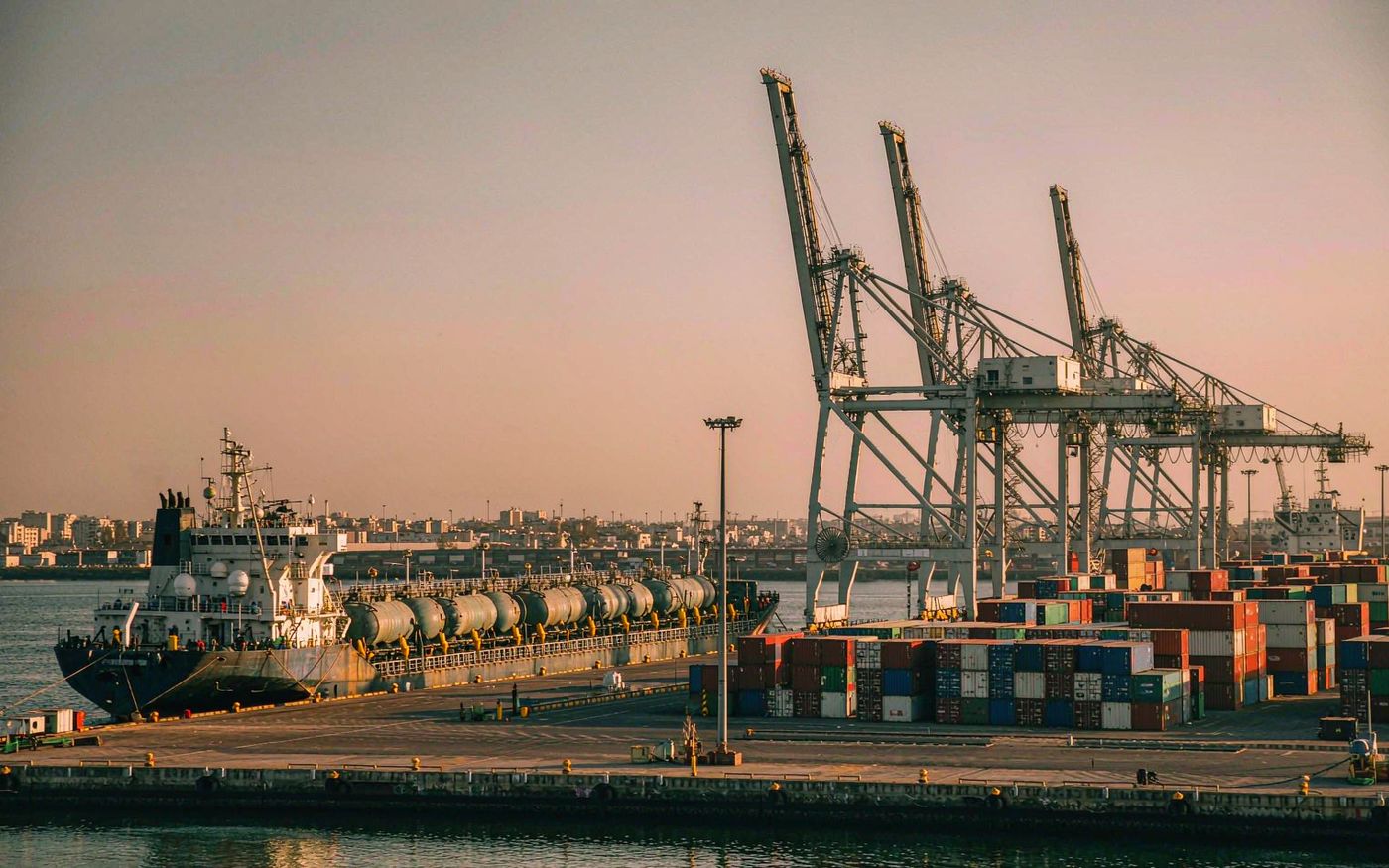
How to ship from China to Angola
Angola is one of China's larger African trading partners and a steady importer of construction materials, machinery, vehicles and consumer goods. Its import process is more straightforward than several West African neighbours in some respects and considerably stricter in one: the loading certificate. Get that wrong and nothing else matters.
This page explains the ARCCLA certificate, which port to aim at and why the second port is sometimes the better choice, which goods currently cannot clear at all, how IVA and duty are calculated, and the two risks specific to this route, strict valuation checks and release without the original bill of lading.
At a glance
A loading certificate issued by ARCCLA, still widely called the CNCA, is mandatory for every ocean shipment and must be obtained before the vessel sails from China. Luanda handles the great majority of container imports and congests in peak season; Lobito serves the central corridor. Duty runs roughly 2 to 30 per cent by HS code, with IVA at 14 per cent applied on top. The consignee tax number has to appear on the bill of lading, the manifest and the certificate application.
How your cargo moves: China to Angola
Eight steps from your supplier's door to yours. The last four are the ones shaped by local rules.
- Pickup from your supplierWe collect the goods anywhere in China and bring them to our consolidation point.
- Export clearanceChina customs declaration filed and released before the goods move to the port.
- Loading and departureContainer loaded, sealed and handed to the carrier at the Chinese port.
- Main carriageOcean, air or rail movement booked on the route agreed for your cargo.
- Arrival at the gatewayDischarge at the port or airport of entry, recorded on the carrier's manifest.
- Import clearanceCustoms declaration filed locally, with duty and tax assessed on the declared value.
- Customs releaseGoods released into free circulation once duty and tax are settled.
- Final deliveryOnward movement to your delivery address, warehouse or nominated depot.
Duty rates, VAT rates and clearance times move, and the figure that applies to your goods is the one set for your commodity code on the day of clearance. We check the current position against your code before your goods sail and confirm it to you in writing — ask for that check when you request a quote.
Luanda takes almost everything, and it gets busy
Luanda is the dominant container port and handles the overwhelming majority of Angola's boxed imports. It has the most frequent sailings from China and the deepest pool of customs brokers, which is why most cargo goes there. The trade-off is congestion: terminal utilisation runs high during the peak period, berthing can be delayed by several days, and free time before storage charges start is limited.
For a first-time importer the practical issue is that congestion converts small problems into expensive ones. A document query that would cost two days at a quiet port can cost a week at a busy one, and the storage meter runs throughout. Send the final document set before the vessel arrives rather than waiting for the discharge notice.
Free time is typically one to two weeks, after which daily charges begin. Confirm the window in writing when you book, and make sure the consignee has transport and payment authority ready before the ship berths.
The ARCCLA certificate, and why it has to be filed in China
The loading certificate issued by Angola's cargo regulator, still widely referred to by its older name CNCA, is mandatory for every ocean shipment to an Angolan port. There is no exemption for small shipments: it applies to full container loads and to consolidated cargo alike.
The critical detail is where and when it is obtained. It is filed at origin, by the shipper or the forwarder, before the vessel departs China. It is not obtained in Luanda and it is not obtainable retrospectively without penalty. Cargo that arrives without one is held, and the combination of fines and daily storage charges quickly exceeds the cost of doing it properly.
The certificate number has to appear on the bill of lading. If your forwarder issues the bill without it, or files late, the problem lands on the cargo at the discharge port. Ask specifically who is responsible for the ARCCLA filing and confirm the number is on the bill before the vessel sails.
Applications are straightforward when the documents are consistent. Declared values need to sit close to the commercial invoice, because a large gap triggers a query, the importer must hold a valid authorisation with the regulator, and the consignee details must match the importer tax number exactly.
Lobito, Namibe and Cabinda: when another port is the better call
| Port | Where it serves | Why consider it |
|---|---|---|
| Luanda | Luanda and Benguela | Most sailings, largest broker network |
| Lobito | Central corridor: Benguela, Huambo, Bié | Less congested, cheaper freight, shorter inland haul for central destinations |
| Namibe | South: Huíla, Cunene | Natural harbour serving southern Angola |
| Cabinda | The Cabinda exclave | Separate enclave with its own port and distinct tax treatment |
The logic is simple: clear where the goods will be used. For a consignee in the central or eastern provinces, Lobito often wins once the inland leg is counted, because the saving on road transport can outweigh a slightly longer sea leg. The counterweight is fewer direct sailings and a smaller broker network, so clearance can take a little longer.
Cabinda deserves a specific mention. It is an exclave with its own port and its own treatment, so cargo destined there should be routed there rather than trucked from Luanda. If your buyer is in Cabinda, say so at the enquiry stage.
Some goods cannot clear at all right now
Angola maintains a list of goods whose import is suspended, and cargo falling under those codes cannot currently clear. Published lists have included wheat flour, maize flour, certain refined vegetable oils, confectionery, uniforms and some hospital consumables, among others.
Suspended lines change. Check the current list against your HS codes before you accept an order, and re-check it before you ship. A suspended line is not a delay or a fine; the cargo simply does not clear.
Separately, Angola requires pre-shipment inspection for a number of categories including electrical goods, vehicle parts, textiles and building materials, carried out before the goods leave China. Where it applies, the inspection has to be completed and certified in good time, not arranged at the last minute.
Vehicles and road parts need one extra authorisation
Since mid-2025, imports of vehicles and road vehicle components require an additional authorisation from the Angolan transport authority, and it has to accompany the loading certificate file. The affected codes include engines for vehicle propulsion, gearboxes, chassis fitted with engines, bodies including cabs, steering systems, suspension systems and transmission systems.
This catches suppliers who think of themselves as shipping general machinery rather than vehicle parts. If any line on your invoice falls into those chapters, flag it at the enquiry stage so the authorisation can be applied for alongside the certificate rather than after it.
Used goods face tight restrictions here as elsewhere in the region, and second-hand cargo is generally not something to attempt through a standard door-to-door service. Check the position for your specific goods before committing.
How IVA and duty stack up on an Angolan entry
Angolan import charges are calculated on the CIF value, with IVA applied on top of the duty rather than alongside it.
| Charge | Indicative rate | Applied to |
|---|---|---|
| Import duty | Commonly 2% to 30% by HS code; the minimum band was reduced for 2026 | CIF value |
| IVA | 14% standard | CIF + duty |
| Customs service charge | Roughly 1% to 2% | CIF value |
| Excise | Varies | Selected goods |
Because IVA is charged on the figure that already includes duty, the effective tax burden on a finished consumer good is noticeably higher than the duty line alone suggests. On higher-duty categories the total tax can approach a third of the cargo value, which is why landed-cost modelling matters more on this route than the headline freight rate does.
Duty bands move with the annual budget, so treat any rate as indicative and confirm the current figure for your HS code before you quote a landed price to anybody.
Portnet prices strictly, so do not under-declare
Angolan customs values cargo through its electronic system and enforces valuation firmly. Declared values that look low are reassessed upward, and the consequences run from additional tax to fines and, in serious cases, seizure.
The loading certificate itself has a tolerance: declared values need to sit within a small margin of the commercial invoice, and a larger gap triggers a query before the goods even reach the port. That is a useful discipline, because it forces the invoice and the certificate to be consistent before sailing.
Declare the true transaction value. On a route where a valuation dispute can leave a container accruing daily charges, the apparent saving from under-declaring is not worth the exposure.
The consignee tax number belongs on every shipping document
The Angolan importer must hold a tax identification number, and it has to appear on the bill of lading, the cargo manifest and the loading certificate application. Without it the entry cannot be submitted in the port system.
Ask your buyer for the number at the same time as you agree the order, and check it appears on the draft bill of lading before the vessel sails. A missing or mistyped number is one of the more preventable causes of a clearance delay, and it is entirely within your control on the Chinese side.
The consignee details on the certificate must match the tax number exactly, so the name, address and number need to be consistent across the invoice, the bill and the certificate.
Whoever holds the paper bill of lading controls your cargo
Shippers on this route should be aware of a specific commercial risk: cargo has in practice been released to an importer without the original bill of lading being surrendered. For a supplier who has not been paid, that is a serious exposure.
Manage the payment risk deliberately. For new buyers, ask for payment before shipment, use a letter of credit, or at minimum confirm who holds the release and on what terms. Do not assume that holding the original bill of lading guarantees the goods will not move.
This is not a reason to avoid the route. It is a reason to match your payment terms to the risk rather than to your usual practice in other markets.
The document set for a Luanda clearance
The following is the working set. Every document has to describe the goods identically, and the HS codes have to be consistent throughout.
- Commercial invoice, ideally in Portuguese alongside English, with HS codes, values, currency and the Incoterm.
- Packing list matching the invoice exactly, with weights and dimensions.
- Bill of lading, showing the ARCCLA certificate number and the consignee tax number.
- ARCCLA loading certificate, validated before the vessel sails.
- Certificate of origin, chamber-certified, with consular legalisation for higher values.
- Import licence where the category requires one.
- Pre-shipment inspection certificate where the category requires one.
- Authorisation from the transport authority for vehicles and road components.
Wooden packaging must meet the ISPM 15 standard and carry the mark, or a no-wood declaration has to be provided. See shipping documents for the format we ask suppliers to use.
Where Angola is easier and harder than its neighbours
Angola sits somewhere in the middle of the African difficulty range, and knowing which way it leans helps you plan.
- One clear electronic valuation system rather than multiple overlapping regimes
- A single loading certificate requirement, applied consistently
- A recognised second port that genuinely relieves the main one
- Duty bands that have been moving downward for industrial inputs
- The certificate must be filed at origin with no retrospective route
- Congestion at Luanda converts small delays into real cost
- Suspended import lines can make a whole shipment unmovable
- Release without original bill of lading is a documented risk
Plan for the second column. If you file the certificate early, confirm the port against the delivery address, and match your payment terms to the release risk, this route works well.
Why importers use Goodhope on this lane
Six things that are different about working with us on China to Angola shipments.
Actual moves into Angola
Five shipments bought in China and delivered into Angola, told end to end — where the order came from, how it moved, where it nearly went wrong, and how it finished. Client names are withheld at their request; the situations and the handling are what we deal with on this lane.
Certificate timing · CNCA · Shenzhen to Luanda
The purchase. A buyer had a vessel due to sail in four days and no loading certificate in hand.
The move. Certificate application processed immediately and completed before departure, then the shipment loaded and sailed as planned.
Where it nearly went wrong. The loading certificate is mandatory for every ocean shipment and must be obtained before the vessel leaves China. Leaving it until the last week turns a routine sailing into a rolled container.
How it finished. We made the application the first step rather than the last, and every shipment since has loaded on the intended vessel.
Consignee tax number · document detail · Ningbo to Luanda
The purchase. A buyer's documents were complete except for one field on one form.
The move. Consignee tax number added across the bill of lading, manifest and certificate application before submission.
Where it nearly went wrong. The consignee tax number has to appear on every relevant document here. One missing occurrence is enough to hold the file, and correcting it after sailing is slow.
How it finished. We check all three documents against each other before anything is filed. It has become routine and the delays stopped.
Under-declaration · Portnet · Guangzhou to Luanda
The purchase. A buyer was advised by no one, but considered declaring a lower value to reduce the assessment.
The move. Declared at the true transaction value and cleared accordingly.
Where it nearly went wrong. The declaration system prices strictly, and the risk of under-declaring falls entirely on the importer in the form of penalties and delays. The saving is small and the exposure is not.
How it finished. He declared at true value. The clearance ran without query and he avoided an audit trail he would not have wanted on later shipments.
Original bill of lading · release risk · Qingdao to Luanda
The purchase. A buyer was relaxed about who held the original bill of lading because his previous markets had been flexible about it.
The move. Original documents couriered and controlled, with release staged against presentation.
Where it nearly went wrong. Release without the original bill of lading is a real risk on this lane. Losing control of that document means losing control of the cargo, and it is the sort of mistake that cannot be undone afterwards.
How it finished. Document flow was agreed with him in advance, and every consignment since has been released to him and nobody else.
Peak season · port congestion · Shanghai to Lobito
The purchase. A buyer shipping into Luanda repeatedly lost time to congestion during the busy months.
The move. Reviewed alternative discharge points and moved part of the volume through Lobito on the central corridor.
Where it nearly went wrong. Luanda handles the overwhelming majority of container imports and congests in peak season. Moving some cargo to another port can shorten door-to-door time even when the sailing itself looks identical.
How it finished. Splitting his volumes cut exposure to the congestion and made his delivery dates predictable again.
Why importers use Goodhope on this lane
Six things that are different about working with us on China to Angola shipments.
Getting a quote for Angola
Tell us the commodity, HS codes if you have them, weight and dimensions, and where in Angola the goods are going. We will confirm the ARCCLA filing, advise on Luanda versus Lobito, and flag anything on the suspended list.
Get a quote Talk to usRelated pages
Frequently asked questions
What is the ARCCLA certificate and who files it?
It is the mandatory loading certificate for every ocean shipment to Angola, still widely called the CNCA. It is filed at origin by the shipper or forwarder before the vessel departs China, not in Luanda, and the number must appear on the bill of lading. Filing late or not at all means the cargo is held, with fines and daily storage charges.
Does it apply to small consolidated shipments too?
Yes. The requirement covers both full container loads and consolidated cargo. There is no small-shipment exemption, and the fee is per shipment rather than per container.
Should I ship to Luanda or Lobito?
Clear where the goods will be used. Luanda has the most sailings and the largest broker network but congests in peak season. Lobito serves the central corridor, is less congested and is typically cheaper on freight, with a shorter inland haul for central destinations. Namibe serves the south and Cabinda serves the exclave.
Are there goods that cannot be imported?
Yes. Angola maintains a list of suspended import lines, which has included certain flours, refined vegetable oils, confectionery, uniforms and hospital consumables. The list changes, so check it against your HS codes before accepting an order and again before shipping.
What tax will I pay on imports?
Duty of roughly 2 to 30 per cent by HS code on the CIF value, IVA at 14 per cent applied on the CIF value plus the duty, and a customs service charge of roughly 1 to 2 per cent. Excise applies to selected goods. Confirm current bands for your codes before quoting.
How strict is customs valuation?
Strict. The electronic system enforces valuation firmly and under-declaration triggers reassessment, additional tax and potentially fines or seizure. The loading certificate also requires declared values to sit within a small margin of the commercial invoice.
What is the NIF and why does it matter?
It is the Angolan importer tax identification number. It has to appear on the bill of lading, the manifest and the certificate application, and without it the entry cannot be submitted. Get it from your buyer before the vessel sails and check it on the draft bill.
Can my goods be released without the original bill of lading?
It has happened on this route, so treat it as a real commercial risk. For new buyers, take payment before shipment or use a letter of credit rather than assuming the original bill of lading protects you.
Do vehicles and vehicle parts need anything extra?
Yes. Since mid-2025 they need an additional authorisation from the transport authority accompanying the certificate file. The affected codes include engines, gearboxes, chassis with engines, bodies and cabs, steering, suspension and transmission systems.
How long do I have to collect before storage charges start?
Free time is typically one to two weeks, after which daily charges accrue, and Luanda congestion can make that window tighter in practice. Confirm the window in writing when booking and have the consignee ready before the vessel berths.