
Home / Shipping to Bahrain / How to Ship from China to Bahrain
How to Ship from China to Bahrain: Ofoq, Khalifa Bin Salman & the 10% VAT
Bahrain is the easiest tax calculation in the Gulf. Five percent duty on the CIF value under the GCC common external tariff, then VAT at ten percent on the duty-inclusive value — raised from five percent in January 2022 — giving an effective burden of about 15.5 percent of CIF on a standard consignment. One flat rate, one VAT rate, no complicated schedule to learn.
What that simplicity hides is the thing that actually decides whether your container clears in a day or a week: whether the declaration went into Ofoq before the vessel arrived. Published guidance describes electronic filing as required and pre-arrival lodging as the practice that reduces physical clearance to 24 to 72 hours. File late, or file incompletely, and you get inspection and storage instead.
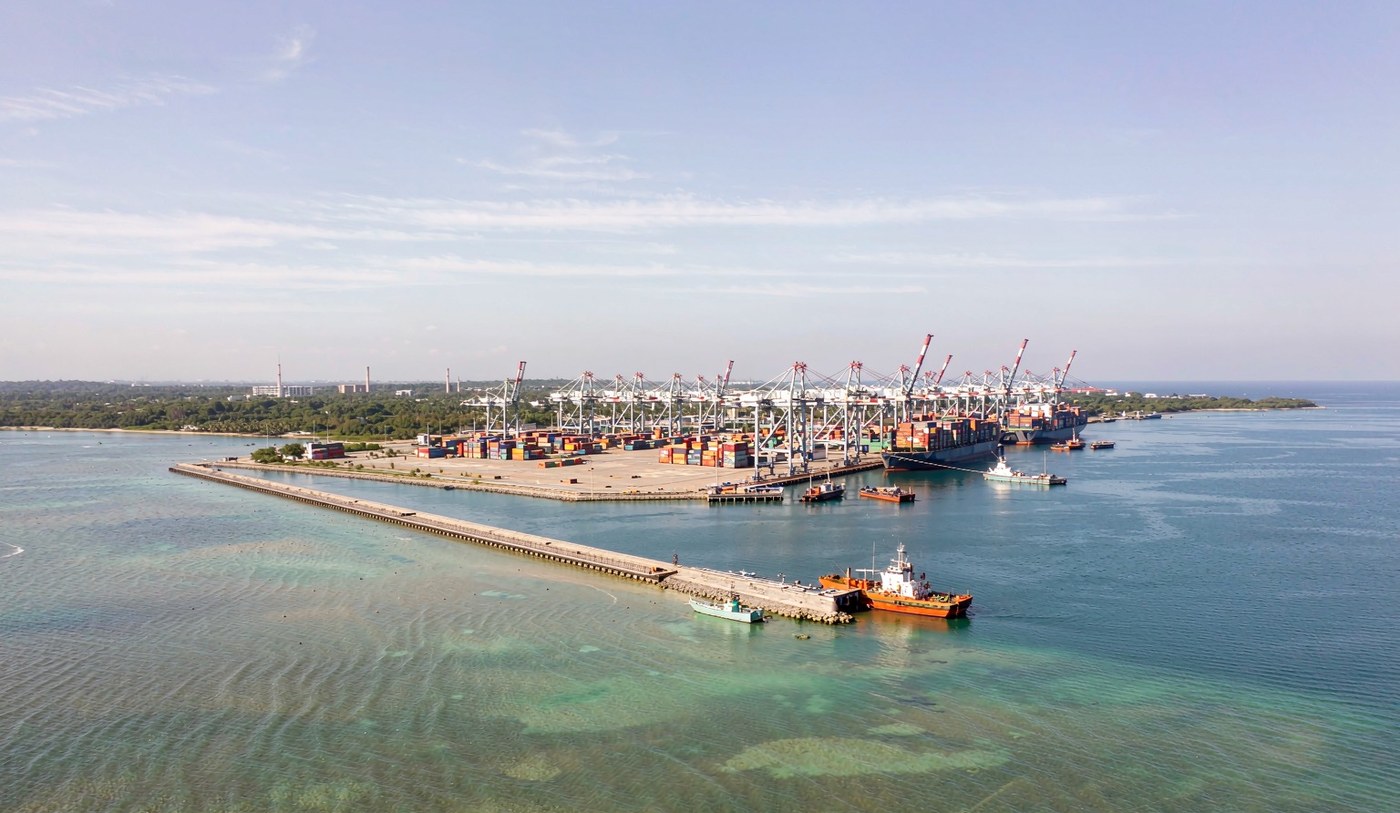
The third thing is that Bahrain is small, efficient and connected. Khalifa Bin Salman Port handles the containers, the airport handles the air freight, and the King Fahd Causeway puts the whole eastern province of Saudi Arabia within a road movement. For a lot of importers Bahrain is not just a destination, it is a staging point.
At a glance
Country: an island state in the Gulf connected to Saudi Arabia by the King Fahd Causeway; capital Manama; a GCC and WTO member. · Currency: the Bahraini dinar, pegged to the US dollar. · Duty: GCC common external tariff, generally 5 percent of CIF; 0 percent for qualifying GCC-origin goods and for approved industrial raw materials; 100 percent on tobacco and energy drinks; 125 percent on alcohol; 50 percent on carbonated soft drinks. · VAT: 10 percent on the CIF value plus duty, raised from 5 percent in January 2022; recoverable by registered businesses. · Effective: about 15.5 percent of CIF on a standard import. · Customs platform: Ofoq, with electronic filing and pre-arrival lodging. · Registration: commercial registration with an import activity through Sijilat, plus customs registration and a customs code. · Port: Khalifa Bin Salman. Airport: Bahrain International. Land: King Fahd Causeway. · Clearance: 1 to 3 days standard; 24 to 72 hours with pre-arrival filing. · Transit: sea 20 to 28 days, LCL adding 5 to 9, air 4 to 6 days. · Parcel threshold: BHD 100 under the 2026 customs decree.
How your cargo moves: China to Bahrain
Eight steps from your supplier's door to yours. The last four are the ones shaped by local rules.
- Pickup from your supplierWe collect the goods anywhere in China and bring them to our consolidation point.
- Export clearanceChina customs declaration filed and released before the goods move to the port.
- Loading and departureContainer loaded, sealed and handed to the carrier at the Chinese port.
- Main carriageOcean, air or rail movement booked on the route agreed for your cargo.
- Arrival at the gatewayDischarge at the port or airport of entry, recorded on the carrier's manifest.
- Import clearanceCustoms declaration filed locally, with duty and tax assessed on the declared value.
- Customs releaseGoods released into free circulation once duty and tax are settled.
- Final deliveryOnward movement to your delivery address, warehouse or nominated depot.
Duty rates, VAT rates and clearance times move, and the figure that applies to your goods is the one set for your commodity code on the day of clearance. We check the current position against your code before your goods sail and confirm it to you in writing — ask for that check when you request a quote.
The GCC tariff at five, then VAT at ten
Duty is assessed on the CIF value — not the factory invoice. Bahrain applies the GCC common external tariff, and for most goods that is a flat five percent. Goods that qualify as GCC-origin with a valid certificate of origin come in at zero, and raw materials for approved industrial use can be exempt or reduced with prior approval from the ministry responsible for industry.
Duty on the CIF value
GCC common external tariff, generally 5 percent. Higher on tobacco, alcohol and soft drinks; zero for qualifying GCC-origin goods.
VAT on the duty-inclusive value
10 percent on CIF plus duty, since January 2022. Recoverable through the periodic return if you are registered with the national tax bureau.
Excise, where it applies
Charged separately on tobacco, energy drinks and carbonated beverages, on top of duty and VAT. Modelled separately because it compounds.
Worked example published for a shipment with a CIF value of US$10,000: duty at 5 percent is US$500, the subtotal is US$10,500, VAT at 10 percent is US$1,050, and the total import cost is US$11,550. That is the arithmetic in full, which is why this lane is pleasant to model — and why a costing that misses the VAT step is obviously wrong rather than subtly wrong.
What to watch: Bahrain Customs has authority to reassess declared values, with penalties reported at up to 100 percent of the under-declared amount. Declare the real value, and keep the contract and payment evidence with the file. On a lane this easy, the only way to create a problem is to invent one.
Ofoq, and why the declaration goes in early
Ofoq is Bahrain's electronic customs platform, run by Bahrain Customs Affairs. Declarations — import, transit and re-export — are filed there by the importer or an appointed broker.
The operational point is timing rather than mechanics:
- Lodge before arrival. Published guidance describes pre-arrival lodging as the practice that lets customs complete its risk assessment and document review before the goods land, reducing physical clearance to 24 to 72 hours for a compliant file.
- Late filing is expensive. Late or incomplete filings attract additional inspection and storage charges at the port, which on a small, efficient port is the main avoidable cost on the lane.
- Risk channels apply. On arrival goods go to documentary review or physical inspection depending on the risk profile, and a shipment flagged for inspection cannot be moved from the customs area until it is released.
- A broker files for you. Published guidance recommends using a broker with active Bahrain clearance experience, which is what turns a multi-day process into a matter of hours.
Khalifa Bin Salman, and the causeway
Khalifa Bin Salman Port
Bahrain's main sea gateway and the one your container will use. It handles the container traffic and sits close to the industrial areas and to the causeway. Published transit for sea freight from China runs 20 to 28 days.
Bahrain International Airport
The air gateway, roughly four to six days from China. Used for high-value, urgent and low-volume cargo, and for the samples and spares that keep a project moving while the container is still at sea.
The King Fahd Causeway is worth understanding even if your cargo never crosses it. It links Bahrain to Saudi Arabia by road, which means Bahrain works as a staging and distribution point for the eastern province of Saudi Arabia, and it means road freight is a genuine third mode alongside sea and air rather than a technicality.
The BHD 100 threshold, and what it changes
Published commentary on Decree No. 23 of 2026, which amended Bahrain's implementation of the GCC Customs Law, describes a parcel threshold of BHD 100 at or above which the full documentation, duty and VAT treatment applies.
For containerised freight this changes nothing. For anyone shipping samples, small orders or e-commerce parcels directly into Bahrain, it is the line that decides whether a shipment moves as a simple parcel or as a full import with a declaration, a duty assessment and VAT. If you run both, make sure whoever files knows which side of the line each consignment sits on.
Registering on Sijilat before the first shipment
Commercial importing needs setup on the Bahraini side before there is anything to declare. Published guidance sets out the sequence:
| Step | Published timeline | Note |
|---|---|---|
| Commercial registration with an import activity, through Sijilat | 1–2 weeks | The activity code must include importing |
| Registration with Bahrain Customs Affairs as an importer, and a customs code | 3–5 days | The code is referenced on declarations |
| Product registration with the relevant authority | 1–4 weeks | NHRA for food and pharma, TRA for telecoms, and so on |
| Tax identification number registration | — | Needed to recover import VAT |
Missing registration is the most common reason a first shipment stalls, and it cannot be fixed by a forwarder at the port. It belongs before the vessel sails.
Excise: the categories that break the flat rate
The five percent flat rate is the story for most goods. These are the exceptions, and the numbers are large enough that they change the commercial case rather than just the costing:
| Category | Published duty | Note |
|---|---|---|
| Tobacco products | 100% | Excise also applies |
| Energy drinks | 100% | Excise also applies |
| Carbonated soft drinks | 50% | Excise also applies |
| Alcohol | 125% | Import licence required; excise applies |
| Raw materials for approved industrial use | 0% or reduced | Requires prior approval |
| GCC-origin goods with a valid certificate of origin | 0% | Must meet GCC origin rules |
| Certain medical supplies and equipment | 0% | Listed items; permits may still apply |
Note that excise is charged in addition to duty and VAT, and the three compound. On an affected product the total is not remotely close to 15.5 percent, and modelling it as if it were will produce a badly wrong landed cost.
Product approvals: NHRA, TRA and the Gulf G-Mark
Controlled goods need a permit from the responsible authority before the goods arrive. The ones that come up most often:
| Product | Approval |
|---|---|
| Pharmaceuticals and medical products | National Health Regulatory Authority approval |
| Telecoms equipment with radio frequency components | Telecommunications Regulatory Authority approval |
| Food, agricultural products, live animals | Health or phytosanitary certificate |
| Low-voltage electricals, toys, some consumer goods | Gulf G-Mark conformity under the Bahrain standards body and GSO standards |
| Chemicals | Permit from the responsible authority |
Confirm whether your product is in scope during quoting rather than after booking. A container that arrives without its permit is not a delay; it is a shipment that cannot be released.
How long Bahrain clearance takes
| Scenario | Published time |
|---|---|
| Compliant shipment with pre-arrival filing | 24–72 hours for physical clearance |
| Standard processing | 1–3 days |
| Express shipments | Faster, often same day |
| Shipment flagged for inspection | Longer, plus examination charges |
| Ramadan and Eid periods | Slower processing |
Detention and demurrage beyond free time is quoted in the range of BHD 16 to 64 per day, which is modest by regional standards but is still pure waste when it comes from a late filing.
The document file Ofoq is happiest with
| Document | What it has to do |
|---|---|
| Commercial invoice | Seller and buyer details, HS code, unit price, total value, currency and Incoterm |
| Packing list | Itemised contents, gross and net weight per carton, dimensions, total carton count |
| Bill of lading or airway bill | Original transport document from the carrier, matching the invoice |
| Customs declaration | Filed electronically through Ofoq, ideally before arrival |
| Certificate of origin | Required to claim preferential or zero-duty treatment; a CCPIT-certificate from China is strongly recommended |
| Import licence or permit | For controlled goods, in place before the goods arrive |
| Health or phytosanitary certificate | For food, agricultural products and live animals |
| Commercial registration and tax number | The importer's valid Bahrain CR and tax identification number |
| ISPM 15 evidence | Stamp on every wooden pallet or crate |
A Bahrain-specific packing point: temperatures inside containers in the Gulf can exceed 70°C between May and September. Electronics, cosmetics, candles, chocolate and some plastics are destroyed by that without climate-appropriate packing. If your product is heat-sensitive, say so at quoting time.
What a Manama clearing agent actually does
On a lane this efficient, it is fair to ask what a broker is for. Four things:
- Filing early. Getting the declaration into Ofoq before the vessel arrives, which is the single biggest lever on clearance time.
- Classification. Confirming the HS code so the duty assessment is not reopened. Published guidance calls misclassification a common source of penalties.
- Permits. Knowing which authority your product needs and starting the process before the goods move.
- Recovery. Making sure import VAT is documented in a way your business can actually reclaim through the periodic return.
Why importers use Goodhope on this lane
Six things that are different about working with us on China to Bahrain shipments.
Straight cases into Bahrain
Five shipments bought in China and delivered into Bahrain, told end to end — where the order came from, how it moved, where it nearly went wrong, and how it finished. Client names are withheld at their request; the situations and the handling are what we deal with on this lane.
Declaration timing · Ofoq early · Shenzhen to Bahrain
The purchase. A buyer used to lodging declarations on arrival assumed Bahrain worked the same way.
The move. Declaration prepared and filed on Ofoq before the vessel berthed.
Where it nearly went wrong. The declaration is expected early on this lane. Lodging at arrival is the difference between clearing and waiting, and storage does not wait politely.
How it finished. Filed ahead of berthing, and the container moved straight out.
Registration missed · Sijilat · Ningbo to Bahrain
The purchase. A first-time buyer had everything ready except the commercial registration his declaration would sit against.
The move. Registration completed, then the shipment moved and cleared on it.
Where it nearly went wrong. Importers register on Sijilat before their first shipment. Freight cannot be routed around a missing registration, and discovering it at the port costs weeks.
How it finished. We flagged it at enquiry rather than at arrival. His first entry cleared normally.
Threshold question · BHD 100 · Guangzhou to Bahrain
The purchase. A buyer shipping small consignments wanted to know whether a low value changed anything.
The move. Value position checked against the threshold before he structured his orders.
Where it nearly went wrong. The BHD 100 threshold changes what applies below and above it. Splitting orders to sit under it is the kind of cleverness that attracts attention rather than saving money.
How it finished. He consolidated instead of splitting, and cleared on the correct basis every time.
Excise surprise · drinks and tobacco · Yiwu to Bahrain
The purchase. A buyer importing mixed grocery lines treated excise as a detail.
The move. Excise-bearing lines identified before shipment so the assessment was predictable.
Where it nearly went wrong. Excise breaks the flat rate on defined categories. On thin-margin grocery lines it decides whether the import is viable at all.
How it finished. He reduced the excise-heavy lines and kept the rest, and stopped being surprised at clearance.
Product approval · NHRA and G-Mark · Foshan to Bahrain
The purchase. A buyer importing electrical goods discovered his products needed approvals he had not arranged.
The move. Approval requirement identified, documentation produced in China, then shipment cleared.
Where it nearly went wrong. Product approvals from the relevant Bahraini authorities, including the Gulf conformity marking, are importer obligations. They cannot be produced at the port.
How it finished. Arranged before the goods left China, and every subsequent shipment has cleared without query.
Why importers use Goodhope on this lane
Six things that are different about working with us on China to Bahrain shipments.
Get the duty and VAT figure before you order
Tell us what you are shipping, the HS codes if you have them, the packed dimensions and gross weight, the pickup city in China and the delivery address in Bahrain. We will confirm the classification before anything is filed, lodge the declaration in Ofoq before the vessel arrives, tell you whether your product needs NHRA, TRA or G-Mark approval, and set out the five percent duty and the ten percent VAT so you can see the landed cost before you commit.
Get a quote Talk to usRelated pages
Frequently asked questions
What duty and tax will I pay?
GCC common external tariff at generally 5 percent of CIF, then VAT at 10 percent on the CIF value plus duty — raised from 5 percent in January 2022. Effective burden about 15.5 percent. Excise applies separately to tobacco, energy drinks and carbonated drinks.
What is Ofoq?
Bahrain's electronic customs platform, run by Bahrain Customs Affairs. Electronic filing is required, and pre-arrival lodging reduces physical clearance to 24–72 hours for a compliant file. Late filing brings inspection and storage.
Which port does cargo arrive at?
Khalifa Bin Salman Port for sea, Bahrain International Airport for air. The King Fahd Causeway connects to Saudi Arabia by road and makes Bahrain usable as a regional staging point.
Do I need to register first?
Yes — commercial registration with an import activity through Sijilat (1–2 weeks), customs registration and a customs code (3–5 days), plus product registration where applicable (1–4 weeks).
How long does clearance take?
1–3 days standard, and 24–72 hours for physical clearance where the declaration was filed pre-arrival. Express often clears the same day. Ramadan and Eid slow things down.
What is the BHD 100 threshold?
Published commentary on Decree No. 23 of 2026 describes a parcel threshold of BHD 100 above which full documentation, duty and VAT apply. It affects parcels and e-commerce rather than containers.
Which products need approval?
Pharmaceuticals and medical products from the NHRA, telecoms equipment from the TRA, food with health or phytosanitary certification, and low-voltage electricals and toys under the Gulf G-Mark. Permits must be in place before arrival.
Is there an FTA for Chinese goods?
No. Bahrain has its own FTA with the United States and GCC-level arrangements with Singapore and Arab League states. A China-GCC agreement has been under discussion but is not in force. Use a standard CCPIT-certificate of origin.
How long does shipping take?
Sea to Khalifa Bin Salman is published at 20–28 days, LCL adding 5–9 days, and air at 4–6 days. Add 1–3 days for clearance where the filing was done in advance.
What documents are required?
Invoice with HS code and Incoterm, packing list with weights and dimensions, original bill of lading or airway bill, the Ofoq declaration, certificate of origin, permits for controlled goods, health or phytosanitary certificates where applicable, and the importer's CR and tax number.