
Home / Shipping to Belgium / How to Ship from China to Belgium
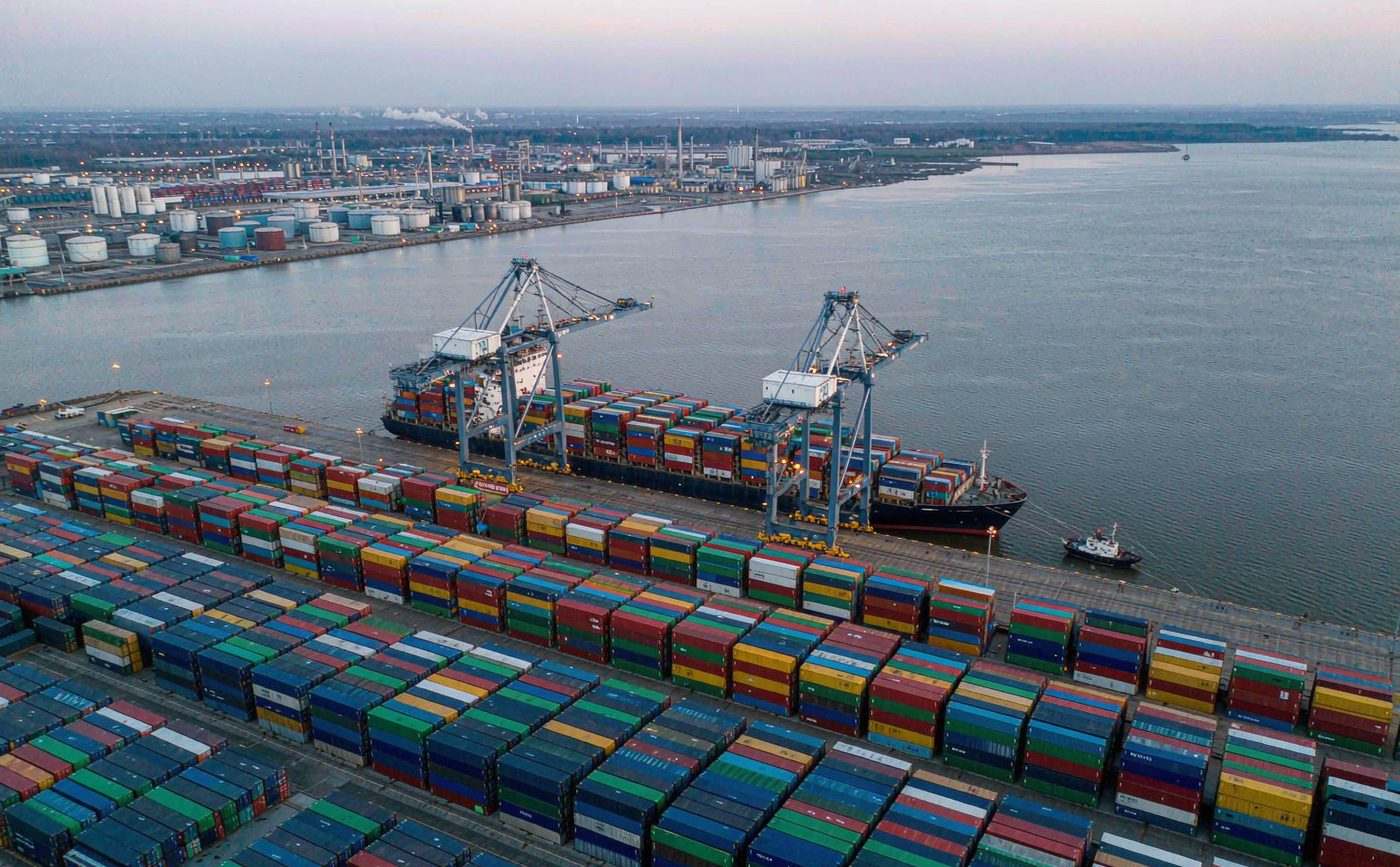
How to Ship from China to Belgium: Antwerp, Liège and Import VAT
Belgium moves far more Chinese cargo than Belgium itself consumes. Its own market is about 11.8 million people, but Antwerp-Bruges handled roughly 13.6 million TEU in 2025, making it the European Union's second-largest container port, and Liège Airport handled 1,324,579 tonnes of cargo in 2025, up 14% year on year — the fastest growth of any of Europe's ten largest cargo airports. Around 30% of Liège's volume is imports from Chinese e-commerce.
That imbalance is the single most useful thing to understand before you ship. Most buyers using Belgium are not importing into Belgium; they are importing through it, then distributing onward. Which of the two you are doing changes almost every decision downstream: which port or airport you use, which customs procedure applies, whether you need a fiscal representative, and whether your money sits at customs for a month or stays in your account.
This guide is written for buyers who are new to importing from China. It covers the four Belgian gateways, sea / air / rail transit times, what the trade terms really mean, the three Belgian import procedures, the step-by-step process, which products need which paperwork, duty and 21% VAT, and how to tell a forwarder who knows this lane from one who is guessing. No prior logistics knowledge assumed.
If you only remember three things. Decide first whether Belgium is your destination or your front door — that answer picks your customs procedure. If you import regularly and hold a Belgian VAT number, apply for the ET 14000 authorisation before the goods ship, because it is granted from the date of approval and does not work backwards. And build slack into the inland leg: barge waiting times at Antwerp ran to about 96 hours in August 2026, which is where schedules quietly slip.
How your cargo moves: China to Belgium
Eight steps from your supplier's door to yours. The last four are the ones shaped by local rules.
- Pickup from your supplierWe collect the goods anywhere in China and bring them to our consolidation point.
- Export clearanceChina customs declaration filed and released before the goods move to the port.
- Loading and departureContainer loaded, sealed and handed to the carrier at the Chinese port.
- Main carriageOcean, air or rail movement booked on the route agreed for your cargo.
- Arrival at the gatewayDischarge at the port or airport of entry, recorded on the carrier's manifest.
- Import clearanceCustoms declaration filed locally, with duty and tax assessed on the declared value.
- Customs releaseGoods released into free circulation once duty and tax are settled.
- Final deliveryOnward movement to your delivery address, warehouse or nominated depot.
Duty rates, VAT rates and clearance times move, and the figure that applies to your goods is the one set for your commodity code on the day of clearance. We check the current position against your code before your goods sail and confirm it to you in writing — ask for that check when you request a quote.
Belgium is a front door, not a market
Worth stating plainly, because it shapes everything else. Belgium is small enough that a single container of consumer goods can represent several months of national demand. It is also one of the busiest entry points on the continent. Those two facts are not in conflict — they are the reason Belgium works the way it does.
The country sits at the mouth of the Scheldt and the Meuse, within a day's trucking of the Rhine-Ruhr industrial region, the Netherlands, northern France and Luxembourg. Barge and rail connections run from Antwerp deep into Germany and Switzerland. So a container discharged at Antwerp can reach more European buyers in 24 hours than almost any other port in the EU.
For a first-time importer that cuts both ways:
- If you are selling into Belgium, you are importing for domestic consumption. Your customs procedure is the standard one, Belgian VAT applies, and your paperwork is straightforward once you have an EORI number and a VAT registration.
- If you are selling into Germany, France or the Netherlands, you may be better served clearing in Belgium and moving the goods onward. That opens up Procedure 42 00, which can remove Belgian VAT from the transaction entirely — but only if your documentation proves the goods actually leave.
Ask yourself this before you get a quote. "Will this cargo stay in Belgium, or will it move on?" A forwarder who does not ask you that question is treating Belgium like any other European destination, and you will end up with the wrong procedure and the wrong VAT treatment.
Which Belgian door: Antwerp, Zeebrugge, Liège or Brussels
Belgium has four working gateways, and they are genuinely specialised. Picking the wrong one costs you time rather than money, but it does cost.
| Gateway | What it is built for | Choose it when |
|---|---|---|
| Antwerp-Bruges (sea) | Europe's second-largest container port at around 13.6m TEU in 2025, and its largest petrochemical cluster. Over 500 bonded warehouses on site. Deep rail and Rhine–Scheldt barge connections. | Containerised general cargo, chemicals, and anything destined for onward European distribution. This is the default for most importers. |
| Zeebrugge (sea) | Europe's largest car port by volume at roughly 3 million vehicles a year, plus LNG and pharmaceutical handling. | Vehicles, vehicle parts and ro-ro cargo. The handling infrastructure for cars is better here than at almost any alternative. |
| Liège (LGG) (air) | Belgium's largest cargo airport and the fifth largest in Europe: 1,324,579 tonnes in 2025, up 14%. Operates around the clock with customs, staff and handling available seven days a week. | Air freight where speed of clearance matters. A Friday-night arrival can clear over the weekend instead of waiting for Monday — which is not true at most European airports. |
| Brussels (BRU) (air) | Wider carrier network and more belly-hold capacity than Liège. | Pharmaceuticals, perishables and general cargo where network breadth matters more than pure clearance speed. |
| Ghent (sea) | Industrial and bulk cargo. | Bulk and project cargo rather than containerised retail goods. |
One more Belgium-specific point worth knowing: Antwerp is the world's diamond trading centre. If you are importing gemstones or jewellery, the Kimberley Process certificate requirements are administered here and handled as a matter of routine — which is a genuine advantage over clearing the same goods elsewhere.
Sea, air and rail into Belgium: what each one is for
Three modes serve the lane, and the honest answer for a first shipment is usually the slowest one you can tolerate.
| Mode | Typical transit | Best for | What to watch |
|---|---|---|---|
| Sea FCL (20ft / 40ft / 40HQ) | Shenzhen–Antwerp 28–34 days; Shanghai–Antwerp 30–38 days; Ningbo 30–38 days; Qingdao 33–40 days; Tianjin 34–42 days. All port to port. | Planned volume and the lowest cost per unit. The default once you import regularly. | These ranges assume a possible Cape of Good Hope routing, which adds 10–14 days over Suez. Treat the fast end as Suez-only. |
| Sea LCL | Sea transit plus roughly 5–8 days for consolidation and deconsolidation. | Small volumes, or several Chinese suppliers combined into one shipment. | Between roughly 12 and 15 CBM, get both an LCL and a 20ft quote. At that volume a full container is frequently cheaper once origin and destination CFS charges are added — and it stays sealed from the factory. |
| Rail | Yiwu–Liège and Tangshan–Antwerp run about 16 days terminal to terminal; 16–22 days is the working range. | When five weeks is too long and air freight is too expensive. | Terminal to terminal, not door to door. Add collection, customs and final delivery. Capacity is seasonal and booked in advance. |
| Air freight | 3–8 days airport to airport; about 5–10 days door to door. | Launch stock, urgent replenishment, high-value and low-weight goods. | Charged on chargeable weight, which is the greater of actual and volumetric. Bulky light goods are expensive. |
| Express courier | Roughly 1–4 days door to door. | Samples and documents. | Since 1 July 2026 even small consignments carry the flat low-value duty, so samples are no longer duty-free by default. |
Two of these terms are worth unpacking, because suppliers use them loosely and the difference matters.
Port to port covers the ocean leg only — from the vessel loading at the Chinese port to discharge at Antwerp or Zeebrugge. Everything else (factory collection, export clearance, terminal handling, customs clearance, delivery) is separate. Airport to airport is the air equivalent: from acceptance at the Chinese airport to availability at Liège or Brussels. A "cheap" port-to-port quote is often just a quote with most of the journey removed.
The inland leg is where Belgian schedules slip
This is the part that surprises new importers, and it is worth a section of its own because it is a 2026 problem rather than a permanent one.
The ocean leg into Antwerp is reliable. What has become less predictable is what happens after discharge. Barge waiting times at Antwerp and Rotterdam reached around 96 hours in August 2026, which makes just-in-time barge collection unrealistic for anything time-critical. Antwerp-Bruges also lost an estimated 2.4 million tonnes in 2025 to roughly 25 days of industrial action.
Practical consequences for you:
- Do not plan a just-in-time barge. If your consignee in Ghent, Genk or Liège is waiting on a barge window, a truck pre-pull from the quay usually costs less than the demurrage clock.
- Know your free time. Ask your forwarder what detention and demurrage free days you have before booking, not after the container lands.
- Consider a bonded warehouse. Antwerp has more than 500 of them. Goods can sit under customs supervision with no duty payable until you withdraw them, which decouples arrival from your sales calendar.
Trade terms when you have no Belgian company
Incoterms decide who pays for what and, more importantly, who carries the risk at each handover point. Suppliers will default to whatever is easiest for them. Here is what each one actually means for you.
| Term | Who controls the shipment | What it means for you |
|---|---|---|
| EXW (Ex Works) | You, from the factory door. | You handle Chinese export clearance, which is difficult without a Chinese entity. Avoid it unless you have a forwarder who can do this cleanly. |
| FOB (Free On Board) | You, from the point the goods are loaded. | The supplier handles Chinese export formalities and delivery to the port. This is the term to ask for. You control the main leg and the pricing stays transparent. |
| CIF (Cost, Insurance, Freight) | The supplier, to the Belgian port. | Looks comparable to FOB but the supplier chooses the carrier and often earns a margin on the freight you cannot see. Destination charges are yours and are frequently higher than expected. |
| DAP / DDU (Delivered At Place / Duty Unpaid) | The supplier, to your address. | You clear customs and pay duty and VAT, but the supplier controls the transport. Works if you have your own broker and want your own VAT treatment. |
| DDP (Delivered Duty Paid) | The supplier, end to end. | Simplest on paper. Someone still has to be importer of record, and if that is the supplier's agent you cannot use your ET 14000 authorisation — so the VAT is genuinely pre-financed and priced into your landed cost. |
The Belgian complication. There are two different representatives in a Belgian import, and conflating them is a common and expensive mistake. A fiscal representative secures your VAT position; a customs representative files the declaration. A non-EU company can hold a Belgian VAT number and still have a customs representation problem. Decide the representation mode before the goods ship.
The three Belgian import procedures: 40 00, 42 00 and ET 14000
This is the part that is genuinely Belgium-specific, and it is where a good forwarder or broker earns their fee. Belgian import VAT can be handled three ways, and the right one depends on the answer to the question at the top of this page.
| Procedure | How the VAT is handled | When it fits |
|---|---|---|
| Procedure 40 00 | Standard import. Goods are released into free circulation in Belgium and Belgian import VAT is payable to customs at clearance. | You are selling in Belgium. Simple and correct, but you pre-finance the VAT until it is recovered through your return. |
| Procedure 42 00 | Goods are imported into Belgium and immediately moved to another EU member state. Belgian import VAT is exempted; VAT is accounted for in the destination country instead. | Belgium is your front door and the goods move on. Requires real, documented evidence that the goods leave: CMR or transport documents, the commercial invoice, and the destination country VAT number. Abuse carries heavy fines. |
| ET 14000 | Import VAT is deferred to your periodic Belgian VAT return rather than paid at customs. You declare and deduct in the same return, so the cash impact is broadly neutral when the VAT is fully recoverable. | You import regularly into Belgium and hold a Belgian VAT number. No financial guarantee has been required since 1 October 2012. |
What the ET 14000 authorisation actually requires. Four things catch people out:
- You need a Belgian VAT identification number linked to your EORI number. The two must be connected for the authorisation to work at clearance.
- You must file periodic Belgian VAT returns (monthly or quarterly). This is why businesses under the EUR 25,000 small-business exemption cannot hold one.
- It is not retroactive. The authorisation is valid from the date it is granted, not for goods cleared before that. Apply before your first container sails.
- First-time applicants must prove future import activity — typically a purchase order with proof of payment, the supplier invoice, and evidence of transport from outside the EU.
Since 15 January 2026, applications are made only through MyMinfin, the Belgian federal finance portal. Intermediaries such as accountants need an active VAT mandate within MyMinfin to apply on your behalf. If your company is not established in the EU, you will need a Belgian fiscal representative to hold the VAT number in the first place.
Worth doing the arithmetic once. On a EUR 50,000 CIF shipment at, say, 6% duty, customs value plus duty is around EUR 53,000 and the 21% VAT is roughly EUR 11,130. Paying that at clearance and reclaiming it a quarter later is a real financing cost on every shipment. ET 14000 removes it. That is the whole point of the authorisation.
Your first Belgian shipment, from factory gate to warehouse
Here is the actual sequence, in the order it happens.
Confirm the commodity code before anything else
Your 10-digit TARIC code determines duty rate, whether licences are needed, and whether the goods are subject to any additional checks. Get it wrong and you will pay the wrong duty or get held. This is the cheapest error to fix and the most expensive to discover late.
Book on FOB and nominate your forwarder
Tell the supplier which forwarder will collect and which port the goods go to. Lock the term at the point you agree the price, not afterwards — renegotiating Incoterms after the fact is awkward and rarely works in your favour.
Collection and consolidation in China
Your forwarder collects from the factory, or from several factories if you are buying from more than one supplier, and consolidates at a warehouse. Damage is checked here, while it is still cheap to argue about.
Chinese export clearance and loading
Export declaration filed, container loaded and sealed, vessel or flight departed. You receive the bill of lading or air waybill.
Advance cargo information reaches Belgian customs
Entry summary data is filed before the goods arrive, and the ICS2 entry summary declaration must be lodged ahead of arrival. Missing or late ENS data is one of the most common reasons a first shipment is held.
Clearance at Antwerp, Zeebrugge, Liège or Brussels
Your broker files the declaration through PLDA, the Belgian customs IT system operated by the customs administration (ADDA). Choose the procedure — 40 00, 42 00 or ET 14000 — and pay or defer the duty and VAT. If customs selects the shipment for examination, this is where the delay happens.
Inland movement and delivery
Barge, rail or truck from the terminal to your warehouse or onward to another EU country. This is the leg that slipped badly in 2026 — plan slack into it, and know your free-time allowance before the container lands.
Products that need extra paperwork at a Belgian port
Antwerp's cargo mix is unusual, and the port's specialisms come with their own documentation. What you ship matters more than where you ship it.
Chemicals
Antwerp hosts Europe's largest petrochemical cluster, so chemical imports are routine here — but "routine" does not mean "light". Expect REACH registration evidence, a safety data sheet in the correct format, correct UN number and classification, and ADR (road) or IMDG (sea) documentation. Misdeclared chemicals are the fastest route to a container being refused at the terminal. See our non-DG chemicals to Belgium and dangerous goods pages.
Vehicles and vehicle parts
Zeebrugge handles around 3 million vehicles a year, so the infrastructure exists. What you need is type-approval or conformity documentation, and for parts, evidence that they meet EU standards. Electric vehicle batteries additionally require UN 38.3 test documentation and correct dangerous-goods declaration.
Pharmaceuticals and perishables
Brussels and Liège both handle these, and Liège moves around 750 tonnes of flowers a day. Temperature-controlled cargo needs GDP-compliant handling and a documented cold chain. Perishables also need health certificates and, for food, notification to the Belgian food safety authority.
Electronics and batteries
CE marking where applicable, WEEE registration for electrical equipment, and UN 38.3 for lithium cells. Lithium batteries shipped by air have their own packing and state-of-charge rules, and a forwarder who treats them as general cargo is a liability.
Furniture, textiles and general retail
The paperwork is lighter, but two things still bite: wood packaging must meet ISPM-15 (heat-treated or fumigated and stamped), and textiles need correct fibre composition labelling to satisfy EU rules.
Diamonds and jewellery
Antwerp is the world's diamond centre, which means the Kimberley Process certification requirement is handled as standard here — a genuine reason to route through Antwerp rather than another EU port.
Across all of these: keep the commercial invoice, packing list, transport document and any certificates consistent with each other. Inconsistency between documents is the single most common cause of an examination.
Twenty-one per cent BTW, and the small parcel fee
Belgium applies the EU common customs tariff, so duty depends on your commodity code rather than on the country. There is no free trade agreement between the EU and China, which means Chinese-origin goods receive no preferential rate.
What you will actually pay:
- Customs duty at the TARIC rate for your commodity — broadly 0–17% for consumer goods, with electronics often at the low end and footwear and textiles higher.
- Belgian VAT (BTW / TVA) at the standard 21%, calculated on the customs value (generally the CIF value) plus the duty. Reduced rates of 12% and 6% apply to certain categories.
A worked example on a EUR 18,000 CIF shipment of general consumer goods at 6% duty:
| Line | Amount |
|---|---|
| Customs value (CIF) | EUR 18,000 |
| Customs duty at 6% | EUR 1,080 |
| VAT base (value + duty) | EUR 19,080 |
| Belgian VAT at 21% | EUR 4,007 |
| Total duty and VAT | EUR 5,087 |
| Landed cost before inland delivery | EUR 23,087 |
Indicative only. Duty rates vary by commodity code and change; confirm the current TARIC rate for your product before you commit to a landed cost.
What changed on 1 July 2026. The old EUR 150 duty-free threshold for low-value consignments ended. Consignments up to EUR 150 now carry a flat duty of roughly EUR 3 per tariff line, an arrangement expected to run until the EU Customs Data Hub comes into service. Belgium has not added its own national parcel charge, unlike France or Italy — but the effect at Liège was immediate rather than gradual: e-commerce shipments into the Bierset customs zone fell about 24% year on year in July 2026 and 41% against June.
One further obligation once you are established: Intrastat reporting kicks in above EUR 1,500,000 of arrivals or EUR 1,000,000 of dispatches, filed by the 20th of the month following the period.
Peppol: the invoicing rule that hits you if you set up in Belgium
If your plan is to establish a Belgian company as your import vehicle, there is a compliance step that has nothing to do with shipping and catches new arrivals out.
Since 1 January 2026, all Belgian VAT-registered businesses must exchange structured electronic invoices with each other, sent over the Peppol network. A PDF invoice by email is no longer sufficient. Belgium is the first EU member state to make this mandatory for B2B; the equivalent obligation for cross-border EU invoicing is expected from 2030.
Three practical points:
- The obligation applies if you have a valid Belgian VAT number, even if your customers are all private individuals — you must still be able to receive structured e-invoices from suppliers.
- The format is Peppol BIS Billing 3.0, built on the European standard EN 16931. Your invoicing or accounting software has to connect to the network.
- Two support measures offset the cost: the investment allowance for digital investments rose to 20% from 1 January 2025, and small SMEs can claim an increased expense deduction of 120% for invoicing software subscriptions for the 2024–2027 tax periods.
This is not a shipping problem, and your forwarder will not raise it. But if you are weighing Belgium against the Netherlands or Germany as the place to register your European entity, it belongs in the comparison.
Personal imports and business imports: where Belgium draws the line
As a private individual
You can receive goods, and genuinely personal shipments are handled differently from commercial ones. But commercial quantities sent as personal parcels to avoid duty are treated as misdeclaration, and the consequences are back taxes and penalties. Since 1 July 2026 the low-value duty relief no longer applies in any case, so the "small parcel" route is less attractive than it was.
As a company
You need an EORI number for customs — an EU EORI issued in any member state is valid across all 27, so a Belgian EORI covers declarations anywhere in the EU. For VAT you need a Belgian VAT registration, and if your business is not established in the EU you will need a fiscal representative. Note the EUR 25,000 small-business VAT exemption: businesses under it do not file periodic returns and therefore cannot hold an ET 14000 authorisation.
From a marketplace order to a Canton Fair handshake
Where you found the supplier changes how your first shipments look, and planning for that saves money.
Sourcing online (Alibaba, 1688, Made-in-China)
You start with samples, then a trial order, then repeats. Samples go by courier. Trial orders are usually too small to fill a container, so they move as LCL or air. The real saving comes later: once you are buying from several online suppliers, consolidating them into one container in China turns three or four shipments into a single customs entry and a single entry fee. Note that since July 2026 even the sample parcels carry the flat duty.
Sourcing at a trade fair (Canton Fair and similar)
You have met the factory and often negotiated on the spot, but you still need samples sent home for evaluation, and the first production order is usually bigger than an online trial. Expect samples by courier straight after the fair, then a consolidated sea or rail shipment once production finishes. Agree FOB at the fair, while the price is still being negotiated — it is much harder to change the term later.
The three parties a Belgian import needs
New importers often try to do this with one counterparty, and it is worth being blunt: the company you need is a freight forwarder, not a shipping line, not a trucking company and not a warehouse.
A shipping line sells space from one port to another. It will not collect your goods from three factories, consolidate them, handle Chinese export formalities, or arrange Belgian clearance and delivery. A trucking company moves a container you have already cleared. A warehouse stores goods you have already imported. Each does one piece.
On a Belgian import there are three roles, and they are genuinely separate:
Your forwarder in China
Collects from suppliers, consolidates, warehouses if needed, prepares documentation, handles Chinese export clearance, books vessel, train or flight space, and reports to you in one thread. Errors are cheapest to fix here — a wrong commodity code caught in Shenzhen costs nothing; the same error found at Antwerp costs demurrage.
Your customs broker in Belgium
A Belgian douane-expediteur / commissionnaire en douane files the declaration through PLDA, arranges duty and VAT payment or deferment, handles any examination, and organises release. Fees are typically in the low hundreds of euros per shipment. They also advise on whether 40 00, 42 00 or ET 14000 fits your flow.
Your fiscal representative (if you are outside the EU)
Holds or supports your Belgian VAT number and carries joint liability for the VAT. Distinct from the customs representative: one secures VAT compliance, the other files the declaration. Non-EU companies are also frequently required to use indirect customs representation, where the representative acts in its own name and carries the heavier customs liability.
Six questions that separate a Belgian-lane specialist from a generalist
Belgium is not a difficult lane, but it has enough specifics that a generalist will give away their inexperience quickly. Ask these and listen to the answer.
| Ask | A competent answer sounds like |
|---|---|
| "Which procedure should this shipment use — 40 00, 42 00 or ET 14000?" | They ask whether the goods stay in Belgium or move on, then explain the VAT consequence. If they have never heard of ET 14000, they have not done much Belgian clearance. |
| "Can you link my EORI to a Belgian VAT number?" | They know this is a prerequisite for ET 14000 and that the authorisation applies only from the date granted. |
| "Do I need a fiscal representative, a customs representative, or both?" | They separate the two roles and tell you which representation mode applies to a non-EU importer. |
| "What evidence does Procedure 42 00 need?" | CMR or transport documents, commercial invoice, and the destination country VAT number — plus a warning that abuse carries heavy fines. |
| "Should this go by barge or truck from Antwerp?" | They mention current barge waiting times and compare a truck pre-pull against demurrage, rather than defaulting to whichever is cheapest on paper. |
| "Are these goods better off at Zeebrugge or Antwerp?" | They know Zeebrugge is Europe's largest car port and will steer vehicle cargo there. |
Beyond the Belgium-specific checks, the usual signs still apply. Green flags: they ask about your commodity before quoting; they quote the whole route rather than a low headline number; they hold an NVOCC licence and will give you the number; you get a named contact. Red flags: a price far below every other quote; reluctance to put the full cost breakdown in writing; no questions about cargo or commodity code; and above all, any suggestion to declare a lower value "to save you duty" — that is fraud, and as importer you carry the liability.
Four Belgian imports and the doors they used
A furniture retailer selling in Belgium and northern France
Sea FCL into Antwerp, cleared under Procedure 42 00. The goods are released in Belgium and moved on, so Belgian import VAT is exempted and VAT is accounted for in the destination country. The cost of this is documentation discipline: the CMR, the invoice and the French VAT number must all line up, and the goods must genuinely leave.
An auto parts distributor restocking quarterly
Zeebrugge rather than Antwerp, because the vehicle handling infrastructure is better and turnaround is faster for ro-ro and containerised parts. Held in a bonded warehouse at the port so duty is not paid until stock is withdrawn, which matches duty payment to sales rather than to arrival.
An online seller whose launch date is fixed
Air freight into Liège, chosen specifically because customs and handling run seven days a week — a Friday-night arrival can clear over the weekend. Since 1 July 2026 the unit economics had to be recalculated: the flat low-value duty on sub-EUR 150 parcels changed the model for anything shipped direct to consumers.
A buyer consolidating four suppliers into one container
Sea FCL into Antwerp on FOB terms, collected from four factories across Guangdong and Zhejiang and consolidated in China. One shipment, one customs entry, one entry fee — and the container stays sealed from the consolidation warehouse rather than being opened and reworked at the destination.
Frequently asked questions
Why do so many Chinese shipments enter Europe through Belgium?
Because Belgium has two front doors rather than one. Antwerp-Bruges handled around 13.6 million TEU in 2025, making it the European Union's second-largest container port, and Liège Airport handled 1,324,579 tonnes of cargo in 2025, up 14% year on year and the fastest growth of any of Europe's ten largest cargo airports. Much of that cargo is not consumed in Belgium; it is cleared there and moved on by barge, rail or truck. Around 30% of Liège's volume is imports from Chinese e-commerce.
How long does shipping from China to Belgium take?
Sea freight from Shenzhen to Antwerp runs roughly 28 to 34 days port to port, from Shanghai or Ningbo 30 to 38 days, and from Qingdao or Tianjin 33 to 42 days. These ranges assume a possible Cape of Good Hope routing, which adds 10 to 14 days over Suez. Rail from Yiwu to Liège or Tangshan to Antwerp takes about 16 to 22 days terminal to terminal. Air freight to Liège or Brussels is 3 to 8 days airport to airport and about 5 to 10 days door to door.
What is the ET 14000 authorisation and do I need it?
ET 14000 is a Belgian authorisation that shifts import VAT from the customs moment to your periodic Belgian VAT return, so you do not pre-finance VAT to customs. Holders declare and deduct the VAT in the same return, which is broadly cash-neutral when the VAT is fully recoverable. You need a Belgian VAT identification number linked to your EORI number, you must file periodic Belgian VAT returns, and since 15 January 2026 applications are made only through MyMinfin. Non-EU companies must appoint a Belgian fiscal representative. The authorisation applies from the date it is granted, so it does not cover goods cleared earlier.
What is the difference between Procedure 40 00 and Procedure 42 00 in Belgium?
Procedure 40 00 is the standard import: goods are released into free circulation in Belgium and Belgian import VAT is due. Procedure 42 00 applies when you import into Belgium and immediately move the goods to another EU member state; Belgian import VAT is exempted and VAT is accounted for in the destination country instead. Procedure 42 00 requires solid evidence that the goods actually leave Belgium, including transport documents, the commercial invoice and the destination country VAT number. Abuse carries heavy fines, so documentation must be consistent.
What taxes will I pay importing from China into Belgium?
Customs duty under the EU common tariff, set by your TARIC commodity code and typically 0 to 17% for consumer goods, plus Belgian VAT at the standard 21% rate calculated on the customs value plus duty. Reduced rates of 12% and 6% apply to certain goods. There is no free trade agreement between the EU and China, so Chinese-origin goods receive no preferential rate. Since 1 July 2026 consignments up to EUR 150 no longer benefit from the old duty-free threshold and instead carry a flat duty of roughly EUR 3 per tariff line.
Do I need a fiscal representative to import into Belgium?
If your company is not established in the EU, yes, in practice. A non-EU business that wants a Belgian VAT number needs a Belgian fiscal representative, who is jointly liable for the VAT. Note that a fiscal representative is not the same thing as a customs representative: the fiscal representative secures your VAT compliance, while the customs representative files the declaration. Non-EU companies are also frequently required to use indirect customs representation, where the representative acts in its own name and carries the heavier customs liability.
Can an individual import from China into Belgium?
A private individual can receive goods, but commercial import volumes need an EORI number and a business with a VAT registration. Belgium's small-business VAT exemption threshold is EUR 25,000, and businesses under it cannot apply for ET 14000 because they do not file periodic VAT returns. Routing commercial quantities through personal parcels to avoid duty is treated as misdeclaration, and the consequences are back taxes and penalties.
Should I use DDP shipping to Belgium?
DDP is convenient for a first shipment because the seller's side handles Belgian clearance and pays duty and VAT. The trade-off is control: someone else is importer of record, and a poorly structured DDP arrangement means you cannot use your own ET 14000 authorisation, so the VAT is genuinely pre-financed by whoever clears and priced into your landed cost. If you import regularly and hold a Belgian VAT number, clearing under your own EORI is usually cheaper over a year.
What Goodhope takes off your hands on a Belgian shipment
We ask the destination question first
Whether your cargo stays in Belgium or moves on decides the procedure, the VAT treatment and the port. We establish that before quoting, not after the container lands.
Multiple suppliers, one shipment
We collect from several factories across China, consolidate at our warehouse, check for damage, and move everything as one shipment with one customs entry.
Compliance flagged before you book
Chemicals, batteries, wood packaging, certification and dangerous goods are identified at quotation stage — while they are still cheap to fix. See our dangerous goods and non-DG chemicals to Belgium pages.
Since 2012, NVOCC licensed
NVOCC licence GD20230925153335. One named contact from factory collection in China through to Belgian delivery.
Goodhope Freight handles sea, rail, air and express from China to Belgium, including consolidation, export clearance and cargo insurance. We are not a Belgian customs broker; we coordinate with yours and make sure everything on the China side is correct before the cargo leaves.
Why importers use Goodhope on this lane
Six things that are different about working with us on China to Belgium shipments.
Shipping your first container through Antwerp?
Send us the commodity, HS codes if you have them, dimensions and weight, origin city and Belgian delivery postcode — and tell us whether the goods stay in Belgium or move on to another EU country. We will price the modes side by side, flag any compliance exposure, and note which import procedure fits.