
Home / Shipping to Bosnia and Herzegovina / How to Ship from China to Bosnia and Herzegovina
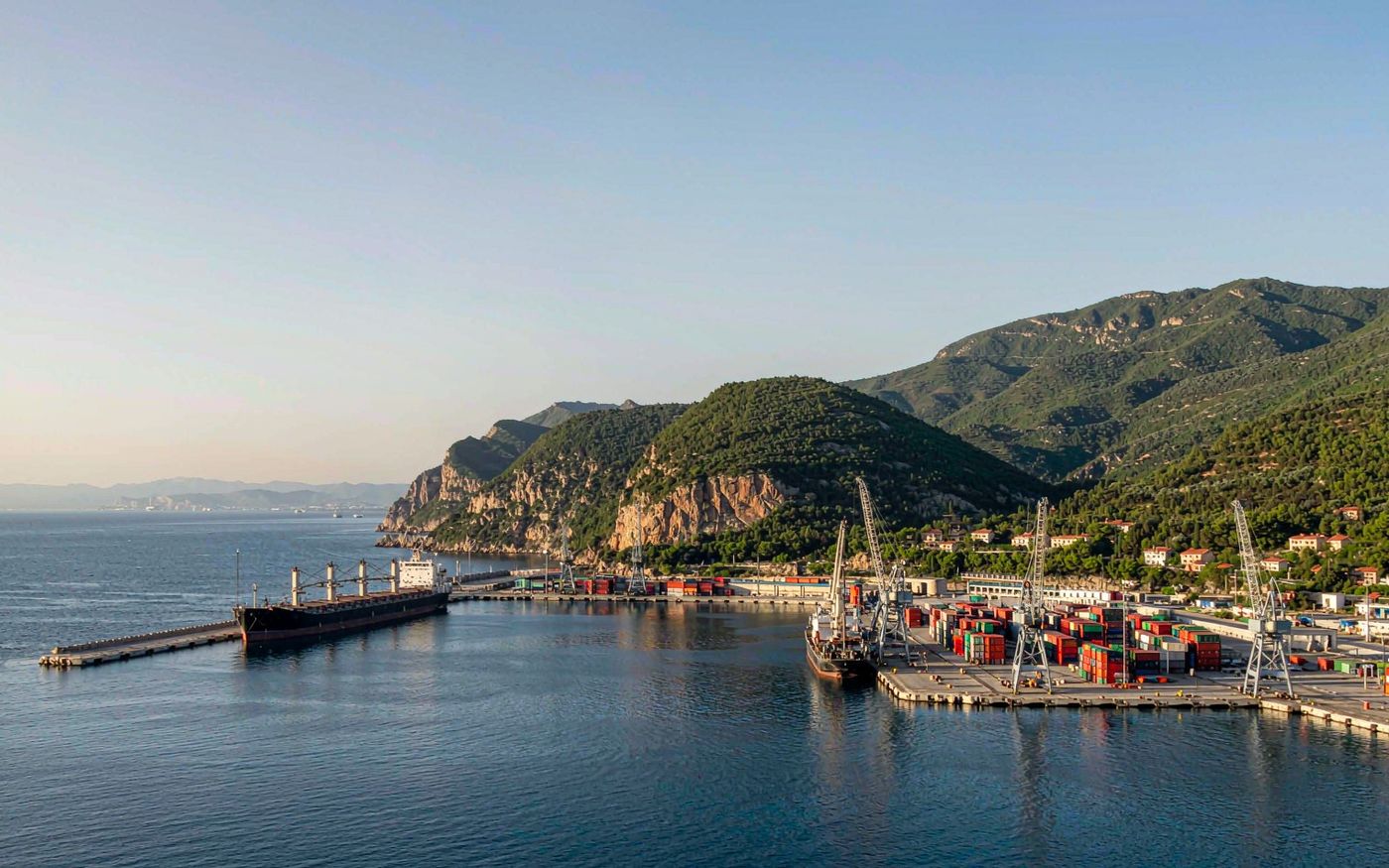
How to Ship from China to Bosnia and Herzegovina
Bosnia and Herzegovina has a coastline, but it is about twenty kilometres long and it has no commercial port. So while the country is not technically landlocked, in practical terms it behaves like one: your sea cargo will be discharged in Croatia - usually at Ploče - and then moved inland across a border under a transit procedure. Understanding that single fact is most of what you need to plan a first shipment.
This guide covers why Ploče is the working answer, how to choose between container options, air alternatives into Sarajevo, realistic transit times, what the customs declaration requires including the language question, how duty and VAT are calculated, which products need approvals, and how the inland leg works. We do not publish freight rates here; the aim is to give you the structure to plan a shipment and read a quotation properly.
At a glance
No commercial seaport - cargo routes via Ploce in Croatia (Bar in Montenegro is an alternative). Air gateway: Sarajevo International Airport. Customs: Indirect Taxation Authority, declarations in Bosnian, Croatian or Serbian. Duty: commonly 0 to 15 per cent, aligned annually with the EU. VAT: 17 per cent. Currency: convertible mark (BAM), pegged to the euro.
How your cargo moves: China to Bosnia and Herzegovina
Eight steps from your supplier's door to yours. The last four are the ones shaped by local rules.
- Pickup from your supplierWe collect the goods anywhere in China and bring them to our consolidation point.
- Export clearanceChina customs declaration filed and released before the goods move to the port.
- Loading and departureContainer loaded, sealed and handed to the carrier at the Chinese port.
- Main carriageOcean, air or rail movement booked on the route agreed for your cargo.
- Arrival at the gatewayDischarge at the port or airport of entry, recorded on the carrier's manifest.
- Import clearanceCustoms declaration filed locally, with duty and tax assessed on the declared value.
- Customs releaseGoods released into free circulation once duty and tax are settled.
- Final deliveryOnward movement to your delivery address, warehouse or nominated depot.
Duty rates, VAT rates and clearance times move, and the figure that applies to your goods is the one set for your commodity code on the day of clearance. We check the current position against your code before your goods sail and confirm it to you in writing — ask for that check when you request a quote.
Neum gives Bosnia a coastline but no port: Ploče is the working answer
Bosnia and Herzegovina has a short stretch of Adriatic coastline at Neum, but there is no commercial port on it. Container cargo for Bosnia is discharged at a neighbouring country's port and moved inland. The primary working answer is Ploče in Croatia, which is connected by road and rail into Bosnia and handles the bulk of the trade. Bar in Montenegro and Rijeka in Croatia are alternatives used for some flows.
The consequence is that a Bosnian sea shipment always has three parts: the ocean leg from China, the discharge and transit formalities at the Croatian port, and the inland movement across the border into Bosnia. A quotation covering only the first is not a quotation for delivery to Bosnia.
The second consequence is that the transit procedure matters. Goods discharged at Ploče and moved into Bosnia are moving under a customs transit regime rather than being entered for home use in Croatia, so the transit documentation and the guarantee have to be right. Confirm who arranges them.
Ask your forwarder which port they are routing through and why. On this trade the answer is usually Ploče, but if your consignee is in the east or north of the country, a different gateway plus a longer inland leg may work out better on total cost.
Full containers or consolidation into Ploče, then the transit inland
Below roughly 15 cubic metres, consolidation usually costs less, because you pay only for the space you use and share the container's destination costs. Above that, a full container usually wins.
The local consideration is the transit leg. A full container moving under transit to a single consignee involves fewer handling events and less risk than consolidated cargo that has to be deconsolidated and then moved. If your cargo is fragile, high-value or time-sensitive, that is an argument for a full container earlier than pure arithmetic would suggest.
Ask for the destination and transit charges separately: terminal handling at Ploče, the transit documentation and guarantee, deconsolidation if applicable, and the inland haulage. These are real costs and they are frequently missing from a headline freight rate.
Also confirm the cut-off for consolidated cargo at origin. Consolidations run to a schedule, and missing the cut-off means waiting for the next departure rather than losing a day.
Air cargo into Sarajevo and the connections behind it
Air cargo arrives at Sarajevo International Airport and is the right answer for urgent, high-value or small consignments. Given the country's size and the length of the sea routing with its inland leg, air closes the time gap substantially.
There is no direct freighter from China in most schedules. Cargo moves via a European or regional hub - Vienna, Istanbul, Frankfurt and Zagreb are the sort of transit points used - so transit includes a handling stop.
Clearance performance differs noticeably by channel. Published trade commentary describes express clearance at Sarajevo airport in a range of three to five working days, while postal channels are considerably slower with a much higher inspection rate. If your shipment matters, route it through an express or general cargo channel rather than post.
For small consignments, express courier is worth comparing against consolidated air freight. Below roughly 100 kilograms courier is usually simpler door to door; above that, consolidated air freight tends to win on cost.
Transit time to Bosnia and Herzegovina, port to warehouse
Total transit is the sum of the ocean leg to the Adriatic, the discharge and transit formalities, and the inland run into Bosnia. Published trade commentary for the market describes average clearance in the region of seven to ten working days, which is longer than the regional average and driven mainly by document review and inspection.
What reliably adds time is documentation. The declaration cannot be filed on an incomplete set, the valuation has to be supportable, and regulated categories need approvals obtained in advance. Goods whose paperwork was prepared while the vessel was at sea move materially faster than goods whose paperwork starts on arrival.
Winter weather in the mountains affects the inland leg, and public holidays stop the administrative clock. If your shipment has a hard deadline, check both.
Ask for a through estimate broken out by stage and add your own buffer. On a route with a transit procedure and a border crossing, a plan with no contingency is a plan to disappoint someone.
Filing in Bosnian, Croatian or Serbian: language and the supporting papers
Customs declarations in Bosnia and Herzegovina must be completed in one of the three official languages - Bosnian, Croatian or Serbian - and submitted by the importer or an authorised representative. If you are used to filing in English, this is the adjustment to plan for: the declaration itself is a local-language document prepared by your broker.
The commercial documents behind it are more forgiving but not entirely. An invoice in English is generally workable provided it carries everything needed: a specific description, the HS code, quantity, unit and total prices, currency, the trade terms, and an explicit statement of origin.
One requirement is easy to miss and reliably causes delay: above a modest declared value threshold, the consignee's identification or tax number is required, and shipments without it are held. Get that number from your consignee before you ship and put it on the documents.
The rest of the set is standard - commercial invoice, packing list, bill of lading or air waybill, certificate of origin - plus conformity documentation where the product needs it. Consistency across the set is what keeps you out of the inspection queue.
Duty bands aligned with the EU, and VAT at 17 per cent
Bosnia and Herzegovina is not an European Union member, but its tariff is aligned with European Union legislation and updated annually, and it uses a nomenclature based on the Brussels tariff system with reference to the European Union's integrated tariff. Published figures put customs duties in a range of roughly zero to 15 per cent depending on the product.
VAT is applied at 17 per cent on goods placed in free circulation, calculated on a base that includes the value of the goods, freight, insurance and duty. Note the base carefully: it is not 17 per cent of your invoice.
The country's trade agreements matter for some importers. A stabilisation and association arrangement with the European Union has progressively removed tariffs on European Union origin goods, and membership of the Central European Free Trade Agreement provides regional preferences. Goods of Chinese origin do not benefit from either, but if your supply chain includes European Union content, ask whether origin can be established.
Worked simply: on a CIF value of USD 12,000 with duty at 10 per cent, duty is USD 1,200, and VAT at 17 per cent on USD 13,200 is USD 2,244. Your tax before port, transit, brokerage and inland charges is USD 3,444. Do this for your own commodity before you buy.
Radio approvals, CE marking and the goods Bosnian inspectors stop
Some categories need approval before they can be imported, and these are the ones that catch buyers out because they look ordinary. Radio and telecommunications equipment requires a permit from the relevant ministry, and in some cases local testing before it can be placed on the market.
Food, cosmetics and medical devices require health sector approvals, and for business-to-consumer sales the local consignee generally needs to be a registered entity holding the relevant licence. If your Bosnian customer is an individual or an unregistered business, that is a problem to solve before you ship.
Second-hand clothing is prohibited. If you are importing textiles, be explicit with your supplier about whether the goods are new.
On conformity, CE marking is generally recognised where it applies, but it needs to be backed by a declaration of conformity and, in practice, instructions in a language the market can use. Recent regulatory updates have also tightened the treatment of lithium batteries and the classification of electronics, so if your product is either, confirm the current position rather than relying on what worked last year.
Packing and labelling for a road leg from the Croatian coast
Cargo to Bosnia is handled more times than cargo to a straightforward port destination: at the Adriatic port, onto the inland truck, across a border, and at the consignee. Pack for more handling events than you would normally assume.
The inland run involves mountain roads. Load securing matters, and pallets should be strapped and wrapped so they do not shift. Cartons that arrive loose in a container after a winding road journey arrive damaged.
Wood packaging must meet the international phytosanitary standard and carry the corresponding mark. It is checked at the European Union border you cross before reaching Bosnia, and non-compliance there stops the shipment before it ever reaches Bosnian customs.
If your product needs local-language labelling or instructions, do it at origin. Relabelling at destination is expensive, slow, and sometimes not permitted for regulated categories.
Incoterms and the ID number Bosnian clearance asks for
Under FOB, the seller loads in China and you contract the ocean leg, the port handling, the transit and the inland delivery. Under CIF to a named Adriatic port, the seller pays freight and insurance to that port, but risk still transfers at loading in China - and your responsibility resumes at the port in any case. Under DAP or DDP, the seller carries more, and DDP includes clearing the goods and paying Bosnian duty and VAT.
Published trade commentary recommends delivered-duty-paid terms for higher-value categories on this market, on the basis that a qualified local broker can keep clearance to a few working days. If you take DDP, confirm who the declarant is, because that party carries the customs liability.
The practical detail that costs the most time is the consignee's identification or tax number. Above a modest declared value it is required, and its absence means a hold. Collect it before shipping and put it on the commercial documents.
Agree currency and payment mechanics in writing. Freight is typically quoted in US dollars and local costs in convertible marks, which is pegged to the euro. Confirm the transfer route with your bank and allow for the time it takes.
Delivery inland from Ploče across Bosnian terrain
The inland leg from the Adriatic coast into Bosnia is a road move through mountainous terrain, and it should be priced as a line item rather than assumed. Distances are modest by international standards but the road geometry and the border crossing both add time.
Confirm the delivery point with your consignee in advance, and check vehicle access. Some industrial sites and older town centres are difficult for large trucks, and a failed delivery attempt costs you the vehicle and a re-booking.
Rail is available on the Ploče corridor and can be worth considering for regular full-container volumes. Ask your forwarder whether a rail option exists for your flow, but do not assume one without checking - road is the default for most importers.
If your consignee is in a remote part of the country, expect the final leg to be a larger share of both cost and time than the geography suggests. Price it explicitly.
Where Bosnian imports lose time
The most common is a missing consignee identification or tax number. It is a one-line requirement that holds shipments above a modest value threshold, and it is entirely avoidable by asking your customer for it before you ship.
The second is the language and documentation gap. The declaration is a local-language document prepared by a broker, and the commercial documents behind it need to carry a full and specific description, the HS code and an explicit origin statement. Thin invoices become queries.
The third is under-declaration. Published commentary describes the customs system flagging declared values far below market levels for automatic inspection, with back-duty and penalties on top. Declare honestly and keep the records.
The fourth is product approvals left too late. Radio equipment, food, cosmetics and medical devices each need something obtained in advance, and none of it can be fixed at the border.
Last: a quotation that stops at the Adriatic port. The transit procedure and the inland leg are where the extra time and money are. Always ask for an all-in figure to your consignee's door.
Why importers use Goodhope on this lane
Six things that are different about working with us on China to Bosnia and Herzegovina shipments.
End to end to Bosnia and Herzegovina
Five shipments bought in China and delivered into Bosnia and Herzegovina, told end to end — where the order came from, how it moved, where it nearly went wrong, and how it finished. Client names are withheld at their request; the situations and the handling are what we deal with on this lane.
Wrong port assumption · Neum has no port · Foshan to Bosnia
The purchase. A buyer had read that Bosnia has a coastline and assumed there was a Bosnian port to ship to.
The move. Routed through Ploce in Croatia with the inland transit arranged, rather than searching for a port that does not handle this cargo.
Where it nearly went wrong. Neum gives the country a stretch of coast but no working commercial port. Planning around a Bosnian port wastes weeks before anyone notices the mistake.
How it finished. We set the routing on Ploce from the first quote, and nothing about the plan had to be redone.
Language · declaration in the local language · Ningbo to Sarajevo
The purchase. A buyer submitted documentation in English, as he had for neighbouring markets.
The move. Documentation prepared in the accepted local language before submission.
Where it nearly went wrong. Declarations here are filed in Bosnian, Croatian or Serbian. English-only paperwork is not a stylistic preference, it is a reason for the file to be held.
How it finished. Prepared correctly before submission, and the clearance ran on the first pass.
VAT budgeting · duty plus 17% · Shenzhen to Banja Luka
The purchase. A buyer was working from a rate he had used for an EU neighbour.
The move. Duty band and the VAT rate confirmed for his actual commodity before he priced his range.
Where it nearly went wrong. Duty bands here are aligned with the EU but the VAT rate is not the same as any neighbouring country's. Carrying a rate across a border is the most common budgeting error on this lane.
How it finished. Priced on the correct figures, and his margin held.
Product approvals · radio equipment · Guangzhou to Bosnia
The purchase. A buyer importing radio equipment had no approval in place and assumed CE marking covered it.
The move. Approval requirement identified and arranged before the goods shipped.
Where it nearly went wrong. Radio equipment needs its own approval in addition to conformity marking, and inspectors do stop goods that lack it.
How it finished. Arranged in advance, and every shipment in that category has cleared since.
Border choice · where time is lost · Shanghai to Bosnia
The purchase. A buyer's containers repeatedly lost time somewhere between Ploce and his warehouse.
The move. Reviewed the border crossing and the inland route, then cleared at the crossing that suited his delivery point.
Where it nearly went wrong. Where you clear on this route matters as much as which port you land at. Clearing at the wrong border adds a day that shows up on every single shipment.
How it finished. Changed the crossing, and the recurring delay disappeared.
Why importers use Goodhope on this lane
Six things that are different about working with us on China to Bosnia and Herzegovina shipments.
Get a Bosnia plan that clears at the right border
Tell us the commodity, volume and delivery town. We will route it through the port that suits your consignee, confirm the transit procedure and any product approvals before you ship, and give you a landed cost that includes duty, VAT and the inland leg.
Get a quote Talk to usRelated pages
Frequently asked questions
Which port does cargo from China arrive at for Bosnia?
Bosnia has a short coastline at Neum but no commercial port, so container cargo is discharged in Croatia - usually at Ploče - and moved inland under a transit procedure. Bar in Montenegro and Rijeka in Croatia are used for some flows. Ask which port your forwarder is routing through and whether the transit documentation is included.
How long does shipping from China to Bosnia and Herzegovina take?
Total transit is the ocean leg to the Adriatic plus discharge and transit formalities plus the inland run. Published commentary for the market describes average clearance in the region of seven to ten working days, longer than the regional average and driven mainly by document review and inspection.
Should I ship FCL or LCL to Bosnia?
Below roughly 15 cubic metres, consolidation usually costs less; above that, a full container usually wins. On this route the transit leg is an extra argument for a full container where cargo is fragile or time-sensitive, because it involves fewer handling events.
Is air freight to Sarajevo practical?
Yes for urgent, high-value or small consignments. Cargo arrives at Sarajevo International Airport, usually via a European or regional hub. Published commentary describes express clearance there in about three to five working days, considerably faster than postal channels.
Do customs documents need to be in the local language?
The customs declaration must be completed in Bosnian, Croatian or Serbian and filed by the importer or an authorised representative. Commercial invoices in English are generally workable provided they carry a specific description, HS code, values, trade terms and an explicit origin statement.
What duty and VAT apply to imports into Bosnia and Herzegovina?
Customs duties are commonly in a range of roughly zero to 15 per cent depending on the product, with the tariff aligned annually with European Union legislation. VAT is 17 per cent, calculated on a base that includes the value, freight, insurance and duty.
Do I need the consignee's tax or ID number?
Yes above a modest declared value threshold - shipments without it are held. Collect the number from your consignee before you ship and put it on the commercial documents. This is one of the most common causes of delay on the route.
Which goods need special approval in Bosnia?
Radio and telecommunications equipment needs a permit from the relevant ministry and sometimes local testing. Food, cosmetics and medical devices need health sector approvals and a registered local consignee holding the appropriate licence. Second-hand clothing is prohibited.
Is CE marking accepted in Bosnia?
Generally yes where it applies, but it needs to be backed by a declaration of conformity and, in practice, instructions in a language the market can use. Recent updates have tightened the treatment of lithium batteries and electronics classification, so confirm the current position for those categories.
Should I use DDP for Bosnia?
Published commentary recommends delivered-duty-paid for higher-value categories on this market, because a qualified local broker can keep clearance to a few working days. If you take DDP, confirm who is the declarant, because that party carries the customs liability.