
Costs
The price agreed at the fair covers the goods and usually the ocean. What happens at your own port is a separate invoice, raised by a company you have never spoken to.
Contents
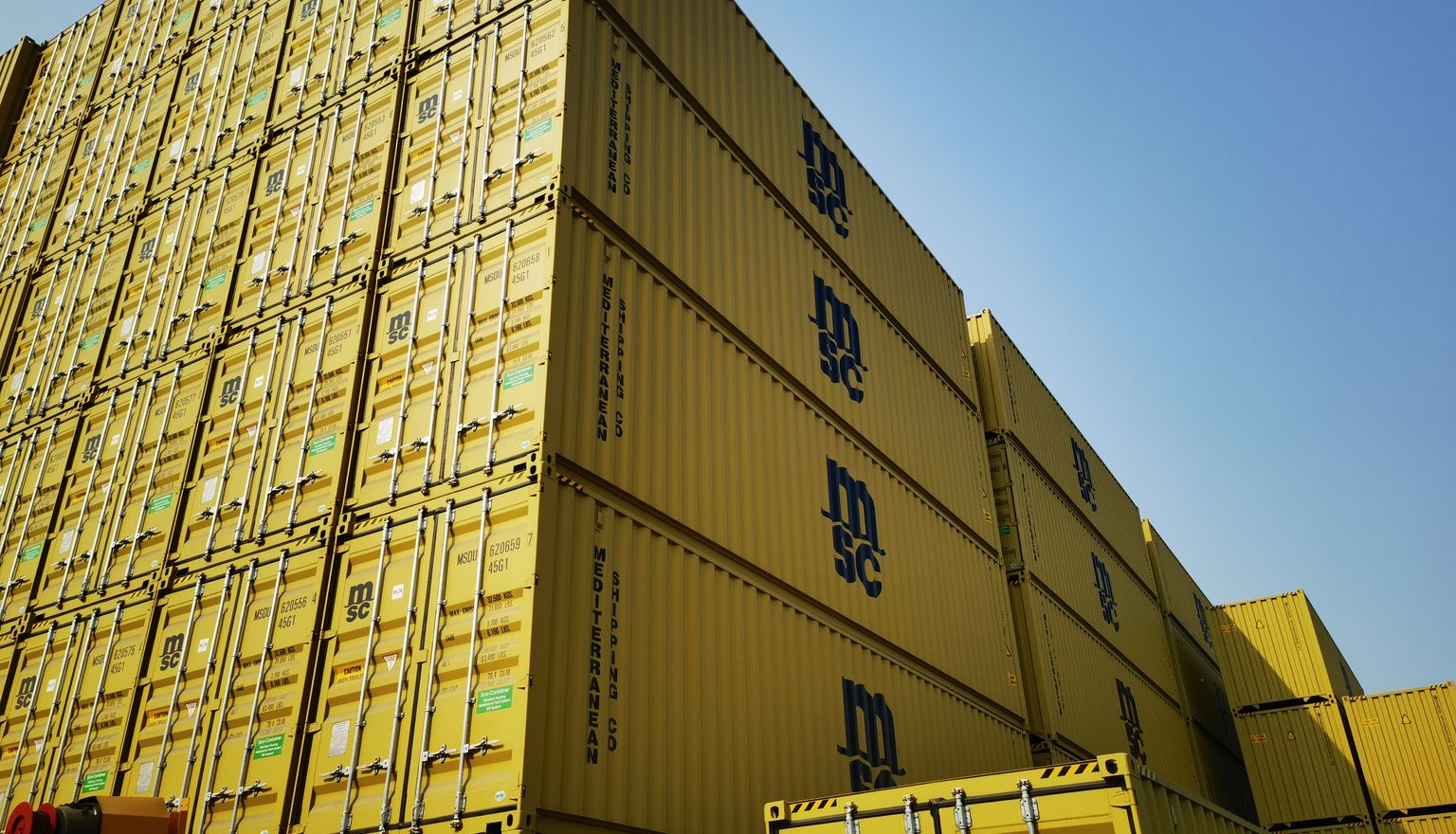
Every container that arrives at a port is handled by someone at that port. A terminal lifts it off the vessel and stacks it. An agent issues a delivery order so it can leave. A customs broker files an entry. A trucker pulls it to your warehouse. Each of those steps is billed locally, in local currency, by a local company.
None of them is the ocean freight. The ocean freight paid for the sea passage. These charges pay for everything that happens while the box is standing still.
They are also the largest single reason a landed cost estimate is wrong. A buyer who budgets the goods, the freight and the duty, and forgets the local block, finds a four-figure invoice waiting at the port before the container can be collected.
A forwarder in China cannot bill you for a charge raised in Rotterdam or Los Angeles. They can arrange it, they can often estimate it, and they frequently do neither because the quote was built to be compared on the ocean line.
There is a second reason. Destination charges belong to the consignee. If you bought on FOB terms, the arrival agent is working for you, not for the supplier, and the supplier's forwarder has no commercial reason to quote your local costs.
The result is a quote that is accurate and incomplete at the same time. It is accurate about the ocean passage and silent about the part of the journey you will actually pay for in your own currency.
Ask for a destination estimate in writing even when it is an estimate. An approximate figure with the basis stated — per container, per bill, per entry — is enough to build a landed cost. A missing figure is not.
| Charge | What it pays for | Raised by |
|---|---|---|
| Destination THC | Terminal handling of the container at arrival | Terminal operator |
| Delivery order fee | The document that releases the container to you | Carrier or arrival agent |
| Documentation fee | Manifest, arrival notice and administrative handling | Arrival agent |
| CFS charge | De-stuffing and handover, LCL only | Arrival station |
| Customs entry | Filing the import declaration | Broker |
| Duty and import VAT | Statutory tax on the goods | Customs, collected by the broker |
| Security or bond | Guarantee required by the destination customs regime | Broker or surety |
| Demurrage | Container staying in the terminal beyond free time | Terminal |
| Detention | Container kept outside the terminal beyond free time | Carrier |
| Delivery | Port to your premises, including chassis where used | Trucker |
Typical destination charge categories. Which ones apply, and at what amount, depends on the port, the carrier and the terms of sale — not a commitment.
Read the table by column rather than by row. Most of the names are unfamiliar; the companies behind them are not, and knowing which one to call when the container is held is worth more than a small saving on any single line.
The delivery order is the practical bottleneck. Until it is issued, the container cannot leave the terminal, regardless of whether duty is paid and whether a truck is waiting outside the gate.
It is issued against the bill of lading, which means the bill has to be surrendered or released first. On a telex release the release is electronic and quick. On originals, a set of paper documents travels by courier from China, and until it arrives the delivery order waits.
This is the most common cause of a demurrage bill on a first import. The container arrives, the cargo is fine, the duty is ready — and the original bill is three days behind because someone chose economy courier.
Free time starts on arrival, not on your convenience. Demurrage clock starts when the container is discharged and available, whether or not you have the paperwork to collect it. The cost of a slow document is charged at the terminal's daily rate.
Two clocks run, and they are not the same clock.
Demurrage runs while the container is inside the terminal, from the day it becomes available until it is gated out. It is charged by the terminal, per container, per day, at a rate that steps up after the first tier.
Detention runs while the container is outside the terminal, in your custody, from gate-out until it is returned empty. It is charged by the carrier. If you keep the box for a week while unloading slowly, this is the charge that catches you.
Free time is typically three to seven days depending on the carrier and the trade, and it is negotiable at the booking stage more often than buyers expect. On a first shipment, ask for the free time in writing and put the number in your own calendar. On a shipment to a warehouse with limited dock space, ask for more before the vessel sails, not after.
Under DDP the seller delivers to your door with duty paid, so the destination charges are the seller's problem until the goods are in your warehouse. That sounds like the safe option, and on a small first order it often is.
It is not free. A supplier quoting DDP is estimating your duty, your local charges and your delivery, then adding a margin for being wrong. When the classification turns out different from what they assumed, the price is renegotiated or the shipment is delayed. Ask what happens in that case before you accept the price.
Under DAP the seller delivers to the named place but the import clearance and duty are yours. This is the cleaner structure for a buyer who has a customs broker and wants to control the entry, and it is the one that makes destination charges visible rather than buried.
Under FOB, the supplier pays to get the container on board and everything after that is yours, including the ocean. Most Canton Fair quotations are FOB, which is why the destination invoice arrives addressed to you.
Four steps, all of them before the deposit is paid.
First, establish the Incoterm in writing. FOB, CIF, DAP or DDP — the destination block belongs to a different party in each case.
Second, ask your own broker or agent for a local charge estimate for the specific port, container size and commodity. A broker who imports your product regularly will produce this in a day.
Third, get the duty rate from the tariff using the HS code the supplier gave you, and confirm the code rather than accepting it. Duty is charged on value, and a classification that is wrong is corrected later with interest.
Fourth, add the delivery leg. Port to warehouse is a trucking rate, and it is priced on distance, container size and whether the site can take a 40ft trailer.
Add those four and the landed cost is a number rather than a hope. It is also the number that tells you whether the price negotiated at the fair was actually a good price.
An arrival invoice reaches you at the worst possible moment: the container is waiting, the clock is running, and the company asking for payment is the only one who can release it. That is not the moment to discover a line you do not recognise.
If you import regularly, three checks a month will keep the invoice honest. Compare the delivery order fee with the figure you were quoted. Compare the free days charged against the free time on the booking confirmation. And check that demurrage is counted from the day the container became available, not from the day the vessel arrived — the two differ by the discharge time.
Two more worth watching. A documentation fee charged twice, once under each of two names, is common enough to check for. And a delivery charge for a container that was collected on your own account should not appear at all.
A charge that is genuinely owed is part of importing. A charge that appears on no tariff is a conversation, and it is a far easier conversation when you have three months of invoices to compare side by side.
Q Are destination charges included in a CIF price?
No. CIF covers cost, insurance and freight to the destination port only. Terminal handling at arrival, delivery order, documentation, duty, clearance and delivery are all the buyer's. Buyers regularly mistake CIF for delivered.
Q How much are destination charges typically?
It varies too widely to generalise safely. On some lanes the local block is a few hundred dollars per container; on others it comfortably exceeds the ocean freight. The only reliable approach is a quote for your specific port, container size and commodity.
Q What is the difference between demurrage and detention?
Demurrage is charged while the container sits inside the terminal after discharge. Detention is charged while the container is outside the terminal in your custody, until the empty is returned. Different clock, different company, different rate.
Q Can I avoid the delivery order fee?
Rarely, and it is not worth trying. It is a standard charge for a document that releases the cargo. What you can control is how quickly the bill of lading is released, which is what decides whether the delivery order is issued on day one or day four.
Q Who pays destination charges under FOB?
The buyer, always. FOB ends when the goods are on board at the port of loading. Everything after that — ocean freight if bought separately, arrival charges, duty, delivery — sits with the consignee.
Q Do destination charges change if I ship LCL instead of FCL?
Yes, and the structure changes too. LCL attracts a destination CFS charge per cubic metre or per tonne with a minimum, plus deconsolidation handling. On small volumes those can be a large proportion of the total cost, which is one reason groupage looks cheaper at origin than it is at arrival.
Related pages
Tell us the destination port, the container size and the terms of sale. We will lay out the arrival charges before the booking, not after the vessel sails.
Email sales8015@goodhopefreight.com | WhatsApp & phone +86 133 9216 2503