
After the Booth Visit
The samples are rarely the problem. The problem is that they come from twenty factories, arrive over ten days, and none of the factories knows what the other nineteen are sending — so nobody is checking that the whole set can legally travel together.
Contents
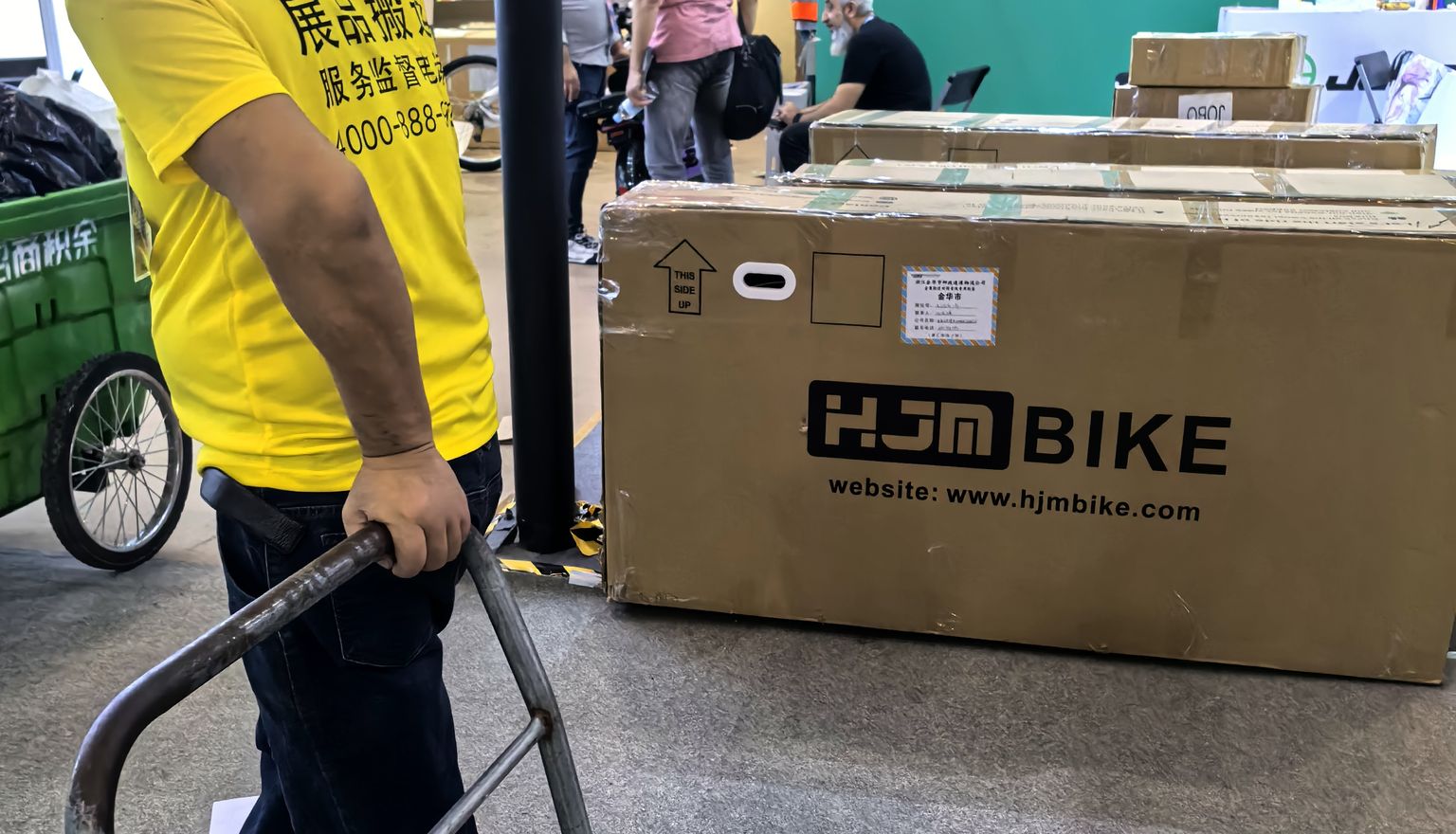
A production order leaves one factory on one date. A sample run leaves twenty factories on twenty dates, in twenty cartons, with twenty sets of paperwork that were never designed to be read together. The value is low, the administrative load is high, and every one of those parcels has to clear export the same way.
The three failures that recur are predictable. Parcels sent to a home address instead of a warehouse, so the buyer ends up carrying them. Parcels that arrive after the flight, because a factory quoted "three days" and meant three days after payment cleared. And parcels that cannot travel together — a lithium battery, a bottle of solvent and a branded sample of a trademarked product in the same consolidated shipment is a shipment that stops at the first checkpoint.
Most exhibitors will give a sample free or refund the sample fee against a production order, and most will ask the buyer to cover the courier. That is normal and it is not a red flag. What matters is the paper that travels with the goods.
Declaring a sample at a fraction of its real value to reduce duty is a decision that belongs to the importer, and it carries the importer's risk. If the shipment is examined and the declared value is challenged, the cost is not the duty — it is the delay, the storage and the record.
The single most useful thing a buyer can do at the fair is hand every supplier the same delivery instruction on the same piece of paper before leaving the booth. It should carry four things: the warehouse address in Chinese and English, the consignee name exactly as it appears on the buyer's record, a marking instruction, and a deadline date with a consequence attached.
The marking instruction matters more than buyers expect. If twenty cartons arrive addressed to twenty variations of the buyer's company name, the warehouse spends a day matching parcels to a purchase list. A short code — buyer reference plus supplier initial, written on two sides of every carton — collapses that to an hour.
Set one cut-off date, not twenty. "All samples must reach the warehouse by the 12th" is an instruction a supplier can plan around. "Send when ready" produces a shipment that is 90 percent complete for three weeks, and the last carton is always the one that matters.
A consolidation warehouse is not a post box. The work that justifies the cost happens in the first 48 hours after the last carton lands.
Where the warehouse cannot help is with a sample that arrives damaged because the factory packed a ceramic in a plastic bag. Photos taken at receiving are the evidence that turns that into a supplier conversation instead of a loss.
The instinct is to send everything by express because samples are urgent. That instinct is right up to a point, and expensive past it.
| Channel | Works for | Transit | Watch out for |
|---|---|---|---|
| Express (DHL, FedEx, UPS) | Under roughly 30 kg, one destination, door to door without a broker | 3–6 days | Volumetric weight on light bulky cartons; surcharges on remote postcodes |
| Air consolidation | 30–150 kg, or several suppliers already merged into one set | 5–9 days plus clearance | Chargeable weight at 1:6000; needs a real invoice and packing list |
| Sea LCL | Bulky, heavy, low-value samples; furniture and building materials | 3–6 weeks depending on route | Destination charges can exceed the freight on a small cube |
| Rail | Europe-bound volume where sea is too slow and air too costly | 18–28 days | Routing restrictions by commodity |
Transit figures are typical ranges on main routes, not commitments. Port congestion, airline capacity and destination clearance each move the number.
The practical rule: if the total chargeable weight stays under about 100 kg and the destination is a city with an airport, air consolidation usually beats express on cost once there are more than four cartons, because express prices each parcel as a parcel. Above that, the gap widens quickly, and a 300 kg sample set that is not urgent belongs on the water.
Consolidation works because the shipment is treated as one consignment. That also means one problem item holds the whole set. Five categories cause most of the trouble at sample stage.
The fix is to sort at the booth rather than at the warehouse. When a supplier hands over a battery product, ask for the UN38.3 report and the MSDS at that moment. They will have both on a phone. Six weeks later, the person who has them may have left the company.
For a consolidated sample shipment leaving China, the minimum set is short and predictable: commercial invoice covering every item, packing list matching the cartons, and the transport document for the chosen channel. Add to that, depending on what is inside: MSDS and UN38.3 for batteries, a non-hazardous declaration for liquids that are not dangerous, a brand authorisation letter where a trademark is involved, and a certificate of origin where the destination's duty rate depends on it.
Two things about the invoice are worth insisting on. It should list every supplier's items line by line rather than summarising them as "samples". And it should be in English, with a total that a customs officer can reconcile against the packing list without calling anyone.
Q Can I combine samples from different suppliers into one shipment?
Yes, and it is usually the cheapest way to get them home. The warehouse receives each parcel, checks it against your list, repacks the set into one consignment and issues one invoice and one packing list for the combined shipment.
Q How long should I allow for samples to reach a warehouse in China?
Three to fifteen days is the realistic range after a supplier confirms the order, and the spread comes from production readiness rather than courier speed. Setting one hard cut-off date is what keeps the shipment from drifting.
Q Is express always the fastest way to get samples home?
Fastest to the door, yes. Cheapest, no. Past roughly 100 kg, or past four or five cartons to one city, air consolidation usually costs less because express prices every parcel separately.
Q What documents do samples need?
Commercial invoice, packing list and transport document as a minimum. Add MSDS and UN38.3 for batteries, brand authorisation for trademarked goods, and a certificate of origin where the destination duty rate depends on it.
Q Can batteries be consolidated with other samples?
Sometimes, but they have to be declared and packed correctly, and some battery types cannot fly at all. Ask for the UN38.3 report and MSDS at the booth, before the supplier's technical contact becomes hard to reach.
Related pages
Send us your supplier list and the sample deadline, and we will set up a receiving address, check each parcel in against your list, and give you a cost for the combined set by air, sea or express.
Email sales8015@goodhopefreight.com | WhatsApp & phone +86 133 9216 2503