
Documents
The certificate is the last step. The decision that matters is whether the goods genuinely originate, and that is settled by where the materials came from and what was done to them, not by which form you buy.
Contents
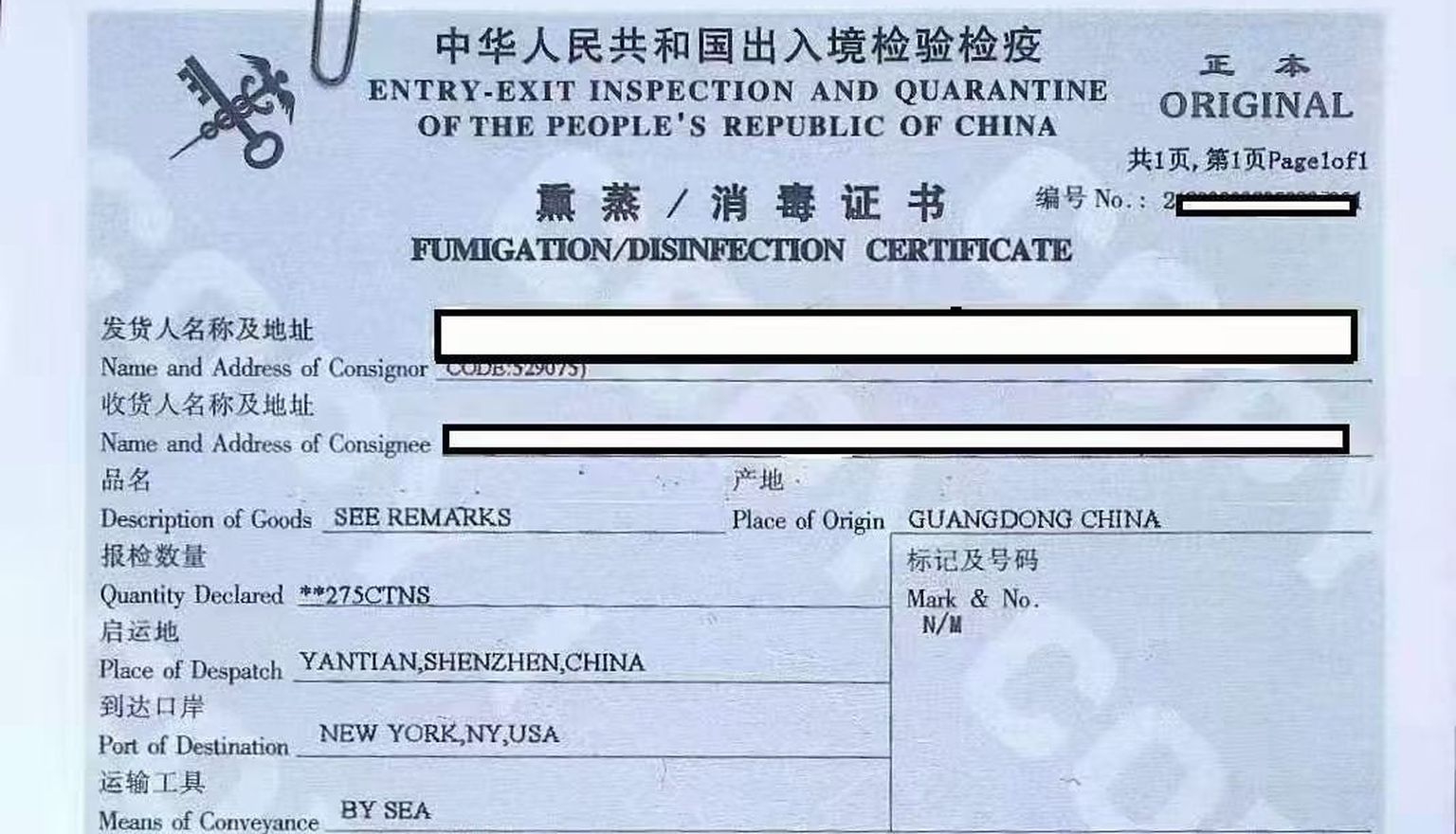
A non-preferential certificate of origin states where the goods were made. Nothing more. It supports the origin marking on the carton, it may be requested by a bank under a letter of credit, and some destinations ask for it as a matter of routine. It does not reduce duty.
A preferential certificate states that the goods qualify under a specific trade agreement, and it does reduce duty, sometimes to zero. It is a legal claim, made on a form that names the agreement, and it can be checked and refused.
The two are routinely confused at a trade fair, because both are called a certificate of origin and both are stamped. The consequences of confusing them run in one direction only: a non-preferential certificate where a preferential one was needed means you pay full duty, and a preferential claim that cannot be supported means you pay the duty plus the argument.
For most buyers the practical question is narrower than the paperwork suggests. Does my destination have an agreement with China, and do my goods qualify under it? If the answer to either is no, the certificate you want is the plain one.
Preferential certificates are issued by authorities designated under each agreement. In China that is usually the customs authority or the China Council for the Promotion of International Trade, depending on the form. The exporter applies, the authority issues, and the certificate travels with the shipping documents.
Non-preferential certificates come from the same channels, most often the CCPIT. They are quicker and cheaper, and they are issued against the invoice rather than against a rules of origin analysis.
In several agreements the paper certificate is no longer mandatory. RCEP, for example, allows an approved exporter to make an origin declaration on the invoice, and some agreements accept self-declaration by any exporter. That reduces cost and time, and it moves the entire liability onto the exporter's statement, which means the underlying analysis has to be right.
Whatever the mechanism, the certificate is issued to an exporter and names a consignee. Change either after issue and the document usually has to be reissued rather than amended. That is a detail worth settling before production finishes, because a reissued certificate can miss the sailing.
The letters are shorthand for agreements, and each has its own rules of origin, its own certificate and its own quirks.
| Form | Agreement | What it does | Watch for |
|---|---|---|---|
| Form A | Generalised System of Preferences | Unilateral duty reduction for developing country exports | Schemes have been narrowed, suspended or replaced country by country |
| Form E | ASEAN-China Free Trade Area | Preferential rates between China and ASEAN members | Product specific rules vary by line; a certificate covers one consignment |
| RCEP certificate | Regional Comprehensive Economic Partnership | Preference across fifteen Asia-Pacific economies | Several rule sets coexist; the right one has to be chosen per shipment |
| Form F | China-Chile | Bilateral preference | Direct consignment rules are strict |
| Non-preferential | None | States origin only | No duty effect at all |
A guide to the families of certificate, not a statement of current tariff treatment. GSP eligibility in particular changes with each importing country's scheme — confirm the position for your destination and product before relying on it.
Where more than one agreement could apply, the choice is not automatic. RCEP and a bilateral agreement may both cover the same goods with different rules and different rates, and the higher rate is sometimes the one with the easier rule. A broker who files the certificate you sent is not going to run that comparison for you.
Origin is not where the goods were bought, invoiced or shipped from. It is where they were wholly obtained, or where they underwent sufficient working or processing. For manufactured goods the question is always the second one, and every agreement defines sufficient in its own way.
Two tests do most of the work. A change in tariff classification asks whether the non-originating materials changed heading through the production process. A regional value content test asks whether enough of the value was added inside the territory, usually expressed as a percentage of the finished price.
This is where a supplier's cheerful yes becomes a problem. A product assembled in China from imported components may qualify, may not, and may qualify under one agreement while failing another. The answer depends on the tariff classification of every input, which depends on the bill of materials, which is why the classification work and the origin work are the same job.
What a certificate cannot fix. A certificate is issued on the exporter's declaration. If the goods do not meet the rule, the certificate is not a technicality that makes them meet it. Retroactive cancellation of preference, plus duty and penalty, is the standard outcome when origin is examined and found wanting.
Preference is refused more often for inconsistency than for substance. The same facts appear on four documents and disagree on one of them.
Third party invoicing is the usual source of trouble. If a trading company in Hong Kong invoices while the factory in Guangdong ships, the certificate names an exporter that is not the invoice issuer. Under several agreements that is permitted with the right declaration or a back-to-back certificate, but it has to be arranged in advance. Arriving at destination with the mismatch already in the file converts a duty saving into a delay.
Direct consignment is the other tripwire. Goods routed through a third country can lose preference unless they stayed under customs control and did not undergo operations beyond unloading, storage or repacking. A transshipment through Singapore is usually fine; a stop where the goods were repacked by a party outside the chain needs documentation that the operations were minimal.
Four causes account for most refusals, and all four are visible before the goods leave China.
The rule was never tested. The certificate was bought because the destination asks for one, not because anyone checked whether the product met the product specific rule. This is common with goods that are assembled rather than made.
The certificate does not match the shipment. Quantities shipped in two lots against one certificate, a consignee renamed at the last minute, an invoice reissued with a different date. Each is a mismatch that a system will flag.
The transit broke the rule. Goods consolidated in a third country, split, or held outside customs control long enough to count as having entered commerce there.
Nobody kept the working papers. Origin can be verified years later. A supplier who cannot produce a bill of materials, supplier declarations for the inputs and cost records is a supplier whose certificate will not survive a verification visit, however genuine the goods.
Where a claim is refused at the border, the usual remedy is to pay the duty and dispute later, or to furnish a guarantee. Either way, the container waits. On a first order, the cost of that wait frequently exceeds the duty the certificate was meant to save.
Four questions, asked at the booth, will tell you whether the duty saving is real.
Does your destination have a trade agreement with China that covers this product? Which form do you normally issue for it? Has this exact product been shipped under that form before, and was the preference accepted? Can you show me the bill of materials, or at least tell me which inputs are imported?
A supplier who answers all four has done this before. A supplier who answers the first two and guesses the third has not, and the certificate will arrive as a document rather than as a claim.
Agree in the purchase order who pays for the certificate, which form is required, and what happens if it is refused at destination. The default, in most contracts, is that duty is the buyer's problem under FOB and CIF, which makes an unusable certificate the buyer's loss even though the exporter applied for it.
Finally, keep the file. Certificate, invoice, packing list, bill of lading, the supplier's origin declaration and the cost working. If an origin verification arrives two years later, that folder is the entire defence.
Q Is a certificate of origin the same as a Form A?
No. Form A is one specific preferential certificate issued under a GSP scheme. A certificate of origin is the general name for the document, which may be preferential, naming an agreement, or non-preferential, stating origin only. The distinction decides whether any duty is saved.
Q Does a Chinese certificate of origin reduce duty in the EU?
Only if the goods qualify under an agreement the EU has with China covering that product, and only with the certificate for that agreement. The EU does not grant China GSP treatment. For most product lines there is no preferential rate, so the certificate you need is the non-preferential one, and full duty applies.
Q Can the exporter declare origin on the invoice instead of a certificate?
Under several agreements, yes, either for approved exporters or for any exporter. It saves time and cost and it is fully valid. It also moves the entire legal weight onto the exporter's declaration, so the rules of origin analysis behind it has to be sound.
Q What happens if the certificate arrives after the goods?
Preference is normally claimed at the time of entry. Some administrations allow a claim after the fact within a defined window, against a guarantee or a refund application. That window is short and the process is administrative. It is far cheaper to have the certificate before the vessel sails.
Q My supplier is a trading company, not the factory. Does that matter?
It can. The certificate is issued to an exporter, and where the invoice comes from a different entity than the certificate, some agreements require a third party declaration or a back-to-back certificate. Arrange it before shipment; a mismatch discovered at destination is a delay, not a discussion.
Q How long is a certificate valid?
Validity is set by the agreement, commonly around a year from issue, but the practical constraint is shorter: it must cover the consignment it names, and it must be presented within the destination's claim window. A certificate held for a later shipment is usually the wrong certificate.
Related pages
Tell us the destination, the product and the materials it is made from. We will say which certificate family applies and whether the rule is likely to be met before the order is placed.
Email sales8015@goodhopefreight.com | WhatsApp & phone +86 133 9216 2503