
Freight Choice
A first order is usually small, and small shipments are where the choice of channel changes the cost most. The rate per kilo is the least useful number in the comparison.
Contents
Divide the value of one carton by its chargeable weight in kilos. That single number, value per kilo, decides more air-versus-sea arguments than any rate sheet.
Goods worth several times their air freight per kilo can fly and still make money. Goods worth less than the air rate per kilo never will, however urgent the buyer feels in November.
The comparison only works when both sides carry the same fixed charges. Compare port-to-port sea with airport-to-airport air, or door-to-door with door-to-door. Mixing the two is how a shipment gets booked twice.
Air freight is charged on the greater of actual weight and volumetric weight. Volumetric weight is the carton's volume in cubic centimetres divided by 6,000, which means one cubic metre counts as about 167 kg if the cargo is light.
A carton that weighs 30 kg but measures 60 by 50 by 50 cm has a volumetric weight of 25 kg, so the charge is on 30 kg. A carton weighing 12 kg at the same size is charged on 25 kg. Light, bulky goods are punished by air; dense goods are not.
Express uses a lower divisor, commonly 5,000, which makes the same carton heavier again. That is one reason express looks reasonable for documents and expensive for cushions.
Measure the carton, do not estimate it. Insurance and carriers both use measured dimensions, and a shipment re-weighed at the terminal is charged on the terminal's numbers, not yours.
Air buys days, not comfort. On main routes the flying time is two to five days, and the door-to-door figure including export handling, security screening and destination clearance is typically five to nine days. Compare that with three to six weeks for LCL, plus a week at each end for handling.
Air also reduces the number of things that can go wrong in the water. There is no demurrage clock at an airport, no terminal congestion surcharge, and no container that misses a cut-off by four hours and waits a week.
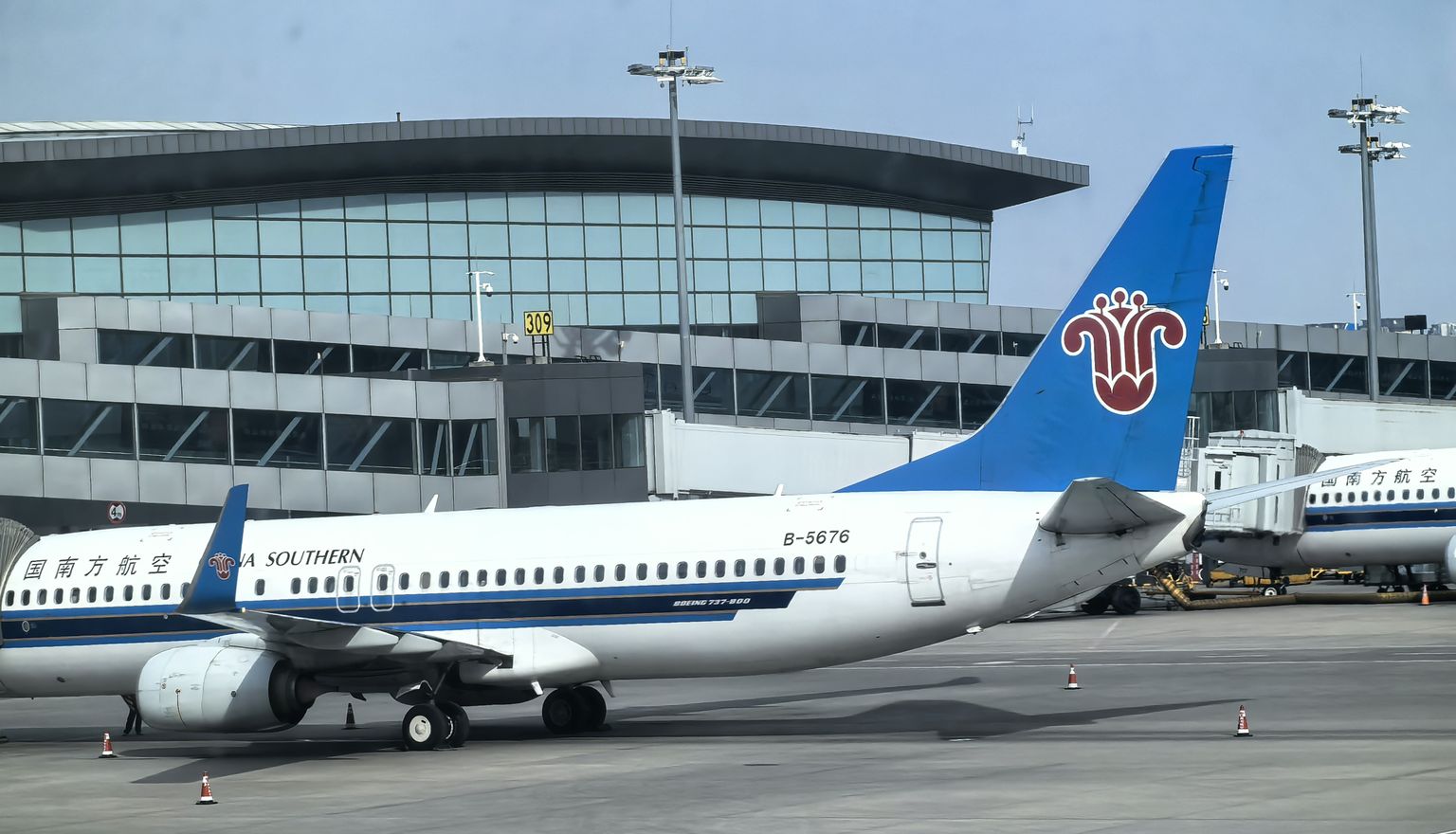
Most air cargo from South China flies in the belly of passenger aircraft rather than on freighters. That constrains the size of a single piece, ties capacity to passenger schedules, and means rates move with the travel season as much as the cargo market.
LCL is priced per cubic metre or per tonne with a minimum, and it carries fixed charges at both ends that do not shrink with the cargo. A small shipment pays a full set of document, terminal and clearance fees spread over very few units.
That structure produces the classic result: the ocean freight looks like a bargain, the destination invoice arrives four weeks later, and the total per unit is worse than air would have been.
LCL is still the right answer for bulky, low-value goods where the units are cheap enough to absorb the fixed costs, and for buyers who care about landed cost per unit more than about the date.
Express is a door-to-door service with customs handled inside the network. It is not a cheap version of air freight; it is a different product with a different cost structure, and it stops making sense at a weight that depends on your market.
Under roughly 30 kg to one address, express usually wins on total cost because the paperwork is minimal and there is no broker at your end. Above 100 kg, a real air waybill is typically cheaper per kilo, provided you can accept an airport-to-airport movement and arrange clearance.
The middle band, roughly 30 to 100 kg, is where buyers overpay without noticing. It is worth asking for both quotes on every shipment in that range.
| Goods | Channel that usually wins | Why |
|---|---|---|
| Electronics, tools, small hardware | Air | High value per kilo, dense cartons, short shelf life of the price advantage |
| Apparel, accessories, samples | Air or express | Light, high value, seasonal timing decides the sale |
| Cushions, plastic housewares, flat-pack | Sea LCL | Low value per kilo, volumetric, absorbs fixed charges per unit |
| Furniture, machinery, building materials | Sea FCL | Volume and weight make a container the only sane unit |
| One carton, one address | Express | Paperwork inside the network, no broker needed |
Transit figures and thresholds in this article are typical ranges on main routes, not commitments. Capacity, fuel and destination clearance move them.
Most importers do not choose between air and sea once. They move along a path, and the path is driven by volume rather than preference.
The first order is a trial: one or two cartons, air or express, because the point is to test the product, the paperwork and the supplier. The second is a stock build: 100 to 300 kg, still often air because the season is short and the cash is limited. The third is the first LCL shipment, and it is the moment fixed charges start to matter and a forwarder becomes useful.
Each step should be planned with the next one in view. A carton specification that works for air may be wrong for a container, and a supplier who has only ever shipped express may not know how to palletise for LCL.
The first is booking sea in October for goods that must be on a shelf before December. Production, LCL consolidation, sailing and clearance do not compress because the calendar is tight. Air exists precisely to solve that, and paying for it in November is cheaper than discounting stock in January.
The second is booking air for goods that are mostly air. A carton of bulky plastic at low value per kilo can consume its entire margin in freight, and no amount of urgency changes the arithmetic.
Both mistakes come from comparing rates instead of comparing landed cost per unit at a date. The number that matters is what one unit costs in your warehouse in week 46, not what the freight costs per kilo on the rate sheet.
There is a third mistake that belongs to the channel rather than the booking: treating air as if it ends at the airport. Airport-to-airport means the cargo is yours once it is off the aircraft, and it needs an agent at that end to clear it, pay the terminal and deliver it. Buyers who assume the airline will call them discover the storage clock on day three.
The counterweight is consolidation. If several suppliers are shipping to you in the same week, their cartons can be gathered at one warehouse and flown or shipped as one consignment with one set of documents. On a first order that is often the difference between four expensive small shipments and one reasonable one.
Q Is air freight cheaper than sea for a small order?
Sometimes, once fixed charges are counted. Air costs far more per kilo but has no cubic-metre minimum and fewer per-shipment fees. For a first order of 100 to 300 kg of high-value goods, air is frequently the lower total cost.
Q How is chargeable weight calculated for air freight?
The greater of actual weight and volumetric weight, where volumetric weight is length times width times height in centimetres divided by 6,000. Express networks often divide by 5,000, which charges more for the same carton.
Q What is the minimum sensible weight for air freight?
Below about 30 kg to one address, express is usually simpler and often cheaper. Between 30 and 100 kg it is worth quoting both. Above 100 kg an air waybill normally wins on rate.
Q Why are LCL destination charges so high on small shipments?
Because they are charged per shipment, not per unit. Documentation, terminal handling and clearance cost about the same whether the cargo is one cubic metre or fifteen, so a small volume carries a disproportionate share.
Q Can I mix air and sea in one order?
Yes, and it is often sensible: the fast-moving part of the order flies and the bulk follows by sea. Split the commercial invoice accordingly, because the two shipments clear separately.
Q How long does air freight take door to door from China?
Typically five to nine days including export handling, screening, flight and destination clearance, on main routes. Add time for anything requiring a specific airline or a permit.
Related pages
Send us the carton dimensions, gross weight and product value. We will price air, express and LCL on the same basis and show you where the crossover sits.
Email sales8015@goodhopefreight.com | WhatsApp & phone +86 133 9216 2503